Blog

  • Chẩn Ä‘oán sá»›m TBM bằng công nghệ gen có thể giúp nâng cao chất lượng cuá»™c sống cá»§a bệnh nhân

    Chẩn đoán sớm TBM bằng công nghệ gen có thể giúp nâng cao chất lượng cuộc sống của bệnh nhân

    Việt Nam vẫn là quốc gia có gánh nặng bệnh lao cao, trong đó lao màng não thường khó chẩn đoán, thường dẫn đến di chứng thần kinh nghiêm trọng ở bệnh nhân.

    Trong số các bệnh liên quan đến lao, lao màng não có tỷ lệ tử vong cao nhất ở trẻ sơ sinh, dao động từ 20-50%. Một trong những thách thức lớn nhất trong việc chẩn đoán lao màng não là các triệu chứng lâm sàng của nó khá giống với các bệnh nhiễm trùng thần kinh trung ương khác.

    Mặc dù là bệnh nguy hiểm, lao màng não có thể được phòng ngừa bằng vắc-xin BCG (Bacille Calmette-Guérin). Tuy nhiên, trong một khảo sát nhanh tại bệnh viện, nhiều phụ huynh đã thừa nhận không nhớ con đã tiêm chủng hoặc đã tiêm đủ hay chưa.

    Với mục tiêu tập trung vào các vấn đề sức khỏe toàn cầu, Collab Lab, sáng kiến của nhóm Đại sứ Kết nối Khoa học do nhóm Kết nối Khoa học với Công chúng và Cộng đồng hỗ trợ thực hiện, đã chọn bài báo khoa học về những phát hiện mới trong phương pháp chẩn đoán sớm lao màng não. Video hoạt hình hóa giải thích bài báo khoa học này giúp góp phần nâng cao nhận thức về bệnh lao nói chung, đặc biệt là lao màng não, và tầm quan trọng của việc tiêm vắc-xin BCG cho trẻ em.

    “Tôi tưởng lao chỉ ảnh hưởng đến phổi”.

    Theo báo cáo năm 2020 của Tổ chức Y tế Thế giới (WHO), Việt Nam xếp thứ 10 trong số 30 quốc gia có số ca mắc lao cao nhất và đứng thứ 11 về gánh nặng bệnh lao kháng đa thuốc trên toàn cầu. Hàng năm, Việt Nam ghi nhận hơn 172.000 ca mắc lao và 10.400 ca tử vong do bệnh này. Riêng tại Thành phố Hồ Chí Minh, 6 tháng đầu năm 2022 đã ghi nhận hơn 8.434 ca mắc lao, tăng hơn 33% so với cùng kỳ năm 2021(2).

    Lao màng não xuất hiện khi vi khuẩn lao xâm nhập vào cơ thể và theo đường máu đến tấn công não và màng não. BS Trương Hữu Khanh, Phó chủ tịch Liên Chi hội Bệnh truyền nhiễm TP HCM, cho biết lao màng não có số tử vong cao nhất trong các bệnh lý về lao ở trẻ sơ sinh, với tỷ lệ tử vong từ 20-50%.

    Hơn 50% bệnh nhân qua khỏi vẫn phải chịu những di chứng thần kinh nghiêm trọng như bại não, liệt chi, động kinh, câm, điếc hoặc mù. Bệnh nhân cũng có thể có những biến chứng nặng nề về lâu dài như sa sút trí tuệ, tổn thương thần kinh và rối loạn tâm thần(1).

    Một trong những thách thức lớn nhất trong việc chẩn đoán lao màng não là bệnh khởi phát bởi các triệu chứng không đặc hiệu, khá giống với các bệnh nhiễm trùng hệ thần kinh trung ương khác. Nếu được phát hiện sớm trong chẩn đoán và điều trị lao màng não, tỉ lệ tử vong và di chứng do bệnh có khả năng giảm đi đáng kể.

    Phát hiện mới mang tính đột phá trong chẩn đoán sớm lao màng não sử dụng công nghệ gen.

    Các báo cáo gần đây đã phát hiện một số gen nhất định—GPB5, DUSP3 và KLF2 — có những thay đổi biểu hiện đáng chú ý ở bệnh nhân mắc lao phổi. Tuy nhiên, liệu những dấu hiệu gen này có đủ đáng tin cậy để áp dụng trong việc phát triển các bộ công cụ xét nghiệm lao màng não nhanh và chính xác hơn các loại xét nghiệm khác trên thị trường.

    BS Julie Huynh, Bác sĩ Nghiên cứu Lâm sàng Nhi khoa cho biết, cô hi vọng nghiên cứu này của cô và các cộng sự sẽ đóng góp vào việc cải thiện tốc độ và độ chính xác trong chẩn đoán lao màng não, từ đó nâng cao chất lượng điều trị và giảm di chứng cho bệnh nhân.

    Nâng cao nhận thức của cộng đồng về lao và lao màng não đóng vai trò quan trọng trong nâng cao tỷ lệ tiêm vắc-xin BCG ở trẻ em.

    Trong một khảo sát nhanh, nhiều phụ huynh có trẻ mắc lao màng não thừa nhận trẻ chưa được tiêm ngừa lao, hoặc phụ huynh không nhớ con đã tiêm vaccine chưa, hay trẻ đã tiêm nhưng vết tiêm nhỏ, không đạt được hiệu quả phòng ngừa.

    Hướng đến mục tiêu giải thích mức độ nguy hiểm của lao và lao màng não, đặc biệt đối với trẻ em, đồng thời nhấn mạnh tầm quan trọng của nghiên cứu trong việc chẩn đoán sớm căn bệnh nguy hiểm này, nhóm Collab Lab đã chọn một cách tiếp cận thú vị và hài hước để giải thích kết quả nghiên cứu một cách dễ hiểu đối với công chúng.

    Nhóm hi vọng cách tiếp cận mới lạ này sẽ giúp thông tin nghiên cứu gen phức tạp trở nên dễ tiếp cận hơn đối với đại chúng, đặc biệt là nhóm người trẻ, những người có thể đóng vai trò quyết định trong việc cải thiện tỷ lệ tiêm chủng vắc-xin lao tại Việt Nam.

    Tài liệu tham khảo:

    1. Huynh J, Nhat LHT, Bao NLH, Hai HT, Thu DDA, Tram TTB, Dung VTM, Vinh DD, Ngoc NM, Donovan J, Phu NH, Van Thanh D, Thu NTA, Bang ND, Ha DTM, Nghia HDT, Van Tan L, Van LH, Thwaites G, Thuong NTT. The Ability of a 3-Gene Host Signature in Blood to Distinguish Tuberculous Meningitis From Other Brain Infections. J Infect Dis. 2024 Aug 16;230(2):e268-e278. doi: 10.1093/infdis/jiad606. PMID: 38169323; PMCID: PMC11326836. 

    2. https://vnexpress.net/who-canh-bao-so-ca-benh-lao-tang-cao-ky-luc-4810615.html  

    3, 4. https://vnexpress.net/nhieu-em-be-mac-lao-mang-nao-nhap-vien-4546696.html 

  • Applying genetic technology for early TBM diagnosis helps to enhance patients’ quality of life

    Applying genetic technology for early TBM diagnosis helps to enhance patients’ quality of life

    Vietnam remains a country with a high tuberculosis burden, with tuberculous meningitis (TBM) being particularly challenging to detect early, often leading to severe neurological sequelae in patients. 

    TBM has a mortality rate of 20%–50%, and neuro-disability occurs in up to 50% of survivors(1). One of the biggest challenges in diagnosing TBM is that its clinical symptoms are quite similar to other brain infections. 

    Despite its dangers, TBM can be prevented with the BCG vaccine (Bacille Calmette-Guérin). However, many parents have admitted that their children either haven’t been vaccinated at all or don’t have up-to-date vaccinations. 

    With the mission of addressing global health issues, Collab Lab, an initiative led by OUCRU’s Public and Community Engagement group, has chosen to animate a publication about TBM, aims to raise awareness about tuberculosis in general, TBM, and the importance of BCG vaccination for children. 

    “I thought TB only affects the lungs”. 

    According to the World Health Organization’s (WHO) 2020 report, Vietnam ranks 11th among 30 countries with the highest number of tuberculosis cases and 1st in terms of multidrug-resistant tuberculosis burden globally(2). Annually, Vietnam records over 172,000 tuberculosis cases and 10,400 deaths due to the disease. In Ho Chi Minh City alone, the first six months of 2022 saw more than 8,434 tuberculosis cases, an increase of over 33% compared to the same period in 2021(3). 

    Tuberculous Meningitis is a severe form of tuberculosis that affects the membranes covering the brain and spinal cord. Dr. Truong Huu Khanh, Vice President of the Ho Chi Minh City Infectious Diseases Association, states that tuberculous meningitis has the highest mortality rate among tuberculosis-related diseases in newborns, with a mortality rate of 20-50%(4).  

    More than 50% of survivors have severe neurological sequelae such as cerebral palsy, limb paralysis, epilepsy, muteness, deafness, or blindness. Patients may also develop other long-term complications like dementia, nerve damage, and mental disorders. 

    One of the biggest challenges in diagnosing TBM is that its clinical symptoms are quite similar to other brain infections. Therefore, early diagnosis before brain damage occurs is the most important prognostic factor for survival and the extent of sequelae impact on patients. 

    Diagnosing TBM using genes 

    Recent reports have shed new light on diagnosing TBM. They’ve discovered that certain genes—GPB5, DUSP3, and KLF2—show significant expression changes in patients with pulmonary tuberculosis. The question now is whether these genetic markers are reliable enough to be applied in the early diagnosis of tuberculous meningitis. 

    A recent publication by Dr Julie Huynh, Clinical Research Paediatrician at OUCRU, aims to develop a simple and effective test for TBM. This test could distinguish TBM from other brain infections, thereby enhance the speed and accuracy of diagnosing TBM, improve treatment quality and reduce sequelae for patients with TBM. 

    Raising awareness of TB vaccines is essential to improve vaccine uptake 

    Other than the challenges in diagnosis, the awareness of the importance of TB vaccines among parents is another factor affecting children’s TBM infection rates. Several families with TBM child patients admitted that their children had not received the BCG vaccine or couldn’t remember if their children had been vaccinated at all. 

    By animating Dr Julie Huynh’s TBM project, Collab Lab seeks to explain TBM’s danger to the human brain, emphasise the significance of early accurate diagnosis, and marking this new milestone in the fight against TB in general and TBM in particular. 

    Collab Lab’s animated explainer videos aim to make complex genetic research information more accessible to a wider audience, particularly young people, who may play a decisive role in increasing TB vaccine uptake in Vietnamese society. 

    Reference:  

    1. Huynh J, Nhat LHT, Bao NLH, Hai HT, Thu DDA, Tram TTB, Dung VTM, Vinh DD, Ngoc NM, Donovan J, Phu NH, Van Thanh D, Thu NTA, Bang ND, Ha DTM, Nghia HDT, Van Tan L, Van LH, Thwaites G, Thuong NTT. The Ability of a 3-Gene Host Signature in Blood to Distinguish Tuberculous Meningitis From Other Brain Infections. J Infect Dis. 2024 Aug 16;230(2):e268-e278. doi: 10.1093/infdis/jiad606. PMID: 38169323; PMCID: PMC11326836. 

    2. https://vnexpress.net/who-canh-bao-so-ca-benh-lao-tang-cao-ky-luc-4810615.html  

    3, 4. https://vnexpress.net/nhieu-em-be-mac-lao-mang-nao-nhap-vien-4546696.html 
  • Nghiên cứu má»›i về Lao màng não: Dấu hiệu được phát hiện trong máu

    Nghiên cứu mới về Lao màng não: Dấu hiệu được phát hiện trong máu

    Vi khuẩn lao có thể lây lan từ phổi lên não, gây ra lao màng não – một dạng bệnh nguy hiểm với hơn 150.000 ca mắc mới mỗi năm trên toàn thế giới. 50% bệnh nhân lao màng não tử vong hoặc có tổn thương não, nguy cơ này đặc biệt cao đối với những bệnh nhân đồng nhiễm HIV.

    Các trường hợp lao màng não nặng có thể liên quan đến tình trạng hoạt động quá mức của hệ miễn dịch, chính phản ứng miễn dịch thái quá trong quá trình chống lại vi khuẩn đã gây tổn thương não. Cho đến nay, việc xác định tình trạng viêm quá mức thông qua xét nghiệm máu rất khó khăn. Các phương pháp hiện tại chỉ cung cấp khá ít thông tin liên quan đến phản ứng viêm.

    Trong một nghiên cứu mới đăng trên tạp chí eLife, các nhà khoa học tại OUCRU đã sử dụng công nghệ di truyền tiên tiến để phân tích biểu hiện của gần 20.000 gen từ mẫu máu của bệnh nhân lao màng não, lao phổi (cả nhiễm HIV và không nhiễm HIV) và người khỏe mạnh. Bằng cách so sánh biểu hiện gen giữa các nhóm, nghiên cứu này giúp làm sáng tỏ cơ chế bệnh sinh của lao màng não, đặc biệt là ở những ca nặng. Đồng thời, phân tích này cũng cho phép các nhà khoa học xác định các gen tiềm năng để theo dõi và dự đoán nguy cơ biến chứng nặng ở bệnh nhân.

    Nghiên cứu đã chỉ ra nguy cơ tử vong do lao màng não có liên quan đến một dấu hiệu đặc trưng trong phản ứng miễn dịch tế bào; sự hoạt hóa mạnh mẽ của bạch cầu trung tính đi kèm với sự suy giảm hoạt động của tế bào T và tế bào B. Các biểu hiện di truyền liên quan đến nguy cơ tử vong cũng khác nhau giữa bệnh nhân nhiễm HIV và không nhiễm HIV, với các gen gây viêm được hoạt hóa nhiều hơn ở nhóm nhiễm HIV. Đáng chú ý, nhóm nghiên cứu đã phát hiện mức độ hoạt động của bốn gen cụ thể trong máu có liên quan mật thiết đến nguy cơ tử vong do lao màng não.

    “Phát hiện này có ý nghĩa quan trọng trong việc cá nhân hóa điều trị lao màng não,” PGS. Nguyễn Thuỵ Thương Thương, trưởng nhóm nghiên cứu lao tại OUCRU chia sẻ. “Trong tương lai, các bác sĩ có thể sử dụng dấu hiệu này để xác định nhanh chóng những bệnh nhân cần được chăm sóc tích cực, đồng thời nghiên cứu còn xác định các mục tiêu tiềm năng cho việc phát triển các liệu pháp điều trị mới.”

    Để tìm hiểu thêm, hãy truy cập bài đăng trên tạp chí eLife.

    Bài viết này ban đầu được đăng bằng tiếng Anh trên eLife Digest và đã được dịch và sửa lại để phù hợp cho độc giả của OUCRU.

  • New Research Sheds Light on Deadly TB Meningitis: Finding cues in the blood 

    New Research Sheds Light on Deadly TB Meningitis: Finding cues in the blood 

    Tuberculous meningitis is a dangerous condition caused by the bacteria responsible for tuberculosis spreading from the lungs to the brain. It affects more than 150,000 adults a year worldwide, and results in death or brain damage in half of all patients. People living with HIV are particularly at risk for negative outcomes. 

    These severe forms of tuberculous meningitis may be linked to the immune system becoming over-active while trying to fight the disease and harming the brain in the process. Detecting this hyperinflammation via blood sample analyzes has remained challenging so far, as traditional approaches can only offer partial information on the inflammatory response. 

    In a new paper published in eLife, OUCRU researchers took advantage of new genetic approaches to examine the expression of around 20,000 genes in the blood of HIV-positive and HIV-negative patients with tuberculous meningitis or lung tuberculosis, as well as in healthy individuals. Identifying which genes are more or less expressed in the different groups of volunteers can help to better understand the mechanisms associated with tuberculous meningitis, particularly in its most dangerous forms. Such analysis could also allow scientists to pinpoint which genes to monitor to efficiently detect patients at higher risk of severe complications. 

    The results show that tuberculous meningitis mortality was associated with a distinct pattern of immune cell response; white blood cells known as neutrophils were increasingly activated while T and B cells showed decreased activity. Increased mortality was also linked to different patterns of gene activity between patients living with or without HIV. Overall, inflammatory genes were more activated in HIV-positive tuberculous meningitis patients than in their HIV-negative counterparts. Finally, the authors found that the blood activity levels of just four specific genes formed a signature associated with increased risk of death from tuberculous meningitis. 

    “In the future, medical professionals may be able to use this signature to rapidly identify patients who require intensive care and more specialized treatments,” said Associate Professor Nguyen Thuy Thuong Thuong, who leads the TB research group at OUCRU. “The findings also reveal immune system processes and molecules that may serve as potential drug targets for future therapies against this disease.”  

    To learn more, visit the published article.  

    This article was originally published in English on eLife Digest and has been modified for OUCRU’s audiences.  

  • Sốt xuất huyết: liệu muá»—i vằn con có phải là mối hiểm họa tiềm tàng?

    Sốt xuất huyết: liệu muỗi vằn con có phải là mối hiểm họa tiềm tàng?

    Với số ca tăng gấp 10 lần trong hai thập kỷ qua, Tổ chức Y tế thế giới (WHO) xếp hạng sốt xuất huyết đứng đầu trong 10 mối đe dọa nghiêm trọng đến sức khỏe toàn cầu.(1) Trong bối cảnh biến đổi khí hậu, cuộc chiến chống lại sốt xuất huyết trở nên phức tạp hơn do những thay đổi không lường trước được trong hành vi và phân bố địa lý của muỗi vằn, vật chủ chính của virus dengue gây bệnh sốt xuất huyết.

    Thông thường, để phòng chống sốt xuất huyết, các cÆ¡ quan y tế và chính phá»§ thường tuyên truyền ngăn ngừa muá»—i (trưởng thành) đốt. Khi các nhà khoa học xác nhận cÆ¡ chế lây truyền dọc – muá»—i mẹ nhiá»…m dengue truyền virus cho muá»—i con, má»™t câu hỏi được đặt ra: virus dengue được lây truyền theo cÆ¡ chế dọc như vậy liệu có khả năng gây bệnh cho con người. Nếu có, chúng ta sẽ phải đối mặt vá»›i má»™t hiểm họa má»›i chưa từng được quan tâm trước đây, muá»—i vằn con.

    Cơ chế lây truyền của virus dengue

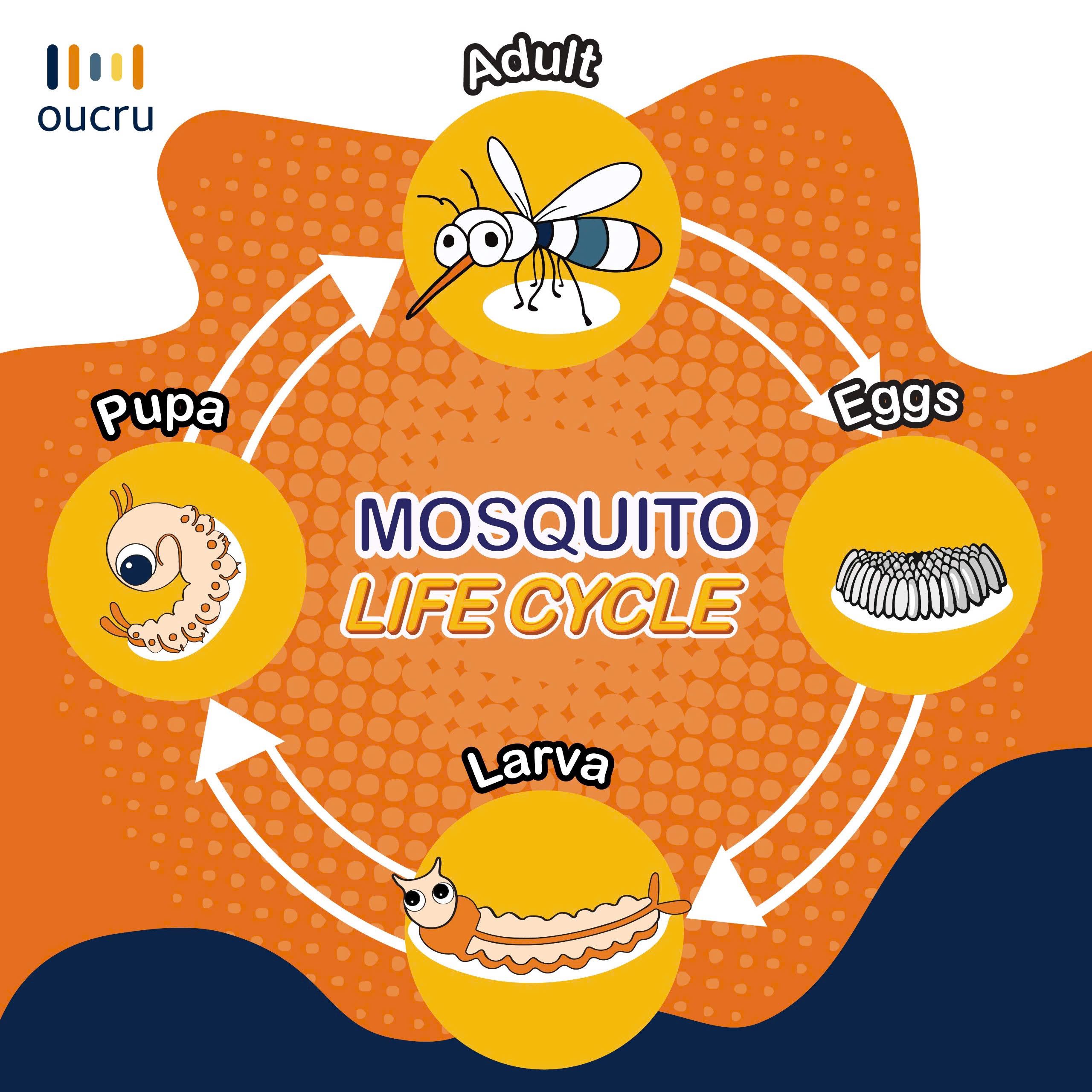
    Cùng tìm hiểu hai cơ chế lây truyền chủ yếu của virus dengue.

    Sốt xuất huyết được gây ra bởi virus Dengue và được lây truyền bởi vector trung gian là muỗi; trong đó chủ yếu qua Muỗi vằn (Aedes aegypti) và Muỗi hổ (Aedes albopictus).

    Virus Dengue được duy trì một cách tự nhiên theo con đường lây truyền ngang (Horizontal transmission) giữa muỗi với người. Khi những con muỗi cái sinh sản, chúng có nhu cầu protein để phát triển trứng; do đó chúng sẽ tìm hút máu các loài động vật, trong đó có con người. Khi con người bị muỗi đốt, virus Dengue từ muỗi cái đã nhiễm xâm nhập sang cơ thể người lành và ngược lại.

    Tuy nhiên vẫn còn má»™t cÆ¡ chế khác để virus duy trì sá»± tồn tại trong tá»± nhiên, chính là con đường lây truyền dọc (Vertical transmission). Má»™t số nghiên cứu đã chỉ ra rằng trong môi trường không thuận lợi như: virus Dengue không tìm được ký chá»§ là con người, Ä‘iều kiện khí hậu khắc nghiệt,…; virus Dengue có thể lây truyền từ muá»—i mẹ sang muá»—i con để tồn tại.

    Với nhiều yếu tố về ngoại cảnh và tần suất lây truyền, rất khó để có thể xác định rằng liệu muỗi cái bị nhiễm virus Dengue (bắt từ thực địa) đã mang virus này thông qua con đường lây truyền theo chiều ngang hay chiều dọc. Ngoài ra, cũng không thể chắc chắn rằng những thế hệ muỗi sau đó mang virus được lây truyền từ muỗi mẹ có đủ khả năng tiếp tục lây bệnh cho con người.

    Việc trả lời câu hỏi này đặc biệt quan trọng trong bối cảnh môi trường sống và điều kiện thời tiết thay đổi, hành vi và phạm vi hoạt động của muỗi vằn ngày càng khó dự đoán. Việc liên tục tìm hiểu và đào sâu kiến thức về virus dengue sẽ giúp các nhà hoạch định chính sách y tế công cộng phát triển các chiến lược phòng ngừa hiệu quả hơn.

    Collab Lab mong muốn nâng cao nhận thức công chúng về phòng ngừa sốt xuất huyết để bảo vệ cả gia đình.

    Tổ chức Y tế Thế giá»›i WHO vẫn xếp sốt xuất huyết vào top 10 mối Ä‘e dọa nghiêm trọng đến sức khỏe toàn cầu, diá»…n biến dịch bệnh này ở Việt Nam ngày càng phức tạp. Riêng giai Ä‘oạn 2019 – 2023, Việt Nam đã trải qua hai đỉnh dịch sốt xuất huyết lá»›n vá»›i số ca ká»· lục 367.729 trường hợp vào năm 2022, đứng thứ hai toàn cầu, chỉ sau quốc gia Brazil.(2)

    Với sứ mệnh giúp các bài báo khoa học trở nên dễ tiếp cận và dễ hiểu hơn với công chúng, từ khi dự án bắt đầu vào năm 2022, Collab Lab luôn ưu tiên các nghiên cứu liên quan đến sức khỏe cộng đồng và toàn cầu như bệnh truyền nhiễm phổ biến ở khu vực nhiệt đới (như Việt Nam nói riêng và Đông Nam Á nói chung), sức khỏe tâm thần, biến đổi khí hậu v.v..

    Nhằm khuyến khích công chúng thực hiện nhiều hành động hơn để bảo vệ bản thân, gia đình, và cộng đồng khỏi sốt xuất huyết, cũng như truyền thông về cơ chế lây truyền của sốt xuất huyết nói riêng và nâng cao hiểu biết về khoa học của công chúng nói chung, Collab Lab đã quyết định chọn hoạt hình hóa dự án tìm hiểu về cơ chế lây truyền dọc và khả năng lây nhiễm sốt xuất huyết của muỗi vằn con nhận virus dengue từ mẹ. Dự án này do nhóm nghiên cứu thuộc phòng Sốt Xuất Huyết Dengue của OUCRU thực hiện.

    Để biết được cuối cùng thì muỗi vằn con có khả năng lây truyền sốt xuất huyết dengue cho người từ virus được truyền từ mẹ hay không, cùng đón xem tập đầu tiên của Collab Lab, Mùa 3, với đội ngũ cộng tác viên khoa học trẻ hoàn toàn mới nhé.

    Tài liệu tham khảo:

    1. https://www.who.int/emergencies/disease-outbreak-news/item/2023-DON498 
    2. https://vnvc.vn/sot-xuat-huyet-tang-gap-10-lan-ca-mac-trong-2-thap-ky/  
    3. Đọc bài nghiên cứu trong video tại đây: Duong Thi Hue, K., da Silva Goncalves, D., Tran Thuy, V. et al. Wolbachia wMel strain-mediated effects on dengue virus vertical transmission from Aedes aegypti to their offspring. Parasites Vectors 16, 308 (2023). https://doi.org/10.1186/s13071-023-05921-y
  • Dengue: Are Baby Mosquitoes a Hidden Threat? 

    Dengue: Are Baby Mosquitoes a Hidden Threat? 

    Did you know that dengue fever cases have witnessed a ten-fold surge in the past two decades?(1) This tropical disease continues to be a global health situation. The fight against dengue has become increasingly complicated due to drastic changes in mosquito behavior and geographical distribution. 
     
    Traditionally, we’ve focused on preventing mosquito bites. But now, researchers are asking a crucial question: What happens when the dengue virus passes from mosquito to mosquito? Through vertical transmission — where a mother mosquito passes the virus to her offspring—could baby mosquitoes also spread dengue? If so, we’re facing a new threat and have to develop new strategies against this new enemy, baby mosquitos!   

    How Does the Dengue Virus Work? 

    Let’s first examine how the dengue virus causes disease in humans. 

    The Dengue virus typically persists through horizontal transmission. The virus is transmitted into human body through infected female mosquitoes (primarily Aedes aegypti and Aedes albopictus). 

    However, in harsh conditions—such as a lack of human hosts or extreme weather—the virus can use vertical transmission (from mother mosquitoes to baby mosquitoes) to survive. 

    This survival tactic could make controlling dengue even more challenging, especially with climate change. As living environments and weather conditions shift dramatically, mosquito behaviors and ranges are becoming unpredictable. Global researchers emphasise the importance of expanding our knowledge about dengue virus in general and their transmission in particularly to develop better prevention strategies and more effective, efficient public health responses. 

    Why Did Collab Lab Choose This Project? 

    While the World Health Organization lists dengue fever among the top 10 serious global health threats, Vietnam faces the alarming complicated dengue situation.(1) In recent years, we’ve faced two major dengue outbreaks, with a record 367,729 cases reported in 2022 alone, an all-time high.(2) 
     
    Collab Lab’s mission is to make scientific publications more accessible and easier to understand. We prioritize projects relevant to public health in Vietnam, including common tropical infectious diseases, mental health, and climate change. 
     
    Given that dengue remains a top public health threat, Collab Lab has decided to animate research on vertical transmission in mosquitoes. Our goal is to spread knowledge and encourage the public to take more actions to protect themselves from dengue. 
     
    Stay tuned and get ready for the first episode of Collab Lab, Season 3, featuring an entirely new production team! 

    Reference:  

    1. https://www.who.int/emergencies/disease-outbreak-news/item/2023-DON498 
    2. https://vnvc.vn/sot-xuat-huyet-tang-gap-10-lan-ca-mac-trong-2-thap-ky/  
    3. Duong Thi Hue, K., da Silva Goncalves, D., Tran Thuy, V. et al. Wolbachia wMel strain-mediated effects on dengue virus vertical transmission from Aedes aegypti to their offspring. Parasites Vectors 16, 308 (2023). https://doi.org/10.1186/s13071-023-05921-y
  • Sân khấu diá»…n đàn: Khám phá sức mạnh cá»™ng đồng và nâng cao nhận thức

    Sân khấu diễn đàn: Khám phá sức mạnh cộng đồng và nâng cao nhận thức

    Sân khấu diễn đàn, thuộc hình thức Sân khấu của người yếu thế, là một hình thức sân khấu tương tác và có sự tham gia được phát triển bởi đạo diễn sân khấu, biên kịch, nhà hoạt động xã hội người Brazil Augusto Boal vào những năm 1970. Phương pháp giàu tính tương tác này giúp cộng đồng (khán giả) được trao quyền để cất lên tiếng nói và từ đó nâng cao nhận thức, thay đổi hành động của họ trong các vấn đề xã hội thực tế.

    Phương pháp hoạt động

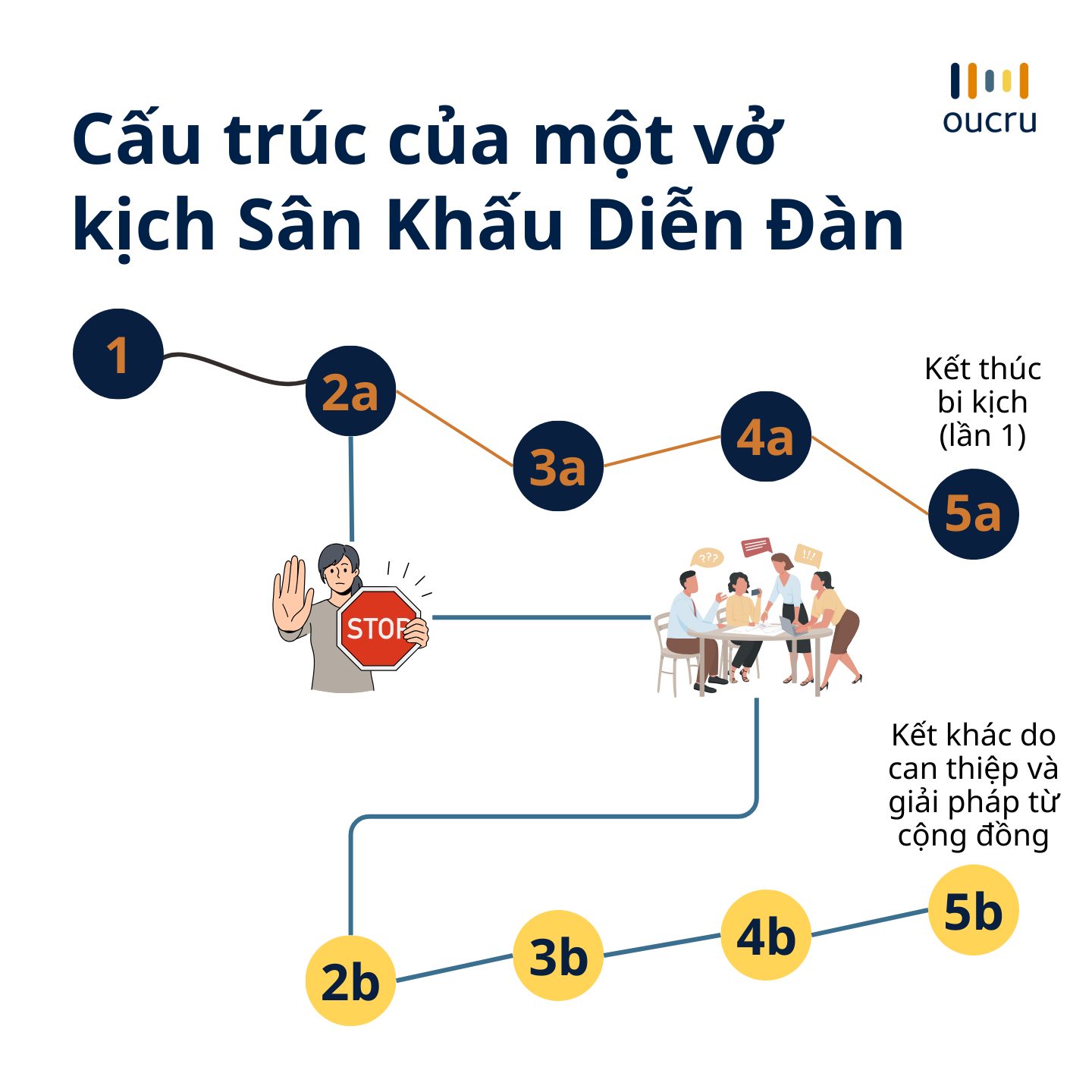
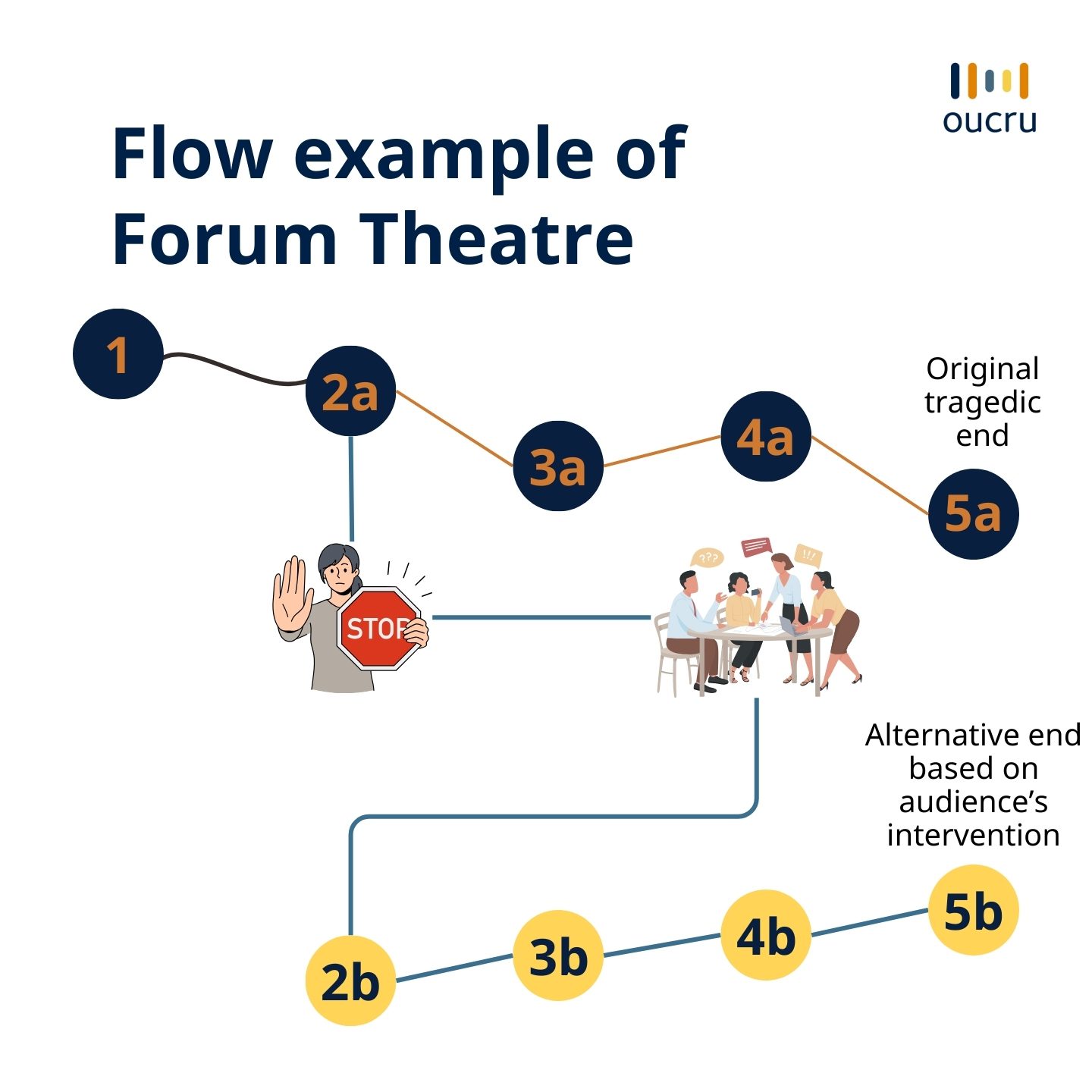
    Sân khấu Diễn đàn bắt đầu với phần biểu diễn ngắn như một vở kịch thông thường, để khán giả được nhìn thấy tình huống. Phần biểu diễn này thường sẽ có kết thúc bi thảm, tạo cơ hội để khán giả có thể thay đổi kết cục.

    Sau đó, người điều phối sẽ thông báo với khán giả vở kịch sẽ được diễn lại, nhưng lần này, họ (khán giả) có quyền can thiệp, đề xuất giải pháp để giải quyết các vấn đề đang xảy ra, từ đó tạo nên kết cục tốt đẹp.

    Vở kịch cũng có thể kết thúc với một tình huống chưa được giải quyết, mời gọi các thành viên khán giả bước vào và đề xuất giải pháp bằng cách thay thế nhân vật và diễn xuất các kịch bản thay thế.

    Sơ đồ cách thức một buổi sân khấu diễn đàn điển hình được thực hiện.

    Sân khấu diễn đàn giúp nâng cao sự tham gia của cộng đồng

    • Tham gia tích cá»±c: Không còn chỉ thụ động ngồi xem như vở kịch thông thường, các khán giả trở nên tích cá»±c hÆ¡n và cùng tham gia thảo luận để giải quyết vấn đề.
    • Trao quyền: Phương pháp này trao quyền cho những cá nhân yếu thế, nói lên những vấn đề họ Ä‘ang gặp phải, giúp họ có tiếng nói trong việc nêu lên giải pháp cho những thách thức trong cuá»™c sống thá»±c tế.
    • Giải quyết vấn đề: Khuyến khích các thành viên cá»™ng đồng làm việc cùng nhau để tìm ra giải pháp cho các vấn đề chung mà vở kịch đưa ra.
    • Không gian an toàn để thảo luận: Sân khấu diá»…n đàn tạo nên má»™t môi trường an toàn cho những người yếu thế, giúp họ cảm thấy thoải mái trong việc thảo luận về các vấn đề nhạy cảm hoặc gây tranh cãi vá»›i những khán giả khác.

    Sân khấu diễn đàn là hình thức truyền thông giúp nâng cao nhận thức hiệu quả

    • Kết nối cảm xúc: Khi người tham gia được đặt mình vào vị trí cá»§a các nhân vật khác nhau, họ sẽ có sá»± đồng cảm hÆ¡n.
    • Hình ảnh hóa vấn đề: Các vấn đề xã há»™i phức tạp được trình bày dưới dạng hữu hình, dá»… liên tưởng.
    • Phản biện tức thì: các giải pháp do khán giả (cá»™ng đồng) đề xuất sẽ được công chúng phản biện tức thì. Điều này vừa giúp nâng cao tư duy phản biện, vừa mang lại góc nhìn Ä‘a chiều cho giải pháp, giúp cá»™ng đồng tìm được giải pháp thá»±c tế nhất cho vấn đề cá»§a mình.
    • Khả năng tiếp cận: Kịch nói riêng và nghệ thuật nói chung phá vỡ rào cản ngôn ngữ và trình độ học vấn, giúp thông tin dá»… tiếp cận hÆ¡n vá»›i đối tượng khán giả Ä‘a dạng.

    Sân khấu diễn đàn và dự án Uốn uốn ván

    Từ một cuộc khảo sát nhanh về mức độ quan tâm đối với 10 bệnh truyền nhiễm phổ biến, uốn ván là bệnh ít được quan tâm thứ hai. Điều này dấy lên hồi chuông báo động về nhận thức đúng trong giới trẻ đối với căn bệnh nguy hiểm này, đặc biệt khi số ca uốn ván tại Việt Nam vẫn còn cao so với 20 năm trước.(1)

    Bên cạnh tính chất nguy hiểm, tá»· lệ tá»­ vong cao (25 – 90% ở trẻ sÆ¡ sinh(2)), chi phí Ä‘iều trị uốn ván rất cao. Tại Bệnh viện Bệnh Nhiệt Đới, chi phí Ä‘iều trị ước tính cá»§a má»™t ca uốn ván nặng và phức tạp có thể lên đến 200 triệu đồng.(3)

    Nhận thấy tầm quan trọng cần nâng cao nhận thức của công chúng về mức độ nguy hiểm của bệnh uốn ván và khuyến khích tiêm chủng, các Đại sứ Kết Nối Khoa học (YSAs) đã quyết định chọn sân khấu diễn đàn làm công cụ truyền thông giúp thu hút nhiều người trẻ hơn, cả trực tiếp và trực tuyến.

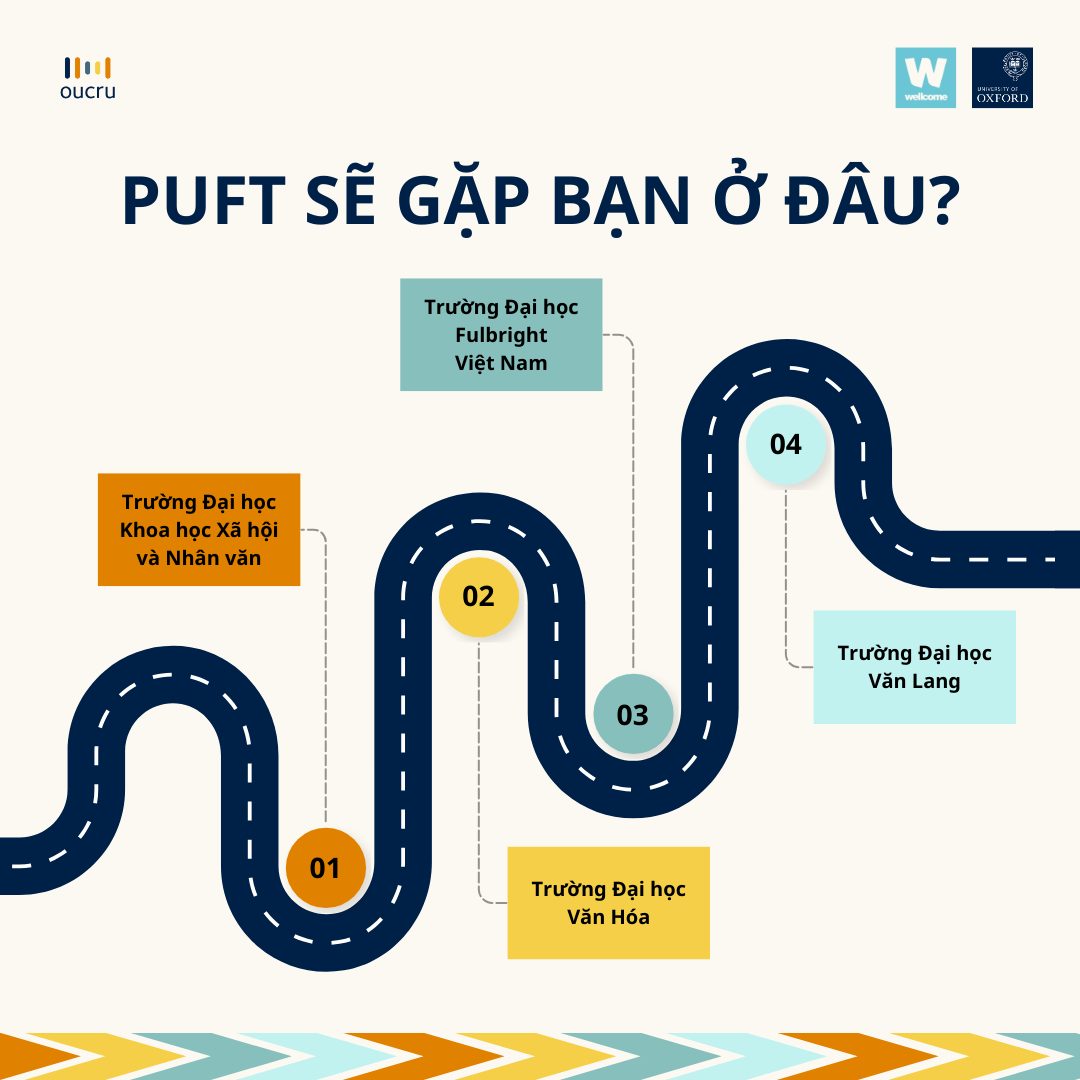
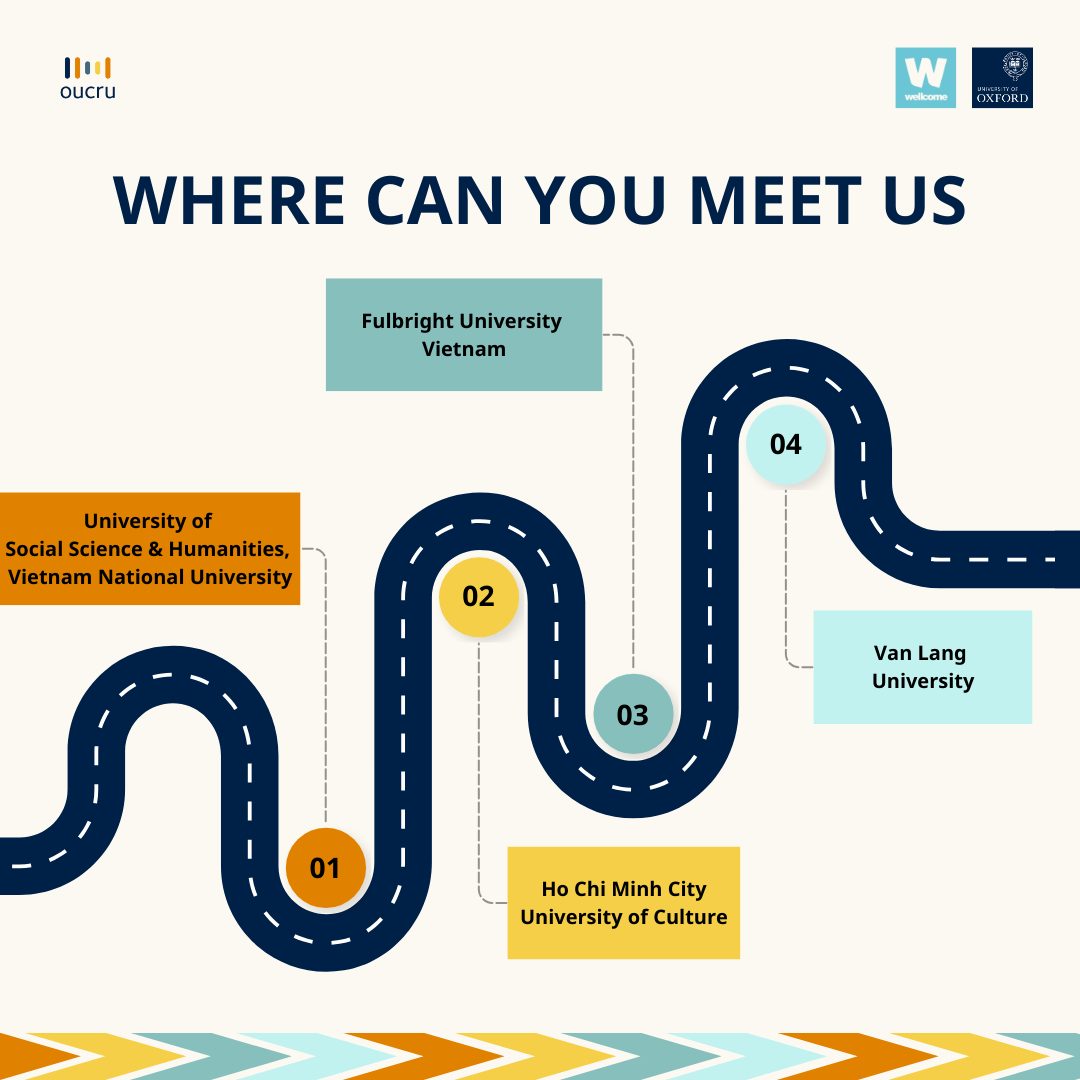
    Đoàn kịch Uốn Uốn Ván sẽ lưu diễn tại bốn trường đại học của TPHCM bao gồm ĐHKHXH&NV, ĐH Văn Hóa, ĐH Fulbright, và ĐH Văn Lang. Các bạn sinh viên tại bốn trường này đừng quên đến xem và thử tài biên kịch thay đổi kịch bản của mình nhé.

    Nếu bạn tò mò vở kịch Uốn Uốn Ván sẽ có những cái kết bất ngờ nào do cộng đồng can thiệp và đề xuất, cùng chờ đón xem và trải nghiệm phiên bản số hóa của vở kịch này của OUCRU trong thời gian sớm nhất!

    Tài liệu tham khảo:

    1. https://pmc.ncbi.nlm.nih.gov/articles/PMC5239717/
    2. https://www.qdnd.vn/y-te/cac-van-de/nguy-kich-vi-chu-quan-voi-vet-thuong-nho-788223
    3. https://bvbnd.vn/uon-van-de-phong-ngua-van-khien-nhieu-nguoi-dan-ong-tan-doi/
  • Forum Theatre: Exploring Community’s Power and Raising Awareness 

    Forum Theatre: Exploring Community’s Power and Raising Awareness 

    Forum Theatre, a branch of the so-called Theatre of the Oppressed, is an interactive and participatory form of theatre developed by Brazilian theatre practitioner Augusto Boal in the 1970s. This unique approach has the potential to explore a community’s voice and raise awareness by empowering people with a tool that encourages them to change reality through their own suggestions for real social issues. 

    How does Forum Theatre work? 

    A Forum Theatre performance will start with a conventional play for audience to witness the situation. Then the facilitator will inform the audience that the play will play again, but this time, they, now called spec-actors, have power to intervene and try to change the consequences. The play then continues with the directions suggested by the ‘spec-actors’. 

    The play may also end with an unresolved situation, inviting audience members to step in and propose solutions by replacing characters and acting out alternative scenarios. 

    See the chart below of how a typical forum theatre performance is conducted. 

    How Forum Theatre Enhances Community Engagement 

    • Active Participation: Audience members become “spect-actors,” actively participating in problem-solving rather than passively observing like in the conventional play. 
    • Empowerment: It empowers the marginalised individuals in the audience to address real-life challenges and voice in their opinions/suggested solutions. 
    • Problem-Solving: Encourages community members to work together in finding solutions to shared problems. 
    • Safe Space for Dialogue: Forum theatre potentially becomes a safe environment for ‘the oppressed’ to discuss the sensitive or controversal problems with other people who may share the same situations. 

    Why is Forum Theatre Suitable to Raising Awareness 

    • Emotional Connection: It creates empathy by allowing participants to step into the shoes of different characters. 
    • Visualisation of Issues: Complex social problems are presented in a tangible, relatable format. 
    • Immediate Feedback: Provides instant feedback on proposed solutions, fostering critical thinking. 
    • Accessibility: It breaks down barriers of language and literacy, making information accessible to diverse audiences. 

    Forum Theatre and Protect Us from Tetanus project 

    A recent survey on young people’s interest in learning about the top 10 infectious diseases revealed that tetanus ranks second to last. The result highlights a serious potential problem that needs addressing, given that many young people in Vietnam are not vaccinated against this dangerous disease.  

    Beyond its clinical dangers, tetanus can be really costly. At the Hospital for Tropical Diseases, the estimated treatment cost for 152 tetanus cases in the Intensive Care Unit (ICU) is 8.5 billion VND(*). 

    Recognising the need for public and community engagement activities to spread the dangers of tetanus and the importance of vaccination, the Youth Science Ambassadors (YSAs) have chosen forum theatre as their communication tool. They believe this interactive approach will effectively engage more young people, both in-person and online. 

    A completely unscripted play will tour four schools in Ho Chi Minh City (University of Social Sciences and Humanities  – HCMC National University, Ho Chi Minh University of Culture, Fulbright University, and Van Lang University), offering live, in-person performances.

    For those unable to attend these on-site sessions, the community-led scenarios will be digitalised and made available online. 

    Stay tuned to discover how we engage with our audience and to experience our first forum theatre play for yourself! 

  • Delegasi Wellcome Trust Berkunjung ke OUCRU Indonesia

    Delegasi Wellcome Trust Berkunjung ke OUCRU Indonesia

    Pada 14 Oktover 20245, delegasi Wellcome mengunjungi OUCRU Indonesia untuk memperdalam pemahaman tentang riset-riset OUCRU Indonesia, kerja samanya dengan berbagai mitra, dan inisiatif peningkatan kapasitasnya bagi ilmuwan lokal.

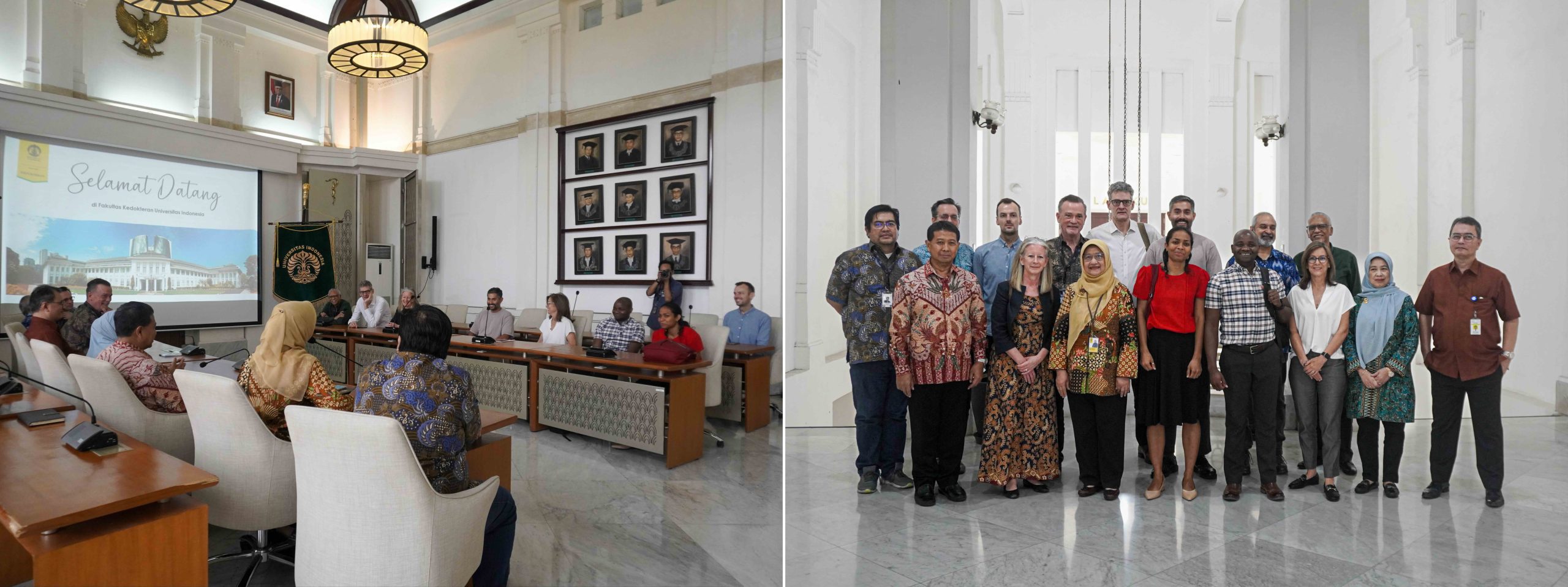
    Kunjungan dimulai dengan rapat dengan para pimpinan FK UI yang merupakan mitra utama OUCRU di Indonesia. Rapat tersebut utamanya membahas kolaborasi yang berlangsung antara OUCRU Indonesia dan FK UI dan cara-cara untuk memperkuatnya.

    Delegasi Wellcome bertemu dengan para pimpinan FK UI dan IMERI, yakni Wakil Dekan Bidang Sumber Daya, Ventura dan Administrasi Umum, Prof. Anis Karuniawati; Sekretaris Pimpinan Fakultas, Dr. Yuli Budiningsih; Manajer Kerja Sama, Ventura, dan Hubungan Alumni, Prof. Andon Hestiantoro; dan Direktur IMERI, Prof. Badriul Hegar Syarif.

    Setelahnya, delegasi Wellcome dibawa berkeliling kantor dan laboratorium OUCRU Indonesia untuk melihat langsung operasi unit riset ini. Tur ini kemudian diikuti dengan sesi presentasi untuk memberikan gambaran umum tentang empat program penelitian OUCRU Indonesia: Program Riset (1) Malaria, (2) Epidemiologi Geospasial, (3) Kesehatan Masyarakat & Genomik, dan (4) Penyakit Menular Klinis.

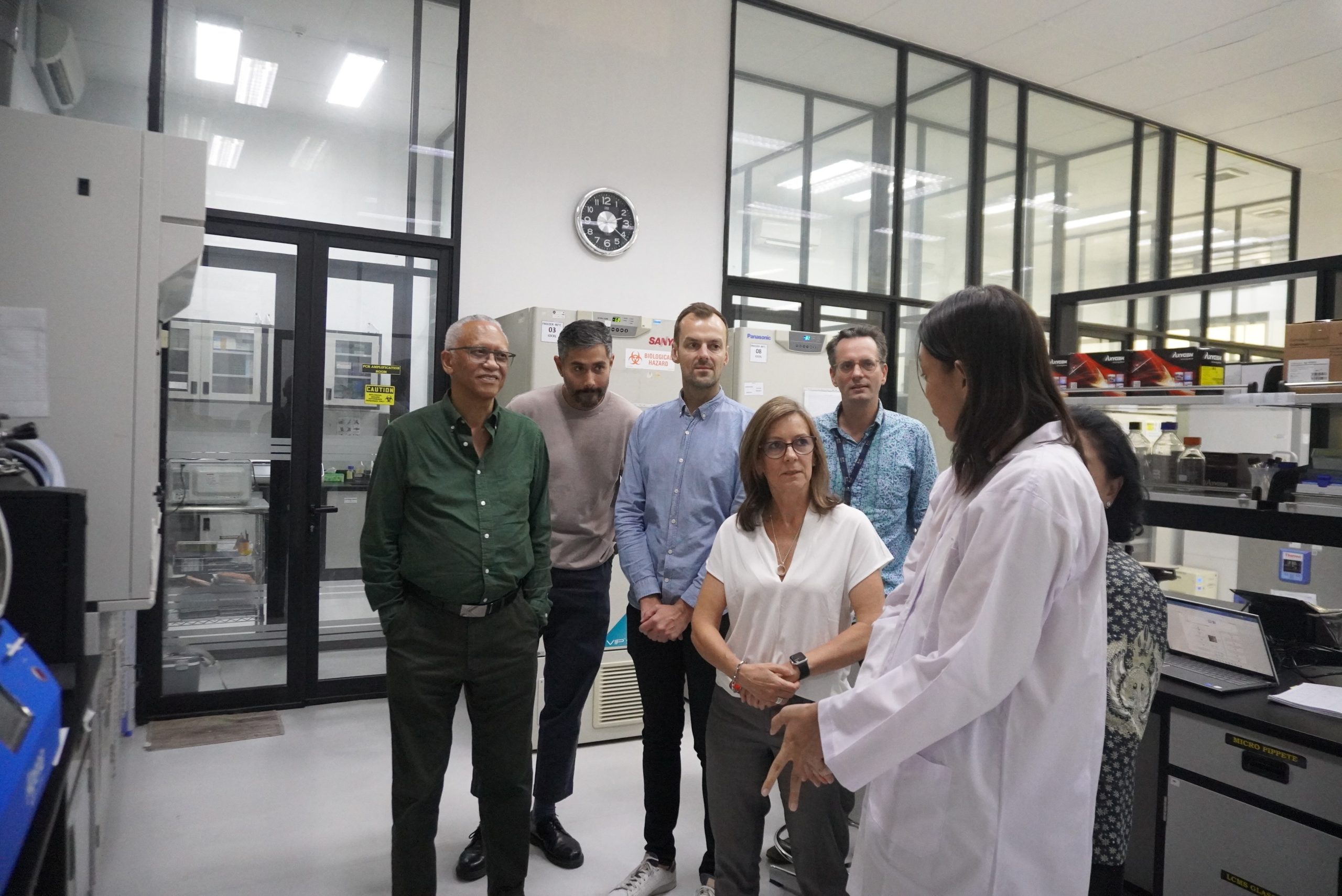
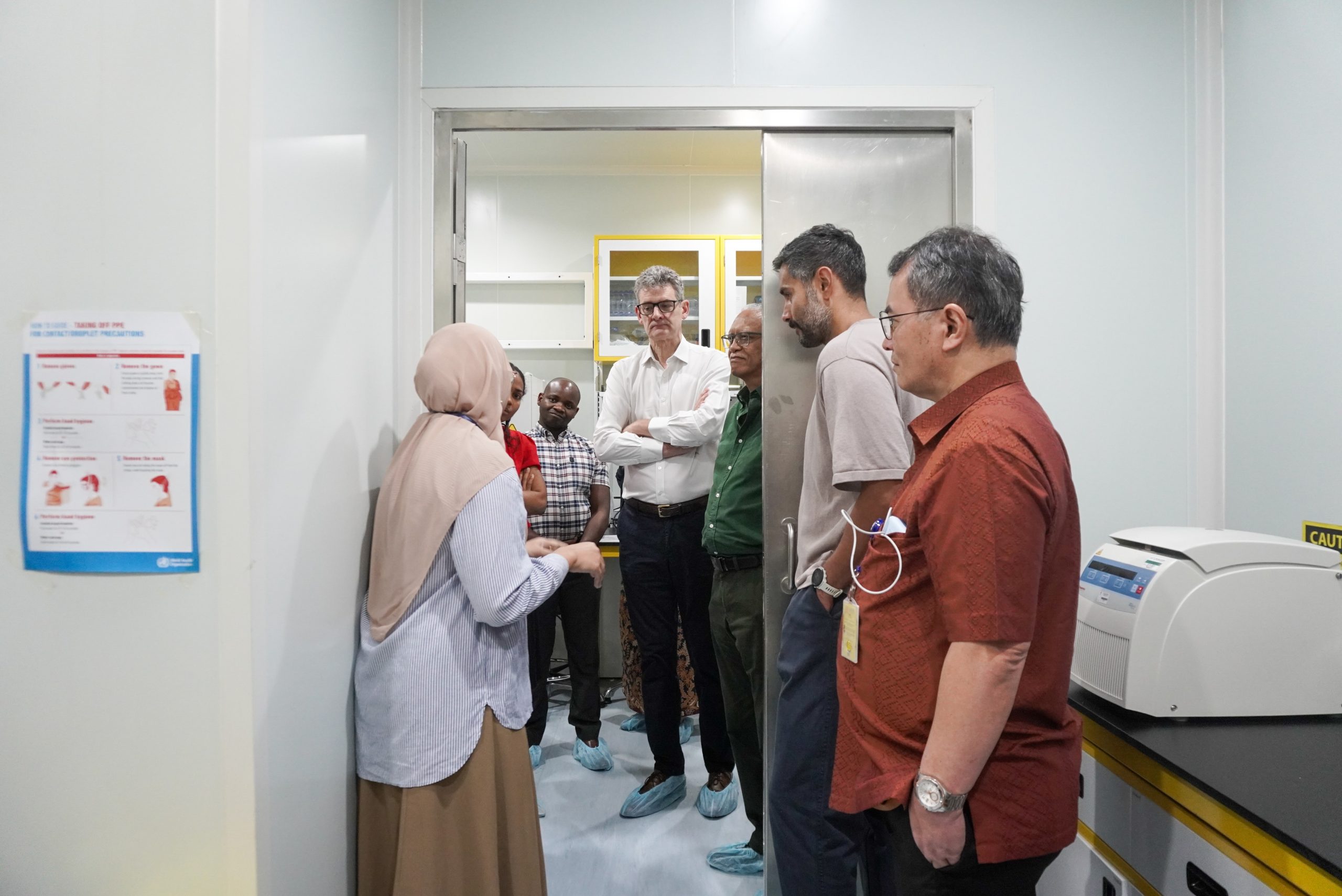
    Delegasi Wellcome mengelilingi laboratorium FK UI yang terletak di dalam gedung Indonesia Medical Education and Research Institute (IMERI).

    Para tamu Wellcome juga disuguhkan dengan Bazar Sains yang memberikan mereka kesempatan untuk berinteraksi langsung dengan para ilmuwan dan kolaborator OUCRU Indonesia. Bazar ini menyajikan dua belas poster ilmiah tentang penelitian-penelitian OUCRU Indonesia dan inisiatif-inisiatif kami dalam melibatkan publik dan komunitas.

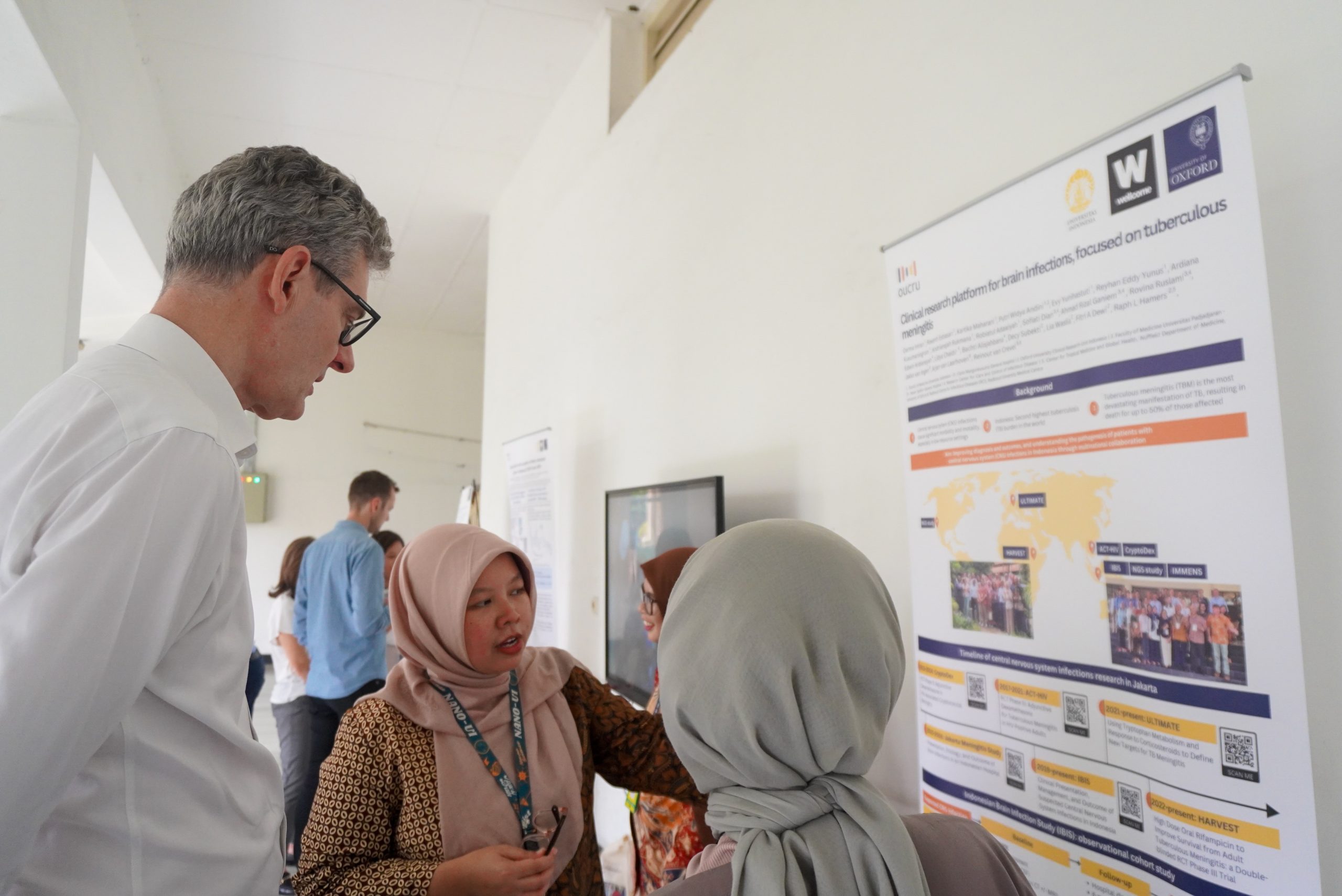
    Salah satu perwakilan Wellcome, Alex Pym, sedang mendiskusikan poster ilmiah tentang tuberkulosis meningitis dengan staf OUCRU Indonesia dan kolaborator saat Bazar Sains.

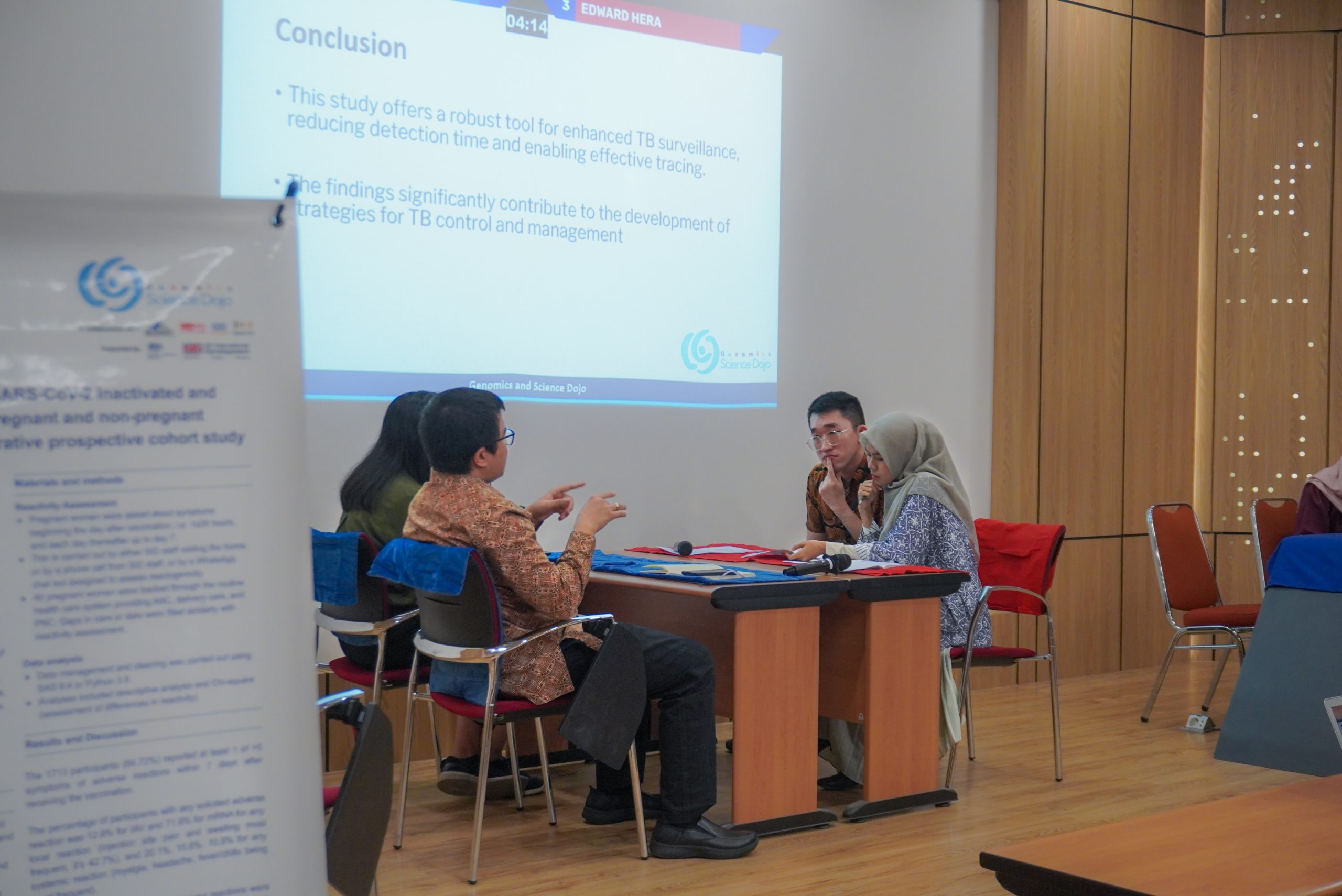
    Para tamu Wellcome juga sempat menyaksikan demonstrasi “Science Dojo” yakni debat ilmiah terstruktur yang dikembangkan bersama OUCRU Indonesia dengan dukungan dari British Council di Indonesia. Latihan debat dengan gaya ini didesain untuk mempertajam cara berpikir analitis serta kritis dan kemampuan komunikasi dengan tujuan membina generasi penerus peneliti Indonesia.

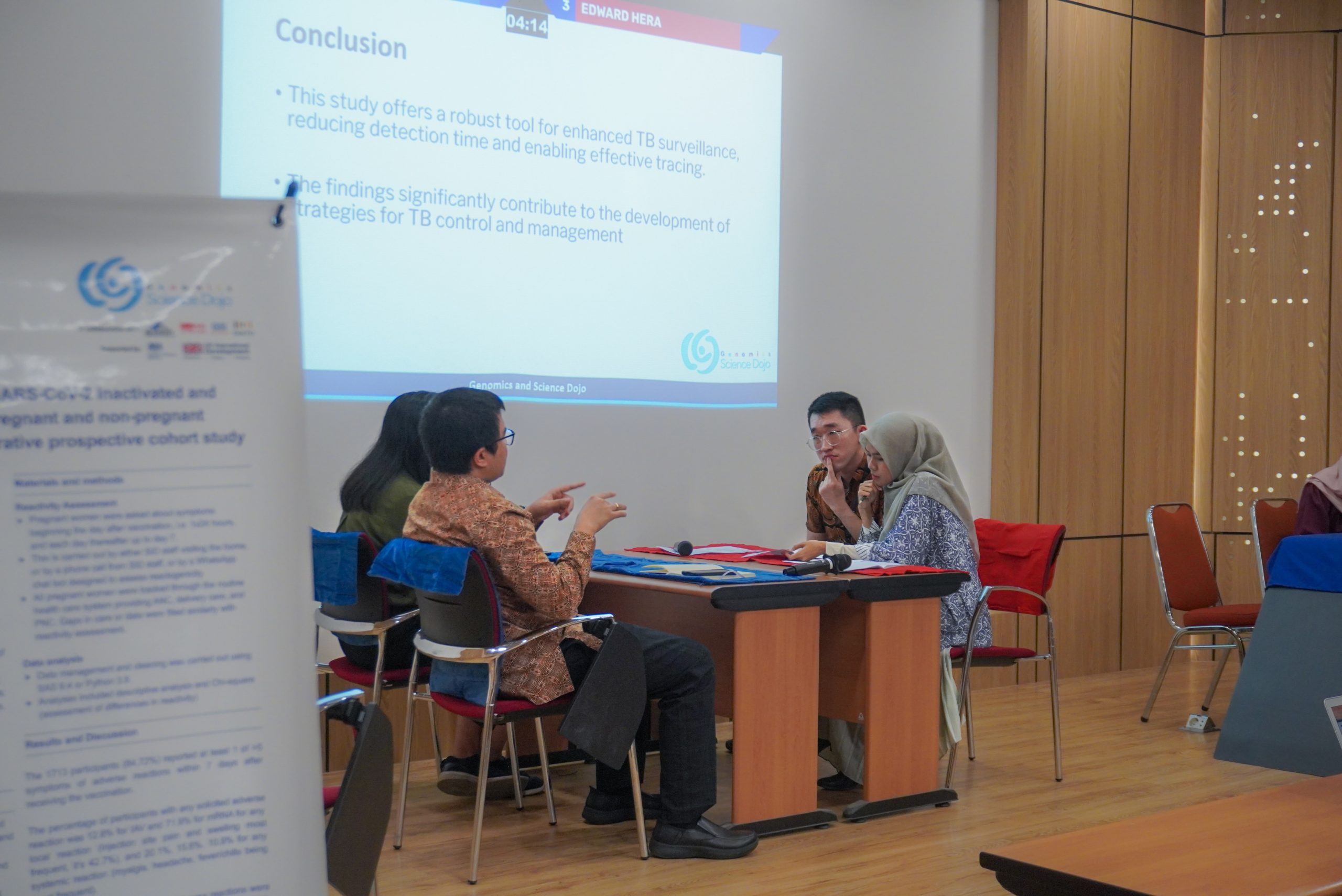
    Peragaan “Science Dojo” untuk Wellcome

    Para tamu Wellcome yang berkunjung adalah:

    • Julia Kemp, Head of Major International Programmes 
    • Stephen Gray, Senior Manager of Major International Programmes 
    • Alex Pym, Director of Infectious Diseases 
    • Sally Nicholas, Head of Health Systems and Environment 
    • Titus Divala, Research Lead Epidemics 
    • Jimmy Volmink, Chief Equity, Diversity, and Inclusion Officer 
    • Diego Baptista, Head of Research and Funding Equity 
    • Alethea Cope, Head of Translation 

    Kunjungan ini memberikan kesempatan OUCRU Indonesia untuk memperlihatkan kontribusinya terhadap penelitian kesehatan serta pengembangan kapasitas ilmuwan lokal dan memperkuat kolaborasi dengan Wellcome. Para delegasi Wellcome mengunjungi OUCRU Indonesia sebagai bagian dari partisipasi mereka dalam Major International Programmes Regional Annual Meeting 2024 yang diselenggarakan di Kota Ho Chi Minh, Vietnam, pada 16–18 Oktober.

  • Wellcome Trust Delegates Visit OUCRU Indonesia

    Wellcome Trust Delegates Visit OUCRU Indonesia

    On 14 October 2024, a delegation from Wellcome visited OUCRU Indonesia to deepen their understanding of the unit’s research, learn about its collaborations with various partners, and gain insights into its capacity-building initiatives for local researchers. 

    Wellcome delegates meet with FK UI faculty members: Vice Dean for Resources, Venture, and General Administration, Prof. Anis Karuniawati; Secretary to the Faculty, Dr. Yuli Budiningsih; Manager of Partnership, Venture, and Alumni Relations, Prof. Andon Hestiantoro; and Director of IMERI, Prof. Badriul Hegar Syarif. 

    The visit began with a meeting between the Wellcome delegates and key members of the Faculty of Medicine Universitas Indonesia (FMUI). The discussion centred around the ongoing collaboration between OUCRU and FMUI and ways to strengthen this partnership. 

    Following the meeting, the delegates were taken on a tour of OUCRU Indonesia’s workspaces and labs to give them a firsthand look at the unit’s operations. This was followed by a separate session offering an overview of OUCRU Indonesia’s four research programmes: Malaria, Geospatial Epidemiology, Community Health & Genomics, and Clinical Infectious Diseases Research Programmes. 

    Wellcome delegates tour FMUI’s laboratory inside the Indonesia Medical Education and Research Institute (IMERI) building.

    The visit also featured a Science Bazaar to provide Wellcome delegates the opportunity to interact directly with OUCRU Indonesia’s scientists and collaborators. The bazaar showcased 12 scientific posters highlighting research from OUCRU Indonesia’s four research programmes as well as our initiatives at public & community engagement. 

    Wellcome representative, Alex Pym, discussing one of the scientific posters presented in the Science Bazaar with OUCRU Indonesia’s staff and a collaborator.

    The Wellcome delegation also had the opportunity to observe a demonstration of “Science Dojo”—a structured debate-style exercise co-developed by OUCRU Indonesia with the support of the British Council in Indonesia. This exercise is designed to foster analytical and critical thinking and communications skills among scientists, with the goal of nurturing the next generation of Indonesian researchers. 

    A demonstration of Science Dojo held for Wellcome visitors.

    The visiting Wellcome delegates were: 

    • Julia Kemp, Head of Major International Programmes 
    • Stephen Gray, Senior Manager of Major International Programmes 
    • Alex Pym, Director of Infectious Diseases 
    • Sally Nicholas, Head of Health Systems and Environment 
    • Titus Divala, Research Lead Epidemics 
    • Jimmy Volmink, Chief Equity, Diversity, and Inclusion Officer 
    • Diego Baptista, Head of Research and Funding Equity 
    • Alethea Cope, Head of Translation 

    This visit was an opportunity to showcase OUCRU Indonesia’s contributions to health research and capacity building and strengthen collaboration with Wellcome. The delegates visited OUCRU Indonesia as part of their participation in the Major International Programmes Regional Annual Meeting 2024, hosted in Ho Chi Minh City, Vietnam, from October 16 to 18.