This year’s official theme, “It’s Time to Prioritise Mental Health in the Workplace,” once again emphasised the importance of mental health in professional settings. The global campaign aimed to advocate for improved mental healthcare systems and procedures in workplaces, ensuring employees feel their mental health is prioritised, protected, and promoted.(1)
Since 2016, OUCRU’s Public and Community Engagement (PCE) group has focused on supporting mental healthcare strategies and practical initiatives for healthcare workers. This focus came after alarming research findings by Dr Pham Ngoc Thanh and the PCE group at the Hospital for Tropical Diseases (HTD) revealed that 28% of healthcare workers had moderate to severe depression, and 38% had moderate to severe anxiety.
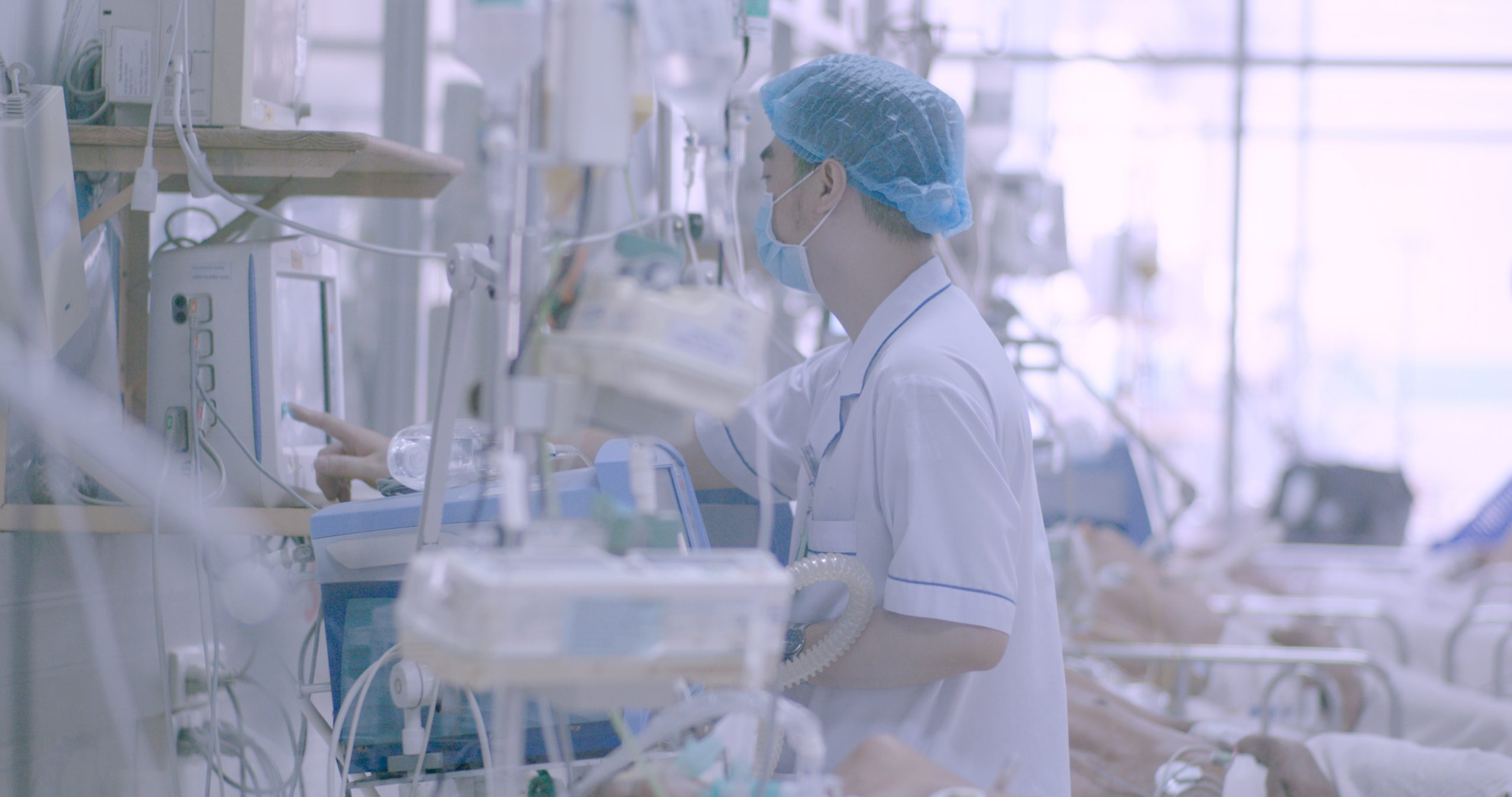
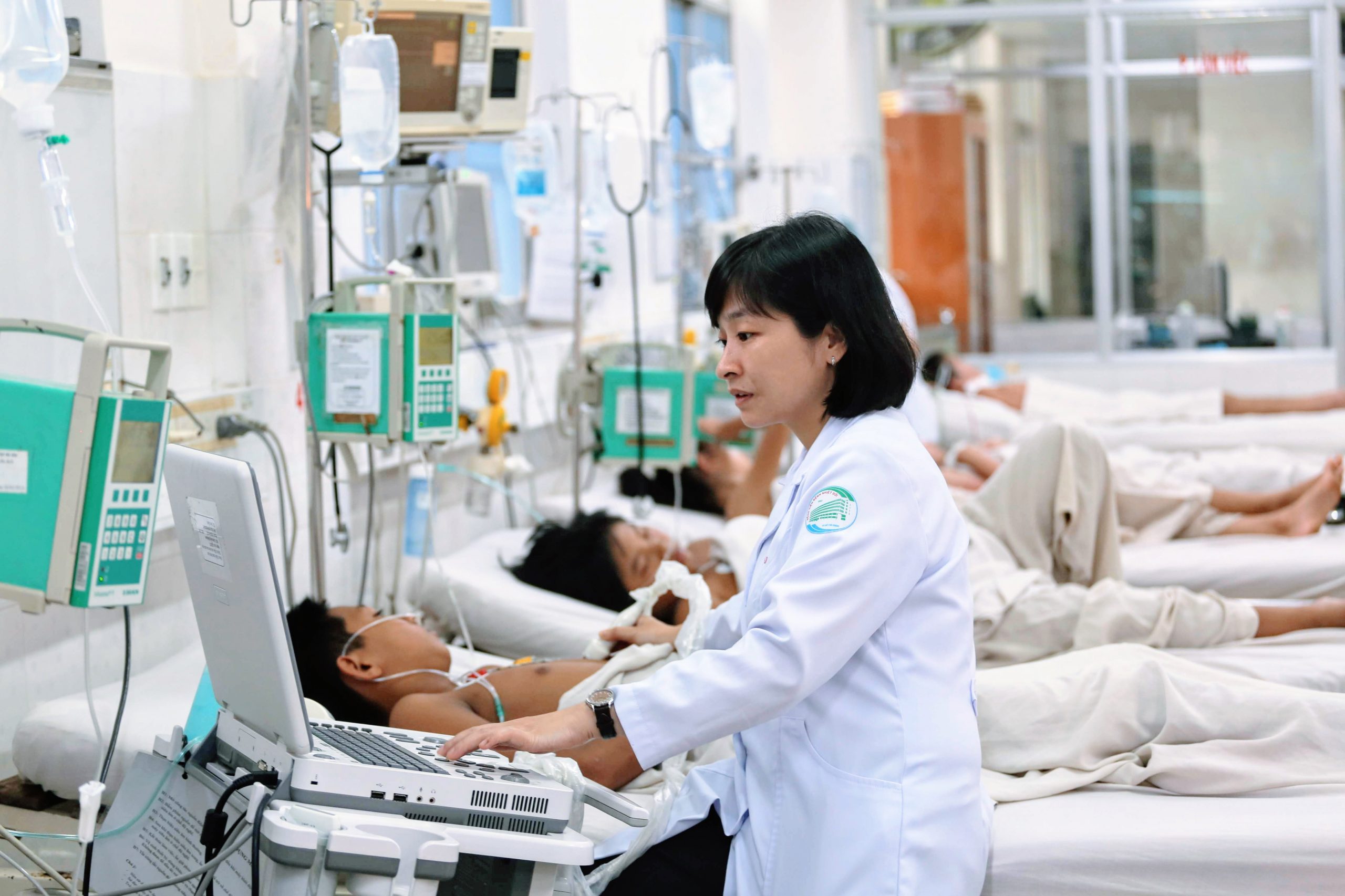
During health crises, the psychological challenges faced by healthcare workers are often overlooked.
In September 2024, Vietnam was hit by Yagi, the strongest typhoon in 30 years. As of September 27th, Yagi had directly and indirectly caused 334 deaths and missing persons, with 1,976 people injured and suffering from post-traumatic psychological effects.(2)
Research by Mao et al. in 2018 found that witnessing firsthand destruction and loss of life in natural disasters and health crises can be traumatic. Among affected communities, the psychological challenges faced by healthcare workers—especially those involved in rescue efforts or stationed in affected areas—often go unnoticed.(3)
Supporting healthcare workers in health settings and research is one of the important focus of OUCRU’s PCE group’s activities.
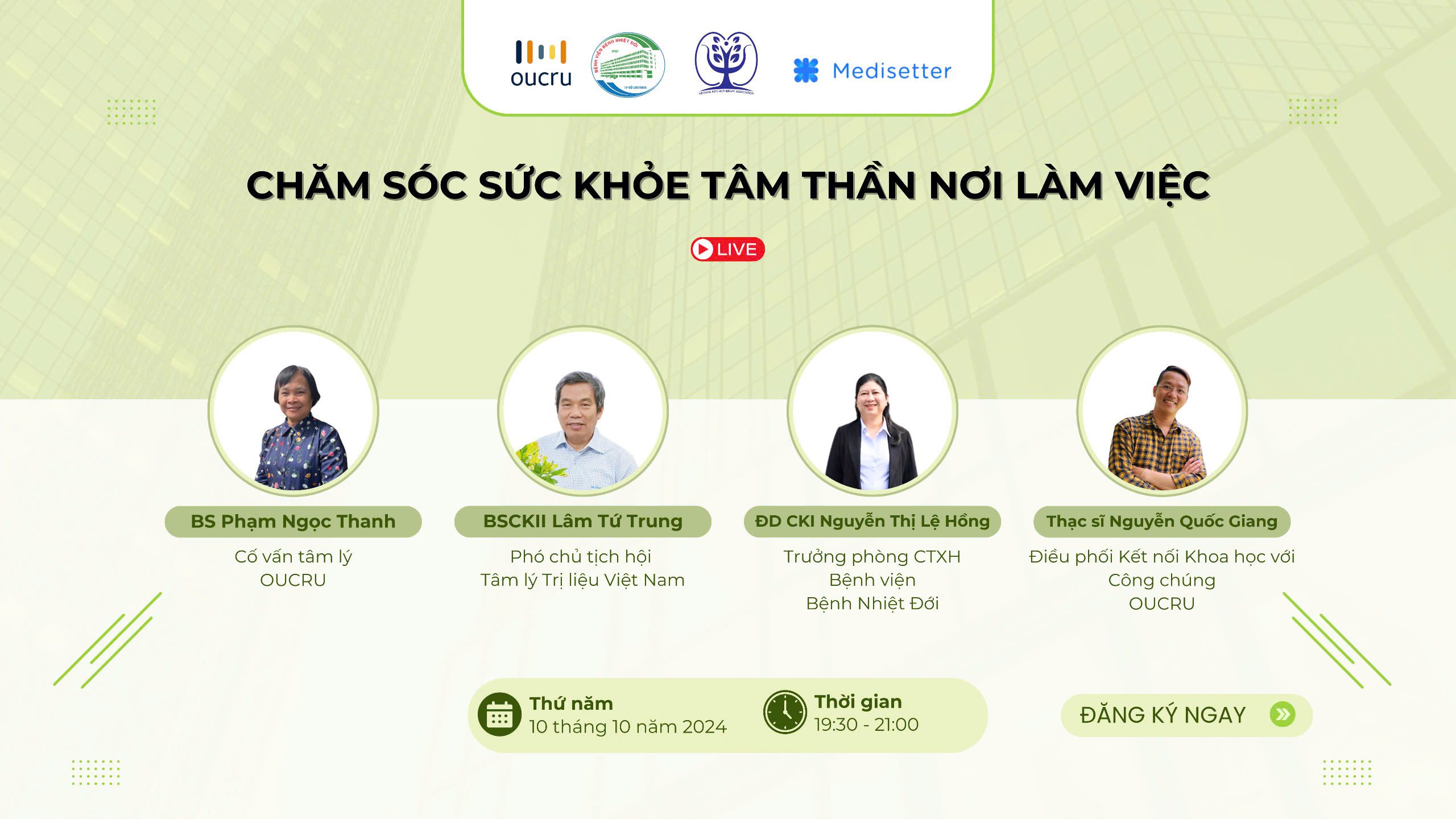
In line with the global theme and in partnership with the HTD, Vietnam Psychotherapy Association (VnPA), and Medisetter, OUCRU’s PCE group co-organised a webinar focuses on providing psychological first aid, raising awareness about mental health during and after disasters, and discussing strategies for mental health preparedness in future crises. It also offered practical coping methods for healthcare workers and researchers in affected areas.
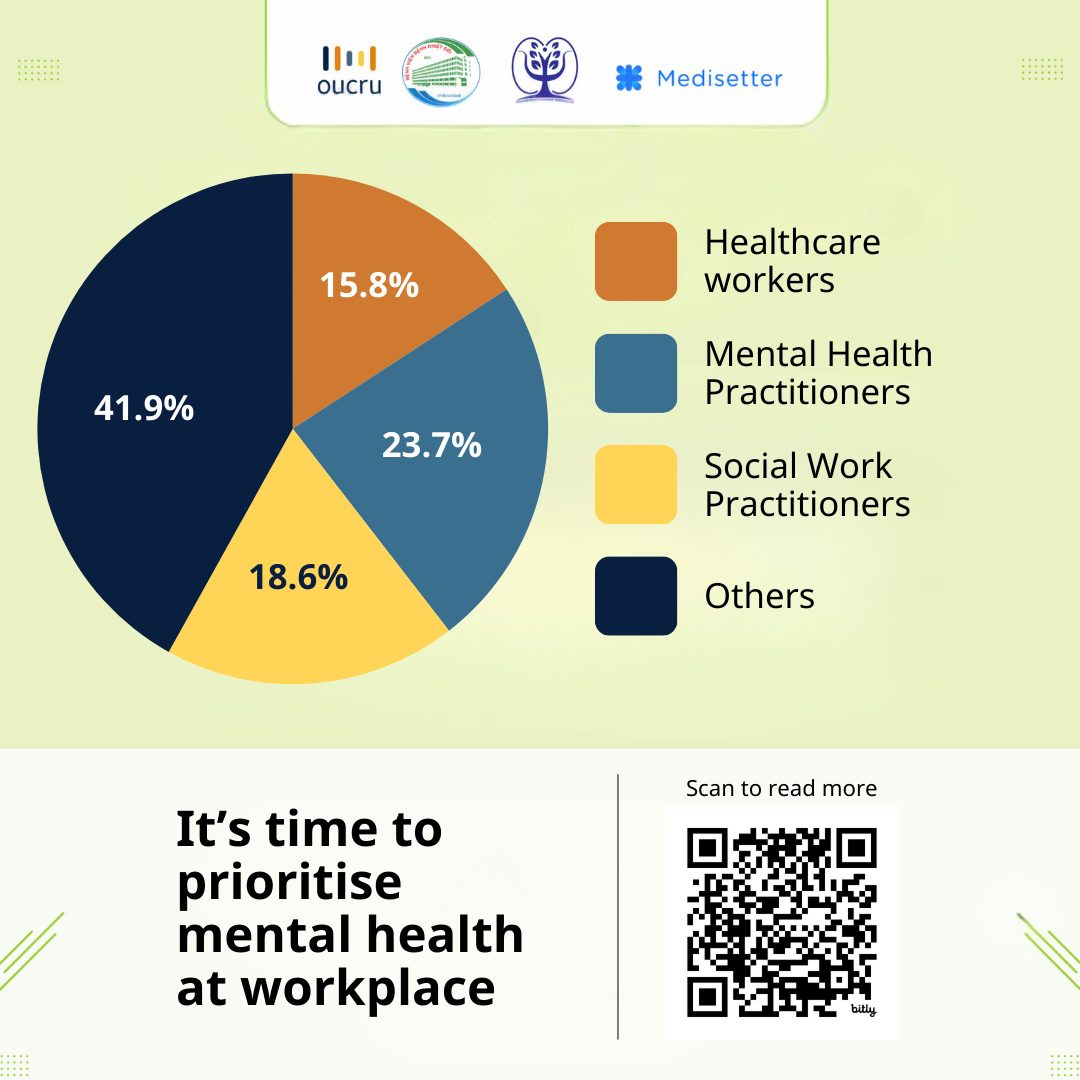
The webinar attracted almost 250 participants from several sectors, including healthcare workers, psychological professionals and students, and social workers.
The webinar attracted several practitioners from relevant industries.
The discussions at the webinar were be led by 3 esteemed speakers:
Dr. Pham Ngoc Thanh, Psychological Advisor at OUCRU, led the discussion on psychological first aid for healthcare workers and researchers during and after disasters, as well as preparation for future crises.
Dr. Lam Tu Trung, Vice Head of VnPA, highlighted the practical aspects of applying mental health support in healthcare settings and suggested strategies to address potential challenges.
Ms. Nguyen Thi Le Hong, Head of Social Work Division at HTD, focused on the actual mental healthcare needs of healthcare workers and discussed initiatives her hospital has implemented to support them.
The webinar was conducted online via Zoom and livestreamed on YouTube. [Full recorded video will be available soon].
In honour of World Mental Health Day, OUCRU’s Public and Community Engagement group, in partnership with the Hospital for Tropical Diseases (HTD), Vietnam Psychotherapy Association (VnPA), and Medisetter, will host a webinar on “Mental Health in the Workplace.” The webinar will focus on providing psychological first aid, raising awareness about mental health during and after disasters, and discussing strategies for mental health preparedness in future crises. This webinar also aims to equip healthcare workers and researchers in the affected areas with practical coping strategies.Â
When: 19h – 21h on October 10th, 2024 (World Mental Health Day)Â
Where: Via Zoom and YouTube Live (Link will be provided before the event via email to registered participants)
Last month, Yagi, the strongest typhoon in 30 years, hit Vietnam. As of September 27th, Yagi had directly and indirectly caused 334 deaths and missing people, with 1,976 people injured and suffering from post-traumatic psychological effects.(1)Â
Among communities affected by disasters like Yagi, the short- and long-term psychological challenges faced by healthcare workers, especially who participated in rescue efforts or stayed in the affected areas, often go unnoticed.
A research by Mao et al. in 2018 found out that in the immediate aftermath, witnessing firsthand the destruction and loss of life caused by such devastating events can be traumatic. An example is that 40.5% of emergency rescue workers exposed to the United Airlines DC-10 crash developed acute stress disorder, with younger workers being more susceptible (Fullerton et al., 2004).
In the long term, rescue workers are at an increased risk of developing post-traumatic stress disorder (PTSD), depression, and anxiety (Mao et al., 2018). A study by Smith and Burkle reported that 79.6% of EMS providers who responded to the 9/11 attack reported PTSD symptoms, with some still experiencing feelings of guilt, anxiety, and nightmares 15 years later (Smith and Burkle, 2019).
Healthcare professionals may also face practical difficulties due to limited access to medical equipment, dangerous and unstable working environment, as well as other potential additional physical and psychological risks; which further intensify the psychological burden they face.
However, there are several challenges need to address when considering how to support the mental health of healthcare workers.
A key issue is the lack of resources and support systems specifically tailoured to address the mental health needs of this workforce. Dr Pham Ngoc Thanh, OUCRU’s Pubic and Community Engagement’s Psychological Advisor, will shed light on this issue and provide psychological first aid strategies to help health professionals to cope with and prepare for mental distress themselves as well as help people suffering an extremely distress event.Â
How health organisations can better support their staff’s mental health, both now and during crises is important yet needs to be practical. Dr. Lam Tu Trung, Vice Head of the Vietnam Psychotherapist Association will share his experience and identify potential relevant issues and practical solutions of implementing mental health interventions tailored for healthcare workers.Â
Addressing the stigma associated with seeking mental health support and emphasising the importance of support from organizations are essential to create an environment where healthcare workers feel encouraged (not embarrased) to seek help. Ms. Nguyen Thi Le Hong, Head of the Social Work Division at HTD, will discuss mental healthcare needs among healthcare workers and share activities implemented by her department.Â
Participants can also benefit from meaningful discussions, experience sharing sessions, as well as practical tools and techniques for managing stress, anxiety, and burnout in high-pressure situations during disasters and health crises.
Registration is free and open to all healthcare workers, researchers, and interested parties.Â
For any questions or further information, please contact us via our official communication channels, including our website, social media accounts, or email at publicengagement@oucru.org.
Your research on end-of-life care in Vietnam is relatively new. What inspired you to focus on this area?
My interest in end-of-life care stems from my experience working on the VITAL Project at OUCRU. This project focuses on technical innovation for intensive care units (ICUs) in Vietnamese hospitals.
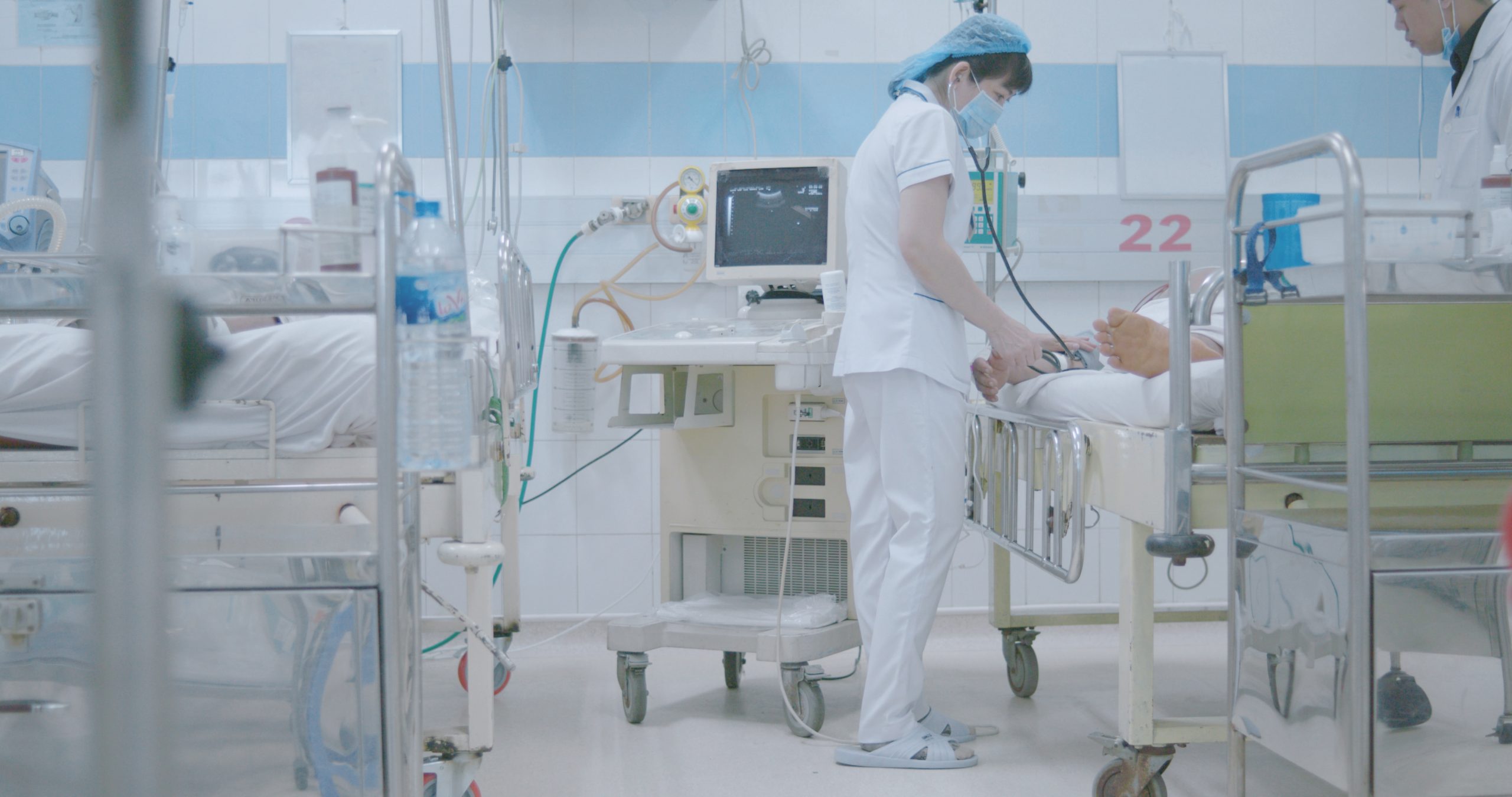
The COVID-19 pandemic exposed critical gaps in Vietnam’s healthcare system, particularly in end-of-life care. Working in the ICU during this time, I witnessed firsthand the immense challenges faced by patients, families and healthcare providers as patients approached the end of their lives.
The emotional toll and lack of adequate resources deeply affected me, inspiring me to pursue research in this area.
How do cultural beliefs influence end-of-life decisions in Vietnam?
Vietnamese culture has distinct beliefs and practices around death and dying. One significant tradition is keeping loved ones at home as they are nearing the end. This is perceived as a “good death”, in contrast to passing away alone in the hospital. Even if it means travelling far or spending a lot, families will try to bring their loved ones home for their final moments.
Another thing is that many Vietnamese prefer a peaceful death without invasive interventions.
These beliefs can create challenges for healthcare providers who must balance the patient’s medical needs with their family’s cultural preferences.
What are some of the most significant challenges faced by patients and families?
Patients and families often struggle with financial burdens, emotional distress, and decision-making related to end-of-life care. Even with health insurance, the costs of hospitalisation, medications, and specialised care at the ICUs can be expensive.
Families of very ill patients may face a difficult choice: extending costly treatments with uncertain outcomes or choosing palliative care, which focuses on comfort and quality of life.
If families choose to care for their loved ones at home, they also face financial barriers. Currently, there is no government support or insurance for home-based palliative care. Once a patient is discharged from the hospital, the family is responsible for all medical costs. This can make it difficult to decide whether to continue treatment or opt for palliative care.
What challenges do healthcare providers face in ICUs in Vietnam?
Healthcare providers in ICUs face a lot of challenges. They may not have enough resources or training to handle end-of-life care, and sometimes, cultural or religious differences can make things even more difficult.
Doctors might know a lot about medicine, but they lack the specialised knowledge in ethics required to guide patients through complex end-of-life decisions. In other countries, an ethical counsellor often works with doctors and patients to make these decisions together.
Caring for patients nearing the end of their lives can be emotionally taxing for frontline workers. The constant exposure to death and suffering, and limited support systems, have led to a surge in burnout and emotional distress among medical staff, especially during COVID-19.Â
What are some of the potential solutions to address these challenges?
One thing we can do is advocate for policies that support home-based palliative care. This would make it easier for families to care for their loved ones in a comfortable and familiar setting, while also reducing financial burdens.
Another approach is to provide alternative services, such as hospice or community-based centres that offer professional palliative care. These centres can help patients manage symptoms, improve quality of life, and make informed decisions about their care.
Within the healthcare system, we can provide frontline workers with training in end-of-life care, including ethics and communication skills, to help them better navigate complex situations and provide compassionate care.
What role can research play in improving end-of-life care in Vietnam?
Research is vital for improving end-of-life care. As a relatively new field, there is a significant lack of research in this area. We need to learn more about the specific needs of patients and families to develop better programmes and policies to enhance their experience.
Furthermore, I believe that research can raise awareness of the importance of end-of-life care and encourage more compassionate and supportive approaches.
What are some of the challenges you’ve faced in conducting your research?
The taboo nature of death and dying in Vietnam makes data collection quite challenging. It can be difficult to discuss these topics openly with grieving families, especially those who have recently lost a loved one. Moreover, end-of-life care is quite new, so there is limited existing research or data to draw from.
However, I am quite ready to rise above these challenges. I have received guidance from my supervisor, who is an experienced medical anthropologist, to have a better approach to this matter. The Public and Community Engagement department at OUCRU has also expressed interest in this field, promising to foster stronger cross-departmental collaboration and potentially expand the scope of our research.
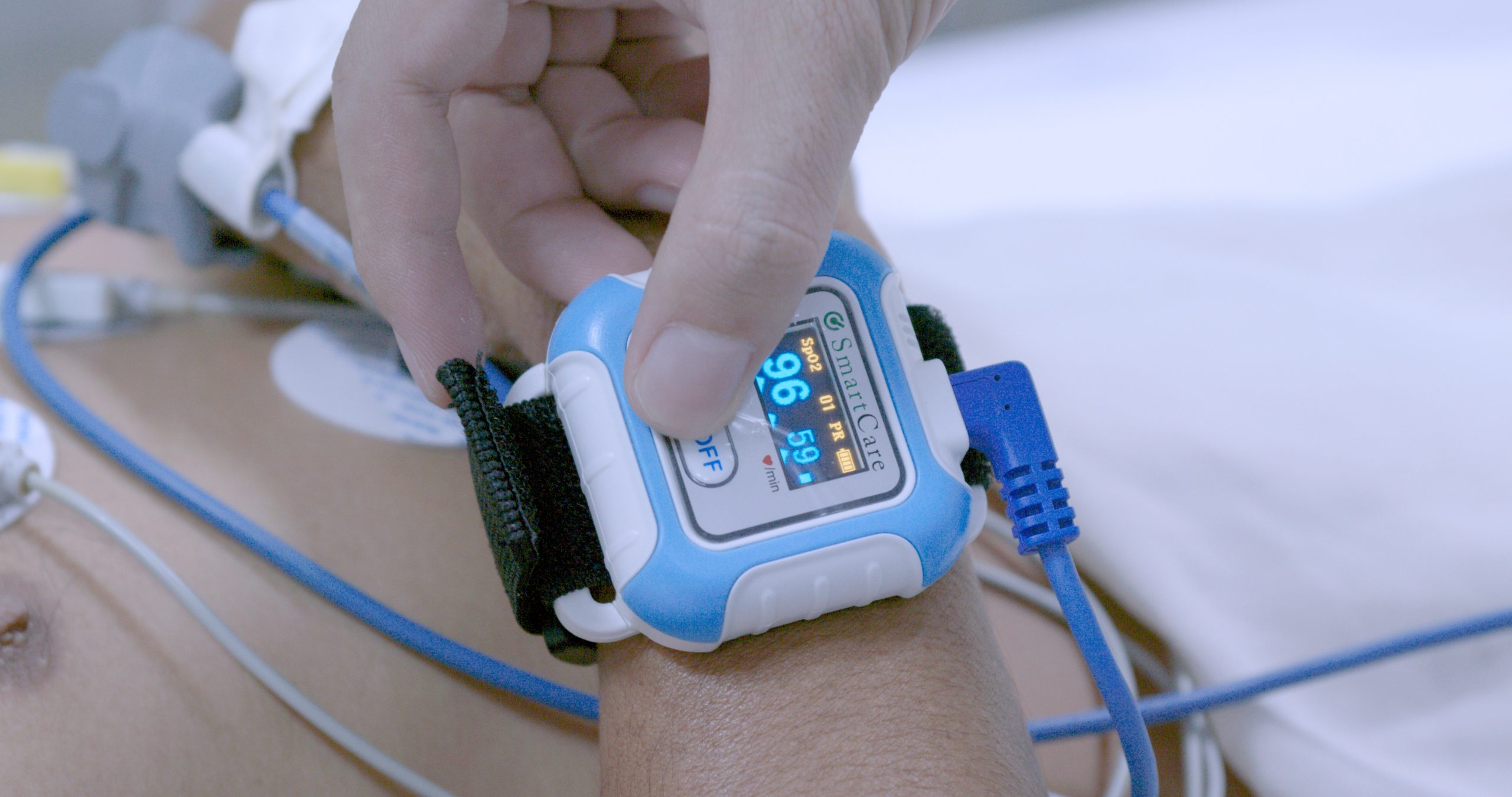
In the future, I envision that the application of affordable vital sign monitoring devices, developed by the VITAL Project, in home and community-based settings can enhance end-of-life care and collect better data.Â
Have you observed any recent trends in societal perceptions of death in Vietnam?Â
Yes, there have been some notable changes. In urban areas, with more people living in apartments or renting houses, there is a growing trend of holding ceremonies in funeral parlours rather than at home. This is a departure from the traditional practice.
There is also a changing perception of death among young people. Death is no longer seen solely as a negative event. More people are becoming organ donors, which reflects a more positive outlook on death and a desire to contribute to society even after passing away.
What is your future in this area of research?
I am very passionate about improving end-of-life care in Vietnam. In October, I will start my PhD training at the University of Oxford under the OUCRU Prize Studentship. There, I seek to learn best practices for alternative care in Western settings, participate in professional networks and learn from leading experts in the field.
As part of my research, I aim to establish a pilot community-based centre for end-of-life care in Vietnam. This will help me gather more data about the costs and challenges of end-of-life care, providing valuable insights for evidence-based advocacy to improve the healthcare system.
By understanding challenges and opportunities, we can provide more informed care to patients and equip medical staff with the necessary skills to counsel patients and families effectively.
Luu Phuoc An is one of the outstanding researchers to receive the OUCRU Prize Studentship 2023 to pursue a doctoral programme at the Nuffield Department of Medicine, University of Oxford, United Kingdom.
Learn more about OUCRU PhD training programme: www.oucru.org/phd-programme
MODRA memilih kelompok peserta pertamanya, terdiri dari 15 peneliti pascadoktoral berbakat, pada Juli 2024 lalu. Seleksi tersebut merupakan awal dari program berdurasi 18 bulan yang dirancang untuk membekali para ilmuwan awal karier dengan keterampilan penting untuk menjadi ilmuwan kesehatan yang sukses.
Lokakarya MODRA pertama, diadakan di Bangkok pada September 2024, menawarkan kurikulum pelatihan yang meliputi topik-topik seputar mencari ide riset, menulis proposal, merancang anggaran, dan berjejaring. Pelatihan ini menghadirkan jajaran fasilitator terkemuka, yaitu:
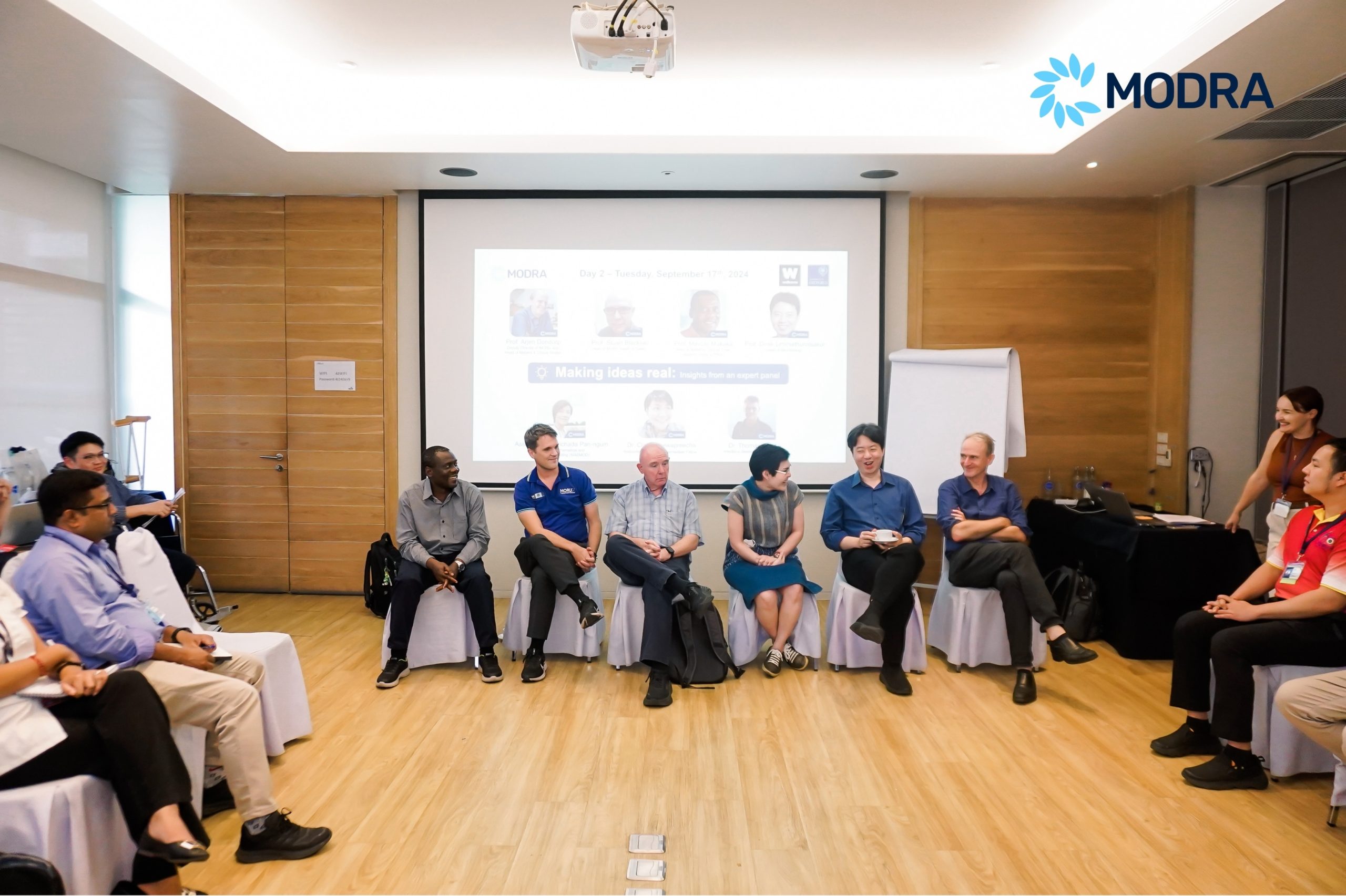
Kami juga turut mengundang panel terhormat yang terdiri dari para peneliti MORU untuk berbagi pengalaman dan saran mereka tentang meniti karier dari peneliti pascadoktoral hingga menjadi pemimpin riset independen.
Prof Mavuto Mukaka (Head of Statistics, Clinical Trials Support Group, MORU)
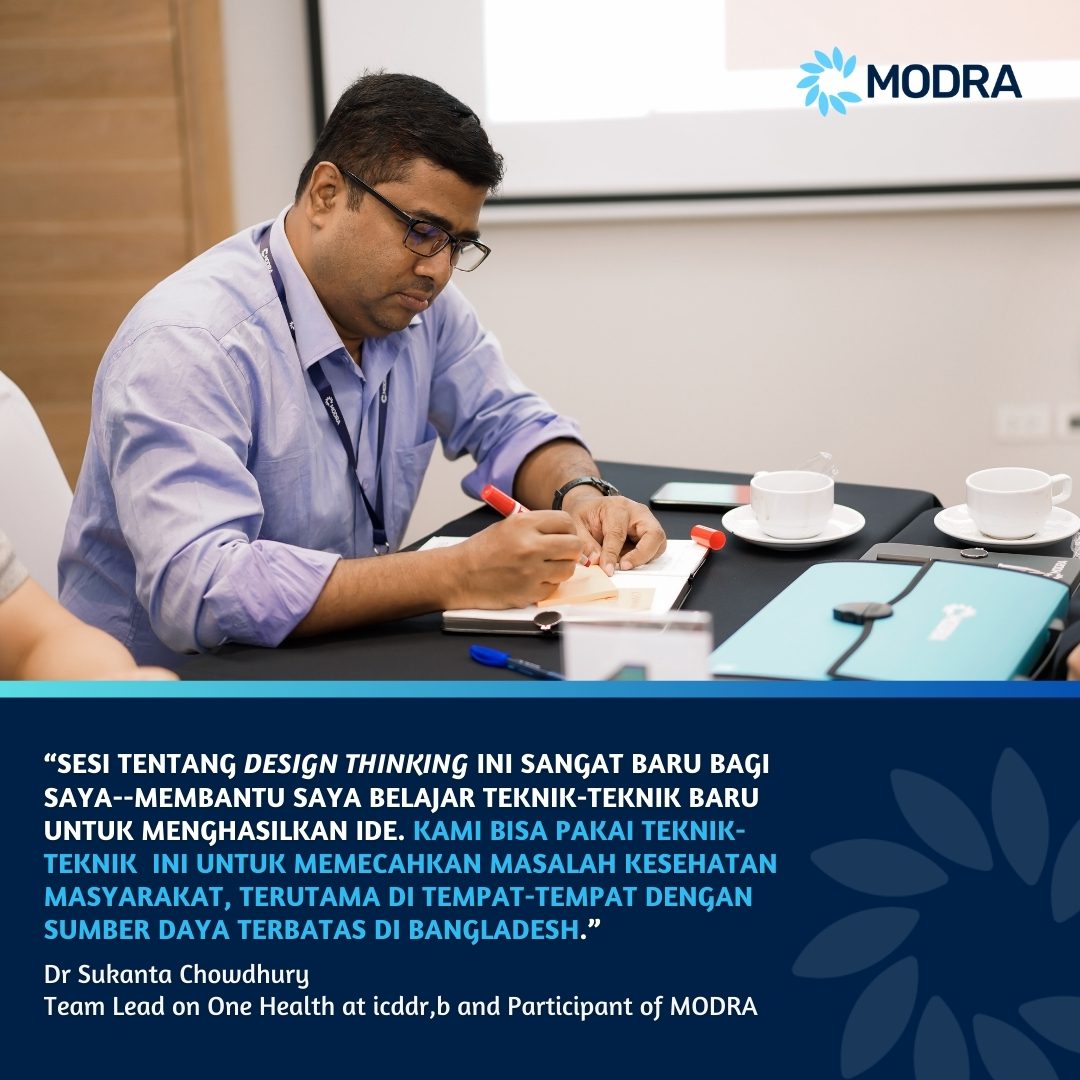
Salah satu sesi dalam lokakarya ini adalah pengenalan ‘Design Thinking’. Metode pemecahan masalah ini mendorong para peneliti untuk menjawab tantangan kesehatan yang kompleks dengan solusi kreatif.
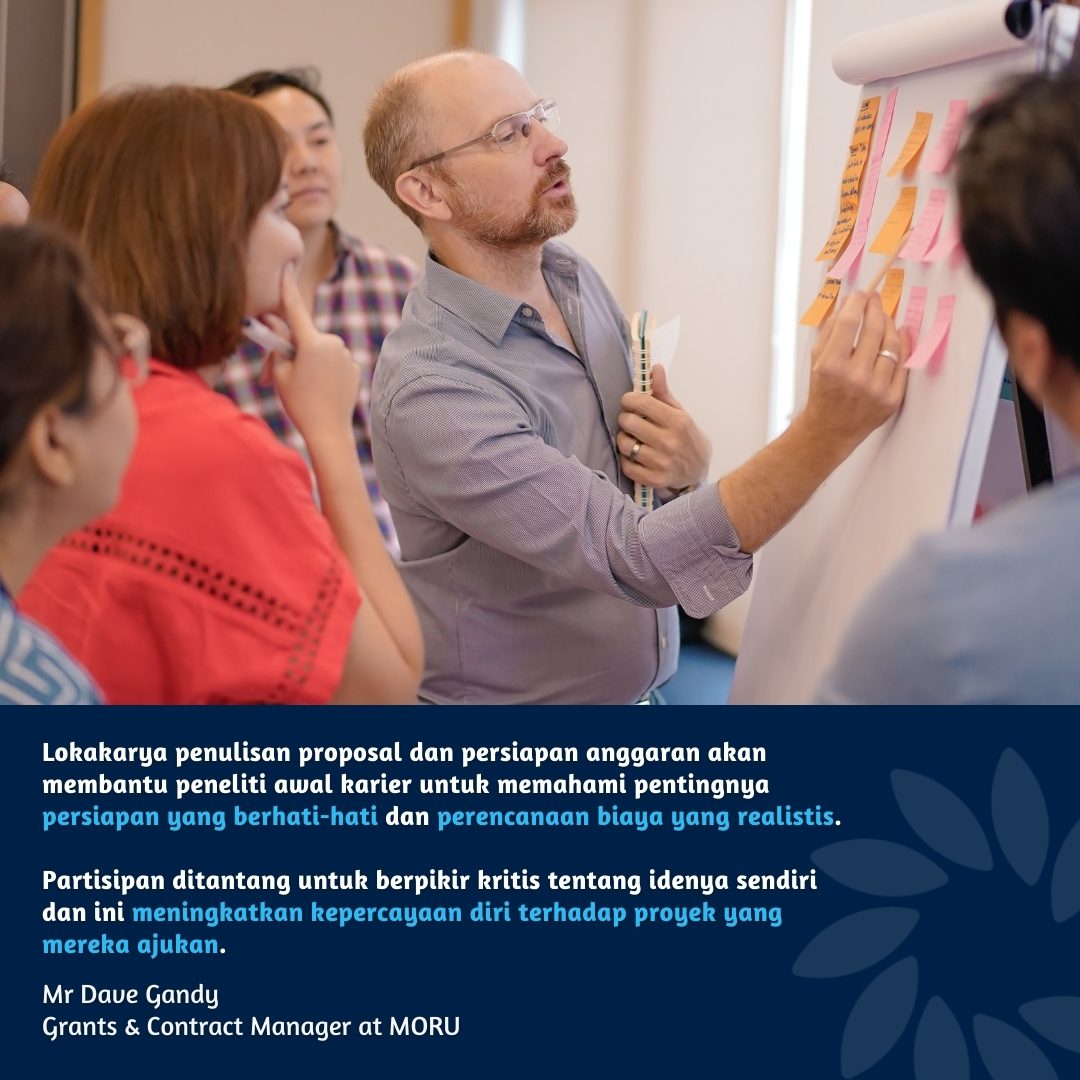
Tujuan utama lain MODRA adalah memberdayakan peserta agar lebih mampu berkompetisi untuk memenangkan dan hibah internasional. Para peserta dibekali dengan keterampilan penting, mis. penulisan proposal dan penyiapan anggaran, yang memungkinkan mereka untuk menuangkan ide penelitian ke dalam proposal ilmiah yang konkret.
Proyek-proyek yang menjanjikan berkesempatan untuk mendapatkan MODRA Seed Award dengan nilai hingga USD30.000. Dana ini mendukung pelaksanaan ide-ide penelitian, memberikan peluang unik bagi ilmuwan awal atau tengah karier untuk mendapatkan pengalaman langsung dalam memimpin seluruh siklus penelitian.
Dr Leigh Jones, Academic Training Leader at OUCRU MORU and Director of MODRA, mencatat, “Banyak peneliti muda berkesulitan memulai penelitian mereka, seringkali karena kurangnya pengalaman dalam mengajukan hibah. MODRA akan mempersiapkan mereka untuk meraih dana hibah yang kompetitif, baik internasional maupun lokal.”
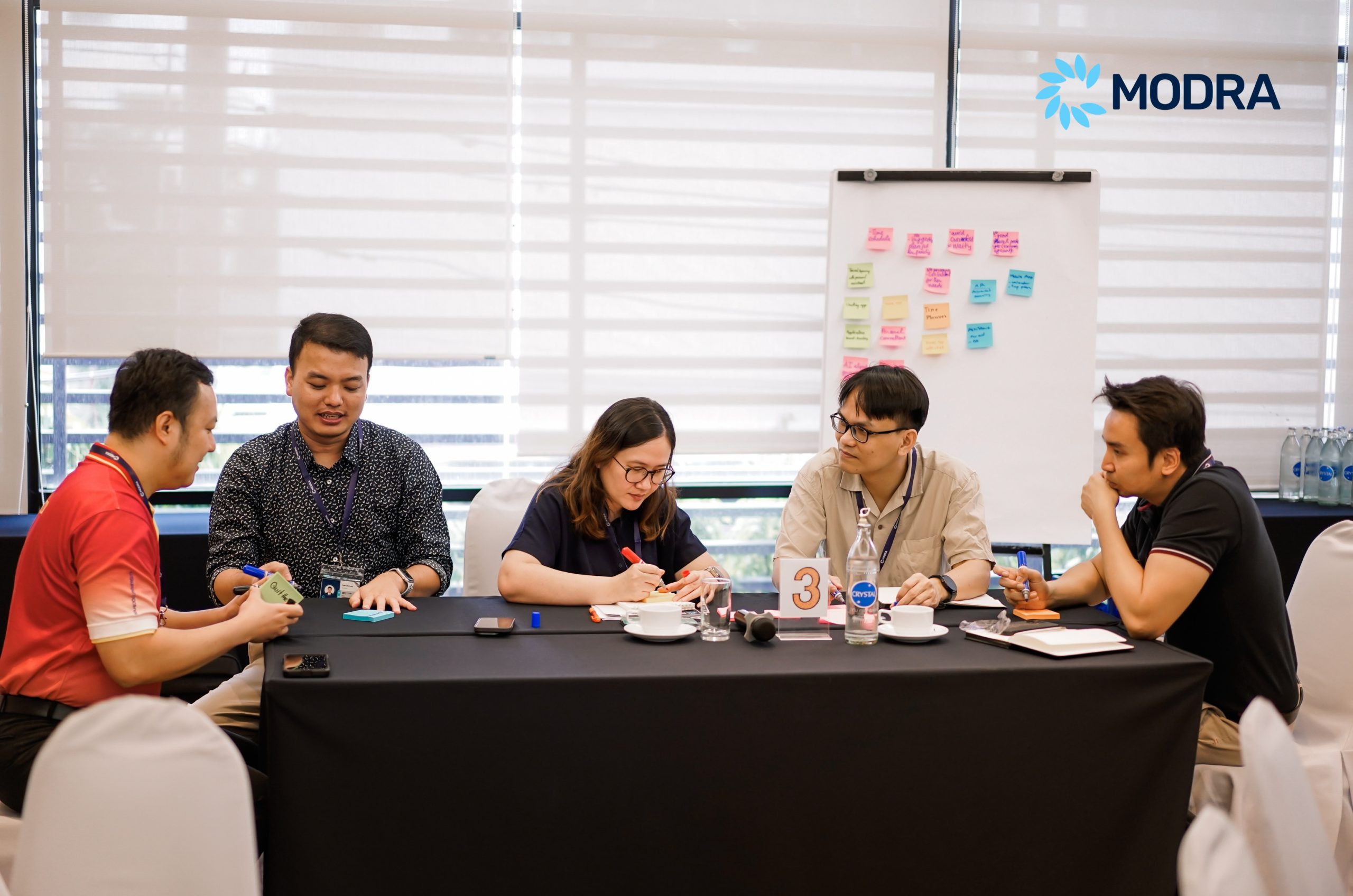
Di luar ruang kelas, lokakarya MODRA berhasil membangun rasa kebersamaan di antara para peserta. Lingkungan yang kolaboratif membantu para peneliti awal karier untuk terhubung dengan rekan-rekannya yang berasal dari latar belakang yang beragam, berbagi ide, dan membuka jalan untuk berkolaborasi di masa depan.
Keberhasilan lokakarya MODRA pertama ini merupakan awal dari banyak lokakarya MODRA selanjutnya, baik di Vietnam maupun Indonesia. Ikuti terus perkembangan para penelitinya dan saksikan bagaimana ide-ide penelitian berubah menjadi nyata.
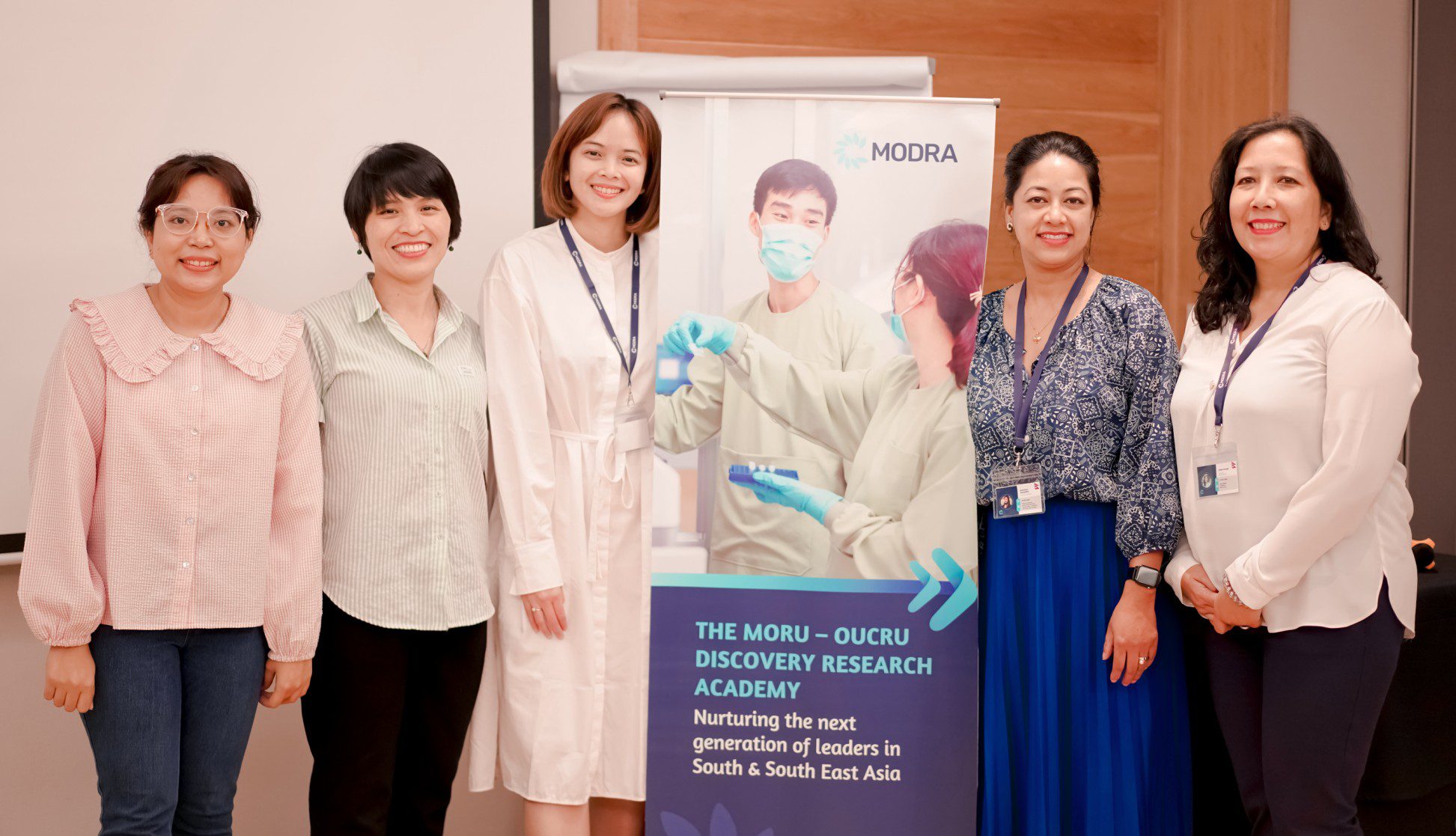
MODRA selected its maiden cohort of 15 talented postdoctoral researchers in July 2024. This marked the beginning of an 18 month-programme designed to equip these early-career scientists with the essential skills for success in health research.
The first MODRA workshop, held in Bangkok in September 2024, offered a well-rounded curriculum covering idea generation, proposal writing, budgeting and networking. It featured a distinguished lineup of trainers, including:
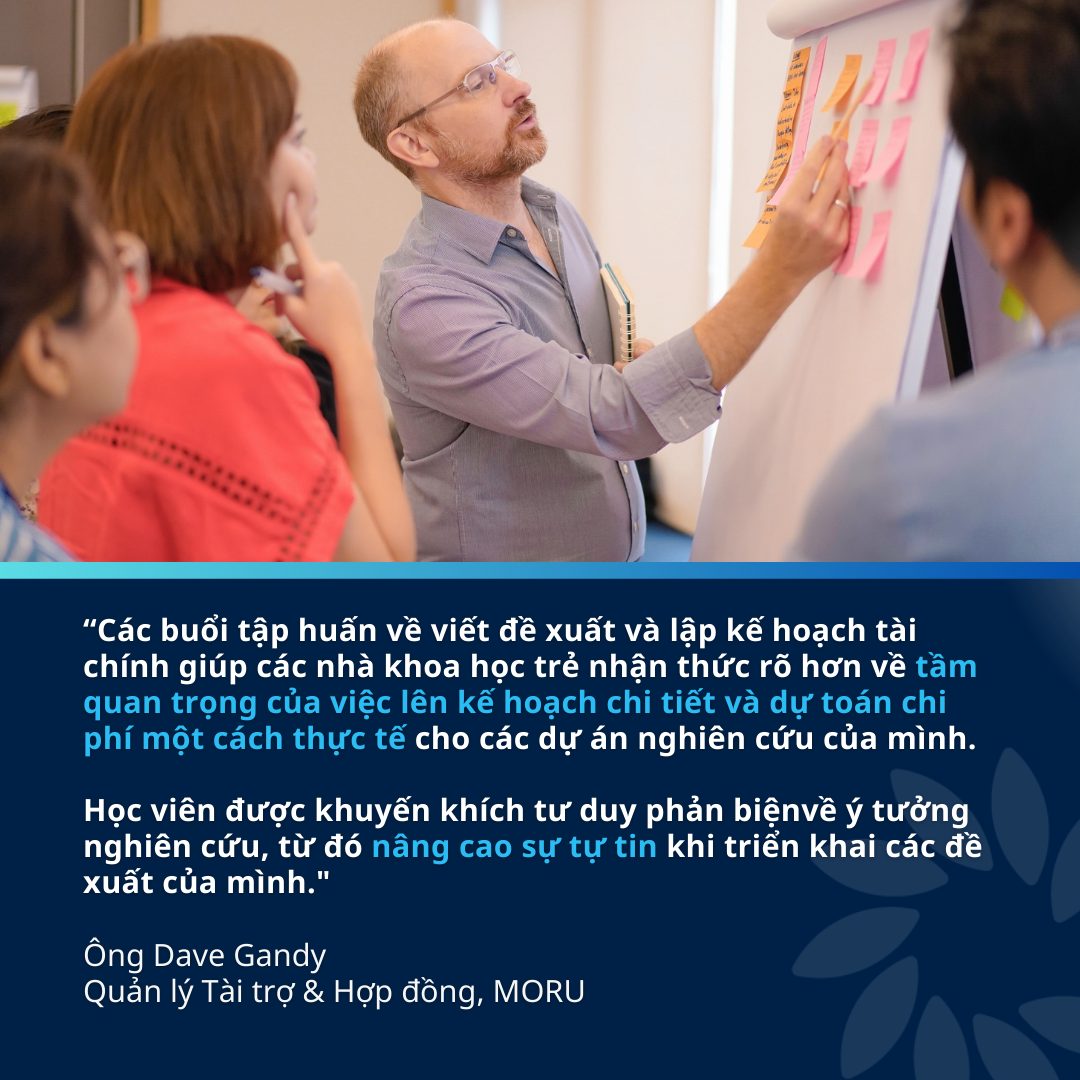
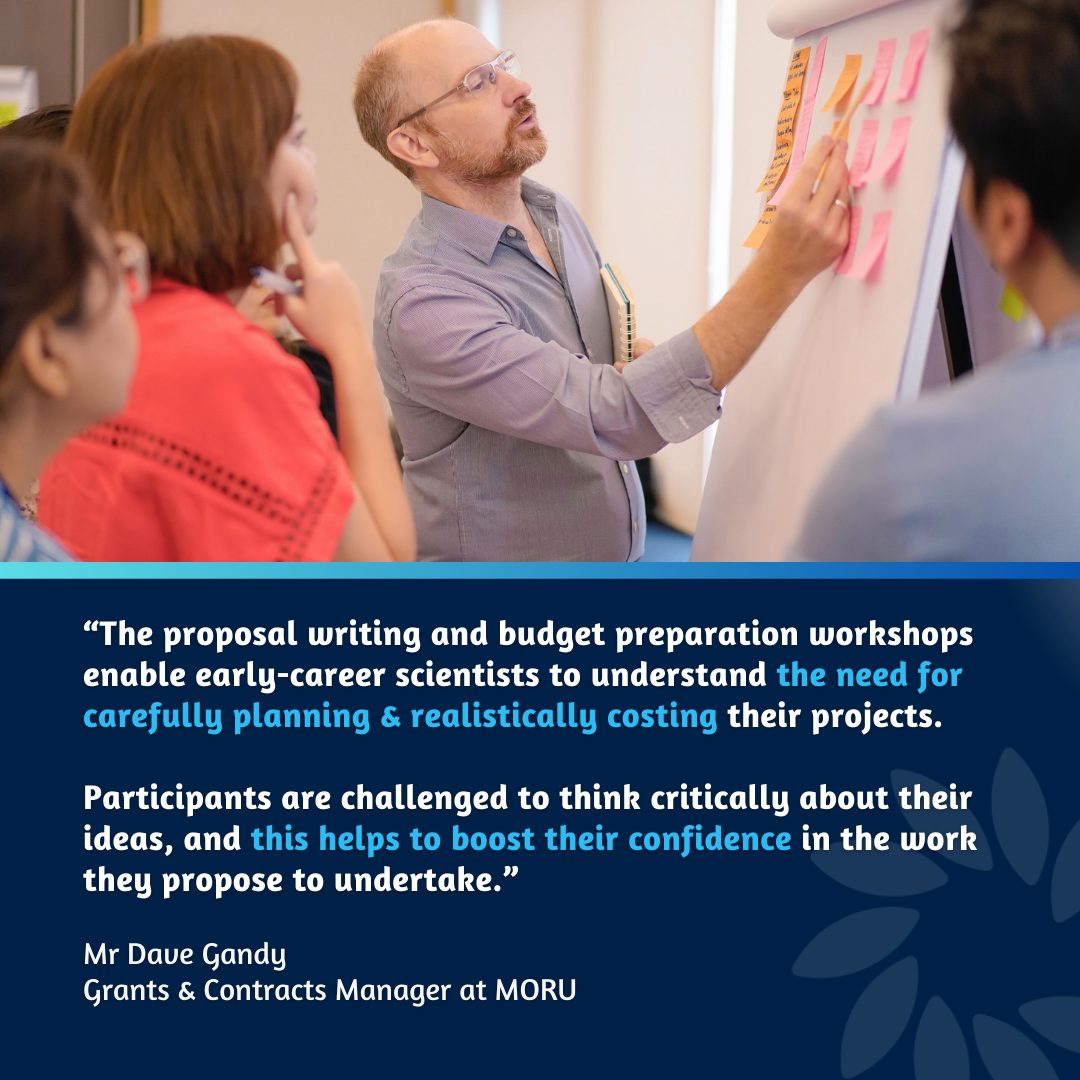
Mr Dave Gandy (Grants & Contracts Manager, MORU): Grant Writing (Proposal Writing; Financial Planning & Budget Preparation).
We also invited an esteemed panel of MORU researchers to share their experiences and advice on making the leap from postdoctoral scientists to independent research leaders.
Prof Mavuto Mukaka (Head of Statistics, Clinical Trials Support Group, MORU)
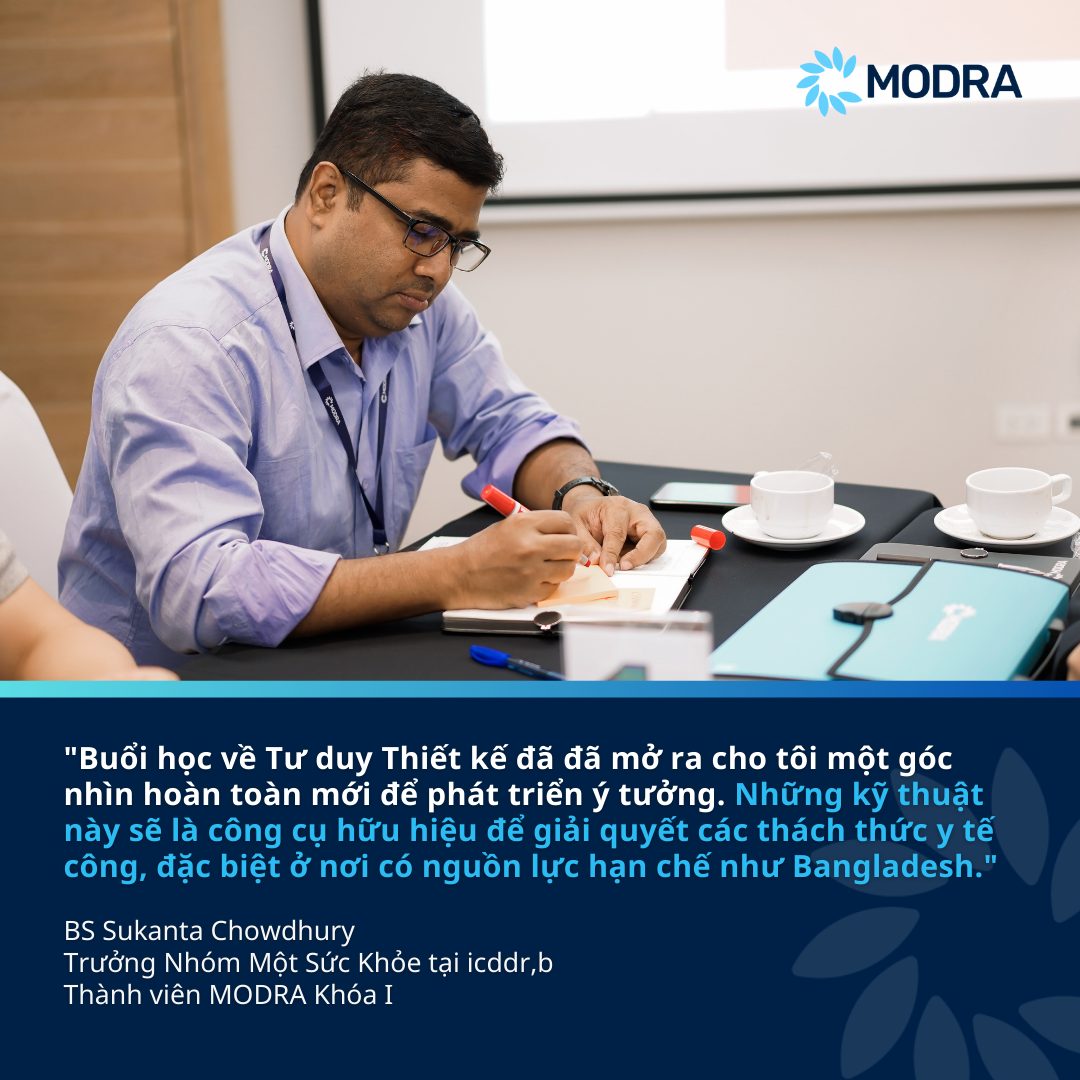
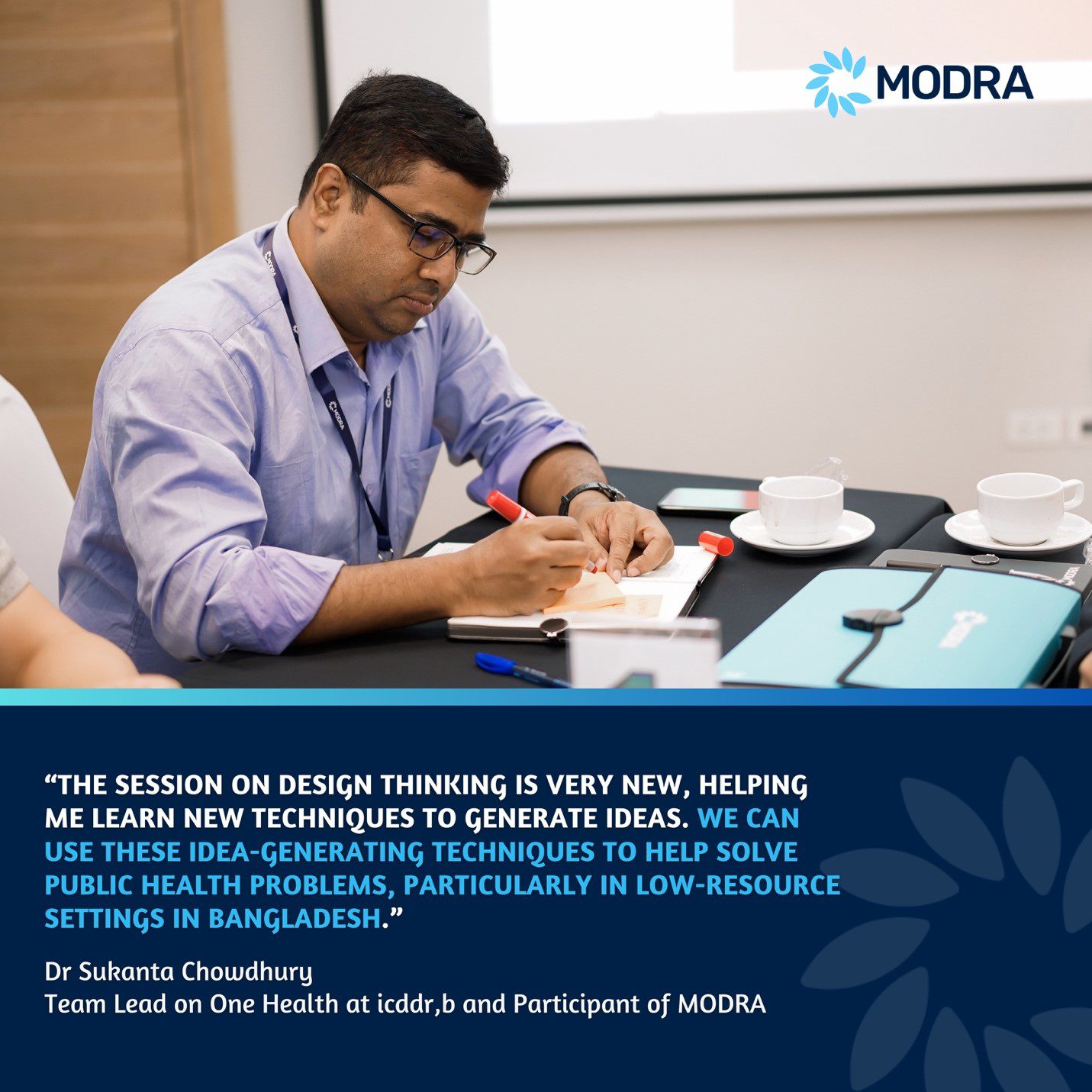
One feature of this workshop was the introduction of Design Thinking. This problem-solving approach encourages researchers to develop creative solutions to complex health challenges.
Another key objective for MODRA is to empower researchers to be more competitive in winning international funding. The workshop offered training in essential skills like proposal writing and budget preparation, enabling participants to transform their research ideas into concrete scientific proposals.
Promising projects are eligible for the MODRA Seed Award, worth up to $30,000. This funding supports the roll-out of these research ideas, bringing them to life and providing early-mid career scientists with a unique opportunity to gain hands-on experience by leading the entire research cycle.
Dr Leigh Jones, Academic Training Leader at OUCRU & MORU and Director of MODRA, noted, “Many young researchers struggle to get their research off the ground, often due to the lack of experience in grants application. MODRA will prepare them to successfully secure competitive grants, both internationally and locally.â€Â
Beyond the classroom, the MODRA workshop fostered a sense of community among the participants. The collaborative environment allowed emerging researchers to connect with peers from diverse backgrounds, share ideas, and lay the groundwork for future collaborations.
The success of the first MODRA event paves the way for upcoming components of the programme, including more training workshops in Vietnam and Indonesia. Stay tuned for updates as we follow the researchers’ progress and witness their research ideas take shape.
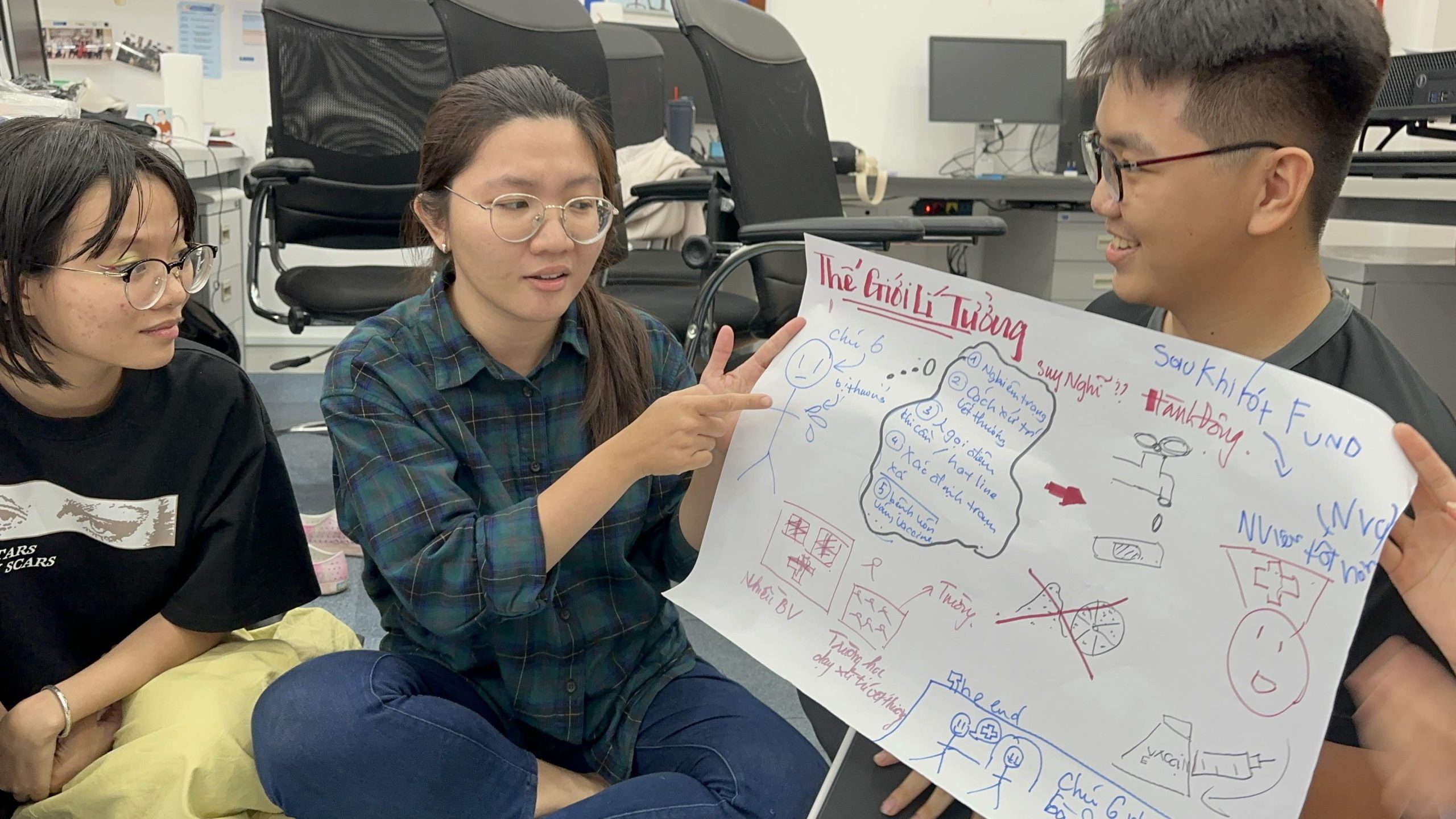
The Youth Science Ambassadors (YSA) project, launched in 2021, has become a key youth engagement activities of OUCRU’s Public and Community Engagement Group. Becoming part of the project, young participants are empowered to lead, propose, plan, and execute their own initiatives addressing specific issues they identify themselves.Â
During the COVID-19 pandemic in 2021, YSAs produced a series of mental health podcasts to address challenges young people faced during that difficult time. In 2022–2023, recognising barriers to accessing global health publications—either due to academic complexity or lack of awareness—YSAs developed the Collab Lab project. This initiative animated published research from OUCRU and partner institutes, making academic publications more accessible and understandable. Collab Lab achieved impressive success, gathering hundreds of thousands of views, and has been continued with a new young team. Â
This year, the YSAs have launched an ambitious project called “Protect Us From Tetanus” (PUFT). PUFT aims to bridge the gap between public knowledge and the severity of tetanus—a dangerous yet preventable disease that often goes overlooked.
Why is Tetanus?
This project was born out of alarming statistics and a clear need for community education.
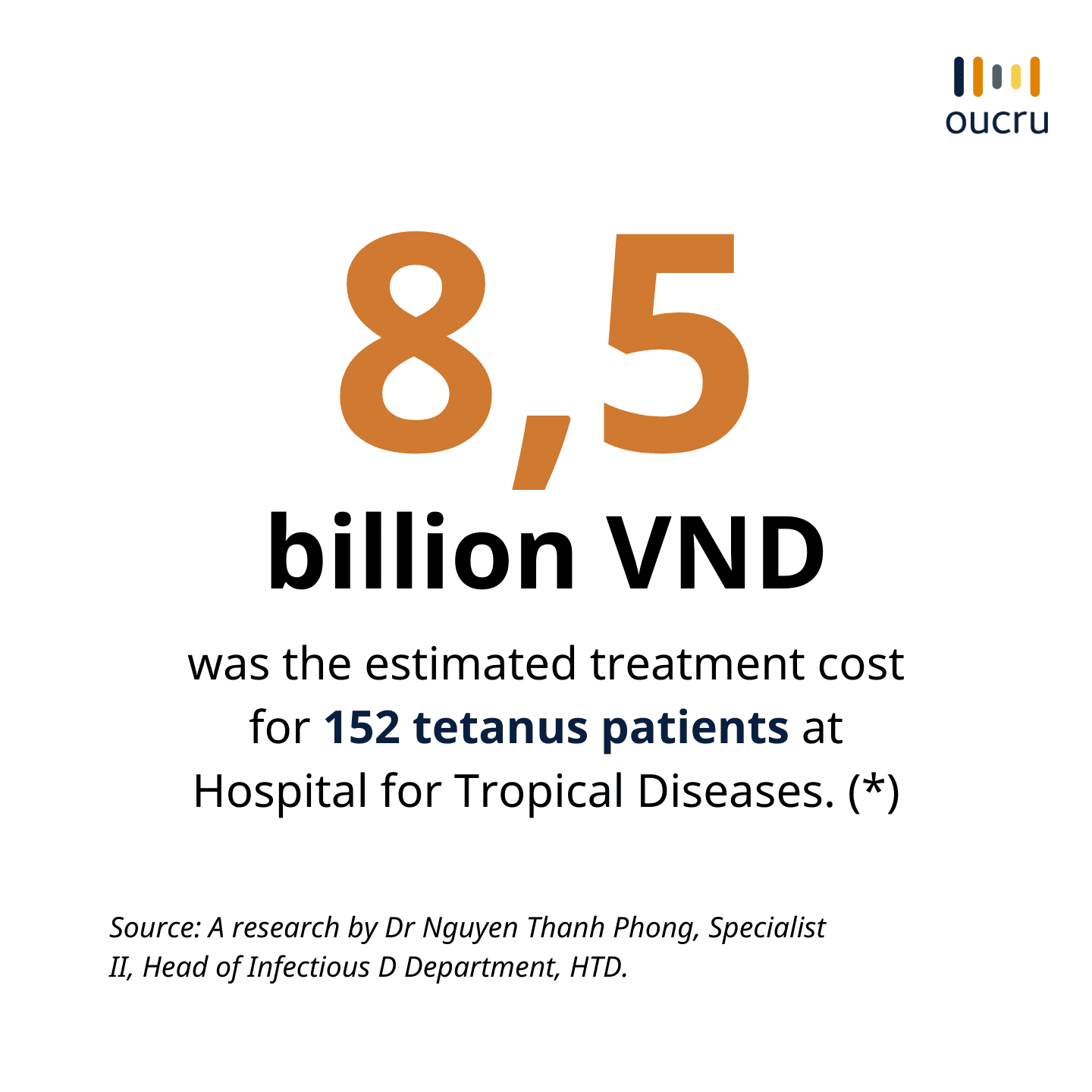
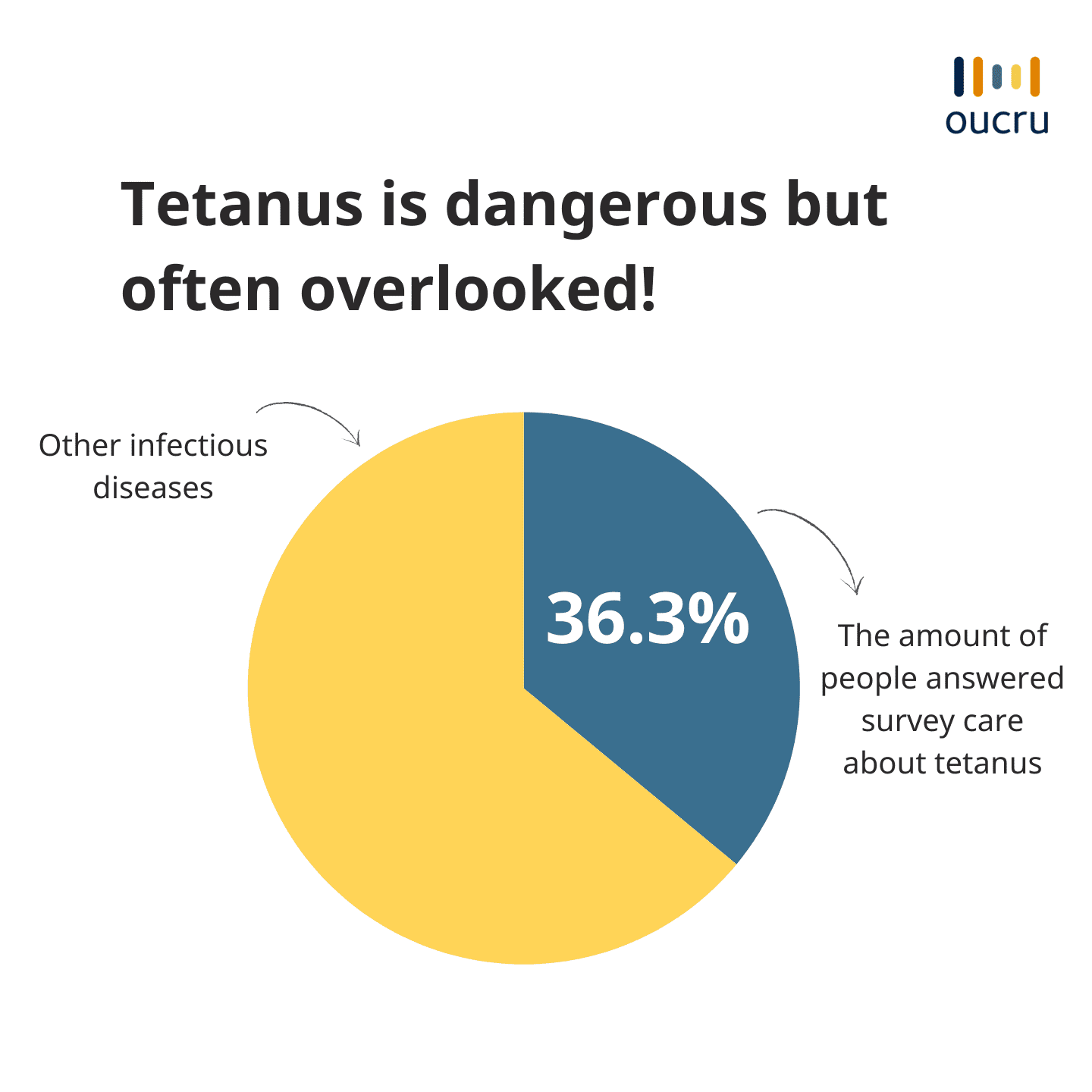
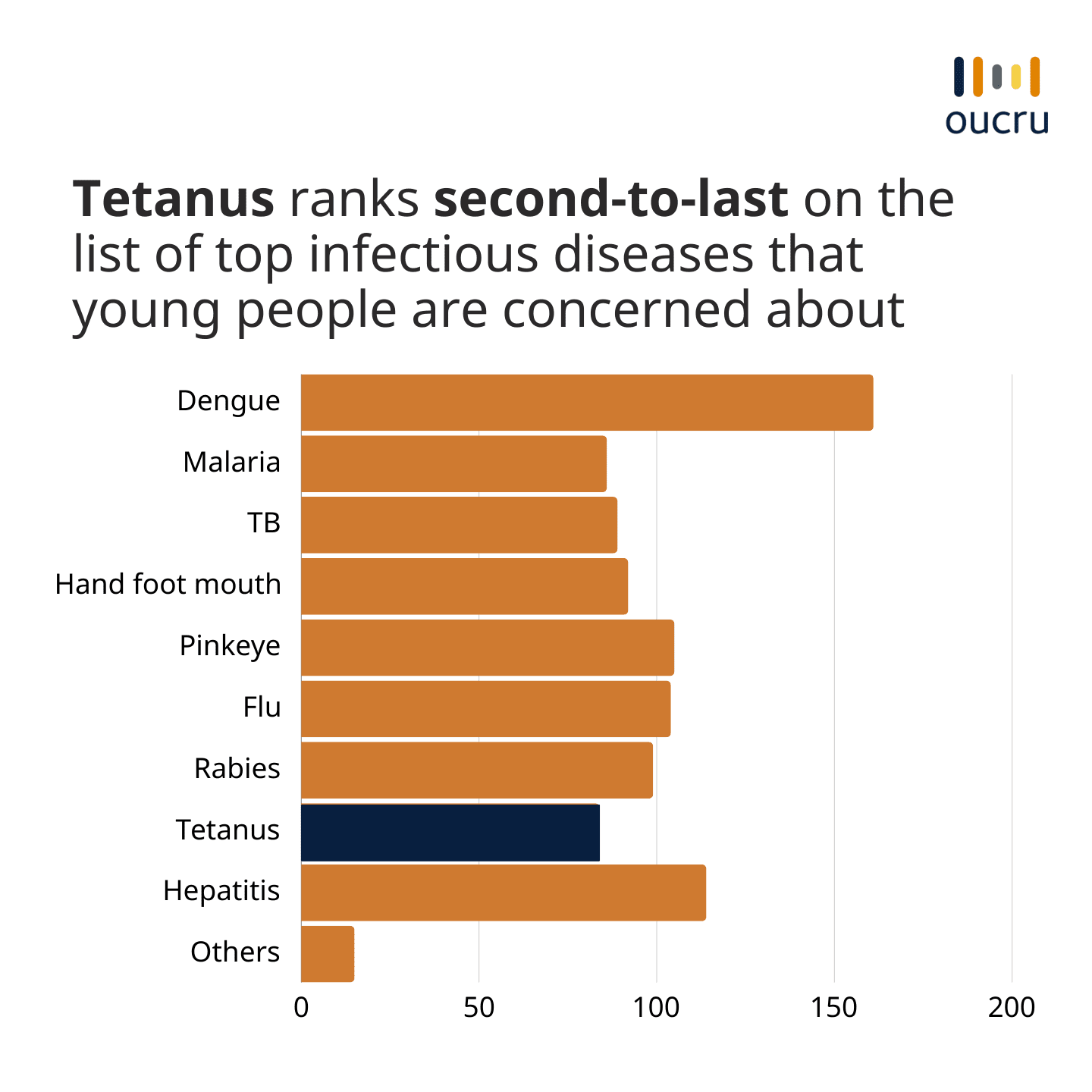
A study by Dr Nguyen Thanh Phong, Spealist II, Head of the Infectious Department D, Hospital for Tropical Diseases, revealed that out of 152 adult tetanus cases admitted from January – June 2016, only one patient had been vaccinated against the disease(*). Moreover, a survey by the YSAs found that tetanus ranked second to last among infectious diseases of concern for young people.
Protect Us From Tetanus ActivitiesÂ
The PUFT project includes a number of activities designed to engage relevant segments of the community:
For patients and carers: Hospital Health TalksÂ
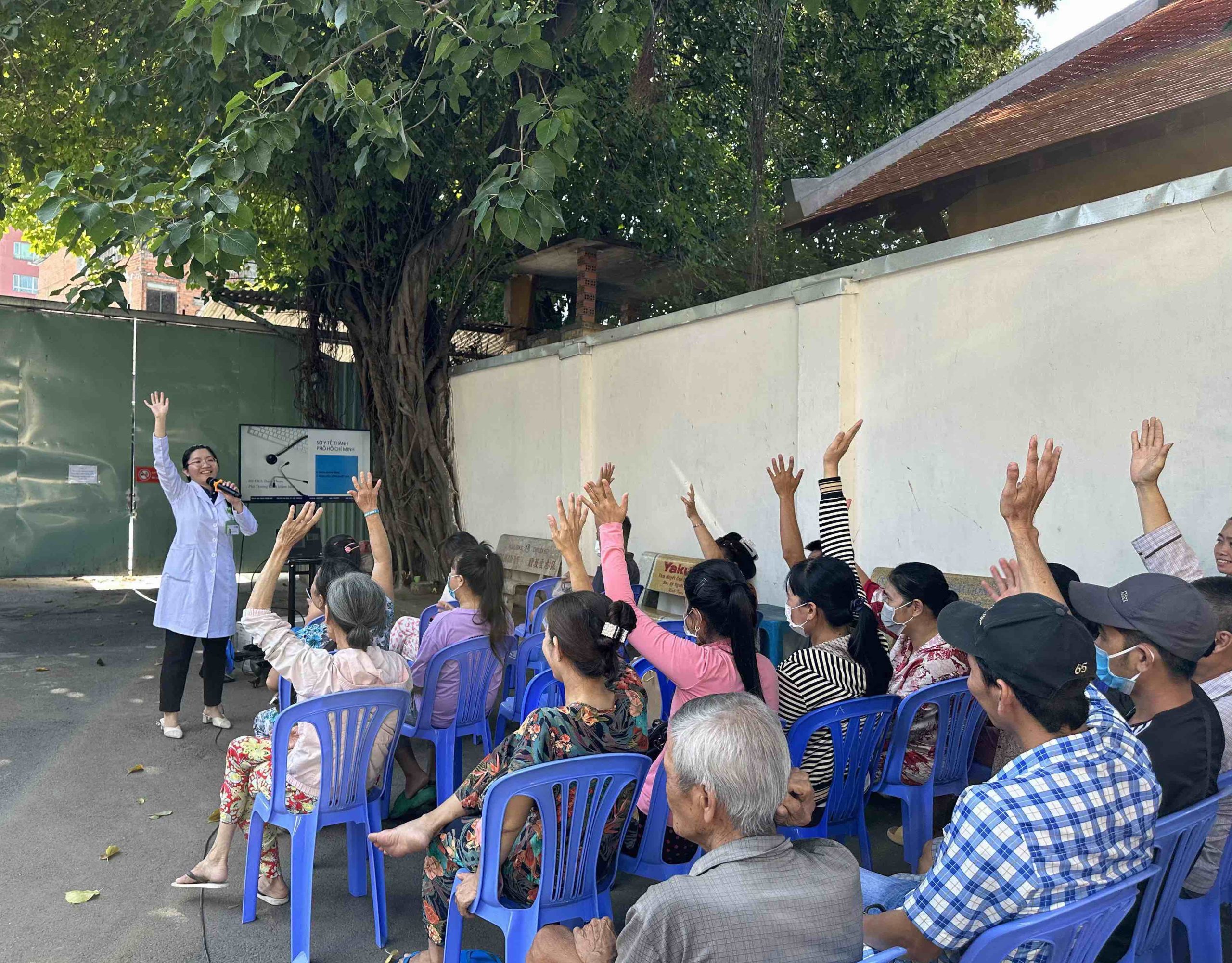
Partnered with doctors at HTD and OUCRU, YSAs conducted a informative session to spread important information about tetanus prevention and treatment.
For young people and the wider public: Forum TheaterÂ
Continuing with the interactive and engaging approach, the YSAs team plan to use forum theater to educate the public about tetanus. This method allows for active participation and helps in delivering the message visually and effectively. Â
The performance is also digitalised, aiming to reach an even wider audience.Â
Collaboration and Support
OUCRU’s Public and Community Engagement Group offered essential training to build young people’s capacity, including communication skills, project planning, execution, and reporting skills.
Key strengths of the YSA project are its collaborative and proactive nature. Young people from YSAs are empowered to take action themselves, from working closely with OUCRU’s Emerging Infectious Group and the Public and Community Engagement Group to identify knowledge gaps and develop their own strategies.Â
To stay updated on the progress of the PUFT project and other initiatives by the Youth Science Ambassadors as well as Public and Community Engagement group, follow OUCRU’s official website and social media accounts.