Blog

  • Xét nghiệm tại chá»— được người Việt Nam đón nhận để cải thiện việc lạm dụng kháng sinh

    Xét nghiệm tại chỗ được người Việt Nam đón nhận để cải thiện việc lạm dụng kháng sinh

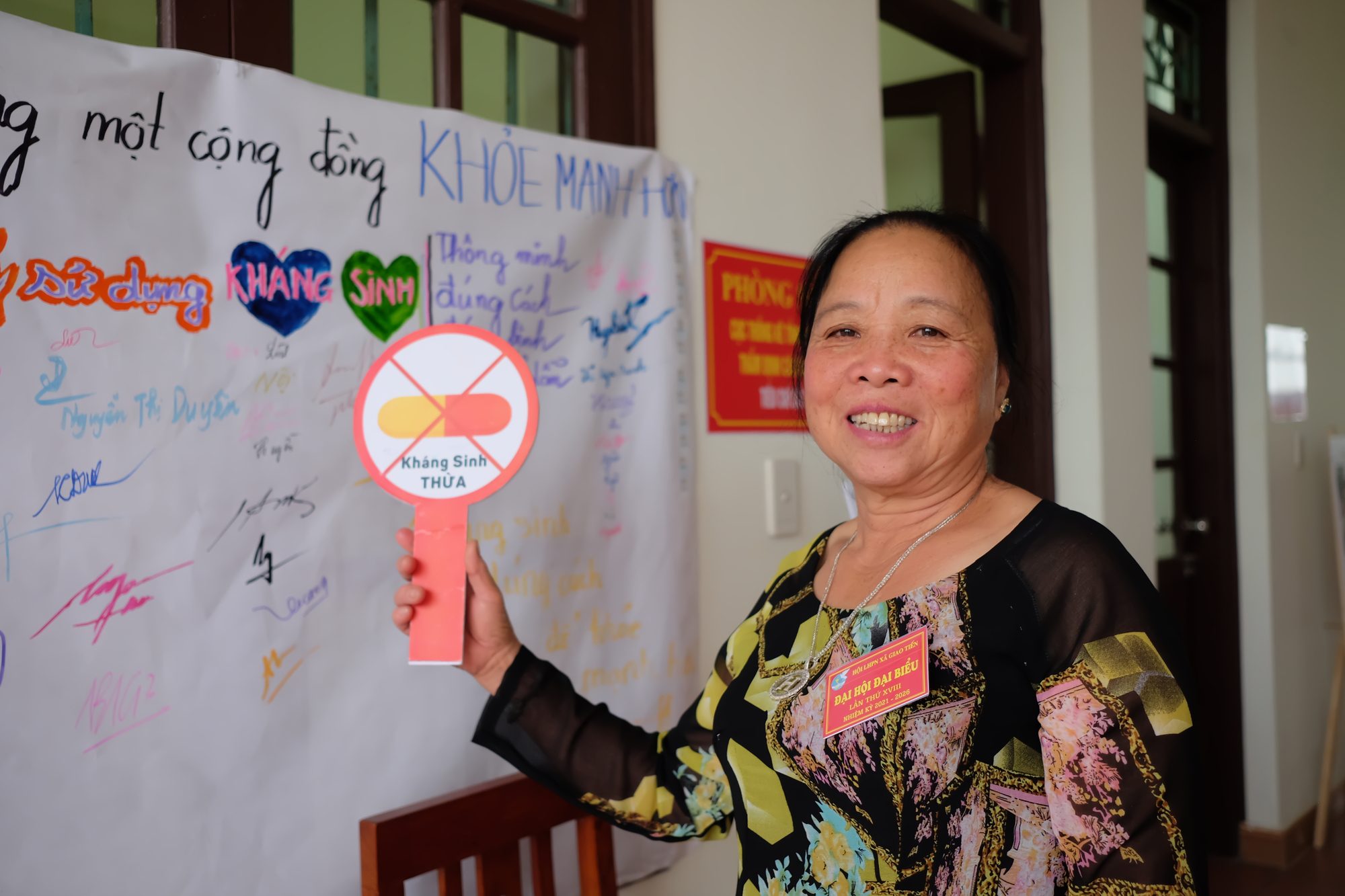
    Ảnh: Một người dân ở tỉnh Nam Định tại triển lãm Photovoice của OUCRU năm 2021.

    Xét nghiệm protein C phản ứng tại chỗ (CRP-POCT) là một xét nghiệm máu đơn giản giúp xác định nguyên nhân gây nhiễm trùng là do vi khuẩn hay vi rút. Việc phân biệt này rất quan trọng vì kháng sinh chỉ có tác dụng tiêu diệt vi khuẩn. Nhờ CRP-POCT, dược sĩ có thể đưa ra lời khuyên chính xác hơn cho bệnh nhân: nên điều trị triệu chứng bằng thuốc thông thường hay cần đi khám để được chẩn đoán chính xác và có thể được kê đơn kháng sinh. Điều này giúp hạn chế việc lạm dụng kháng sinh, từ đó ngăn ngừa tình trạng kháng kháng sinh ngày càng gia tăng.

    Nghiên cứu được đăng trên Tạp chí Bệnh truyền nhiễm Diễn đàn Mở cho thấy xét nghiệm CRP-POCT nhận được sự ủng hộ rộng rãi từ phía người sử dụng. Cụ thể, 96,5% khách hàng đã trải nghiệm dịch vụ này bày tỏ mong muốn được tiếp tục sử dụng tại các hiệu thuốc trong tương lai. Hơn nữa, đa số khách hàng (78,3%) sẵn lòng chi trả cho dịch vụ, với mức giá trung bình là khoảng 60.000 đồng (2,4 USD).

    Đây là một phát hiện quan trọng trong bối cảnh Việt Nam đang là một trong những quốc gia có tỷ lệ lạm dụng và kháng kháng sinh cao nhất thế giới. Việc sử dụng kháng sinh không đúng cách, chẳng hạn như tự ý mua thuốc tại hiệu thuốc mà không có chỉ định của bác sĩ, là nguyên nhân hàng đầu dẫn đến tình trạng kháng kháng sinh. Điều này không chỉ làm giảm hiệu quả của thuốc kháng sinh trong điều trị nhiễm trùng mà còn gây nguy hiểm đến tính mạng người bệnh trong tương lai.

    “Mặc dù luật pháp Việt Nam đã có những quy định hạn chế việc bán kháng sinh không kê đơn, thá»±c tế cho thấy hoạt động này vẫn diá»…n ra phổ biến, góp phần làm trầm trọng thêm tình trạng kháng kháng sinh tại đây. Trong bối cảnh đó, CRP-POCT có thể là giải pháp thay thế, cho phép các dược sÄ© cung cấp dịch vụ há»— trợ Ä‘iều trị thay vì trá»±c tiếp bán kháng sinh khi chưa có chỉ định cá»§a bác sÄ©.”

    Phó Giáo sư Sonia Lewycka chia sẻ

    Nghiên cứu được thực hiện tại thành phố Nam Định và kết hợp nhiều phương pháp thu thập dữ liệu khác nhau. Cụ thể, nhóm nghiên cứu đã tiến hành khảo sát 520 khách hàng sau khi sử dụng thuốc, tổ chức thảo luận nhóm tập trung với 20 người và phỏng vấn chuyên sâu 12 dược sĩ cùng các bên liên quan khác.

    Nghiên cứu cho thấy xét nghiệm CRP-POCT có thể là một công cụ đắc lực trong việc giảm thiểu tình trạng lạm dụng kháng sinh tại Việt Nam. Đối với dược sĩ, CRP-POCT cung cấp thông tin khách quan về tình trạng nhiễm trùng của bệnh nhân, giúp họ có cơ sở vững chắc hơn trong việc quyết định cấp phát kháng sinh. Đối với bệnh nhân, kết quả xét nghiệm sẽ giúp họ an tâm khi không cần sử dụng kháng sinh, từ đó nâng cao sự tin tưởng vào hướng dẫn của dược sĩ.

    Hiện nay, việc mua bán kháng sinh không cần đơn thuốc vẫn diễn ra phổ biến tại Việt Nam. Nghiên cứu chỉ ra rằng có đến 81,4% trường hợp được cấp phát kháng sinh là không cần thiết dựa trên mức CRP của họ, cho thấy mức độ lạm dụng kháng sinh đáng báo động.

    Ngoài ra, nghiên cứu cũng phân tích những yếu tố thuận lợi và khó khăn trong việc triển khai dịch vụ này tại các hiệu thuốc. Sự mong muốn của cả khách hàng và dược sĩ về một giải pháp hỗ trợ sử dụng kháng sinh hiệu quả, cùng với lợi ích rõ ràng của CRP-POCT trong việc giảm thiểu việc lạm dụng kháng sinh, là những yếu tố hỗ trợ quan trọng. Tuy nhiên, vẫn còn những thách thức cần được giải quyết, bao gồm việc đào tạo và hỗ trợ dược sĩ sử dụng CRP-POCT thành thạo, cũng như xây dựng hướng dẫn chi tiết về quy trình vận hành và diễn giải kết quả xét nghiệm.

    “Đại dịch COVID-19 đã góp phần thúc đẩy sá»± phổ biến cá»§a các loại xét nghiệm nhanh, giúp người bệnh dá»… dàng tiếp cận các dịch vụ chăm sóc sức khỏe hÆ¡n. Trong bối cảnh đó, việc triển khai xét nghiệm CRP-POCT tại các hiệu thuốc không chỉ mang lại lợi ích thiết thá»±c cho người bệnh mà còn góp phần nâng cao vai trò cá»§a dược sÄ© trong hệ thống y tế, biến họ trở thành lá»±c lượng quan trọng trong cuá»™c chiến chống lại kháng kháng sinh.”

    Tiến sĩ Nguyễn Vinh Nam, tác giả thứ nhất của nghiên cứu này, cho biết.

    Bên cạnh đó, các tác giả cũng đã đăng bài bình luận trên tạp chí Lancet Global Health, nhấn mạnh tiềm năng của dịch vụ CRP-POCT trong việc đối phó với hiểm họa kháng kháng sinh. Bài báo khẳng định rằng việc tiếp cận chẩn đoán nhanh chóng và chính xác là một trong bốn trụ cột của chiến lược lấy con người làm trung tâm do WHO khởi xướng nhằm giải quyết vấn nạn kháng kháng sinh trên toàn cầu. Điều này cũng hướng đến Mục tiêu Phát triển Bền vững của Liên Hợp Quốc về việc nâng cao khả năng tiếp cận dịch vụ chăm sóc sức khỏe chất lượng, bao gồm cả dịch vụ chẩn đoán.

    Để biết thêm chi tiết, hãy truy cập bài báo tại đây.

  • New Study Shows High Acceptability for Point-of-Care Testing to Improve Antibiotic Use in Vietnam 

    New Study Shows High Acceptability for Point-of-Care Testing to Improve Antibiotic Use in Vietnam 

    Photo: A community member in Nam Dinh Province at OUCRU’s Photovoice exhibition in 2021.

    C-reactive protein point-of-care testing (CRP-POCT) is a simple blood test that can be used to determine whether an infection is likely to be caused by a bacteria or a virus. This is important because antibiotics are only effective against bacterial infections. By using CRP-POCT, pharmacists can provide patients with more informed advice about whether their illness can be treated with medicines for symptomatic relief, or whether they should see a doctor for appropriate diagnosis and possible prescription of antibiotics. This step can help to reduce unnecessary antibiotic use and the spread of antibiotic resistance. 

    The study, published in Open Forum Infectious Diseases, found that 96.5% of customers who experienced CRP-POCT supported its future introduction at pharmacies. The majority of customers (78.3%) were also willing to pay for the service, with an average willingness-to-pay of US$2.4. 

    This is an important finding, as Vietnam has one of the highest rates of antibiotic use and resistance in the world. Inappropriate antibiotic use is a major driver of antibiotic resistance, which threatens the effectiveness of antibiotics and puts lives at risk. 

    “Despite legislation to restrict over-the-counter antibiotic sales in Vietnam, this practice is still widespread, which worsens antimicrobial resistance in Vietnam. CRP-POCT provides pharmacists with an alternative product to sell instead of antibiotics.”

    Last author Associate Professor Sonia Lewycka.

    The study, conducted in Nam Dinh City, involved a mixed-methods approach, including a customer exit survey (n=520), focus group discussions (n=20), and in-depth interviews with pharmacists and other stakeholders (n=12). 

    The study found that CRP-POCT could help to reduce unnecessary antibiotic use by providing pharmacists with objective information to guide their dispensing decisions, and patients with evidence to reassure them when antibiotics are not needed. Currently, antibiotics are often dispensed without a prescription in Vietnam, and the study found that the majority of antibiotic transactions (81.4%) were for patients who did not have a clinical need for antibiotics based on their CRP levels. 

    The study also identified a number of enablers and challenges for implementing CRP-POCT at pharmacies. Enablers included customer and pharmacist demand for the service, as well as the perceived benefits of CRP-POCT in reducing unnecessary antibiotic use. Challenges included the need for training and support for pharmacists, as well as the development of clear guidelines for CRP-POCT use. 

    “Rapid testing became more common and acceptable during COVID-19 and provided patients with convenient access to healthcare. Extending testing services at pharmacies would affirm pharmacists as important stakeholders in the health system, and in the fight against AMR.”  

    First author of the study, Dr Nguyen Vinh Nam

    The authors also recently published a commentary in the Lancet Global Health, arguing for greater attention to the potential for CRP-POCT services in the community as a tool in the fight against AMR. Access to timely and accurate diagnosis is one of the four pillars in WHO’s people-centred strategy to address AMR, and contributes to the United Nations’ Sustainable Development Goal of improving access to quality healthcare, including diagnostic services. 

    To learn more details, visit the publication.  

  • Nghiên cứu má»›i xác định các yếu tố nguy cÆ¡ gây bệnh lao tại TP.HCM

    Nghiên cứu mới xác định các yếu tố nguy cơ gây bệnh lao tại TP.HCM

    Bệnh lao – Mối Ä‘e dọa sức khỏe toàn cầu

    Trên thế giới, tiến trình làm giảm gánh nặng bệnh lao đã vấp phải thách thức trong suốt thời kỳ COVID-19 và ước tính có 10,6 triệu người mắc lao vào năm 2021, trong đó có 1,6 triệu người chết.

    Điều đặc biệt là tình trạng mắc bệnh lao không phân bố đồng nhất khi 90% gánh nặng bệnh này thuộc về 30 quốc gia thu thập trung bình và thấp. Do đó, người ta tin là sự phân bố về mặt địa lý của bệnh phản ánh sự tương tác phức tạp của người mắc bệnh và người dễ mắc, môi trường vật lý, tình trạng nghèo đói…

    Tại Việt Nam, theo thông tin từ Bộ Y tế, Việt Nam hiện đứng thứ 16/30 quốc gia về số bệnh nhân lao và đứng thứ 13/30 nước có gánh nặng bệnh lao kháng đa thuốc cao nhất trên toàn cầu. Việc hiểu sâu thêm các nhân tố ảnh hưởng đến tình trạng mắc bệnh lao và lao đa kháng thuốc là điều quan trọng điểm kiểm soát dịch bệnh.

    Bệnh lao ở TP.HCM: Ai dễ bị tổn thương?

    Nghiên cứu này sử dụng dữ liệu về bệnh nhân đăng ký điều trị bệnh lao ở các bệnh viện công tại 23 phường của TP.HCM, từ tháng 1/2020 đến tháng 4/2023.

    Các nhà khoa học đã phân tích thông tin của từng cá nhân để miêu tả về gánh nặng của lao ở TP.HCM và đặc điểm của các ca bệnh lao, đồng thời sử dụng dữ liệu cấp quận để thiết kế thông tin sinh thái, miêu tả được các nhân tố ở cấp quận liên quan đến gánh nặng lao.

    Theo phân tích của các nhà nghiên cứu, từ tháng 1/2020 đến tháng 4/2023 tại TP.HCM có tổng số 36.089 người đăng ký điều trị bệnh lao và 1.451 người mắc lao đa kháng thuốc (họ đã loại trừ một số người mắc bệnh sống ngoài TP.HCM).

    Phân tích những thông số sâu hơn thì trong đó có 67.7% nam và 32,3% nữ; 81% sống ở thành thị; độ tuổi trung bình 45; 5% đồng nhiễm HIV; 31.999 trường hợp mắc không có tiền sử về bệnh lao, 5.516 trường hợp có tiền sử lao. Trong số các trường hợp đăng ký điều trị lao đa kháng thuốc, 2% không có tiền sử lao và 14% trường hợp có tiền sử lao.

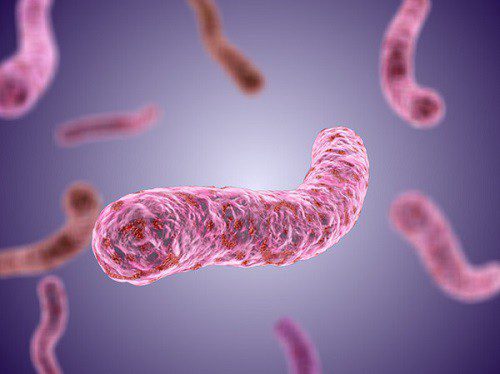
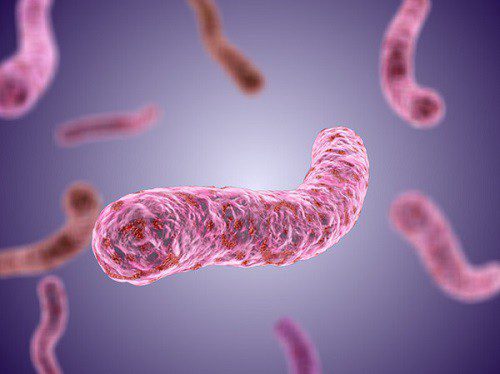
    Vi khuẩn hình que Mycobacterium tuberculosis.
    Vi khuẩn hình que Mycobacterium tuberculosis.

    Sự phân bố không đồng đều của bệnh lao

    Tháp dân số không đối xứng cho thấy gánh nặng bệnh lao nhạy cảm với thuốc và lao đa kháng thuốc thuộc về nhóm nam ở độ tuổi trung niên và tăng theo độ tuổi, tương đồng với kết quả điều tra tỷ lệ mắc lao toàn quốc lần thứ hai tại Việt Nam và các nghiên cứu khác.

    Mô hình thống kê cho thấy, các điểm nóng bệnh lao xuất hiện ở nhiều nơi thuộc trung tâm TP.HCM, cho cả lao nhạy thuốc và lao đa kháng thuốc trong khi ít hơn ở phía Bắc trung tâm.

    Sự không đồng nhất về tỉ lệ mắc, cho cả hai dạng lao, đều xuất hiện ở các khu vực này. Với lao nhạy thuốc, dù phần lớn tập trung ở các phường ở khu vực trung tâm nhưng khu vực xung quanh có tỉ lệ cao thấp khác nhau; với lao đa kháng thuốc đều phân thành các cụm với tỉ lệ mắc cao, chỉ dấu có sự tương đồng nhiều hơn.

    Sự khác biệt về giới tính của hai dạng lao cho thấy sự tương tác phức tạp giữa các yếu tố sinh học, hành vi và môi trường. Sự xuất hiện của lượng mắc HIV nhấn mạnh sự đóng góp tiềm tàng của HIV vào lao, ngay cả ở những nơi có tỷ lệ mắc HIV tương đối thấp.

    Kết luận

    Kết quả nghiên cứu cho thấy, việc ước tính tỷ lệ mắc bệnh lao nhạy thuốc và lao đa kháng thuốc ở TP.HCM thấp hơn đáng kể so với ước tính của WHO đối với Việt Nam, mặc dù có bằng chứng về việc TP.HCM có một số tỷ lệ mắc bệnh lao cao nhất cả nước.

    Mặt khác, tỷ lệ mắc bệnh lao ở TP.HCM không liên quan đến nghèo đói, mặc dù đây là một yếu tố rủi ro. Thay vào đó, sự tập trung gánh nặng bệnh lao ở đây liên quan đến các yếu tố như phân bố giới tính và tỷ lệ lưu hành HIV.

    Đọc nghiên cứu.

    Viết bởi Thanh Nhã cho Tạp chí Tia Sáng.

  • Tuberculosis in Ho Chi Minh City: Who’s at Risk? 

    Tuberculosis in Ho Chi Minh City: Who’s at Risk? 

    Tuberculosis as a Global Health Threat

    Tuberculosis (TB) remains a significant global health threat, with progress in controlling the disease disrupted by the COVID-19 pandemic. In 2021, TB claimed 10.6 million lives, while over 1.6 million people fell ill.

    The global burden of TB is disproportionately concentrated in 30 countries with limited resources, where 90% of cases occur. This uneven distribution is likely influenced by a complex interplay of factors, including the infected and susceptible individuals, characteristics of TB bacteria, environmental conditions, and socioeconomic factors like poverty.

    According to the Ministry of Health, Vietnam ranks 16th out of 30 countries for drug-susceptible TB (DS-TB) cases, and 13th globally for the highest burden of multidrug-resistant TB (MDR-TB). A deeper understanding of the factors influencing TB and MDR-TB is crucial for disease control.

    TB in Ho Chi Minh City: Who’s Most Vulnerable?

    This study examined TB patients treated at state-owned hospitals in 23 Ho Chi Minh City districts from January 2020 to April 2023. The researchers analysed detailed information about individual TB cases in the city, including patient demographics and disease characteristics. They also examined district-level data to identify factors that might contribute to the spread of TB in different parts of the city.

    Analysis from January 2020 to April 2023 revealed 36,089 people registered for DS-TB treatment in Ho Chi Minh City, with 1,451 cases of MDR-TB (excluding cases involving people living outside the city).

    Most cases were male (67.7%) and lived in urban areas (81%). The average age was 45. About 5% also had HIV. Nearly 32,000 cases never had TB before, while 5,516 had a history of the disease. Among those getting MDR-TB treatment, 2% got TB for the first time, and 14% had had TB in the past.

    Mycobacterium tuberculosis rod-shaped bacteria

    Mapping the Uneven Distribution of TB

    Most DS-TB and MDR-TB cases occurred in middle-aged men, and the burden increased with age. This is consistent with the results of Vietnam’s second national TB prevalence survey and other studies.

    The study identified central Ho Chi Minh City as a hotspot for both DS-TB and MDR-TB, while the northern area witnessed notably lower cases.

    The number of TB cases varied greatly across districts for both types. DS-TB cases were mainly concentrated in central districts, with prevalence rates varying in the surrounding areas. In contrast, MDR cases tended to cluster in areas with already high TB cases, indicating a more consistent distributing pattern.

    Differences between men and women in both types of TB show how biology, behaviour, and the environment all play a role. There is a link between HIV levels and TB cases, even in areas with relatively low HIV rates.

    Conclusion 

    The study found that the estimated rate of both DS-TB and MDR in Ho Chi Minh City was much lower than the WHO’s estimate for Vietnam. This was surprising because Ho Chi Minh City is known for having high TB rates in Vietnam. This is likely due to underreporting of TB, as many people with TB may be undiagnosed.

    Moreover, the study showed that estimates of poverty within districts were not significantly linked to the rates of TB. Instead, gender and HIV prevalence were more closely linked to the disease burden.

    Read the paper

    Written by Thanh Nhan for Tia Sang Magasine

  • OUCRU Indonesia dan Universitas Indonesia Selesaikan Uji Vaksin Malaria Historis

    OUCRU Indonesia dan Universitas Indonesia Selesaikan Uji Vaksin Malaria Historis

    Sebagai suatu kesuksesan besar, Fakultas Kedokteran Universitas Indonesia (FK UI) dan OUCRU Indonesia telah menyelesaikan uji klinis fase 2 untuk dua vaksin malaria baru yang diproduksi Sanaria Inc. Riset ini merupakan uji coba vaksin malaria pertama yang pernah dilakukan di Indonesia dan yang pertama di kawasan Asia Pasifik dalam lebih dari 30 tahun.

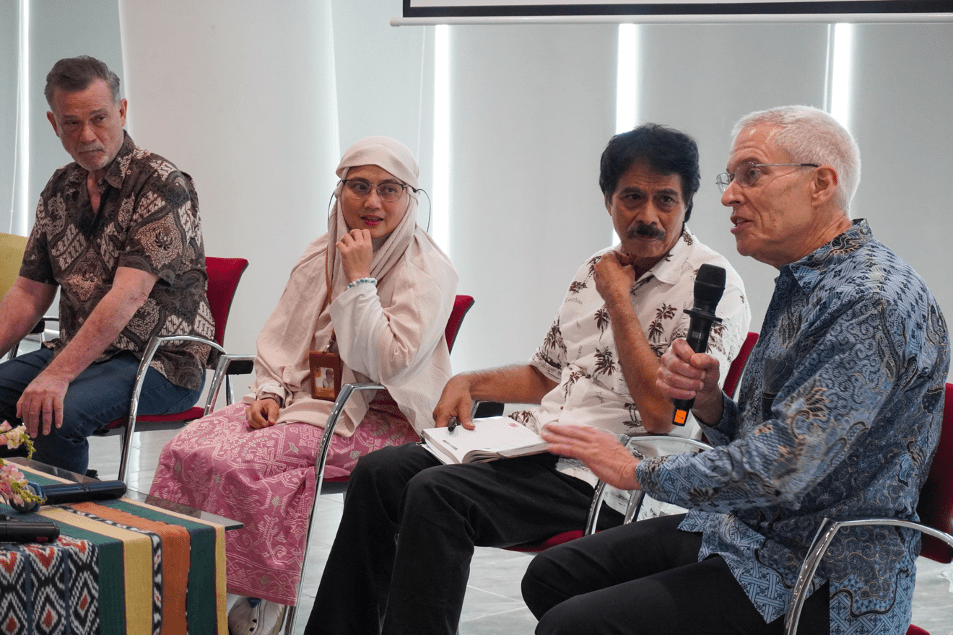
    Penyelesaian uji klinis ini diumumkan secara resmi saat ‘Scientific Collaborators Meeting’ yang diadakan pada 17 Juli 2024, terbuka untuk umum melalui Zoom. Dari kiri ke kanan: Direktur OUCRU Indonesia, Prof. J. Kevin Baird; Principal Investigator, Prof. Erni J. Nelwan; Site Medical Supervisor, Dr. Krisin Chand; dan Chief Medical Officer Sanaria, Dr. Thomas L. Richie.

    Terobosan dalam Riset Malaria

    Uji klinis ini melibatkan 345 sukarelawan TNI dari Batalyon 132 di Bangkinang, Riau, Indonesia. Mereka mendapatkan injeksi salah satu jenis vaksin atau suntikan plasebo sebelum berangkat tugas ke Kabupaten Keerom, Papua, daerah endemis malaria. Tujuannya adalah melihat seberapa baik vaksin bisa melindungi orang-orang yang belum pernah terkena malaria sebelumnya.

    Prof. Erni J. Nelwan dari FK UI, selaku Principal Investigator studi ini, mengatakan, “Penelitian ini unik karena melibatkan populasi yang belum pernah terkena malaria yang kemudian bepergian ke daerah endemik malaria. Dengan memvaksin para tentara yang belum pernah terinfeksi sebelum mereka bepergian ke daerah berisiko tinggi, kami bisa menguji efektivitas vaksin ini dalam kondisi nyata.”

    Letnan Dua Kennedi Siregar dari Peleton Kesehatan Batalion 132 Bangkinang turut menekankan pentingnya studi ini bagi masyarakat secara umum dan TNI secara khusus. “Tugas kami sering membawa kami ke daerah-daerah terpencil di seluruh Indonesia, terutama daerah yang rawan malaria. Malaria merupakan tantangan bagi kami. Keterlibatan dalam studi ini membuat kami lebih memahami penyakitnya. Sekarang, kami lebih memahami cara mendiagnosis dan mengobatinya dengan benar,” jelasnya.

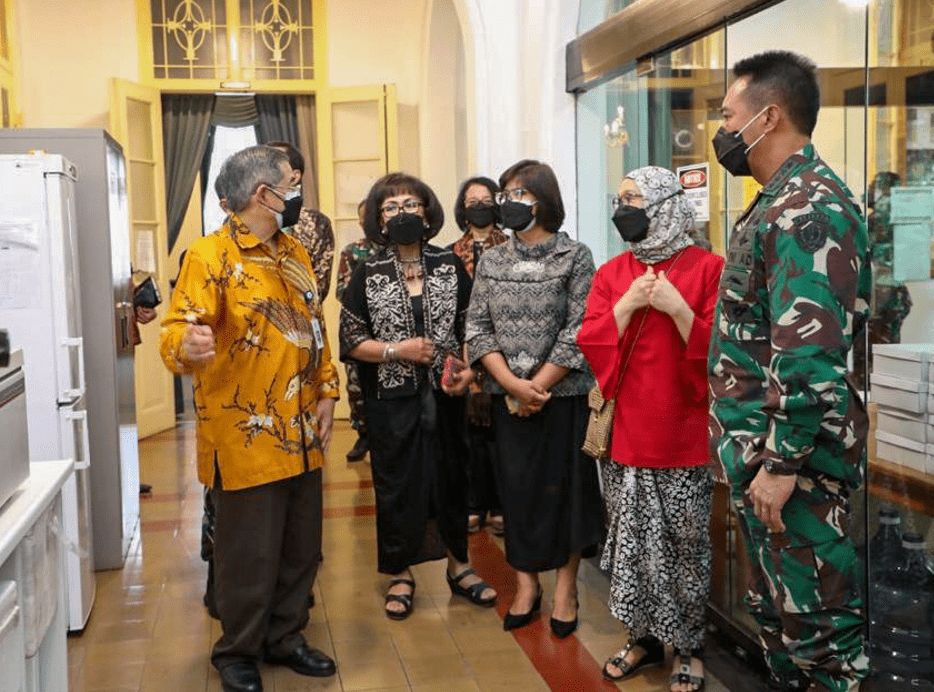
    Jenderal (Purn) Andika Perkasa, Kepala Staf TNI AD pada masanya (kanan), mengunjungi Lembaga Biologi Molekuler Eijkman (LMBE) pada 2021 untuk menandai awal kerja sama untuk uji klinis vaksin malaria. Dari kiri ke kanan: Prof. Amin Soebandrio, Direktur LBME; Prof. Herawati Sudoyo, Deputi Direktur LBME; Dr. Rintis Noviyanti, peneliti LBME; Dr. Safarina G. Malik, peneliti LBME; dan Jenderal Andika Perkasa.

    Para tentara divaksinasi dari Mei sampai September 2022 sebelum bertugas ke Kabupaten Keerom. Selama berada di sana, tim peneliti menangani lebih dari 700 kasus malaria. Mereka melanjutkan pemantauan selama enam bulan setelah para tentara kembali dan menangani 300 kasus tambahan.

    Dua Vaksin Malaria Baru yang Diuji Coba

    Kedua vaksin yang diuji coba adalah Sanaria® PfSPZ dan Sanaria® PfSPZ-CVac. Keduanya terbuat dari parasit malaria hidup, khususnya jenis Afrika Barat, yang dilemahkan dengan cara berbeda. Parasit di dalam Vaksin Sanaria® PfSPZ dilemahkan menggunakan radiasi, sedangkan parasit di dalam Vaksin Sanaria® PfSPZ-CVac dilemahkan dengan obat klorokuin yang diberikan secara oral kepada partisipan studi.

    Hasil uji cobanya menunjukkan bahwa vaksin Sanaria® PfSPZ aman dan dapat ditoleransi dengan baik, sama seperti plasebo. Vaksin Sanaria® PfSPZ-CVac juga terbukti aman dengan efek samping ringan. Kedua vaksin memberikan perlindungan terhadap malaria yang disebabkan parasit Plasmodium falciparum yang ditemukan di Papua, meskipun vaksinnya terbuat dari jenis malaria yang berbeda.

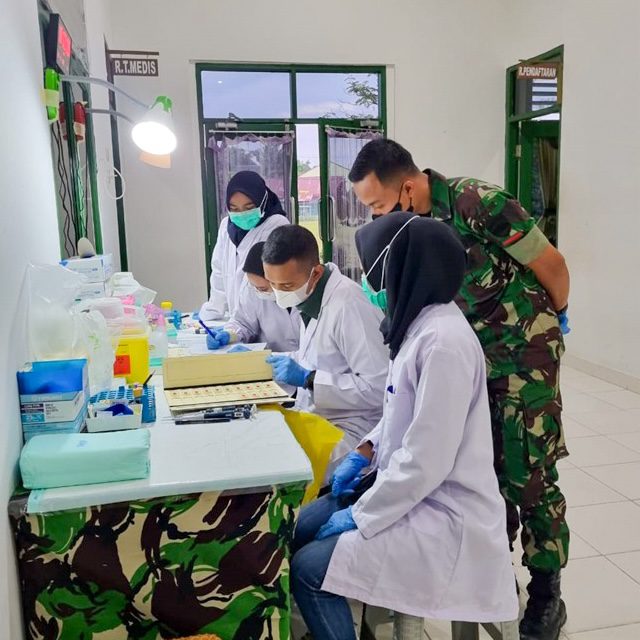
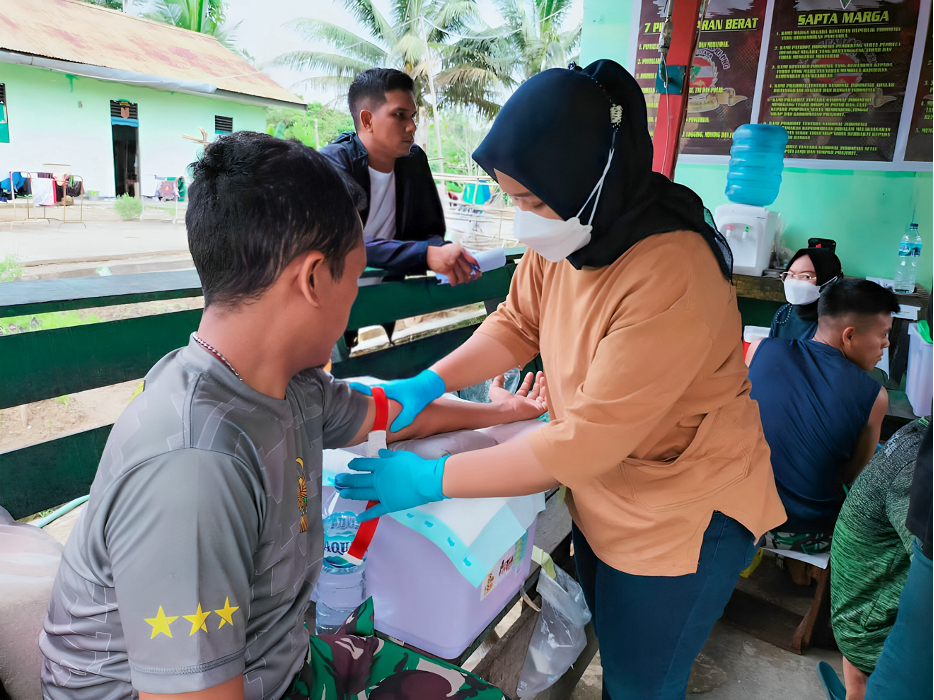
    Pengambilan sampel darah oleh Tim Studi sebagai bagian dari monitoring rutin partisan studi selama di Papua.

    Kerja Sama Merupakan Kunci Keberhasilan Uji Coba Ini

    Uji klinis ini merupakan buah kerja sama antara FK UI, OUCRU Indonesia, Pusat Kesehatan TNI AD (PUSKESAD), dan Pusat Riset Biologi Molekuler Eijkman dari Badan Riset dan Inovasi Nasional (PRBM BRIN).

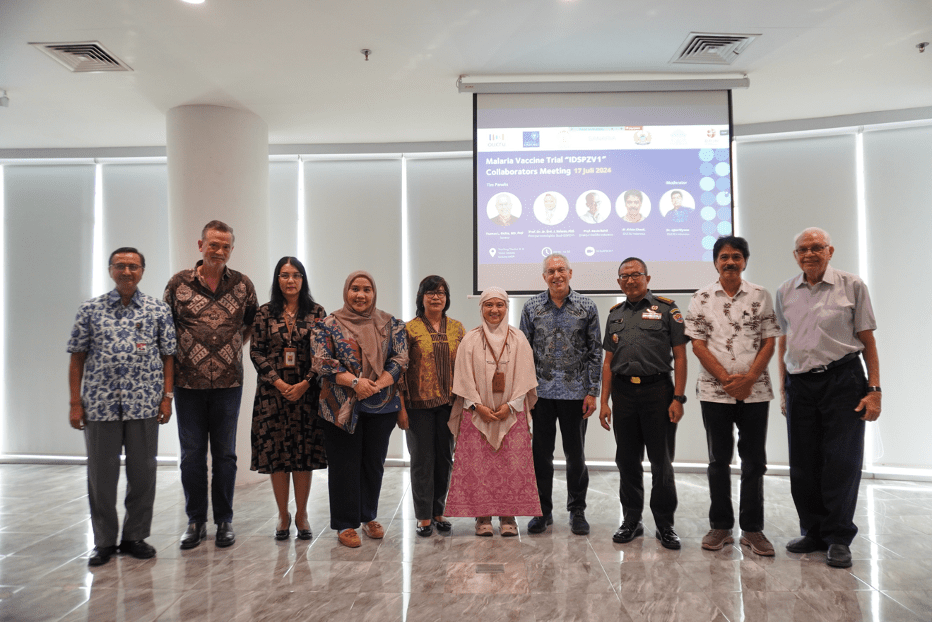
    Tim studi uji coba vaksin malaria saat ‘Scientific Collaborators Meeting’ pada 17 Juli yang diwakili oleh (dari kiri ke kanan): Dr. dr. Soroy Lardo, Research Monitor; Prof. J. Kevin Baird, Direktur OUCRU Indonesia; dr. Minerva Theodora Simatupang dari Kelompok Kerja Malaria Kemenkes RI; dr. Helen Dewi Prameswari, Ketua Kelompok Kerja Malaria Kemenkes RI; Dr. Rintis Noviyanti, peneliti PRBM BRIN; Prof. Erni J. Nelwan, Principal Investigator; Dr. Thomas L. Richie, Chief Medical Officer Sanaria; dr. Sony Endro Cahyo, Dirbinlitbang PUSKESAD; dr. Krisin Chand, Site Medical Supervisor; dan Dr. Narain Punjabi, Research Monitor.

    Direktur OUCRU Indonesia, Prof. J. Kevin Baird, menekankan pentingnya kolaborasi dengan berbagai institusi lokal dalam mencari solusi global bagi penyakit menular, termasuk malaria. “Malaria adalah masalah besar di dunia dan Indonesia. Pekerjaan kami di OUCRU Indonesia mengutamakan penjalinan kerja sama dengan mitra lokal untuk menemukan solusi efektif bagi penyakit menular yang dapat diterapkan di seluruh dunia. Keberhasilan uji coba ini membuktikan kekuatan kemitraan tersebut dan merupakan langkah penting menuju eliminasi malaria,” terangnya.

    Dekan FK UI, Prof. Ari Fahrial Syam, turut menyoroti kerja sama yang memungkinkan terselesaikannya riset ini. Ia mengatakan, “Uji klinik fase 2 tentang vaksin malaria merupakan riset penting dalam pengembangan vaksin. Mudah-mudahan uji klinik bisa berlanjut sehingga keberadaan vaksin ini benar-benar bermanfaat dalam upaya memberantas malaria di Indonesia dan dunia. FK UI terus mendukung berbagai uji klinik the Oxford University Clinical Research Unit (OUCRU) melanjutkan kerja sama yang telah berlangsung sejak 13 tahun yang lalu.”

    Rencana ke Depan

    Chief Medical Officer Sanaria, Thomas L. Richie, mengungkapkan kegembiraannya atas hasil uji klinik ini dan menerangkan rencana Sanaria untuk menciptakan vaksin yang lebih baik lagi. “Kami sangat senang dengan hasil uji cobanya yang menjanjikan, terutama kemampuan vaksin untuk melindungi dari jenis malaria yang berbeda dari yang dipakai untuk membuatnya. Efikasi lintasjenis ini sangat penting untuk eliminasi malaria global karena ada banyak spesies malaria di seluruh dunia. Berdasarkan temuan ini, kami sedang mengembangkan vaksin generasi berikutnya bernama PfSPZ-LARC2 yang diharapkan menunjukkan hasil yang lebih baik lagi,” jelasnya.

    Hasil studi yang lebih rinci akan dipublikasikan pada akhir tahun setelah melalui peer-review. Penelitian yang didanai oleh Congressionally Directed Medical Research Program (AS) dan dipimpin oleh Prof. Erni J. Nelwan dari FK UI ini merupakan langkah penting dalam perjuangan melawan malaria.

  • OUCRU and Universitas Indonesia Complete Historic Malaria Vaccine Trial

    OUCRU and Universitas Indonesia Complete Historic Malaria Vaccine Trial

    In a major achievement, the Faculty of Medicine Universitas Indonesia (FMUI) and OUCRU Indonesia have completed a phase 2 clinical trial for two new malaria vaccines developed by Sanaria Inc. This is the first malaria vaccine trial ever conducted in Indonesia and the first in the Asia-Pacific region in over 30 years.

    This trial’s completion was officially announced during the Scientific Collaborators Meeting held on 17 July 2024, open to the public via Zoom. From left to right: Director of OUCRU Indonesia, Prof. J. Kevin Baird; Principal Investigator of the clinical trial, Prof. Erni J. Nelwan; Site Medical Supervisor, Dr. Krisin Chand; and Chief Medical Officer of Sanaria, Dr. Thomas L. Richie.

    Groundbreaking Research in Malaria

    The trial included 345 Indonesian soldier volunteers from Battalion 132 in Bangkinang, Riau Province, Indonesia. These soldiers received either one of the new malaria vaccines or a placebo before traveling to Keerom District in Papua Province, an area where malaria is endemic. The goal was to see how well the vaccines protected people who had never had malaria before.

    Prof. Erni J. Nelwan from FMUI, the Principal Investigator of this trial, said, “This study is groundbreaking because it involved a malaria-naive population traveling to an endemic region. By vaccinating soldiers who had never been exposed to malaria, we were able to truly test the effectiveness of these vaccines in a real-world setting.”

    Second Lieutenant Kennedi Siregar from Battalion 132 also noted the importance of this study, both for the public and, more specifically, the Indonesian Army. “Our soldiers are frequently deployed in remote areas across the country, especially in malaria-endemic areas. Malaria is a challenge for us. Being involved in this study has helped us understand this disease better; we now know better how to diagnose and treat it properly.”

    General Andika Perkasa, then Chief of Staff of the Indonesian Army (right), visited the Eijkman Institute for Molecular Biology in 2021 to mark the start of a partnership for Indonesia’s first malaria vaccine trial. From left to right: Prof. Amin Soebandrio, Director of Eijkman Institute for Molecular Biology (EIMB); Prof. Herawati Sudoyo, Deputy Director of EIMB; Dr. Rintis Noviyanti, EIMB scientist; Dr. Safarina G. Malik; EIMB scientist; and General Andika Perkasa.

    The soldiers were vaccinated between May and September 2022 and then deployed to Keerom District. During their time there, the research team treated over 700 malaria cases and continued to monitor the soldiers for six months after their return, treating another 300 cases.

    The New Malaria Vaccines Tested

    The two vaccines tested were Sanaria® PfSPZ and Sanaria® PfSPZ-CVac. Both used live malaria parasites from the West African strain that were weakened by different methods. The Sanaria® PfSPZ vaccine used parasites weakened by radiation, while the Sanaria® PfSPZ-CVac vaccine used parasites weakened by chloroquine that was given orally to study participants.

    The Sanaria® PfSPZ vaccine was found to be safe and well-tolerated, similar to a saline placebo. The Sanaria® PfSPZ-CVac vaccine also showed good safety and minor side effects. Both vaccines offered protection against malaria caused by the Plasmodium falciparum parasite found in Papua, which is different from the strain that made up the vaccine.

    A blood test done by the study team as part of routine monitoring of study participants in Papua, Indonesia.

    Partnerships are Key to the Trial’s Success

    The trial was made possible through a partnership between the Faculty of Medicine Universitas Indonesia, OUCRU Indonesia, the Indonesia Army Health Center, and the Eijkman Molecular Biology Research Center of the National Research and Innovation Agency.

    The malaria vaccine trial study team during the Scientific Collaborators Meeting on July 17, represented by (from left to right): Dr. dr. Soroy Lardo, Research Monitor; Prof. J. Kevin Baird, Director of OUCRU Indonesia; dr. Minerva Theodora Simatupang from the Malaria Working Group of the MoH; dr. Helen Dewi Prameswari, Head of the Malaria Working Group of the MoH; Dr. Rintis Noviyanti, scientist at the National Research and Innovation Agency; Prof. Erni J. Nelwan, Principal Investigator; Dr. Thomas L. Richie, Chief Medical Officer of Sanaria; Dr. dr. Sony Endro Cahyo from the Indonesia Army Health Center; dr. Krisin Chand, Site Medical Supervisor; and Dr. Narain Punjabi, Research Monitor.

    Director of OUCRU Indonesia, Prof. J. Kevin Baird, emphasized the importance of partnerships with local institutions in finding global solutions for infectious diseases, including malaria. “Malaria is a significant problem both globally and in Indonesia. Our work at OUCRU Indonesia focuses on collaborating with local partners to find effective solutions against infectious diseases that can be adopted around the world. The success of this trial is a testament to the power of these partnerships and a crucial step toward eliminating malaria,” he said.

    Dean of FMUI, Prof. Ari Fahrial Syam, also highlighted the collaborative effort behind the trial, saying “The phase 2 clinical trial of the malaria vaccine is crucial research in vaccine development. Hopefully, the clinical trial can continue so that the existence of this vaccine can truly benefit efforts to eradicate malaria in Indonesia and the world. FMUI continues to support various clinical trials of OUCRU Indonesia, continuing the cooperation that has been ongoing for the past 13 years.”

    The Next Steps

    The Chief Medical Officer of Sanaria, Thomas L. Richie, expressed his excitement about the results and shared Sanaria’s plan to create an improved vaccine. “We are thrilled with the trial’s promising results, especially the vaccines’ ability to protect against a different malaria strain than the one used to create them. This cross-strain efficacy is crucial for global malaria eradication, as there are many malaria species around the world. Building on these findings, we are developing a next-generation vaccine called PfSPZ-LARC2, hopefully showing even better results,” he explained.

    The detailed results of this study, funded by the Congressionally Directed Medical Research Program (USA) and led by Prof. Erni J. Nelwan from FMUI, will be published after peer review later this year. This trial marks a significant advancement in the fight against malaria, demonstrating the potential of innovative vaccines to combat this deadly disease on a global scale.

  • Peneliti OUCRU Indonesia Raih Presentasi Poster Terbaik di International Pandemic Sciences Conference 2024

    Peneliti OUCRU Indonesia Raih Presentasi Poster Terbaik di International Pandemic Sciences Conference 2024

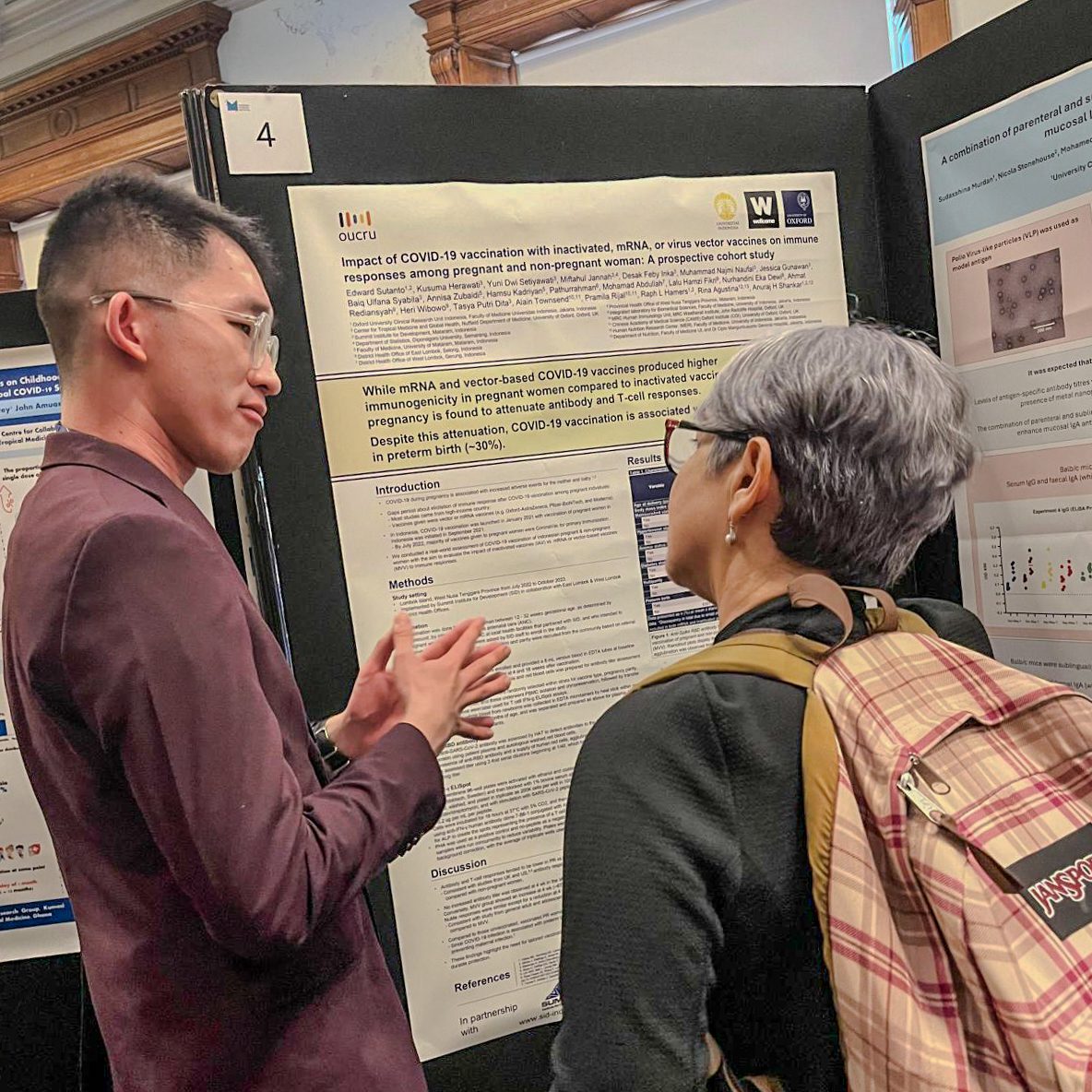
    Salah satu ilmuwan OUCRU Indonesia, dr. Edward Sutanto MPH, memperoleh penghargaan ‘Presentasi Poster Terbaik’ dalam topik Vaksin dan Imunologi di International Pandemic Sciences Conference 2024. Poster Edward berkenaan dengan penelitian OUCRU Indonesia yang baru saja selesai tentang vaksin Covid-19 untuk ibu hamil di Indonesia.

    Dokter Edward Sutanto menjelaskan posternya kepada salah satu peserta dari International Pandemic Sciences Conference 2024 di Oxford.

    Penelitian tersebut menunjukkan bahwa vaksinasi Covid-19 saat hamil dapat mengurangi risiko kelahiran prematur sekitar 30%. Vaksin mRNA (Pfizer serta Moderna) dan vaksin berbasis vektor (AstraZeneca) menghasilkan respons imun terhadap Covid-19 yang lebih kuat dibandingkan vaksin inaktif (Sinovac dan SinoPharm), meskipun kehamilan melemahkan respons imun ini.

    Studi yang dipresentasikan dr. Edward (dikenal sebagai studi “PregVax”) mempelajari bagaimana vaksin-vaksin Covid-19 memengaruhi ibu hamil dan bayinya. Penelitian ini secara khusus menyelidiki bagaimana vaksinasi, termasuk injeksi ‘booster’, memicu kekebalan terhadap Covid-19 pada ibu hamil dan bagaimana kekebalan ini ditransfer dari ibu hamil ke bayinya. Studi ini juga melihat dampk terhadap kondisi kehamilan dan keamanan dari vaksin-vaksin yang diteliti.

    PregVax melibatkan lebih dari 12.000 perempuan dan 6.000 bayi di Indonesia. Penelitian ini dilakukan bersama dengan para kolaborator dari Universitas Indonesia, Universitas Diponegoro, Universitas Mataram, Summit Institute for Development, beberapa dinas kesehatan, Chinese Academy of Medical Sciences Oxford Institute, dan MRC Weatherall Institute. Studi ini didanai oleh Chinese Center for Disease Control and Prevention.

    Edward bekerja di bawah Program Kesehatan Masyarakat di OUCRU Indonesia dan merupakan mahasiswa DPhil di University of Oxford.

    Edward berkomentar, “Saya senang kami menerima banyak pertanyaan dan ketertarikan terhadap PregVax selama konferensi berlangsung. Ini adalah penelitian yang penting untuk dilakukan di negara berpenghasilan rendah dan menengah, seperti Indonesia, karena sebagian besar penelitian vaksin COVID-19 cenderung berasal dari negara berpenghasilan tinggi. Penelitian kami mengungkapkan bahwa kehamilan melemahkan respons imun yang dihasilkan oleh vaksin COVID-19, menyoroti urgensi strategi vaksinasi khusus untuk kelompok berisiko tinggi ini.”

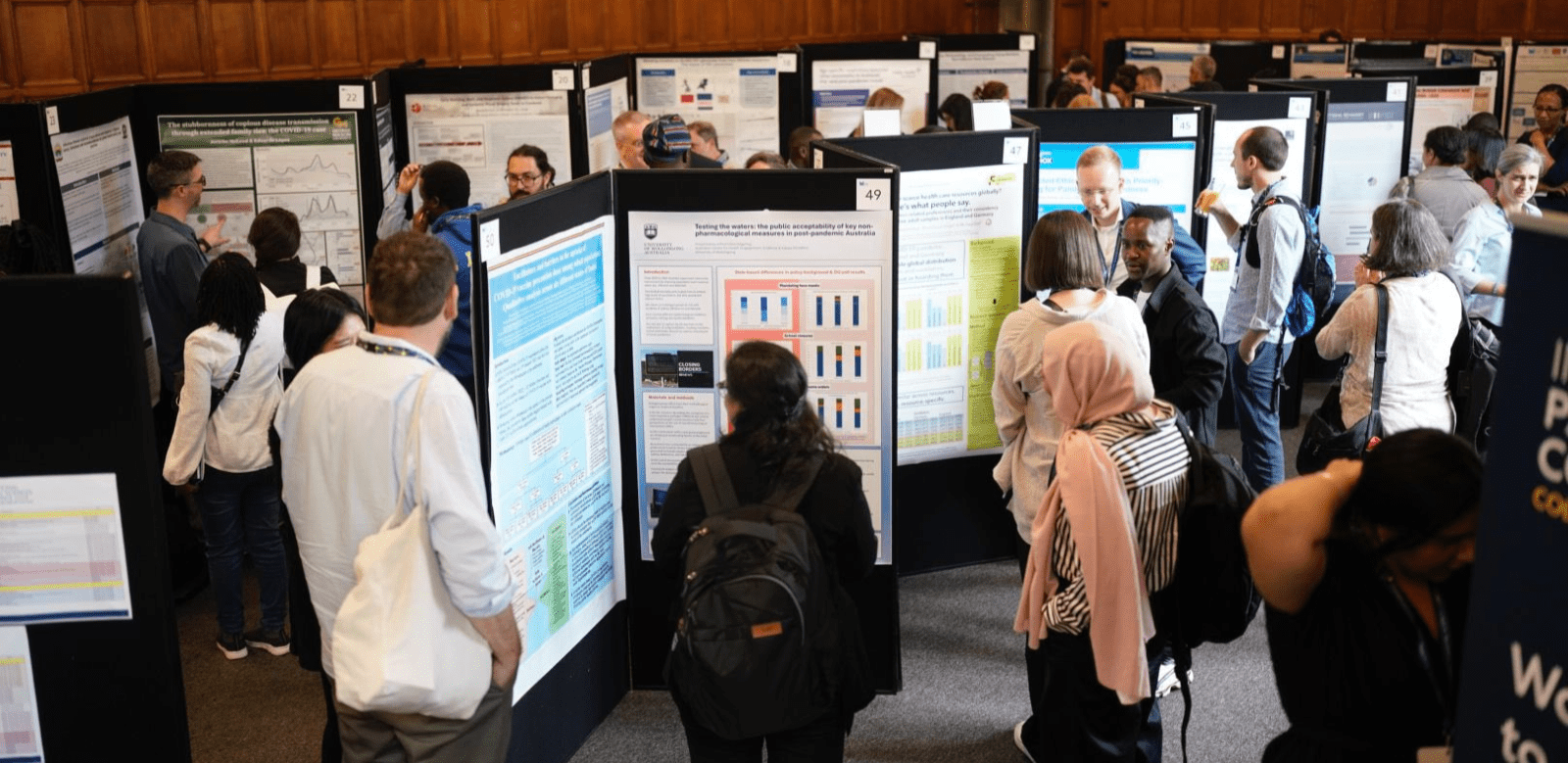
    Edward adalah salah satu dari sekian banyak peneliti OUCRU yang menghadiri International Pandemic Sciences Conference 2024. Delegasi kami yang terdiri dari berbagai program menampilkan poster-poster penelitian terbaru OUCRU tentang kesiapsiagaan dan respons terhadap pandemi.

    Dari kiri ke kanan: Ida Ayu Sutrisni (OUCRU Indonesia), Dr Nguyen Thanh Ha dan Assoc Prof Jennifer Van Nuil (OUCRU Vietnam) mempresentasikan studi COVID-19 mereka tentang Kohesi Sosial antara Tenaga Kesehatan dan Lapisan Kerentanan.
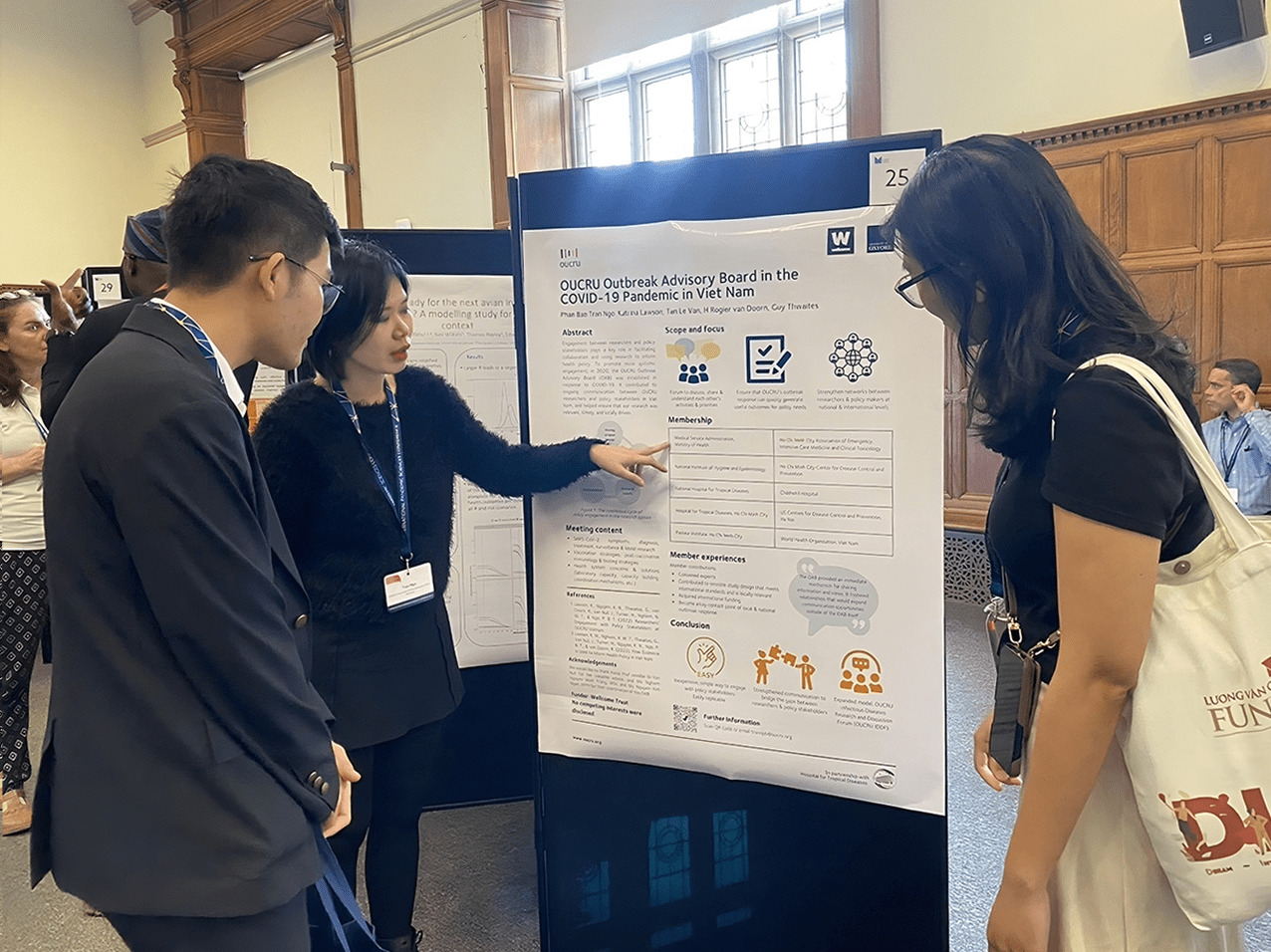
    Ngo Phan Bao Tran,Senior Policy Engagement Coordinator (OUCRU Vietnam), menjelaskan upaya para peneliti OUCRU dalam menggaet pemangku kepentingan di Vietnam.
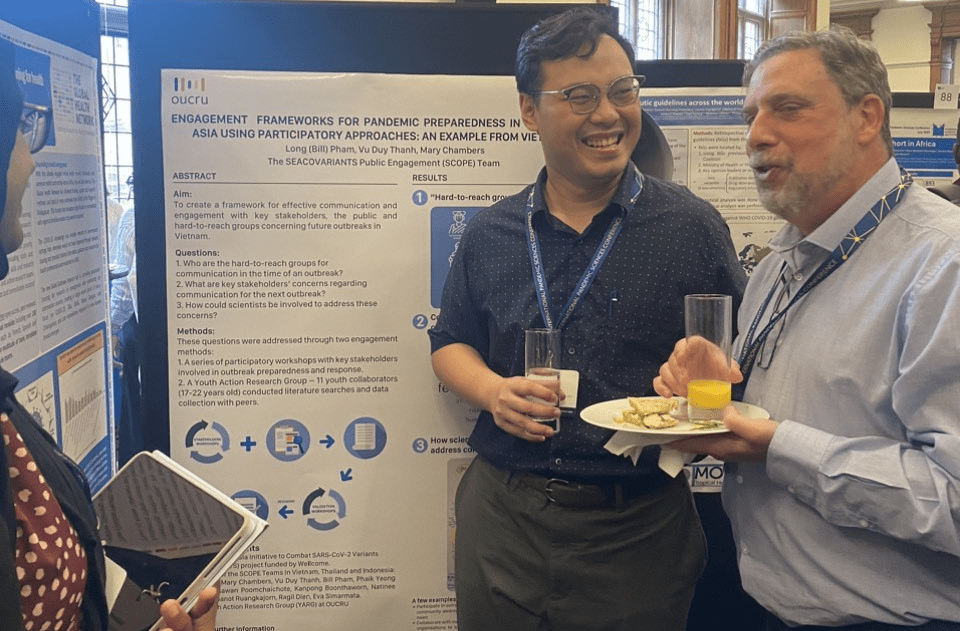
    Pham Ngoc Long (Bill) (OUCRU Vietnam), mempresentasikan kerangka kerja pelibatan masyarakat untuk kesiapsiagaan pandemi sebagai bagian proyek unggulan Southeast Asia Initiative to Combat SARS-CoV-2 Variants (SEACOVARIANTS)
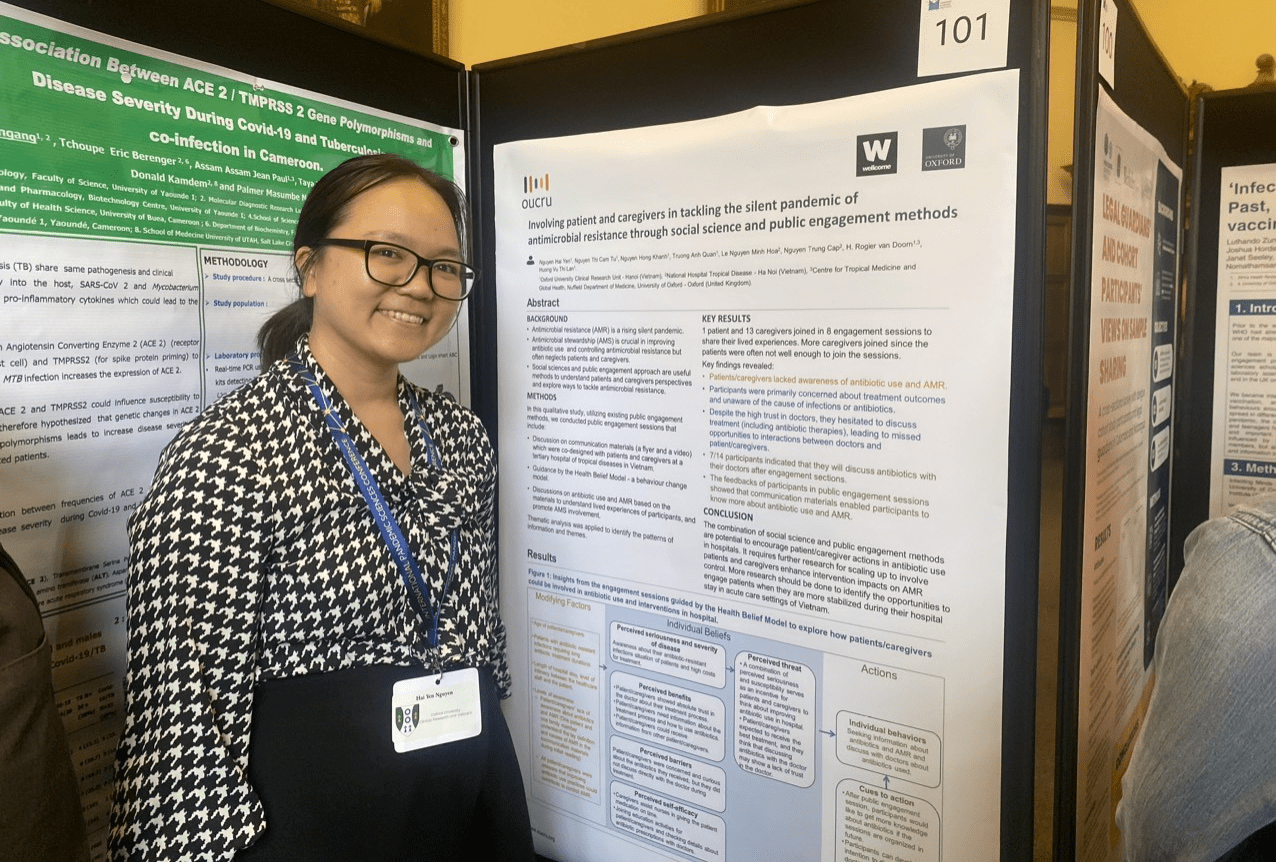
    Nguyen Hai Yen (OUCRU Vietnam) dengan penelitian terbarunya tentang resistensi antimikroba.

    Konferensi Ilmu Pandemi Internasional, yang diselenggarakan setiap tahun oleh Pandemic Sciences Institute, University of Oxford, bertujuan untuk memajukan penelitian dan kebijakan publik untuk mengatasi ancaman epidemi dan pandemi. Tahun ini, konferensinya dihadiri oleh lebih dari 750 delegasi, baik secara luring maupun daring, dari 63 negara berbeda.

  • Nghiên cứu cá»§a OUCRU Indonesia nhận giải thưởng tại Há»™i nghị Khoa học về Đại dịch Quốc tế 2024

    Nghiên cứu của OUCRU Indonesia nhận giải thưởng tại Hội nghị Khoa học về Đại dịch Quốc tế 2024

    Tiến sỹ Edward Sutanto MPH, OUCRU Indonesia, đã được trao giải “Trình bày Poster Khoa học Xuất Sắc Nhất” trong hạng mục Vắc xin và Miá»…n dịch học tại Há»™i nghị Khoa học về Đại dịch Quốc tế 2024. Poster cá»§a Tiến sÄ© Edward trình bày về PregVax má»™t nghiên cứu má»›i về vắc xin COVID-19 dành cho phụ nữ mang thai tại Indonesia.

    Bác sĩ Edward Sutanto trình bày poster tại Hội nghị Khoa học về Đại dịch Quốc tế 2024 tại Oxford.

    Nghiên cứu cho thấy Nghiên cứu cho thấy việc tiêm vắc xin COVID-19 khi mang thai giúp giảm khoảng 30% nguy cơ sinh non. Vắc xin sử dụng mRNA (Pfizer và Moderna) và vắc xin vector (AstraZeneca) tạo ra phản ứng miễn dịch chống lại COVID-19 ở phụ nữ mang thai tốt hơn so với vắc xin bất hoạt (SinoVac và SinoPharm), nhưng việc mang thai vẫn làm suy yếu phản ứng này.

    Nghiên cứu được trình bày (được gọi là nghiên cứu “PregVax”) tìm hiểu cách thức một số loại vắc xin COVID-19 ảnh hưởng đến phụ nữ mang thai và trẻ sơ sinh. Nghiên cứu cũng tìm hiểu việc tiêm chủng, bao gồm cả mũi nhắc lại, có tăng cường miễn dịch chống lại COVID-19 ở phụ nữ mang thai hay không và khả năng miễn dịch này được truyền từ mẹ sang con sơ sinh như thế nào. Ngoài ra, còn đánh giá các kết quả thai kỳ liên quan đến các loại vắc xin này, cũng như độ an toàn của chúng.

    PregVax được thực hiện trên 12.000 phụ nữ và 6.000 trẻ sơ sinh ở Indonesia. Nghiên cứu được thực hiện với sự hợp tác của Đại học Indonesia, Đại học Diponegoro, Đại học Mataram, Viện Phát triển Summit, một số sở y tế địa phương ở Indonesia, Viện Khoa học Y tế Trung Quốc Viện Oxford và Viện MRC Weatherall. Nghiên cứu được Trung tâm Kiểm soát và Phòng ngừa Dịch bệnh Trung Quốc tài trợ.

    Tiến sĩ Edward đang làm việc tại Chương trình Sức khỏe Cộng đồng thuộc OUCRU Indonesia và là sinh viên DPhil tại Đại học Oxford.

    Tiến sĩ Edward phát biểu, “Tôi rất vui vì PregVax nhận được nhiều câu hỏi và sự quan tâm trong hội nghị. Đây là một nghiên cứu quan trọng được thực hiện ở một quốc gia thu nhập thấp và trung bình như Indonesia, vì hầu hết các nghiên cứu về vắc xin COVID-19 đều đến từ các quốc gia thu nhập cao. Nghiên cứu của chúng tôi cho thấy thai kỳ làm giảm phản ứng miễn dịch do vắc xin COVID-19 tạo ra, do đó nhấn mạnh sự cấp thiết của một chiến lược tiêm chủng đặc biệt được thiết kế riêng cho nhóm nguy cơ cao này.”

    Tiến sĩ Edward là một trong số nhiều nhà nghiên cứu của OUCRU tham dự Hội nghị Khoa học về Đại dịch Quốc tế 2024. Các đại biểu đã trình bày một số poster, giới thiệu các nghiên cứu mới nhất của OUCRU về việc phòng, chống dịch bệnh.

    Từ trái sang: Ida Ayu Sutrisni (OUCRU Indonesia), BS Nguyễn Thanh Hà và PGS TS Jennifer Van Nuil (OUCRU Việt Nam) trình bày nghiên cứu COVID-19 vềSự gắn kết xã hội trong cộng đồng Nhân viên Y tế và Các tầng lớp tổn thương.
    Ngô Phan Bảo Trân, Điều phối viên Cấp cao Kết nối Chính sách (OUCRU Việt Nam), giới thiệu vềNỗ lực của OUCRU trong kết nối với các nhà hoạt định chính sách tại Việt Nam.
    Ths Phạm Ngọc Long (Bill) (OUCRU Việt Nam), trình bày khung tham vấn cộng đồng về việc sẵn sàng ứng phó đại dịch; trong khuôn khổ của dự án trọng điểm Sáng kiến Đông Nam Á Phòng chống Biến thể SARS-CoV-2 (SEACOVARIANTS)
    Ths Nguyễn Hải Yến (OUCRU Việt Nam) với nghiên cứu mới nhất về kháng thuốc kháng sinh.

    Hội nghị Khoa học về Đại dịch Quốc tế, được tổ chức hàng năm bởi Viện Khoa học về Đại dịch, Đại học Oxford, nhằm mục đích thúc đẩy nghiên cứu và chính sách công để giải quyết các mối đe dọa dịch bệnh và đại dịch. Năm nay, hội nghị chào đón hơn 750 đại biểu tham dự trực tiếp và trực tuyến tại Oxford, với sự tham gia của đại diện từ 63 quốc gia khác nhau.

  • OUCRU Indonesia Researcher Wins Best Poster Presentation at International Pandemic Sciences Conference 2024 

    OUCRU Indonesia Researcher Wins Best Poster Presentation at International Pandemic Sciences Conference 2024 

    OUCRU Indonesia scientist, Dr Edward Sutanto MPH, was awarded ‘Best Poster Presentation’ in the topic of Vaccine and Immunology at the International Pandemic Sciences Conference 2024. Edward’s poster showcased a recently completed study on Covid-19 vaccines for pregnant women in Indonesia. 

    Dr Edward Sutanto presents his poster to one of the participants at the International Pandemic Sciences Conference 2024 in Oxford. 

    The study showed that getting vaccinated against Covid-19 when pregnant reduces the chance of premature birth by about 30%. Vaccines that use mRNA (Pfizer and Moderna) and vector-based vaccines (AstraZeneca) produce better immune response against COVID-19 in pregnant women compared to inactivated vaccines (SinoVac and SinoPharm), but pregnancy still weakens this response.

    The study presented (called “the PregVax study”) investigated how several types of Covid-19 vaccines affected pregnant women and their newborns. The study specifically examined how vaccination, including booster shots, induced immunity against Covid-19 in pregnant women and how this immunity is transferred from pregnant women to newborns. Additionally, the study assessed pregnancy outcomes related to these vaccines as well as their safety.

    PregVax involved a cohort of more than 12,000 women and 6,000 newborns in Indonesia. It was conducted with collaborators from the University of Indonesia, University of Diponegoro, University of Mataram, Summit Institute for Development, several regional health offices in Indonesia, Chinese Academy of Medical Sciences Oxford Institute, and MRC Weatherall Institute. It received funding from the Chinese Center for Disease Control and Prevention.

    Edward works under the Community Health Programme at OUCRU Indonesia and is a DPhil student at the University of Oxford.

    Edward commented, “I am glad we received many questions and interest in PregVax during the conference. This is an important study to be conducted in a low- and middle-income country, like Indonesia, as most COVID-19 vaccine studies tend to come from high-income countries. Our study reveals that pregnancy weakens immune responses produced by COVID-19 vaccines, highlighting the urgency for a special vaccination strategy for this high-risk group.”

    Edward was one of many OUCRU researchers who attended the International Pandemic Sciences Conference 2024. Our delegates from across our programme presented several posters showcasing OUCRU’s latest research on pandemic preparedness and response.

    From left to right: Ida Ayu Sutrisni (OUCRU Indonesia), Dr Nguyen Thanh Ha and Assoc Prof Jennifer Van Nuil (OUCRU Vietnam) present their COVID-19 studies on Social Cohesion among Healthcare Workers and Vulnerability Layers.
    Ngo Phan Bao Tran, Senior Policy Engagement Coordinator (OUCRU Vietnam), highlights OUCRU Outbreak Advisory Board in the COVID-19 Pandemic in Viet Nam
    Pham Ngoc Long (Bill) (OUCRU Vietnam), presents the community engagement framework for pandemic preparedness under the flagship project Southeast Asia Initiative to Combat SARS-CoV-2 Variants (SEACOVARIANTS) 
    Nguyen Hai Yen (OUCRU Vietnam) with her latest research on antimicrobial resistance.

    The International Pandemic Sciences Conference, held annually by the Pandemic Sciences Institute, the University of Oxford, aims to advance research and public policies to address epidemic and pandemic threats. This year, the event welcomed over 750 delegates in Oxford and online, with participants from 63 different countries.

  • Community Engagement and Involvement: Enhancing Research Impact

    Community Engagement and Involvement: Enhancing Research Impact

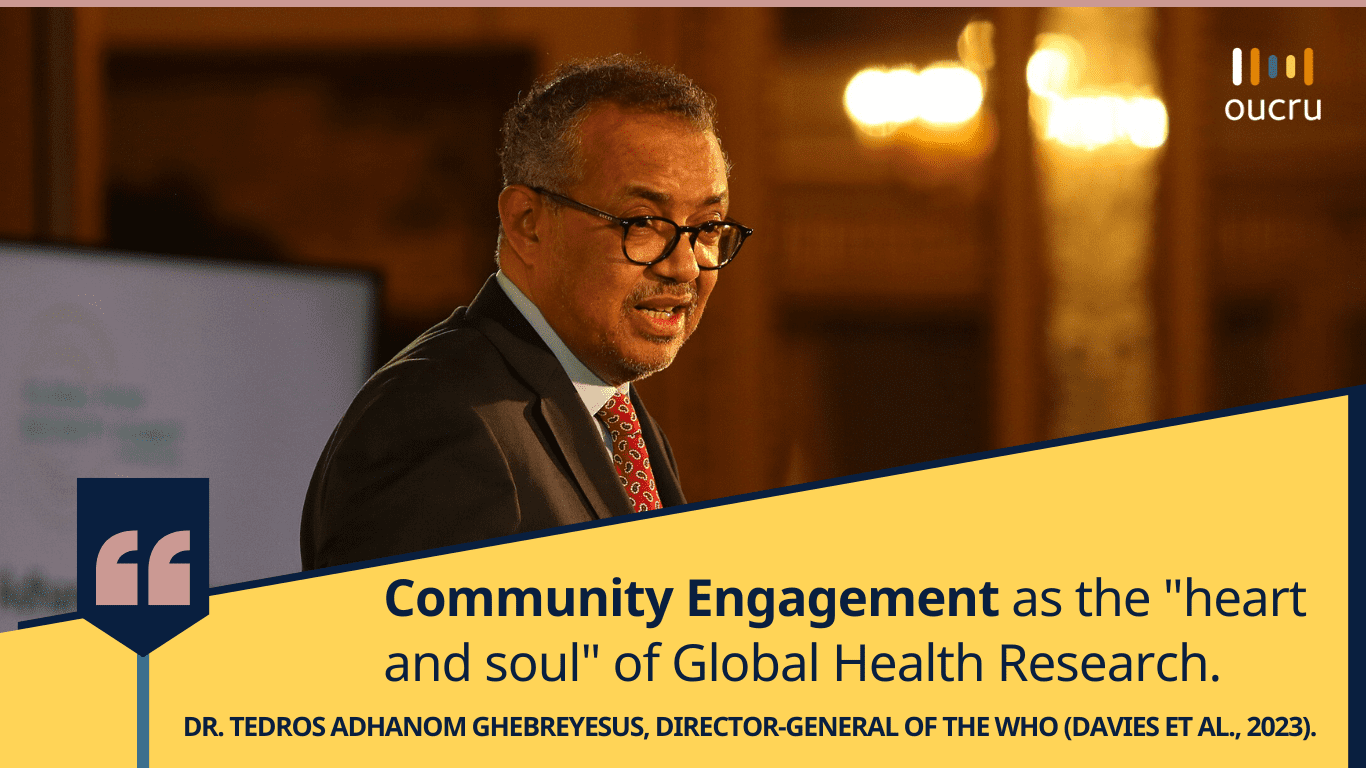
    At OUCRU, we have integrated public and community engagement projects into our research program since 2011. But what exactly is community engagement (and involvement), and why is it important to global health research? Let’s take a look at the summary of a new free course on MESH, a community engagement knowledge and professional support hub by The Global Health Network, and the research outputs made by and led by community members at OUCRU throughout the years to find out.

    What is Community Engagement and Involvement (CEI)?

    Community engagement and involvement is a process that involves stakeholders and communities likely to be affected and/or beneficial by research process and outcomes.

    Engaging these communities will help researchers to ensure that their work is relevant, valuable, and culturally sensitive. This process not only enhances the research but also empowers community members to express their needs and perspectives.

    Why Does Community Engagement Matter?

    It’s ethical: CEI ensures appropriate methods of engagement and informed consent are used in research. When done well, CEI can enhance the protection of research participants and reduce the risk of stigmatisation.

    It helps improving research implementation: By involving community members and stakeholders, researchers can gain insights into their views and concerns about specific projects. This dialogue helps address fears and misconceptions, ensuring that research activities are acceptable and feasible for the community.

    It enhances research relevance: Involving communities in the research process helps tailor the research to their needs, increasing its relevance and impact.

    Learn More with MESH’s Free Course

    To further understand the importance and potential of community engagement and involvement in research, MESH—a community engagement knowledge and professional support hub by The Global Health Network—offers a free course. This course provides valuable insights into the core values and best practices of CEI.

    You can access this Community Engagement and Involvement course here.

    Explore more about OUCRU’s community engagement and involvement commitment and outputs here.