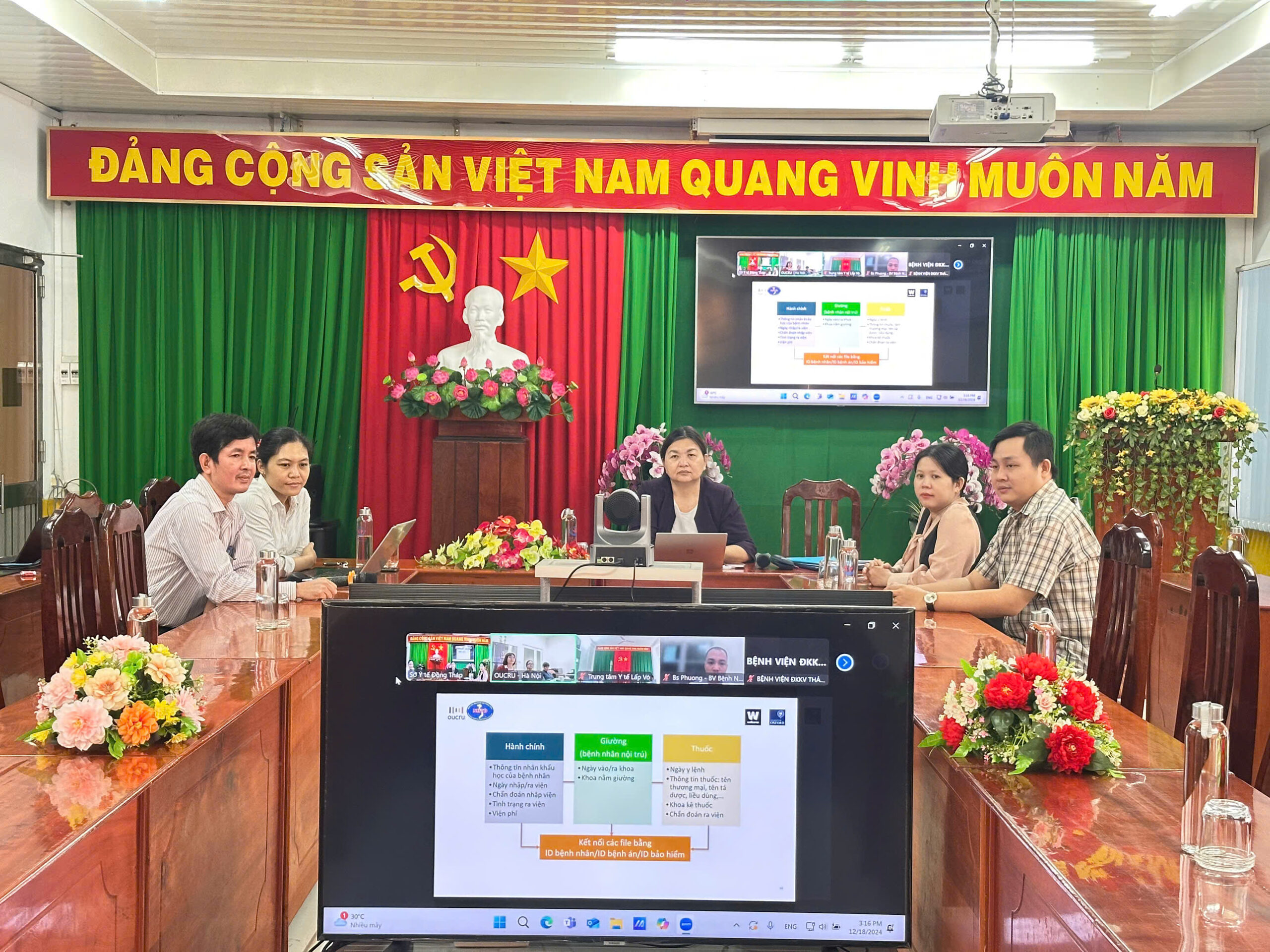
The first virtual network initiation meeting took place on December 18, 2024, hosted by the Dong Thap Department of Health and chaired by Deputy Director Lam Thi Ngoc Kim. Participants included Dong Thap General Hospital, Sa Dec General Hospital, Thap Muoi Regional General Hospital, and three district health centers: Cao Lanh, Thanh Binh, and Lap Vo. This demonstrates the strong commitment of local healthcare leadership and hospitals in Dong Thap to effectively address AMR challenges and improve healthcare outcomes.
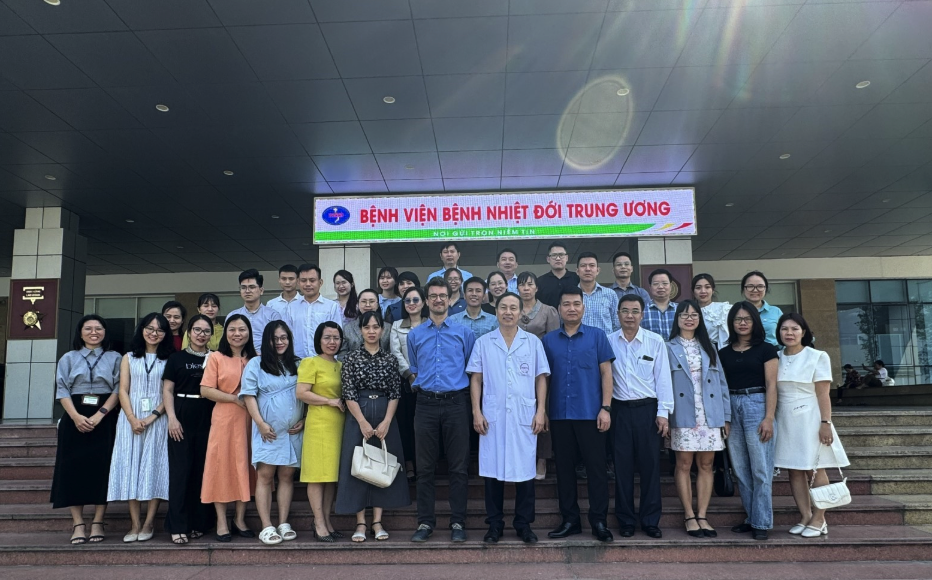
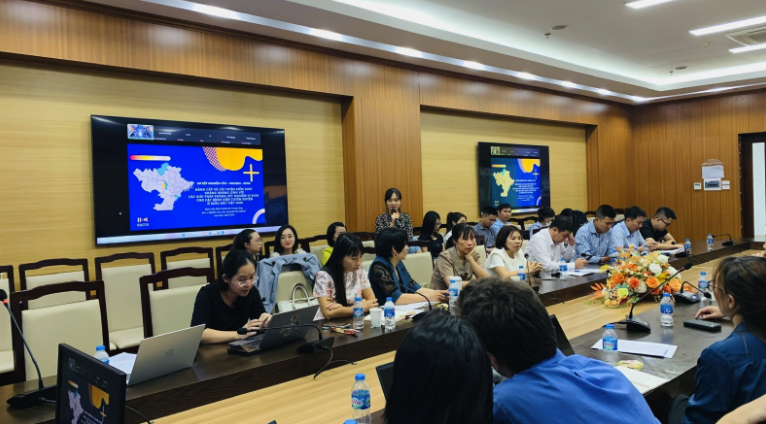
Participants in the virtual meeting, including representatives from OUCRU, NHTD, and Dong Thap Department of Health.
The first virtual network initiation meeting took place on December 18, 2024, hosted by the Dong Thap Department of Health and chaired by Deputy Director Lam Thi Ngoc Kim. Participants included Dong Thap General Hospital, Sa Dec General Hospital, Thap Muoi Regional General Hospital, and three district health centers: Cao Lanh, Thanh Binh, and Lap Vo. This demonstrates the strong commitment of local healthcare leadership and hospitals in Dong Thap to effectively address AMR challenges and improve healthcare outcomes.
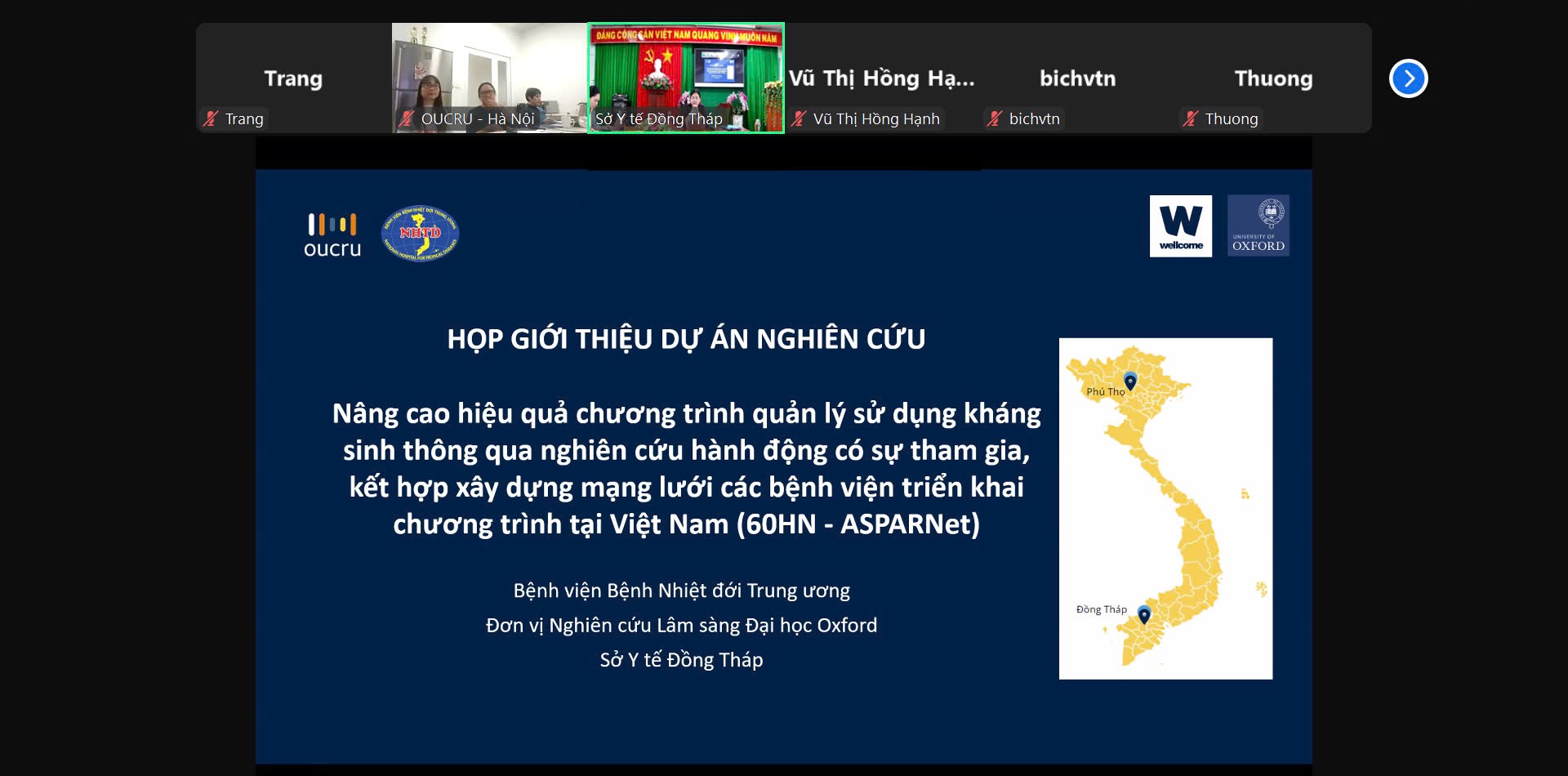
Representatives from NHTD, OUCRU, and the Dong Thap Department of Health provided guidance on the “Evaluating Antimicrobial Stewardship strategies and capacity building through Participatory Action Research and a Network approach in Vietnam (ASPARNet)” project during the meeting. Key topics included research operations, project objectives, capacity-building for AMS implementation, microbiological testing, sample transportation, patient surveys, and initial evaluation activities in Dong Thap hospitals. Discussions also focused on supporting sites in extracting and applying antibiotic usage data for planning AMS program implementation.Â
Funded by the UKRI Medical Research Council, the ASPARNet project aims to evaluate the impact of AMS programs across hospital networks. The study will analyze antibiotic usage, patient clinical outcomes, feasibility, cost-effectiveness, acceptability, equity, sustainability, and scalability of AMS networks. It will also investigate the program’s impact on the prevalence of antimicrobial-resistant gram-negative bacteria, including carbapenem-resistant strains, and identify opportunities to support AMS in specific hospital contexts.
Global and National Mental Health Statistics Among YouthÂ
According to UNICEF, at least 30% of school-age children experienced stress, anxiety, or depression due to health-related social restrictions during and after the pandemic. Poverty, violence, gender social norms, high-pressure learning environments, and stressful life events all contribute to emotional and psychological distress among young people.(1)  Another UNICEF report from 2021 also revealed that more than 1 in 7 adolescents aged 10–19 globally has been diagnosed with a mental disorder.(2)  In Vietnam, 14.9% of the population (about 15 million people) suffer from mental disorders, with depression and anxiety accounting for 5.4%. Similar with UNICEF’s report, in 2020 during COVID-19, depression increased by 28% and anxiety by 26%.(3)  A research study of over 37,000 students at Vietnam National University of Ho Chi Minh City (VNU-HCMC) revealed widespread mental health challenges during the COVID-19 crisis. The study found that 56.8% of students lacked concentration or interest in studying and living, while 56.2% experienced sleep disorders. Students also commonly reported feelings of inadequacy, low self-esteem, and uncertainty about their life purpose.  The study reinforced previous findings on gender differences in mental health, showing that female students tend to have more sensitive stress responses to emergencies, leading to an increased risk of experiencing pressure and stress.Â
A comprehensive mental health support is urgently neccessary
These numbers highlight the urgent need for a systematic approach to young people’s mental health and the importance of developing support systems at home, in schools, and throughout society.  Participants of this study reported to have the limited use of systematic support methods. Most of them relied on self-entertainment, exercise, and staying connected with family and friends to maintain positive mental health.  The research highlighted how the lack of institutional support can amplify students’ mental health issues, particularly among third-year students who face mounting pressure about future employment while preparing for their thesis. The study recommends that public health centers and universities should provide psychosocial support and mental health services, especially for students at high risk of anxiety and depression. Targeted counseling services for career planning, stress management, and networking are among recommendations.Â
How Did Collab Lab Transform This Research into an Engaging Animation?Â
Collab Lab‘s mission is to make health science research more accessible and relatable to young people, and university students are their main target audience and stakeholders. Mental health is also one of Collab Lab’s key focus areas. Therefore, transforming this research becomes Collab Lab’s priority and is a challenge that Collab Lab was eager to conquer.   To make this research more accessible while highlight key academic findings, Collab Lab adopted the popular social media format of livestreaming— the current beloved entertaining platform by young people.  As a reporter, Collab Lab’s “ambassador” (key character) I-sà becomes a streamer reporting on a new “human” who embodies the mental health challenges young people faced during COVID. This creative approach allows viewers to recognise signs of mental health issues and find those related to them while being entertained.  We hope you will enjoy this video. Stay tuned and visit the Collab Lab page to watch the latest episode and all previous ones.  Don’t forget to leave us feedback and share our videos!Â
(*) Duong, C.B., Van Tran, N., Nguyen, A.H. et al. Impacts of COVID-19 crisis and some related factors on the mental health of 37150 Vietnamese students: a cross-sectional online study. BMC Public Health 23, 445 (2023). https://doi.org/10.1186/s12889-023-15317-3
12 Desember 2024 – Uji klinis baru menunjukkan bahwa klorokuin dan hidroksiklorokuin memberikan perlindungan moderat terhadap virus Covid-19. Para partisipan riset yang meminum klorokuin (CQ) atau hidroksiklorokuin (HCQ) punya risiko terinfeksi Covid-19 bergejala 15% lebih rendah dibandingkan kelompok plasebo. Melibatkan lebih dari 4.600 sukarelawan, uji klinis ini merupakan studi terbesar di dunia tentang manfaat kedua obat dalam mencegah Covid-19.
Dipublikasikan di PLOS Medicine, riset bernama COPCOV ini juga menunjukkan bahwa kedua obat bisa menekan risiko penyakit pernapasan lain dan mengurangi absensi kerja akibat sakit. Selain itu, hidroksiklorokuin dan klorokuin terbukti aman serta dapat ditoleransi dengan baik oleh para peserta uji klinis.
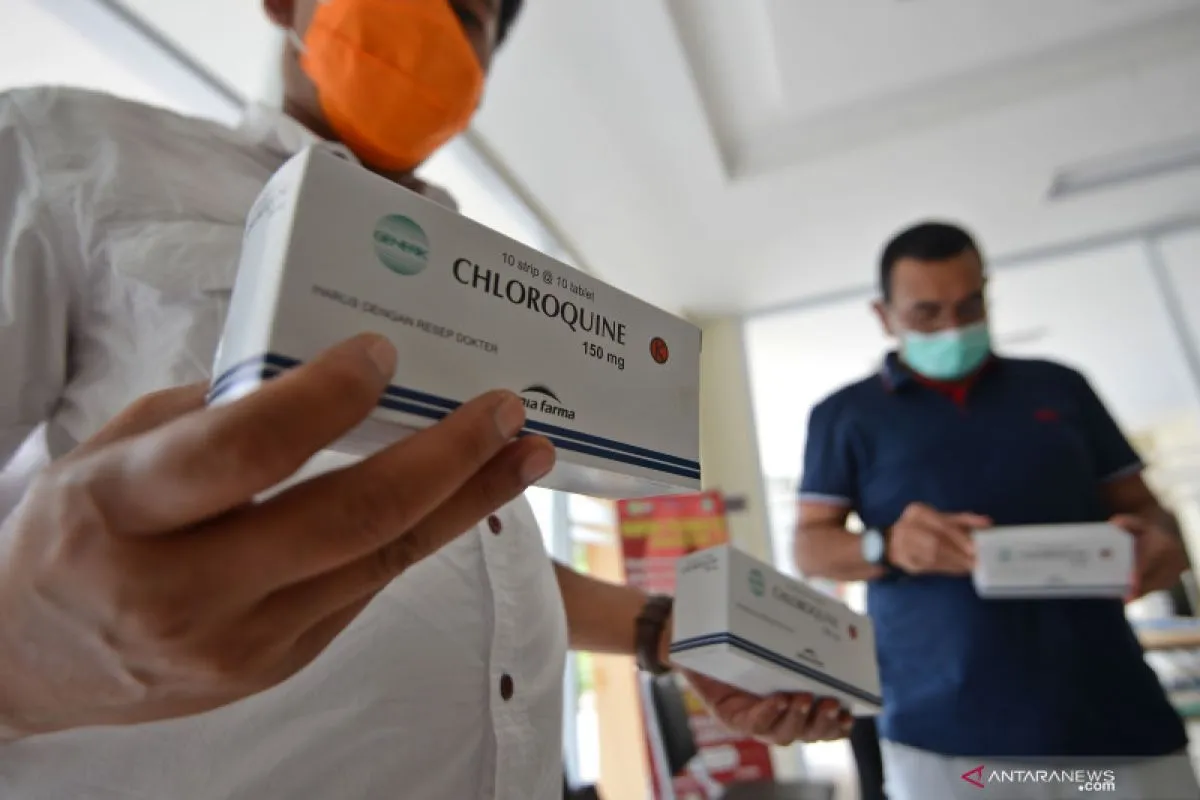
Klorokuin digunakan di berbagai RS di Indonesia sebagai bagian dari pengobatan Covid-19. Foto oleh Aditya Pradana Putra, ANTARA.
OUCRU Indonesia dan OUCRU Nepal turut berperan dalam studi ini. OUCRU Indonesia bertanggung jawab atas pelaksanaan uji klinis COPCOV di Indonesia, sedangkan OUCRU Nepal memimpin risetnya di Nepal. Keduanya bekerja sama erat dengan berbagai mitra lokal di masing-masing negara. Studi ini dipimpin oleh Mahidol Oxford Tropical Medicine Research Unit dan dilaksanakan di 26 lokasi di sebelas (11) negara, termasuk Benin, Pantai Gading, Kenya, Mali, Niger, Pakistan, Thailand, Inggris, dan Zambia.
Perjalanan Penuh Tantangan
Studi COPCOV sudah dimulai sejak tahun 2020, tetapi menghadapi banyak kendala pada awal pelaksanaannya. Pada awal pandemi, beredar klaim keliru tentang bahaya hidroksiklorokuin yang memicu ketakutan publik. Akibatnya, berbagai otoritas kesehatan menarik dukungan terhadap obat ini dan mencabut izin guna daruratnya. Berbagai uji klinis serupa terpaksa dihentikan atau ditunda.
Belakangan, diketahui bahwa obat ini tidak efektif untuk pasien COVID-19 yang sudah dalam kondisi parah. Namun, potensi hidroksiklorokuin dan klorokuin dalam mencegah infeksi masih belum jelas, sehingga perdebatan terus berlangsung.
Meski menghadapi berbagai hambatan, studi COPCOV akhirnya berhasil diselesaikan. Pada Maret 2022, studi ini berhasil merekrut 4.652 sukarelawan di 26 lokasi di sebelas (11) negara.
Perlindungan Moderat terhadap COVID-19 dan Penyakit Pernapasan Lain
Hasil studinya menunjukkan bahwa hidroksiklorokuin dan klorokuin memberikan perlindungan moderat terhadap COVID-19. Setelah mengonsumsi salah satu obat ini setiap hari selama tiga (3) bulan, para peserta studi memiliki risiko sakit COVID-19 bergejala 15% lebih rendah dibandingkan dengan kelompok plasebo. Meskipun tingkat perlindungannya tidak sekuat vaksin, efek ini bermanfaat saat awal pandemi, ketika vaksin belum tersedia.
Studi ini juga mengungkap bahwa klorokuin dan hidroksiklorokuin bisa mencegah penyakit pernapasan lainnya dan mengurangi absensi kerja. Secara rata-rata, para peserta yang meminum salah satu obatnya kehilangan 337 hari kerja per seribu (1.000) orang selama tiga (3) bulan, sementara kelompok plasebo kehilangan 441 hari. Dengan kata lain, obat ini membantu mengurangi absensi kerja hingga 104 hari. Efek ini bisa sangat bermanfaat dalam mengatasi pandemi, terutama saat awal pandemi.
Melihat Ke Depan
Saat ini, hidroksiklorokuin dan klorokuin mungkin sudah jarang digunakan sejak munculnya vaksin. Namun, temuan dari studi COPCOV memberikan wawasan penting tentang peran kedua obat ini saat awal pandemi. “Obat-obat ini tetap menjadi bagian dari alat potensial kita saat menghadapi ancaman kesehatan baru,†kata Assoc. Prof. Raph Hamers, salah satu peneliti dalam studi ini sekaligus Kepala Program Riset Klinis Penyakit Menular OUCRU Indonesia.
Raph juga menekankan pentingnya penelitian berkualitas tinggi dalam menghadapi tantangan kesehatan global. “Menyelesaikan studi ini sangat menantang di tengah pandemi. Penelitian klinis yang baik sangat penting untuk memberikan dasar intelijen dalam menghadapi epidemi di masa depan,†tambahnya.
Studi ini didanai oleh COVID-19 Therapeutics Accelerator dari Wellcome dan diadakan atas kerja sama dengan berbagai institusi penelitian global. Terlepas dari tantangan pandemi, studi COPCOV telah memberikan wawasan penting tentang strategi pencegahan pada awal pandemi serta memperkuat pentingnya penelitian klinis yang menyeluruh dalam menghadapi krisis kesehatan global.
12 December 2024 – The world’s largest study on the use of hydroxychloroquine (HCQ) and chloroquine (CQ) to prevent COVID-19 has published results showing moderate protection against the virus. The trial involved over 4,600 participants and found a 15% reduction in symptomatic COVID-19 among those who took the medications compared to those who took a placebo.
Published in PLOS Medicine, the study, called COPCOV, also showed that both drugs reduced other respiratory illnesses and helped people miss fewer days at work due to sickness. Hydroxychloroquine and chloroquine were also found to be safe and well tolerated by participants.
Chloroquine is used in hospitals in Indonesia as part of treatment of Covid-19. Photo Credit: Aditya Pradana Putra, ANTARA.
OUCRU Indonesia and OUCRU Nepal took part as collaborators in this study, with OUCRU Indonesia managing the trial in Indonesia and OUCRU Nepal overseeing the trial in Nepal, working closely with local partners in both countries. The overall study was led by the Mahidol Oxford Tropical Medicine Research Unit and conducted across 26 sites in 11 countries, including Benin, Côte d’Ivoire, Kenya, Mali, Niger, Pakistan, Thailand, the UK, and Zambia.
A Challenging Journey
The COPCOV study began in 2020 but faced many challenges at the beginning. Early in the pandemic, there was a false claim that hydroxychloroquine was dangerous, which caused public distrust. As a result, regulatory authorities withdrew their support for the drug and revoked emergency authorizations for its use. This led to many trials, which were looking into its potential for treating COVID-19, being paused or stopped altogether.
Then it became clear later that these drugs did not help severely ill COVID patients. However, their potential to prevent infection was still unknown, keeping the controversy alive.
Despite these setbacks, the COPCOV study resumed and completed its recruitment across 26 sites in 11 countries, involving a total of 4,652 participants by March 2022.
Moderate Prevention against COVID-19 and Other Respiratory Illnesses
The study showed that hydroxychloroquine and chloroquine offered moderate protection against COVID-19. After taking either medication daily for 3 months, participants had a 15% lower risk of developing symptomatic COVID-19 compared to those who took a placebo. Although this level of protection was not as strong as that provided by vaccines, it would have been valuable earlier in the pandemic when vaccines were not yet available.
The study also found that hydroxychloroquine and chloroquine helped reduce the number of respiratory illnesses and days people missed from work because of being sick. On average, participants taking these medications missed 337 days of work per 1,000 people over 3 months, while those taking a placebo missed 441 days. This means the medications helped reduce work absences by about 104 days. This benefit could have been useful in managing outbreaks during the early pandemic phase.
Looking Ahead
Though hydroxychloroquine and chloroquine are unlikely to be used widely now given the availability of vaccines, the findings of the COPCOV study contribute valuable insights into the role these drugs could have played during earlier stages of the pandemic. “These drugs will also remain part of our potential toolkit in addressing new health threats,†explained Prof. Raph Hamers, a co-investigator of the study and Head of Clinical Infectious Diseases Research Programme at OUCRU Indonesia.
Prof. Hamers also stressed how this study highlights the crucial role of high-quality trials in tackling health challenges. “Completing this study was hard in the midst of a pandemic. Good intelligence through high-quality clinical research is essential to fight future epidemics. These drugs will remain part of our potential toolkit in addressing new health threats,†he added.
The study was funded by Wellcome’s COVID-19 Therapeutics Accelerator and involved collaboration across multiple global research institutions. Despite the challenges posed by the pandemic, the COPCOV study has provided valuable insights into early COVID-19 prevention strategies and reinforced the importance of rigorous clinical research in the face of global health crises.
Pneumococcal infections are a major public health issue in Vietnam, causing a high number of community-acquired pneumonia cases and deaths, especially among young children. The rise in antibiotic resistance has made treatment even more challenging.
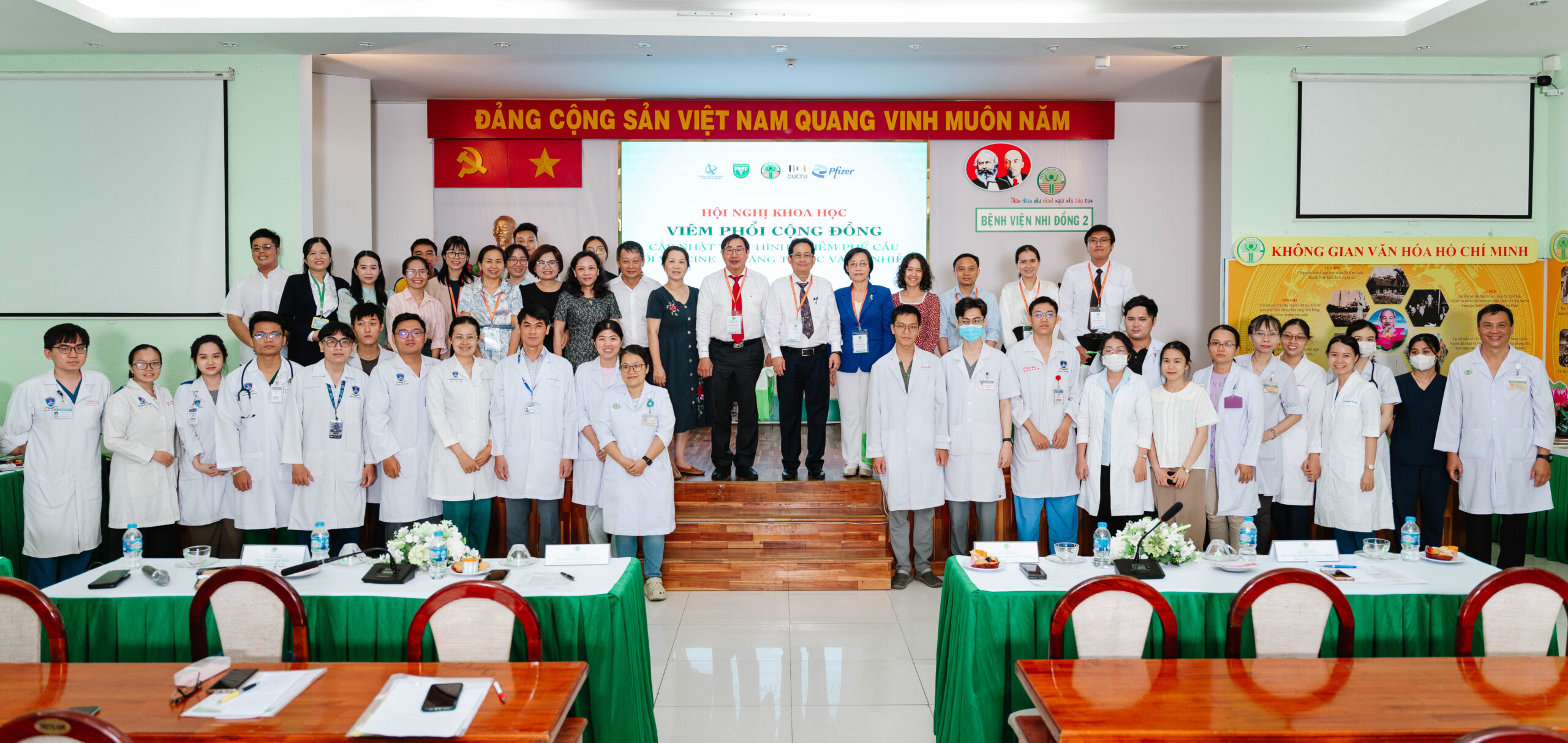
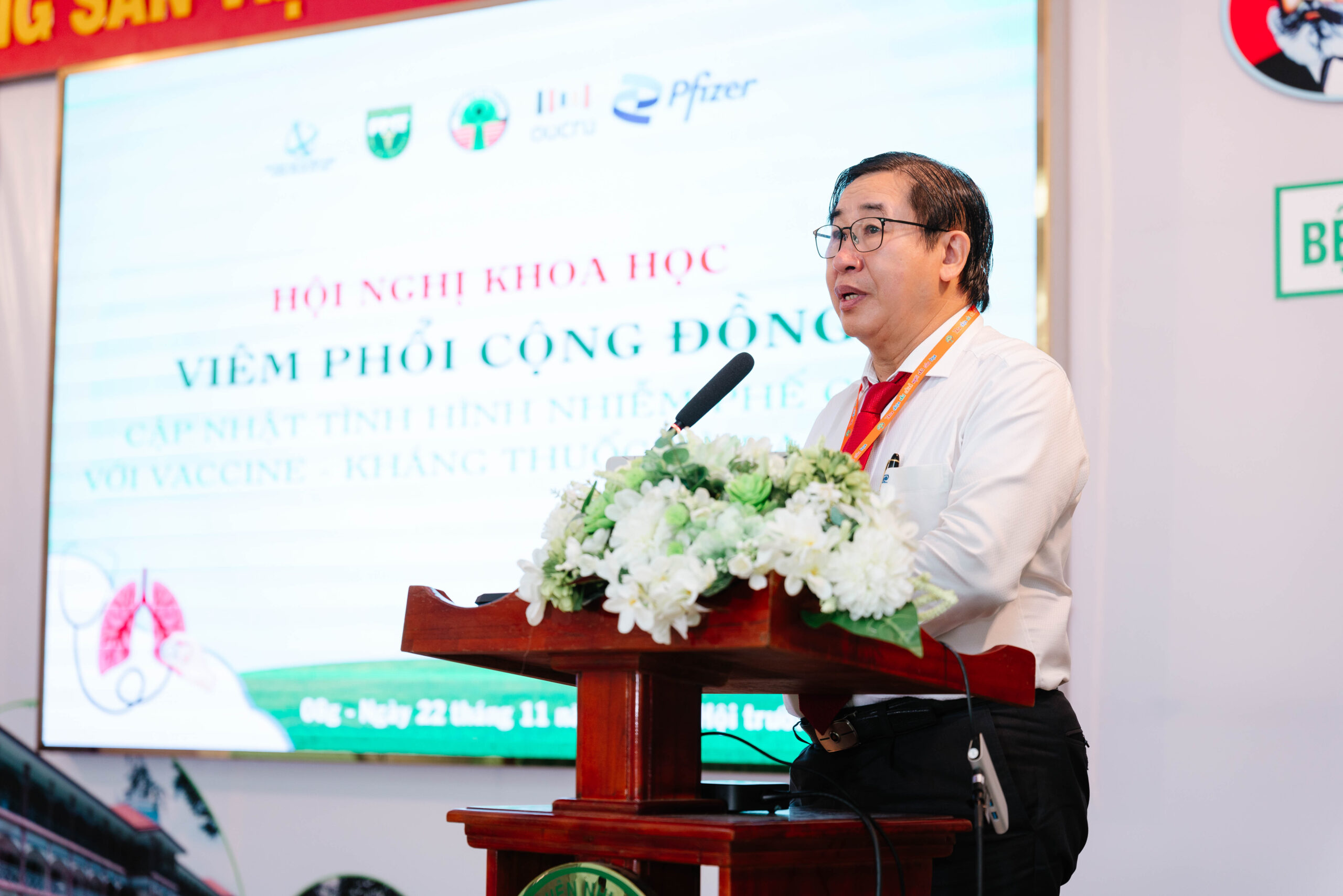
Prof Ngo Minh Xuan, MD, PhD, Chair of the Scientific and Education Council, Former Chairman of the University Council, and Former Rector of Pham Ngoc Thach University of Medicine, delivered the opening speech.Dr Trinh Huu Tung, MD, Specialist level II, Director of Children’s Hospital 2, spoke at the workshop.
The workshop featured presentations by the study team at OUCRU and doctors from Pham Ngoc Thach University of Medicine, who have completed their Master training at OUCRU, highlighting four key aspects of pneumococcal disease :
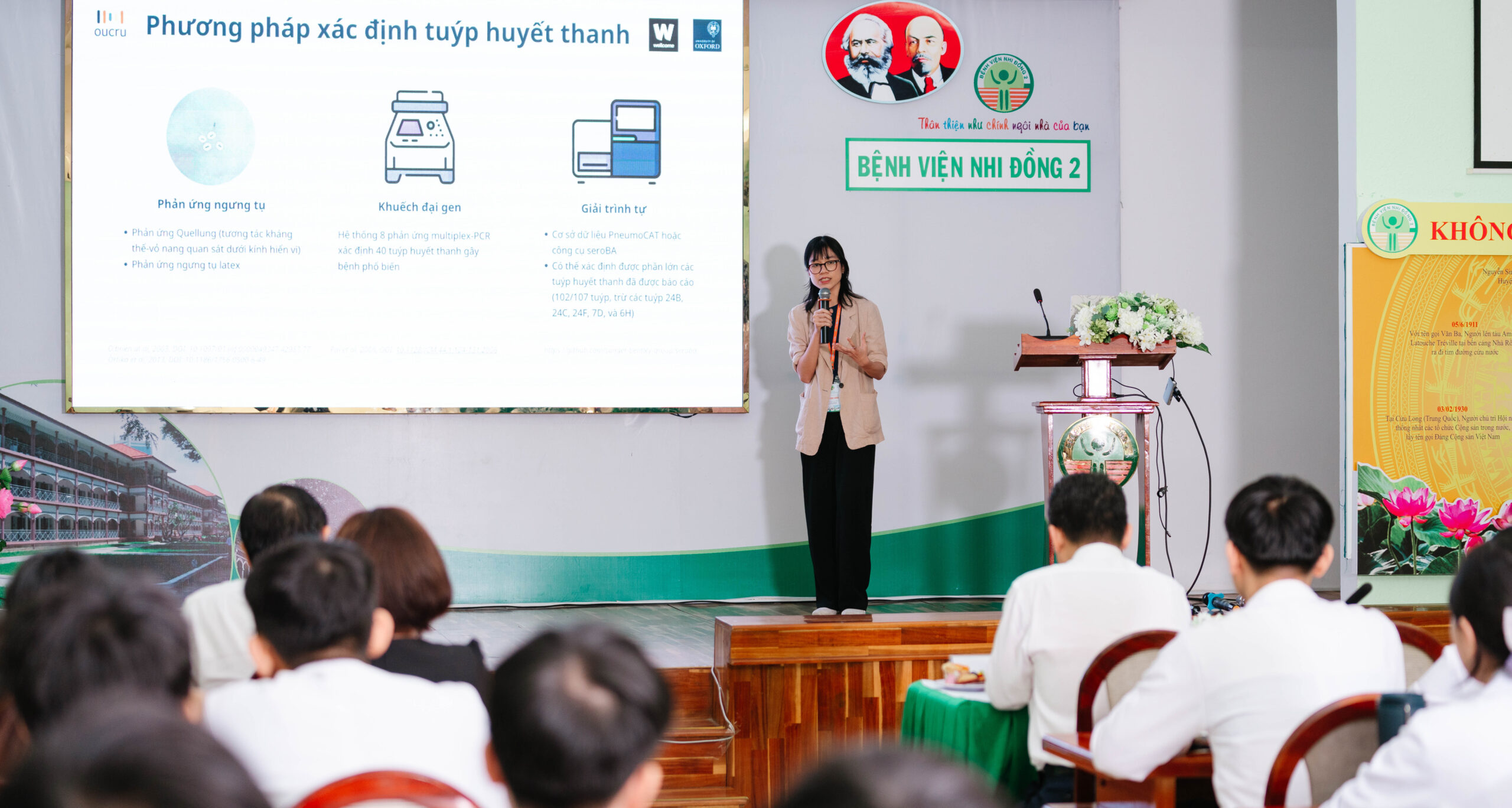
“The distribution of serotypes in healthy children” presented by Ms Huynh Xuan Yen, Pharm, OUCRU.
“The association between antibiotic resistance and pneumococcal serotypes with invasive pneumococcal infections including meningitis and blood-stream infections in children” presented by Ms Dang Nguyen Huong Trinh, MD, MSc, PNTU.
“The distribution of pneumococcal serotypes and their antibiotic resistance in children with community-acquired pneumonia” presented by Dr Nguyen Trung Thanh, PhD, OUCRU.
“The prevalence of co-infection with multiple pathogens in children with community-acquired pneumonia” presented by Mr Tran Si Nguyen, MD, MSc, PNTU and Ms Phung Le Kim Yen, MSc, OUCRU.
These presentations provided valuable insights, combining clinical data with practical applications.
Ms Huynh Xuan Yen, Project Coordinator, Research Assistant at OUCRU, presents current methods for the identification of pneumococcal serotypes
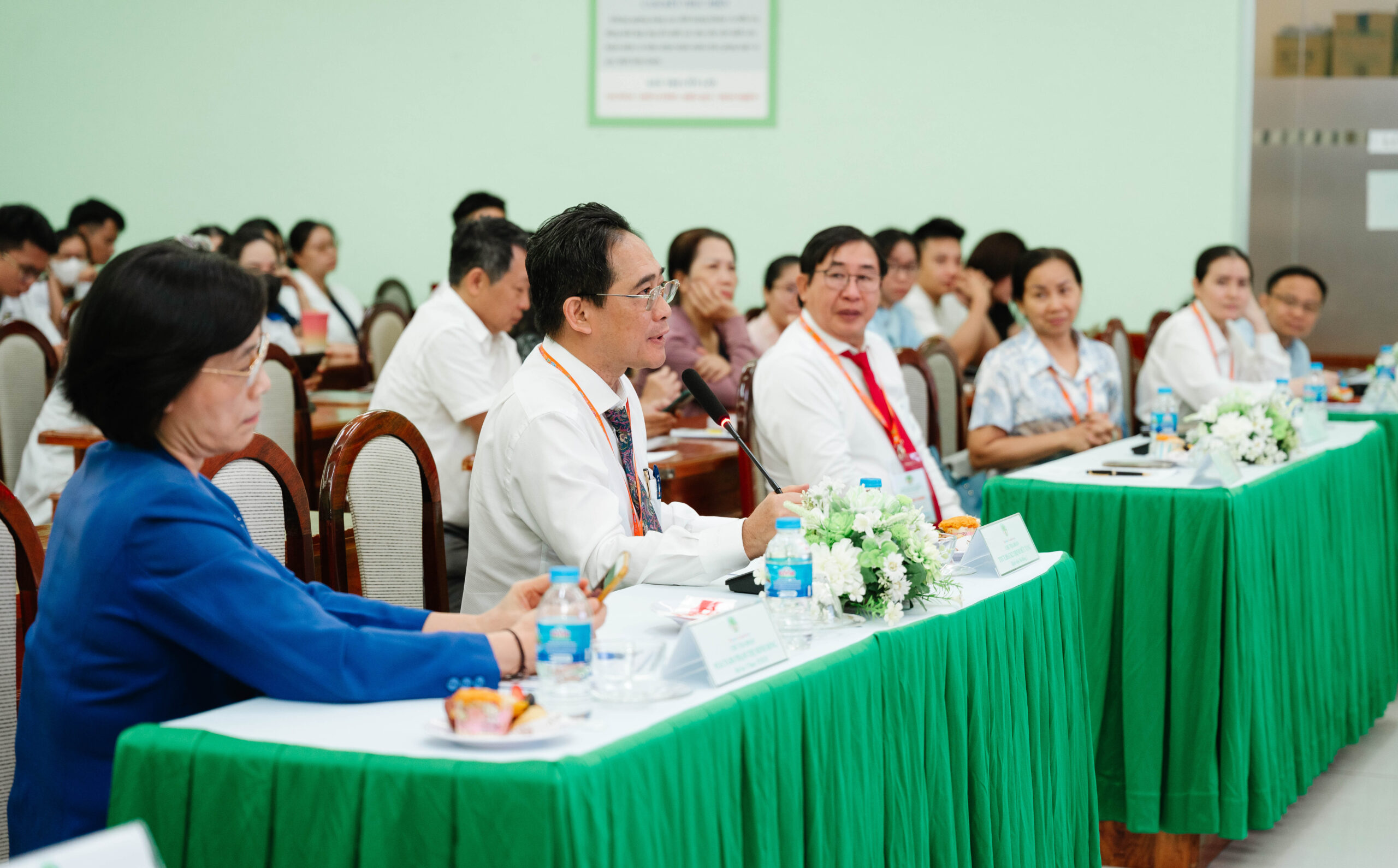
A highlight of the event was the lively debate and discussion on serotype distribution, antibiotic resistance, co-infection and pneumococcal vaccine coverage, where experts shared experiences, shared the need for more information which suggested further investigation.
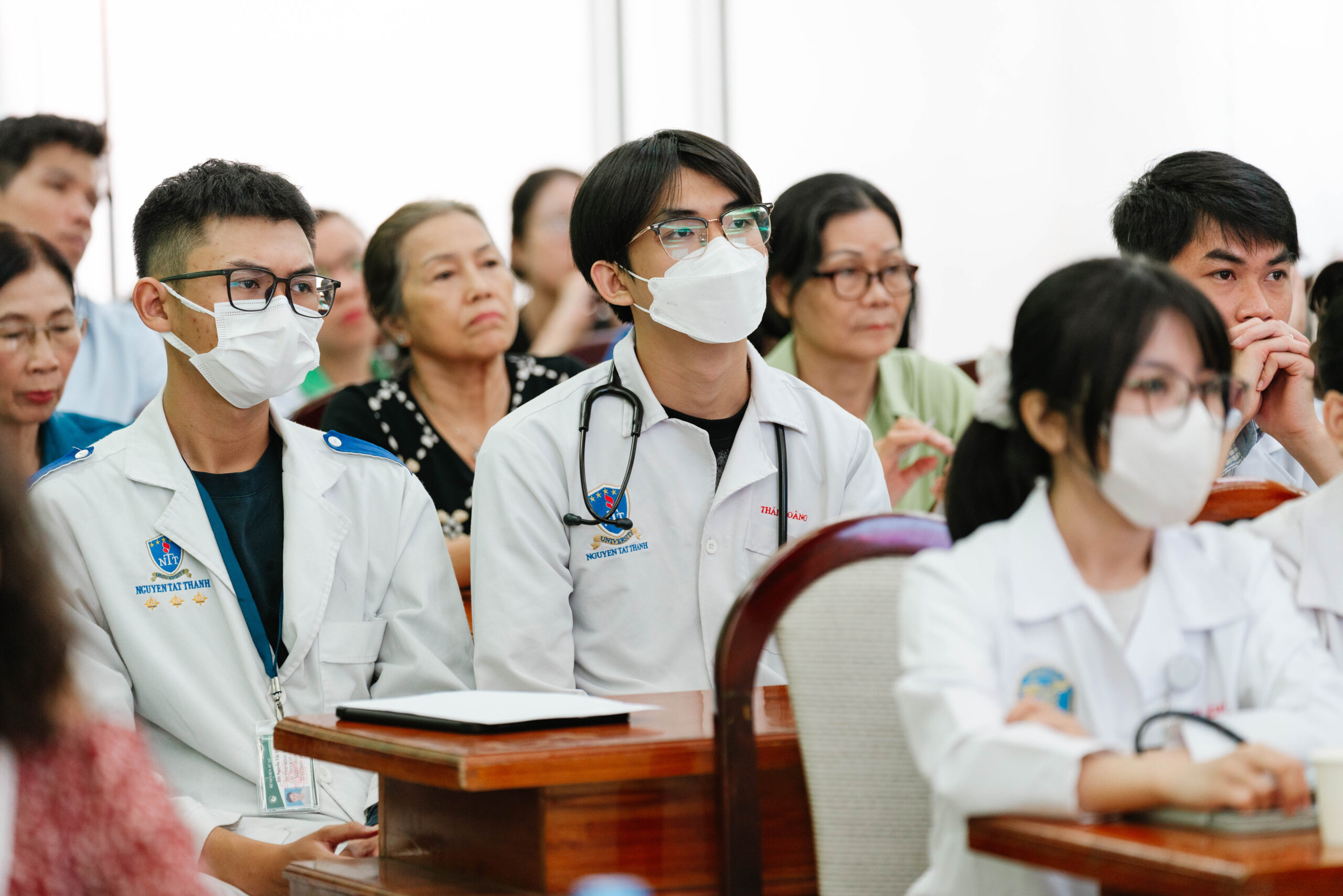
The participants took part in the pre- and post-seminar information collection. With a high satisfaction score of 9/10, the workshop also demonstrated strong and productive research collaborations and provided an excellent platform for the dissemination of project findings.
Via project implementation, OUCRU provided the opportunities for training of medical professionals, including one medical resident, one specialist level II for Children Hospital No. 2 and three Master’s graduates, who are lecturers at the Microbiology Department of Pham Ngoc Thach University of Medicine; and one MSc student for Zoonoses group at OUCRU. The project is seeking a PhD candidate to join the research team and help advance these critical studies.
These trainings were successful thanks to the collaborative efforts between OUCRU scientists and professional educators, Prof Ngo Minh Xuan, Assoc Prof Pham Thi Minh Hong, Specialist level II Dr Trinh Huu Tung, Specialist level II Dr Nguyen Minh Ngoc, Dr Huynh Minh Tuan, and Dr Tran Thi Hue Van.
The workshop aims to update healthcare workers and students on the latest developments in pneumococcal infections
The workshop not only provided professional information but also research into clinical practice, ultimately advancing patient care and public health. Organised under the CHANCES project, this workshop is part of a larger study investigating Streptococcus pneumoniae carriage in Vietnamese children. The project’s findings are anticipated to be published in 2025.
Peneliti OUCRU dari Indonesia, Nepal, dan Vietnam ambil andil dalam penyusunan agenda riset AMR yang baru diterbitkan oleh WHO. Empat puluh topik penelitian prioritas ditentukan bersama berbagai kolaborator dari seluruh dunia untuk memandu riset tentang mikroba resisten obat selama lima tahun ke depan. Perhatian khusus diberikan terhadap tantangan-tantangan yang kerap dihadapi negara berpendapatan rendah dan menengah.
Ancaman AMR Kian Meningkat di Seluruh Dunia
AMR (antimicrobial resistance–AMR) adalah salah satu tantangan kesehatan global paling mendesak saat ini. Ketika mikroba menjadi kebal terhadap obat-obatan yang ada, pengobatan infeksi menjadi semakin sulit, penyakit yang diderita menjadi lebih parah, dan risiko kematian meningkat. Hal ini juga merugikan secara ekonomi, baik dari segi biaya kesehatan maupun produktivitas yang hilang.
Dampak AMR diderita lebih parah di negara berpendapatan menengah dan rendah. Penggunaan antibiotik yang berlebihan atau tidak tepat, ditambah dengan sanitasi yang buruk dan pengendalian penyakit menular yang terbatas, menciptakan kondisi ideal bagi berkembangnya mikroba resisten obat. Akibatnya, masyarakat di wilayah ini menjadi lebih rentan terhadap penyakit yang kebal obat dengan angka kematian yang lebih tinggi.
Assoc. Prof. Raph Hamers berkontribusi terhadap penyusunan agenda penelitian WHO sebagai salah satu anggota tim inti.
“Meskipun perhatian terhadap AMR sebagai masalah kesehatan global semakin meningkat, masih banyak kesenjangan pengetahuan yang menghambat respons efektif terhadap AMR, terutama di negara-negara berpenghasilan rendah dan menengah. Hal ini menghambat kemajuan di area penting seperti pencegahan infeksi, vaksin, diagnostik, pengobatan, dan pengelolaan antimikroba. Untuk mengatasi kesenjangan ini, diperlukan kolaborasi antara pemerintah, akademisi, masyarakat sipil, dan sektor swasta,” ujarnya.
Sebagai Kepala Program Penelitian Klinis Penyakit Menular di OUCRU Indonesia, Raph memimpin beberapa proyek yang berfokus pada AMR di OUCRU Indonesia, termasuk ACORN, NASPA, dan Studi BCB.
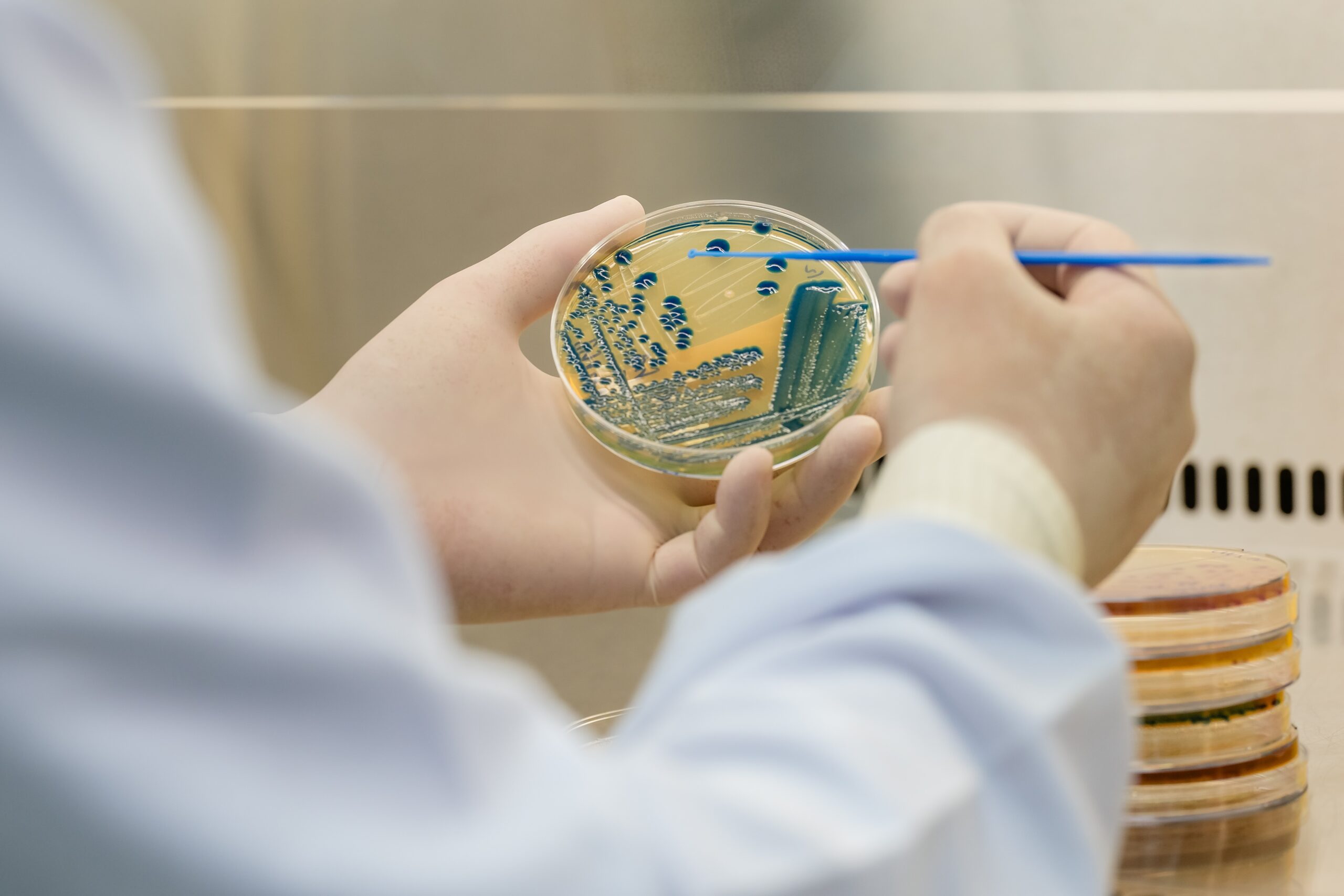
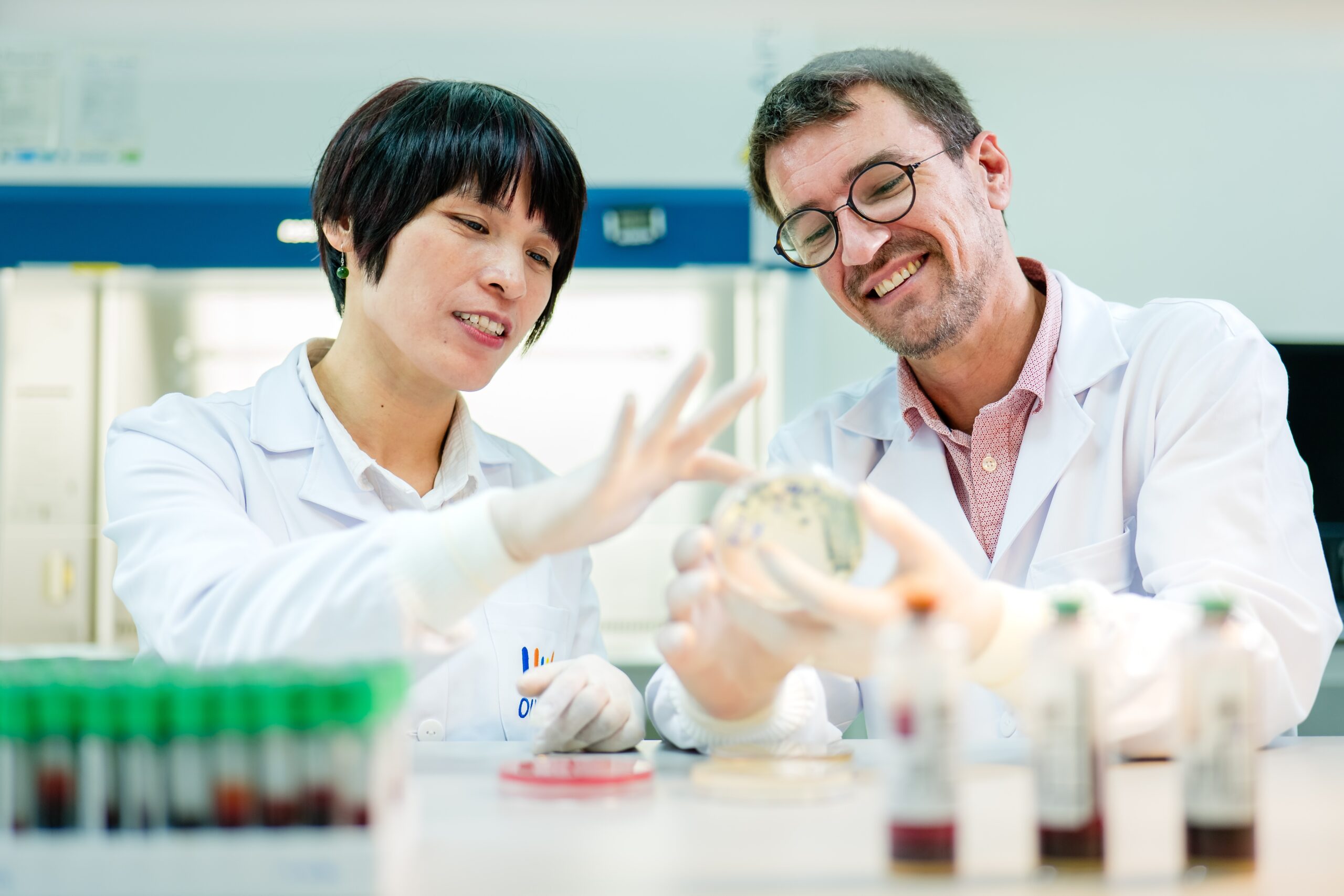
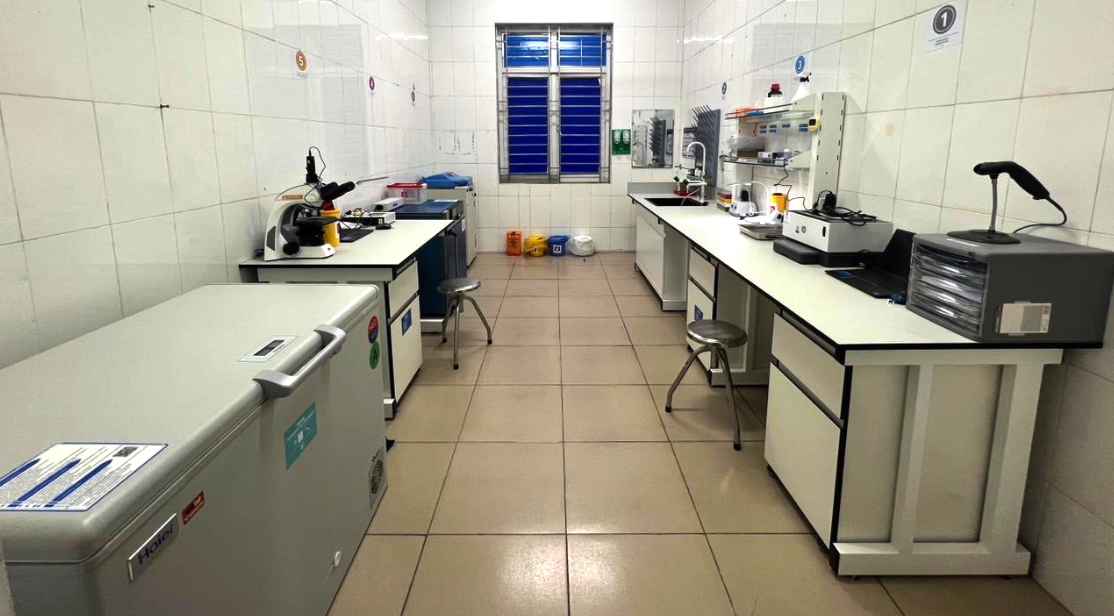
Penelitian AMR di laboratorium OUCRU Hanoi.
Agenda Penelitian yang Disusun Secara Global dengan Panduan WHO
Penyusunan 40 topik penelitian prioritas ini dimulai dengan mengidentifikasi kesenjangan dalam pengetahuan yang ada. Proses yang juga melibatkan OUCRU ini mengidentifikasi lebih dari 3.000 kesenjangan yang kemudian disaring ke dalam 177 topik. Setelah melalui proses pemilihan oleh 261 ahli dari seluruh dunia, 40 butir topik penelitian prioritas pun ditetapkan.
Prof. Rogier, Direktur OUCRU Hanoi, menekankan, “Agenda penelitian WHO ini dapat menciptakan momentum untuk mempercepat penelitian di area-area krusial dan menyelaraskan pendanaan serta kolaborasi global. Dengan menargetkan kebutuhan penelitian yang paling mendesak, kita dapat memperkuat cara kita menangani AMR secara signifikan.”
Agenda penelitian WHO ini akan menjadi pilar penting dalam menerapkan rekomendasi Deklarasi AMR di Sidang Umum PBB dan mendukung strategi nasional serta global untuk penanganan AMR hingga 2030.
OUCRU researchers from Indonesia, Nepal, and Vietnam contributed to the newly published WHO research priorities for AMR. These top 40 priorities, developed by the World Health Organization (WHO) with global collaborators, aim to guide research into drug-resistant infections over the next five years, with a special focus on challenges faced by low- and middle-income countries (LMICs).
The Growing Threat of AMR Worldwide
AMR is one of the most pressing global health challenges of our time. As microbes become resistant to existing medicines, treating infections becomes harder, leading to more severe illness and higher death rates. This has significant economic consequences, in terms of health costs and loss of productivity.
The impact of AMR is especially severe in LMICs. Overuse and misuse of antibiotics, combined with poor sanitation and limited infection control, create an environment where resistant microbes thrive. As a result, people in these regions are more vulnerable to drug-resistant infections, and the burden of AMR is felt more deeply, with higher death rates in LMICs.
Assoc. Prof. Raph Hamers contributed to the new WHO research agenda as one of the core team members.
“Despite the growing attention on AMR as a global health issue, major knowledge gaps still slow down an effective response, especially in LMICs. This limits progress in key areas like infection prevention, vaccines, diagnostics, treatments, and antimicrobial stewardship. Addressing these gaps will require collaboration between governments, academia, civil society, and the private sector,†he said.
As the Head of the Clinical Infectious Diseases Research Programme at OUCRU Indonesia, Raph leads several projects at OUCRU Indonesia that are focused on AMR, including ACORN, NASPA, and BCB Study.
AMR research in a laboratory at OUCRU Hanoi.
A Globally Coordinated Research Agenda Led by WHO
The process of determining the 40 research priorities began with identifying existing knowledge gaps, a process in which OUCRU was also involved. This led to the discovery of over 3,000 gaps, which were then narrowed down to 177 topics and prioritised by 261 experts worldwide. The result is a final list of 40 research priorities designed to have the most significant impact.
OUCRU researchers played a key role in this global effort. Prof. Guy Thwaites, Prof. Rogier van Doorn, and Assoc. Prof. Abhilasha Karkey were part of the WHO Research Agenda for AMR in Human Health Collaborators. OUCRU involvement highlights our leadership in AMR research in Southeast and South Asia, supported by a strong, interdisciplinary units in Indonesia, Vietnam, and Nepal.
Prof. Rogier, Director of OUCRU Hanoi, emphasized, “The WHO’s research agenda can help create momentum to accelerate research in critical areas and streamline global funding and collaboration. By targeting the most pressing research needs, we can significantly improve how we combat AMR.”
The WHO research agenda will play a crucial role in implementing the recommendations from the AMR declaration at the UN General Assembly and contribute to national and global strategies for AMR containment by 2030.