Author: Trang Nguyen

  • Học viện Nghiên cứu Khám phá MORU-OUCRU Công bố Kết quả Tuyển chọn Khóa I

    Học viện Nghiên cứu Khám phá MORU-OUCRU Công bố Kết quả Tuyển chọn Khóa I

    Học viện Nghiên cứu Khám phá MORU-OUCRU (MODRA), được tài trợ bởi Quỹ Wellcome, là sáng kiến hợp tác giữa Đơn vị Nghiên cứu Lâm sàng Đại học Oxford (OUCRU) và Viện nghiên cứu Y học Nhiệt đới Mahidol – Oxford (MORU) nhằm bồi dưỡng thế hệ lãnh đạo khoa học tiếp theo tại các quốc gia thu nhập thấp và trung bình (LMICs) ở Nam Á. 

    Trong khóa đầu tiên, MODRA đã nhận được hồ sơ từ các nhà nghiên cứu bậc sau tiến sĩ đang ở giai đoạn đầu và giữa sự nghiệp. Sau quá trình tuyển chọn kỹ lưỡng, 15 cá nhân xuất sắc nhất đã được chọn để tham gia đợt đầu tiên của Học viện. 15 nhà nghiên cứu này có chung niềm đam mê về lĩnh vực nghiên cứu sức khỏe toàn cầu và bệnh truyền nhiễm, cũng như cam kết tìm ra giải pháp cho các vấn đề sức khỏe cấp bách trong khu vực. 

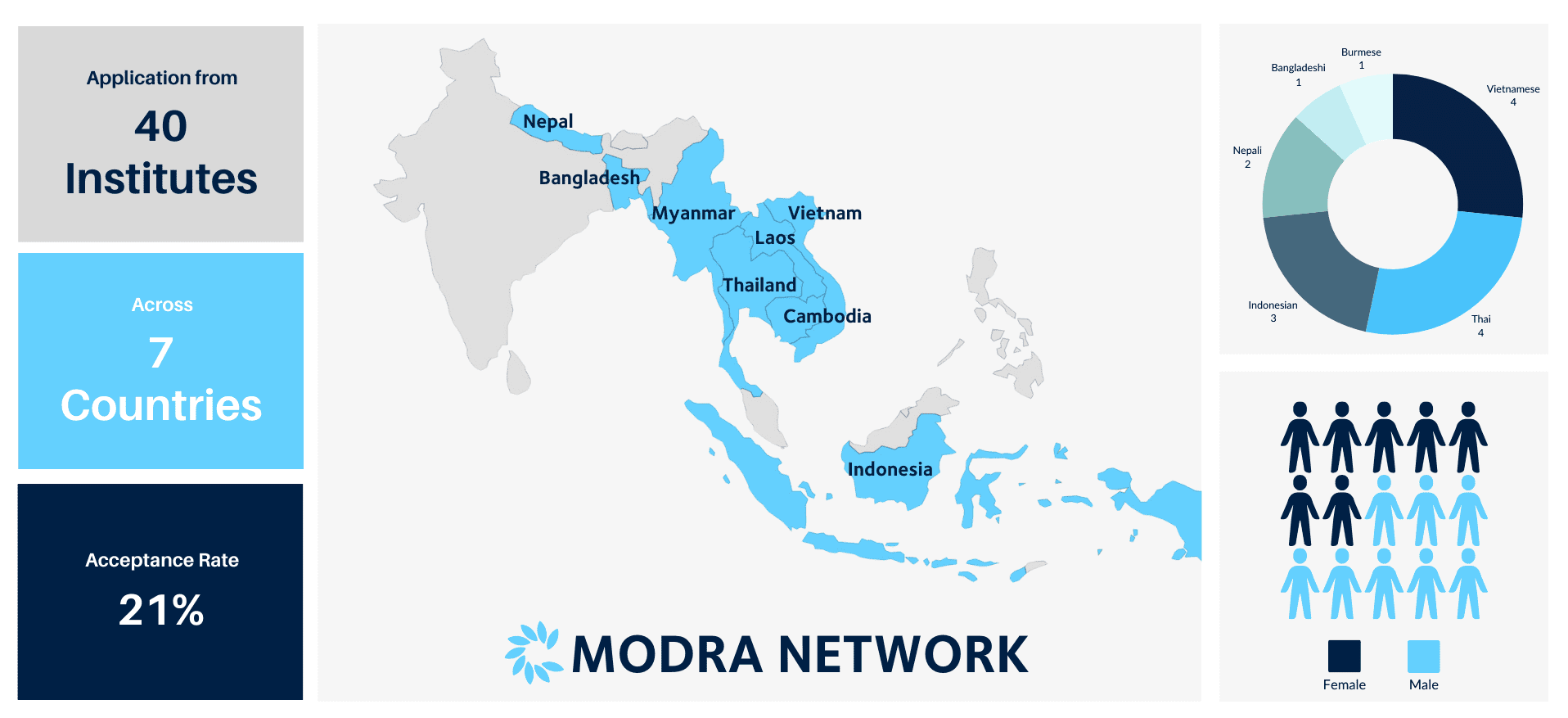
    Số liệu thống kê MODRA Khóa I

    Khóa đầu tiên của MODRA gồm các nhà nghiên cứu đến từ sáu quốc gia Nam Á với nhiều lĩnh vực nghiên cứu khác nhau. Tỷ lệ nam/nữ gần như cân bằng của khóa góp phần thúc đẩy bình đẳng giới và tính bao trùm trong lĩnh vực nghiên cứu sức khỏe học thuật. Chúng tôi tin rằng nhóm nghiên cứu sẽ mang đến nhiều góc nhìn đa chiều và đa chuyên môn, góp phần nuôi dưỡng cộng đồng nghiên cứu năng động và toàn diện trong khu vực. 

    Thành viên MODRA Khóa I

    1. TS Chawarat Rotejanaprasert, MORU, Thái Lan
    2. TS Dương Thị Huệ Kiên, OUCRU, Việt Nam
    3. TS Kartika Saraswati, Đại học Quốc gia Singapore, Singapore
    4. TS Henry Surendra, OUCRU, Indonesia
    5. TS Inke Nadia Diniyanti Lubis, Universitas Sumatera Utara, Indonesia
    6. TS Lê Thanh Hoàng Nhật, OUCRU, Việt Nam
    7. TS Phạm Trần Vĩnh Phú, Đại học Đà Nẵng, Việt Nam
    8. TS Pyae Linn Aung, Đại học Mahidol, Thái Lan
    9. TS Sabina Dongol, OUCRU, Nepal
    10. TS Sukanta Chowdhury, Trung tâm Quốc tế Nghiên cứu Bệnh tiêu chảy, Bangladesh
    11. TS Sulochana Manandhar, OUCRU, Nepal
    12. TS Thanaporn Wattanakul, MORU, Thái Lan
    13. TS Thitinan Kitisin, Mahidol University, Thái Lan
    14. TS  Vũ Thị Ngọc Bích, OUCRU, Việt Nam
    15. TS Weerawat Phuklia, LOMWRU, Lào

    Trong 10 năm tá»›i, tôi mong muốn trở thành người có tiếng nói hàng đầu trong lÄ©nh vá»±c nghiên cứu y học nhiệt đới, góp phần nâng cao chăm sóc y tế ở các địa phương có nguồn lá»±c hạn chế. Tham gia MODRA là cÆ¡ há»™i giúp tôi nâng cao khả năng đăng ký các guồn tài trợ độc lập để giải quyết các thách thức quan trọng về sức khỏe ở Đông Nam Á, đặc biệt là ở Indonesia.”

    TS Kartika Saraswati
    Thành viên MODRA Khóa I


    Khóa I sẽ bắt đầu hành trình 18 tháng với nhiều cơ hội phát triển và hợp tác như: được đào tạo chất lượng cao, được hướng dẫn trực tiếp bởi các nhà khoa học đầu ngành, tham gia hội thảo về viết đề án xin cấp vốn, quản lý dự án và lập kế hoạch tài chính. Một trong những mục tiêu quan trọng của MODRA là giúp các nhà nghiên cứu xin được nguồn tài trợ quốc tế có tính cạnh tranh. 

    “Trước tiên, tôi xin chúc mừng nhóm nghiên cứu MODRA đầu tiên, và cảm Æ¡n Quỹ Wellcome  đã tài trợ cho dá»± án mà chúng tôi vô cùng tâm huyết này. Chúng tôi mong muốn há»— trợ nhóm nghiên cứu MODRA thông qua chương trình đào tạo hữu ích, cÅ©ng như tạo Ä‘iều kiện cho những nhà lãnh đạo nghiên cứu tương lai này xây dá»±ng mạng lưới, hợp tác và cùng nhau phát triển.”

    TS Leigh Jones
    Trưởng nhóm Đào tạo Học thuật Khu vực tại OUCRU & MORU 

    Việc công bố khóa đầu tiên của MODRA đánh dấu cột mốc quan trọng của chương trình. Với mục tiêu trao quyền cho các nhà nghiên cứu, nâng cao nghiên cứu khoa học và thúc đẩy hợp tác, MODRA kỳ vọng sẽ góp phần chuyển đổi bức tranh nghiên cứu sức khỏe ở Nam Á. 

    Để biết thêm thông tin về MODRA và các cơ hội trong tương lai, vui lòng truy cập: www.modracademy.org
  • The MORU – OUCRU Discovery Research Academy Announces its First Cohort 

    The MORU – OUCRU Discovery Research Academy Announces its First Cohort 

    The MORU – OUCRU Discovery Research Academy (MODRA), funded by Wellcome, is a collaborative initiative by the Oxford University Clinical Research Unit (OUCRU) and the Madihol Oxford Tropical Medicine Research Unit (MORU) to nurture the next generation of scientific leaders in low- and middle-income (LMICs) countries of South Asia.

    In this inaugural year, MODRA received a tremendous response from early to mid-career postdoctoral researchers. Following a thorough selection process, 15 distinguished individuals have been selected to form the first cohort. These researchers share a keen interest in global health and infectious disease research and a commitment to address pressing health concerns in the region.

    MODRA First Cohort Statistics

    The MODRA first cohort encompasses participants from many LMICs in South Asia with a wide range of research interests. The nearly equal gender balance contributes to the promotion of gender equity and inclusivity in academic health research. We believe this diverse group of researchers will bring together many perspectives and expertise, fostering a vibrant and inclusive research community across the region.

    Meet the First MODRA Cohort

    1. Dr Chawarat Rotejanaprasert, MORU, Thailand
    2. Dr Duong Thi Hue Kien, OUCRU, Vietnam
    3. Dr Kartika Saraswati, National University of Singapore, Singapore
    4. Dr Henry Surendra, OUCRU, Indonesia
    5. Dr Inke Nadia Diniyanti Lubis, Universitas Sumatera Utara, Indonesia
    6. Dr Le Thanh Hoang Nhat, OUCRU, Vietnam
    7. Dr Pham Tran Vinh Phu, The University of Danang, Vietnam
    8. Dr Pyae Linn Aung, Mahidol University, Thailand
    9. Dr Sabina Dongol, OUCRU, Nepal
    10. Dr Sukanta Chowdhury, International Centre for Diarrhoeal Disease Research, Bangladesh
    11. Dr Sulochana Manandhar, OUCRU, Nepal
    12. Dr Thanaporn Wattanakul, MORU, Thailand
    13. Dr Thitinan Kitisin, Mahidol University, Thailand
    14. Dr Vu Thi Ngoc Bich, OUCRU, Vietnam
    15. Dr Weerawat Phuklia, LOMWRU, Laos

    “In the next 10 years, I aspire to become a leading voice in tropical medicine research, contributing to improved health outcomes in resource-limited settings. Joining MODRA is a steppingstone that empowers me to secure independent funding for addressing crucial health challenges in Southeast Asia, particularly in Indonesia.”

    Dr Kartika Saraswati
    MODRA Fellow, Cohort I


    The selected cohort will embark on an 18-month journey filled with opportunities for growth and collaboration. The fellows will receive high-quality, in-person training, mentorship from senior scientists; and workshops on grant writing, project management, and financial planning. One of the key aims of MODRA is to enable researchers to obtain competitive international grant funding.

    “Firstly, I would like to congratulate our inaugural MODRA cohort and thank Wellcome for funding this new project, about which we are incredibly passionate. We look forward to supporting our MODRA cohort through an exciting programme of training and mentorship, and to seeing these future research leaders’ network, collaborate, and grow together.”

    Dr Leigh Jones
    Regional Academic Training Leader at OUCRU & MORU

    The announcement of MODRA’s first cohort marks an important milestone in the programme journey. With a focus on empowering researchers, elevating discovery research, and fostering collaborations, MODRA is set to transform the landscape of health research in South Asia.

    For more information about MODRA and future opportunities, visit: www.modracademy.org
  • OUCRU Tổ Chức Khóa Học “Mô Hình Đa Tác Nhân (ABM) Vá»›i Nền Tảng GAMA”: Ứng Dụng và Tiềm Năng Trong Khoa Học Sức Khỏe và Xã Há»™i

    OUCRU Tổ Chức Khóa Học “Mô Hình Đa Tác Nhân (ABM) Vá»›i Nền Tảng GAMA”: Ứng Dụng và Tiềm Năng Trong Khoa Học Sức Khỏe và Xã Há»™i

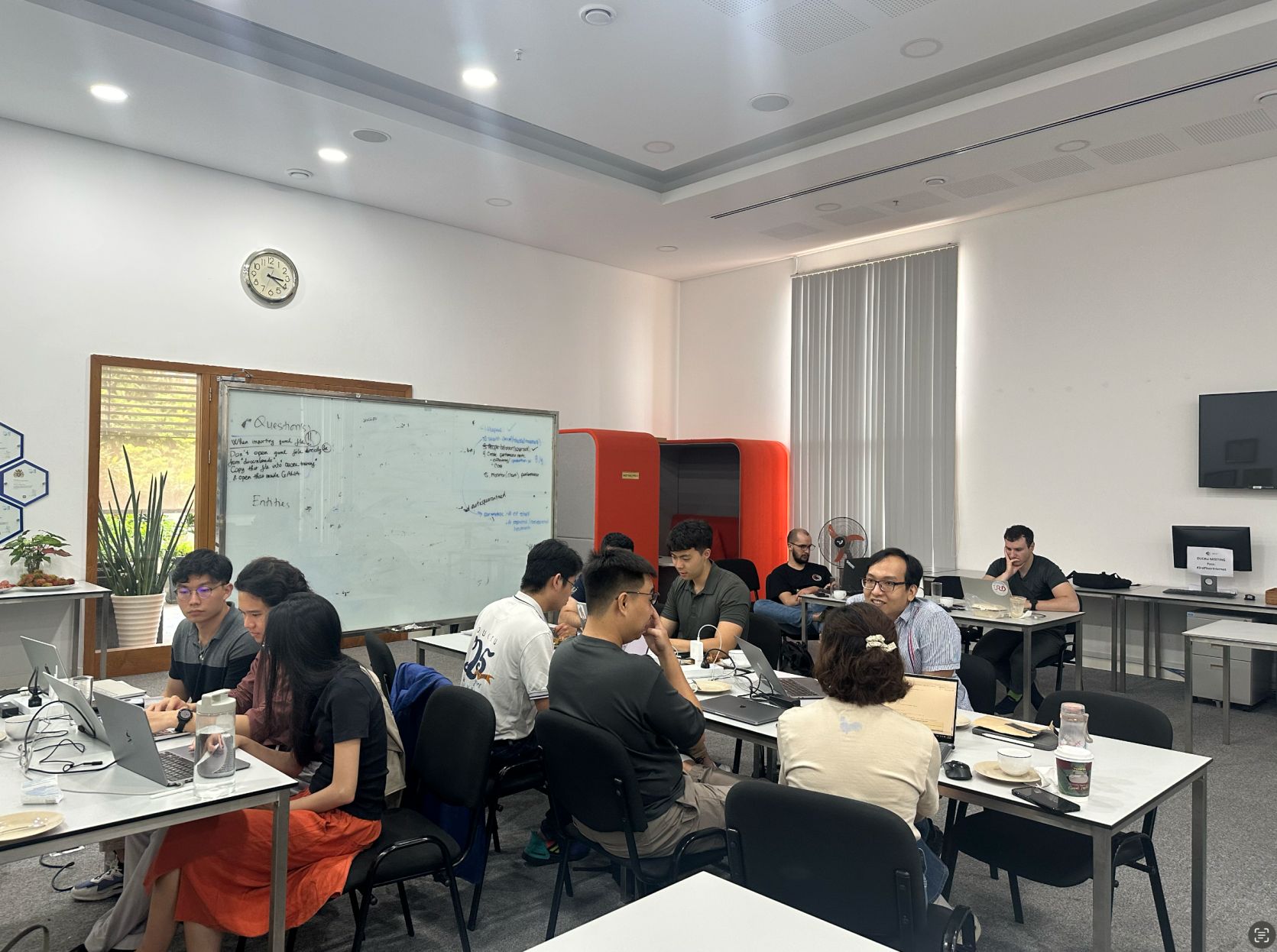
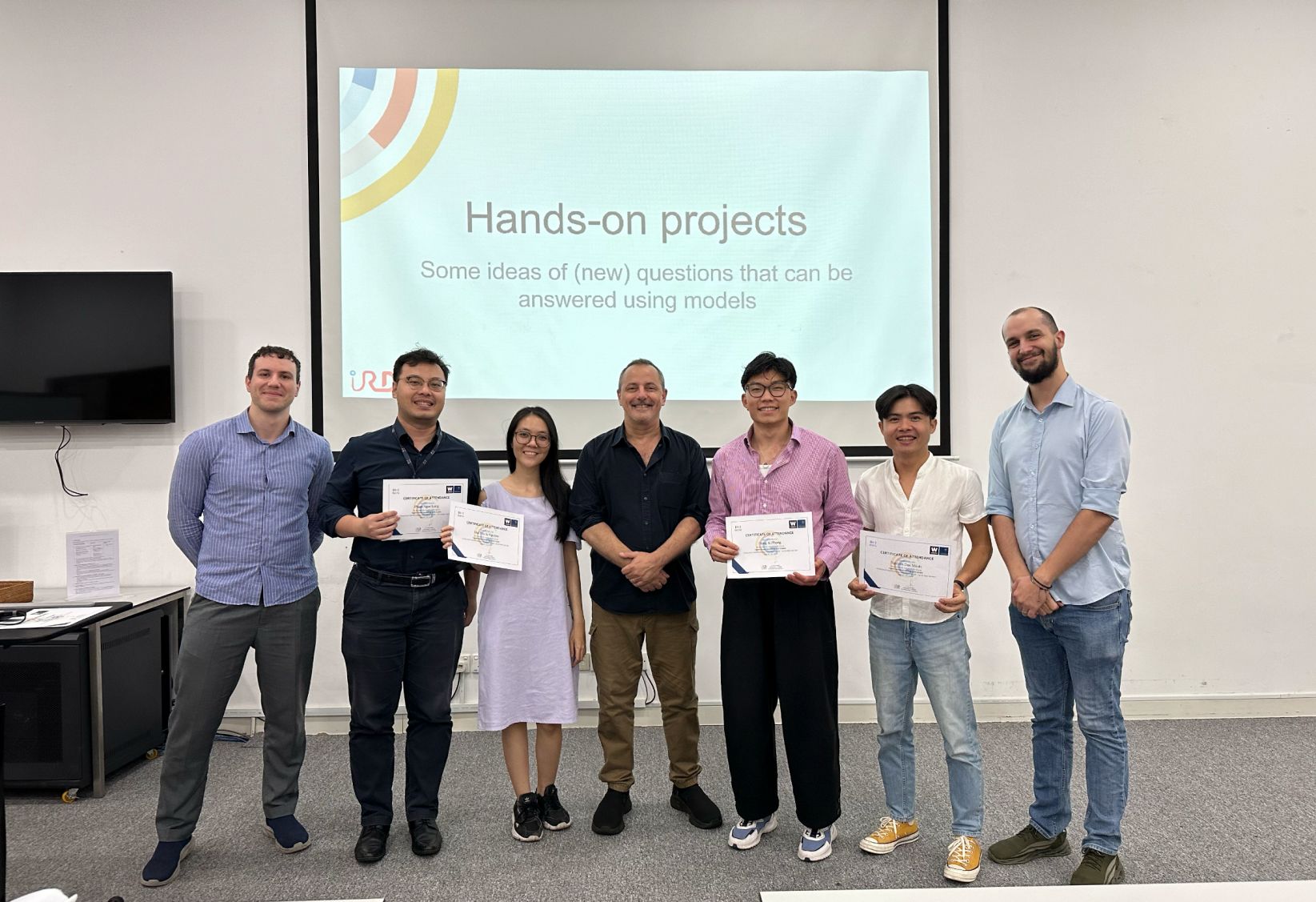
    Đầu tháng 6 năm 2024, nhóm Mô hình toán học thuá»™c Đơn vị Nghiên cứu Lâm sàng Đại học Oxford (OUCRU), phối hợp cùng Across Lab và IRD, đã tổ chức khóa học “Agent-based Modelling (ABM) vá»›i GAMA”tại thành phố Hồ Chí Minh. Khóa học kéo dài 5 ngày đã thu hút sá»± tham gia cá»§a gần 30 học viên đến từ Việt Nam, Pháp, Hoa Kỳ và Thái Lan, nhằm khám phá ứng dụng thá»±c tế cá»§a ABM trong lÄ©nh vá»±c nghiên cứu y tế.

    Agent-based Modelling (ABM) – tạm dịch là Mô hình Ä‘a tác nhân, sá»­ dụng thuật toán để mô phỏng và dá»± Ä‘oán cách má»™t cá thể, được đặc trưng bởi má»™t số thuá»™c tính và hành vi, tương tác vá»›i nhau và vá»›i môi trường xung quanh.

    Phương pháp này hữu hiệu trong nhiều lĩnh vực, đặc biệt trong việc tìm hiểu hành vi phức tạp của một mẫu nghiên cứu. ABM nổi lên đáng kể trong dịch tễ học, đặc biệt là trong thời gian đại dịch COVID-19, vì phương pháp này cho phép mô hình hóa chi tiết hành vi của cá thể.

    Dù có nhiều tiềm năng, ABM vẫn ít được sử dụng trong lĩnh vực nghiên cứu y tế, chủ yếu vì phương pháp này đòi hỏi người dùng phải có các kiến thức lập trình máy tính phức tạp. Trong khóa học này, OUCRU giới thiệu GAMA, một nền tảng mô phỏng ABM hiệu quả và dễ sử dụng. Nền tảng GAMA cho phép các nhà khoa học không có kiến thức chuyên sâu về máy tính cũng có thể dễ dàng hiểu và sử dụng ABM trong nghiên cứu của họ.

    Dưới sự hướng dẫn của các giảng viên giàu kinh nghiệm, bao gồm Tiến sĩ Alexis Drogoul, khóa học bao gồm bài giảng lý thuyết và phần thực hành, cho phép học viên nắm vững kiến thức và và áp dụng chúng hiệu quả trong các tình huống thực tế.

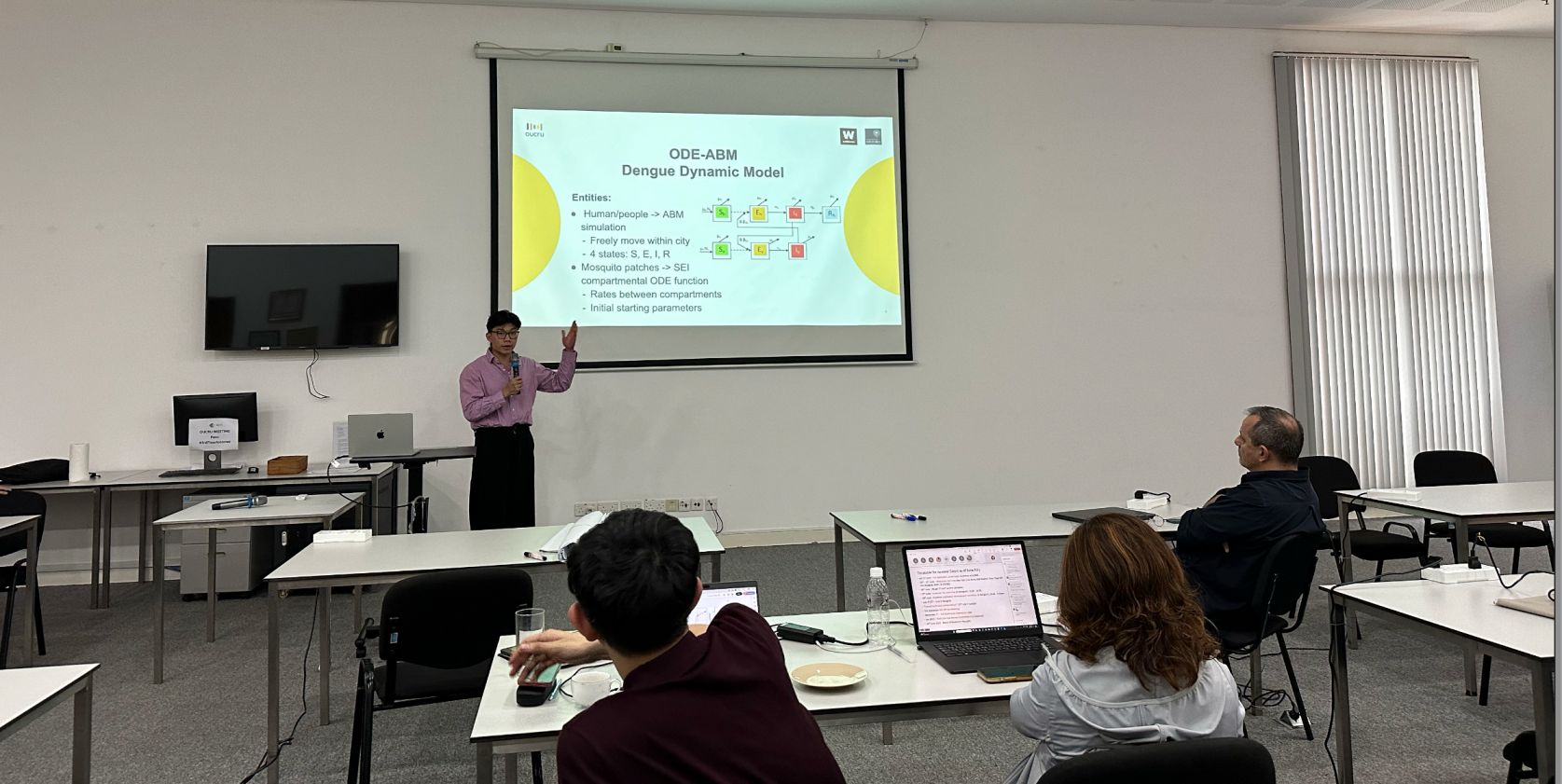
    Điểm nổi bật của khóa học là các dự án thực hành nhóm. Học viên được thực hành ứng dụng GAMA trong các dự án nghiên cứu y tế với chủ đề đa dạng như mô hình hóa kháng kháng sinh tại bệnh viện, xây dựng mô hình ODE-ABM bệnh sốt xuất huyết Dengue, mạng lưới giám sát và khám phá nguy cơ bùng phát dịch bệnh sởi trong khu vực. Cuối khóa học, các nhóm trình bày mô hình của mình và nhận được góp ý hướng dẫn từ giảng viên và đồng nghiệp.

    Khóa học ABM của nhóm GAMA rất hữu ích, cả với những người nhà nghiên cứu đã có kinh nghiệm sử dụng mô hình này và học viên đến từ các lĩnh vực khác. Bên cạnh lý thuyết, học viên cũng có cơ hội áp dụng mô hình này để trả lời các câu hỏi nghiên cứu thực tế một cách vô cùng thiết thực!

    PGS Wirichada Pan-ngum, MORU, Bangkok

    Khóa học giúp các học viên sử dụng thành thạo mô hình ABM trên nền tảng GAMA, tạo điều kiện cho họ giải mã các vấn đề phức tạp trong nghiên cứu khoa học. Thông qua khóa học, chúng tôi mong muốn góp phần thúc đẩy việc ứng dụng khoa học kỹ thuật và phát triển lĩnh vực nghiên cứu y tế.

    OUCRU sẽ tiếp tục tổ chức các khóa học và hội thảo chuyên ngành, nhấn mạnh cam kết của chúng tôi trong việc cung cấp các nền tảng học tập và hợp tác trong lĩnh vực nghiên cứu y tế.

  • OUCRU Hosts “Agent-based Modelling (ABM) with GAMA” Course: Potential Application in Health Sciences

    OUCRU Hosts “Agent-based Modelling (ABM) with GAMA” Course: Potential Application in Health Sciences

    Ho Chi Minh City – In June 2024, the Mathematical Modelling Group of Oxford University Clinical Research Unit (OUCRU), in partnership with Across Lab and IRD, organised an engaging course titled “Agent-based Modelling (ABM) with GAMA” in Ho Chi Minh City. The five-day course brought together 30 participants from Vietnam, France, the USA and Thailand, to explore the practical application of ABM in health science. 

    Agent-based Modelling (ABM) is an algorithm-based approach that focuses on understanding how an agent (e.g., individuals in a population), characterised by various attributes and behaviours, interacts with their environment and each other.

    It has proven useful in various fields, particularly in understanding complex population behaviours. ABM has gained significant attention in epidemiology, especially during the COVID-19 pandemic, as it allows for detailed modelling of individual behaviours. 

    Despite its potential, ABM has been underused in health sciences due to the requirement of extensive computer programming. In this course, OUCRU introduced GAMA, an ABM simulation platform that has emerged as a user-friendly and efficient tool. This tool enables even non-computer scientists to easily comprehend and utilise ABM in their research. 

    Led by experienced instructors, including Dr Alexis Drogoul, the course consisted of a balanced mix of theoretical lectures and practical sections, allowing participants to grasp the concepts and effectively apply them in real-world scenarios.  

    One of the course highlights was the collaborative group projects. Participants worked together on health sciences projects, applying GAMA to research such as modelling antimicrobial resistance in hospital settings, developing an ODE-ABM dengue dynamic model, creating a surveillance network, and exploring regional outbreak risks for measles. Each group had the opportunity to present their models, receiving constructive feedback and guidance from instructors and peers. 

    The ABM course by the GAMA team was very refreshing for many of us who have been doing some modelling work, as well as for some participants who were from other disciplines. While we were learning this new amazing modelling technique, we were able to apply the models to some real-world questions. It is very practical.

    Assoc Prof Wirichada Pan-ngum, MORU, Bangkok

    The course provides participants with the knowledge to command ABM using GAMA, empowering them to tackle complex problems in health sciences. Through this, we seek to drive scientific progress and facilitate the development of impactful health interventions. 

    Stay updated for future courses and workshops organised by OUCRU, as we remain committed to providing platforms for learning and collaboration in health sciences. 

  • Nghiên cứu má»›i: Các biện pháp hiệu quả trong việc giảm gánh nặng kháng kháng sinh ở các quốc gia có thu nhập thấp và trung bình.

    Nghiên cứu mới: Các biện pháp hiệu quả trong việc giảm gánh nặng kháng kháng sinh ở các quốc gia có thu nhập thấp và trung bình.

    Nghiên cứu có tiêu đề “Gánh nặng kháng kháng sinh ở các nước thu nhập thấp và trung bình có thể ngăn ngừa được bằng các biện pháp can thiệp hiện có,”cung cấp các phân tích về hiệu quả cá»§a các biện pháp can thiệp y tế hiện có trong việc giảm tải tình trạng kháng kháng sinh.

    Kháng kháng sinh (AMR) xảy ra khi vi khuẩn không còn đáp ứng với loại thuốc dùng để điều trị chúng. Ước tính có khoảng 5 triệu ca tử vong hàng năm liên quan đến nhiễm trùng do vi khuẩn kháng kháng sinh. Phần lớn số ca này, khoảng 4,3 triệu người, xảy ra ở các quốc gia có thu nhập thấp và trung bình (LMIC), nơi hệ thống chăm sóc sức khỏe còn nhiều hạn chế.

    Nhóm nghiên cứu, bao gồm PGS TS Abhilasha Karkey của OUCRU Nepal, đã tiến hành phân tích các biện pháp can thiệp hiện có và tác động của chúng trong việc giảm tử vong liên quan đến AMR ở các nước thu nhập thấp và trung bình. Nghiên cứu chỉ ra rằng các quốc gia này nên ưu tiên nguồn lực để đầu tư vào các biện pháp can thiệp mang lại hiệu quả giảm thiểu gánh nặng AMR lớn nhất.

    Các nhà nghiên cứu đã thu thập và sử dụng dữ liệu từ nhiều nguồn, bao gồm nghiên cứu dịch tễ học, dữ liệu khảo sát đa quốc gia và các phân tích tổng hợp hiện có. Họ cũng phát triển mô hình phân tích để ước tính tác động của các biện pháp can thiệp khác nhau trong việc giảm thiểu ca tử vong liên quan đến AMR ở LMIC.

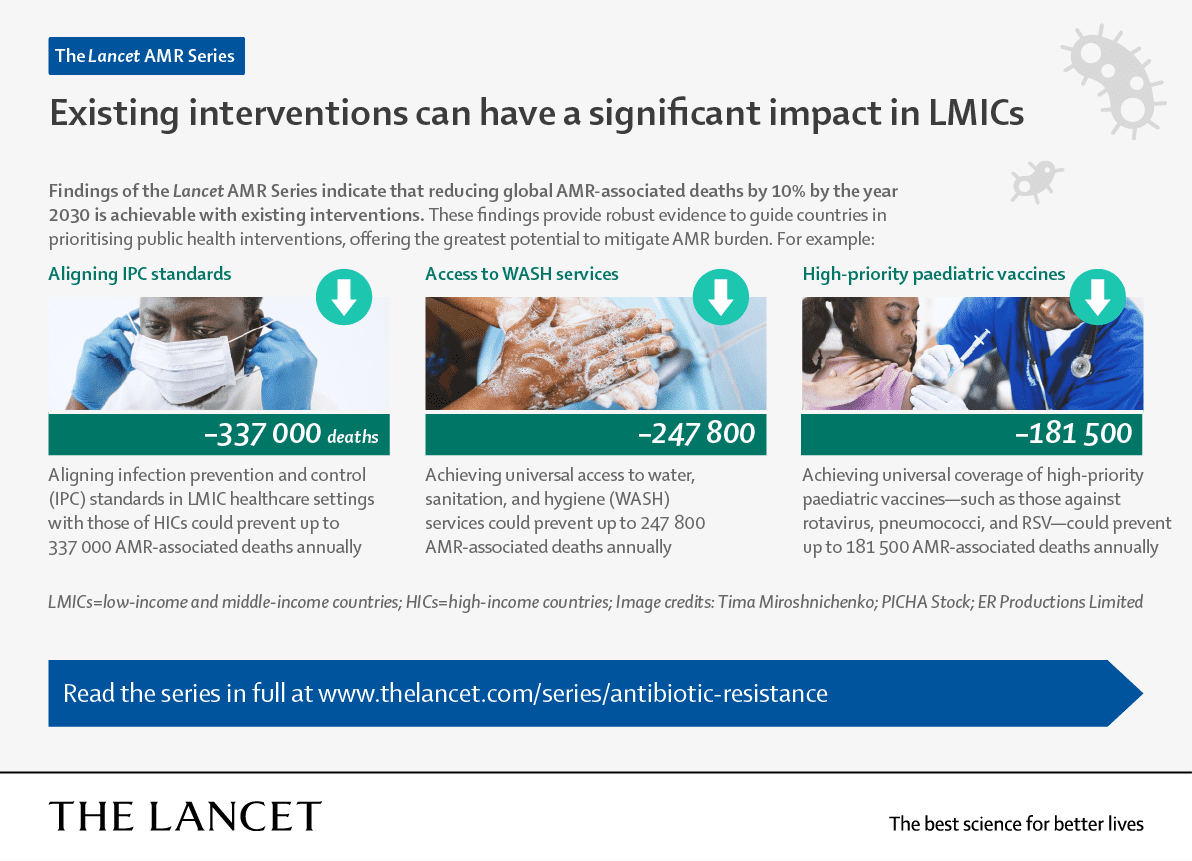
    Nghiên cứu nhấn mạnh ba biện pháp can thiệp chính có tiềm năng ngăn chặn 750.000 ca tử vong liên quan đến AMR mỗi năm:

    1. Cải thiện các chương trình phòng ngừa và kiểm soát nhiễm trùng (IPC): Tăng cường các chương trình IPC tại cơ sở chăm sóc sức khỏe của LMIC có thể ngăn ngừa ít nhất 337.000 ca tử vong hàng năm liên quan đến AMR. Trong bối cảnh cơ sở hạ tầng vệ sinh nước sạch còn nhiều hạn chế, vẫn có những biện pháp hiệu quả để đảm bảo vệ sinh môi trường bề mặt tại các cơ sở khám chữa bệnh (sử dụng dung dịch phun khử khuẩn, vệ sinh tay chứa cồn, thiết bị bảo hộ cá nhân).

    2. Đảm bảo tiếp cận đầy đủ các dịch vụ vệ sinh nước sạch (WASH): Cung cấp dịch vụ vệ sinh nước sạch đạt chất lượng có thể ngăn ngừa tới 247.800 ca tử vong liên quan đến AMR hàng năm. Tuy nhiên, điều này sẽ đòi hỏi đầu tư lớn vào cơ sở hạ tầng, thay vì chỉ dựa vào các biện pháp chi phí thấp nhằm thay đổi hành vi cá nhân.

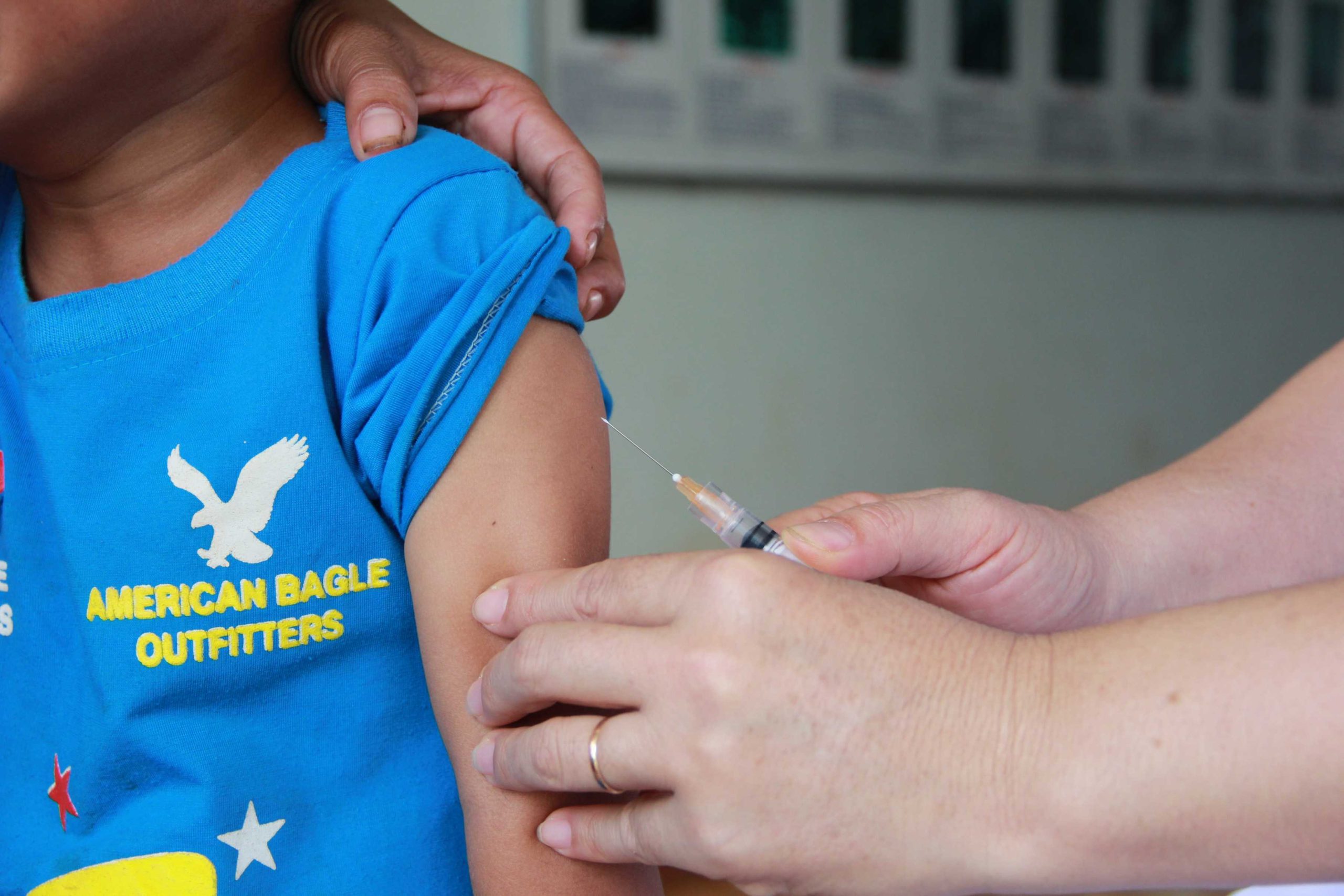
    3. Thực hiện tiêm chủng mở rộng cho trẻ em: Việc đảm bảo các liều vắc xin cơ bản có thể ngăn ngừa 181.500 ca tử vong liên quan đến AMR hàng năm ở các nước LMIC. Vắc-xin không chỉ bảo vệ chống lại các bệnh nhiễm trùng nguy hiểm mà còn làm giảm việc tiêu thụ kháng sinh của trẻ về sau.

    “Các biện pháp phòng ngừa trên không chỉ cần thiết trong điều trị bệnh, mà còn giúp bảo toàn hiệu quả của các loại kháng sinh hiện có. Thông qua các can thiệp này, chúng ta có thể giảm nhẹ gánh nặng toàn cầu do kháng kháng sinh gây ra, nhằm đảm bảo một tương lai khỏe mạnh cho tất cả mọi người.”

    PGS TS Abhilasha Karkey, Giám đốc OUCRU Nepal

    Bằng cách thực hiện các biện pháp can thiệp trên, ước tính có thể giảm 18% số ca tử vong liên quan đến AMR xảy ra hàng năm ở các nước LMIC. Tuy nhiên, những biện pháp can thiệp này không loại trừ lẫn nhau, do đó cần phải kết hợp cùng lúc nhiều phương pháp đa dạng để có kết quả tốt nhất.

    Nghiên cứu nhấn mạnh tầm quan trọng của việc hoạch định chính sách dựa trên bằng chứng và sự cần thiết của quốc gia trong việc phân bổ nguồn lực để thực hiện những can thiệp này. Nghiên cứu cũng nhấn mạnh vai trò của hợp tác quốc tế trong việc chia sẻ kiến thức, nguồn lực và các biện pháp thực hành tốt nhất để chống lại tình trạng kháng kháng sinh trên toàn cầu.

    Để đọc thêm nghiên cứu, truy cập The Lancet.

  • New Study: Existing Interventions Proven Effective to Reduce Burden of Antimicrobial Resistance in Low-Income and Middle-Income Countries

    New Study: Existing Interventions Proven Effective to Reduce Burden of Antimicrobial Resistance in Low-Income and Middle-Income Countries

    The study, titled “Burden of Bacterial Antimicrobial Resistance in Low-Income and Middle-Income Countries Avertible by Existing Interventions,” provides valuable insights into existing public health interventions that can save lives and curb this global crisis.

    Antimicrobial resistance (AMR) occurs when bacteria become resistant to the drugs used to treat them. It is estimated that approximately 5 million deaths annually are associated with bacterial infections resistant to antibiotics. The majority of these deaths, around 4.3 million, occur in low-income and middle-income countries (LMICs), where healthcare systems often struggle to cope.

    The research team, including Assoc Prof Abhilasha Karkey from OUCRU Nepal, conducted a comprehensive analysis of existing interventions and their impact on reducing AMR-associated deaths in LMIC settings. Their findings indicate that countries should prioritise certain public health interventions that offer the greatest potential to mitigate the AMR burden.

    Using a robust methodology, the researchers examined data from diverse sources, including epidemiological studies, multicountry survey data, and existing meta-analyses. They developed a modelling analysis to estimate the impact of various interventions on reducing AMR-associated deaths in LMICs.

    The study highlights three key interventions that have the potential to prevent 750,000 deaths linked to AMR each year:

    1. Improving infection prevention and control (IPC) programs: Enhancing IPC programs in LMIC healthcare settings could prevent at least 337,000 annual AMR-associated deaths. Despite constraints on WASH infrastructure, effective measures to ensure hand hygiene and proper sanitation (e.g., alcohol-based hand sanitisers, disinfectants and personal protective equipment) can prevent transmission within healthcare facilities and save lives.

    2. Ensuring universal access to water, sanitation, and hygiene (WASH) services: Providing high-quality WASH services could prevent up to 247,800 AMR-associated deaths annually. However, it would require heavy investment in physical infrastructure rather than relying on prevailing low-cost measures that focus on individual behaviour changes.

    3. Achieving universal coverage of high-priority pediatric vaccines: Access to vaccines could prevent 181,500 AMR-associated deaths annually in LMICs. Vaccines not only protect against resistant infections but also reduce antibiotic consumption.

    “Preventive measures are not only critical for saving lives but also for safeguarding the efficacy of existing antibiotics. By prioritising these interventions, we can significantly reduce the global burden of AMR and ensure a healthier future for all.”

    Assoc Prof Abhilasha Karkey, Director of OUCRU Nepal

    Implementing these interventions is estimated to reduce 18% of AMR-associated deaths occurring in LMICs annually. However, it is crucial to note that these interventions are not mutually exclusive, thus a combination of different methods is necessary to have the best results.

    The study underscores the importance of evidence-based policymaking and the need for governments to allocate resources to implement these interventions. It also highlights the role of international collaboration in sharing knowledge, resources, and best practices to combat antibiotic resistance globally.

    Read the series on The Lancet.

  • RECOVERY Meeting Drives Global Collaboration for Future Research

    RECOVERY Meeting Drives Global Collaboration for Future Research

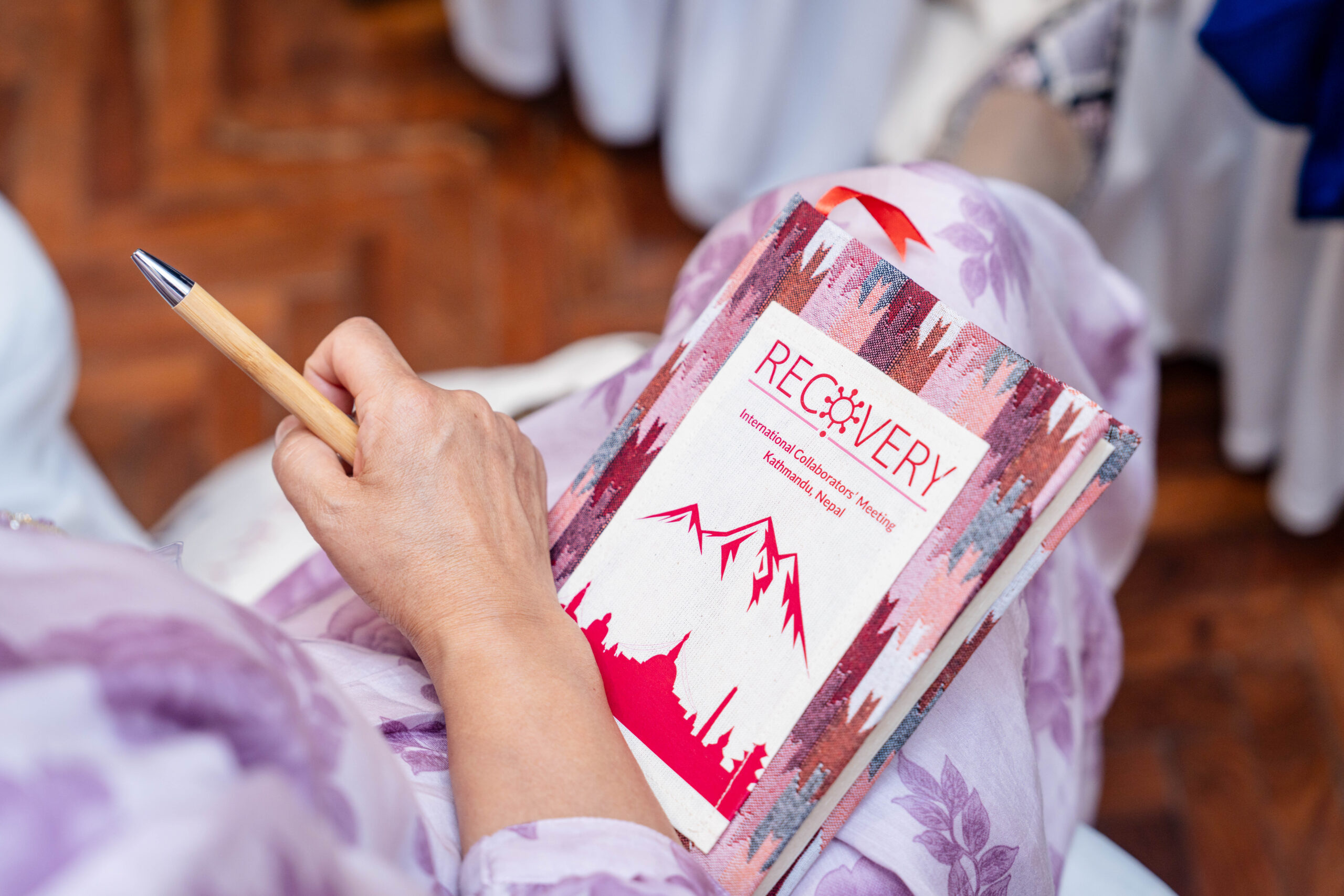
    The RECOVERY Trial, initiated in the UK in early 2020, is one of the world’s largest randomised controlled trials aimed at identifying effective treatments for COVID-19. The trial has since expanded its scope to other Low- and Middle-Income Countries (LMICs), with Nepal becoming one of the first sites outside of the UK.

    This year, OUCRU Nepal is honoured to have organised one of the first international collaborators’ meetings of the RECOVERY network, providing a platform to discuss the next steps for advancing the platform’s research agenda.

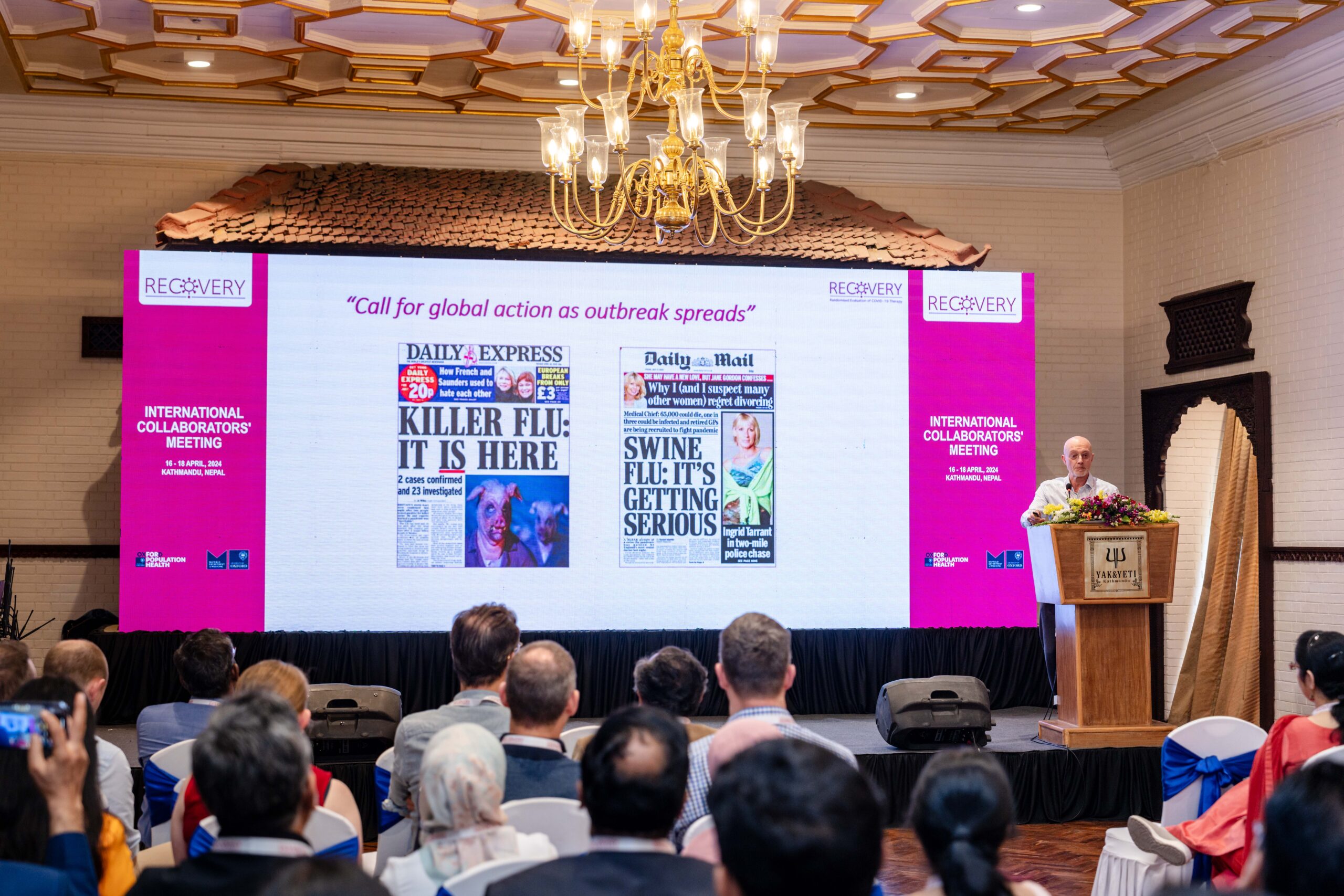
    Professor Peter Horbey delivered the opening speech for the 3-day meeting.

    The event’s objectives were to review lessons learned from the trial, explore new research questions, and identify opportunities to apply the trial’s findings to other infectious diseases. Participants focused on strengthening global collaborations and shaping the future direction of the RECOVERY platform, particularly in relation to diseases like influenza, pneumonia, and emerging infections in Asia and Africa.

    Over three days of insightful discussions, participants reflected on the trial’s key findings, identified best practices, and explored areas for improvement. A significant highlight of the meeting was the collaborative brainstorming sessions, where Regional Coordinating Centres (RCCs) from around the world shared their experiences and contributed to shaping the future direction of the platform. These discussions are expected to drive new research initiatives with a lasting impact on patient outcomes globally.

    The event brought together high-profile experts, including Professor Peter Horby, the principal investigator of the RECOVERY trial, and Professor Richard Haynes, a leading researcher and statistician involved in the trial, alongside other distinguished global health professionals.

    OUCRU Nepal is proud to have hosted this international gathering and looks forward to the continued global collaboration that will help improve health outcomes for people worldwide.

    For more information on the meeting and ongoing RECOVERY research, visit the website www.recoverytrial.net

  • RECOVERY Meeting Drives Global Collaboration for Future Research

    RECOVERY Meeting Drives Global Collaboration for Future Research

    The RECOVERY Trial, initiated in the UK in early 2020, is one of the world’s largest randomised controlled trials aimed at identifying effective treatments for COVID-19. The trial has since expanded its scope to other Low- and Middle-Income Countries (LMICs), with Nepal becoming one of the first sites outside of the UK.

    This year, OUCRU Nepal is honoured to have organised one of the first international collaborators’ meetings of the RECOVERY network, providing a platform to discuss the next steps for advancing the platform’s research agenda.

    Professor Peter Horbey delivered the opening speech for the 3-day meeting.

    The event’s objectives were to review lessons learned from the trial, explore new research questions, and identify opportunities to apply the trial’s findings to other infectious diseases. Participants focused on strengthening global collaborations and shaping the future direction of the RECOVERY platform, particularly in relation to diseases like influenza, pneumonia, and emerging infections in Asia and Africa.

    Over three days of insightful discussions, participants reflected on the trial’s key findings, identified best practices, and explored areas for improvement. A significant highlight of the meeting was the collaborative brainstorming sessions, where Regional Coordinating Centres (RCCs) from around the world shared their experiences and contributed to shaping the future direction of the platform. These discussions are expected to drive new research initiatives with a lasting impact on patient outcomes globally.

    The event brought together high-profile experts, including Professor Peter Horby, the principal investigator of the RECOVERY trial, and Professor Richard Haynes, a leading researcher and statistician involved in the trial, alongside other distinguished global health professionals.

    OUCRU Nepal is proud to have hosted this international gathering and looks forward to the continued global collaboration that will help improve health outcomes for people worldwide.

    For more information on the meeting and ongoing RECOVERY research, visit the website www.recoverytrial.net

  • OUCRU 2024 Prize Studentship

    OUCRU 2024 Prize Studentship

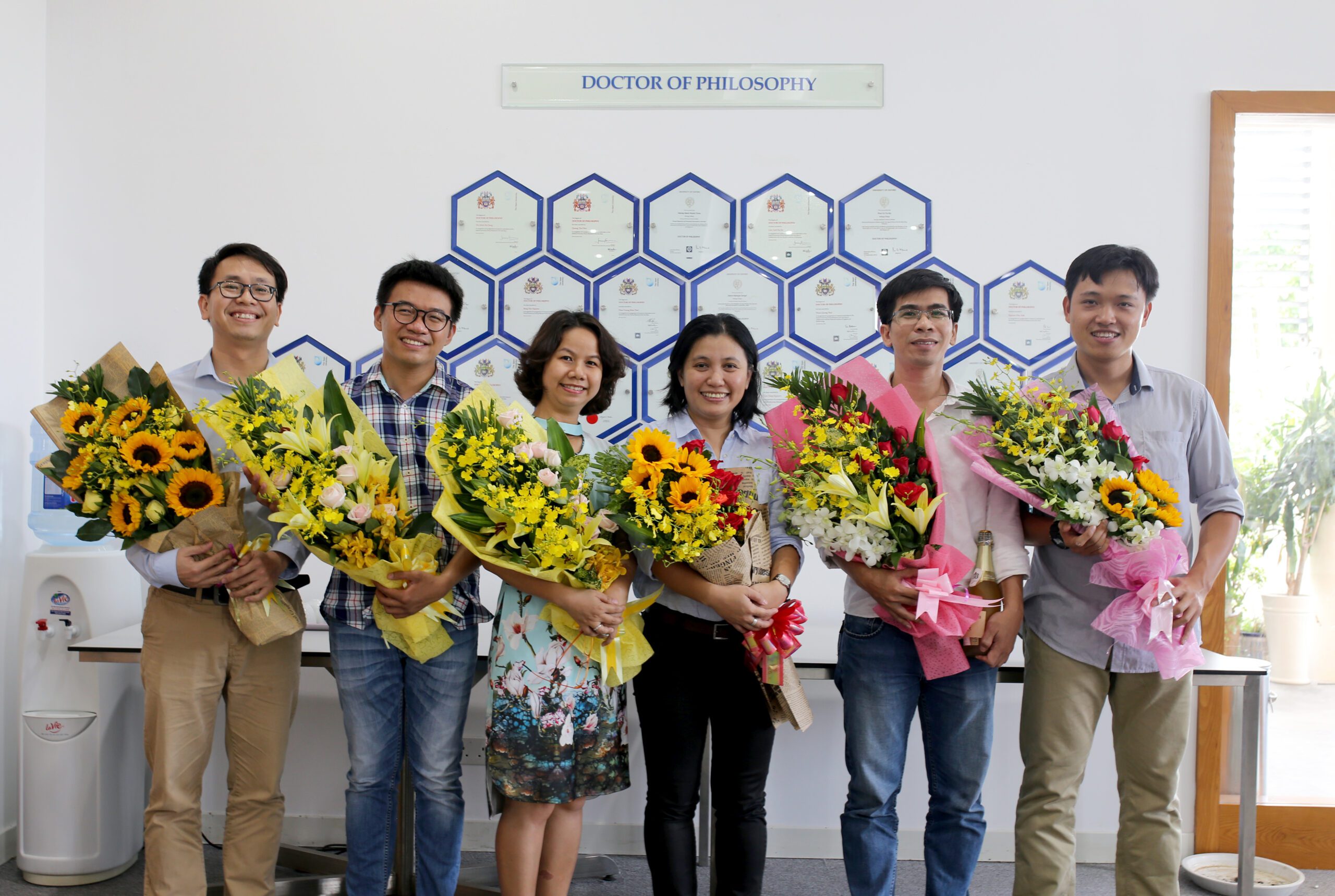
    Congratulations to the recipients of this year’s OUCRU-SOVICO Prize Studentships! These excellent candidates will join the OUCRU PhD family and enrol at the University of Oxford’s Nuffield Department of Medicine.

    Let’s learn why they are excited about joining OUCRU and Oxford’s DPhil programme.

    Dr Tran Bang Huyen: New Treatment For Moderate To Severe Dengue Fever

    Dengue is an important endemic infectious disease in Vietnam. Most patients recover after a week, however a minority can progress to severe dengue with shock (a collapse of the circulatory system) or severe organs involvement, which can be life-threatening. Yet there are no specific treatments for dengue. 

    Recent studies suggest that IL-1 drives excessive inflammation which is associated with severe outcomes. Blocking IL-1 might reduce hyperinflammation and improve clinical outcomes – an exciting topic I’m eager to investigate. 

    Blocking IL-1 might reduce hyperinflammation and improve clinical outcomes – an exciting topic I’m eager to investigate. 

    Dr Huyen

    I’m thrilled to have this amazing chance to pursue my passion for the next 4 years. This journey will allow me to dive deep into the research and set me up for a successful clinical academic career. Importantly, I also aim to grow as a person, building greater resilience to overcome life’s challenges. 

    Ms Nguyen Pham Nhu Quynh: The Emergence, Transmission, And Colonization Of Klebsiella Pneumoniae (Kp) In Vietnam 

    For the next 4 years, I’ll dedicate myself to gaining insights into Klebsiella pneumoniae (KP) epidemiology, a major and emerging public health problem worldwide. Having more than 4 years of research experience and 8 publications on genomics epidemiology, I’ve realized hospitalized KP cases are just the tip of the iceberg.

    Accordingly, my utmost dedication will be focused on providing unique insights into the dynamics of KP epidemiology within the community. Altogether, I believe that I can make a significant contribution to our understanding of KP dynamics and evolution among the Vietnamese population. 

    Accordingly, my utmost dedication will be focused on providing unique insights into the dynamics of KP epidemiology within the community.

    Ms Quynh

    Getting this news filled me with a mix of emotions. It warms my heart to think about the invaluable support and belief that others have shown in my abilities, making me deeply grateful. Along with the excitement, a bit of anticipation washes over me, looking forward to the intellectual challenges and growth at one of the world’s top universities. Above all, my gratitude is beyond words, I will try hard to become an independent scientist and make a meaningful impact in the field of clinical medicine. 

    Ms Luu Phuoc An: Exploring End-of-life Care In The Context Of Infectious Diseases In Vietnam

    In my research field at the ICUs, I’ve witnessed firsthand the struggles that staff, patients, and families have around end-of-life care. It’s a challenging and emotional experience for all involved. I believe we can do better and alleviate a great deal of suffering. 

    I believe we can do better and alleviate a great deal of suffering. 

    Ms An

    I am thrilled to have been awarded the OUCRU Prize scholarship to study at University of Oxford. It’s a dream come true for me. I’m grateful to the selection committee, my supervisors, my colleagues, my family and friends who supported me along the way.

    This scholarship is not only a financial award but also a recognition of my hard work and dedication. I am eager to start my journey and make the most of this opportunity. 

    Ms Tran Dong Thai Han: Evaluating Scientists’ Competencies To Engage About Antimicrobial Resistance (AMR) 

    AMR is a complex global challenge and is particularly concerning in Asia. Solving this issue requires AMR experts to effectively communicate with various stakeholders and the public. I am interested in exploring how scientists in Asia are currently involved in AMR science communication and devising initiatives to build their competencies to engage about AMR.  

    I am interested in exploring how scientists in Asia are currently involved in AMR science communication and devising initiatives to build their competencies to engage about AMR.  

    Ms Han

    Upon receiving the news, I immediately shared this good news with all of my supervisors and colleagues in the Public & Community Engagement team, as I appreciate very much their warm support. I’m excited about this opportunity to study the subject that I love and work with experts across the fields of both science communication and AMR. 

    Stay tuned for more updates from the PhD Programme at OUCRU.

  • Tân CEO Quỹ Wellcome thăm OUCRU: Tăng cường quan hệ đối tác trong nghiên cứu y tế

    Tân CEO Quỹ Wellcome thăm OUCRU: Tăng cường quan hệ đối tác trong nghiên cứu y tế

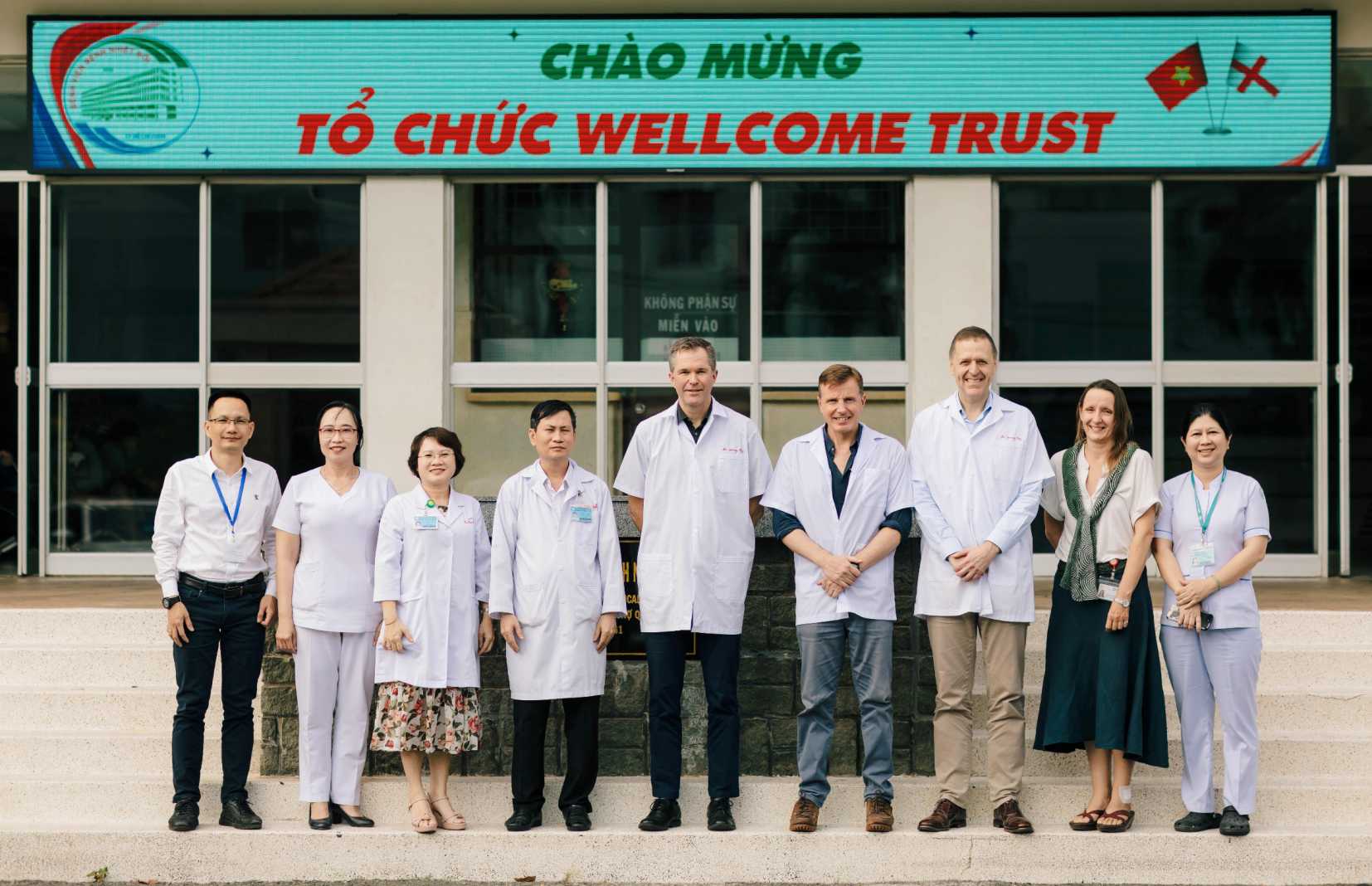
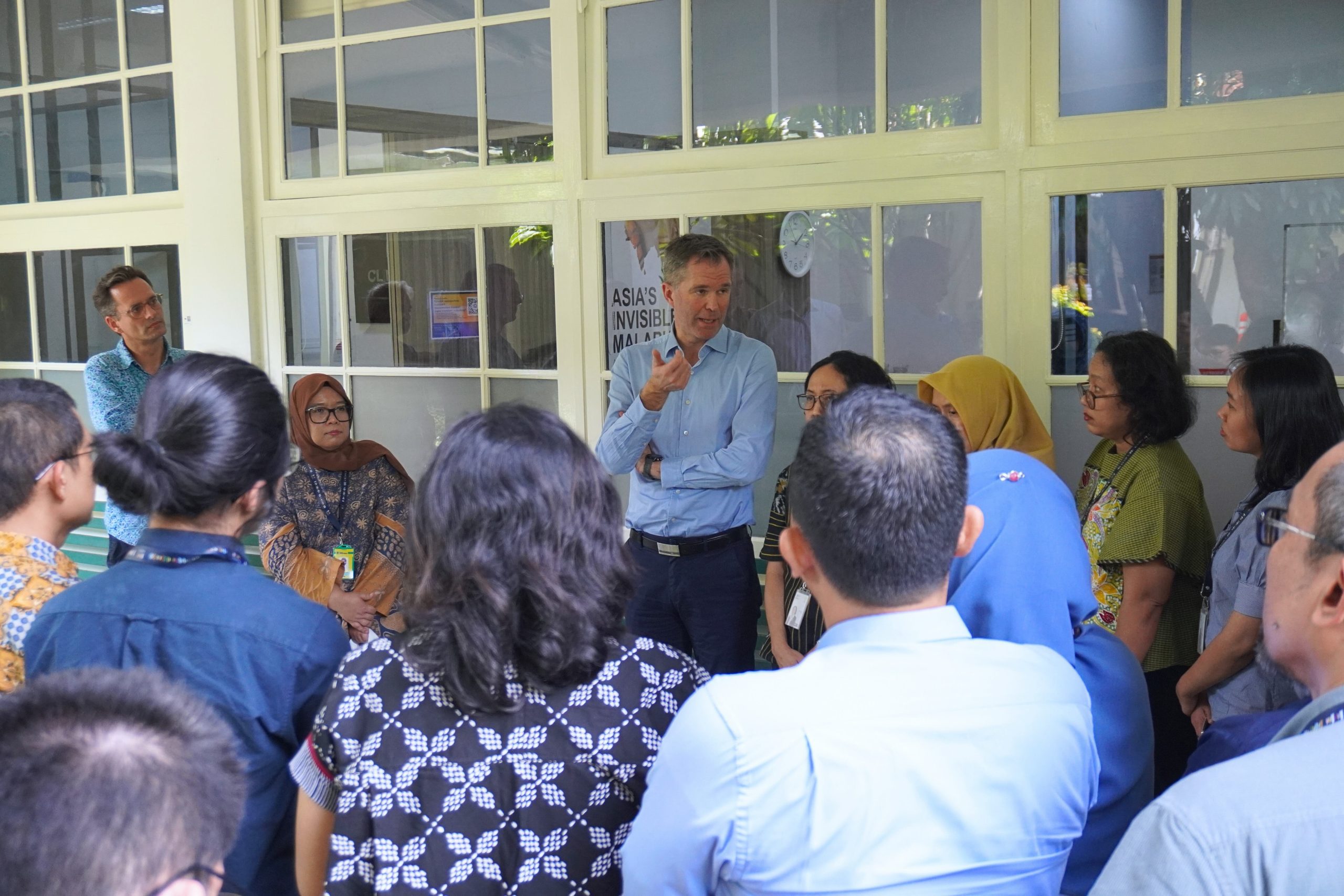
    Từ ngày 22-23 tháng 1 năm 2024, CEO mới được bổ nhiệm của Quỹ Wellcome (Wellcome) Tiến sỹ John-Arne Røttingen đã thăm Đơn vị Nghiên cứu Lâm sàng Đại học Oxford (OUCRU) tại Indonesia và Việt Nam. Trong phái đoàn có Tiến sỹ Paul Schreier, COO và cựu CEO. Phái đoàn được tiếp đón bởi các lãnh đạo OUCRU, bao gồm Giám đốc OUCRU GS. Guy Thwaites, Giám đốc OUCRU Indonesia GS. Kevin Baird, và ban lãnh đạo của các bệnh viện và tổ chức đối tác.

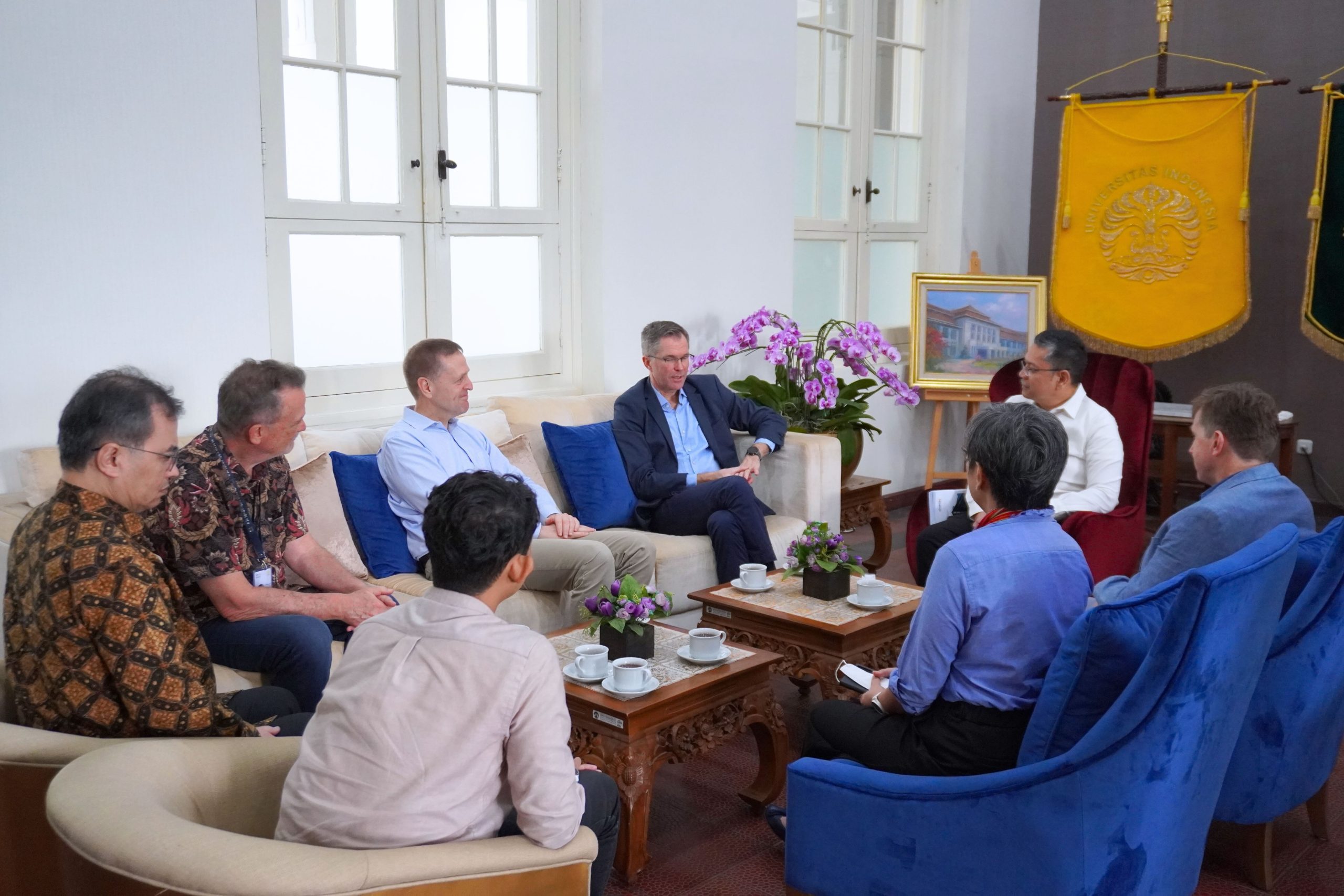
    Trong chuyến thăm, Tiến sĩ Røttingen đã có cuộc gặp mặt hiệu quả với các lãnh đạo bệnh viện và trường đại học, nơi đặt trụ sở của OUCRU tại Indonesia và Việt Nam. Tại Indonesia, ông đã gặp gỡ Giáo sư Ari Fahrial Syam, Trưởng khoa Khoa Y học Đại học Indonesia (FMUI) – nơi đặt trụ sở OUCRU Indonesia, và GS. Badriul Hegar Syarif, Giám đốc Viện Đào tạo và Nghiên cứu Y học Indonesia (IMERI). Buổi họp giúp hai bên hiểu rõ hơn về nghiên cứu của OUCRU và các đối tác tại Indonesia, mở ra nhiều cơ hội hợp tác trong tương lai.

    Cuá»™c há»™i đàm vá»›i Trưởng khoa FMUI – GS. Ari Fahrial Syam; Giám đốc IMERI – GS. Badriul Hegar Syarif; Đại diện LEMTEK UI – Rika Rukyana Sjokeri và Ryan Farid Pratama.

    Tại Việt Nam, phái đoàn Wellcome gặp gỡ Ban giám đốc Bệnh viện Bệnh nhiệt đới, nơi đặt trụ sở OUCRU Hồ Chí Minh. Cuộc trao đổi được chủ trì bởi Giám đốc Bệnh viện, GS. Nguyễn Thành Dũng. Tiến sỹ Røttingen đánh giá cao hợp tác chặt chẽ giữa OUCRU và các đối tác địa phương, góp phần vào việc thúc đẩy nghiên cứu y tế và áp dụng các thành quả nghiên cứu vào thực tiễn lâm sàng.

    Tiến sỹ Røttingen và đoàn Wellcome gặp gỡ Ban giám đốc Bệnh viện Bệnh Nhiệt Đới Thành phố Hồ Chí Minh, Việt Nam.

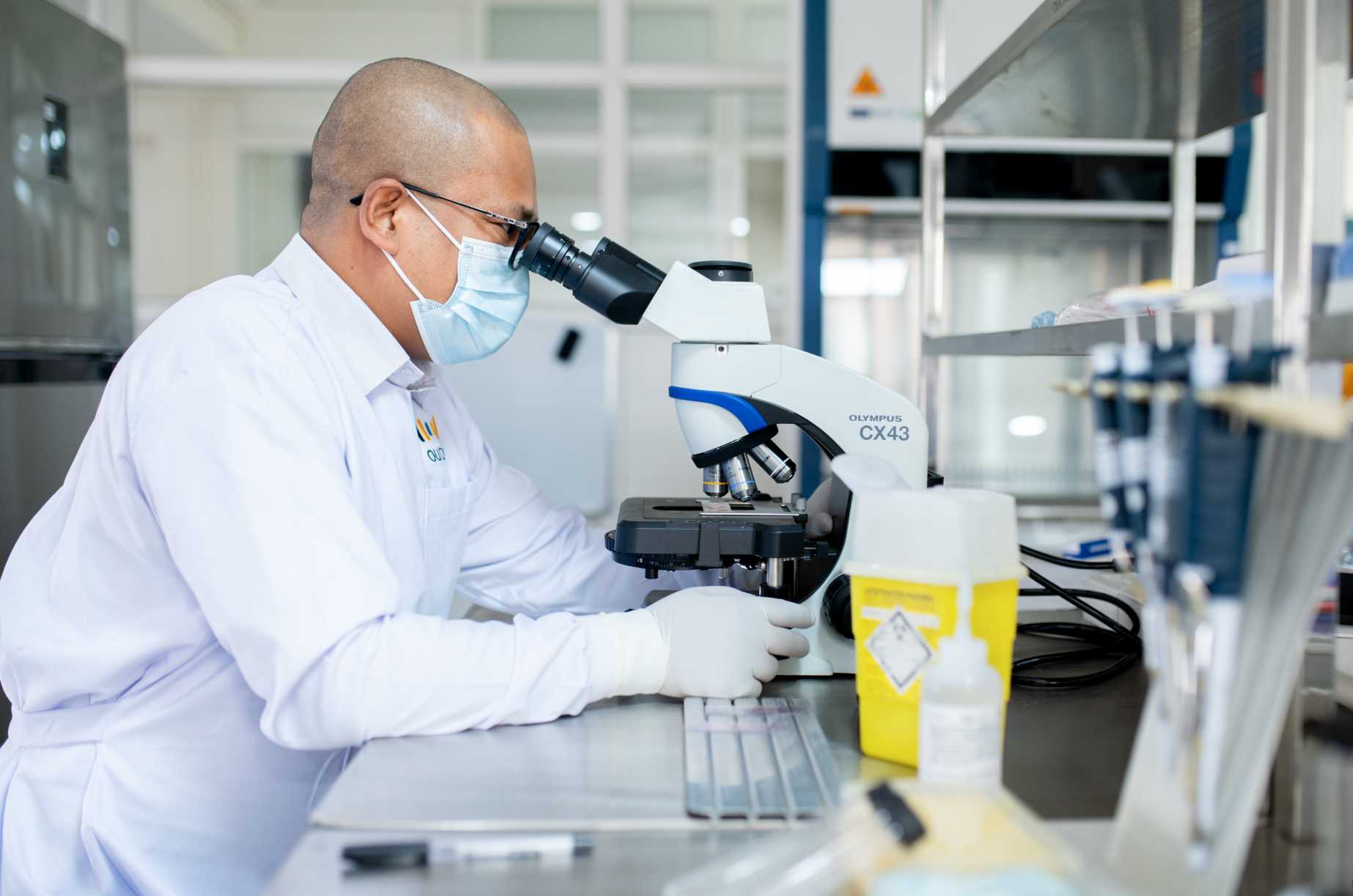
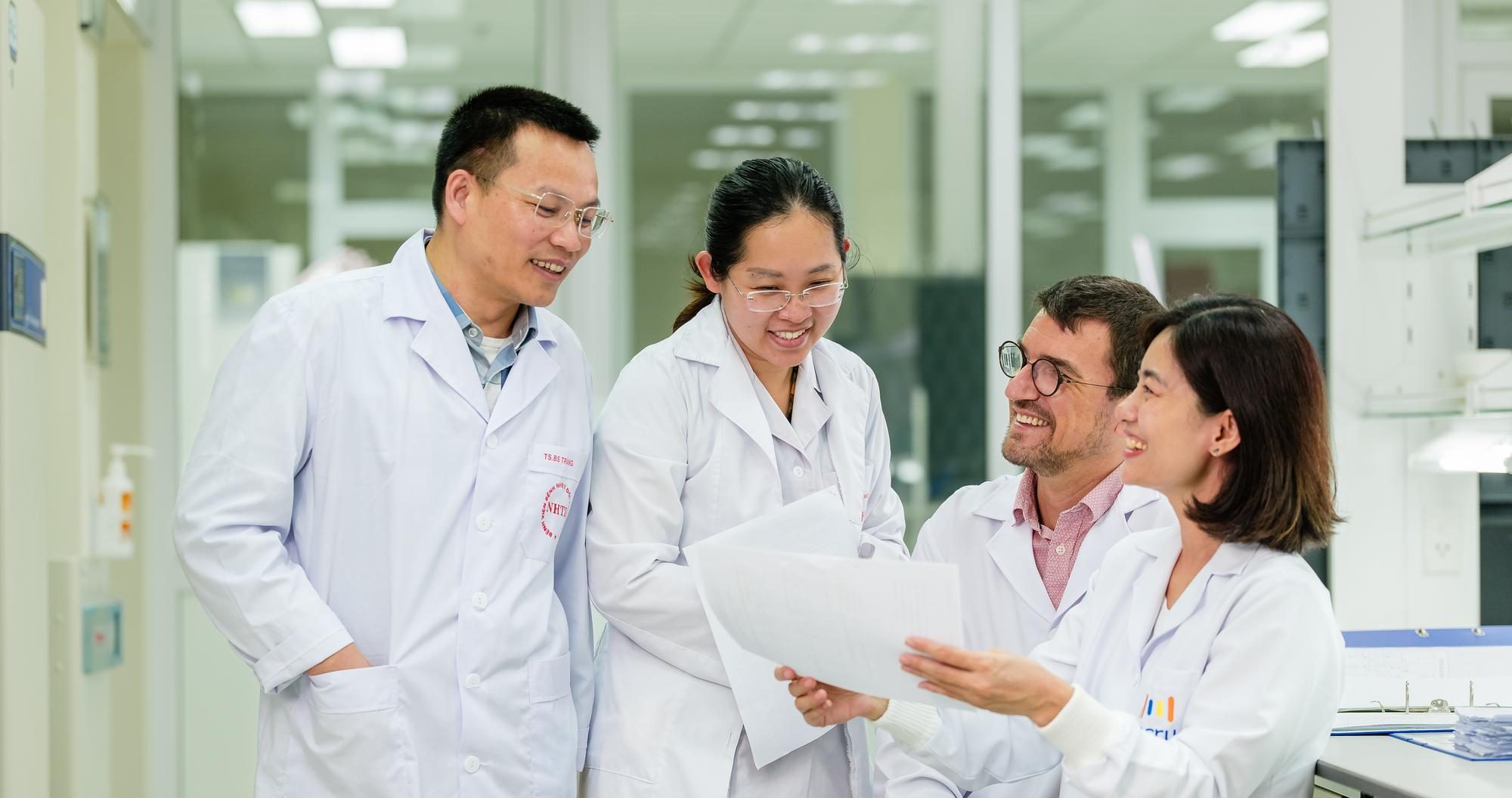
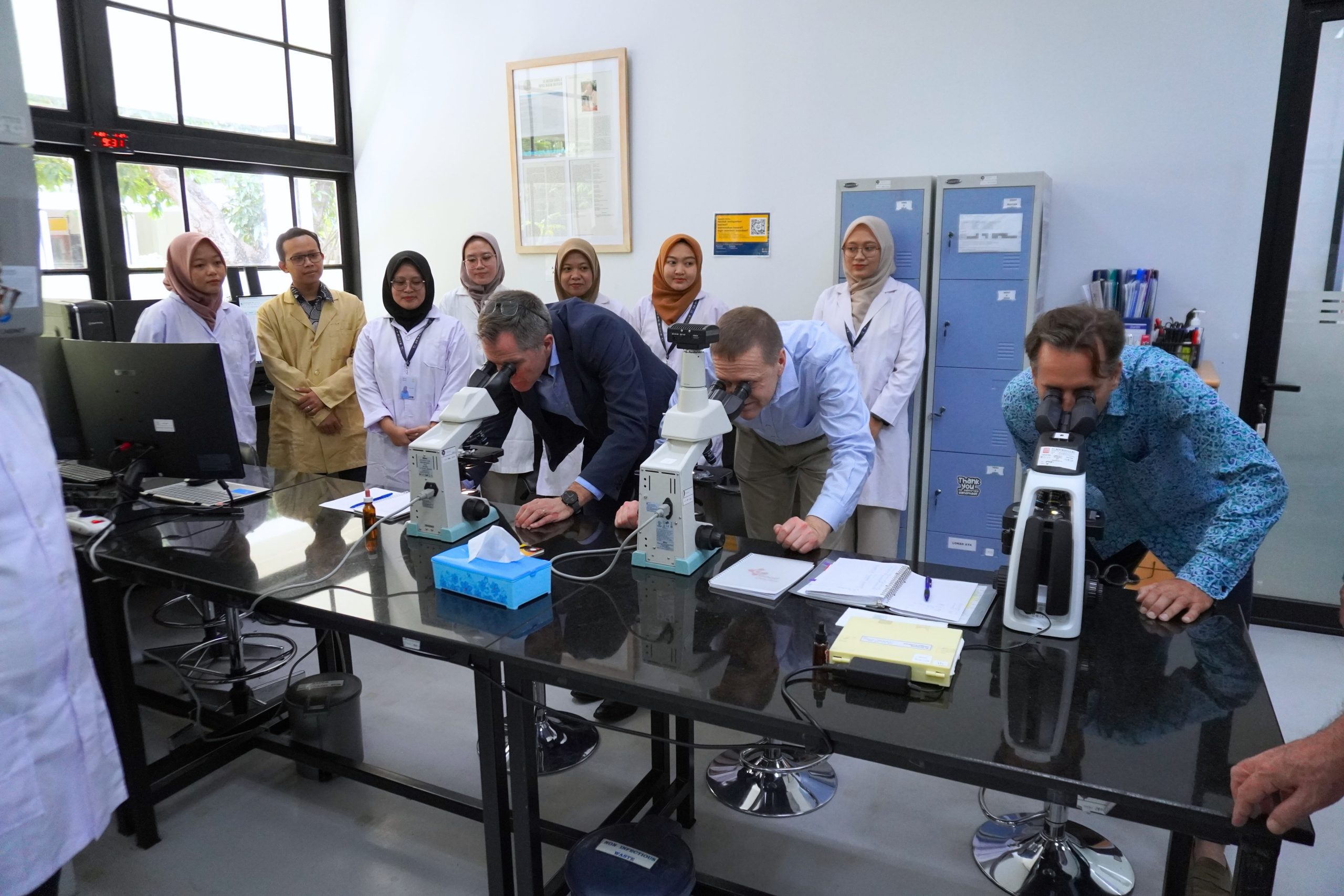
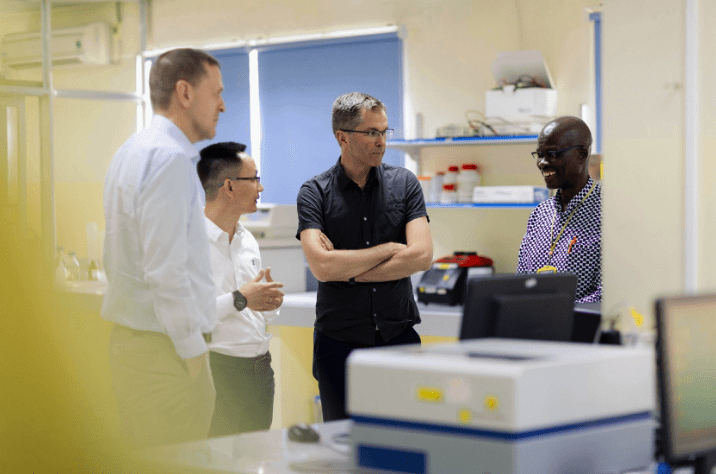
    Đoàn cũng tham quan các cơ sở nghiên cứu, phòng lab tân tiến của OUCRU, nơi có nhiều trang thiết bị hiện đại được tài trợ bởi Quỹ Wellcome. Các thiết bị này đóng vai trò quan trọng trong các nghiên cứu lâm sàng của OUCRU, giúp điều trị và ngăn chặn các bệnh dịch truyền nhiễm trong khu vực. Tiến sĩ Røttingen cũng tìm hiểu về các quy tắc và quy trình an toàn nghiêm ngặt tại phòng thí nghiệm, nhấn mạnh cam kết của OUCRU đối với sự an toàn của các nhà nghiên cứu và môi trường xung quanh.

    CEO John-Arne Røttingen (trái), COO Paul Schreier (giữa), trưởng nhóm nghiên cứu Bệnh nhiễm trùng mới nổi tại OUCRU Indonesia PGS Raph Hamers (phải) quan sát ký sinh trùng sốt rét qua kính hiển vi tại OUCRU Indonesia.
    Từ trái sang: COO Paul Schreier, PGS Lê Văn Tấn – Trưởng nhóm Bệnh truyền nhiá»…m má»›i nổi OUCRU HCMC, CEO John-Arne Røttingen, và Kennedy Awoundo – Trưởng nhóm quản lý phòng xét nghiệm OUCRU, tại phòng Sinh học Phân tá»­ OUCRU Tp. Hồ Chí Minh

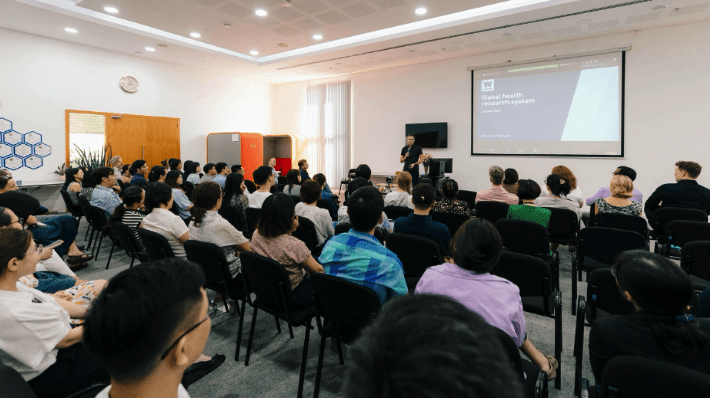
    Buổi thăm viếng kết thúc bằng cuộc gặp gỡ giữa TS Røttingen và nhân viên OUCRU. Ông trình bày về sứ mạng của Quỹ Wellcome nhằm nâng cao nghiên cứu và đổi mới y tế toàn cầu, tập trung vào sức khỏe tâm thần, bệnh truyền nhiễm và hợp tác với các nhà tài trợ.

    OUCRU, một phần của Chương trình Wellcome tại Châu á và Châu Phi, đã nhận được sự hỗ trợ từ Quỹ Wellcome từ khi thành lập vào năm 1991. Qua ba thập kỷ, quan hệ đối tác giữa hai bên đóng vai trò quan trọng trong các nghiên cứu bệnh truyền nhiễm của OUCRU tại Đông Nam Á, cũng như góp phần thực hiện tầm nhìn của Quỹ Wellcome về việc thúc đẩy nghiên cứu y tế toàn cầu.

    TS Røttingen trò chuyện với nhân viên OUCRU Indonesia.
    TS Røttingen phát biểu trước nhân viên OUCRU HCMC.

    Xin gửi lời chúc tốt đẹp nhất đến TS Røttingen với cương vị mới là CEO Quỹ Wellcome. Chúng tôi tin rằng sự hợp tác giữa OUCRU và Quỹ Wellcome sẽ tiếp tục phát triển trong tương lai.