Author: Trang Nguyen

  • Dá»± báo sốt xuất huyết bằng học máy

    Dự báo sốt xuất huyết bằng học máy

    Dự báo dịch trong bối cảnh biến đổi khí hậu

    Việt Nam ghi nhận khoảng 200.000 ca mắc sốt xuất huyết mỗi năm. Các điều kiện định hình dịch ngày càng phức tạp. Nhiệt độ tăng và lượng mưa thay đổi khiến muỗi Aedes aegypti mở rộng địa bàn lên miền Bắc và vùng núi. Biến đổi khí hậu, đô thị hóa nhanh, gia tăng dân số và di biến động dân cư khiến các phương pháp giám sát truyền thống gặp nhiều hạn chế.

    Hệ thống DART (Công cụ cảnh báo sốt xuất huyết nâng cao) được thiết kế để giải quyết thách thức này. Do Quỹ Wellcome tài trợ, nền tảng tích hợp dữ liệu ca bệnh, khí hậu và mật độ dân số để dự báo số ca mắc theo tuần ở cấp quận/huyện trước từ 1 đến 12 tuần. Khoảng thời gian này giúp ngành y tế dự phòng kịp chuẩn bị, phân bổ nguồn lực và phản ứng trước khi dịch lan rộng. DART được xây dựng qua tham vấn trực tiếp với các đối tác địa phương, đảm bảo đáp ứng yêu cầu và sát với thực tế Việt Nam.

    Hướng tiếp cận mới trong mô hình hóa dữ liệu

    Nhiều công cụ dự báo truyền thống thường dựa vào mô hình thống kê vì chúng hiển thị một dải kết quả khả thi, giúp nhà hoạch định chính sách hình dung các kịch bản bùng dịch. Tuy nhiên, phương pháp này buộc nhà nghiên cứu phải tự áp đặt trước các biến số tác động (như nhiệt độ, lượng mưa, mật độ dân số). Nếu bỏ sót một yếu tố, độ chính xác của dự báo sẽ giảm.

    Mô hình học máy vận hành khác biệt: tự phân tích khối lượng dữ liệu lớn để tìm quy luật thay vì chờ con người chỉ định. Dẫu vậy, hạn chế của đa số mô hình học máy là chỉ đưa ra một con số dự báo duy nhất, thiếu dải biên độ sai số và mức độ tin cậy. Với nhà quản lý y tế cần cơ sở ra quyết định, sự thiếu vắng bối cảnh này là một trở ngại lớn.

    “Trước đây ta phải đánh đổi giữa hai phương pháp. DART được thiết kế để kết hợp thế mạnh cá»§a cả hai,” NCS. Huỳnh Ngọc Tuyên, chuyên gia mô hình hóa dá»± án DART tại OUCRU Việt Nam (Đại học Oxford), chia sẻ.

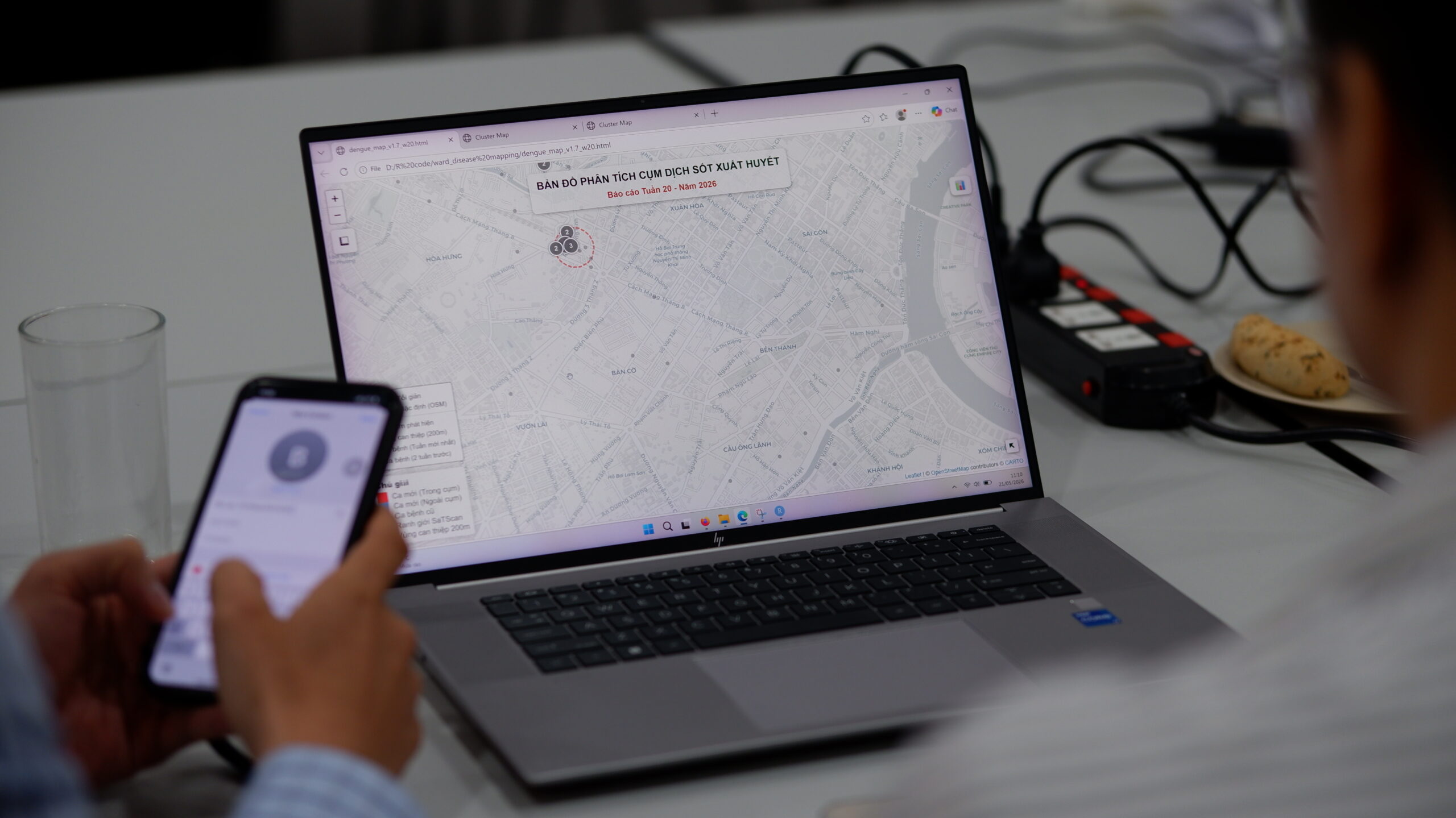
    Giám sát và dự báo là những công cụ thiết yếu trong kiểm soát dịch sốt xuất huyết. (Ảnh: Trang Nguyễn, OUCRU)

    DART kết hợp học máy với kỹ thuật tiên tiến để bổ sung dải biên độ tin cậy cho mỗi kết quả. Mô hình tự bóc tách các mối quan hệ từ dữ liệu gốc thay vì dựa vào nhận định chủ quan của con người. Người dùng sẽ thấy một dải biên độ (ví dụ 400 đến 650 ca) thay vì một con số đơn độc, giúp việc ra quyết định chính xác hơn.

    “DART mang lại sá»± linh hoạt cá»§a học máy nhưng vẫn tạo ra đầu ra có ý nghÄ©a cho y tế công cá»™ng. Sá»± kết hợp đó làm nên khác biệt,” anh Tuyên cho biết.

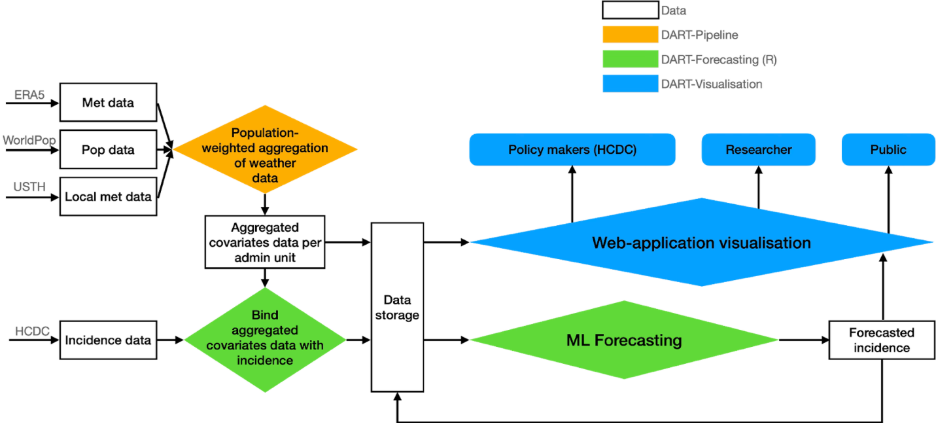
    Nền tảng gồm ba thành phần: đường truyền dữ liệu (data pipeline), mô hình dự báo và giao diện trực quan hóa. Dữ liệu giám sát dịch bệnh, thời tiết và mật độ dân số được nạp vào hệ thống để xử lý và tổng hợp tự động.

    Hình 1. Quy trình vận hành của DART: đường truyền dữ liệu, mô hình dự báo bằng học máy và giao diện trực quan hóa trên ứng dụng web.

    Hệ thống mất khoảng 8 tiếng để xử lý dữ liệu toàn Việt Nam giai đoạn 2002–2025. Khi vận hành thường quy, quy trình này sẽ chạy tự động hằng tuần, ít cần can thiệp thủ công.

    Hiện tại, DART đã dự báo hằng tuần số ca mắc sốt xuất huyết cho TP.HCM trước tối đa 12 tuần ở cấp thành phố và quận/huyện. Để thích ứng với việc thay đổi địa giới hành chính hiện nay, DART đang tinh chỉnh mô hình xuống cấp xã/phường.

    Dự báo chỉ có giá trị khi được sử dụng

    Qua ba năm, DART mở rộng quy mô từ một nhóm kỹ thuật tinh gọn thành một mạng lưới đối tác rộng lớn gồm chính quyền địa phương, cơ quan y tế công cộng và các viện nghiên cứu.

    “Nhiều bên tham gia hÆ¡n là má»™t tín hiệu tốt,” PGS. Sarah Sparrow (Đại học Oxford), chá»§ nhiệm dá»± án, nhận định.

    Sự đồng hành của Viện Vệ sinh Dịch tễ Trung ương (NIHE), CDC Hà Nội, HCDC, Sở Y tế TP.HCM, Trường Đại học Khoa học và Công nghệ Hà Nội (USTH) giúp nền tảng được kiểm chứng bằng thực tế vận hành, thay vì chỉ dựa trên các giả định nghiên cứu.

    Thay vì tham vọng so sánh động học dịch giữa nhiều thành phố, nhóm nghiên cứu chọn hướng Ä‘i thá»±c tế: hoàn thiện và chứng thá»±c hiệu quả bá»™ khung mô hình tại TP.HCM trước khi tính đến chuyện nhân rá»™ng. “Đây không phải là má»™t thá»­ nghiệm học thuật. Chúng tôi muốn xây dá»±ng má»™t công cụ mà đội ngÅ© y tế công cá»™ng có thể hiểu, tin tưởng và sá»­ dụng,” PGS. Sparrow nhấn mạnh.

    Đến năm 2026, bài toán đặt ra là liệu các cơ quan quản lý có đủ niềm tin để hành động dựa trên dự báo của DART.

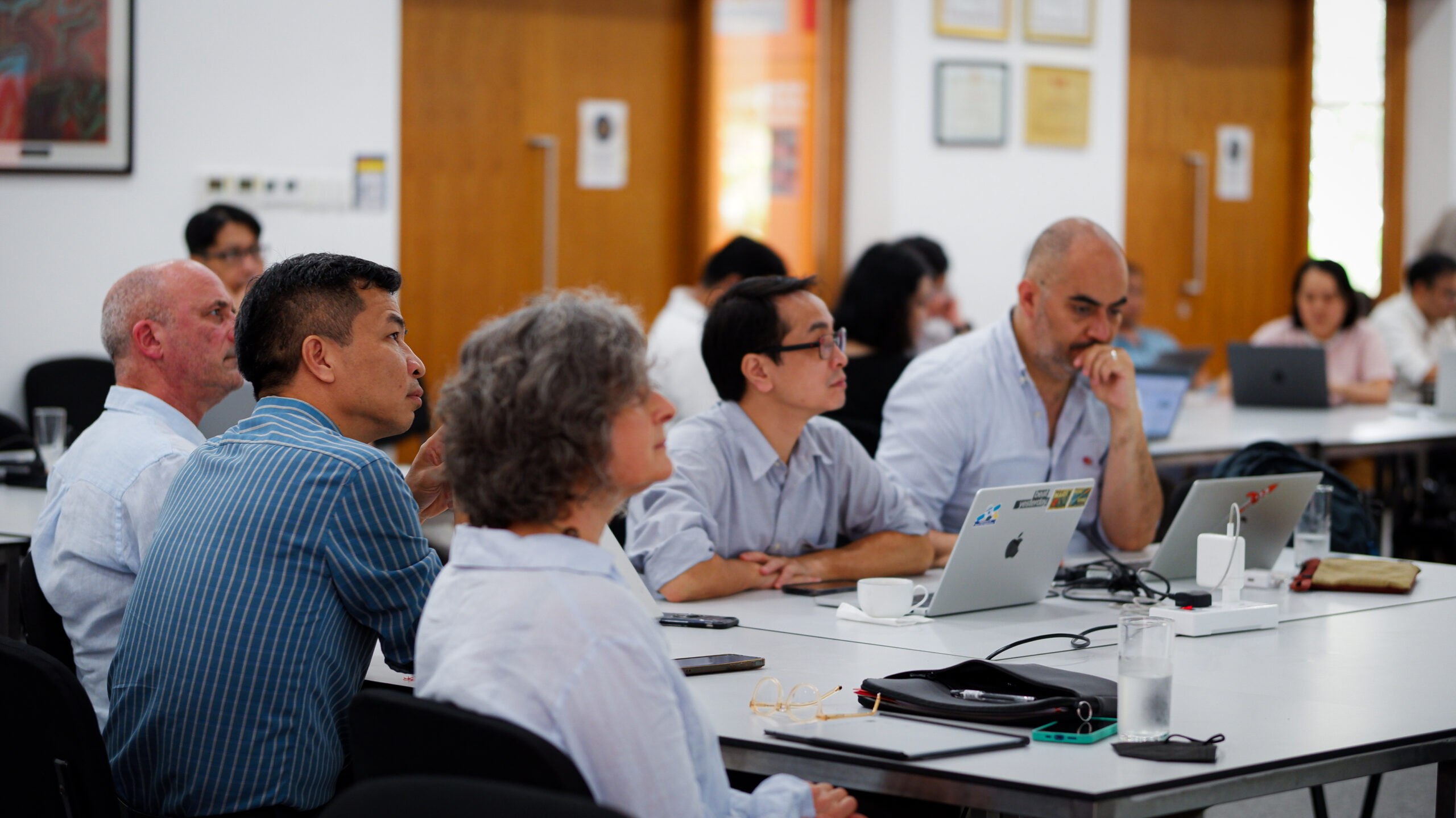
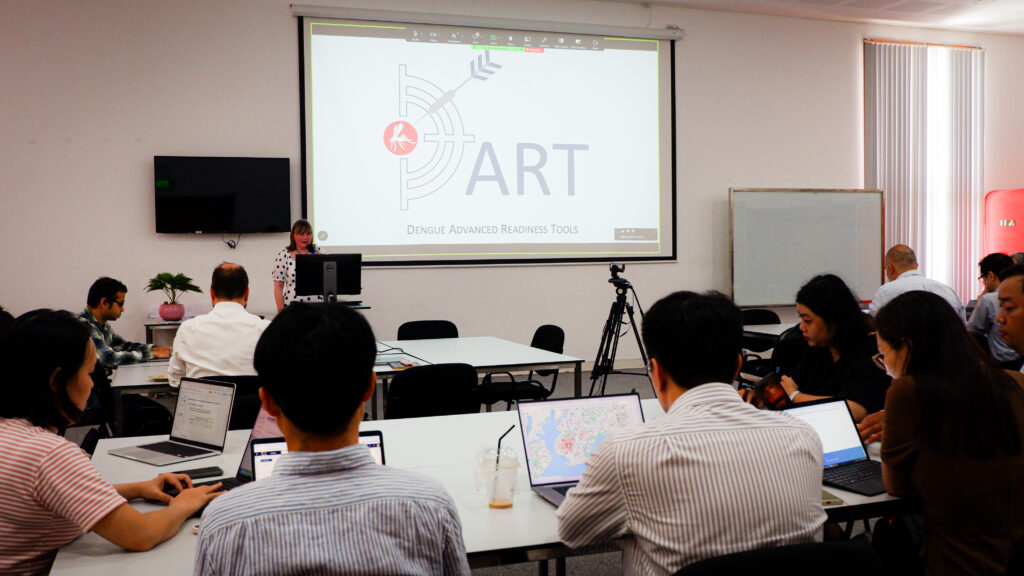
    Các đại biểu Vương quốc Anh và Việt Nam tại hội thảo tổng kết dự án DART, tháng 5/2026. (Ảnh: Trang Nguyễn, OUCRU)

    Tại hội thảo tổng kết ngày 21–22/5, đại diện từ Quỹ Wellcome, NIHE, HCDC, CDC Hà Nội, Viện Pasteur TP.HCM, USTH, Save the Children và các đối tác Anh – Việt đã thảo luận về tầm nhìn chiến lược và trực tiếp đánh giá tính thực tiễn của dự án.

    Thạc sÄ© Trương Thị Thanh Lan, Trưởng khoa Giám sát, Cảnh báo, Chuẩn bị và Đáp ứng khẩn cấp dịch bệnh (HCDC), đánh giá DART là “công cụ hiệu quả há»— trợ dá»± báo sốt xuất huyết tại TP.HCM”, nhưng lưu ý cần tiếp tục tinh chỉnh mô hình để thích ứng vá»›i các thay đổi cấu trúc hành chính gần đây cá»§a thành phố.

    Hội thảo cũng chỉ ra thách thức chung của ngành: sự hào hứng ban đầu đối với các công cụ mô hình hóa đang nhường chỗ cho sự thận trọng. PGS. Phạm Quang Thái, Phó Trưởng khoa Kiểm soát bệnh truyền nhiễm (NIHE), nhận định:

    “Các mô hình thường sa đà vào con số, hình ảnh trá»±c quan và kỹ thuật. Vá»›i nhà quản lý y tế, câu hỏi đơn giản hÆ¡n: Điều này có ý nghÄ©a gì, cần chú ý vào đâu và bước tiếp theo phải làm gì?”

    Ông lập luận: để tạo dựng niềm tin, cần sự tham gia của chuyên gia dịch tễ ngay từ đầu, minh chứng rõ lợi ích thực tế và sự phê duyệt chính thức từ các hội đồng khoa học thẩm quyền để công cụ có đủ tính pháp lý nhằm phục vụ quản lý nhà nước.

    Chặng đường phía trước

    Bài toán tiếp theo là tính bền vững khi hết kinh phí tài trợ. Các hệ thống dự báo luôn cần hỗ trợ kỹ thuật liên tục, cập nhật dữ liệu và quyền sở hữu của cơ quan chức năng. Nhóm nghiên cứu sẽ tiếp tục phối hợp với HCDC và các đối tác để tích hợp DART vào hoạt động phòng chống dịch thường quy.

    Nghiên cứu Advance Warning and Response Exemplars của OUCRU về hệ thống cảnh báo sớm cũng chỉ ra: việc gắn kết các bên liên quan phải là quá trình liên tục xuyên suốt vòng đời của dự án.

    Tầm nhìn của dự án đang mở rộng sang Brazil và Nepal nhằm thử nghiệm bộ khung công nghệ trong các bối cảnh dịch tễ khác nhau.
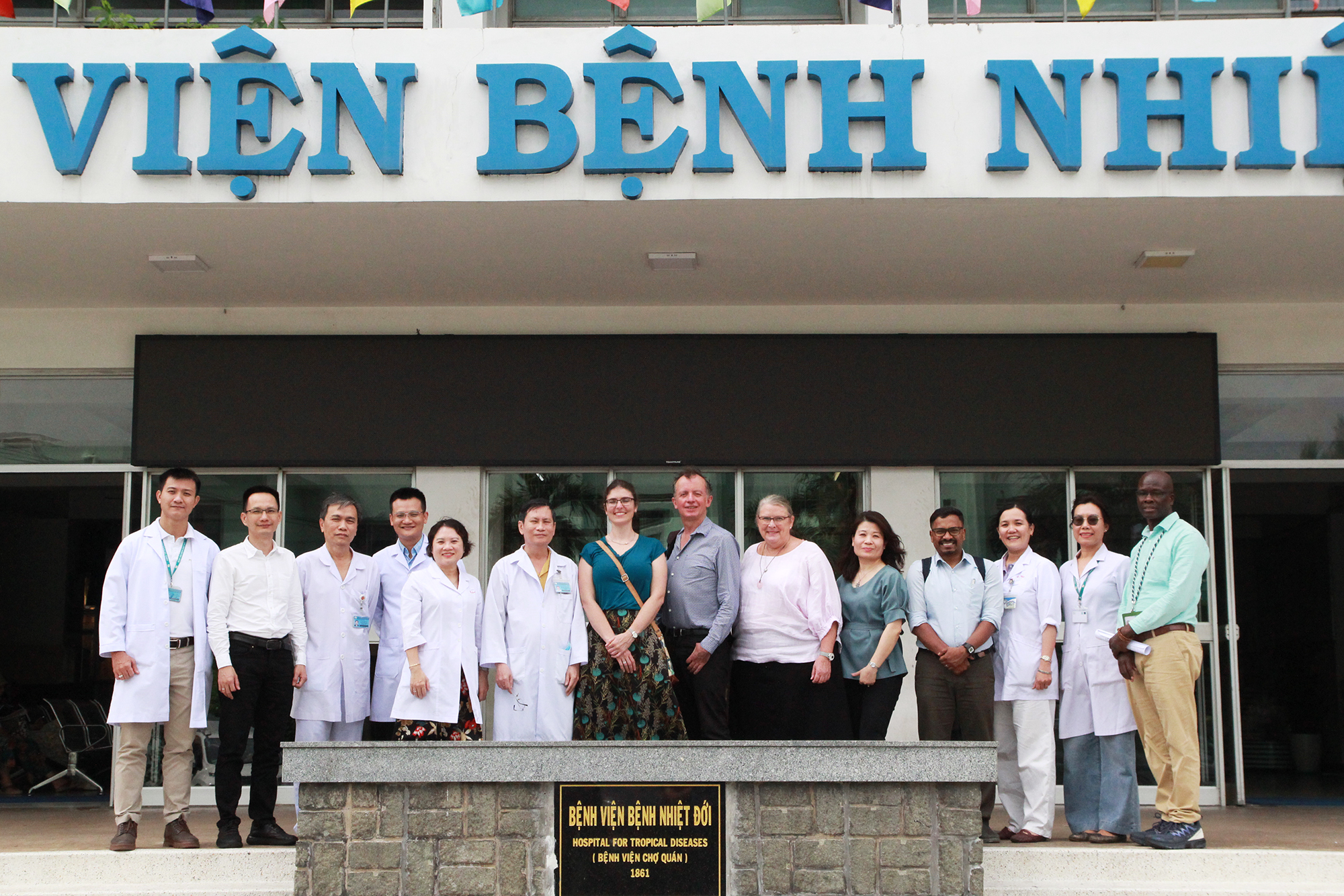
    Hệ thống DART hướng tới mục tiêu thử nghiệm bộ khung công nghệ trong các bối cảnh dịch tễ khác nhau và nâng cao khả năng mở rộng của mô hình. (Ảnh: Trang Nguyễn, OUCRU)

    TS. Felipe J. Colón-González từ Quỹ Wellcome đúc kết: “Đây không chỉ thuần túy là hoạt động từ thiện. Đây là khoản đầu tư chiến lược nhằm tạo ra các công cụ dẫn đường cho việc hoạch định chính sách và ra quyết định thá»±c địa.”

    Giá trị dài hạn của DART không nằm ở một đột phá công nghệ đơn lẻ, mà phụ thuộc vào việc các tổ chức y tế công cộng Việt Nam có thể làm chủ và vận hành hệ thống bền vững hay không. Trong kiểm soát dịch bệnh, một lời dự báo chỉ có giá trị khi đi kèm sự sẵn sàng hành động.

  • OUCRU scientists are using machine learning to forecast the next dengue outbreak

    OUCRU scientists are using machine learning to forecast the next dengue outbreak

    Forecasting dengue in a changing climate

    Every year, Vietnam braces for dengue season. Up to 200,000 cases are reported annually, and the conditions that shape those outbreaks are becoming harder to read.

    Rising temperatures and shifting rainfall are pushing Aedes aegypti, the mosquito that transmits dengue, into northern and mountainous regions. Changes in the climate, rapid urbanisation, population growth, and complex human movement are making dengue increasingly difficult to anticipate through conventional surveillance alone.

    Dengue Advanced Readiness Tools (DART) was designed to help address this challenge. Supported by Wellcome, the platform brings together case notifications, climate, and population data to forecast dengue weekly incidence at district level 1 to 12 weeks in advance, giving public health teams more time to prepare, allocate resources and respond before an outbreak takes hold.

    The scope and outputs of DART were shaped through direct consultation with local partners, making it highly customised to Vietnam’s needs and realities.

    A new way to forecast

    Building an effective dengue forecast is harder than it sounds. Many forecasting tools have traditionally relied on statistical models because they can show a range of possible outcomes, helping decision makers better understand uncertainty.

    But they require researchers to decide up front which factors should shape those predictions and the uncertainties, such as temperature, rainfall, or population density. Miss something important, and the forecast can become inaccurate.

    Machine learning models work differently. Rather than being told which factors matter, it analyses large amounts of data and identifies patterns for itself. The catch is that most machine learning models produce only a single predicted case count, with no range and no indication of how confident it is. For a public health manager deciding whether to act, that missing context matters.

    ‘It used to be an either-or dilemma, so DART was designed to bring these strengths together,’ said Huỳnh Ngọc Tuyên, DPhil candidate, University of Oxford, forecast modeller of DART project, OUCRU Vietnam.

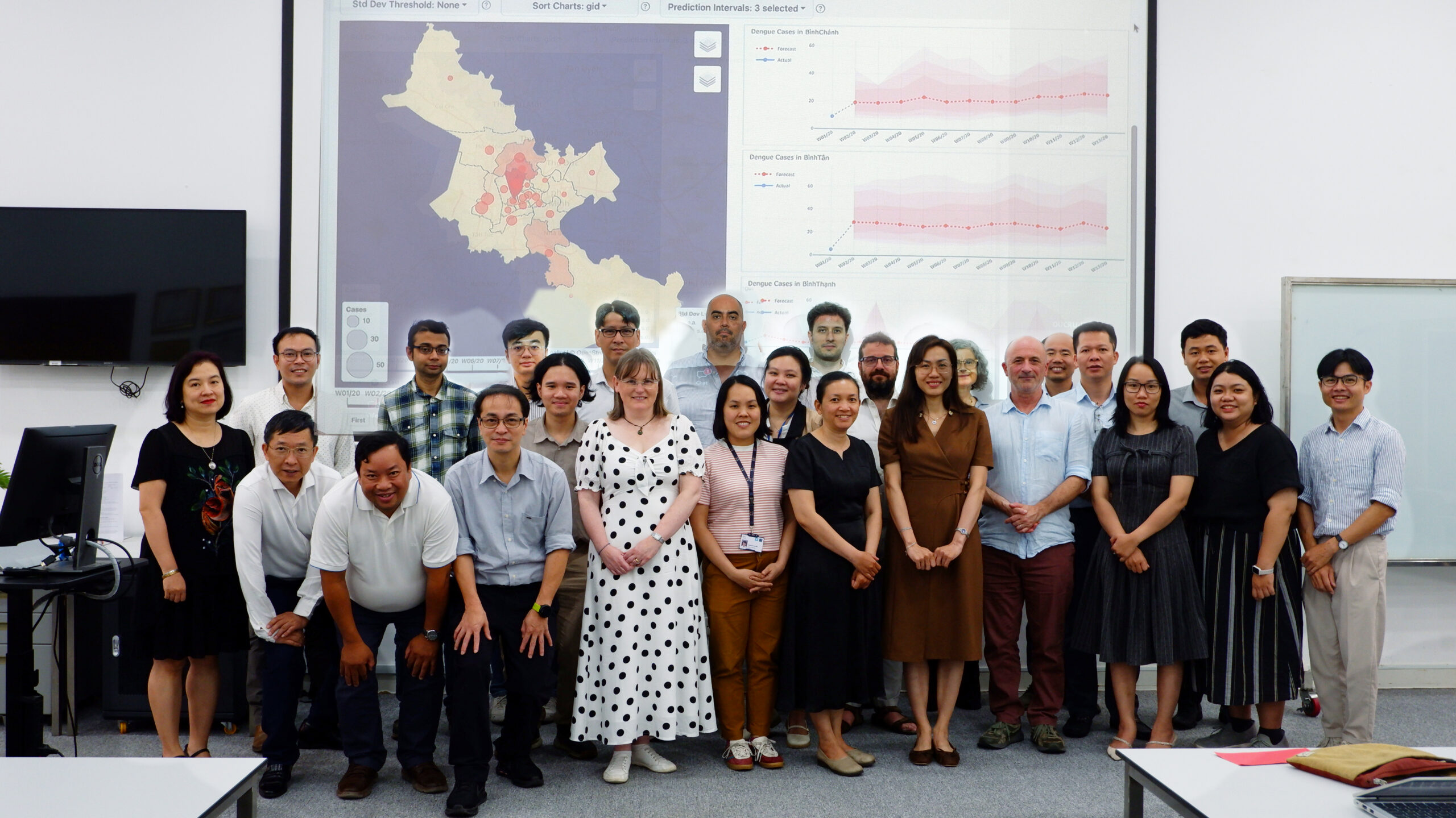
    Surveillance and forecasting are essential tools in the control of dengue epidemics. (Photo: Trang Nguyen, OUCRU)

    DART combines machine learning with an advanced technique that adds a confidence range to each forecast. In practice, rather than relying on human judgements to decide in advance whether humidity, rainfall or other factors matter most, DART identifies those relationships from the data itself. Instead of a single predicted number, users see a range, say 400 to 650 cases, giving them a clearer basis for deciding whether and how to act.

    ‘It gives us the flexibility of machine learning while still producing outputs that are meaningful for public health decision making,’ Tuyên said. ‘That combination is what sets DART apart.’

    The platform brings together three components: a data pipeline, a forecasting model, and a visualisation interface. Disease surveillance records, weather data, and population density estimates feed into the system, where they are processed and aggregated automatically.

    Figure 1. The DART workflow, showing the data pipeline, machine learning forecasting, and web-application visualisation.

    Processing data for the whole of Vietnam from 2002 to 2025 takes around eight hours. Once in routine operation, the pipeline can be automated to run weekly with little manual input.

    The current system already generates weekly forecasts of dengue incidence for Ho Chi Minh City, up to 12 weeks ahead, at either city or district level. In 2025, district-level administrative was removed in Vietnam, DART aims to adapt the model to commune level to reflect this change.

    A forecast is only useful if it is used

    Over three years, DART grew in ways that reflected the complexity of the problem itself. The project began with a focused technical team and ended with a wider circle of partners, including local government, public health agencies, and academic institutions, all of whom shaped what the platform became.

    ‘We have more people involved, which is a good thing,’ said project lead Associate Professor Sarah Sparrow of the University of Oxford. That expansion was not simply a matter of scale.

    Bringing in the National Institute of Hygiene and Epidemiology (NIHE), Hanoi Centre for Disease Control (Hanoi CDC), Centre for Disease Control of Ho Chi Minh City (HCDC), Ho Chi Minh City Department of Health (HCMC DoH), the University of Science and Technology of Hanoi (USTH), and other local stakeholders meant the platform was tested against operational realities, not just research assumptions.

    The original ambition was to compare dengue dynamics across multiple Vietnamese cities. Over time, the team moved towards a more grounded approach: getting the framework right in Ho Chi Minh City first, validating it, then thinking about where else it might go.

    ‘It’s not an academic exercise,’ Assoc Prof Sparrow said. ‘We want to develop a tool that public health teams could understand, trust and use.’

    By 2026, the question was no longer whether DART could generate reliable forecasts. It was whether the institutions it was built with had enough confidence to act on them.

    Delegates from the UK and Vietnam at the DART closing workshop, May 2026. (Photo: Trang Nguyen, OUCRU)

    On 21 and 22 May, the question was brought into the closing workshop. Participants watched data move through the pipeline and reviewed what it had produced. The institutions present, including Wellcome, NIHE, HCDC, Hanoi CDC, Ho Chi Minh City Pasteur Institute, USTH, Save the Children and academic partners from Vietnam and the United Kingdom, reflected the translational ambition of the project.

    Trương Thị Thanh Lan, MSc, Head of the Department of Surveillance, Early Warning, Preparedness and Emergency Response to Epidemics at HCDC, described the platform as ‘an effective tool for supporting dengue forecasting in Ho Chi Minh City’ but noted that recent changes to the city’s administrative structure will require further refinement to ensure it remains relevant and usable in practice.

    The meeting also surfaced a challenge the field has been grappling with more broadly. Associate Professor Phạm Quang Thái, Vice Head of Communicable Disease Control at NIHE, observed that initial enthusiasm for modelling tools among public health managers has given way to caution.

    ‘The models get caught up in numbers, visuals, technique,’ he said. ‘For public health managers, the question is simpler: what does this mean, where should we look, and what should we do next?’

    Earning broader confidence, he argued, would require closer involvement of surveillance specialists from the outset, clearer evidence of practical benefit and formal validation by recognised scientific bodies to give tools like DART the legitimacy needed for government adoption.

    What comes next

    The workshop also turned to the harder question of what happens after the grant ends. Forecasting systems require ongoing technical support, updated data, and most importantly, institutional ownership. The research team plans to continue working closely with key stakeholders, including HCDC and local partners, to integrate DART into routine dengue prevention and control activities.

    Findings from Advance Warning and Response Exemplars, another study conducted at OUCRU on barriers and enablers to early warning systems, highlighted that stakeholder engagement must be treated as an ongoing process throughout the entire life cycle of the project.

    The conversation also looked further ahead. Interest has been expressed in adapting the platform for Brazil and Nepal, stress-testing the framework in different epidemiological settings, and making it more scalable.

    DART looks to stress-test the framework in diverse epidemiological settings and enhance its scalability. (Photo: Trang Nguyen, OUCRU)

    Dr Felipe J. Colón-González of Wellcome framed the ambition plainly: ‘This is not purely philanthropic. It is a strategic investment in creating tools that will guide policy and decision-making on the ground.’

    DART’s long-term value may therefore depend less on a single technical breakthrough than on whether Vietnam’s public health institutions can own, test and use the system over time. In dengue control, as in weather forecasting, a prediction matters only if someone is prepared to act on it.

  • OUCRU gia nhập Mạng lưới Giám sát Virus Corona toàn cầu cá»§a WHO

    OUCRU gia nhập Mạng lưới Giám sát Virus Corona toàn cầu của WHO

    Được thiết lập từ năm 2023, CoViNet quy tụ các chương trình giám sát và phòng thí nghiệm tham chiếu trên toàn thế giới nhằm hỗ trợ phát hiện sớm, theo dõi và đánh giá rủi ro đối với SARS-CoV-2, MERS-CoV cùng các chủng virus corona mới nổi có tiềm năng gây dịch và đại dịch.

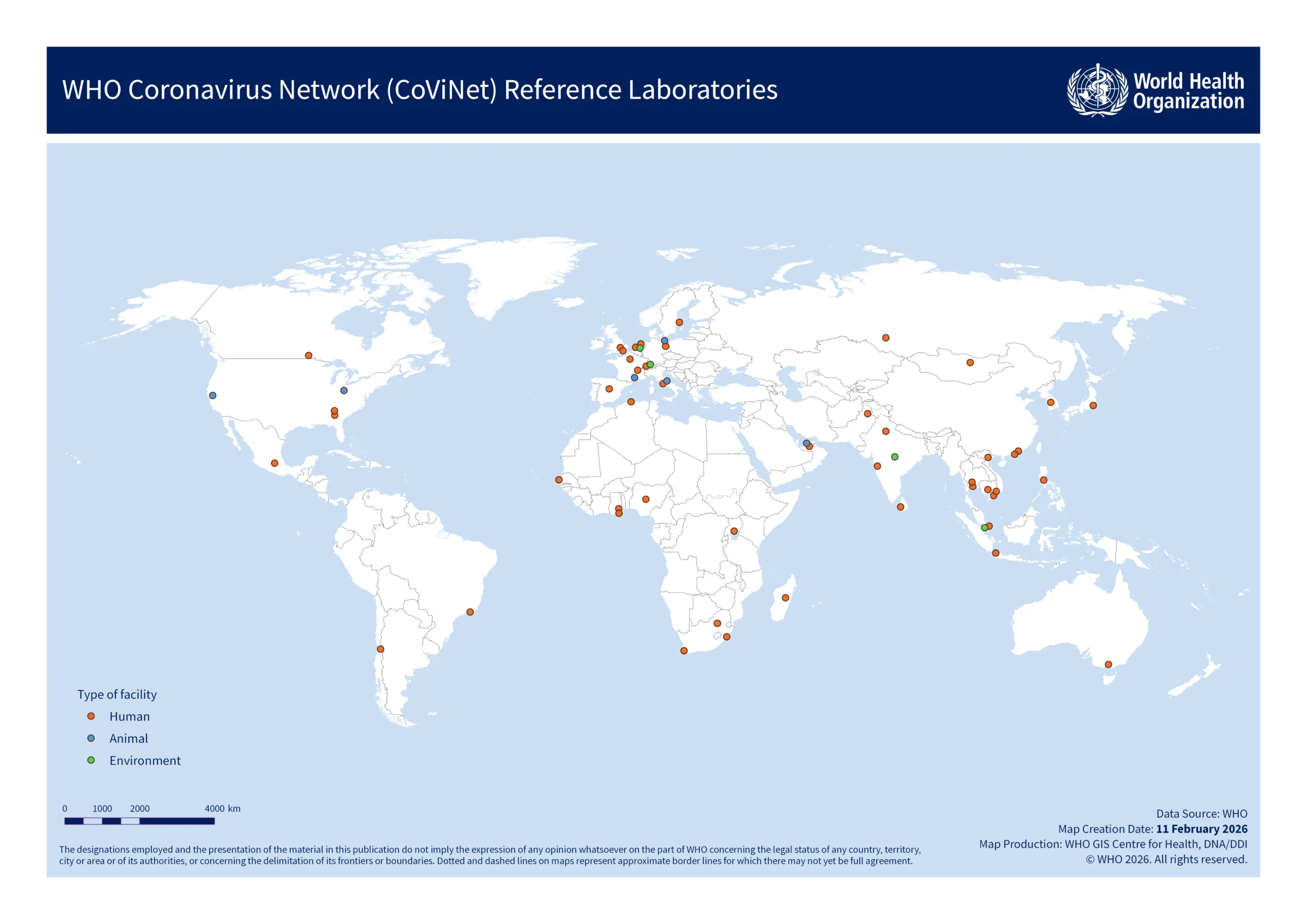
    Mạng lưới này phát triển dá»±a trên hệ thống phòng thí nghiệm tham chiếu COVID-19 cá»§a WHO từ đầu đại dịch, nay được mở rá»™ng quy mô để bao quát nhiều chá»§ng virus corona hÆ¡n thông qua hướng tiếp cận “Má»™t sức khỏe” (One Health), tích hợp giữa sức khỏe con người, động vật và môi trường. CoViNet hiện bao gồm 58 phòng thí nghiệm tham chiếu tại 35 quốc gia.

    Các phòng thí nghiệm tham chiếu thuộc Mạng lưới Virus Corona của WHO (CoViNet). Ảnh: WHO (2026).

    Vào tháng 3/2026, phòng thí nghiệm nghiên cứu của OUCRU và BVBNĐ chính thức góp mặt vào hệ thống tham chiếu virus corona toàn cầu. Với tư cách thành viên, đội ngũ chuyên gia sẽ tiếp tục phối hợp chặt chẽ với WHO và các đối tác toàn cầu nhằm củng cố năng lực giám sát, xét nghiệm và ứng phó với các mối đe dọa từ virus corona. Sự kiện này là minh chứng cho bề dày kinh nghiệm và năng lực nghiên cứu của OUCRU và BVBNĐ trong lĩnh vực bệnh truyền nhiễm.

    BS.CKII Nguyá»…n Thành DÅ©ng, Giám đốc Bệnh viện Bệnh Nhiệt đới, chia sẻ: “Mối quan hệ hợp tác bền chặt giữa BVBNĐ và OUCRU, cùng kinh nghiệm dày dặn trong ứng phó dịch bệnh má»›i nổi tạo tiền đề vững chắc để chúng tôi đóng góp cho CoViNet. Thông qua mạng lưới này, chúng tôi sẽ nâng cao hÆ¡n nữa năng lá»±c xét nghiệm để phát hiện và phản ứng kịp thời vá»›i các mối nguy từ virus corona trong tương lai.”

    Giáo sư Kevin Baird, Quyền Giám đốc OUCRU, nhận định: “Chúng tôi đánh giá cao vai trò dẫn dắt cá»§a WHO trong các chiến dịch giám sát nhiá»…m trùng trọng Ä‘iểm, mà CoViNet là má»™t Ä‘iển hình. Cùng vá»›i các đồng nghiệp tại BVBNĐ, chúng tôi sẵn sàng đồng hành cùng WHO và các đối tác trong nhiệm vụ giám sát các chá»§ng virus corona ngoài tá»± nhiên. Sá»± hợp tác này không chỉ phục vụ sức khỏe cá»™ng đồng, mà còn duy trì các tiêu chuẩn chuyên môn nghiêm ngặt cho nghiên cứu khoa học thá»±c tiá»…n.”

    Giáo sư Lê Văn Tấn, Trưởng nhóm Nghiên cứu Bệnh truyền nhiá»…m má»›i nổi tại OUCRU, chá»§ nhiệm dá»± án SEACOVARIANTS, cho biết thêm: “Thông qua nền tảng SEACOVARIANTS do quỹ Wellcome tài trợ, chúng tôi đã xây dá»±ng hệ thống khu vá»±c về giám sát di truyền và đánh giá đáp ứng miá»…n dịch đối vá»›i nhiều tác nhân gây bệnh má»›i nổi như SARS-CoV-2, cúm gia cầm A, đậu mùa khỉ và Enterovirus A71. Gia nhập CoViNet giúp chúng tôi phát huy những thành quả này, đóng góp vào ná»— lá»±c chung trong việc sẵn sàng ứng phó dịch bệnh.”

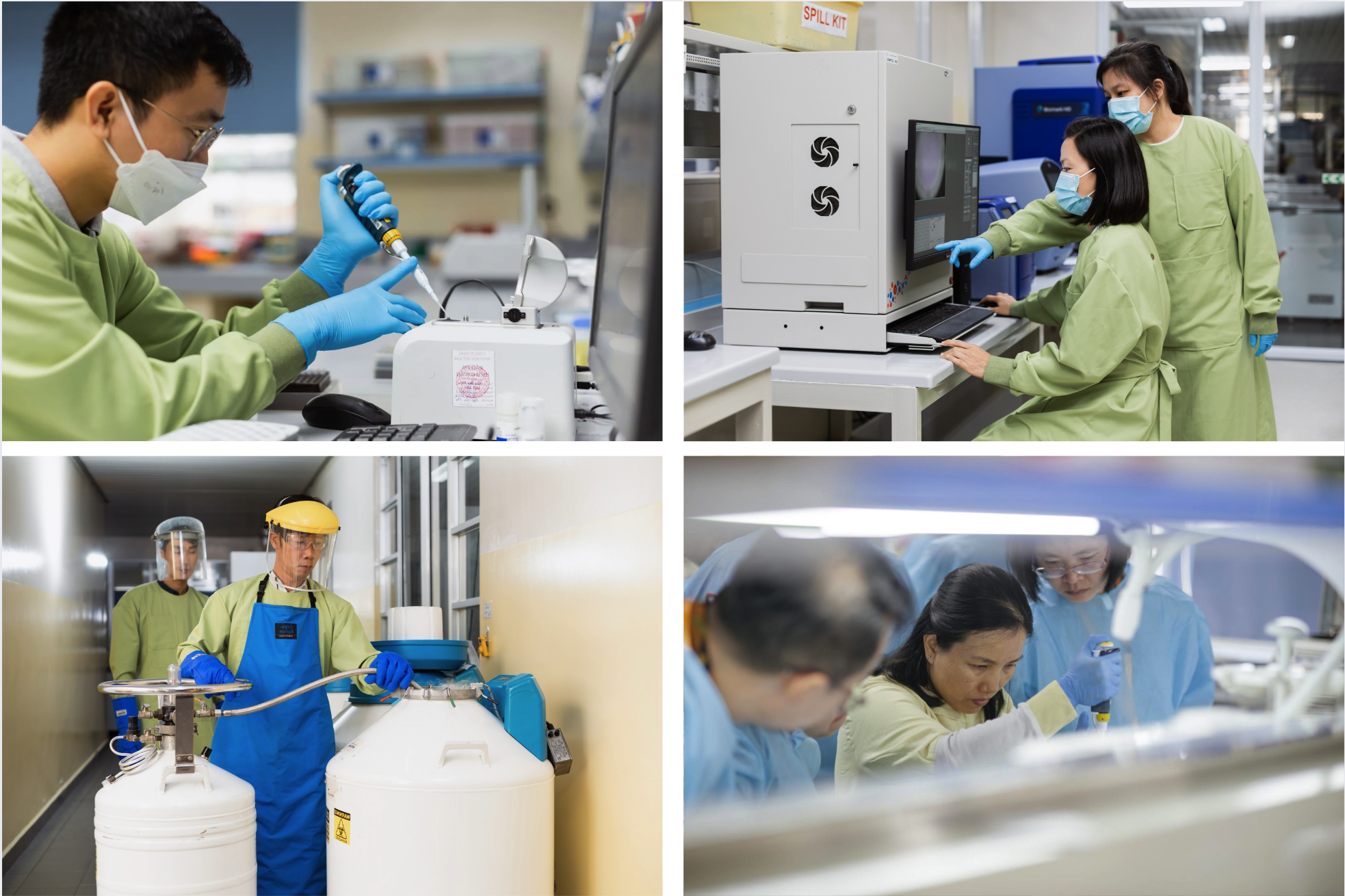
    Phòng thí nghiệm của OUCRU và BVBNĐ tại Tp.HCM. Ảnh: Sang Nguyễn/OUCRU (2023).

    Tiến sÄ© Sangjun Moon, Điều phối viên nhóm An ninh Y tế và Khẩn cấp tại WHO Việt Nam, khẳng định: “Việc OUCRU và BVBNĐ trở thành phòng thí nghiệm tham chiếu CoViNet giúp nâng tầm đóng góp cá»§a Việt Nam vào mạng lưới giám sát virus corona toàn cầu. Cùng vá»›i Viện Vệ sinh Dịch tá»… Trung ương (NIHE) và Viện Pasteur TP.HCM, ba đơn vị này sẽ há»— trợ đắc lá»±c cho công tác chuẩn bị quốc gia và ứng phó khu vá»±c, dá»±a trên những đóng góp then chốt cá»§a OUCRU trong giám sát di truyền và xác định đặc tính biến thể thời gian qua. CoViNet sẽ giúp chia sẻ thông tin nhanh hÆ¡n và phối hợp hành động y tế hiệu quả hÆ¡n.”

    Việc gia nhập CoViNet sẽ thúc đẩy hợp tác sâu rộng tại Việt Nam và Đông Nam Á, đồng thời thắt chặt quan hệ đối tác với WHO và các mạng lưới nghiên cứu quốc tế. Điều này phản ánh cam kết chung trong việc phối hợp hành động y tế công cộng xuyên biên giới.

    OUCRU và BVBNĐ kỳ vọng sẽ đóng góp tích cực vào nỗ lực chung nhằm giám sát, thấu hiểu và ứng phó hiệu quả với các mối đe dọa sức khỏe cộng đồng trong tương lai.

  • OUCRU joins WHO Coronavirus Network 

    OUCRU joins WHO Coronavirus Network 

    Launched in 2023, CoViNet brings together surveillance programmes and reference laboratories from around the world to support the early detection, monitoring, and risk assessment of SARS-CoV-2, MERS-CoV, and emerging coronaviruses with epidemic and pandemic potential.

    The network builds on WHO COVID-19 reference laboratory network established at the start of the pandemic, expanding its scope to include a broader range of coronaviruses through a One Health approach that integrates human, animal and environmental health. It currently includes 58 reference laboratories across 35 countries.

    WHO Coronavirus Network (CoViNet) reference laboratories. Image: WHO (2026).

    In March 2026, the research laboratory of OUCRU and HTD was appointed by WHO as a reference laboratory for coronaviruses. As a member of the network, the team will continue to work closely with WHO and global partners to strengthen surveillance, laboratory capacity and coordinated responses to coronavirus threats. This appointment recognises OUCRU and HTD’s established expertise in infectious diseases and their strong research capacity.

    Dr Nguyá»…n Thành DÅ©ng, director of HTD, said: ‘The long-term partnership between HTD and OUCRU, together with our experience in responding to emerging infectious diseases, places us in a strong position to contribute to CoViNet. Through this network, we will further strengthen our laboratory capacity to detect and respond to future coronavirus threats.’

    Professor Kevin Baird, interim director of OUCRU, commented: ‘We appreciate and acknowledge the global leadership of the WHO in critical infections surveillance operations, of which CoViNet is a fine example. Together with our colleagues at HTD, we look forward to working with WHO and its many partners in the very important and global task of surveilling natural coronaviruses. The relationship not only serves human global health, it also serves to sustain the very high bar of technical excellence for the useful science emanating from it.’

    Professor Lê Văn Tấn, head of the Emerging Infections Research Group at OUCRU and principal investigator of SEACOVARIANTS, added: ‘Through the Wellcome-funded SEACOVARIANTS platform, we have established a regional platform for genomic surveillance and assessment of immune response to a wide range of emerging pathogens, including SARS-CoV-2, avian influenza A viruses, mpox and enterovirus A71. Joining CoViNet allows us to build on this work and contribute to strengthened epidemic preparedness and response.’

    The laboratory of OUCRU and HTD in Ho Chi Minh City, Vietnam. Photo: Sang Nguyen/OUCRU (2023).

    Dr Sangjun Moon, team coordinator, Health Security and Emergencies, WHO Vietnam asserted: ‘The appointment of OUCRU and HTD as a CoViNet reference laboratory enhances Vietnam’s contribution to global coronavirus surveillance.

    ‘Together with NIHE and PIHCMC, the three reference laboratories can support national preparedness and regional response, building on OUCRU’s recent contributions to genomic surveillance and variant characterisation. CoViNet enables faster information-sharing and more coordinated public health action.’

    Membership of CoViNet will strengthen collaboration across Vietnam and South-East Asia, as well as deepen partnerships with WHO and global research networks. It reflects a shared commitment to coordinated, cross-border public health action.

    OUCRU and HTD look forward to contributing to collective efforts to monitor, understand and respond to future public health threats.

  • OUCRU triển khai chương trình nghiên cứu quốc tế nhằm tìm kiếm chiến lược Ä‘iều trị má»›i cho lao màng não

    OUCRU triển khai chương trình nghiên cứu quốc tế nhằm tìm kiếm chiến lược điều trị mới cho lao màng não

    Lao màng não là một trong những thể lao nghiêm trọng nhất. Dù được điều trị, căn bệnh này vẫn cướp đi sinh mạng của 30% đến 50% người mắc. Từ giữa thế kỷ 20, các bác sĩ vẫn phải dựa trên một phương pháp tiếp cận cơ bản: sử dụng kháng sinh để tiêu diệt vi khuẩn và corticosteroid để giảm tình trạng viêm não nguy hiểm do nhiễm trùng gây ra.

    Tuy nhiên, các thử nghiệm lâm sàng gần đây của OUCRU — bao gồm HARVEST (NEJM, tháng 12/2025); SURE (chưa công bố); ACT HIV (NEJM, tháng 10/2023); LAST ACT (Nat Med, tháng 1/2026) — đã chỉ ra rằng phương pháp này là chưa đủ. Việc tăng liều kháng sinh không cải thiện tiên lượng điều trị, trong khi hiệu quả của corticosteroid trong việc kiểm soát phản ứng viêm và mang lại lợi ích lâm sàng cho đa số bệnh nhân vẫn còn hạn chế. Thực tế này đặt ra yêu cầu cấp thiết về một hướng đi mới trong nghiên cứu và điều trị.

    Cơ hội đột phá

    Hiện nay, cơ hội để cải thiện việc điều trị lao màng não đang mở ra rõ rệt. Sự xuất hiện của hàng loạt thuốc chống lao mới có khả năng tiêu diệt vi khuẩn nhanh hơn các loại thuốc hiện tại. Đồng thời, các loại thuốc kháng viêm trúng đích cũng hứa hẹn kiểm soát tình trạng viêm não tốt hơn so với tiêu chuẩn điều trị bằng corticosteroid hiện nay.

    Dù vậy, những cơ hội này đang bị cản trở bởi ba lỗ hổng lớn: sự hiểu biết còn hạn chế về cơ chế bệnh sinh và dược lý; thiếu các mô hình động vật có khả năng dự báo chính xác hiệu quả của thuốc trên người; và sự vắng bóng của các dấu ấn sinh học (biomarkers) đáng tin cậy để đánh giá mức độ thành công của quá trình điều trị.

    Một chương trình nghiên cứu quy mô lớn, được hỗ trợ bởi Giải thưởng Khám phá (Discovery Award) trị giá 5 triệu Bảng từ quỹ Wellcome trong vòng 5 năm, sẽ tập trung lấp đầy những khoảng trống đó. Dự án do Giáo sư Guy Thwaites từ Đại học Oxford dẫn dắt, quy tụ đội ngũ chuyên gia quốc tế từ OUCRU Việt Nam, CIDRI-Africa (Nam Phi), Vương quốc Anh và Hoa Kỳ. Chương trình dự kiến khởi động vào tháng 10 năm 2026.

    “Đây là thời điểm cực kỳ triển vọng trong lĩnh vực nghiên cứu bệnh lao, với sự xuất hiện của các loại thuốc chống lao và kháng viêm mới,” Giáo sư Guy Thwaites chia sẻ. “Nhưng nếu không hiểu được mối quan hệ cốt lõi giữa khả năng diệt khuẩn, tình trạng viêm và kết cục lâm sàng, chúng ta có nguy cơ sử dụng thuốc thiếu tối ưu và bỏ lỡ cơ hội cứu sống bệnh nhân khỏi căn bệnh nguy hiểm này.”

    Nội dung nghiên cứu

    Đội ngũ nghiên cứu sẽ xây dựng một nền tảng khám phá và phát triển các chiến lược điều trị mới cho lao màng não, kết nối giữa y học thực nghiệm trên người tại Việt Nam và Nam Phi với các mô hình động vật tại Hoa Kỳ.

    Trong nghiên cứu trên người, nhóm sẽ thử nghiệm 4 phương pháp điều trị trên 160 người trưởng thành mắc lao màng não: bao gồm hai phác đồ kháng lao mạnh chứa bedaquiline và hai loại thuốc nhắm trực tiếp vào tình trạng viêm não thay vì vi khuẩn. Nghiên cứu nhằm định lượng mối liên hệ giữa nồng độ thuốc trong cơ thể, khả năng diệt khuẩn, mức độ viêm và kết quả lâm sàng; đồng thời tìm kiếm các dấu ấn sinh học mới về viêm và sinh lý để đo lường hiệu quả điều trị trong các thử nghiệm tương lai.

    Song song đó, nhóm nghiên cứu sẽ sử dụng mô hình thỏ và chuột mắc lao màng não để xác định mức độ dự báo của các nghiên cứu trên động vật đối với phản ứng điều trị ở người. Các mô hình này cũng được dùng để đánh giá tiềm năng của ba loại thuốc mới đang trong giai đoạn phát triển lâm sàng là ganfeborole (GSK), telacebec (TB Alliance) và TBAJ-876 (TB Alliance).

    Đội ngũ hợp tác quốc tế

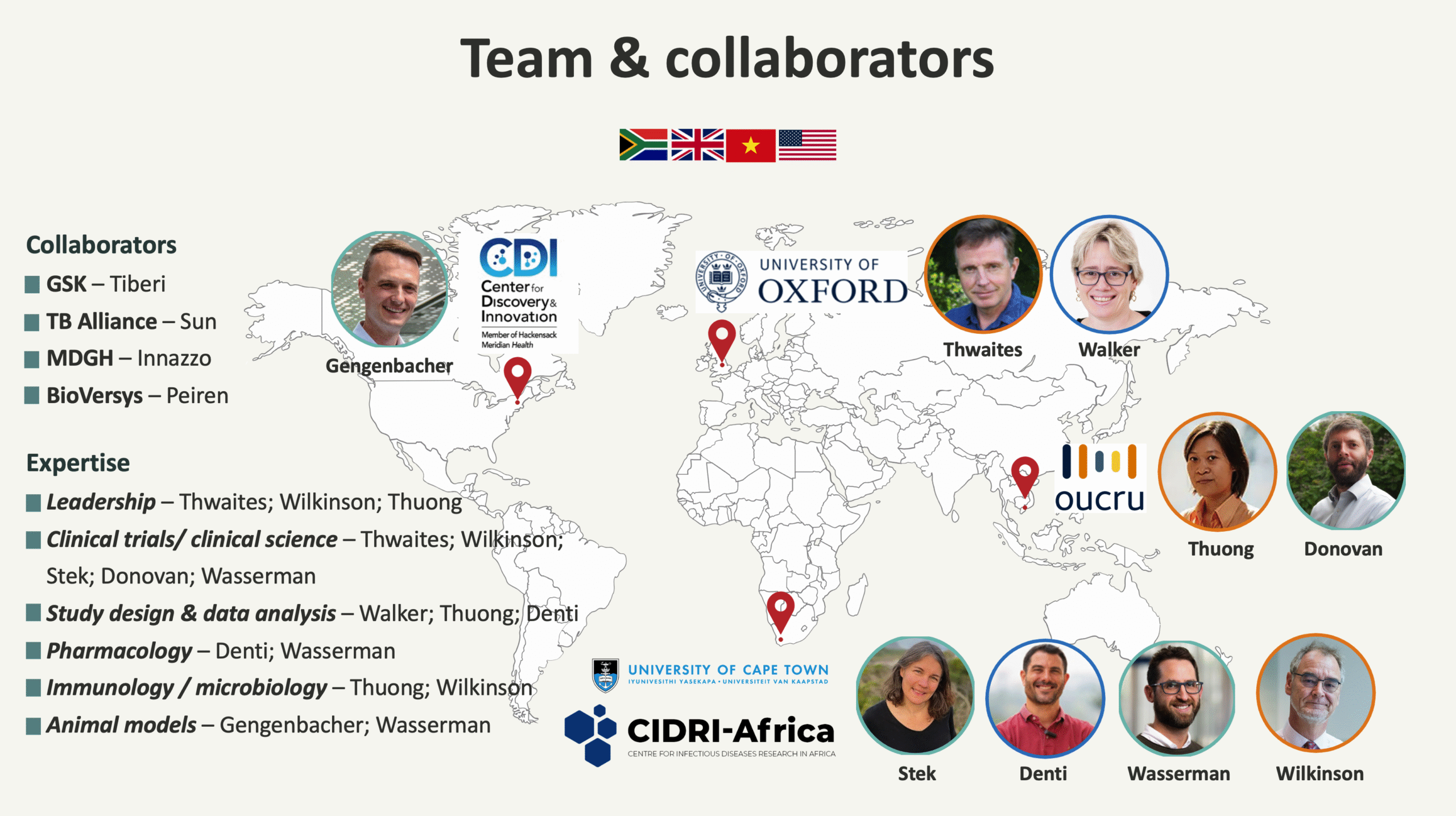
    Đội ngũ nghiên cứu đến từ Việt Nam, Nam Phi, Vương quôc Anh, Hoa Kỳ. Bản đồ: GS Guy Thwaites.

    Dự án được điều phối bởi Giáo sư Guy Thwaites, cùng các cộng sự: Sarah Walker (Đại học Oxford), Nguyễn Thụy Thương Thương và Joseph Donovan (OUCRU Việt Nam), Martin Gengenbacher (Trung tâm Khám phá và Đổi mới, Hoa Kỳ), cùng đội ngũ từ Đại học Cape Town và CIDRI-Africa (Nam Phi) gồm Robert Wilkinson, Cari Stek, Sean Wasserman và Paolo Denti.

    Các đối tác tham gia bao gồm GSK, TB Alliance, Medicines Development for Global Health, và BioVersys.

    Tầm nhìn dài hạn

    Lao màng não gây ảnh hưởng nặng nề nhất đến người dân tại các quốc gia có thu nhập thấp và trung bình. Dù các loại thuốc mới đang dần xuất hiện, nhưng nếu thiếu kiến thức để triển khai chúng một cách an toàn và hiệu quả, tiềm năng của chúng sẽ không thể được khai thác trọn vẹn.

    Nghiên cứu này đặt mục tiêu cung cấp nền tảng tri thức đó, từ đó tạo tiền đề cho một thế hệ thử nghiệm lâm sàng mới, giúp giảm thiểu đáng kể tỉ lệ tử vong do căn bệnh tàn khốc này gây ra.

  • New £5 million Wellcome Discovery Award to transform treatment for tuberculous meningitis

    New £5 million Wellcome Discovery Award to transform treatment for tuberculous meningitis

    Tuberculous meningitis (TBM) is one of the most severe forms of tuberculosis, killing between 30 and 50% of those who develop it despite treatment. Doctors have relied on the same basic approach since the 1950s: antibiotics to kill the bacteria, and corticosteroids to reduce the dangerous brain inflammation that the infection causes.  

    Recent OUCRU clinical trials, including HARVEST (NEJM Dec 2025); SURE (unpublished); ACT HIV (NEJM Oct 2023); LAST ACT (Nat Med Jan 2026), have shown that this approach is not good enough: higher-dose antibiotic regimens have worsened outcomes rather than improved them, and corticosteroids appear not to control inflammation or benefit most patients. The field needs a new direction. 

    The opportunity 

    There are real opportunities to improve TBM treatment. A resurgent pipeline of new anti-tuberculosis drugs may kill bacteria faster than current drugs, and targeted anti-inflammatory drugs may control life-threatening brain inflammation better than the corticosteroids used as standard of care today. 

    However, these opportunities are impaired by three critical gaps: a poor understanding of disease and therapeutic mechanisms; a lack of animal models that can predict whether new drugs and regimens will work in humans; and no reliable biomarkers to measure whether treatment is succeeding. 

    A major new research programme, funded by a £5 million Wellcome Discovery Award over five years, will seek to close those gaps. Led by Professor Guy Thwaites at the University of Oxford, the project brings together an international team from OUCRU Vietnam, CIDRI-Africa in Cape Town, South Africa, the UK, and the USA. The programme will start in October 2026. 

    ‘This is an incredibly exciting time in tuberculosis, with new anti-tuberculosis and anti-inflammatory drugs becoming available to improve treatment. But unless we understand the fundamental relationship between bacterial killing, inflammation, and outcome, we risk using the new drugs wrongly and missing the opportunity to increase survival from this lethal disease,’ said Professor Guy Thwaites.  

    What the research will do 

    The team will create a platform for the pre-clinical and clinical discovery and development of new therapeutic strategies for TBM, linking human experimental medicine in Vietnam and South Africa with animal models in the USA. 

    In the human study, the team will test four treatments in 160 adults with TBM: two potent bedaquiline-containing anti-tuberculosis regimens, and two drugs that target inflammation in the brain rather than the bacteria themselves. The study aims to quantify the relationship between drug concentrations in the body, bacterial killing, inflammation, and clinical outcome, and to discover novel inflammatory and physiological biomarkers that could be used to measure treatment success in future trials. 

    In parallel, the team will use rabbit and mouse models of TBM to define how well animal studies can predict human therapeutic responses. The models will also be used to evaluate the therapeutic potential of three new drugs in clinical development, ganfeborole (GSK), telacebec (TB Alliance), and TBAJ-876 (TB Alliance), establishing their role in the discovery and development of new treatment strategies for TBM. 

    An international team 

    The research team spans Vietnam, South Africa, the United Kingdom, and the United States. Map: Guy Thwaites.

    The research is led by Guy Thwaites, with Sarah Walker (University of Oxford), Nguyễn Thụy Thương Thương and Joseph Donovan (OUCRU Vietnam), and Martin Gengenbacher (Center for Discovery & Innovation, USA). The team also includes Robert Wilkinson, Cari Stek, Sean Wasserman and Paolo Denti at the University of Cape Town and CIDRI-Africa, South Africa.

    Industry collaborators include GSK, TB Alliance, Medicines Development for Global Health, and BioVersys. 

    Looking ahead 

    TBM disproportionately affects people in low- and middle-income countries. New drugs are beginning to emerge, but without the knowledge to deploy them safely and effectively, their potential may not be realised.  

    This research aims to provide that knowledge, and in doing so, lay the foundation for a new generation of clinical trials that could meaningfully reduce deaths from this devastating disease.

  • Tăng cường năng lá»±c hồi sức tích cá»±c tại Việt Nam thông qua đào tạo quốc tế

    Tăng cường năng lực hồi sức tích cực tại Việt Nam thông qua đào tạo quốc tế

    Việt Nam đang đối mặt với gánh nặng bệnh truyền nhiễm thuộc nhóm cao trong khu vực Đông Nam Á, đặt ra yêu cầu cấp thiết phải tăng cường năng lực Hồi sức tích cực trong hệ thống y tế. Năm nay, chương trình thu hút hơn 140 bác sĩ Hồi sức tích cực và dược sĩ lâm sàng đến từ 20 bệnh viện và trường đại học y khoa trên địa bàn TP. Hồ Chí Minh.

    Nội dung đào tạo bao quát các kiến thức trọng tâm của thực hành hồi sức hiện đại, bao gồm phòng ngừa viêm phổi liên quan thở máy, phân nhóm kiểu hình nhiễm trùng huyết, theo dõi huyết động, siêu âm tại giường (POCUS), an thần, rối loạn chức năng cơ quan, kháng kháng sinh, cũng như quản lý sảng và hội chứng cai. Chương trình cũng bao gồm các phiên thảo luận ca bệnh và tổng quan những nghiên cứu hồi sức nổi bật trong năm qua.

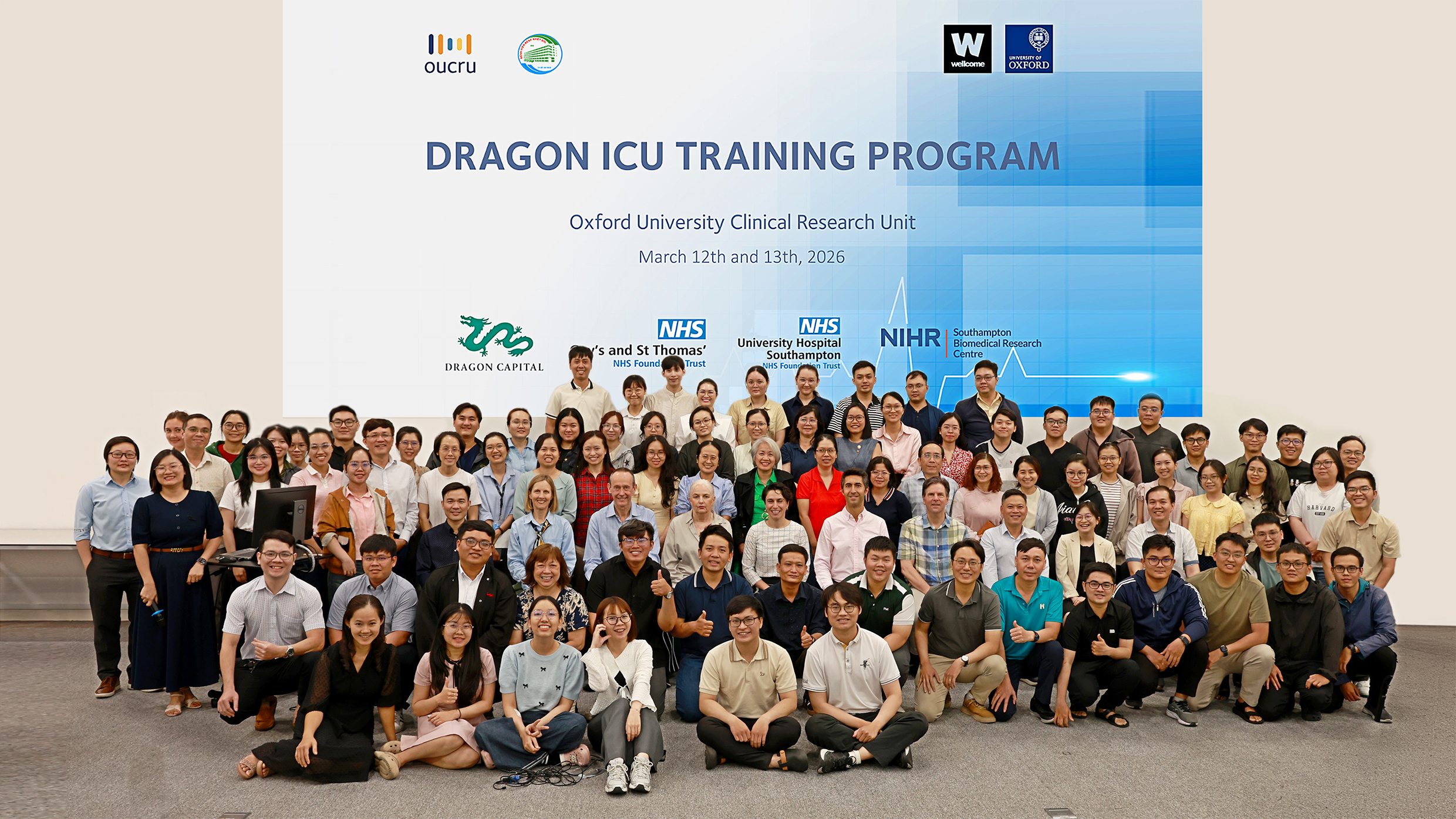
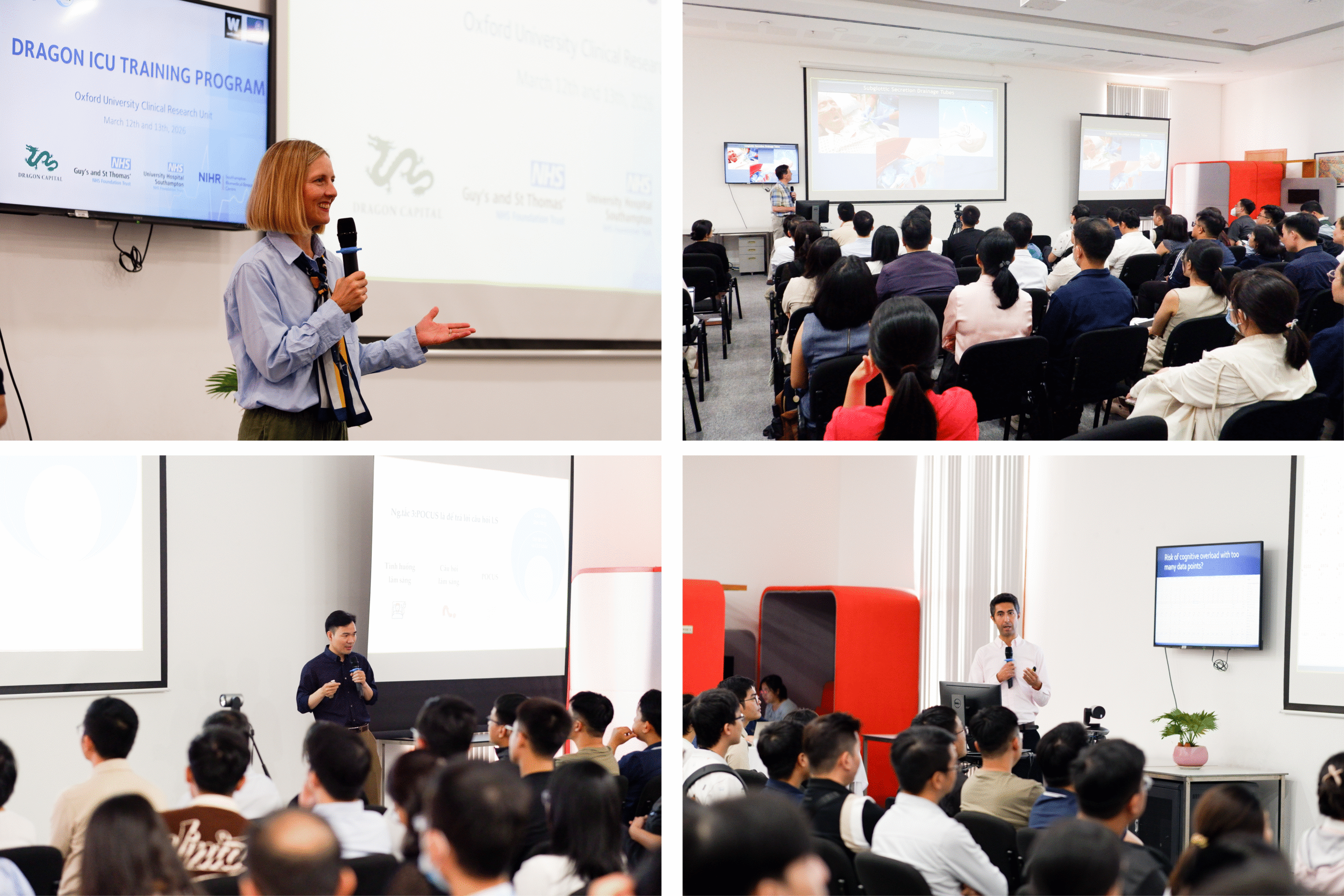
    Các chuyên gia Anh – Việt giảng dạy tại chương trình đào tạo Hồi sức tích cực 2026.
    Hình ảnh: Trang Nguyen/OUCRU

    Tham gia giảng dạy có các chuyên gia từ Bệnh viện Guy’s and St Thomas’ NHS Foundation Trust và Đại học Southampton, Vương Quốc Anh, cùng các bác sĩ lâm sàng đến từ Bệnh viện Bệnh Nhiệt đới và Bệnh viện Nhân dân 115.

    Đoàn chuyên gia cũng đã thăm Bệnh viện Nhân dân Gia Định (TP. Hồ Chí Minh) và Bệnh viện Đa khoa Đồng Tháp, đánh dấu lần đầu tiên hoạt động hợp tác được mở rộng ra ngoài địa bàn thành phố. Các chuyến thăm mang lại cái nhìn trực tiếp về thực hành hồi sức trong cả bối cảnh tuyến cuối đô thị và tuyến tỉnh, qua đó làm cơ sở xây dựng một buổi đào tạo ngắn tại Đồng Tháp, với nội dung điều chỉnh phù hợp với điều kiện thực tiễn địa phương.

    Những kinh nghiệm này sẽ góp phần định hướng các chương trình trong tương lai theo hướng thiết thực và phù hợp hơn với nhu cầu thực tế, đồng thời thúc đẩy hợp tác chuyên môn đến tuyến tỉnh.

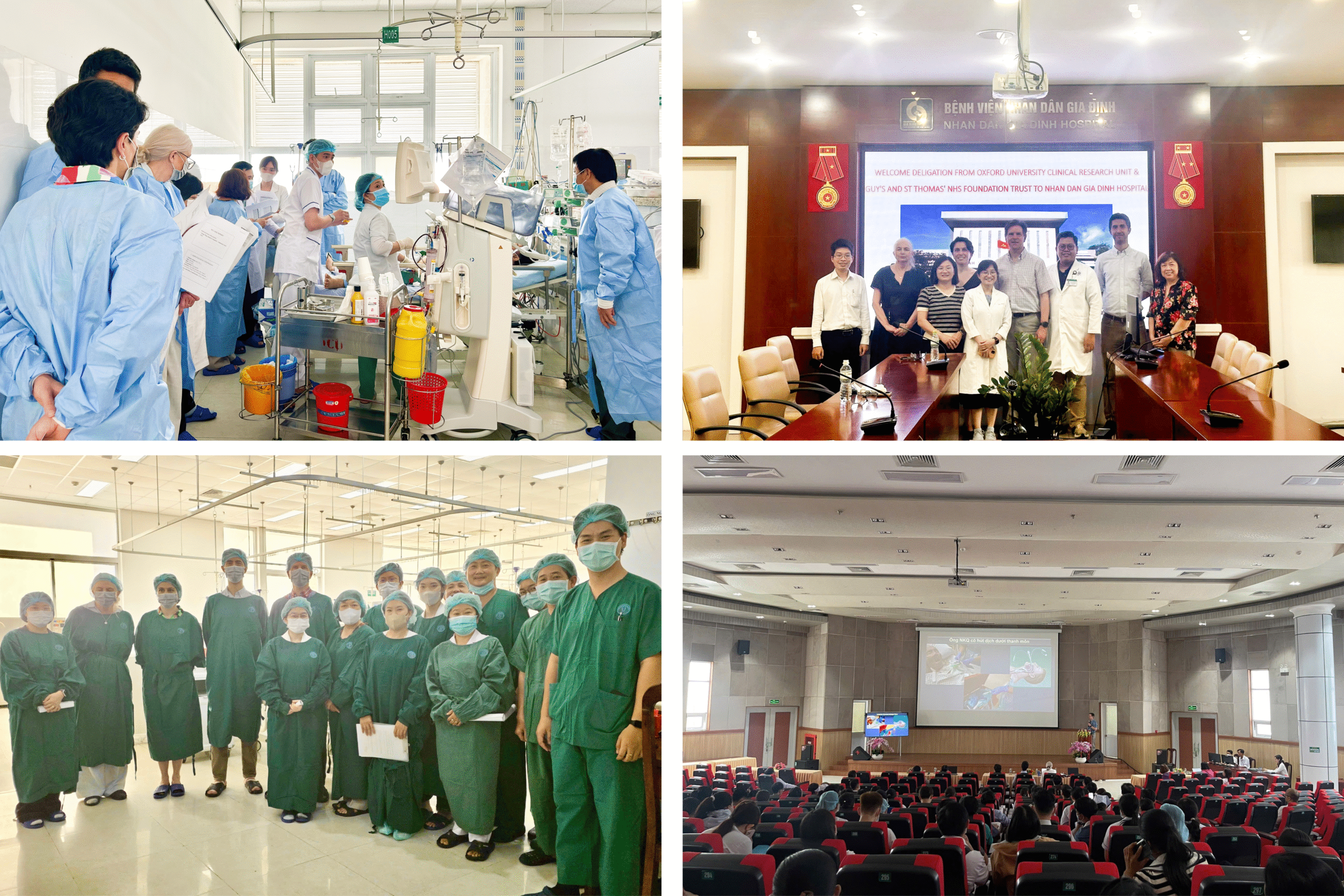
    Đoàn chuyên gia thăm Bệnh viện Nhân dân Gia Định và Bệnh viện Đa khoa Đồng Tháp.
    Hình ảnh: Trang Nguyen/OUCRU

    GS. TS. BS. Louise Thwaites, Nghiên cứu viên cấp cao tại OUCRU Việt Nam, nhận định: “Gánh nặng bệnh truyền nhiá»…m tại Việt Nam tạo áp lá»±c rất lá»›n lên các đơn vị Hồi sức tích cá»±c. Các bác sÄ© Ä‘ang phải xá»­ trí những ca bệnh phức tạp, thường trong Ä‘iều kiện nguồn lá»±c hạn chế. Chương trình đào tạo này nhằm đảm bảo họ có thể tiếp cận vá»›i trình độ chuyên môn tương đương các trung tâm hàng đầu thế giá»›i, đồng thời cá»§ng cố mạng lưới hợp tác trong nước.”

    Chương trình đào tạo thường niên này là một phần của hợp tác lâu dài giữa OUCRU và Bệnh viện Guy’s and St Thomas’, được triển khai từ năm 2014. Hoạt động được tài trợ bởi Dragon Capital Group, đối tác đã đồng hành lâu dài trong các nỗ lực nâng cao chất lượng chăm sóc y tế tại Việt Nam của OUCRU. Trong thời gian tới, các bên dự kiến tiếp tục mở rộng đào tạo, tăng cường hợp tác nghiên cứu, và thúc đẩy kết nối chính thức giữa các hội Hồi sức tích cực của Việt Nam và Vương quốc Anh.

  • Strengthening intensive care capacity in Vietnam through international training

    Strengthening intensive care capacity in Vietnam through international training

    Vietnam’s hospitals face some of the highest infectious disease caseloads in Southeast Asia, and strengthening intensive care unit (ICU) capacity is increasingly recognised as a national health priority. This year’s training drew over 140 intensive care doctors and clinical pharmacists from 20 hospitals and medical universities across Hồ Chí Minh City.

    The programme covered the breadth of modern ICU practice, from ventilator-associated pneumonia prevention, sepsis phenotypes, haemodynamic monitoring, point-of-care ultrasound, to sedation, organ dysfunction, antimicrobial resistance, and delirium and withdrawal management. Sessions also included interactive case presentations, and a review of key critical care research from past year.

    UK and Vietnamese experts lead sessions at the ICU Training 2026.
    Credit: Trang Nguyen/OUCRU

    Speakers included experts from Guy’s and St Thomas’ NHS Foundation Trust and the University of Southampton, alongside clinicians from the Hospital for Tropical Diseases and People’s 115 Hospital in Hồ Chí Minh City.  

    The visiting team also visited Gia Định People’s Hospital in Hồ Chí Minh City, and Đồng Tháp General Hospital, marking the first time the collaboration has extended beyond the city. These visits provided direct insight into intensive care practice across both urban and provincial settings, informing a short on-site training in Äá»“ng Tháp tailored to local needs.

    Going forward, these insights will help shape future programmes to be more targeted and locally relevant, with the broader aim of strengthening clinical exchange at provincial level.

    The visiting team at Gia Định People’s Hospital and Đồng Tháp General Hospital.
    Credit: Trang Nguyen/OUCRU

    “Vietnam’s infectious disease burden places enormous pressure on the ICUs. Clinicians here are managing some of the most complex cases in the region, often with limited resources.

    “This training is about ensuring they have access to the same expertise as specialists anywhere in the world, while strengthening local networks and partnerships,” said Professor Louise Thwaites, Senior Research Fellow at OUCRU Vietnam.

    The annual training is part of a long-standing collaboration between OUCRU and Guy’s and St Thomas’, which has been running since 2014. It is funded by Dragon Capital Group, a long-term supporter of OUCRU’s work to improve healthcare in Vietnam. 

    Future plans include additional training programs, research collaborations, and the establishment of formal links between Vietnamese and UK ICU societies. 

  • EQUIPSEA: Recognising the people behind-the-science

    EQUIPSEA: Recognising the people behind-the-science

    In research, attention is often focused on scientists and scientific impact. But behind every grant and every partnership is work that is less visible and just as critical: people managing funding, budgets, contracts and keeping everything on track from the first grant application to the final report.  

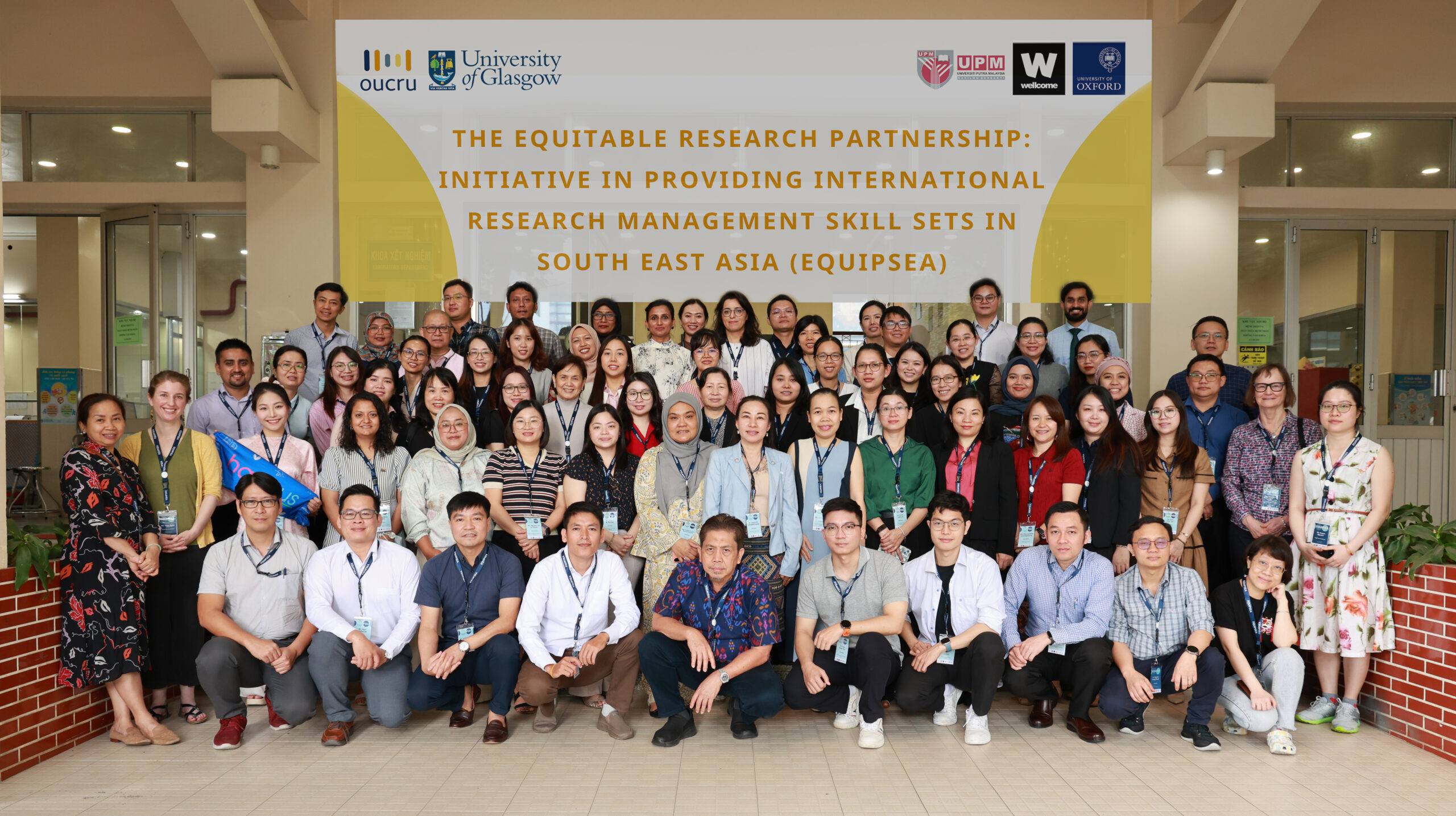
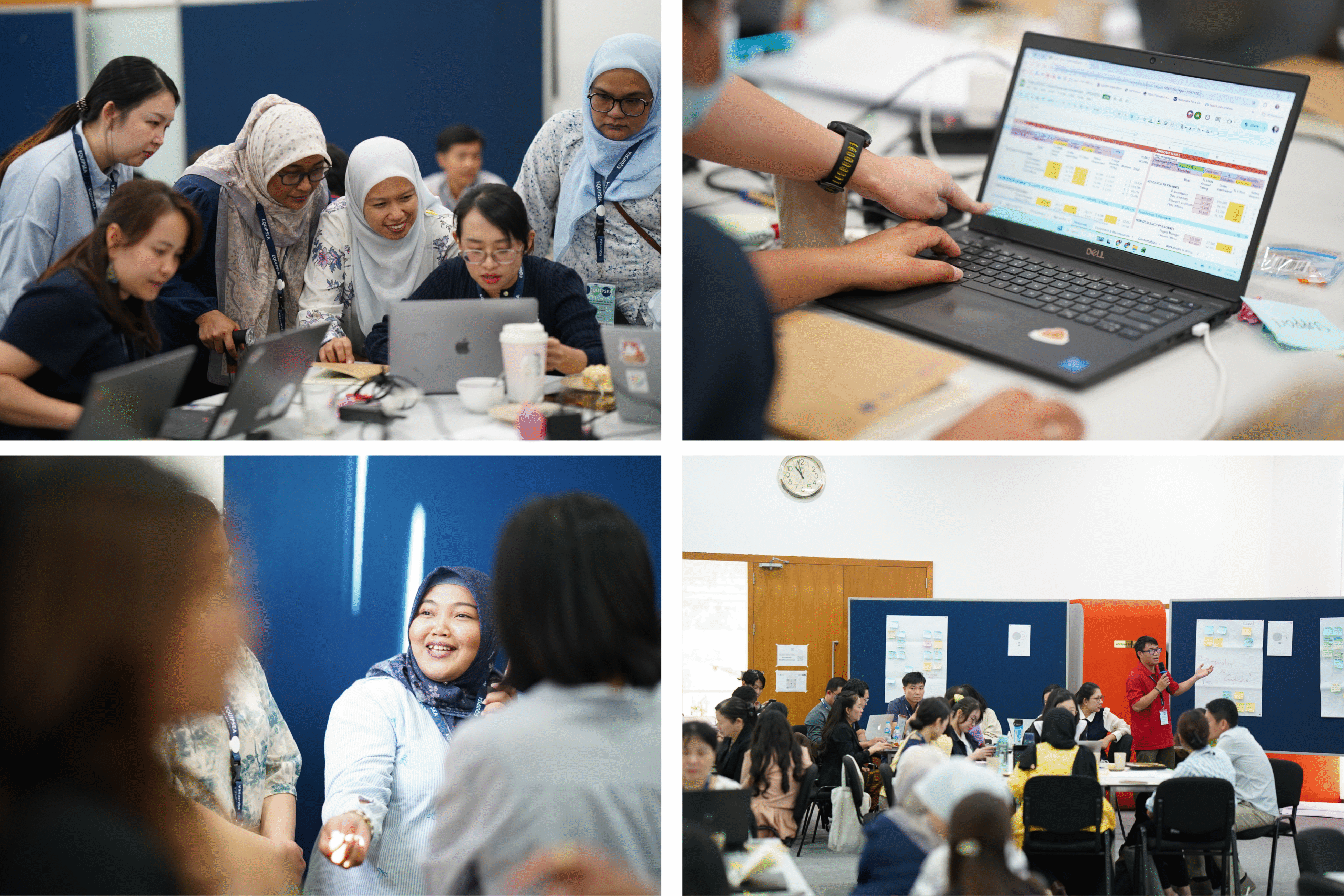
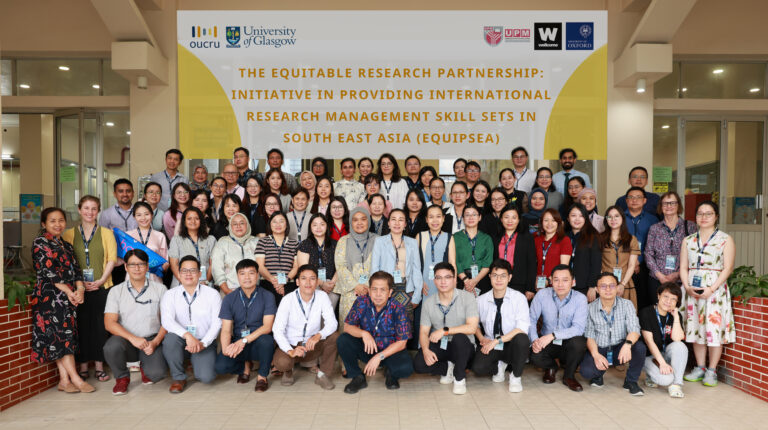
    In February 2026, 75 of these professionals, including 67 trainees and 8 trainers, gathered in Ho Chi Minh City for something rare: a workshop designed specifically for them.  

    “I’ve been doing this work for years,” shared Ms Lê Duyên Ân, Head of Procurement and Logistics at OUCRU, “but I learned a lot on the job. There has been quite little training on how procurement fits into the research cycle, or how people across disciplines can work together more effectively throughout that cycle.”

    That’s the reality across much of Southeast Asia. Research and grant management are emerging professions here. Many people juggle these responsibilities alongside other official roles, without formal training or clear career pathways. This is not a lack of capability, but a lack of investment in a profession that is essential to modern research. 

    Meanwhile, international funders increasingly expect stronger systems: due diligence, financial management, governance, reporting, and compliance. When local institutions fail to demonstrate these capacities, they struggle to attract funding and lead research projects, even when scientific expertise is clearly there.

    Over time, this influences who holds responsibility, who makes decisions and who is seen as ready to lead. 

    The Equitable Research Partnership: Initiative in Providing International Research Management Skill Sets in South East Asia programme, or EQUIPSEA, was designed to respond to this reality. It aims to underline research and grant management not just as support staff, but as a core part of research leadership. 

    Over 12 months, the organisers consulted with international experts and then ran a regional needs assessment to understand what people actually need. The result was a three-and-a-half-day workshop focused on practical realities of research management: grant and finance management, budgeting, institutional styles and policies, effective communication, contracts, intellectual property, and Good Financial Grant Practice standard (GFGP).

    Every session was designed around real challenges participants face daily, with the principle that “Everyone is a teacher – Everyone is a learner.”

    “An important and distinctive feature of the workshop is that the agenda and the content is created in response to the needs of the participants, based on the information they provide during registration.

    This approach puts the focus on what is most useful for the attendees, to support them in more confidently tackling the challenges they face in their day-to-day professional roles.”

    Ms Mary Ryan, International Research Development Manager, University of Glasgow, United Kingdom.

    Perhaps the most valuable part wasn’t the formal sessions. It was discovering that others were navigating the same obstacles, that the workarounds you invented weren’t unique, that the expertise in the room was deeper than anyone realised. Participants left with more skills, confidence, and a community of peers they can call on long after the workshop ends.

    “Having a history of more than 35 years and thanks to our affiliation with the University of Oxford, OUCRU has a dedicated grant management system and an excellent team. However, such support is missing in most research institutions and universities in Vietnam. This situation is common across Southeast Asia and negatively impacts equitable research partnerships.

    Our workshop was an initiative to improve this situation, and it was successful beyond my expectations. I believe a series of workshops providing international research management skills is essential and urgently required to significantly improve the research culture in Southeast Asian countries.”

    Assoc Prof Ngô Thị Hoa, Head of Zoonoses Group, OUCRU Vietnam.

    By investing in research and grant management capacity, EQUIPSEA contributes to more equitable research partnerships across low- and middle-income countries. When local institutions can manage funding confidently, they are better positioned to lead collaborations, shape research agendas and share ownership more fairly.

    Over time, this strengthens not only individual projects, but the wider research ecosystem across Southeast Asia.

    About EQUIPSEA

    The EQUIPSEA programme was funded by the British Academy and codeveloped by partners affiliated with the University of Oxford (Assoc Prof Ngô Thị Hoa, Ms Genevieve Kiff, Ms Duyen Nguyen, Mr Paul Miki Carvalho, Ms Laura Scifo) and the University of Glasgow (Ms Mary Ryan) in the United Kingdom, Universiti Putra Malaysia (Assoc Prof Mohamad Faizal Bin Ibrahim), and the Oxford University Clinical Research Unit (OUCRU) (Assoc Prof Ngô Thị Hoa, Dr Nguyễn Trung Thành, Mr Nguyễn Xuân Trường) in Ho Chi Minh City, Vietnam. 

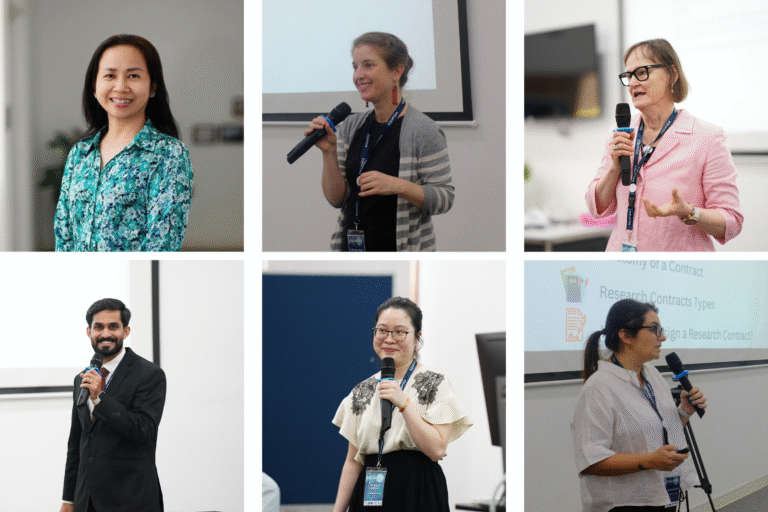
    The EQUIPSEA trainers leading the sessions: (top row, left to right) Assoc Prof Ngô Thị Hoa, Ms Mary Ryan, Ms Genevieve Kiff; (Bottom row, left to right) Mr Paul Miki Carvalho, Ms Duyen Nguyen and Ms Laura Scifo.

    The EQUIPSEA workshop generated significant regional interest, attracting 165 applicants from across South and Southeast Asia, including research scientists, support staff, and grant managers. From this competitive pool, 67 participants were selected based on the excellence and relevance of their professional profiles. 

    Our selection strategy was intentionally multidimensional to ensure a truly inclusive impact. We balanced geographic representation across the region with a diverse range of host institutions and sectors within grant and finance management. To foster the next generation of leaders, we prioritised a mix of seniority, welcoming junior members alongside seasoned professionals.  

    Furthermore, the scope was expanded beyond biomedical research to encompass various scientific disciplines, with gender balance serving as a core consideration throughout. To support this diverse cohort, 30 participants (including 11 from Vietnam and 19 international) were fully funded by the British Academy, with the remainder receiving partial funding. 

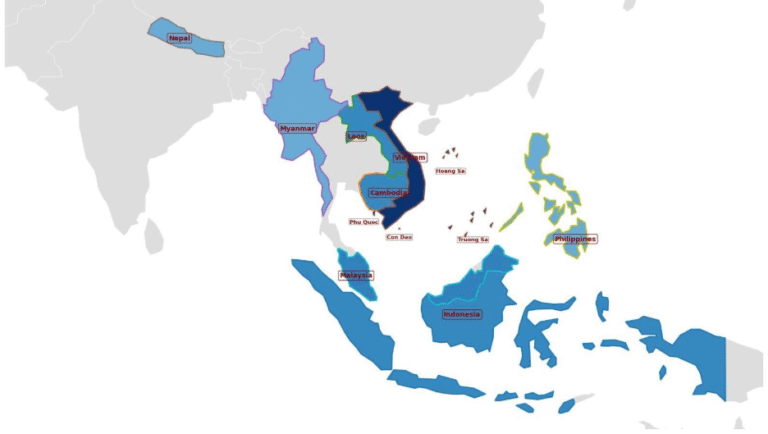
    EQUIPSEA trainee distribution by country

    The cohort comprises a diverse, multidisciplinary network spanning research institutes, Ministries of Agriculture, universities, and tertiary hospitals. The workshop achieved significant regional reach: nearly half of the participants (43%; 29/67) represented the Southeast Asian and South Asian nations of Indonesia, Malaysia, Thailand, the Philippines, Myanmar, Cambodia, Laos, and Nepal. The remaining 57% were drawn from diverse geographical areas across Vietnam, ensuring a comprehensive national and international exchange of research management best practices. 

    Closing the event, Assoc Prof Ngô Thị Hoa emphasised the collaborative nature of the initiative: “The success of the EQUIPSEA workshop is due to the generous support of the British Academy and OUCRU… together, we are building a stronger research culture in Southeast Asia.”

    Her remarks highlighted a key theme of the week: that regional scientific excellence depends as much on administrative stewardship as it does on laboratory skills. 

    Testimonials

    “The workshop has brought me new knowledge and skills; it was worth every penny I spent.” 

    Dr Tống Thị Lan Chi, Tay Nguyen University, Vietnam.

    “Duplicate this kind of action to continue knowledge sharing, develop networking and collaboration to address common challenges, and online meetings could work. Many thanks for this valuable initiative.” 

    A participant from Cambodia.

    “Please make another workshop like this for more research support. This encourages us and values insight and knowledge, and also increases our confidence despite feeling ‘we are just supporting’. Thank you very much for the great workshop! Congratulations.” 

    A participant from Indonesia.

  • Professor Guy Thwaites, Director of OUCRU, honoured for contributions to Vietnam’s healthcare sector

    Professor Guy Thwaites, Director of OUCRU, honoured for contributions to Vietnam’s healthcare sector

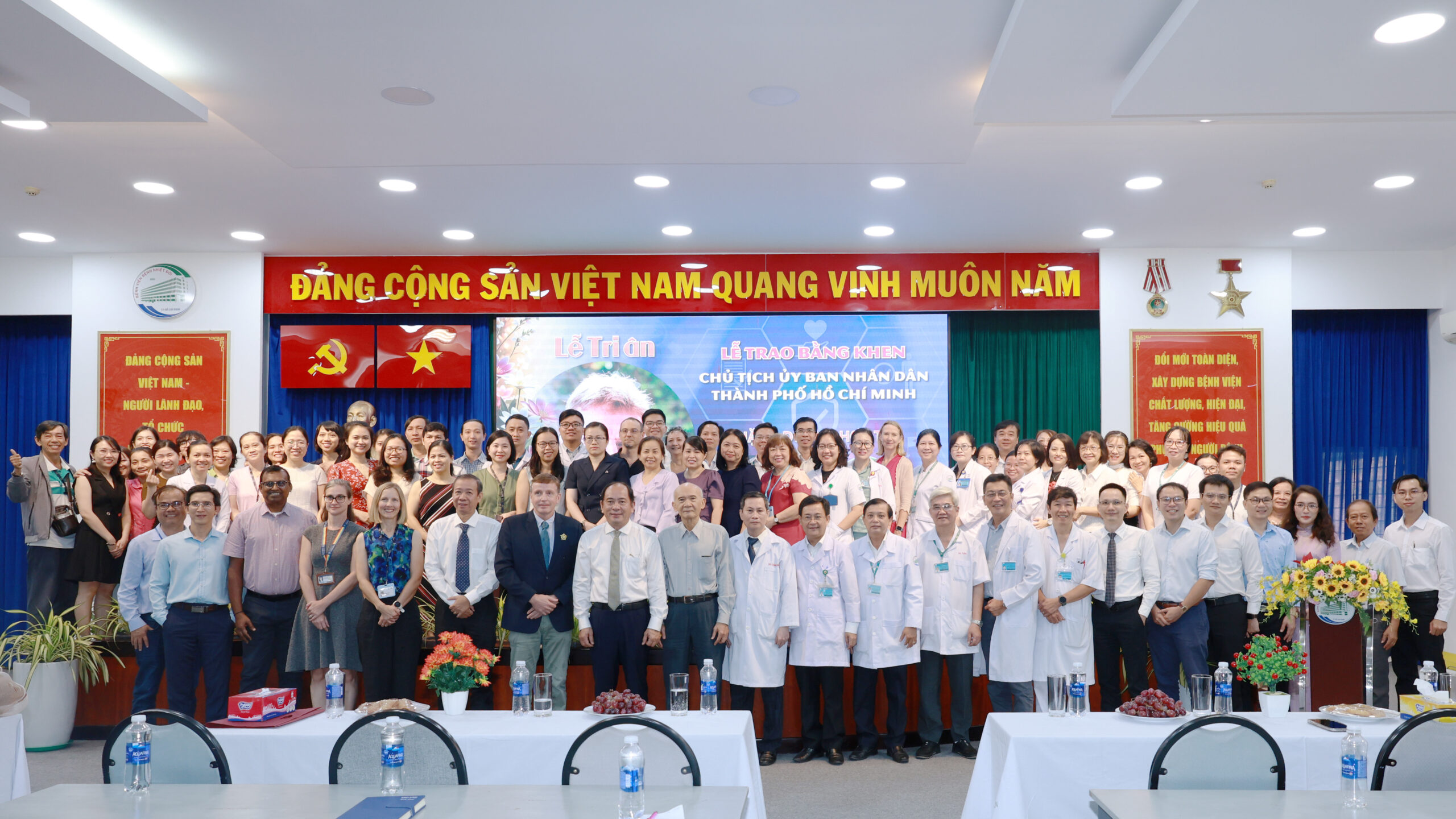
    On 18 December, the Hospital for Tropical Diseases in Ho Chi Minh City hosted a ceremony to honour Professor Guy Edward Thwaites for his long-standing commitment to public health in Viet Nam.

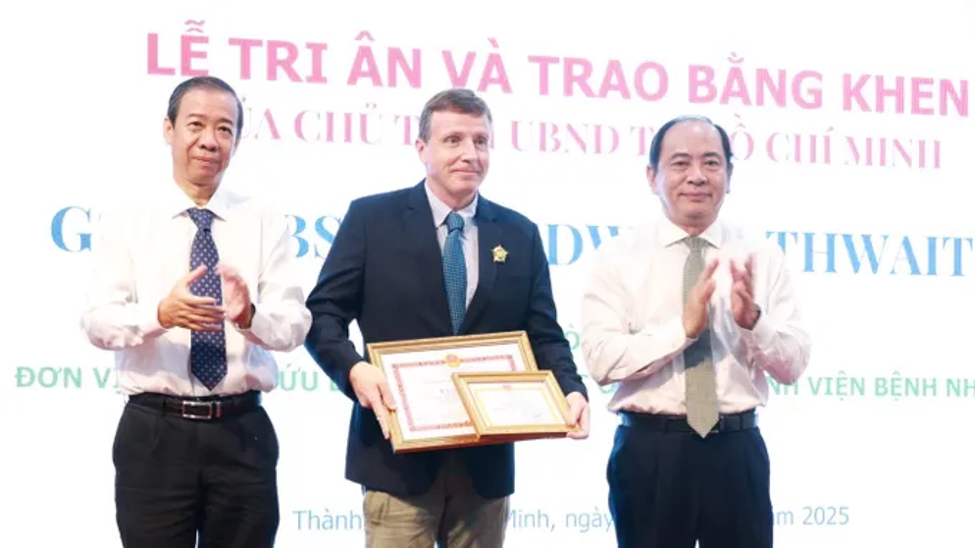
    On this occasion, Professor Guy Thwaites also received a Certificate of Merit from the Chair of the Ho Chi Minh City People’s Committee and the “For the Health of the People” Medal from the Ministry of Health of Viet Nam.

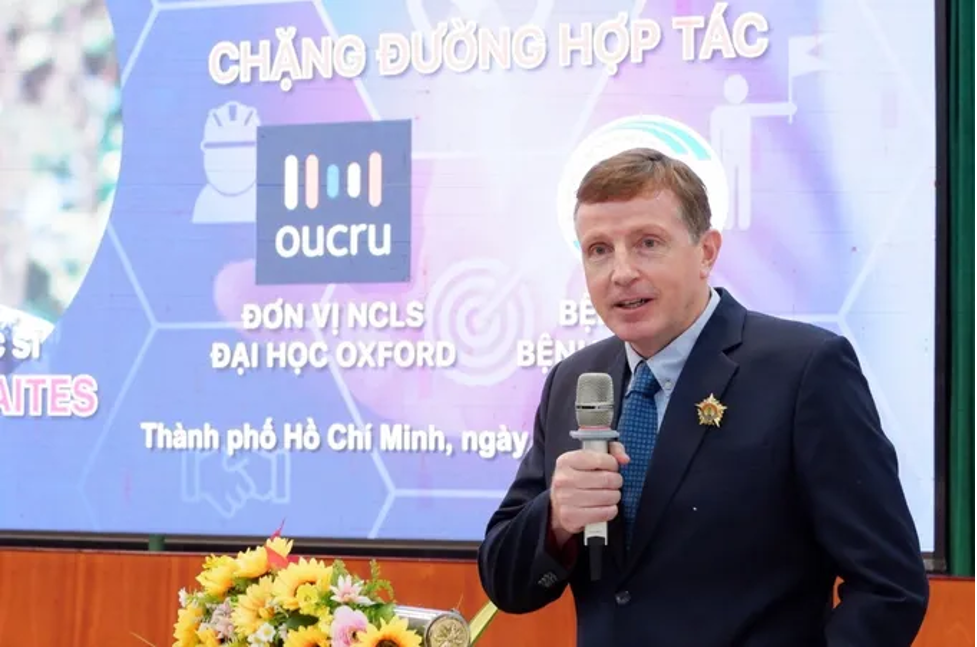
    Professor Guy Thwaites, Director of OUCRU, at the appreciation ceremony on 18 December.

    Professor Guy Thwaites is a world-leading expert in infectious diseases and serves as an advisor to the World Health Organisation, as well as to the governments of Australia and the United Kingdom.

    During his 13-year tenure as Director of OUCRU, Professor Guy Thwaites has translated research findings into practical applications for the prevention and control of infectious diseases, as well as for diagnosis and treatment.

    Professor Guy Thwaites is also recognised for his contributions to public health and to strengthening cooperation between the United Kingdom and Viet Nam, contributing to frontline research and healthcare delivery, particularly during the COVID-19 pandemic.

    In Ho Chi Minh City, Professor Guy Thwaites and OUCRU have signed a cooperation agreement to support capacity building for the city’s Centre for Disease Control. He also proposed an initiative to the Wellcome Trust to consider potential support for establishing an innovation hub for the city’s health sector.

    Professor Guy Thwaites receives the Certificate of Merit from the Chair of the Ho Chi Minh City People’s Committee and the “For the Health of the People” Medal from the Ministry of Health.

    Sharing his reflections, Professor Thwaites said that the achievements were not his own alone, but the result of sustained collaboration between OUCRU and Vietnamese colleagues over many years.

    His dedicated contributions to the community have helped to enhance the standing of Viet Nam’s healthcare sector in general, and that of Ho Chi Minh City in particular, on the global medical map. On 1 January 2026, he will conclude his term as Director of OUCRU.

    Source: “Honouring Professor Guy Edward Thwaites for his contributions to Viet Nam’s healthcare sector”, by journalist Giao Linh, Saigon Giai Phong Newspaper.