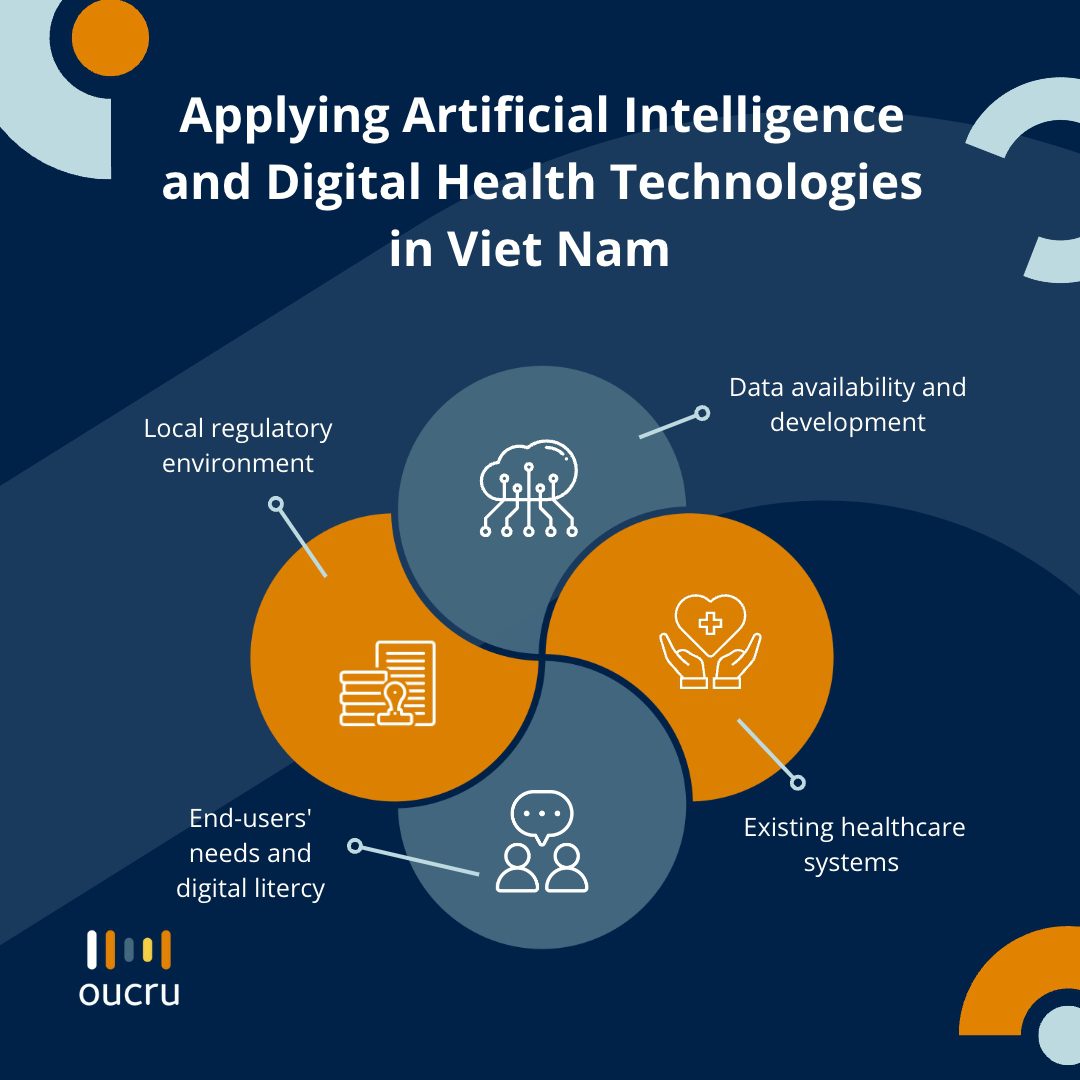
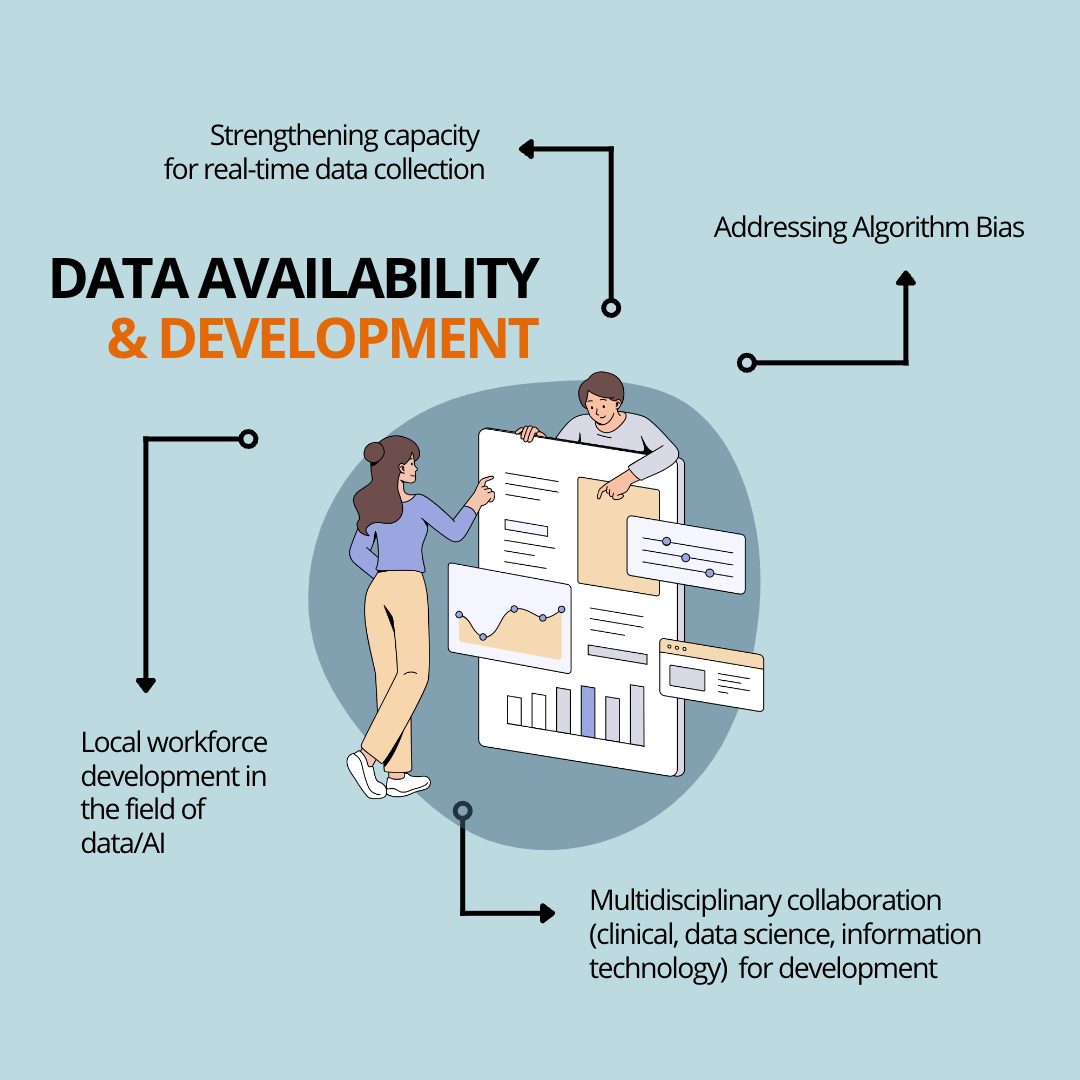
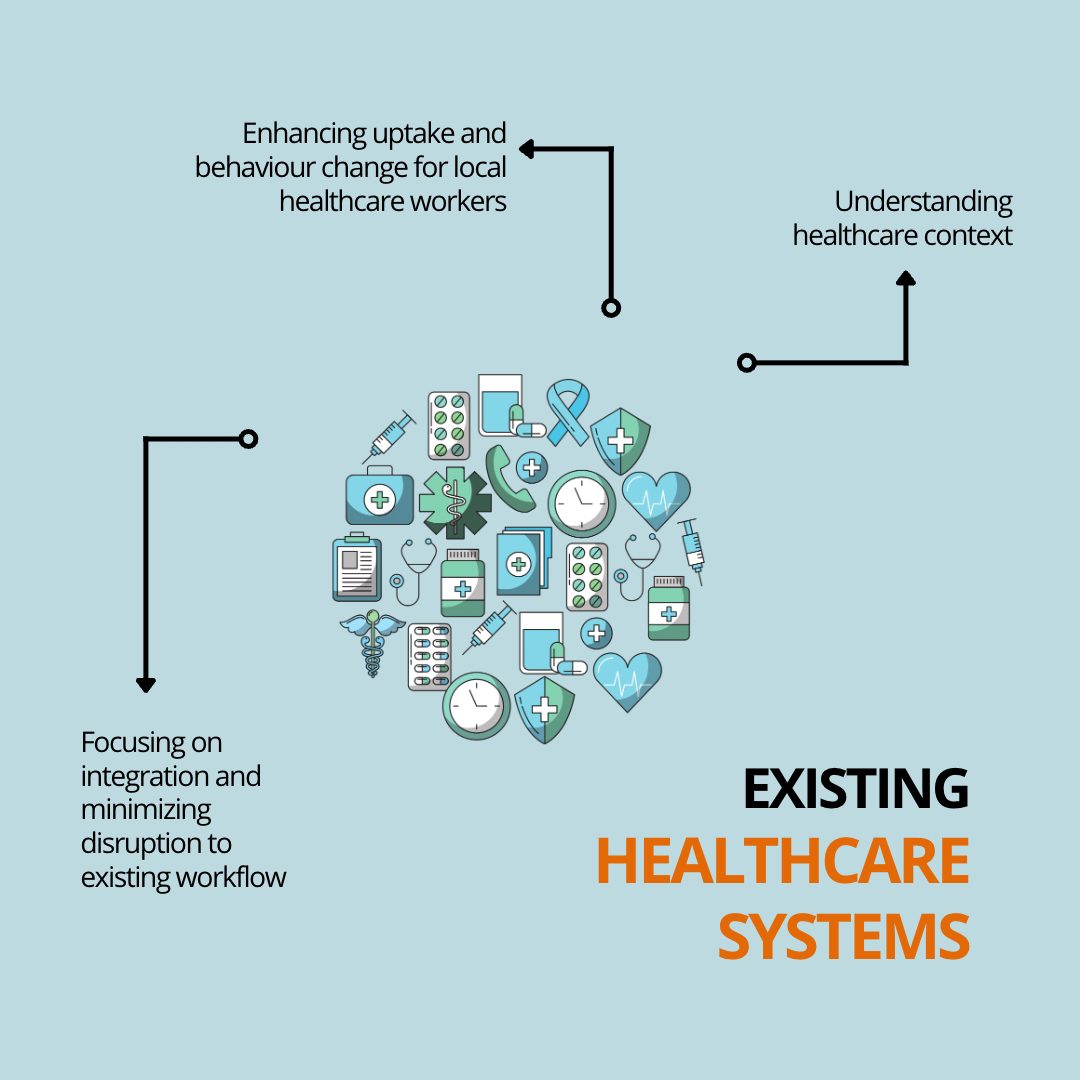
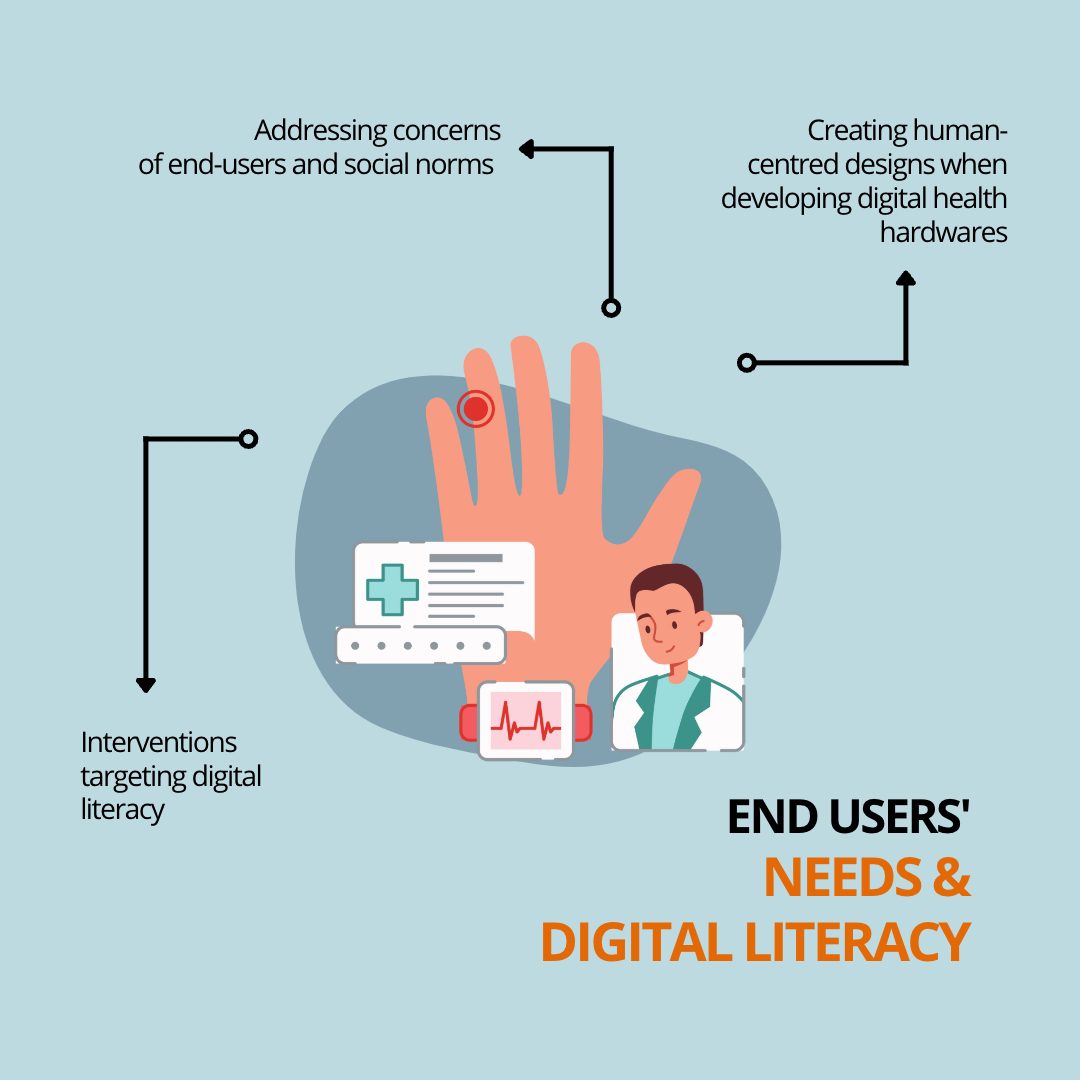
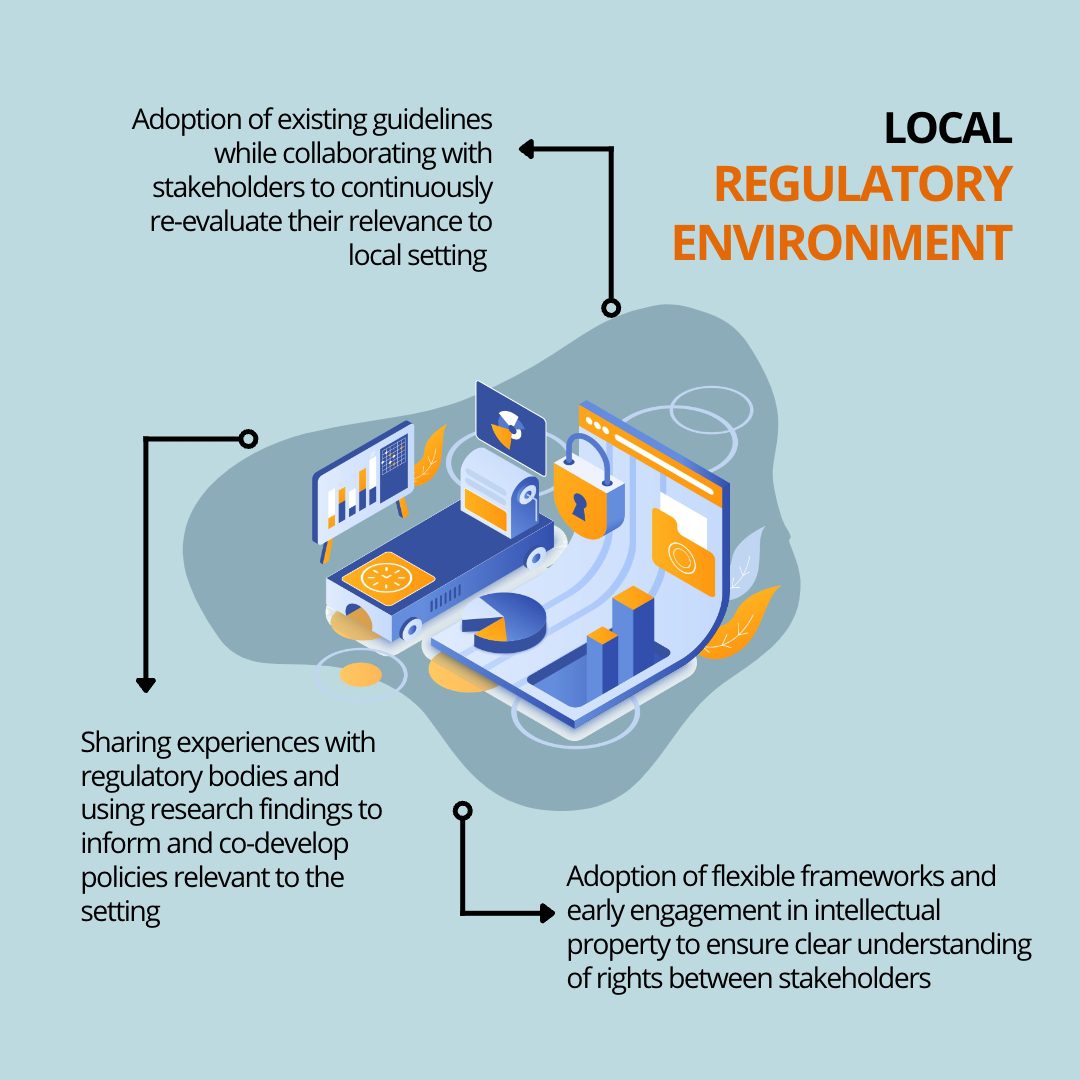
In Viet Nam, a lower middle-income country, the healthcare system is in the nascent stage of implementing digital health technologies. As a result, digital health initiatives need to address challenges involving data availability and development, integration into the existing healthcare system and local workflow, understanding end users, as well as the local regulatory landscape.
“Digital health needs to fit within an ecosystem of moving parts,†said first author Ho Quang Chanh, PhD student at OUCRU. “Working within the local context is crucial to develop a digital health system that works for local patients, local healthcare workers, and local regulatory environment.â€Â Â
The following infographic details opportunities to address these challenges. Â
Chanh HQ, Ming DK, Nguyen QH, Duc TM, Phuoc An L, Trieu HT, Karolcik S, Hernandez B, Perez, Van Nuil J, Lyle NN, Kestelyn E, Thwaites L, Georgiou P, Paton C, Holmes A, Van Vinh Chau N, Yacoub S. Applying artificial intelligence and digital health technologies, Viet Nam. Bull World Health Organ. 2023 Jul 1;101(7):487-492. doi: 10.2471/BLT.22.289423. Epub 2023 May 26. PMID: 37397176; PMCID: PMC10300774.
The awards recognise dermatologists leading high-impact projects in three categories: prevention and education on skin health, improved quality of life and self-esteem for people facing skin issues, and access to care coverage and surgery.
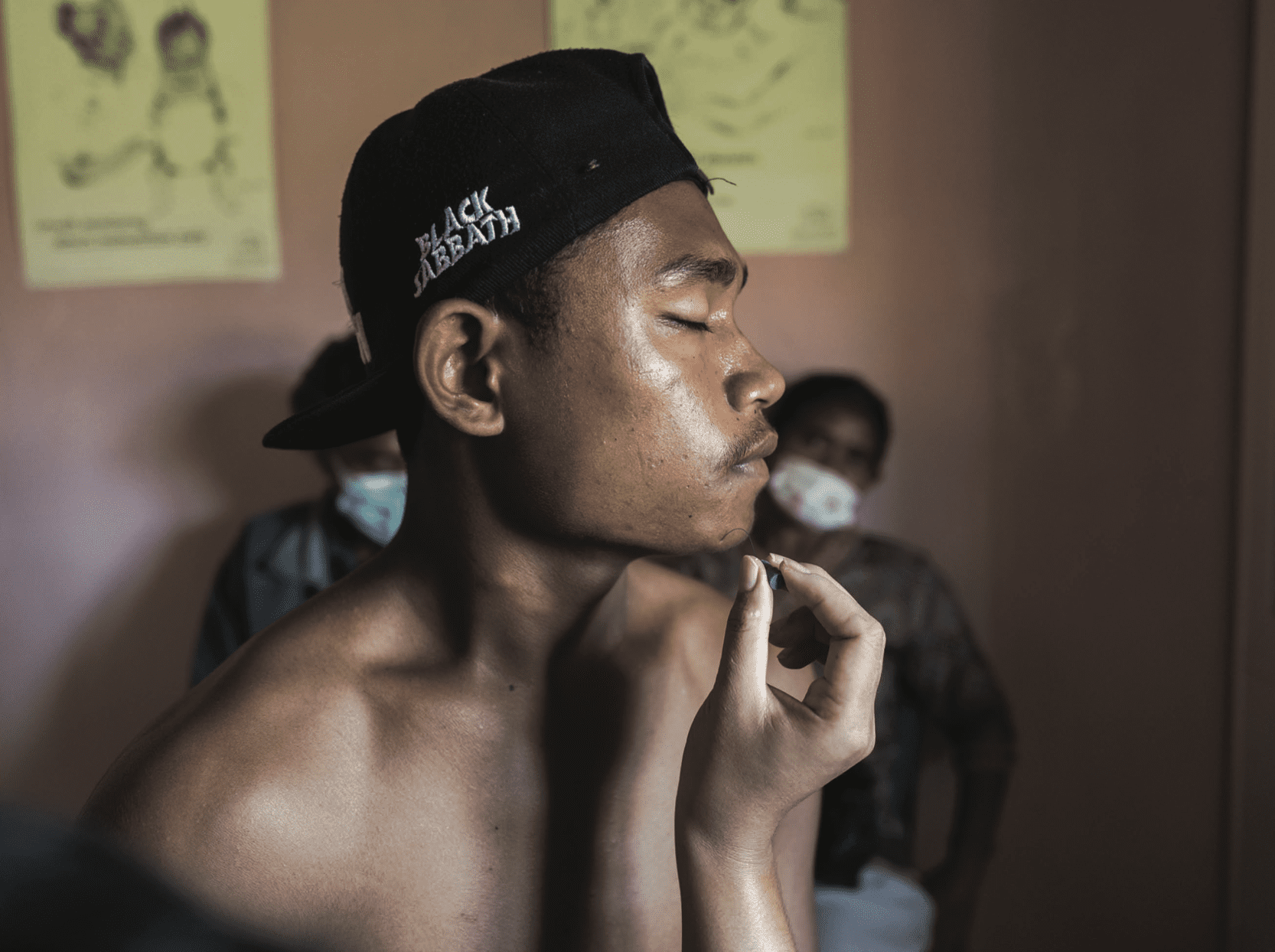
This award recognises the efforts that OUCRU Indonesia, in collaboration with Sumba Foundation and Gadjah Mada University (Yogyakarta, Indonesia), have made to launch a teledermatology service in Sumba, Indonesia. This remote and economically underdeveloped island has a high burden of skin diseases. Since its launch, the platform has trained and supported 30 health workers with the intent to treat over 600 patients with a broad range of common and neglected skin diseases. Around 10,000 patients who presented with skin diseases have since benefitted from the initiative.
Each winning project is awarded a €20,000 grant to fund its continuation. OUCRU Indonesia will use the grant for continuous education and training on common and neglected skin diseases, strengthening the quality of care for people, and increasing local capacity to deliver multidisciplinary healthcare services.
Learn more about OUCRU Indonesia and Sumba Foundation’s work in Sumba, Indonesia.
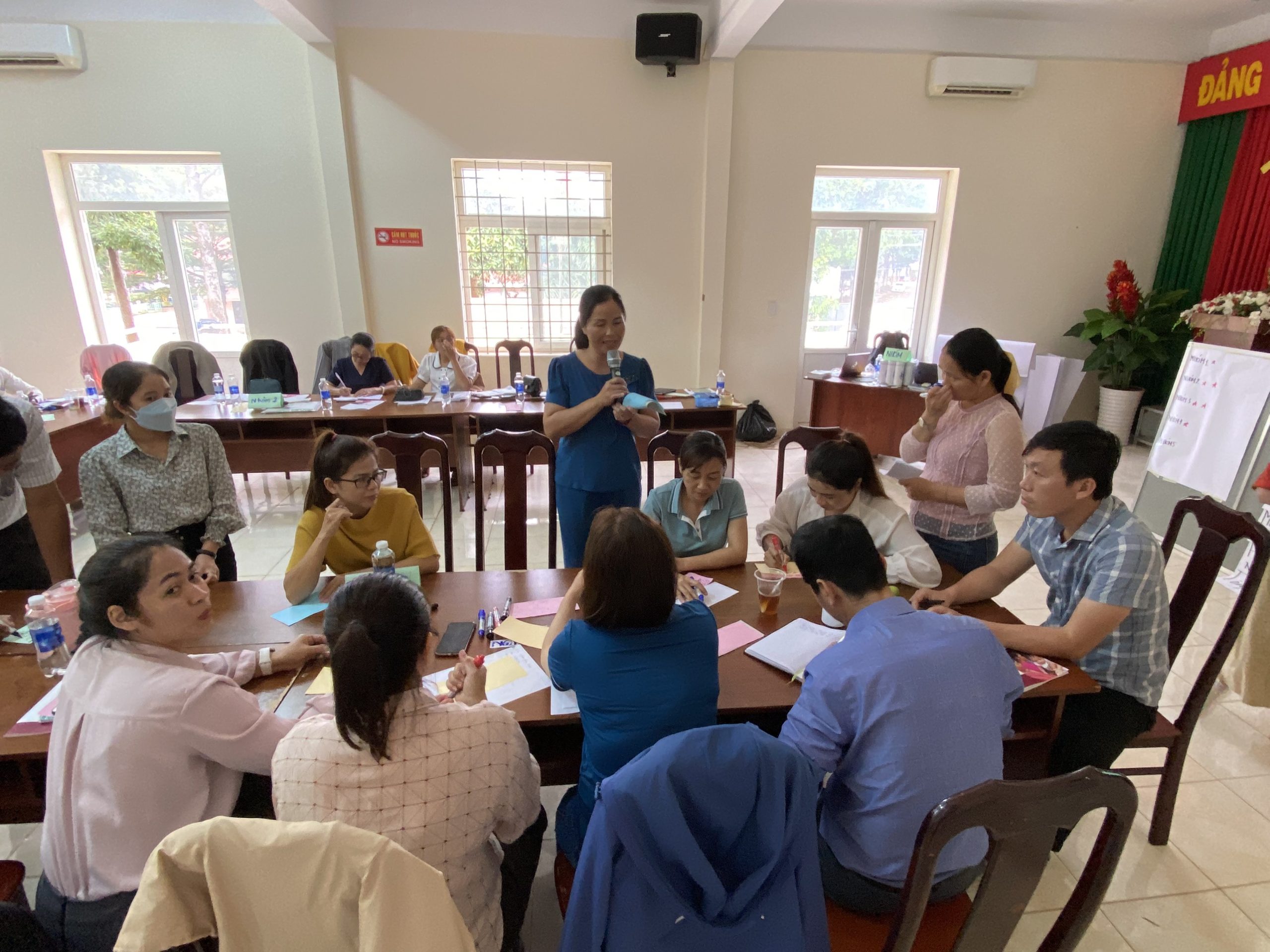
OUCRU, in collaboration with Dak Lak’s Department of Health and Centre for Disease Control (CDC), developed a training programme to enhance the capacity of commune vaccine staff, with a particular focus on supporting their communication about the vaccines and vaccination process.
Communes that participated in the training programme saw up to a 42% increase in booster vaccination uptake compared to the communes that did not participate.
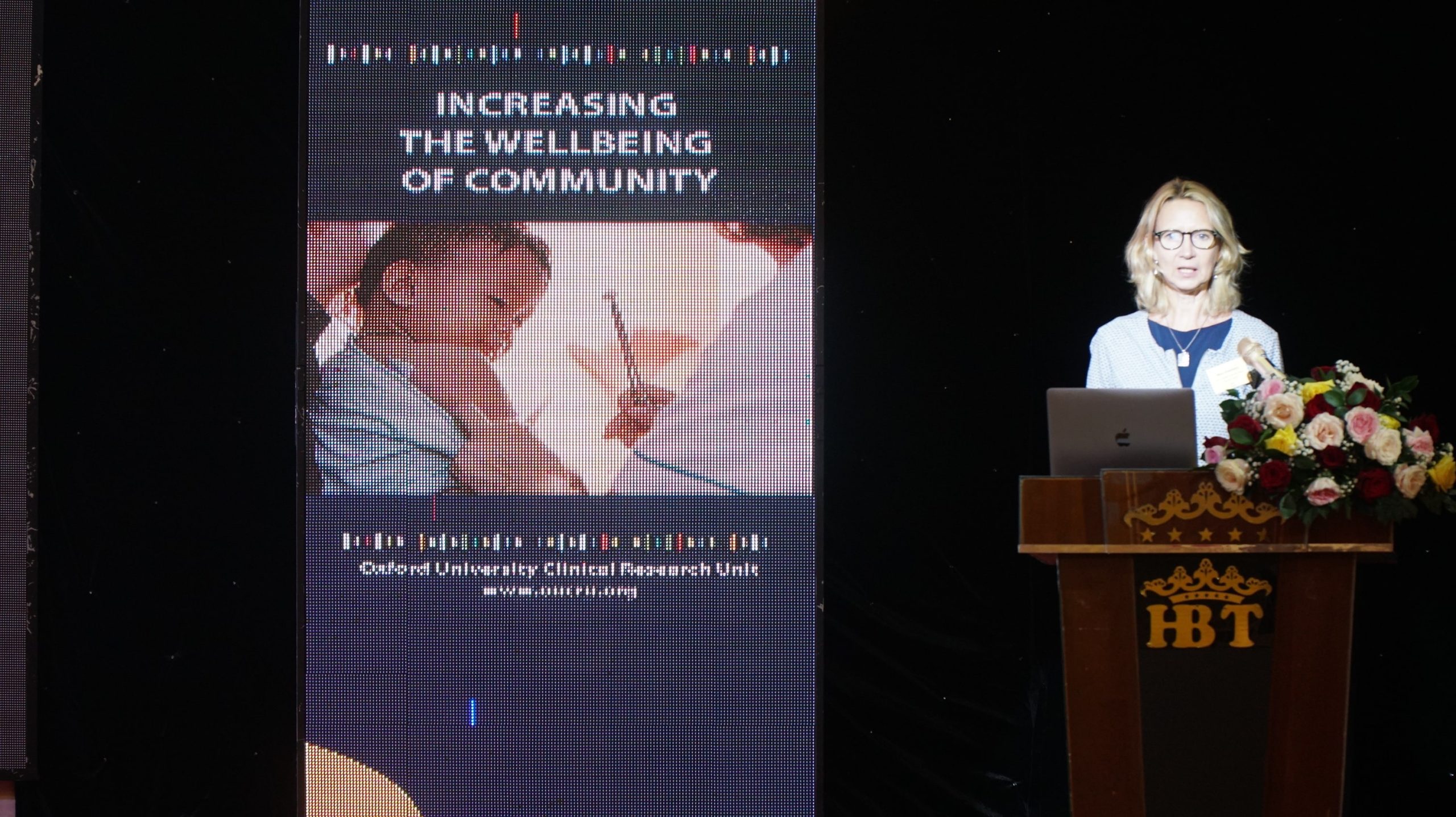
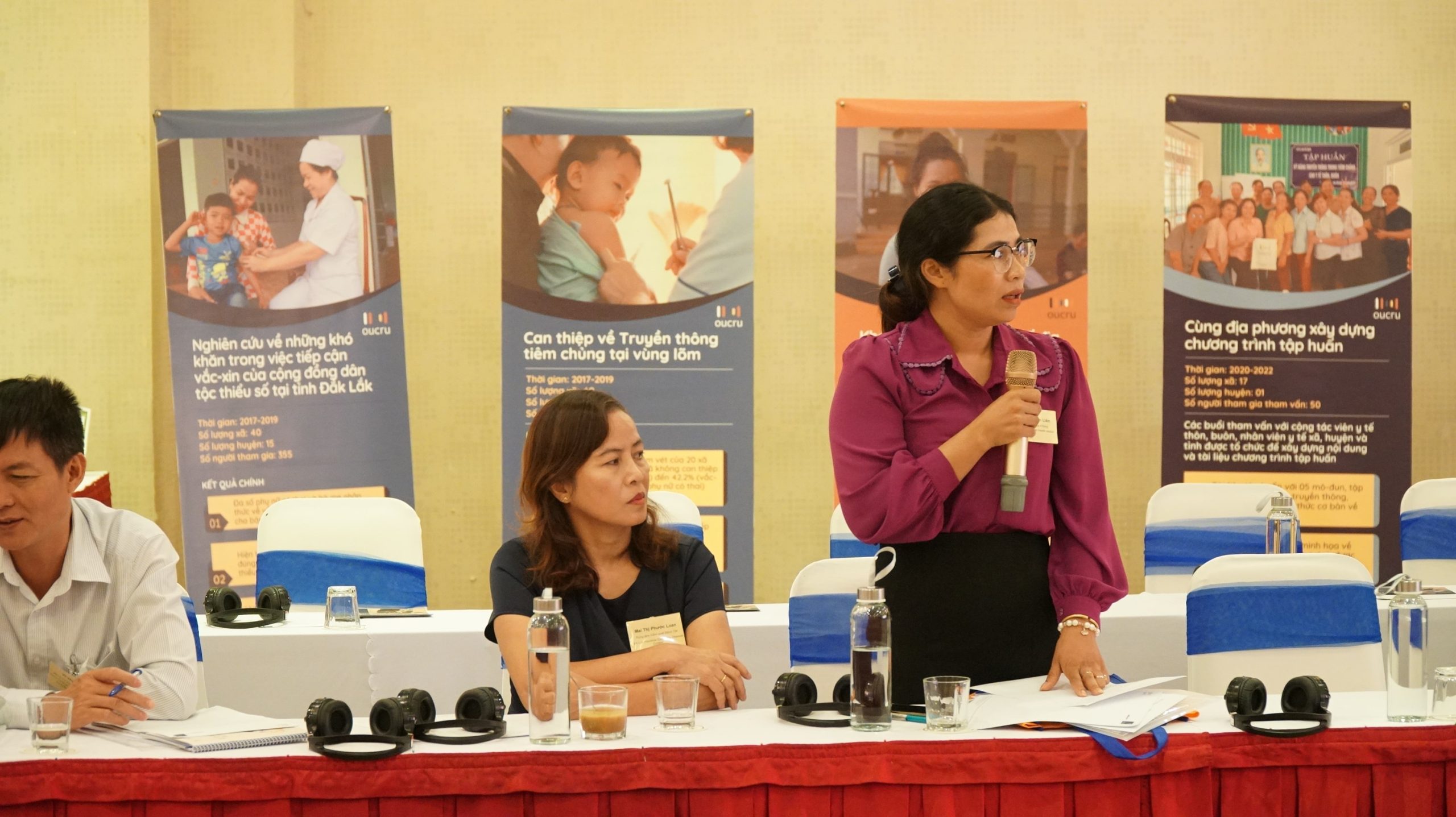
Dr Mary Chambers, Head of Public and Community Engagement at OUCRU, shared why this training programme is needed.Representatives from OUCRU, Dak Lak Department of Health and Dak Lak CDC
This training programme is part of a 9-year collaboration between OUCRU and Dak Lak’s Department of Health to conduct research on health issues such as zoonotic diseases, Covid-19 and vaccine uptake. Â
In response to isolated outbreaks and deaths from vaccine preventable diseases, including diptheria and tetanus, in 2016, OUCRU and the provincial CDC started a programme of work to conduct qualitative and quantitative research on vaccine uptake in marginalised groups, and evaluate community engagement interventions.  Â
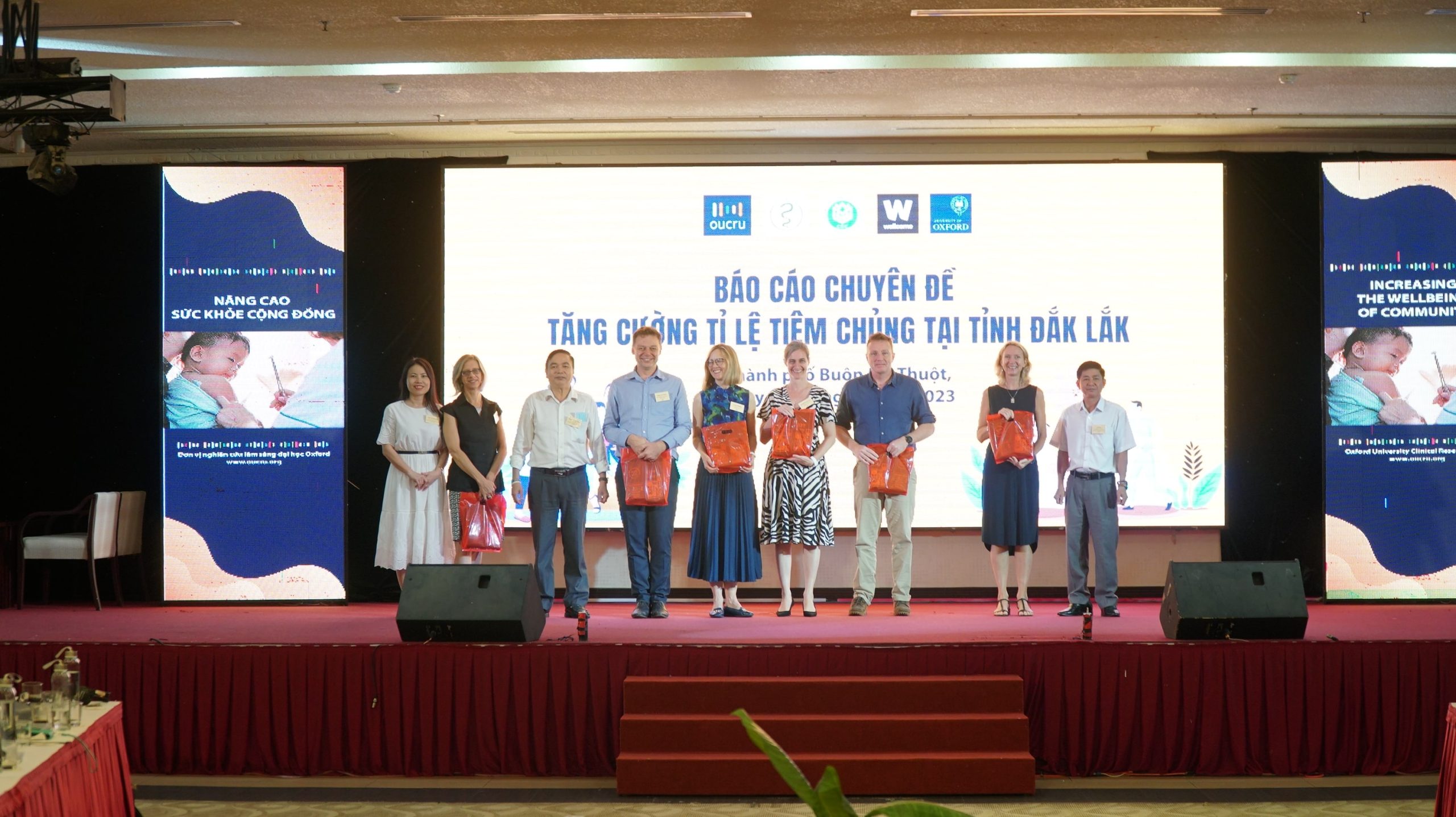
On May 18, 2023, OUCRU and Dak Lak CDC hosted an event to celebrate the progress made to improve the vaccination rates amongst the province’s most vulnerable communities. The new training modules were introduced, along with results from the pilot training in 17 communes of Cu Mgar district.Â
The event saw the participation of the National Institute of Hygiene and Epidemiology, Department of Foreign Affairs, Department of Planning and Investment, and district and commune healthcare workers.
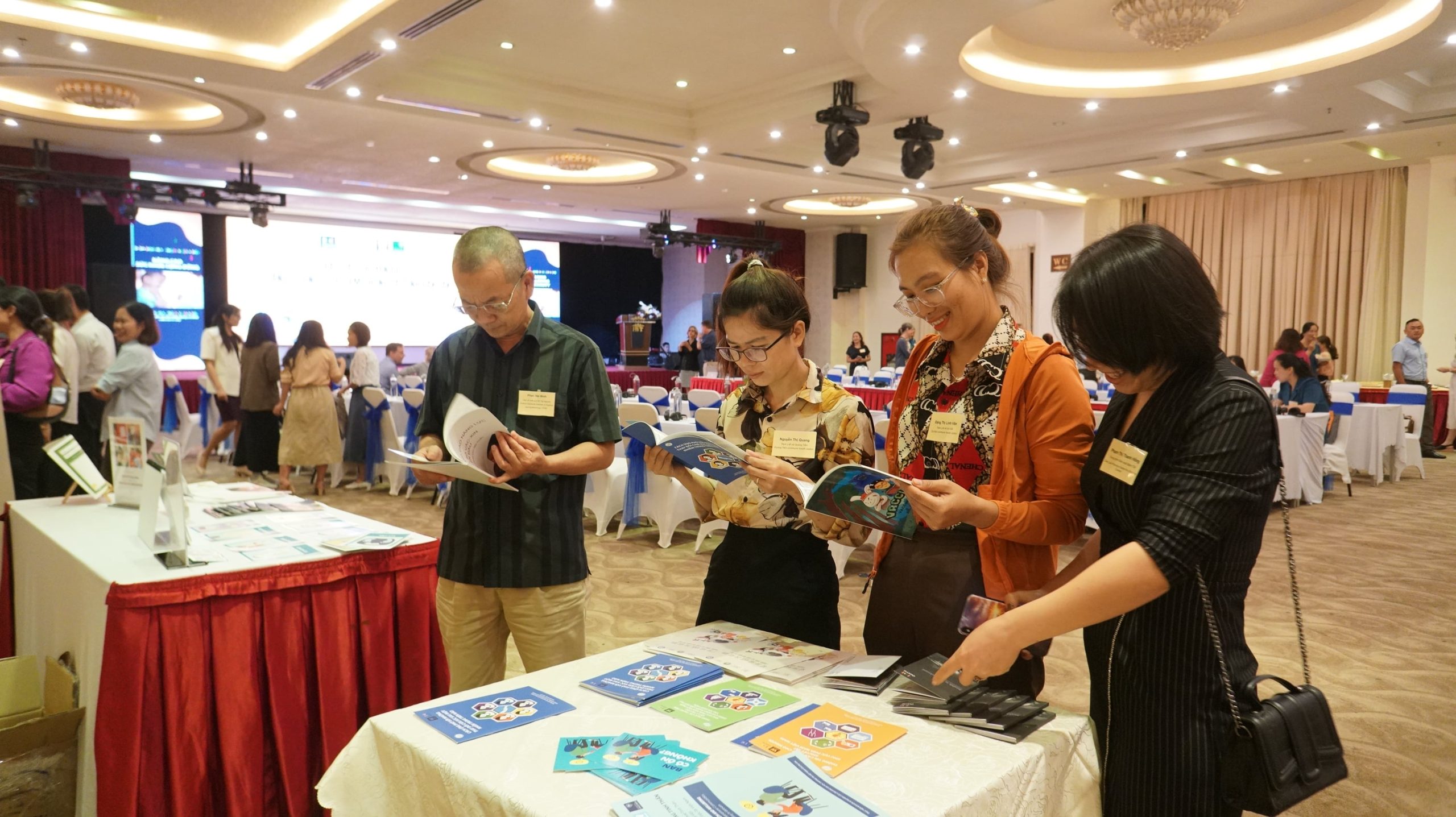
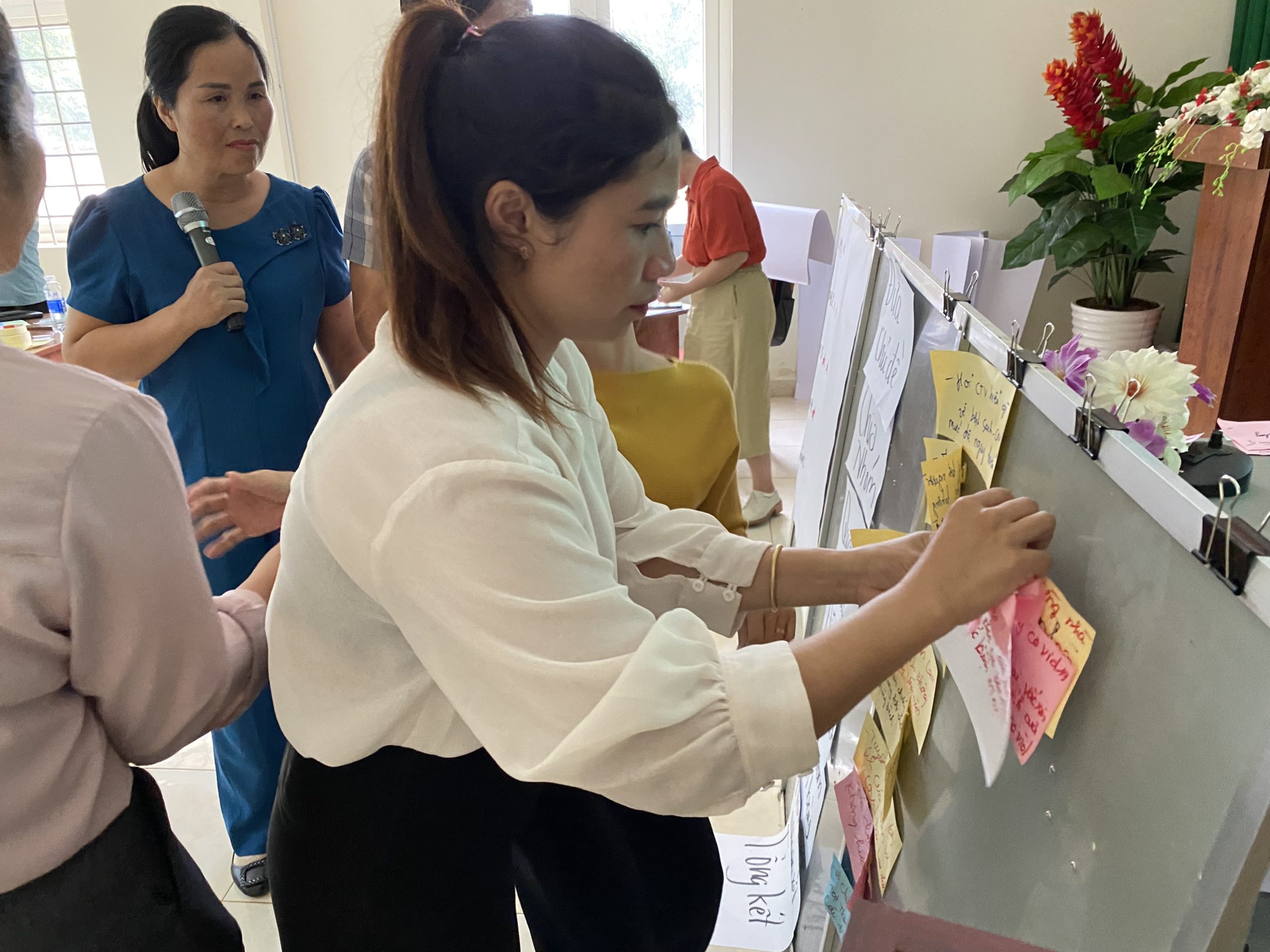
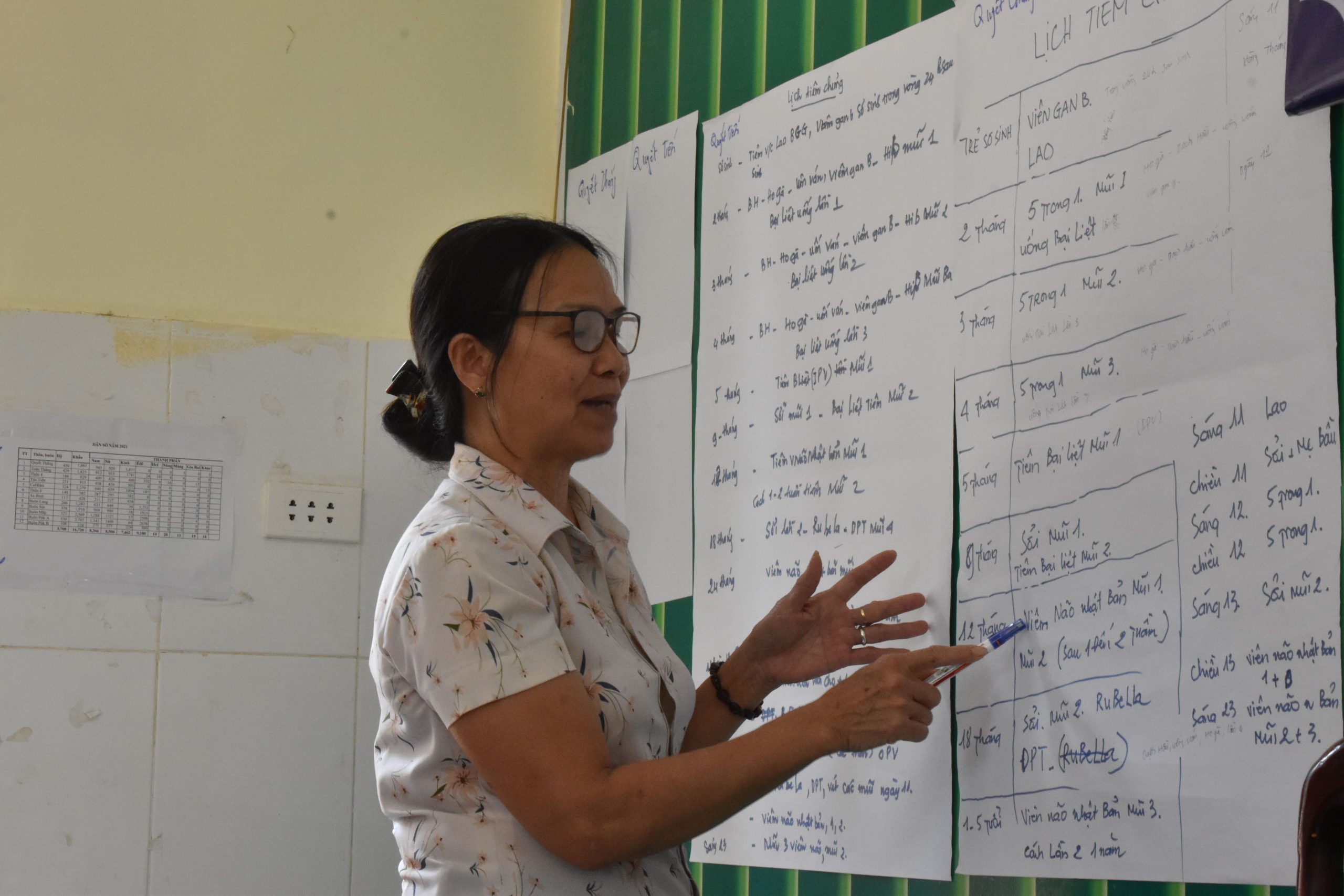
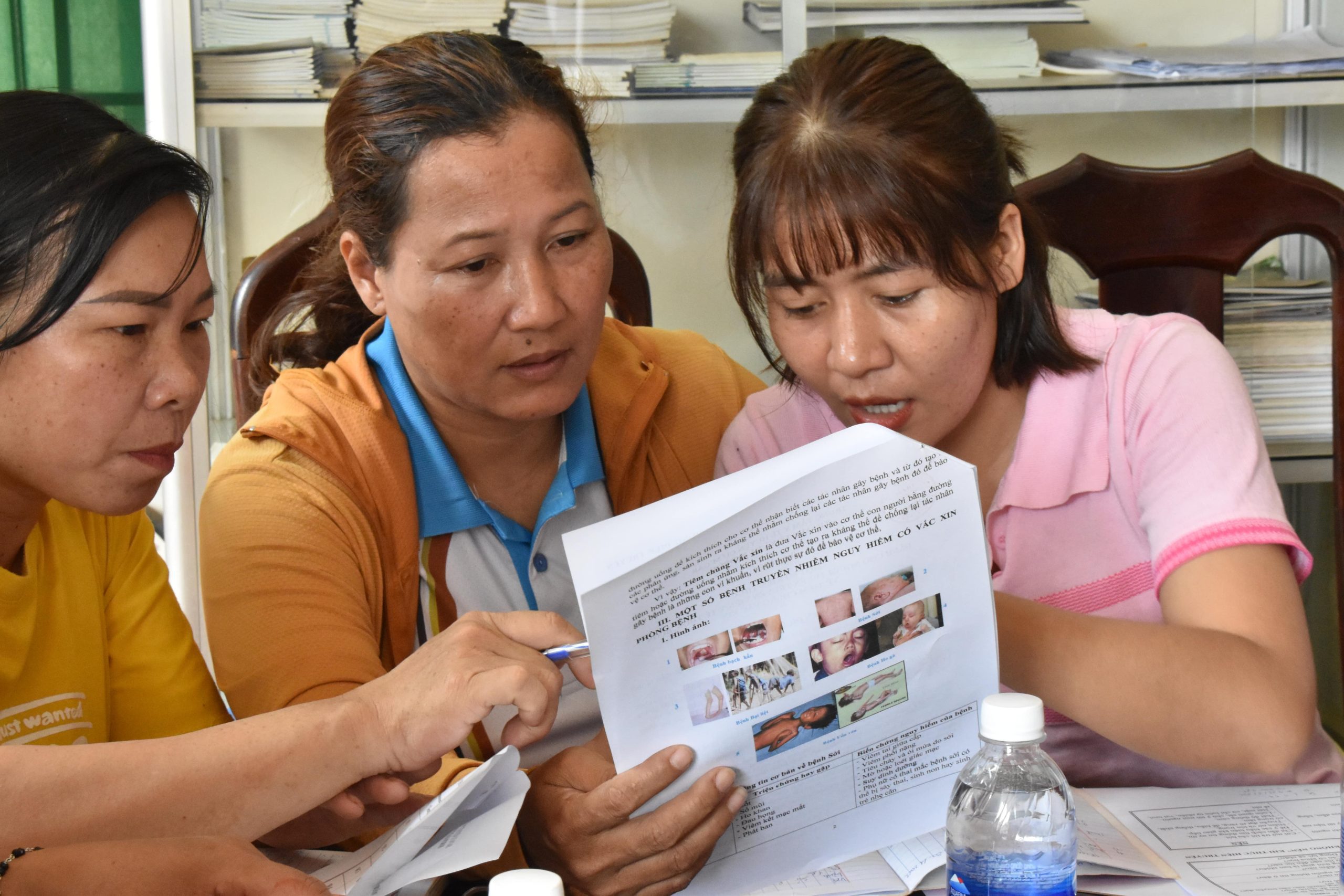
Sharings from frontline health workers Event participants explore the participant-led training materials developed during this project.
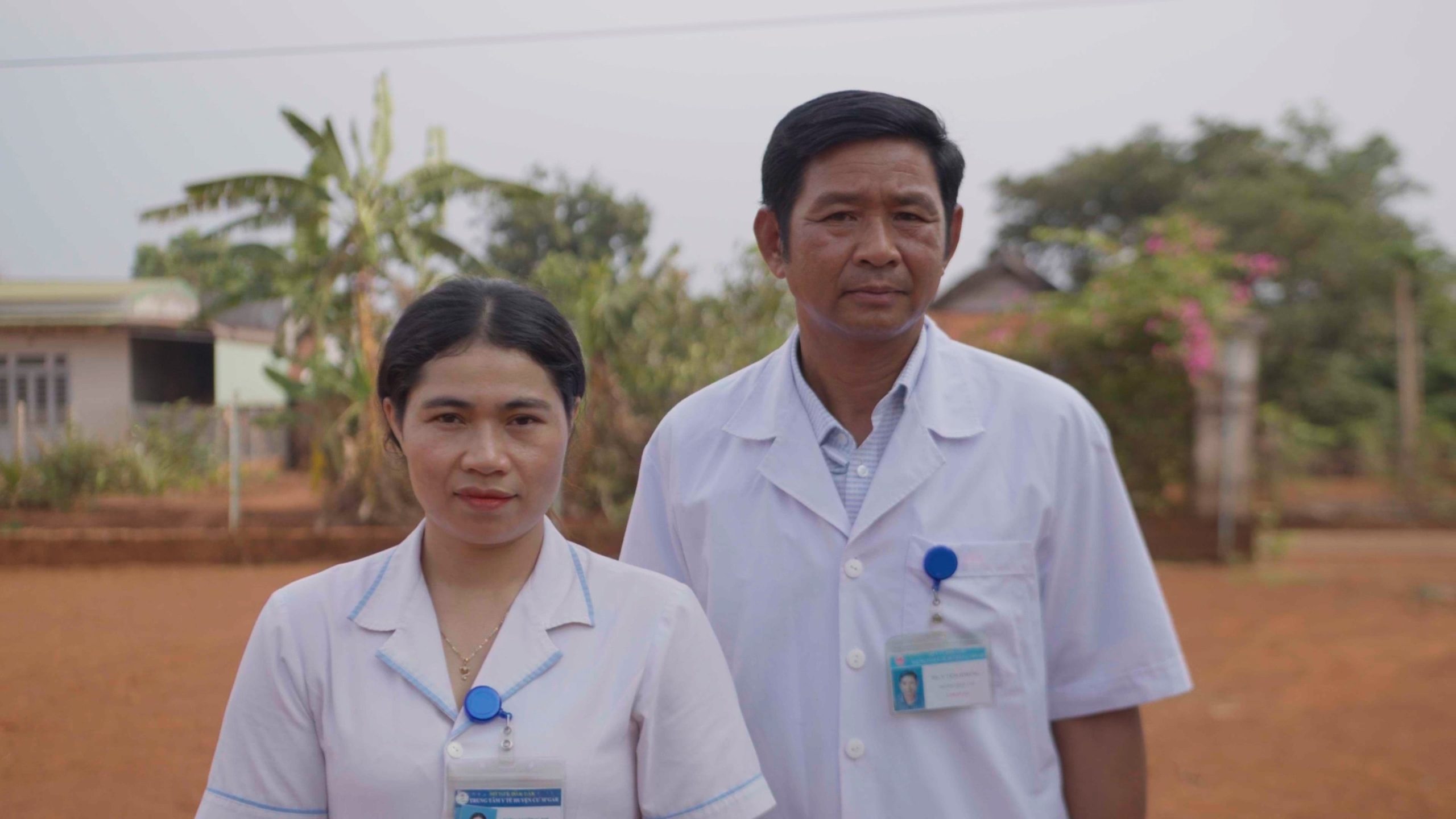
“Before the training was implemented, 52 out of 184 communes in Dak Lak fell behind on vaccination. This is an area of concern for us. After the Covid-19 pandemic, the vaccination rate fell significantly. Capacity building for frontline health workers is now more important than ever.â€
Dr Le Phuc, Vice Director of Dak Lak CDC, said during the meeting.
Addressing Structural Challenges
Vaccine delivery and uptake in Vietnam are reportedly very high. However, sporadic outbreaks of vaccine-preventable diseases such as measles, diphtheria, and neonatal tetanus reveal that uptake is not uniform across the country. Outbreaks in rural areas have predominantly been amongst ethnic minority communities.
The first phase of our project looked at the challenges that community members face when getting vaccinations and healthcare workers face when working with community members.
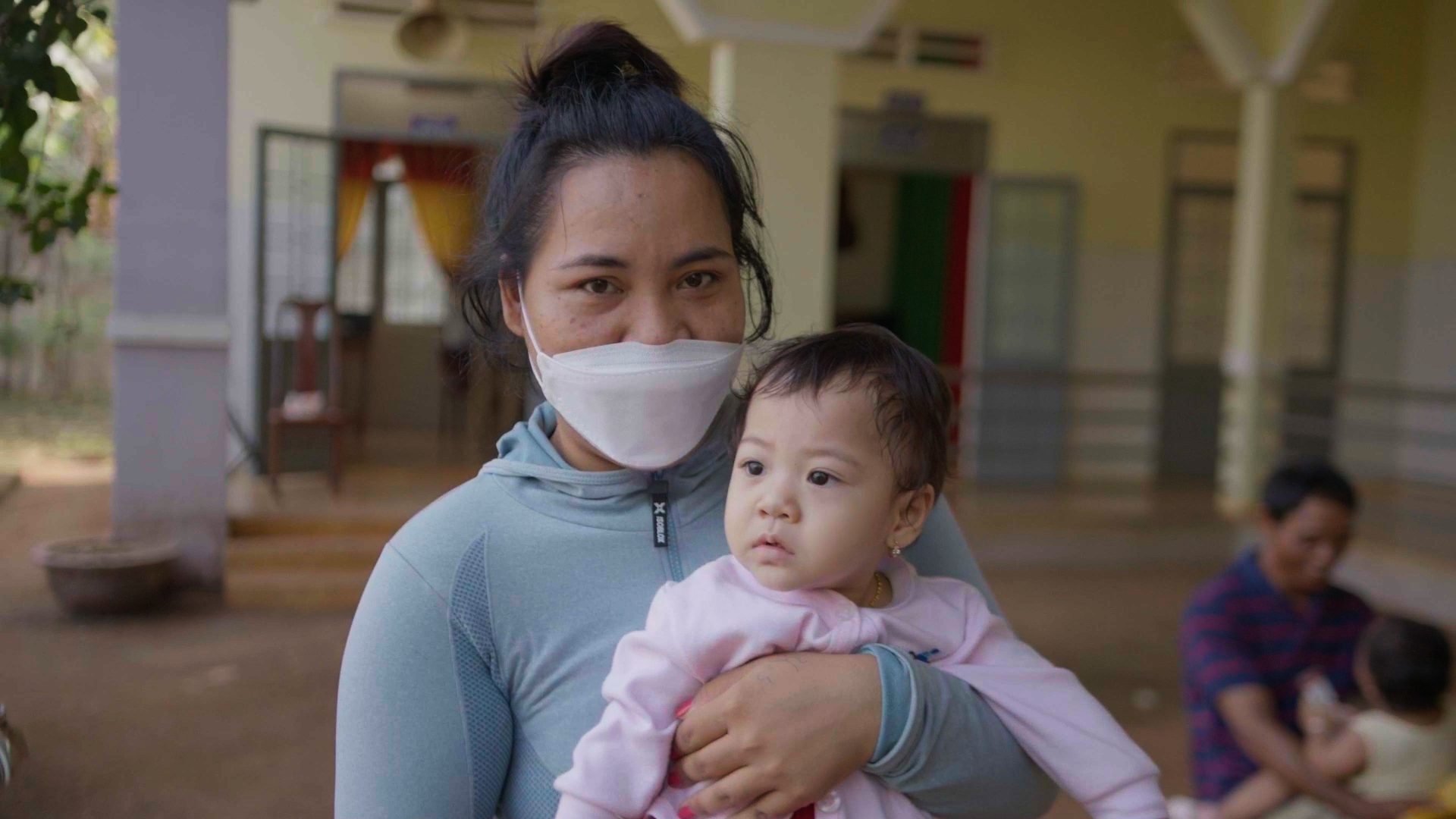
Research carried out by Nguyen Thanh Ha, PhD student at OUCRU, found that most community members know about the benefits of vaccines and express positive attitudes toward vaccination. However, structural challenges such as lack of transportation, lack of driving license, difficult routes to vaccination centres, or difficulties taking work absences to take children to vaccination prevent them from getting vaccinated.
Structural challenges such as lack of transportation, lack of driving license, difficult routes to vaccination centres, or difficulties taking work absences to take children to vaccination prevent them from getting vaccinated.
Additionally, the research shows that local healthcare workers play an essential role in encouraging and maintaining the community’s vaccination behaviours. However, they are required to communicate about complex issues, often with community members of another ethnic group and language.
When working with these hard-to-reach communities, the local healthcare workers often rely on village health collaborators, who are often low-paid volunteers with little training in vaccines or communication skills.
The Covid-19 pandemic only exacerbated the issue. According to WHO, 25 million children missed out on one or more doses of diphtheria, tetanus, and pertussis vaccine (DTP) in 2021 alone.
“Reaching the zero dose children and the families that they are a part of is now a global goal for many organisations. Communication is particularly needed to achieve vaccination coverage in hard-to-reach populations.â€
Dr Mary Chambers, Head of Public and Community Engagement at OUCRU said.
Training Programme for Commune Vaccine Staff
In response to these findings, we have collaborated with Dak Lak CDC to develop a training programme to enhance the capacity of commune health collaborators and commune health station staff, with a particular focus on supporting their communication about the vaccines and vaccination process.
The outputs are a five-module training manual, supporting communication material such as flash cards. A training of trainer (TOT) course has also been developed to give district-level and village-level health staff who deliver this training to village health collaborators.   Â
This course, ‘Capacity Building for Frontline Vaccination Staff’, and the TOT course have been piloted with 200 health collaborators from 17 communes of Cu Mgar district, Dak Lak province, and with 26 district and village-level health staff (2022-23).   Â
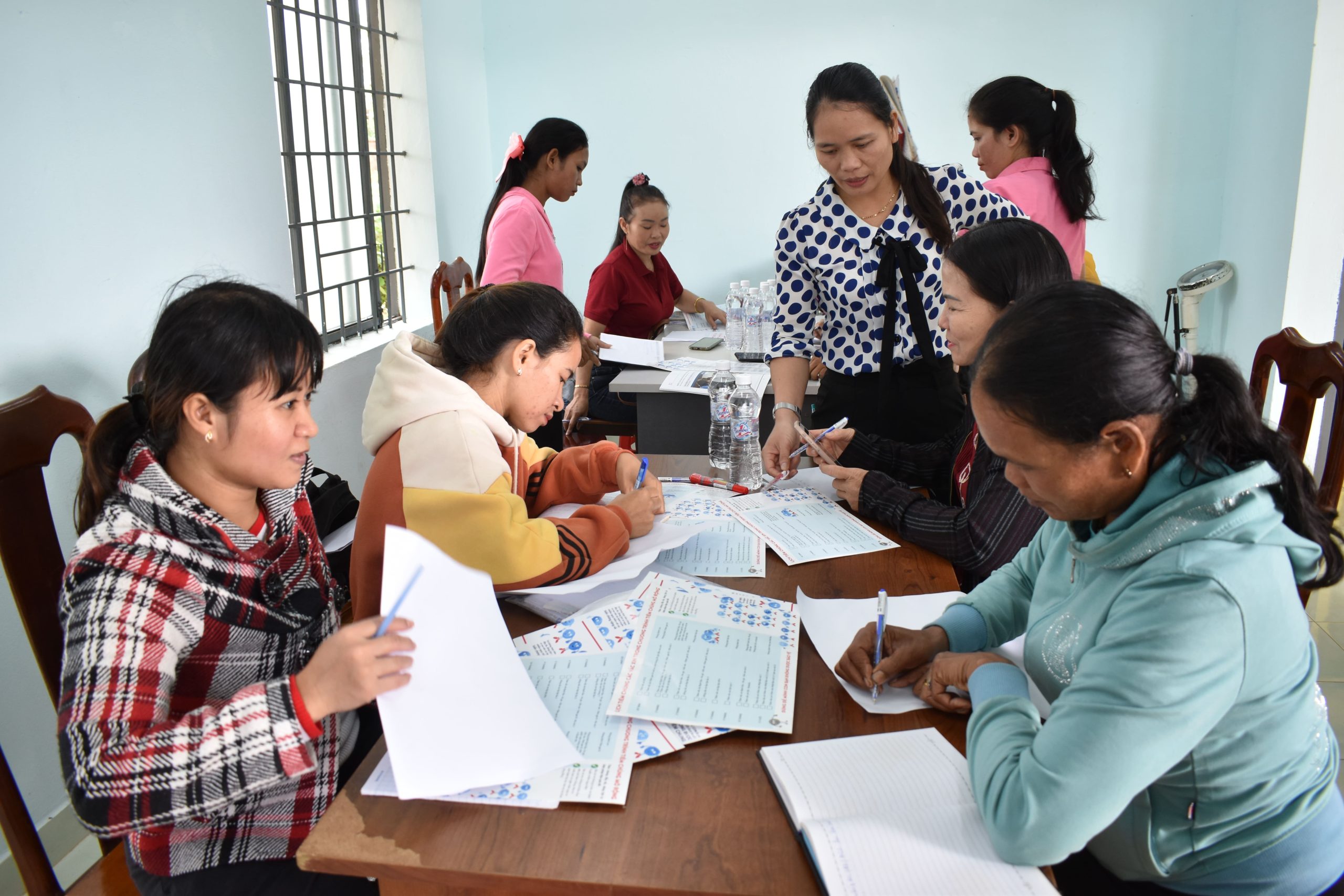
The participatory training programme not only enhances self-confidence by creating an active learning space for commune vaccine staff but also ensures sustainability through capacity building for the trainers. Â
Recap of the training programme and sharings from frontline health workers
Feedback from the pilot training shows that the programme is suitable for local health staff and helpful for the commune health collaborators to build their confidence and capacity.
The 20 communes that participated in the training programme saw a significant increase in booster vaccination rate (up to 42%) compared to the communes that did not participate.
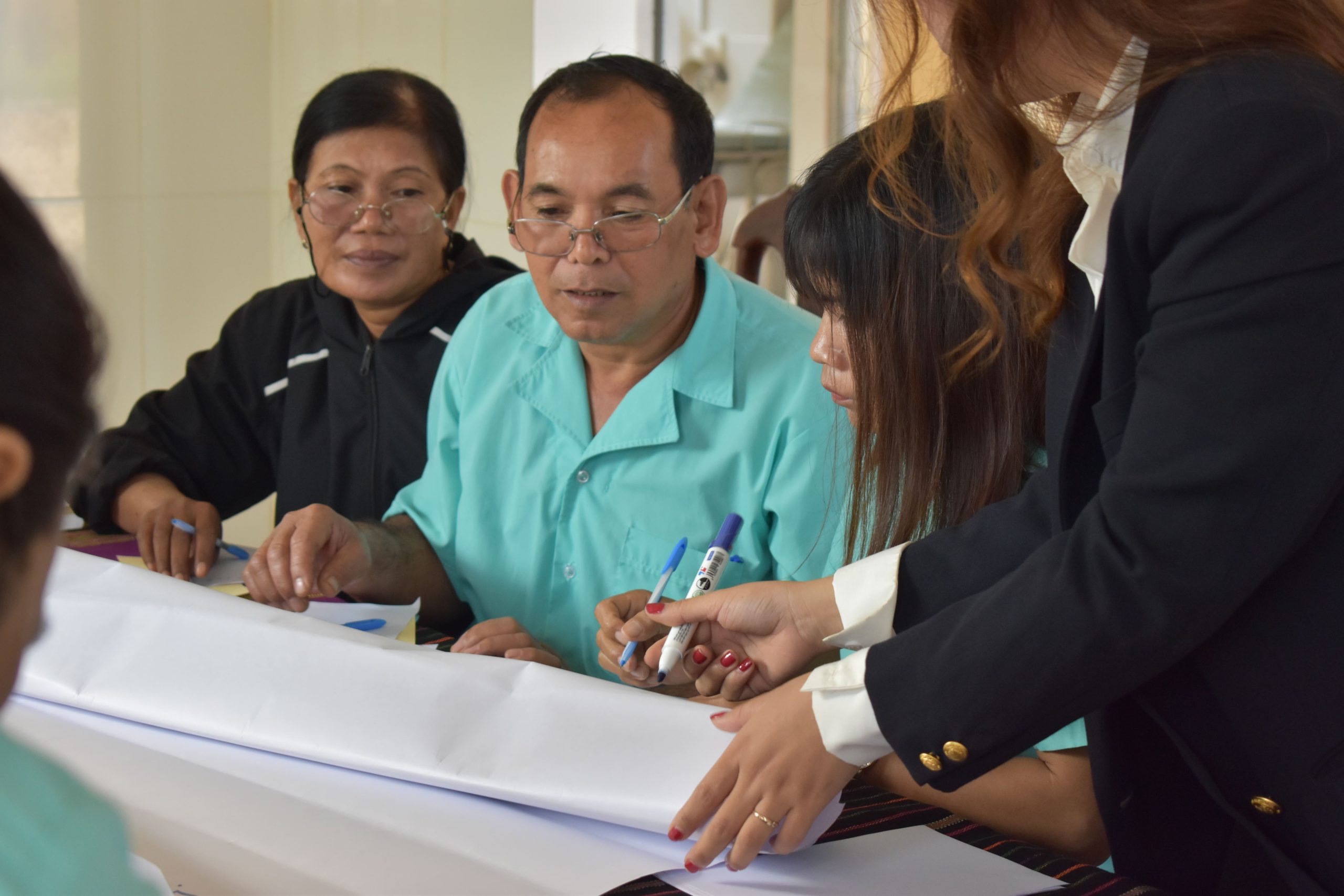
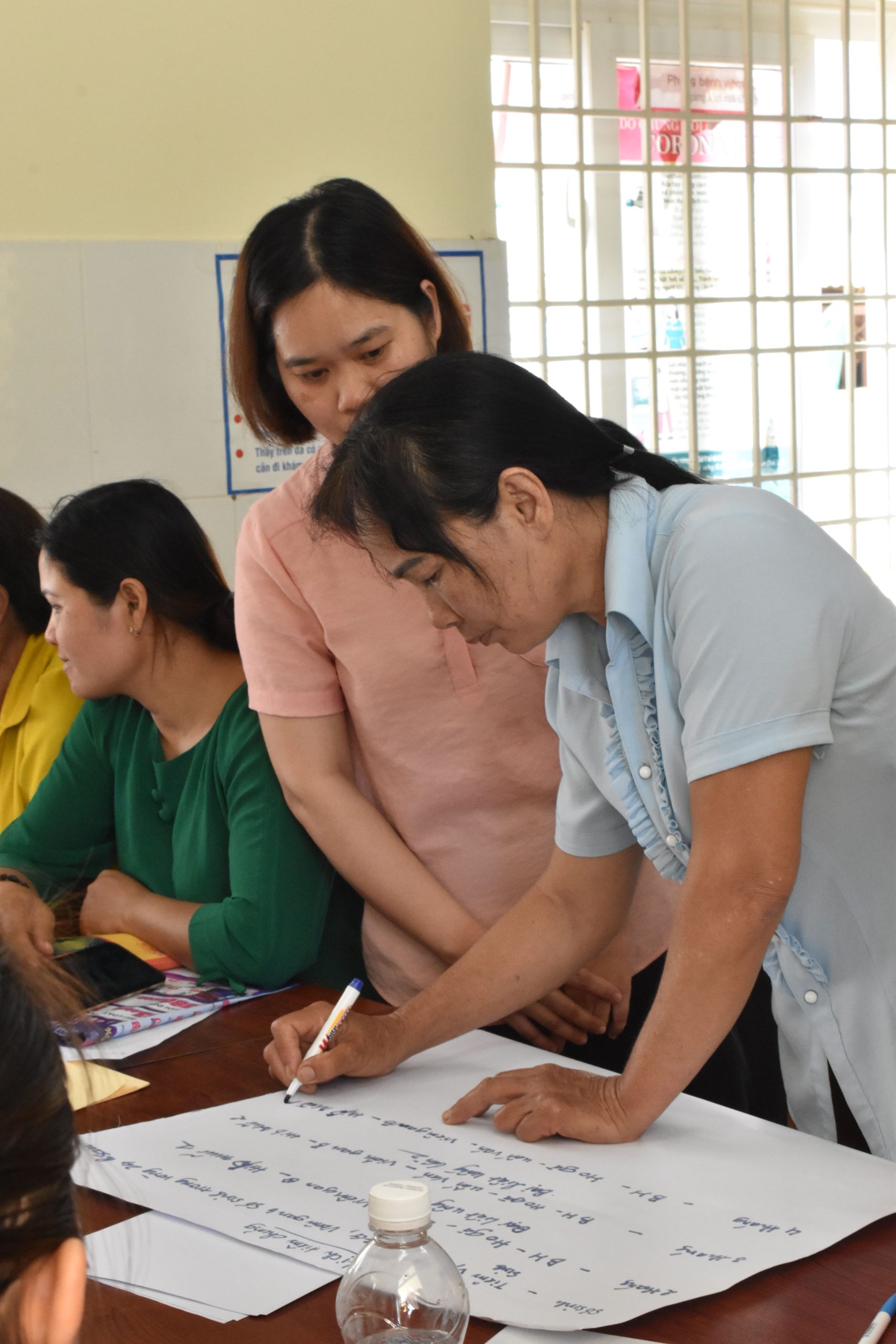
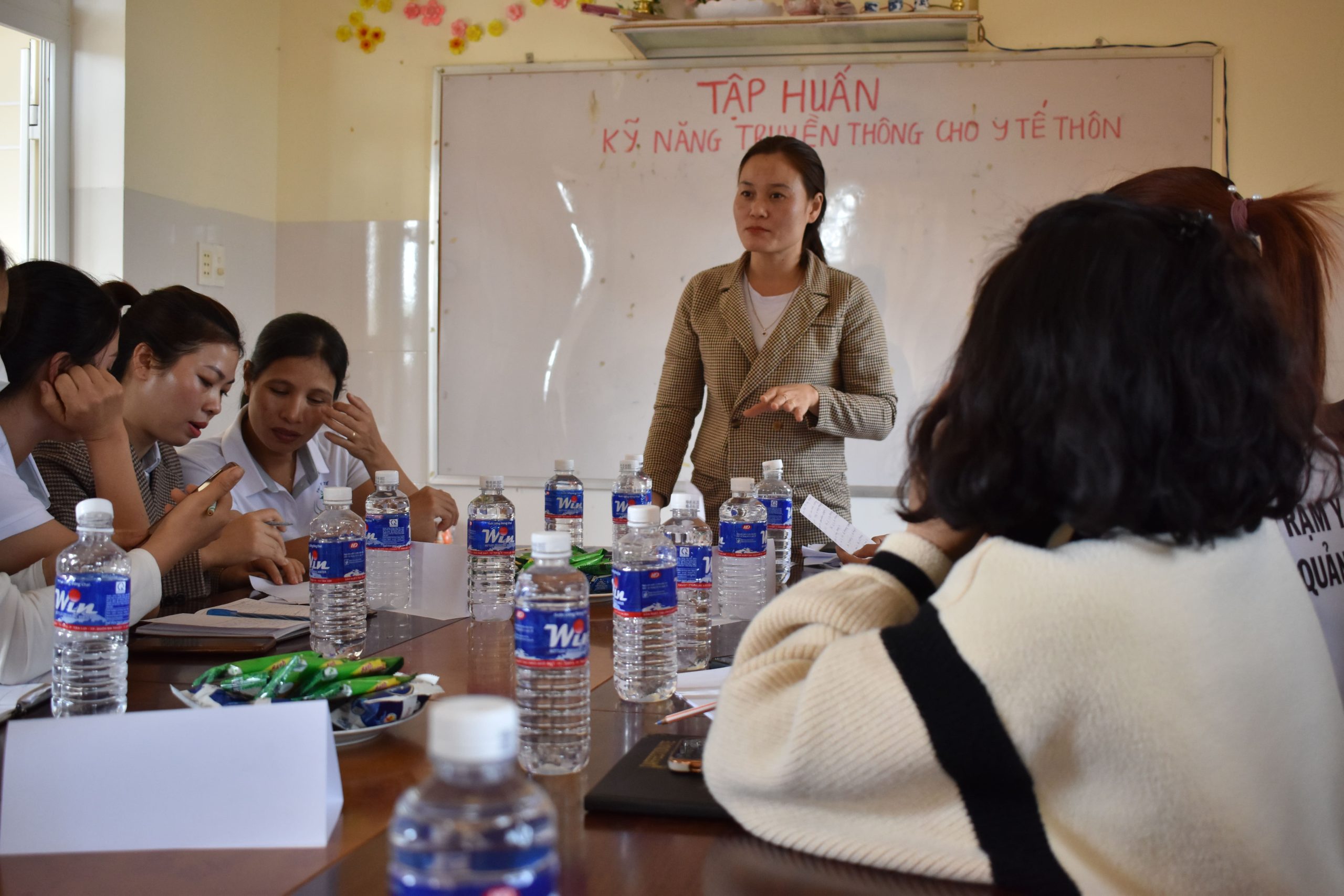
A training session with frontline health workersA training session with frontline health workers
“I feel more confident now, after being the trainer for the first time in my life; I think I just made the impossible possible!”
A commune vaccine staff in Dak Lak province said after the training.
A training session with frontline health workersA training session with frontline health workersA training session with frontline health workersA training session with frontline health workersA training session with frontline health workersA training session with frontline health workers
“This new training method focuses on the commune staff; it has them actively learn how to do their communication tasks.”
The Head of a Health Station in Dak Lak province expressed.
“It is our hope that this programme will be used widely throughout Vietnam to support health workers involved in vaccinations in rural areas, and thereby increase the well-being of the communities they serve, especially the disadvantaged and marginalised,” Nguyen Bich Phuong, Senior Engagement Coordinator for the project said.
“I truly hope that we can reflect on the strengths and the needs of these essential workers and how they can be supported to conduct these very important tasks of acting as the interface between the health system and the communities,” Dr Mary Chambers stressed. Â
Nguyen, Y.H.T., Dang, T.T., Lam, N.B.H. et al. Fragmented understanding: exploring the practice and meaning of informed consent in clinical trials in Ho Chi Minh City, Vietnam. BMC Med Ethics24, 3 (2023). https://doi.org/10.1186/s12910-023-00884-2
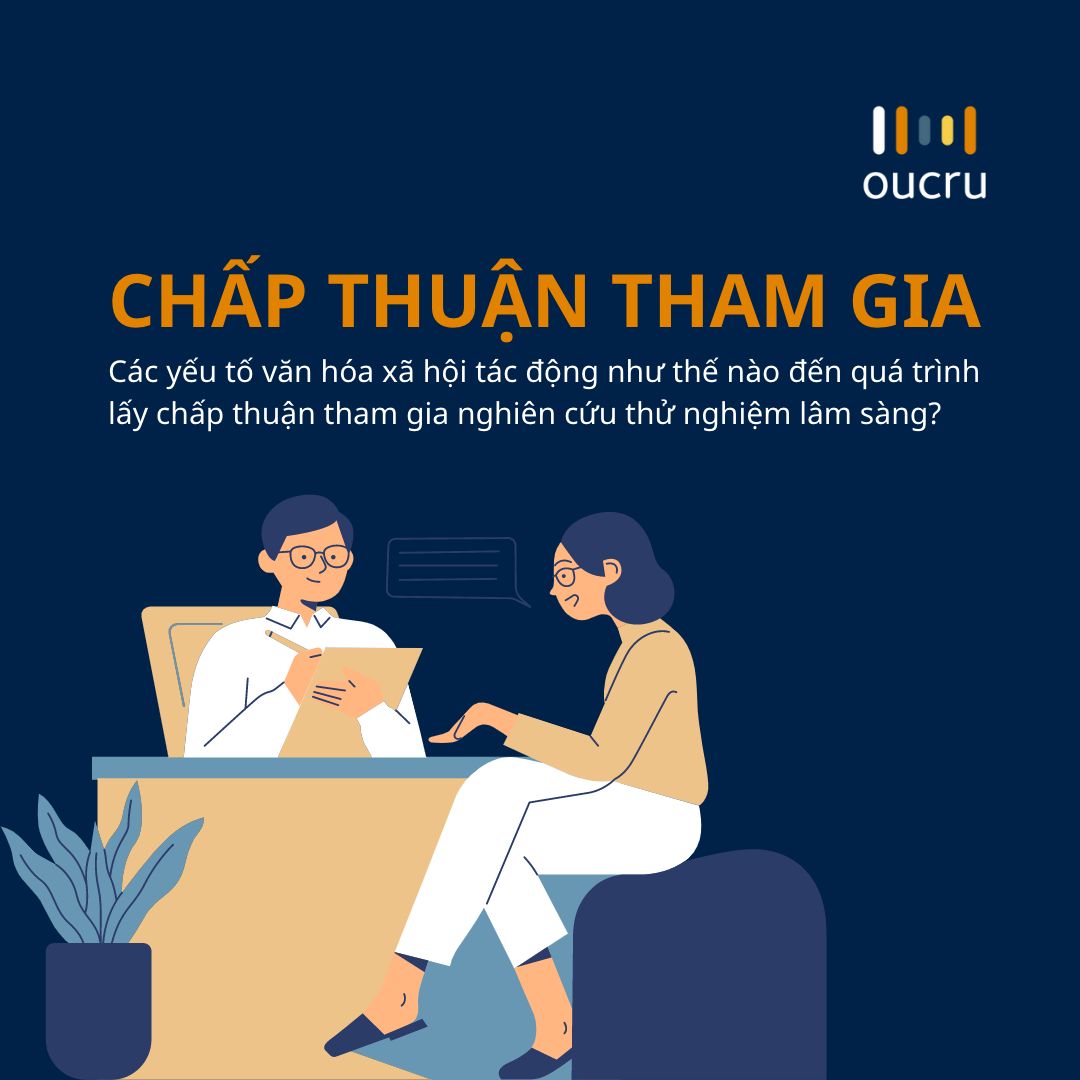
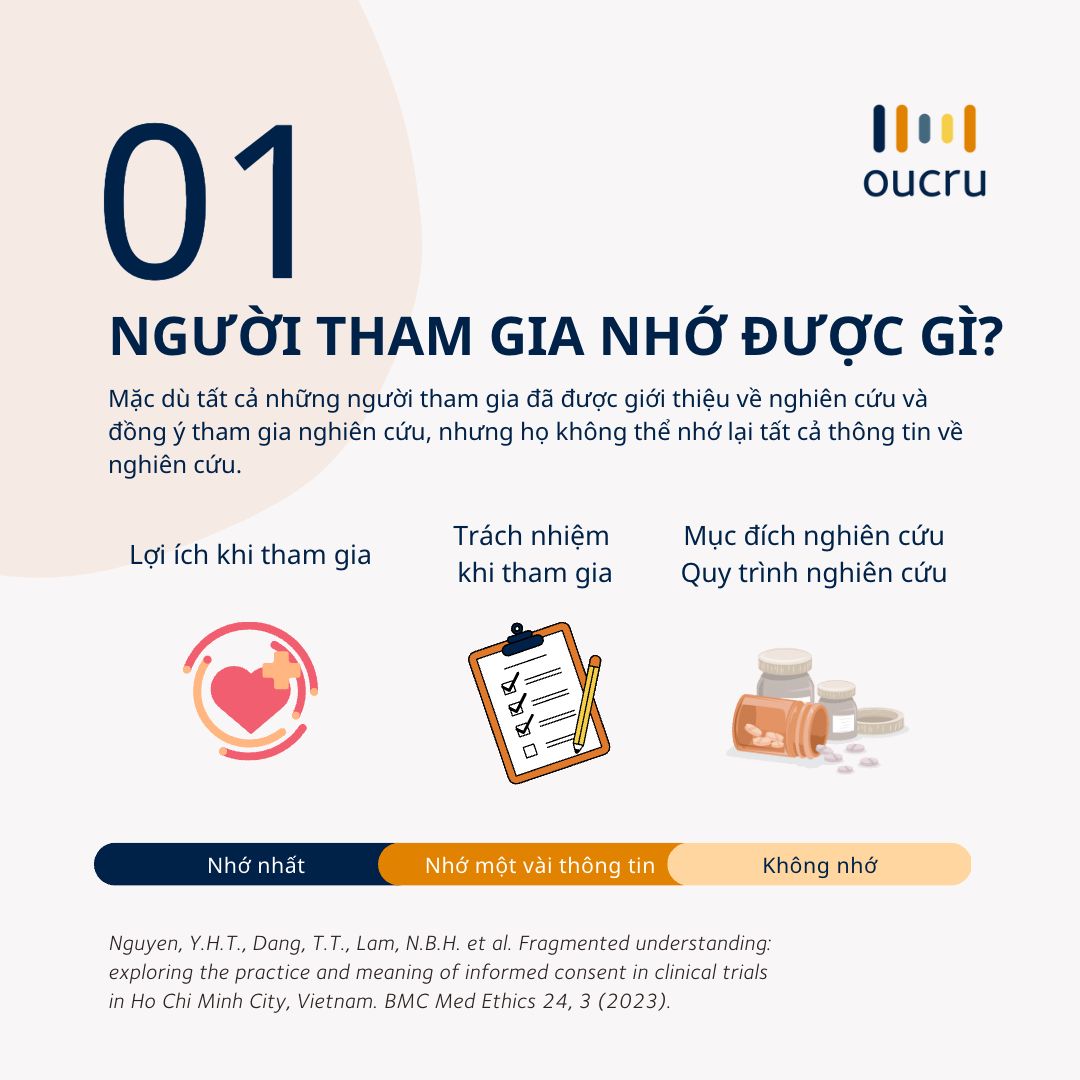
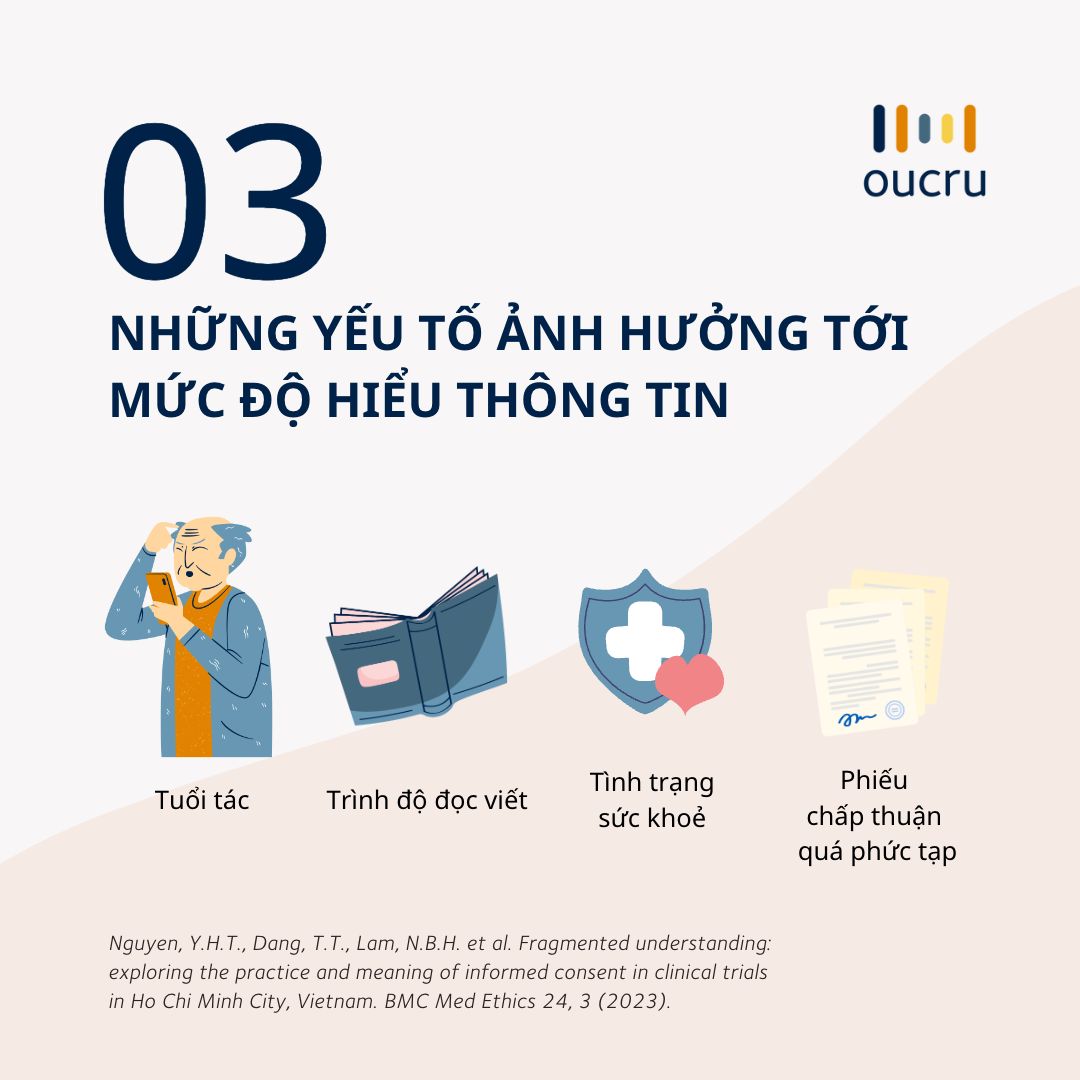
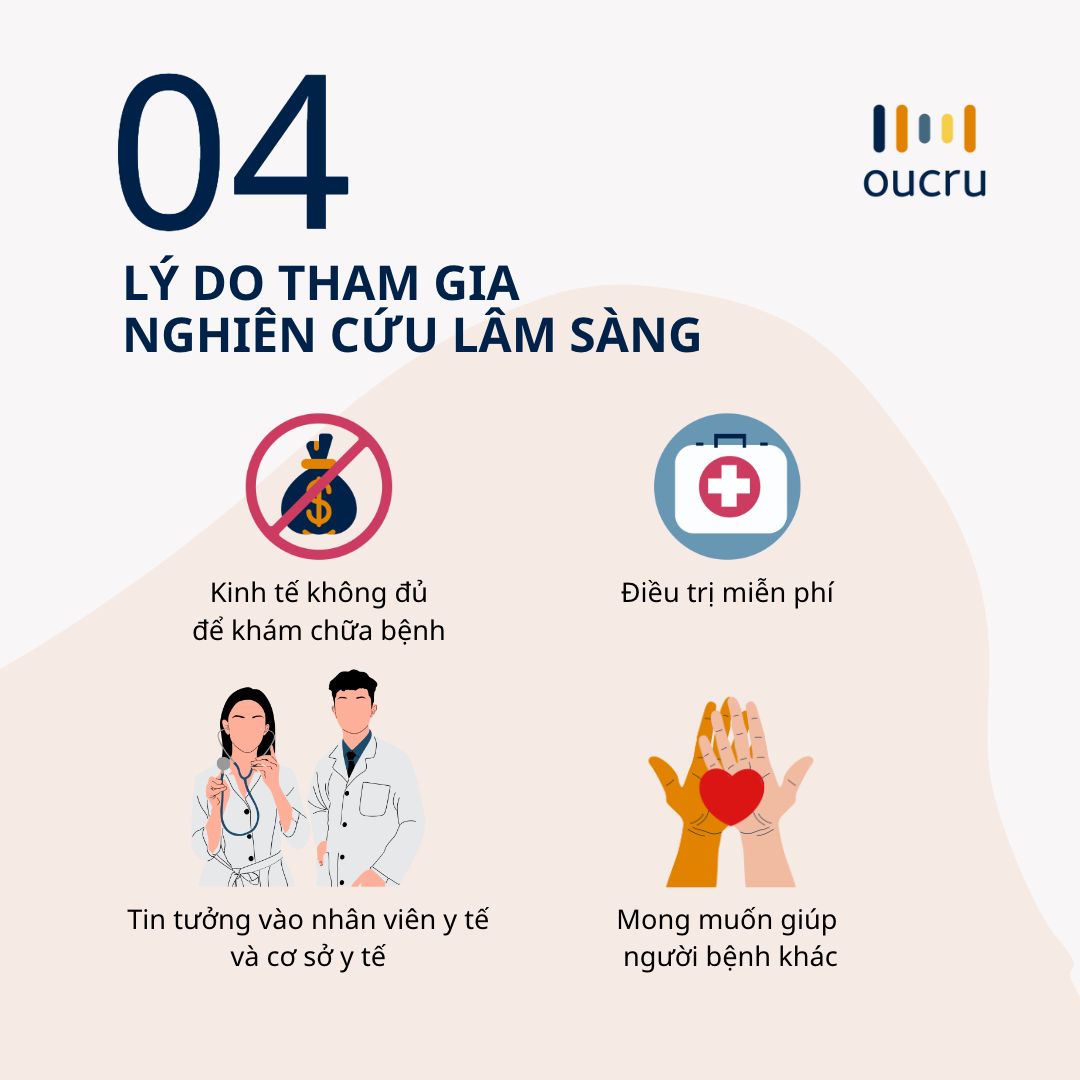
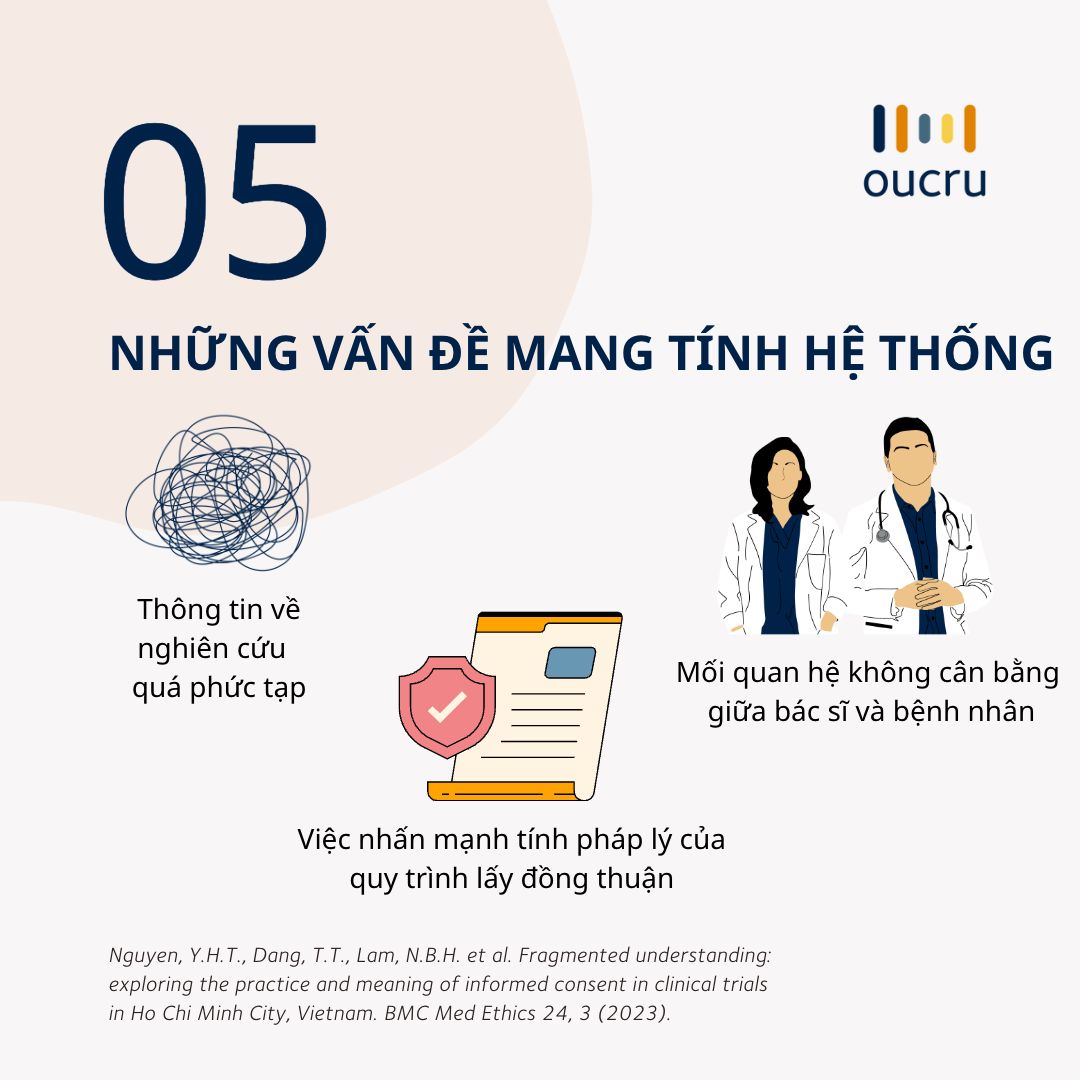
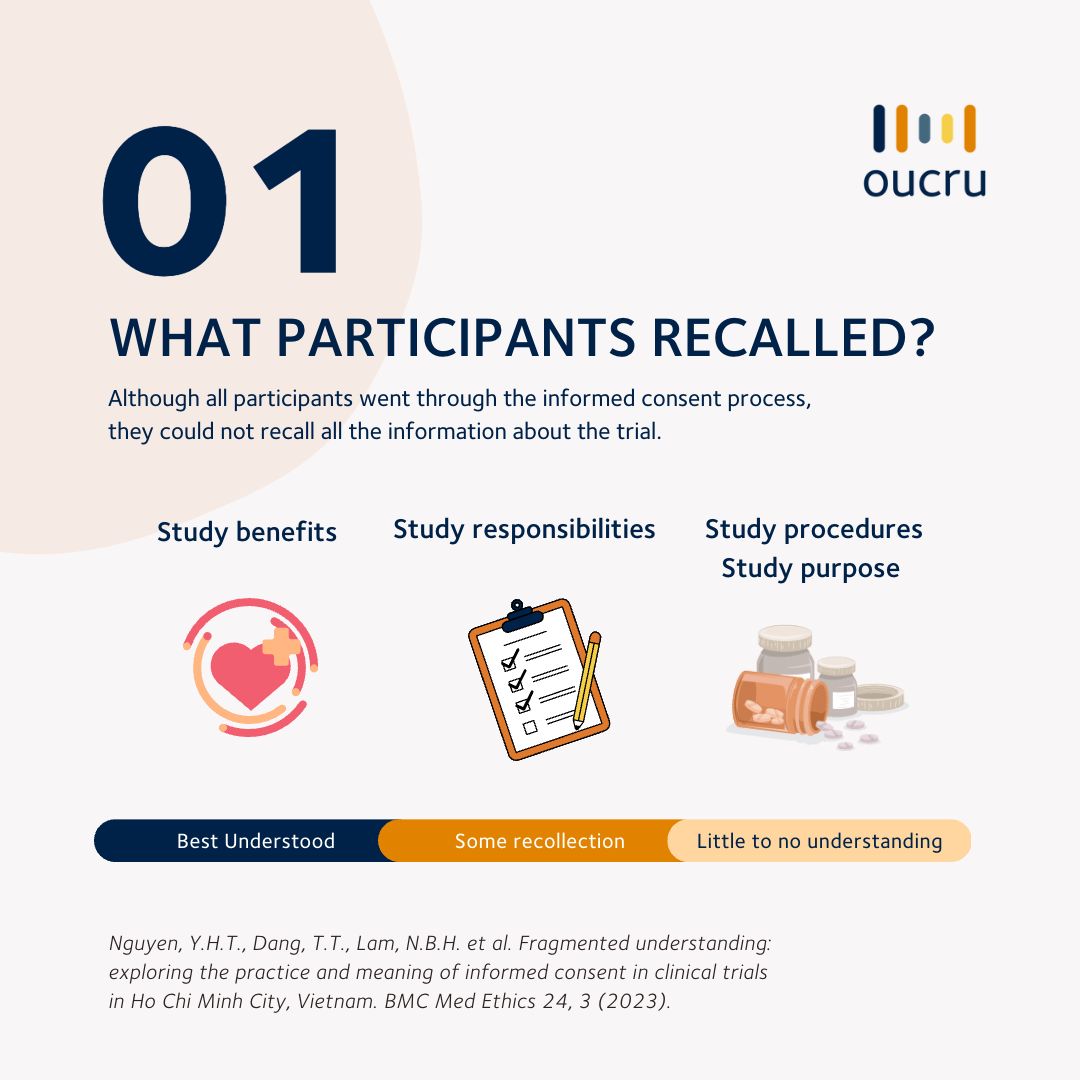
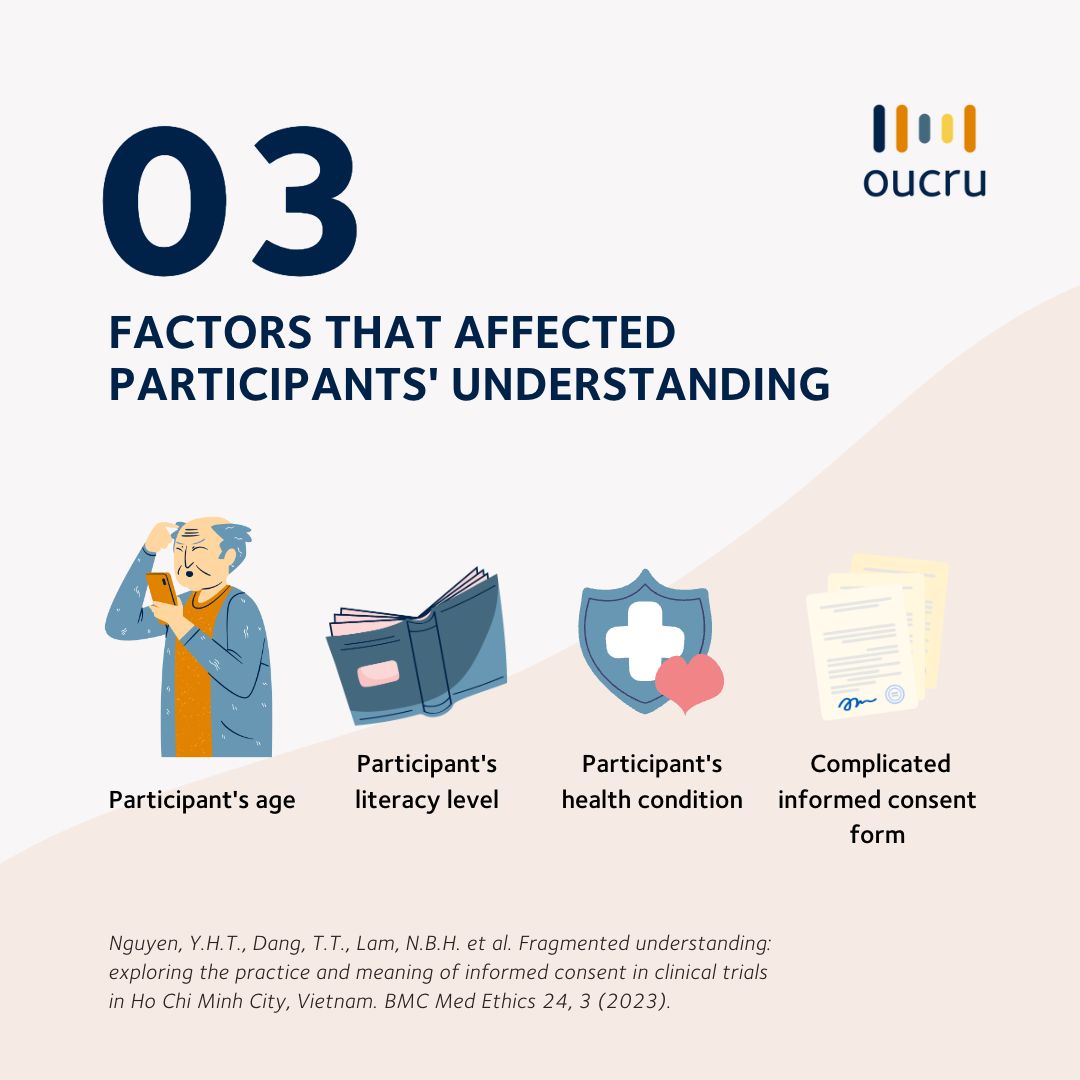
Age, literacy level, and health status shape participants’ understanding of clinical trials. In a recently published study, OUCRU researchers observed the consent process in two trials and noted many ways that participants’ understanding of study information can be enhanced.
Informed consent is an essential process when doing clinical trials involving human subjects, according to Good Clinical Practice. This step ensures that trial participants are aware of the trial information, study purpose, potential risks, and benefits to their health before making an informed decision to participate.
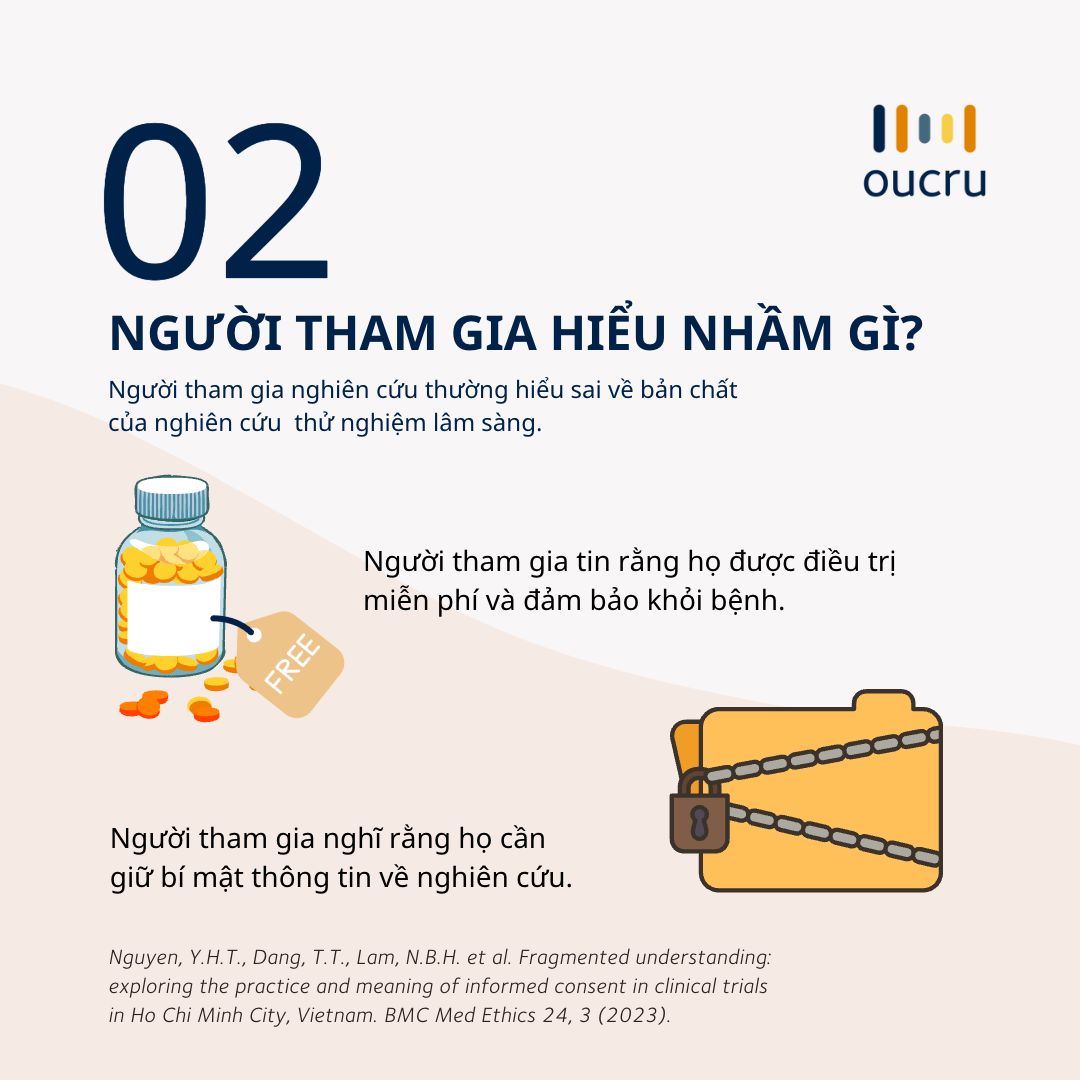
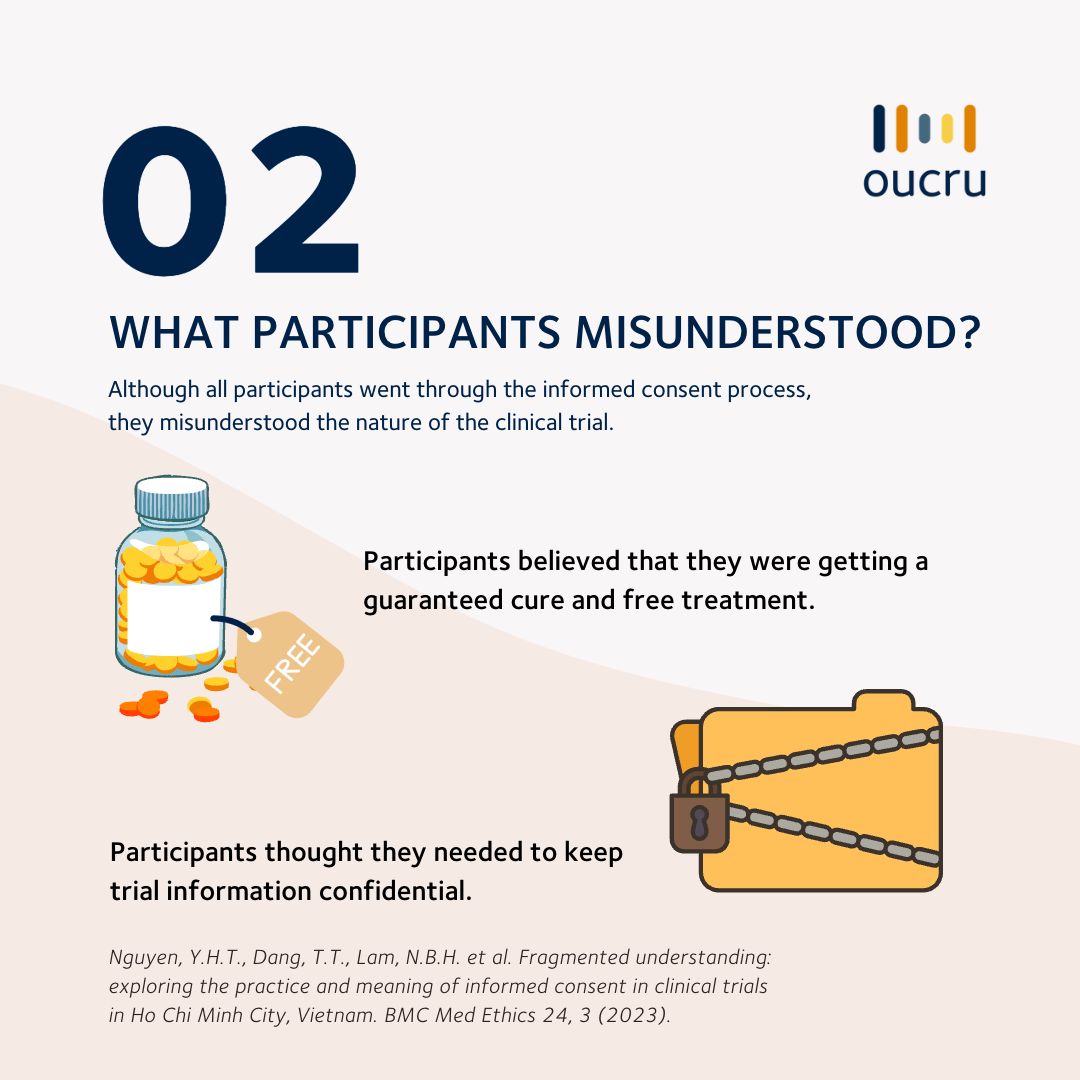
Studies at OUCRU follow international and national guidelines on ethical standards and procedures for biomedical research involving human subjects—however, a new social science study by Nguyen Thi Hong Yen et al. found participants still had many different perceptions and misunderstandings of research and clinical trial information.
The study was embedded in two randomised clinical trials conducted by OUCRU and Hospital for Tropical Diseases (Ho Chi Minh City). One was an outpatient clinical trial involving patients with chronic liver conditions. The other was an in-patient clinical trial involving patients with TB meningitis.
Both clinical trials did not involve high-risk interventions. However, some participants enrolled in the in-patient clinical trial were quite ill. Participants in the trials received drugs and examinations per trial protocol, as well as had travel costs reimbursed.
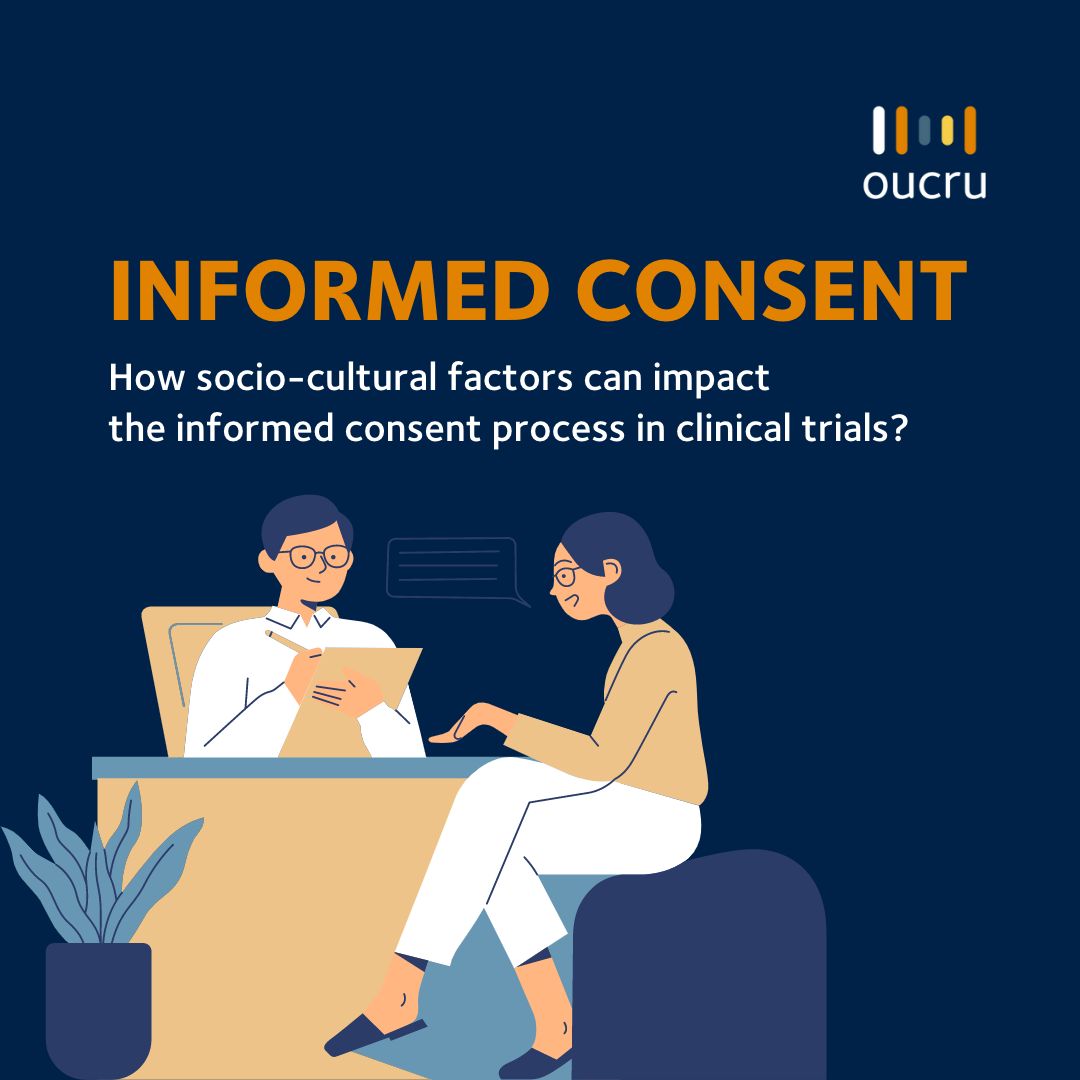
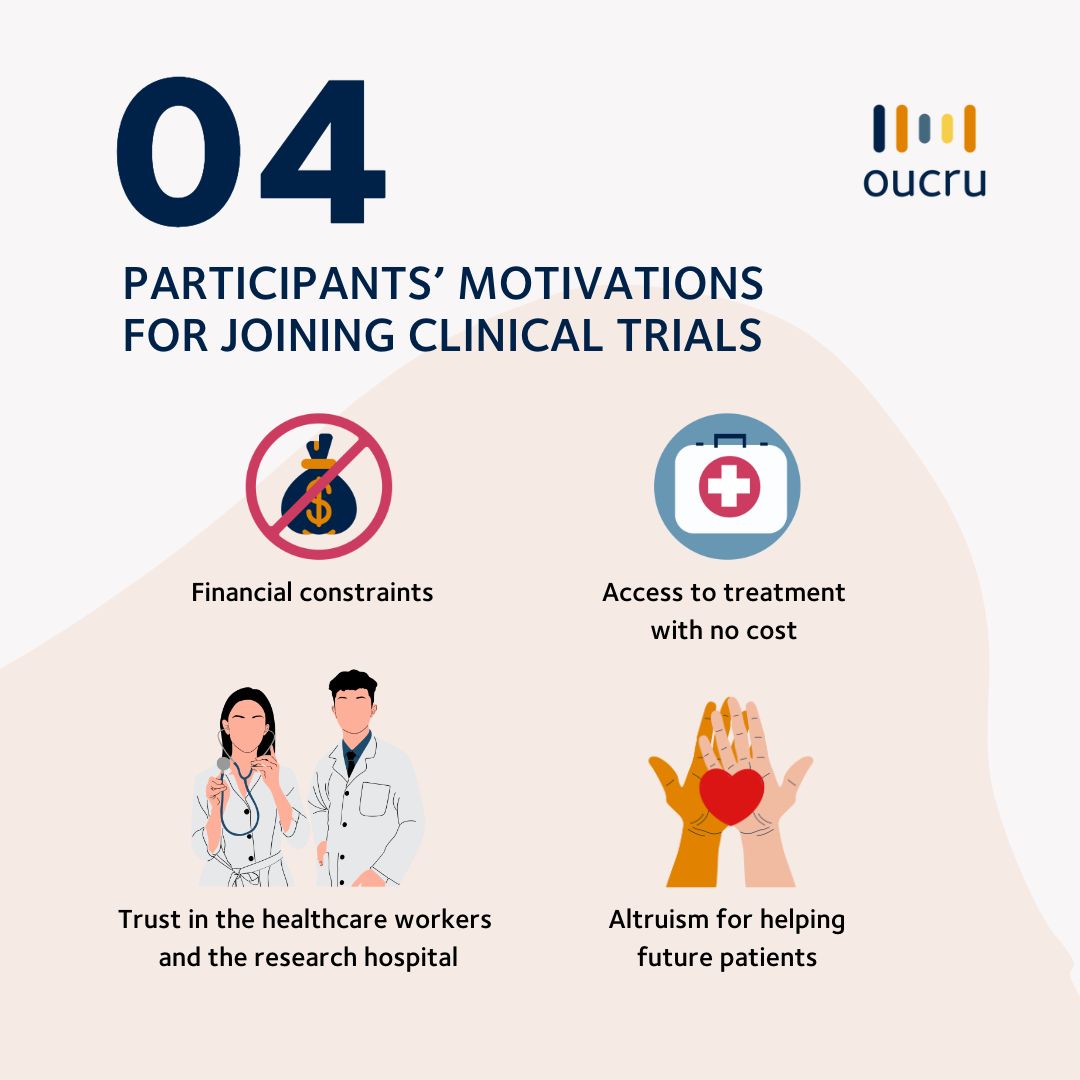
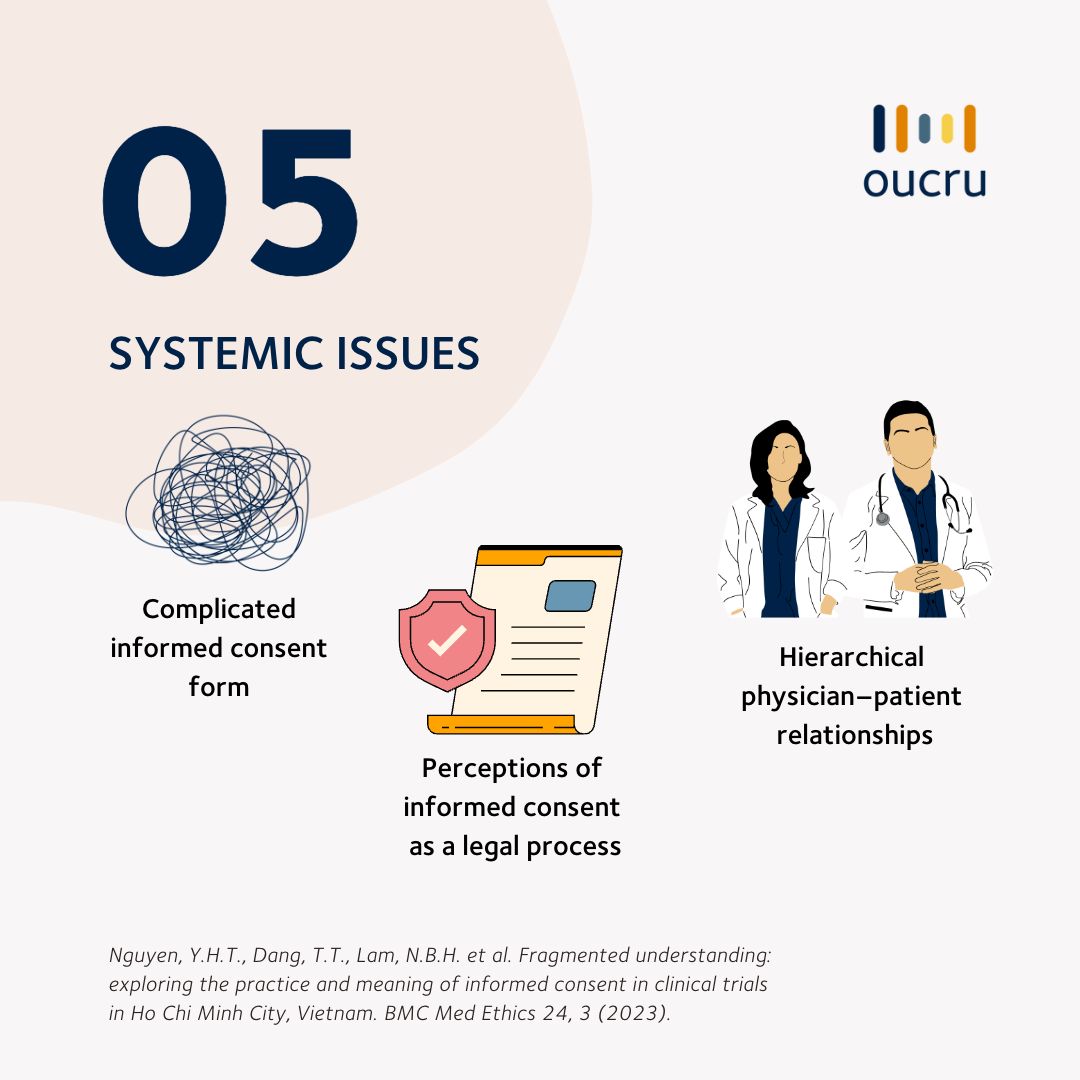
The following infographic describes the findings.
How socio-cultural factors impact the consent process in clinical trials
The research team stressed that “clinical trial teams and research institutions need to recognize their responsibility to improve the process and protect participants in research. Improved access to quality healthcare for poor patients can also reduce their vulnerabilities when making the decision to join clinical trials.â€
The findings also pointed out ways clinical trials can improve the informed consent process to enhance participants’ understanding.
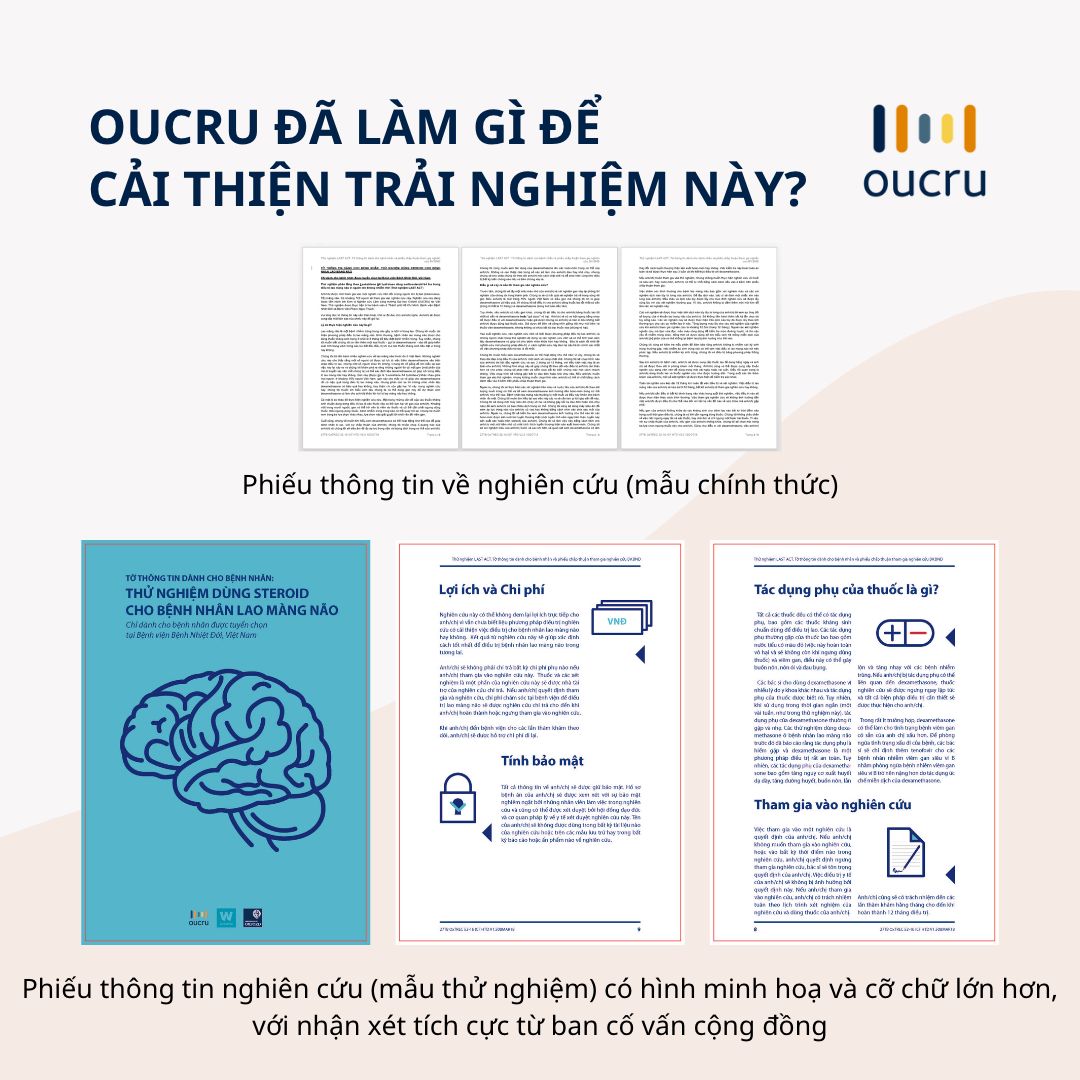
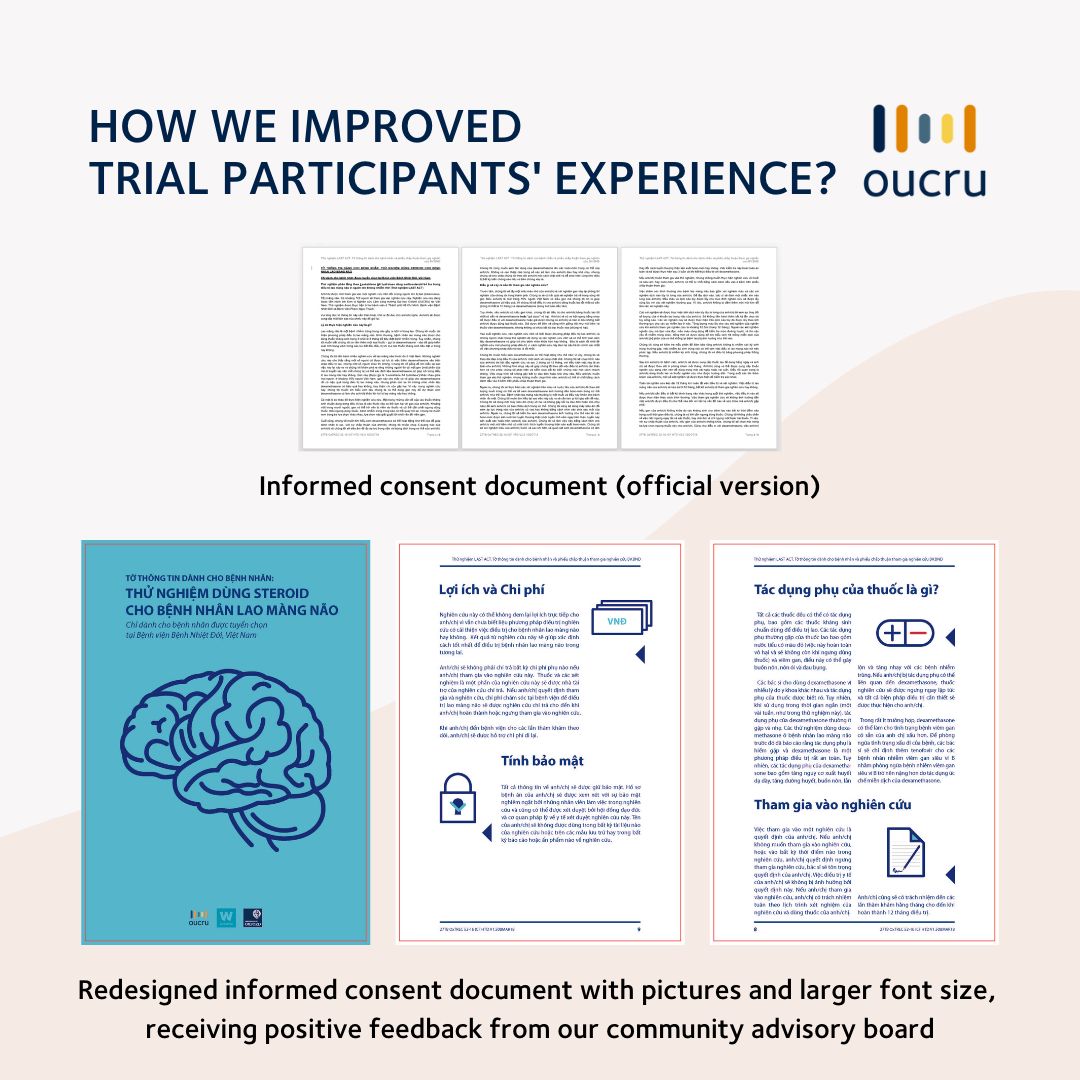
The first step we took was redesigning trial documents with pictures and larger font sizes and testing the design with our community advisory board. The board members found the revised forms improved readability and enhanced their understanding of the information.
We redesigned trial documents with pictures and larger font sizes and testing the design with our community advisory board.
Similar studies also suggested other ways to improve participants’ understanding of the clinical trial. These methods include providing additional written information, using audiovisual and multimedia tools, extended discussions and test/feedback techniques, which improved the study participants’ comprehension and understanding of risks and procedures.
Citation
Nguyen, Y.H.T., Dang, T.T., Lam, N.B.H. et al. Fragmented understanding: exploring the practice and meaning of informed consent in clinical trials in Ho Chi Minh City, Vietnam. BMC Med Ethics24, 3 (2023). https://doi.org/10.1186/s12910-023-00884-2
![[Infographic] Opportunities and Challenges in Applying Artificial Intelligence and Digital Health Technologies in Viet Nam Â](https://test.oucru.org/wp-content/uploads/2023/07/Wearable-Dengue-monitoring-hardware-2.jpg)
![[Infographic] Các yếu tố văn hóa xã há»™i tác Ä‘á»™ng thế nà o đến quy trình lấy chấp thuáºn tham gia nghiên cứu lâm sà ng?](https://test.oucru.org/wp-content/uploads/2023/04/Doctor-1.jpg)