Author: Tuyet Anh Tran

  • Nurturing Future Generations’ Passion for Science through Engagement with Children and Teachers 

    Nurturing Future Generations’ Passion for Science through Engagement with Children and Teachers 

    At OUCRU, we believe that science can excite and inspire children, contribute to their understanding of the world, and present opportunities for life skill development. The better children understand and appreciate science, the better-informed decisions they can make throughout their lives. 

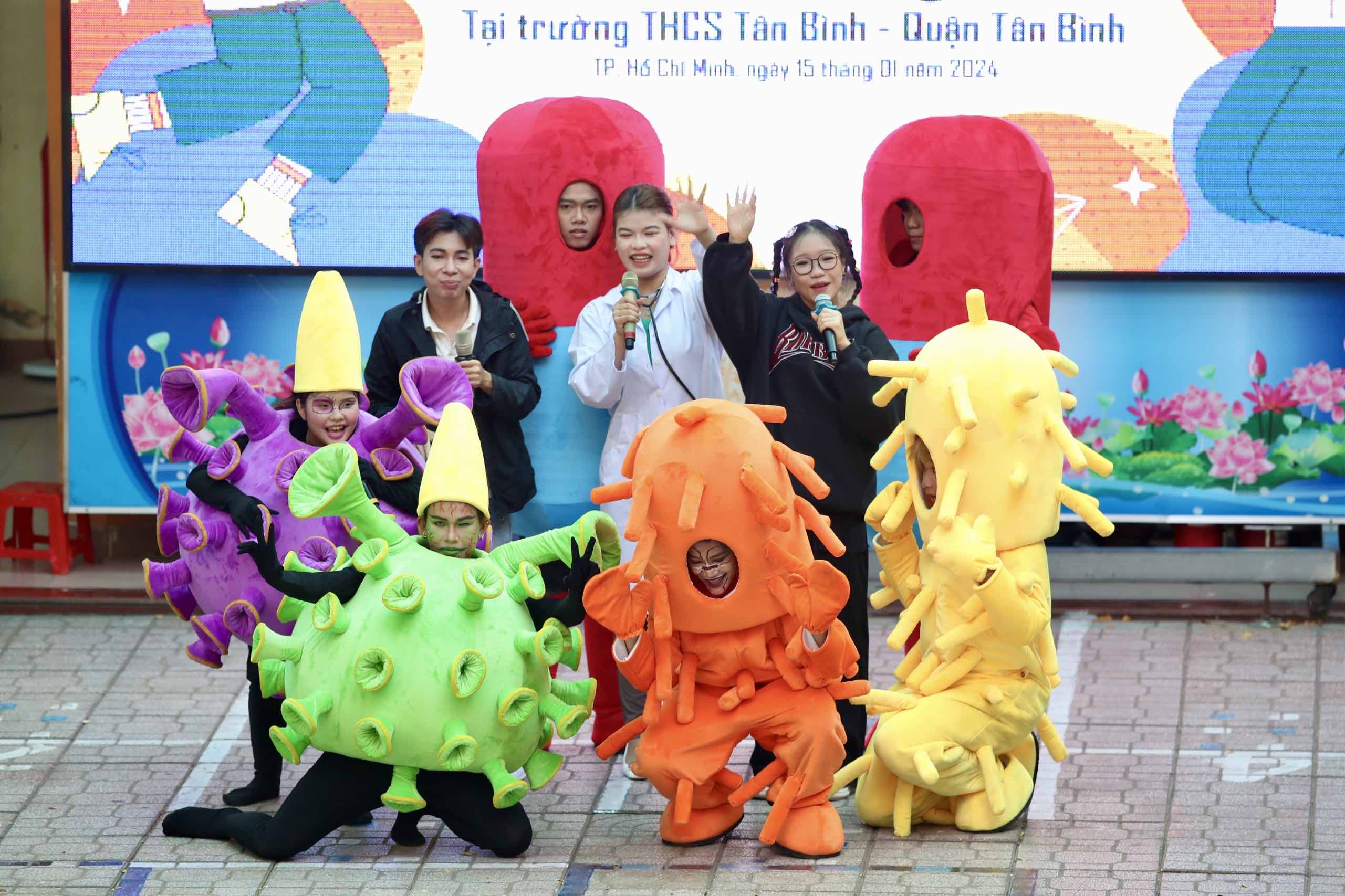
    To make science more approachable and engaging, OUCRU’s Public and Community Engagement group conducts a range of activities using several appealing, up-to-date formats to transform national programme’s science books, simplify complex concepts such as AMR, vaccinations, and climate change via comics, cartoon, plays, and other rich-media formats. Those media outputs can be also served as educational materials for schools as our contribution to address the shortcomings of scientific educational materials in Vietnam.

    Explore our approaches below. 

  • Public and Community Engagement to Support Vaccine Research  

    Public and Community Engagement to Support Vaccine Research  

    The Public and Community Engagement group at OUCRU has a strong commitment to community engagement, particularly in the field of vaccine research. Let’s look at some featured projects in all OUCRU’s local offices, spreading out from typhoid in Nepal to TB in Vietnam.  

    Nepal: Tackling Typhoid 

    Typhoid is a public health problem in Nepal(1). With its high incidence, Kathmandu, the capital city of Nepal, has been labelled the enteric fever capital of the world.(2) To reduce the morbidity and mortality, the Typhoid Vaccine Acceleration Consortium (TyVAC) supported the introduction of typhoid conjugate vaccine (TCV) for Gavi eligible countries with a typhoid disease burden(3) using a World Health Organization (WHO) prequalified vaccine. 

    However, in Nepal, clinical research is often met with distrust and negative opinions. Therefore, when the TyVAC-Nepal study was conducted, a continuous public engagement strategy had been used to gain and maintain community trust.  

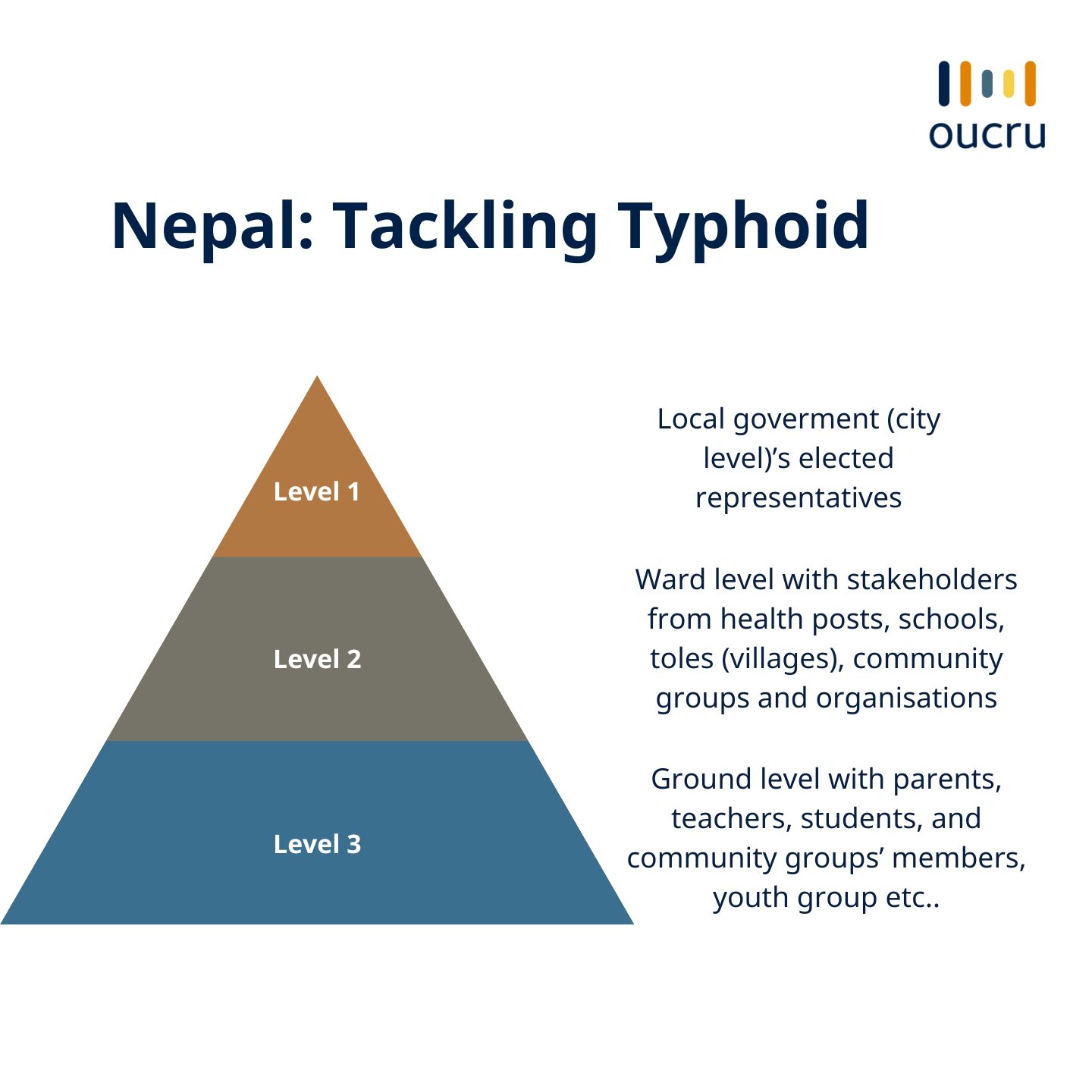
    The strategy involved three tiers of engagement with various stakeholders, including parents/guardians of vaccinated children, before, during, and after vaccination.  

    Before vaccination, initial engagement involved Lalitpur Metropolitan City’s elected representatives. The second engagement level was carried out in all 17 municipal wards, attended by various local stakeholders, including ward chairpersons and elected members. The third level involved engaging with mothers’ groups and schools before vaccination, and subsequently with parents of vaccinated children and non-vaccinated community members. School engagement with students and teachers was also part of this third level. 

    Access full paper about public engagement to support typhoid vaccine in Nepal here. 

    Despite challenges such as misinformation, skepticism, and logistical issues, the study achieved its target of vaccinating 20,019 children. The study found that using community-friendly language, involving locals in the consent process, and adapting to community needs and expectations were crucial in overcoming hurdles and building trust. 

    Indonesia: Battling Malaria 

    Over 150 million Indonesians are at risk of malaria from five Plasmodium species. Malaria is particularly severe in rural and impoverished areas. 

    The Indonesian Army deployment of malaria-naïve (or minimally malaria-exposed) infantry soldiers to Papua are highly exposed and vulnerable to severe forms of clinical malaria. Therefore, they view the development of a vaccine as an ideal solution. They believe it could serve as a powerful tool for both the prevention of new cases and the eventual elimination of the disease within their ranks. 

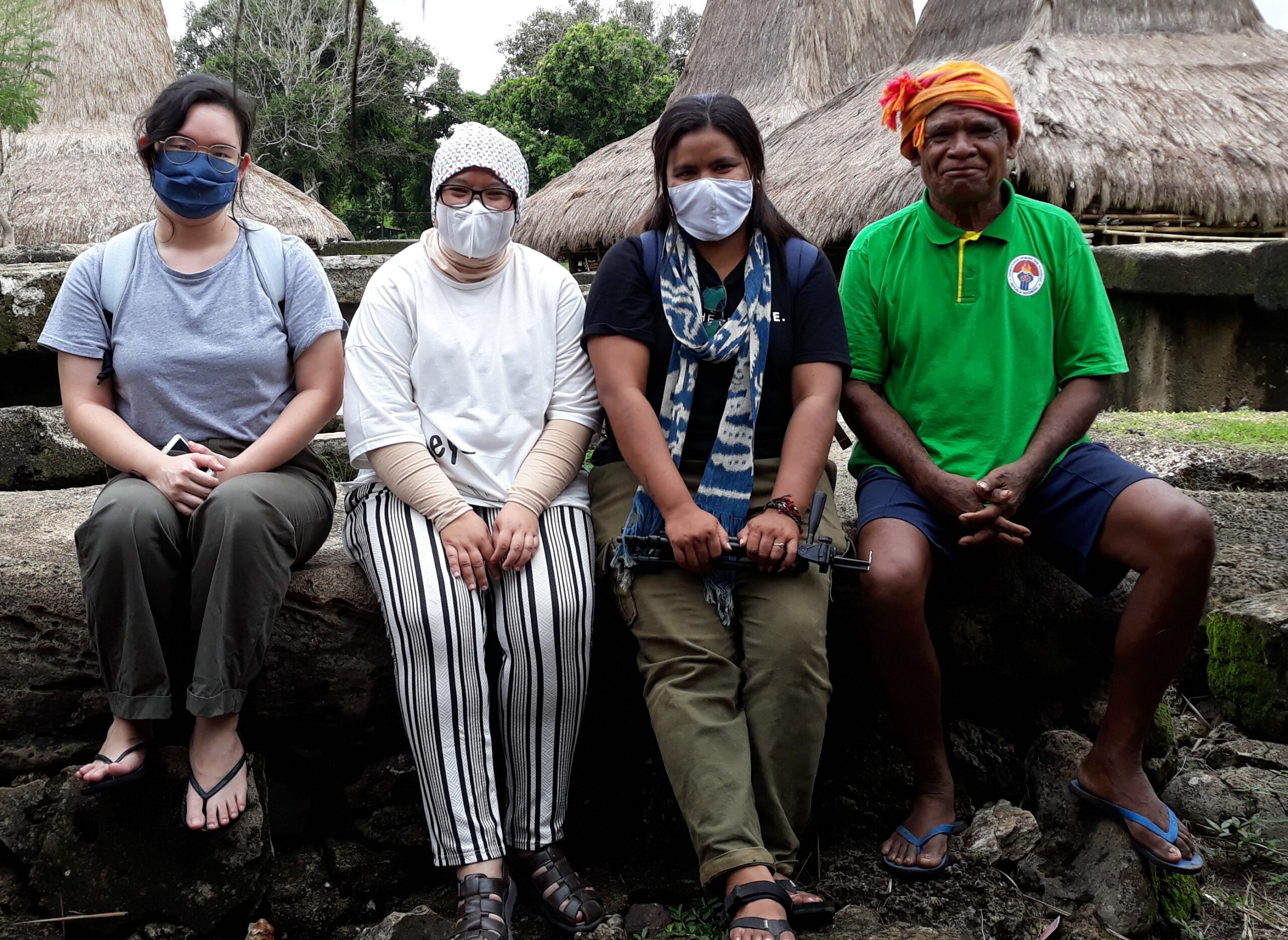
    The Indonesia trial is being performed as a collaboration between the Indonesian Army, the Eijkman Institute, the University of Indonesia School of Medicine, and OUCRU Indonesia (formerly EOCRU). 

    This is the first time a malaria vaccine has been tested in a real-world setting outside Africa in many years. It’s also the first time the vaccines have been tested against natural strains of P. falciparum and P. vivax outside of Africa. 

    Vietnam: Working towards #EndTB Goal  

    Tuberculosis (TB) is a leading cause of death from infectious diseases and antimicrobial resistance, affecting about a quarter of the world’s population. The Global tuberculosis report 2018 estimated Viet Nam had 124.000 new TB cases and 12.000 TB-related deaths in 2017. Despite advances in diagnosis and treatment, TB still causes significant human suffering and economic burden. The current BCG vaccine, developed over 100 years ago, only offers partial protection and does not protect adults and adolescents, who are the majority of TB transmitters. Achieving the WHO’s End TB Strategy targets by 2035 will require a new vaccine effective across all age groups, and vaccines are the best chance to contain the spread of multi-drug resistant tuberculosis.(4) 

    One of OUCRU’s initial steps towards new TB vaccine and other TB prevention approaches is consulting with the community through the Public and Community Engagement Group’s initiative, the Health Research Advisory Board. Through several meetings and discussions, researchers expect to have opportunities to understand the awareness, concerns, perspectives, and TB vaccine readiness of several communities represented in the board.  

    Read more about Health Research Advisory Board here.  

    Watch the interview with the TB vaccine project’s two OUCRU researchers  

    Interview with Associate Professor Timothy Walker on World TB Day
    Interview with Dr Phan Triệu Phú on World Health Worker Day

    The work of the PCE group at OUCRU highlights the importance of public and community engagement in vaccine research, from encouraging two-way dialogues, dispelling misconceptions, and promoting the benefits of vaccination. 

    References:  

    (1) Shakya M, Colin-Jones R, Theiss-Nyland K, Voysey M, Pant D, Smith N, Liu X, Tonks S, Mazur O, Farooq YG, et al. Phase 3 efficacy analysis of a typhoid conjugate vaccine trial in Nepal. N Engl J Med. 2019;381(123):2209–18. doi:10.1056/NEJMoa1905047. – DOI PMC PubMed  

    (2) Karkey A, Aryjal A, Basnyat B, Baker S.. Kathmandu, Nepal: still an enteric fever capital of the world. J Infect Dev Ctries. 2005;2(6):461–65. doi:10.3855/jidc.162. – DOI PubMed 

    (3) Karkey A, Aryjal A, Basnyat B, Baker S.. Kathmandu, Nepal: still an enteric fever capital of the world. J Infect Dev Ctries. 2005;2(6):461–65. doi: 10.3855/jidc.162. [PubMed] [CrossRef] [Google Scholar

    (4) https://www.who.int/teams/global-tuberculosis-programme/research-innovation/vaccines and https://www.who.int/vietnam/health-topics/tuberculosis  

  • Kết Nối vá»›i Công Chúng và Cá»™ng Đồng để há»— trợ nâng cao tá»· lệ tiêm chá»§ng và nhận thức về vắc-xin  

    Trong các yếu tố quan trọng ảnh hưởng đến tá»· lệ tiêm chá»§ng, nhận thức về vắc-xin là má»™t trong những yếu tố đóng vai trò quan trọng(1), đặc biệt ở các vùng nông thôn ít được tiếp cận vá»›i thông tin về vắc-xin, ví dụ như cá»™ng đồng dân tá»™c thiểu số tại các vùng sâu vùng xa (như Bình Phước, nÆ¡i nghiên cứu được thá»±c hiện). Những cuá»™c khá»§ng hoảng y tế công như COVID-19 ảnh hưởng rất lá»›n đến khả năng tiếp cận vá»›i thông tin vắc-xin.  

    Phòng Kết Nối Khoa Học với Công Chúng và Cộng Đồng đã thực hiện đánh giá tỷ lệ tiêm chủng và tìm hiểu thái độ cũng như quan điểm của một số cộng đồng đối với vắc-xin. Sau hoạt động đánh giá này, cùng với sự hỗ trợ từ địa phương, chúng tôi đã triển khai một số hoạt động hỗ trợ cải thiện tình hình này.

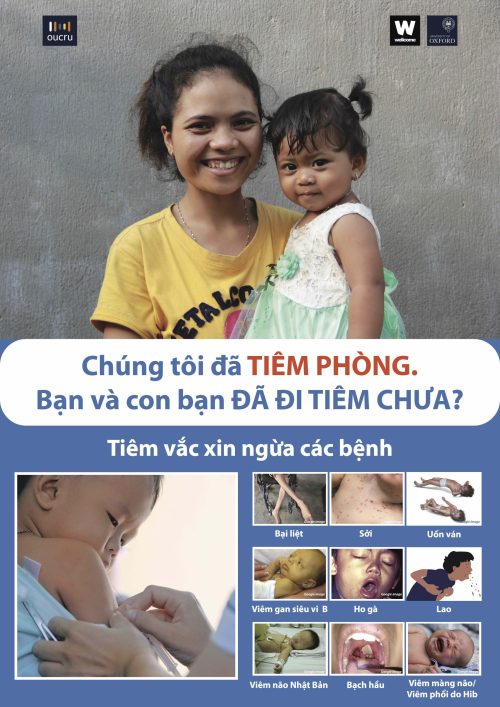
    Các sáng kiến được thá»±c hiện trong dá»± án bao gồm tờ rÆ¡i, áp-phích về tiêm chá»§ng cho trẻ sÆ¡ sinh và trẻ nhỏ. Đặc biệt, chúng tôi đã sá»­ dụng hình ảnh cá»§a chính người dân địa phương nhằm thu hút sá»± chú ý cá»§a họ. Các tài liệu truyền thông này được phân phát thông qua các cá»™ng tác viên y tế thôn bản và các trưởng thôn, cÅ©ng như được đặt tại các địa Ä‘iểm có nhiều người dân tụ tập trong làng.  

    Bên cạnh tài liệu truyền thông này, chúng tôi cÅ©ng sáng tạo và biểu diá»…n má»™t vở kịch về vắc-xin nhằm truyền tải thông tin về vắc-xin dá»… hiểu nhất có thể cho người dân.  

    Tài liệu truyền thông về vắc-xin của dự án tại Bình Phước

    Một nghiên cứu của TS Nguyễn Thanh Hà cho thấy, tại các vùng nông thôn Việt Nam, cộng tác viên y tế thôn/buôn và nhân viên trạm y tế xã là cách hiệu quả nhất để giúp nâng cao nhận thức về vắc-xin và duy trì tỷ lệ tiêm chủng của cộng đồng địa phương. Tuy nhiên, nhóm cán bộ và cộng tác viên này thường không được trang bị đầy đủ kỹ năng giao tiếp hay kiến thức về vắc-xin trong khi phải giải thích những vấn đề phức tạp cho người dân địa phương có thể có trình độ văn hóa và nhận thức không cao, nhiều người trong số họ cũng như không nói được tiếng Kinh(2).  

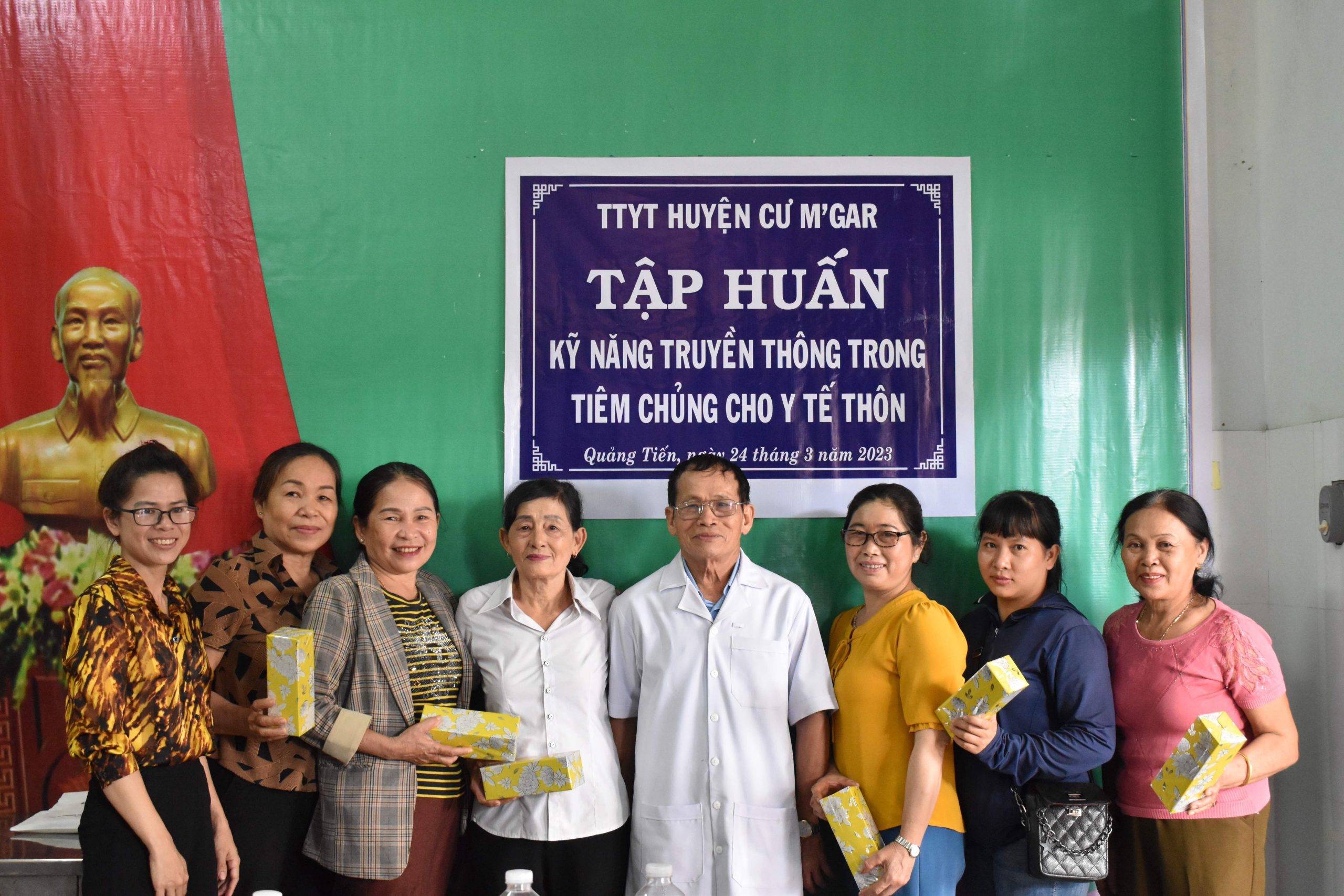
    Từ những thông tin này, nhóm Kết Nối Khoa Học vá»›i Công Chúng và Cá»™ng Đồng đã phối hợp cùng Trung tâm Phòng Chống Bệnh Tật tỉnh Đắk Lắk để phát triển nên má»™t chương trình tập huấn nhằm cung cấp các kỹ năng và kiến thức hữu ích cho nhóm cán bá»™ y tế này. Chương trình tập huấn bền vững này cÅ©ng bao gồm các hướng dẫn và tài liệu cụ thể để giúp cán bá»™ y tế cấp huyện, xã có thể trở thành những người giảng dạy sau này.  

    Xem thêm và tải tài liệu truyền thông cho cán bộ vắc-xin tuyến đầu tại đây

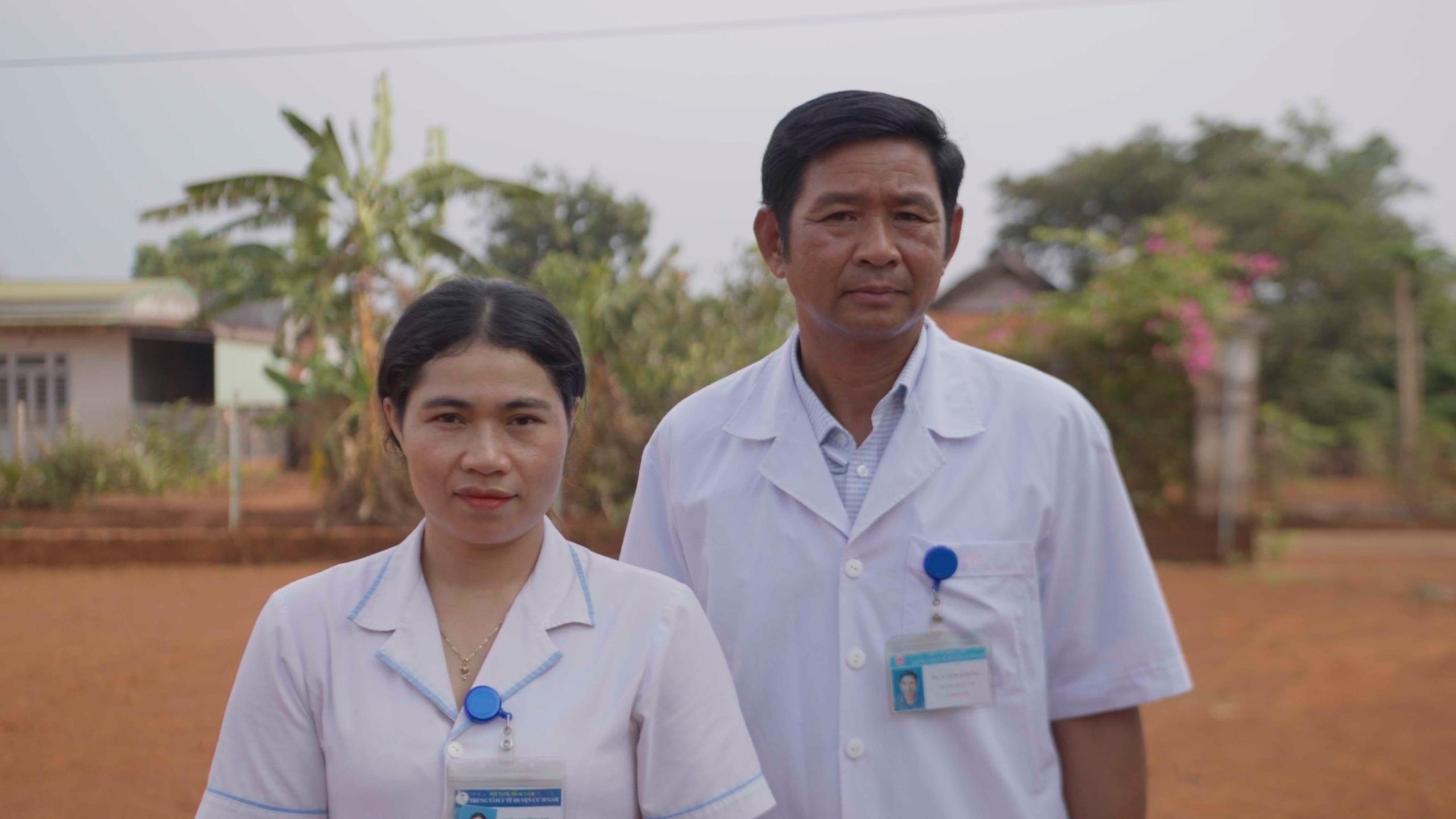
    Phản hồi của các cộng tác viên y tế thôn bản đã tham gia chương trình tập huấn thí điểm tại Đắk Lắk.

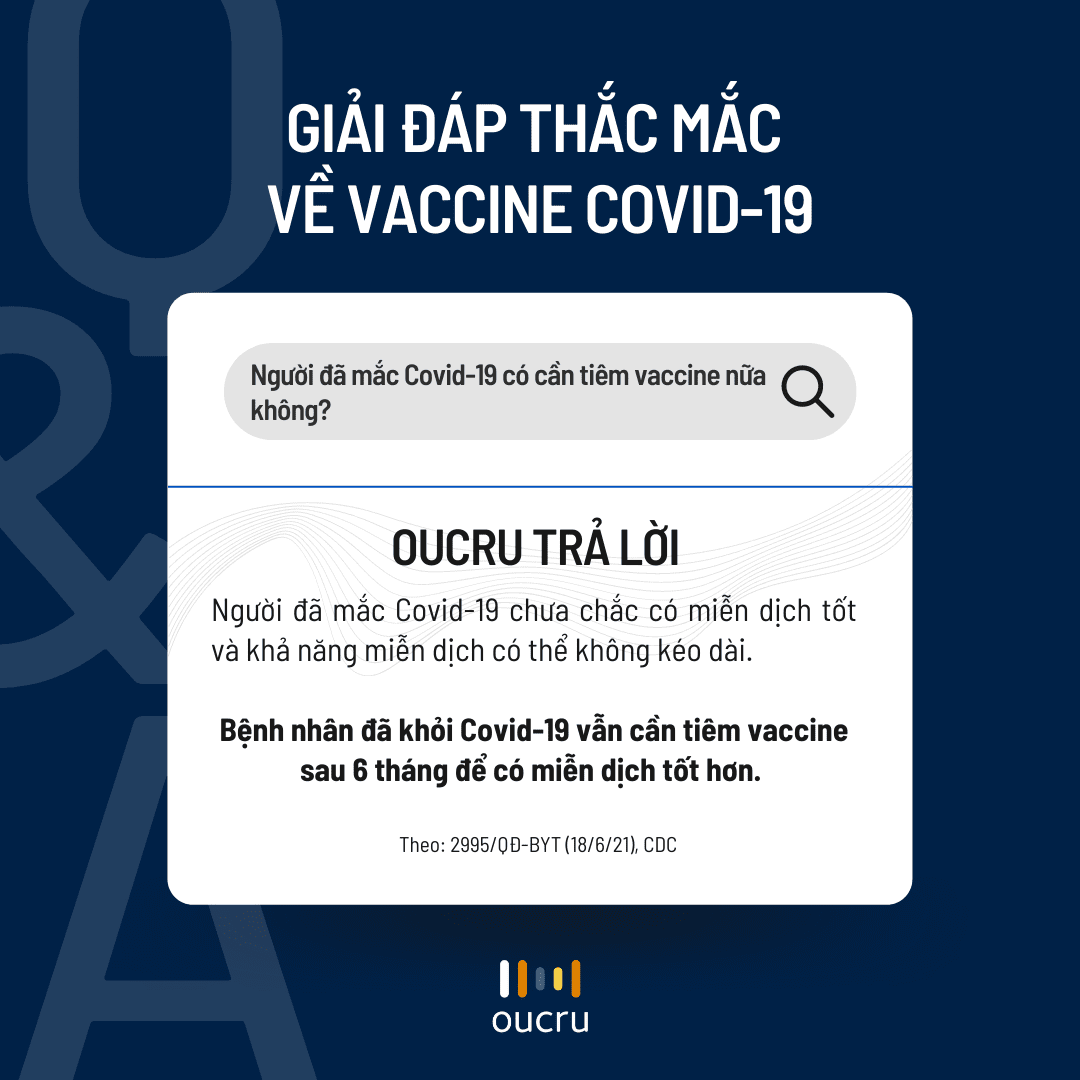
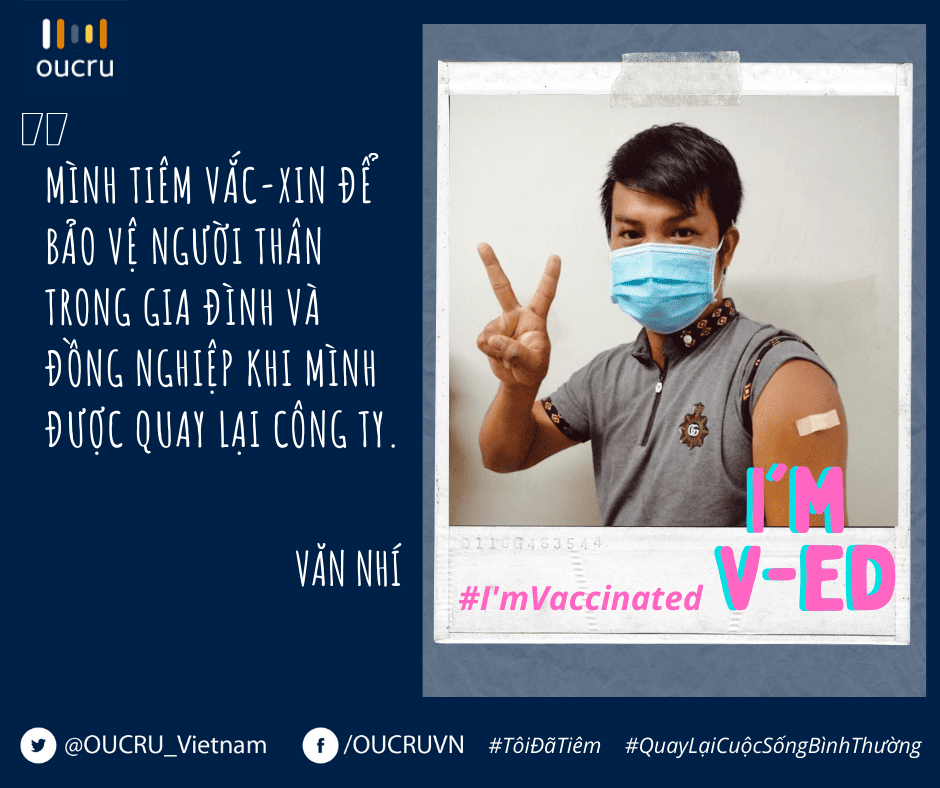
    Trong thời gian đại dịch COVID-19 năm 2021, dịch tin giả trở nên nguy hiểm và khó kiểm soát hÆ¡n. Đóng góp vào ná»— lá»±c ngăn chặn tin giả, tin không đúng sá»± thật, đặc biệt là tin về vắc-xin, OUCRU đã thá»±c hiện má»™t chiến dịch truyền thông trên mạng xã há»™i, sá»­ dụng nền tảng này để lan truyền các thông tin đáng tin cậy, có bằng chứng, và được khoa học kiểm định về vắc-xin COVID-19, cÅ©ng như khuyến khích mọi người Ä‘i chích vắc-xin khi có thể.  

    Má»™t số hình ảnh cá»§a chiến dịch  

    Thông qua các phương thức tiếp cận Ä‘a dạng được chọn lá»±a cẩn thận thông qua nghiên cứu và các bản đánh giá nhu cầu, OUCRU hướng đến việc xây dá»±ng được nhiều mô hình khác nhau nhằm cải thiện tá»· lệ tiêm chá»§ng trong các cá»™ng đồng, đặc biệt là ở vùng nông thôn sâu và xa, cÅ©ng như nâng cao nhận thức về thông tin vắc-xin trong công chúng.  


    Tài liệu tham khảo:

    (1) In 2016 Thomson et al proposed a taxonomy of ‘5-As’ to describe the dimensions of vaccine uptake: access, affordability, awareness, acceptance and activation.  

    Thomson A, Robinson K, Vallée-Tourangeau G. The 5As: a practical taxonomy for the determinants of vaccine uptake. Vaccine 2016;34:1018–24.doi:10.1016/j.vaccine.2015.11.065pmid:http://www.ncbi.nlm.nih.gov/pubmed/26672676 

    (2) Đọc thêm về dự án tại đây.

  • Supporting Vaccine Uptake and Raising Vaccine Awareness through Public and Community Engagement 

    Awareness is a critical factor affecting vaccine uptake(1), especially in rural communities with limited access to vaccine information , such as ethnic minority communities in rural areas  (Binh Phuoc, our research province for example), or due to several different challenges like health crises like COVID-19. 

    After assessing vaccine uptake, and  exploring attitudes and perceptions of selected communities related to vaccination ,with the support of local health authorities, we initiated several interactive activities. These included creating leaflets, posters about neonatal and childhood vaccinations, which used the images of local people to get more attraction from the local community . Then, they were distributed  through local health workers and community leaders to the most visited locations in the villages to be able to reach most of the people living there.  We also created and performed a community play to make vaccine information as accessible and easy to understand as possible. 

    Dr Nguyen Thanh Ha‘s research shows that working with hard-to-reach communities in rural areas in Vietnam, local healthcare workers and village health workers play a crucial role in promoting and maintaining the community’s vaccination behaviours. However, they need to explain complex issues to community members from different ethnic groups speaking different languages while having limited training in vaccine knowledge or communication skills(2). 

     In response to these findings, PCE group collaborated with Dak Lak CDC to develop a training curriculum aimed at building the capacity of those local healthcare workers and village health workers . This curriculum also serves as a Train-the-Trainer (TOT) course and guideline to equip district-level and commune-level health staff with sustainable and accessible training materials. 

    Access the training materials here.  

    Watch the positive result of the pilot training curriculum here.

    In 2021, recognising the significant danger of the spread of COVID-19 infordemic, OUCRU launched a campaign to combat misinformation. We used social media to disseminate trustworthy, evidence-based, scientifically-backed information about COVID-19 vaccines and encouraged people to get vaccinated when possible. 

    Look at some social media materials we developed. 

    Through those interactive methods which were carefully chosen through research and need assessments, we aim to build different models to improve vaccine uptake at communities, especially rural areas and enhance vaccine information awareness among wider public 

    References:  

    (1) In 2016 Thomson et al proposed a taxonomy of ‘5-As’ to describe the dimensions of vaccine uptake: access, affordability, awareness, acceptance and activation.  Thomson A, Robinson K, Vallée-Tourangeau G. The 5As: a practical taxonomy for the determinants of vaccine uptake. Vaccine 2016;34:1018–24.doi:10.1016/j.vaccine.2015.11.065pmid:http://www.ncbi.nlm.nih.gov/pubmed/26672676 

    (2) Read more about the project here

  • Ngày Trái Đất 2024: Cùng nhìn lại sá»± kiện Green Day tại OUCRU

    Ngày Trái Đất 2024: Cùng nhìn lại sự kiện Green Day tại OUCRU

    Ngày 22 tháng 4 là Ngày Trái đất.

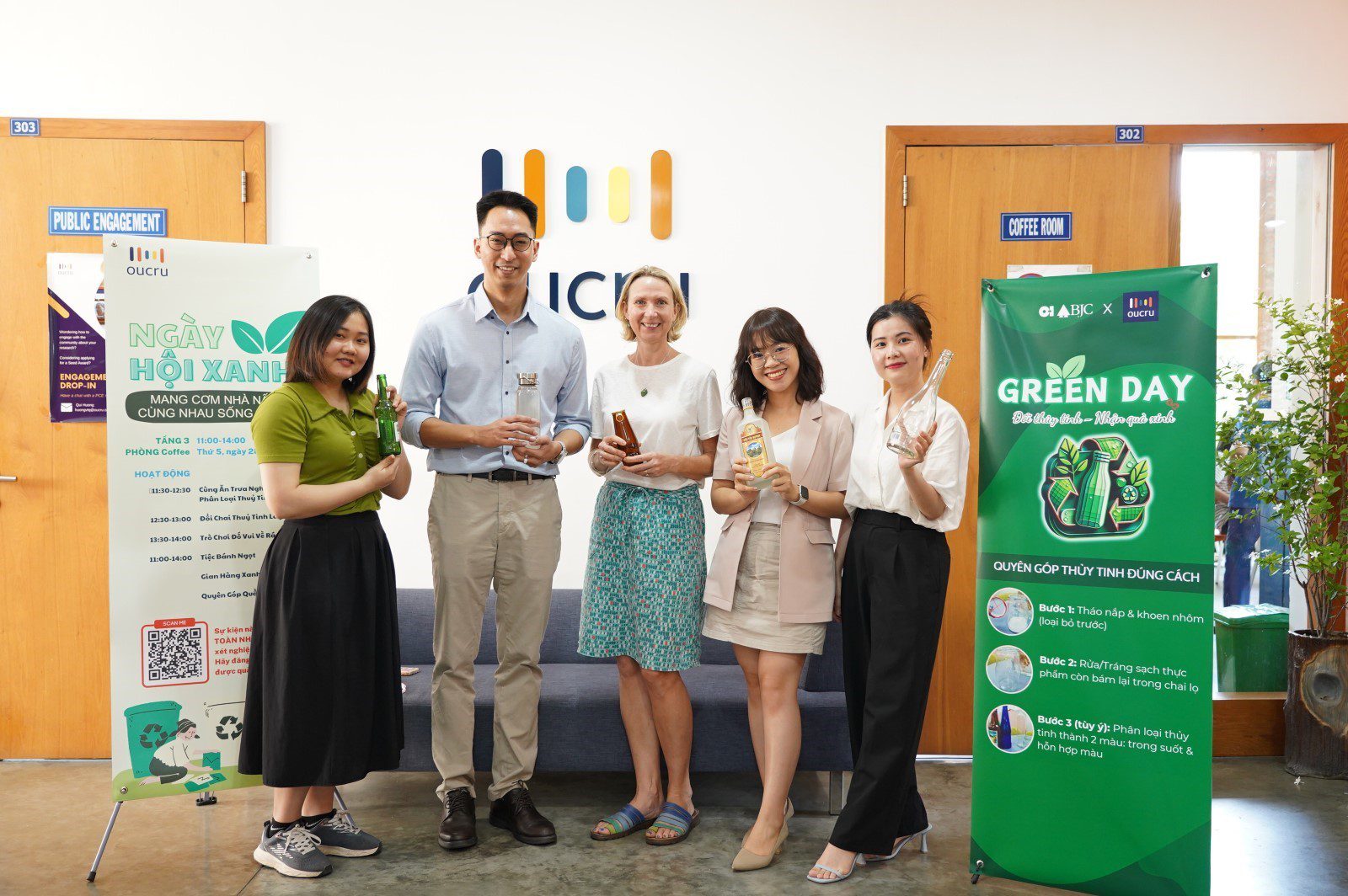
    Bên cạnh lĩnh vực nghiên cứu lâm sàng, OUCRU cũng tích cực thúc đẩy và khuyến khích các hoạt động môi trường cũng như văn hóa sống xanh tại văn phòng. Tại OUCRU, chúng tôi có nhóm Green Team và đa dạng các sáng kiến cổ động lối sống bền vững, trong đó có sự kiện Green Day.

    Nhóm Green Team của OUCRU gồm các tình nguyện viên đầy nhiệt huyết, đã làm việc không mệt mỏi để giúp thiết lập và vận hành các hoạt động xanh, qua đó truyền cảm hứng cho mọi người cùng áp dụng lối sống bền vững mỗi ngày.

    Trong sự kiện Green Day gần đây nhất vào ngày 28/03/2024, hơn 250 nhân viên OUCRU đã cùng tham gia để cổ vũ cho tình yêu với môi trường. Sự kiện do Green Team tổ chức có các hoạt động hấp dẫn như gian hàng sản phẩm xanh của doanh nghiệp địa phương, trò chơi, và một phiên trò chuyện thú vị về sử dụng nguyên liệu tái chế trong sản xuất thủy tinh.

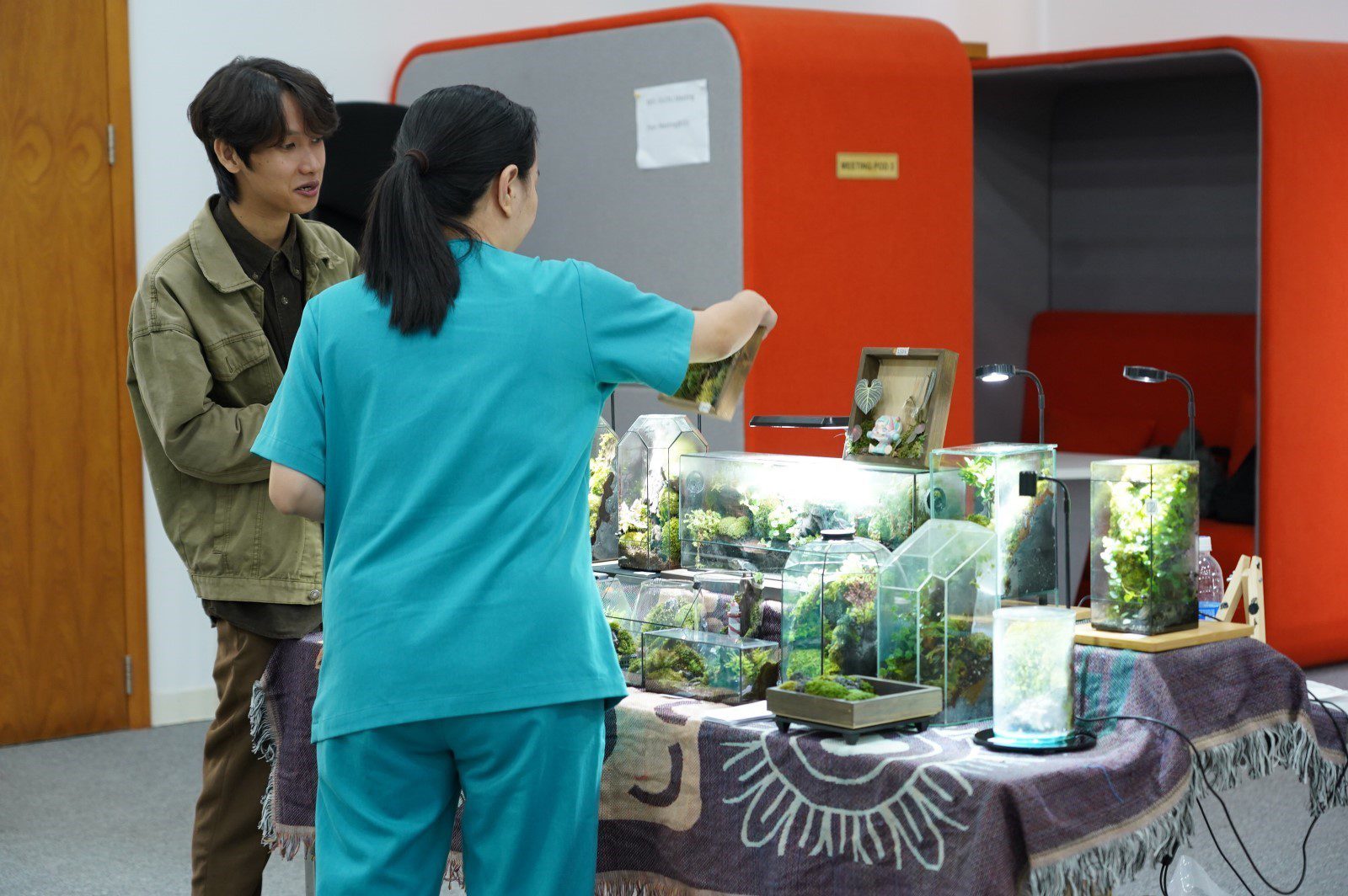
    Nhân viên OUCRU khám phá terrariums, mô hình hệ sinh thái mini bền vững, mang đến màu xanh tươi mát trang trí trên bàn làm việc.
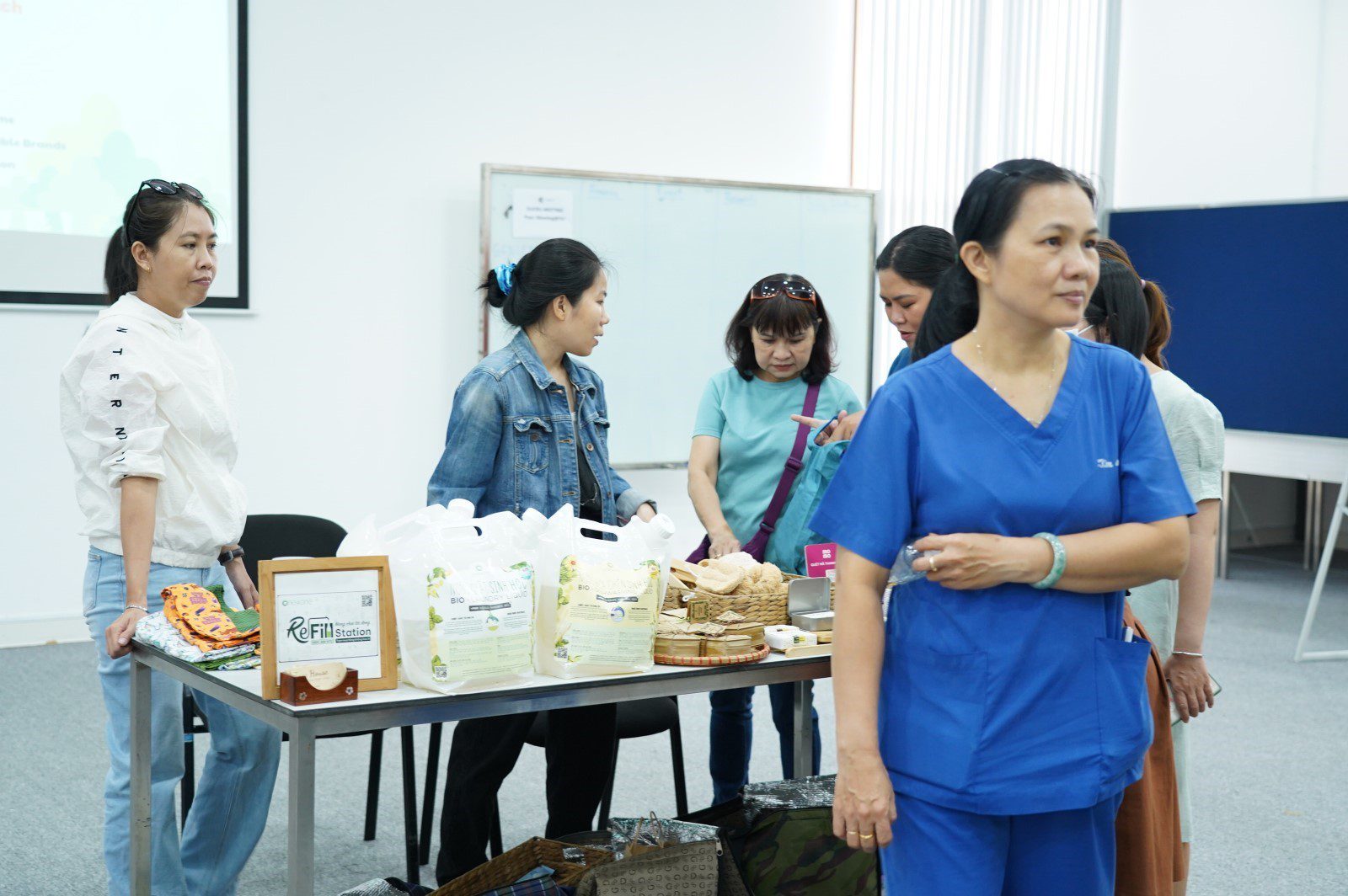
    Một cửa hàng địa phương cung cấp các sản phẩm làm sạch gia dụng có thể làm đầy (nước giặt, nước rửa tay, nước lau nhà v.v..) và các mặt hàng thủ công được làm từ vải tái sử dụng.

    Sự kiện thêm hấp dẫn với hoạt động đố vui về ô nhiễm nhựa với những phần quà bất ngờ. Qua những câu đố, Green Team hi vọng có thể lan truyền những thông tin quan trọng và nâng cao ý thức về các vấn đề môi trường ở Việt Nam.

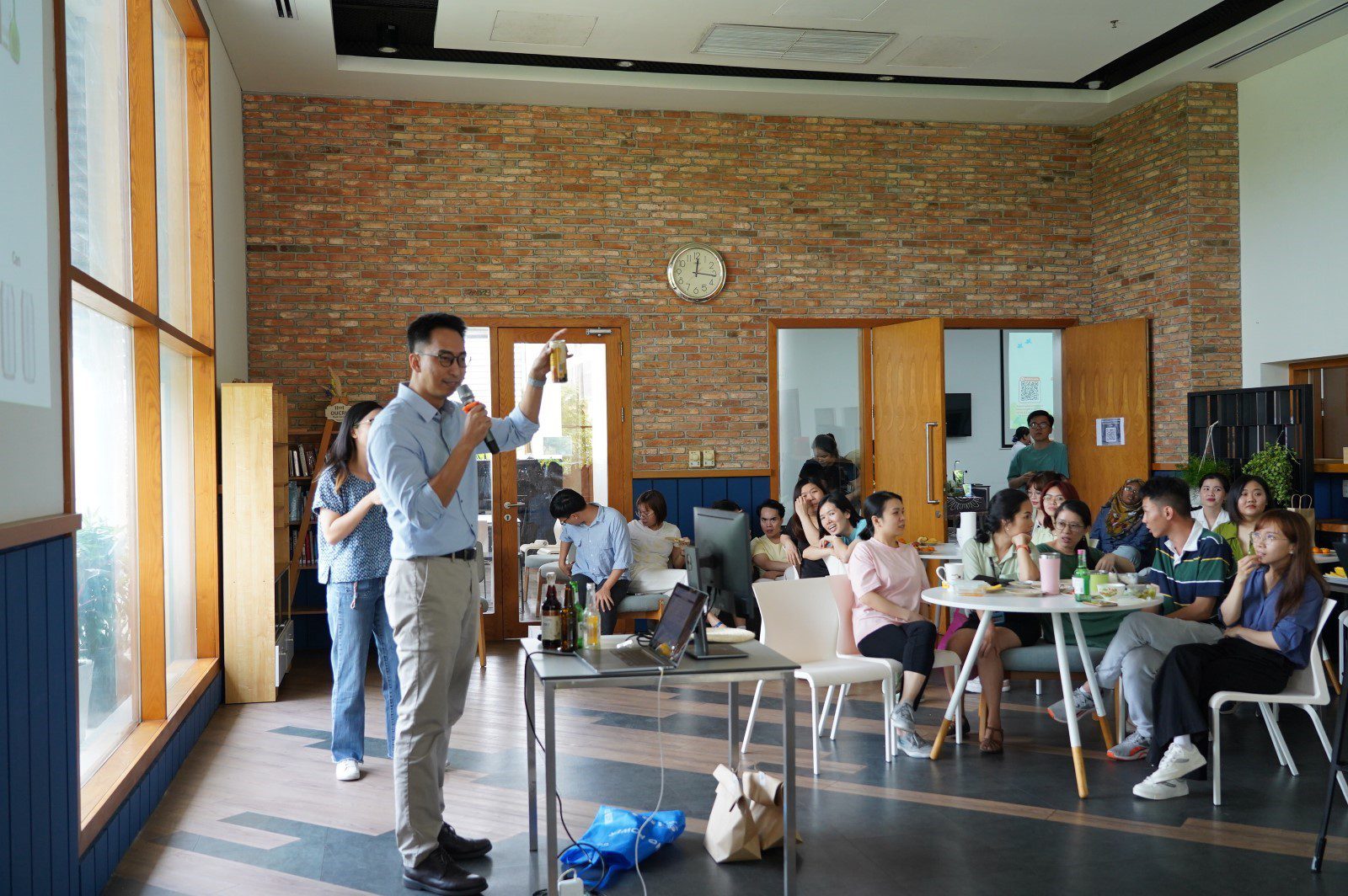
    Một điểm nổi bật khác của sự kiện là bài thuyết trình và phiên thảo luận được trình bày bởi I-O BJC, đơn vị sản xuất thủy tinh có sử dụng nguyên liệu tái chế Việt Nam. Người đại diện của I-O BJC đã mang đến cái nhìn toàn cảnh về cách họ thu thập và sử dụng chai lọ thủy tinh cũ để sản xuất thủy tinh mới, giúp hạn chế chất thải ra môi trường. I-O BJC cũng có gian hàng đổi thủy tinh lấy quà và đã thu được 50kg thủy tinh các loại. Được truyền cảm hứng từ sự nhiệt tình của nhân viên OUCRU, đơn vị này đã bước đầu có những thảo luận và sẽ tiến tới thiết lập hệ thống thu thập thủy tinh định kỳ ngay tại văn phòng.

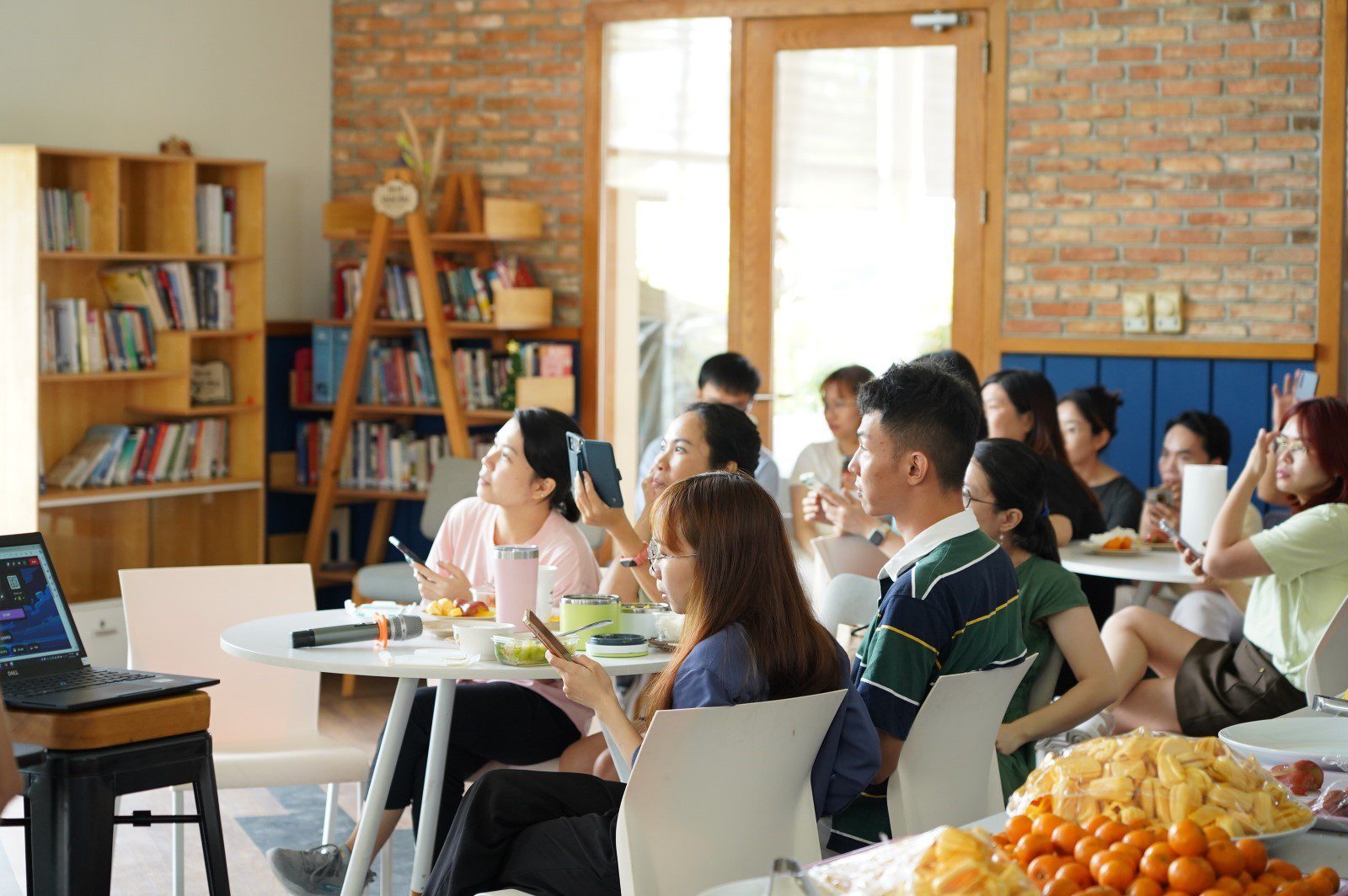
    Những nụ cười trong buổi nói chuyện cùng nhà sản xuất thủy tinh với những món quà bất ngờ.
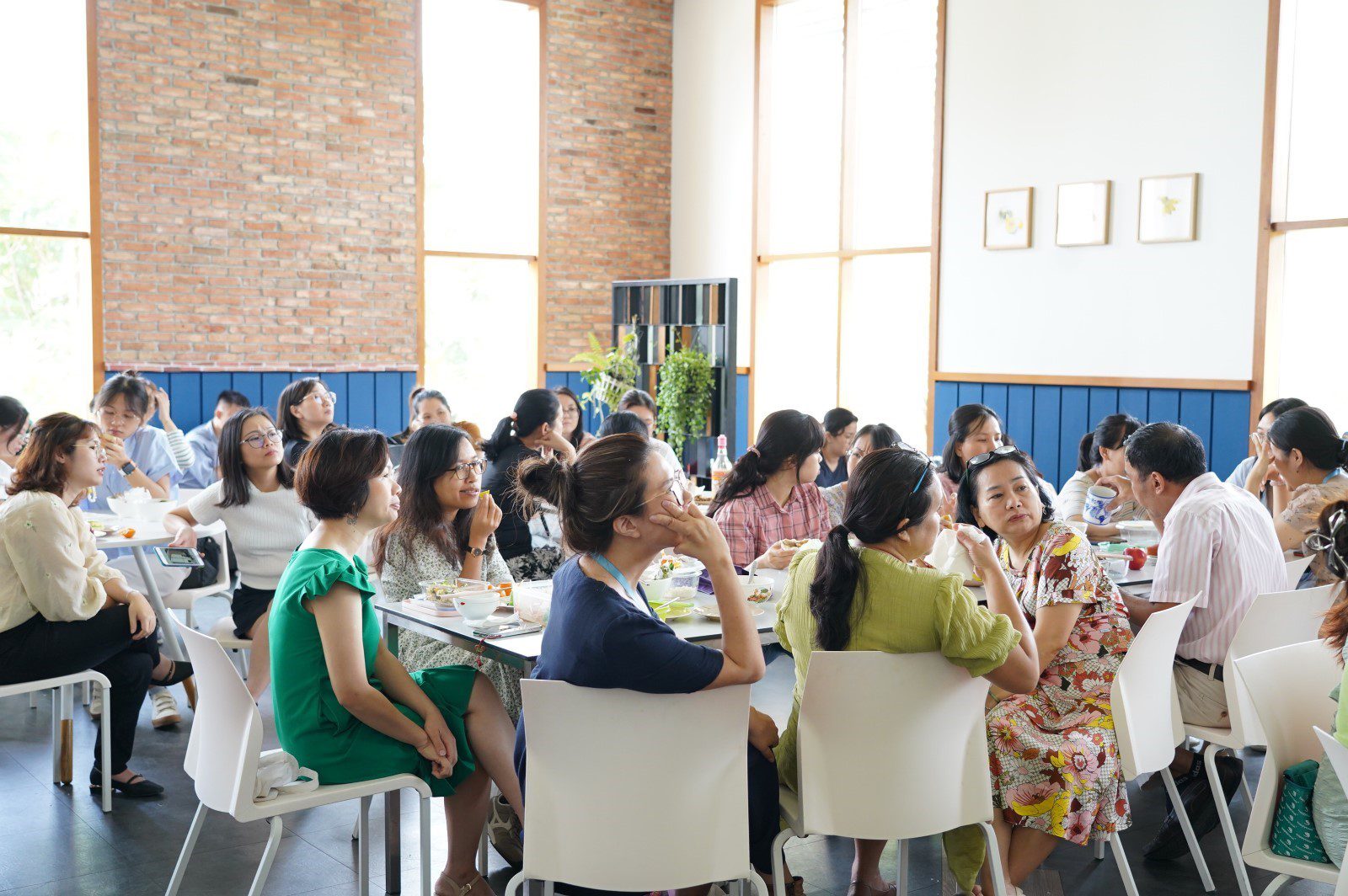
    Chăm chú lắng nghe bài trình bày.

    Một con số ấn tượng khác từ sự kiện là 500kg quần áo và vật dụng cũ để quyên góp cho những hoàn cảnh khó khăn. Mục tiêu của hoạt động này không chỉ giúp đỡ cộng đồng, mà còn nhấn mạnh tầm quan trọng của việc tái chế, giảm mua sắm quá đà, và giảm rác thải ra môi trường.

    Nhận được phản hồi tích cực từ người tham dự, cả OUCRU và Green Team đều tự tin tiếp tục thực hiện nhiều sáng kiến bền vững và tổ chức các sự kiện và hoạt động xanh khác, nhằm thúc đẩy lối sống bền vững trong cộng đồng và hơn thế nữa.

  • Celebrating Earth Day: Reflecting on OUCRU Green Day 

    Celebrating Earth Day: Reflecting on OUCRU Green Day 

    22th April is Earth Day.

    As important as clinical research, at OUCRU, we are also committed to promoting environmental activities and encouraging a culture of sustainability. Our initiatives include a dedicated Green Team and several activities, one of which is the Green Day event.

    The OUCRU Green Team is a group of passionate volunteers who work tirelessly to equip our office with eco-friendly systems and inspire staff to adopt environmentally sustainable lifestyles.

    On the most recent Green Day, held on 28th March 2024, over 250 environmentally conscious OUCRU staff members gathered. The event, led by the OUCRU Green Team, featured engaging activities, presentations from local green businesses about sustainable reusable alternatives, and informative talks about glass recycling.

    An OUCRU staff member explored terrariums, sustainable mini ecosystems that can serve as cute little decorations at workstations.
    A local eco-friendly shop featured refillable household solutions and handmade items crafted from reusable fabric.

    To make the event more engaging and enjoyable, the Green Team organised a quiz game about plastic pollution. The game aimed to disseminate important information and raise awareness about environmental issues in Vietnam.

    A key highlight of the event was an informative presentation by I-O BJC, a Vietnamese recycle glass manufacturer. Their representative discussed the glass production process, featured old glass bottles they collected, and its influence on waste management. This session led to the collection of 50kg of glass and the potential establishment of a long-term glass recycling system, a joint venture between OUCRU and I-O BJC.

    There was much enjoyment during the talk, with surprise gifts from the speaker.
    The OUCRU staff showed interest in the talk.

    Another impressive accomplishment from the event was the collection of 500kg of used clothing and goods for donation. Our objective is not only to prevent waste from ending up in landfills, but also to emphasise the importance of recycling and reducing consumption.

    Received positive feedback from participants, both OUCRU and OUCRU Green Team are confident to continue the commitment to lead sustainable practices and initiatives to promote a green lifestyle within our community and beyond.

  • Bài báo má»›i xuất bản: Gắn kết xã há»™i trong cá»™ng đồng nhân viên y tế trong đại dịch COVID-19 

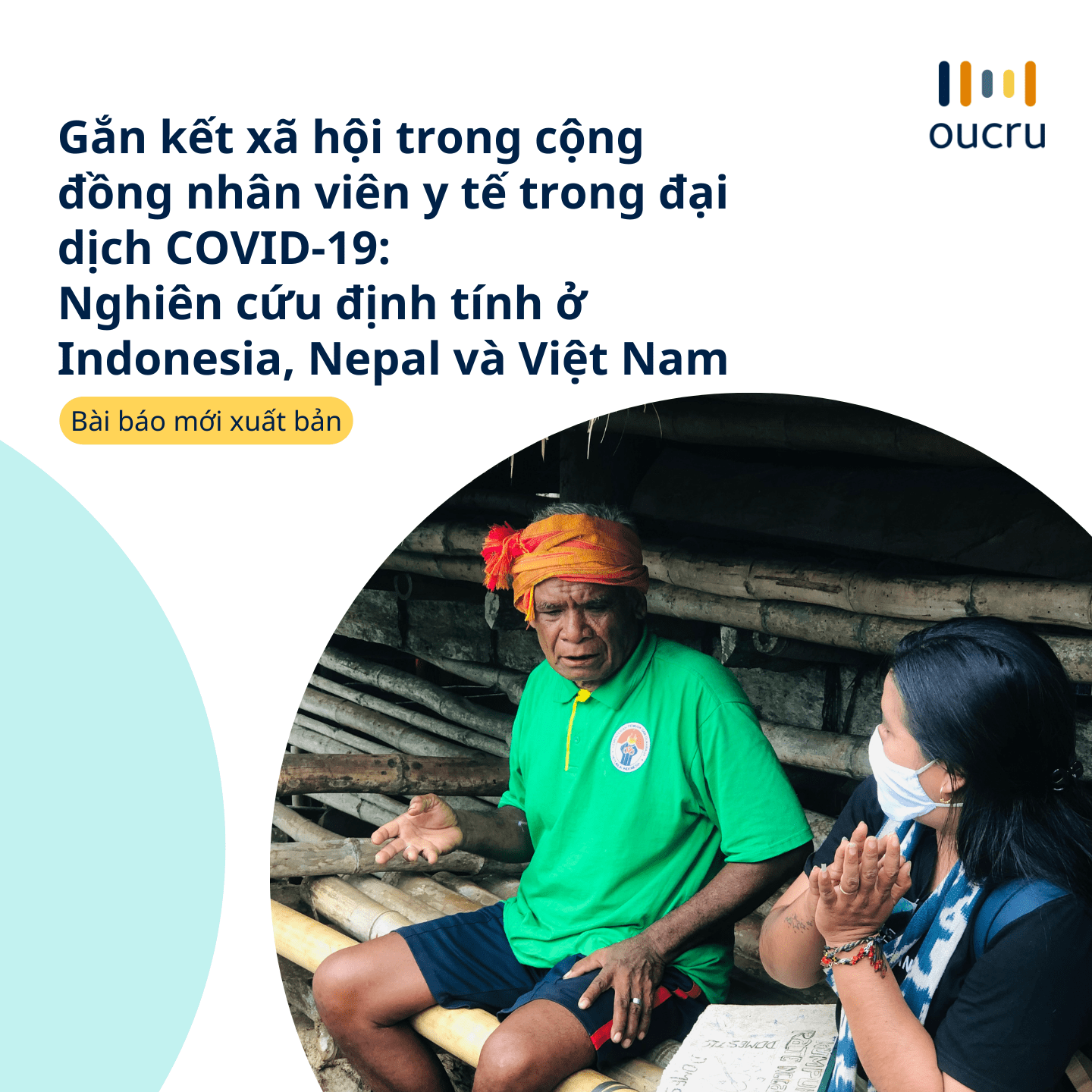
    Bài báo mới xuất bản: Gắn kết xã hội trong cộng đồng nhân viên y tế trong đại dịch COVID-19 

    Đã có nhiều nghiên cứu chỉ ra rằng nhân viên y tế là nhóm người bị ảnh hưởng nặng nề bởi đại dịch COVID-19.

    Họ phải đối mặt với nguy cơ lây nhiễm cao, thiếu trang thiết bị an toàn, khối lượng công việc nặng nề, và mức độ căng thẳng tinh thần trầm trọng. Tuy nhiên, hầu hết nghiên cứu chỉ mới khám phá trải nghiệm của nhân viên y tế dưới góc độ cá nhân, chứ chưa tìm hiểu ở mức độ khái quát chung. Việc nghiên cứu những trải nghiệm này của nhân viên y tế dưới ống kính tập thể sẽ làm nổi bật mức độ ảnh hưởng của văn hóa địa phương và xã hội cũng như những hạn chế trong hệ thống y tế trong các tình huống khủng hoảng y tế công.  

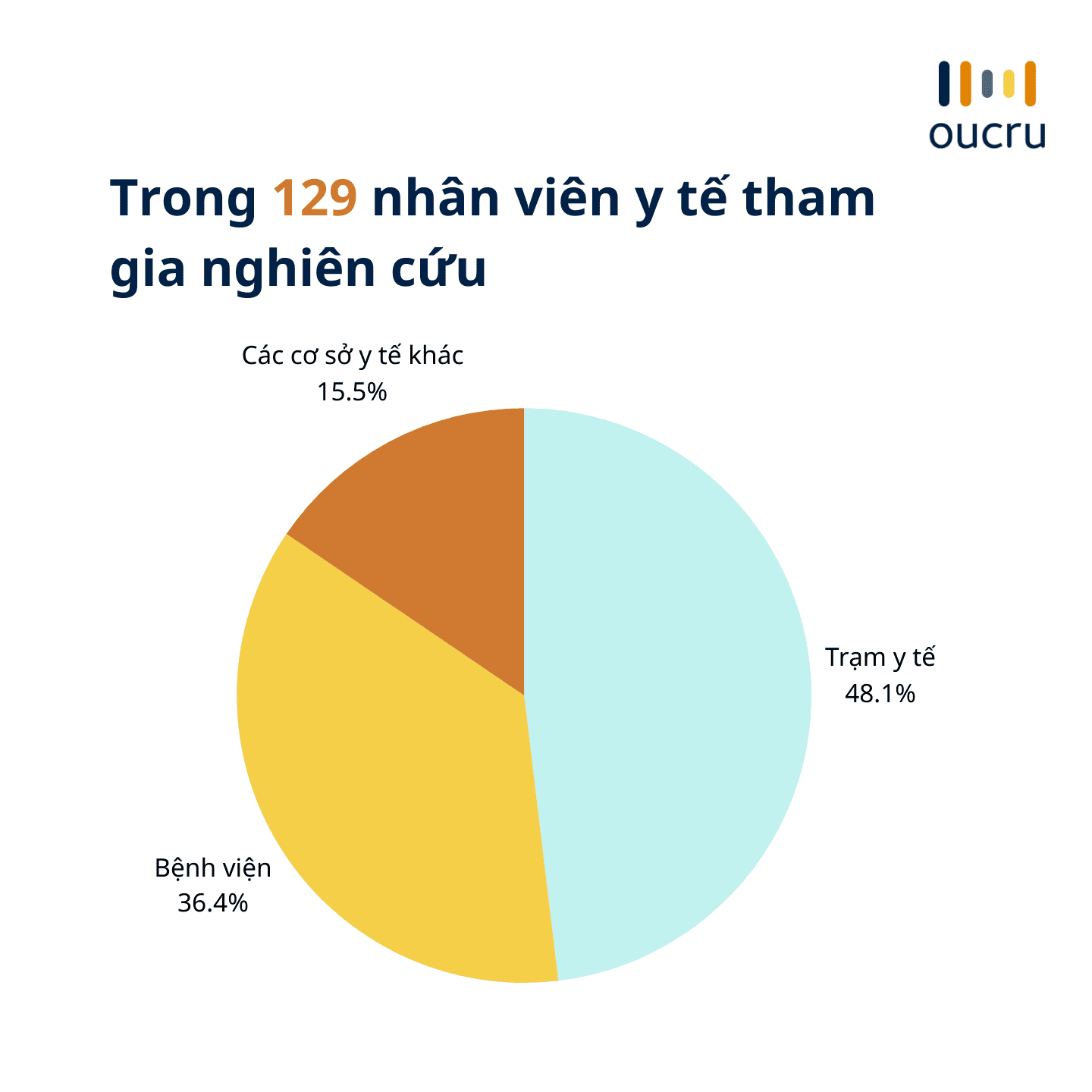
    Nhóm Nghiên cứu Khoa học xã há»™i, Đạo đức nghiên cứu và Nghiên cứu ứng dụng và nhóm Kết Nối Khoa Học vá»›i Công Chúng và Cá»™ng Đồng đã cùng phối hợp nghiên cứu những ảnh hưởng cá»§a đại dịch đối vá»›i nhóm nhân viên y tế tại Indonesia, Nepal, và Việt Nam từ năm 2020 – 2021, và chỉ ra 5 mô hình thể hiện cá»™ng đồng nhân viên y tế đã gắn kết và há»— trợ lẫn nhau trong những thời Ä‘iểm khó khăn như đại dịch COVID-19.  

    Nghiên cứu này được thá»±c hiện trên các nhân viên y tế tại Indonesia, Nepal, và Việt Nam từ năm 2020 – 2021.  Tìm hiểu thêm về SPEAR (Nghiên cứu Hành Động Khoa Học Xã Há»™i và Kết Nối Công Chúng): Tìm hiểu về ảnh hưởng văn hóa-xã há»™i cá»§a đại dịch tại ba nước Châu Á tại đây  

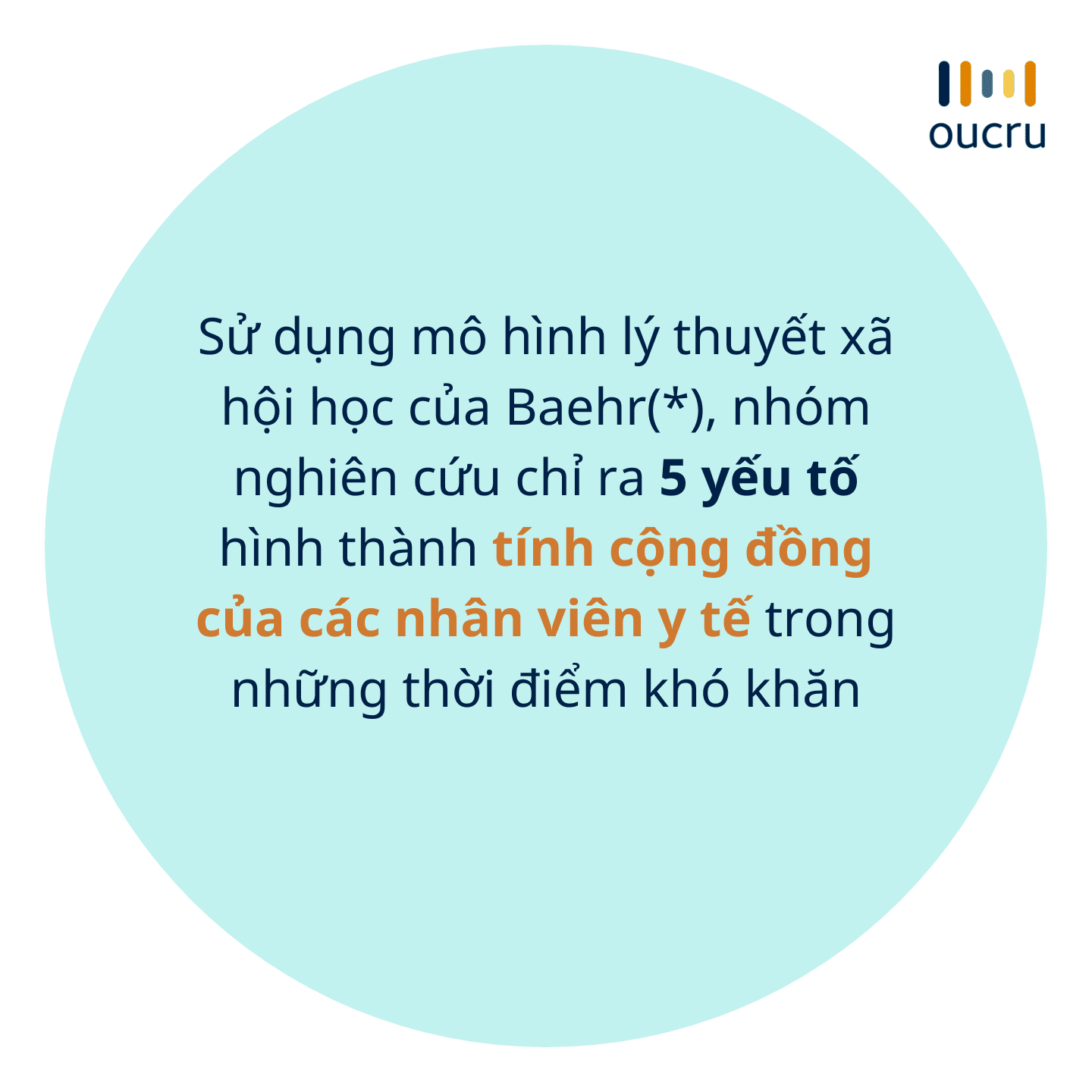
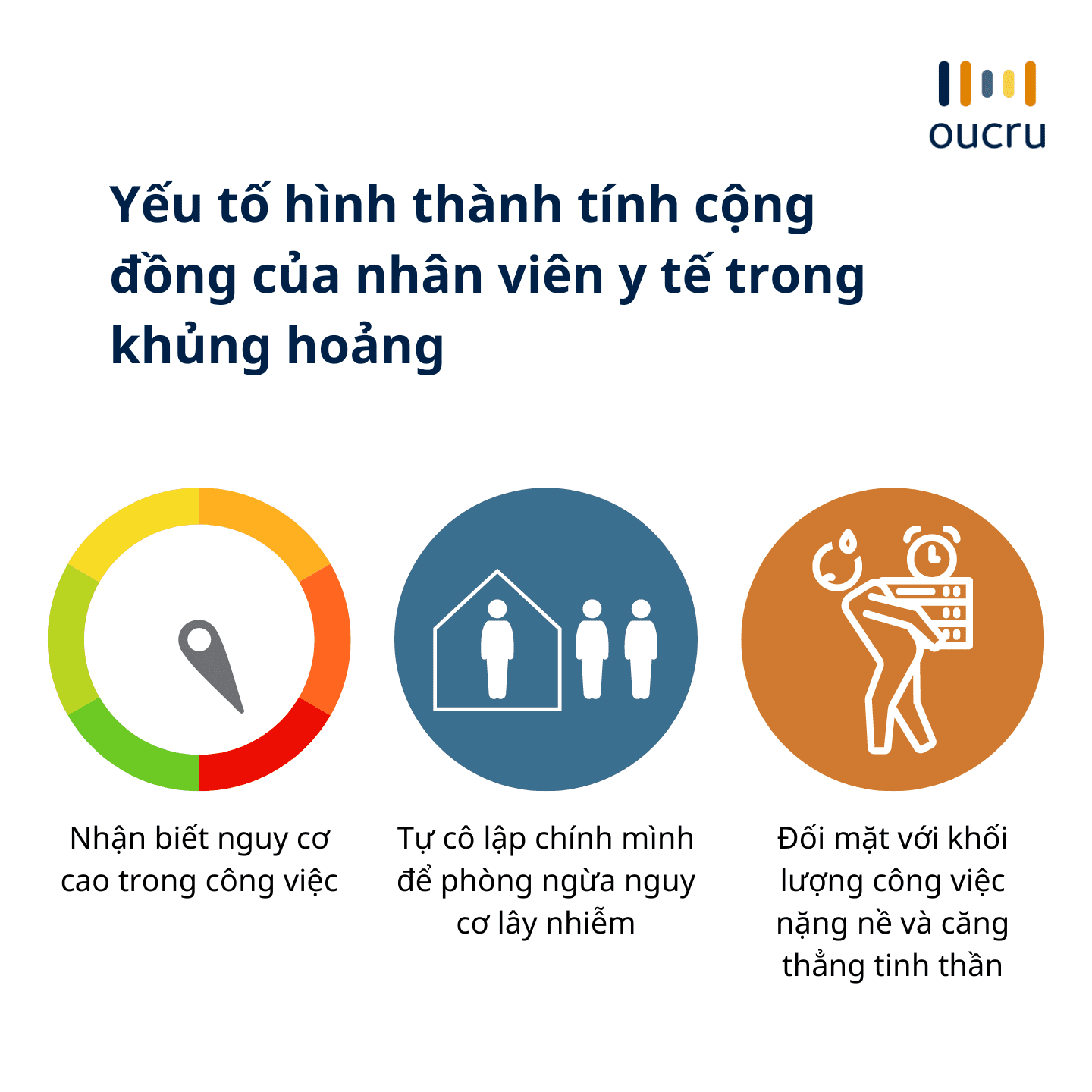
    Sá»­ dụng mô hình lý thuyết xã há»™i học cá»§a Baehr(*), nhóm nghiên cứu chỉ ra 5 mô hình giải thích cách cá»™ng đồng nhân viên y tế gắn kết và há»— trợ lẫn nhau trong những thời Ä‘iểm khó khăn. Ba mô hình đầu tiên chỉ ra cách nhân viên y tế hình thành nên những ‘cá»™ng đồng trong khá»§ng hoảng’ trong thời gian diá»…n ra đại dịch:  

    • Họ nhận thức được mức độ nguy hiểm/lây nhiá»…m cao liên quan đến công việc. 
    • Họ tá»± cô lập chính mình để phòng ngừa nguy cÆ¡ lây nhiá»…m  
    • Họ liên tục phải đối mặt vá»›i thá»­ thách từ khối lượng công việc nặng nề và những vấn đề liên quan đến sức khỏe tinh thần  

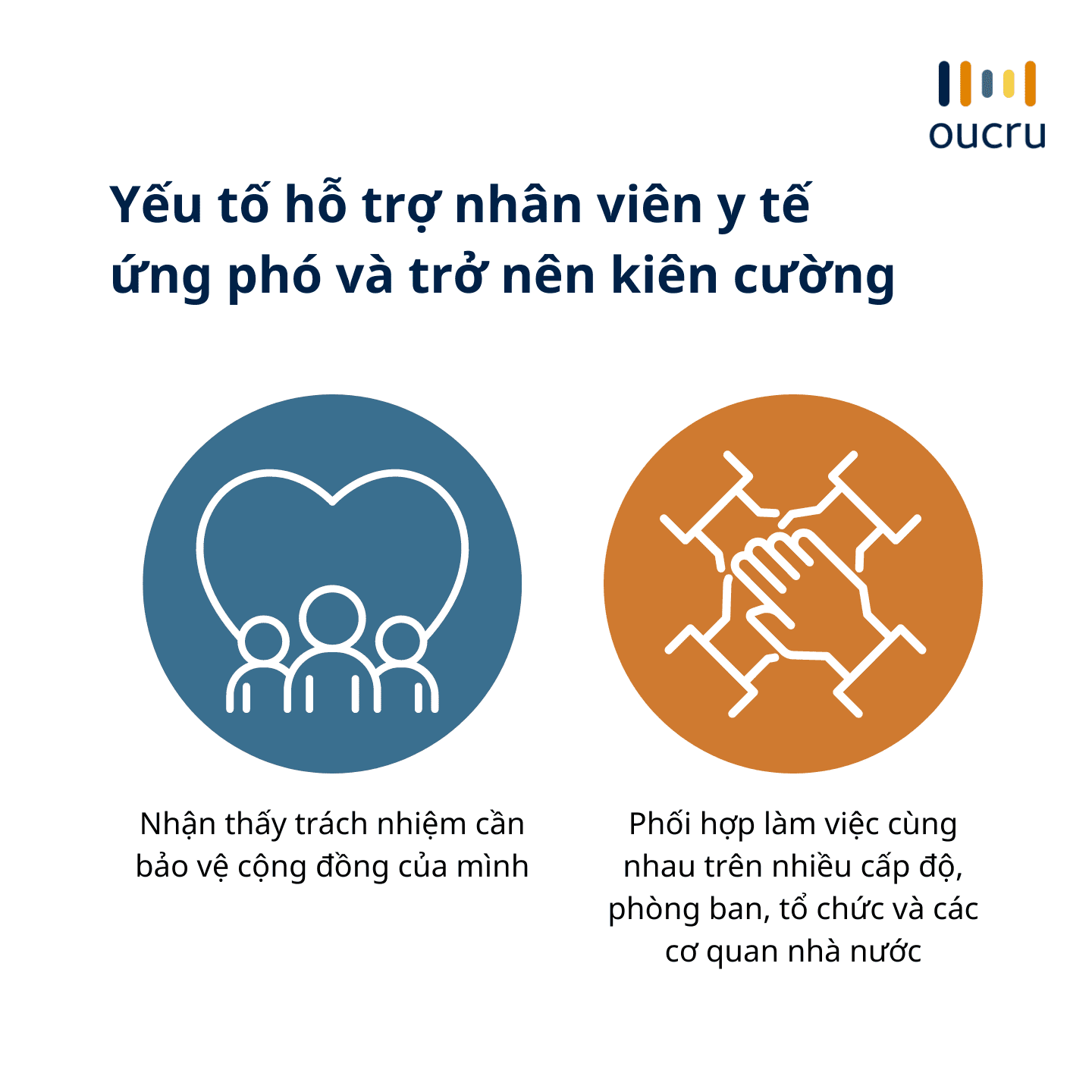
    Để đối phó vá»›i những khó khăn này, hai mô hình bên dưới đã được hình thành thể hiện cách nhân viên y tế gắn kết vá»›i nhau và trở nên kiên cường:  

    • Họ tá»± nhận nhiệm vụ bảo vệ cá»™ng đồng cá»§a mình  
    • Nhân viên y tế từ mọi phòng ban, cÆ¡ quan, tổ chức cùng làm việc vá»›i nhau  

    Từ những mô hình trên, nhóm nghiên cứu hướng đến mục tiêu vận động chính sách để ngành y tế công được chú trọng đầu tư hơn, và các ban ngành đoàn thể hợp tác với nhau tốt hơn, đặc biệt là ở những nước có thu nhập trung bình thấp nơi mà nhân viên y tế tại các trạm y tế cơ sở thường gánh trách nhiệm tuyến đầu khi có dịch bệnh xảy ra.  

    Chúng tôi cũng đề xuất rằng, khi ngành y tế và chính quyền đoàn kết và phối hợp nhịp nhàng với nhau trên nhiều cấp độ, cũng như có được sự ủng hộ và hợp tác từ công chúng sẽ là mô hình đầy tiềm năng để thay đổi và ứng phó tốt hơn với những tình huống y tế khẩn cấp như đại dịch trong tương lai. 

    Xem nhanh tóm tắt nghiên cứu trong infographics bên dưới. 

    Đọc toàn bộ bài báo (bằng tiếng Anh) tại đây.  

  • New publication: Social cohesion among healthcare workers during COVID-19: Qualitative research in Indonesia, Nepal, and Vietnam

    New publication: Social cohesion among healthcare workers during COVID-19: Qualitative research in Indonesia, Nepal, and Vietnam

    Several published research studies have shown that healthcare workers (HCWs) were significantly affected during the COVID-19 pandemic. Being on the front line of the pandemic response, they faced increased risks including pathogen exposure, a shortage of protective equipment, heavy workloads, long working hours, and significant mental distress.

    However, many of these studies focused on individual experiences of HCWs rather than their group responses. Examining these collective experiences can highlight the influence of local culture and social factors, as well as analyse system limitations during public health crises such as the pandemic. This understanding can then be used to develop recommended guidelines for future similar crisis situations.

    As a part of SPEAR project studying the pandemic impacts on HCWs in Vietnam, Indonesia, and Nepal from 2020 to 2021, we found five main themes that explain how HCWs started coming together, uniting and building communities, as well as supporting each other during tough times using a sociological framework [by Baehr](1).

    The first three themes show how HCWs formed a ‘community of fate’ during the pandemic: 

    1. They recognised the extreme work-related danger. 
    1. They isolated themselves from the outside world to limit transmission risks.
    1. They faced constant challenges with heavy workloads and mental health issues. 

    In response to these difficulties, two following themes showed how they bonded and became resilient: 

    1. They felt a shared duty to protect their communities 
    1. They worked together across different levels and departments 

    Based on these findings, we came to the conclusion that to prepare for future health crises, we need more investment in public health and collaboration across government sectors for smoother operations and responses. This potential model is particularly important in low- and middle-income countries, where most of the responsibility in public health emergencies falls on HCWs in primary care settings, where systematic challenges (long working hours, lacking equipment and infrastructure, etc..) are more common.

    Read full article here https://bit.ly/HCW-social-cohesion  

    References:  

    (1) Baehr, P. (2005). Social extremity, communities of fate, and the sociology of SARS. 

    *Archives Europ* ́*eennes de Sociologie, 46*(2), 179–211. https://doi.org/10.1017/ 

    S000397560500007X 

    Read more about SPEAR (Social Science and Public Engagement Action Research): Understanding the Socio-Cultural Impact of the COVID-19 Pandemic in Three Countries in Asia 

  • Tuần lá»… Nhân Viên Y Tế Thế Giá»›i 2024: Tri ân những người anh hùng cá»§a đời thường  

    Tuần lễ Nhân Viên Y Tế Thế Giới 2024: Tri ân những người anh hùng của đời thường  

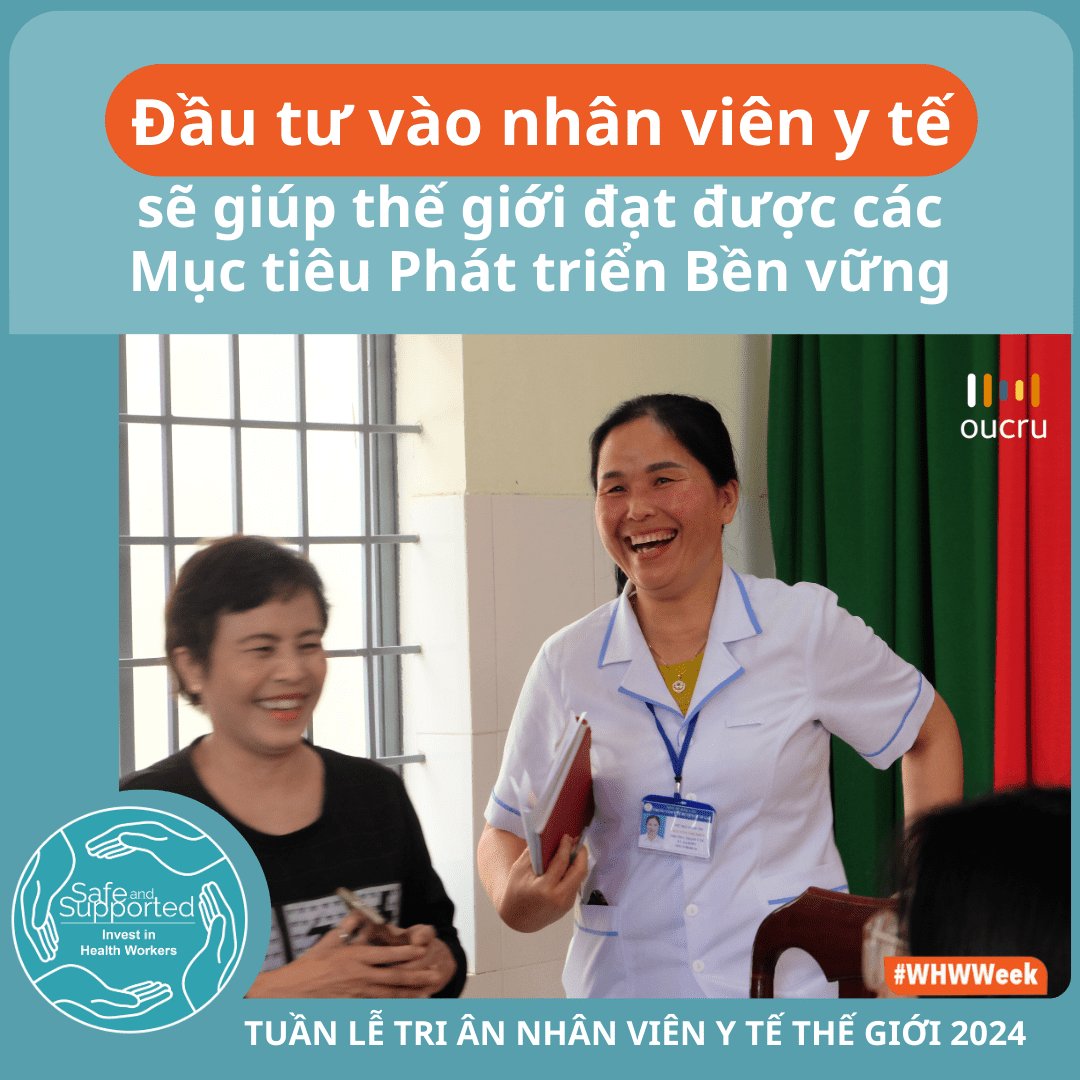
    Vào tuần lá»… đầu tiên cá»§a tháng 4 hằng năm, cá»™ng đồng thế giá»›i sẽ cùng nhau tri ân nhân viên y tế, lá»±c lượng trụ cá»™t cá»§a ngành y tế nói riêng và cả xã há»™i nói chung.  

    Năm nay, chá»§ đề chính cá»§a tuần lá»… đặc biệt này là #SafeSupportedHealthWorkers – Há»— trợ Nhân viên Y Tế có môi trường làm việc an toàn và được há»— trợ, do tổ chức Frontline Health Workers Coalition (Liên Đoàn Nhân Viên Y Tế tuyến đầu) và cá»™ng sá»± nhận nhiệm vụ dẫn đầu.  

    Mục tiêu cá»§a tuần lá»… này đó là kêu gọi sá»± Ä‘oàn kết giữa các nhà vận động chính sách, nhân viên y tế, lãnh đạo, và cá»™ng đồng toàn cầu trong việc thu hút đầu tư, bảo vệ, và há»— trợ lá»±c lượng nhân viên y tế. Điều này đặc biệt quan trọng đối vá»›i các nước có thu nhập trung bình thấp.  

    Sau đây là 5 thông Ä‘iệp chính cá»§a tuần lá»… này:  

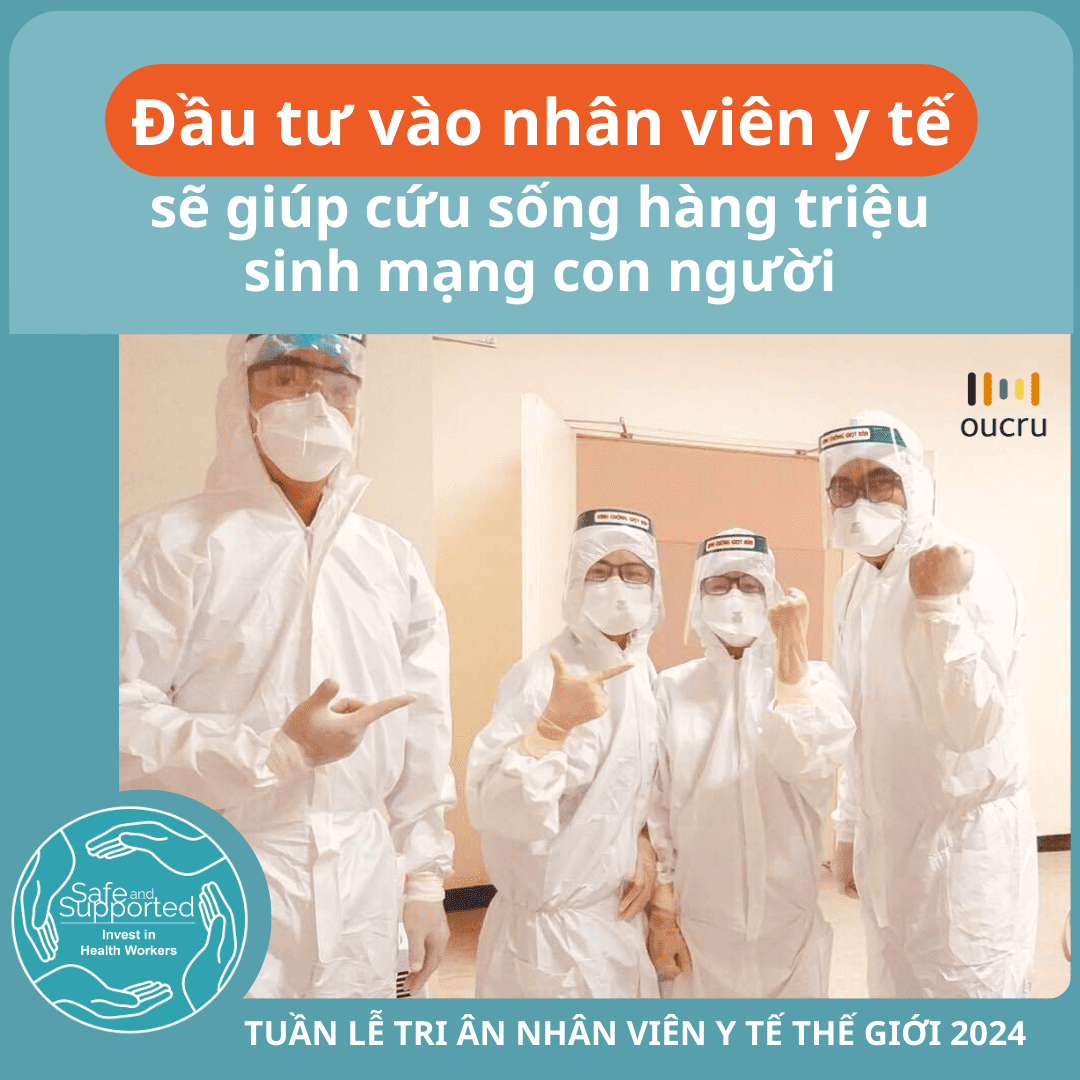
    1. Đầu tư vào nhân viên y tế sẽ giúp cứu sống hàng triệu con người.

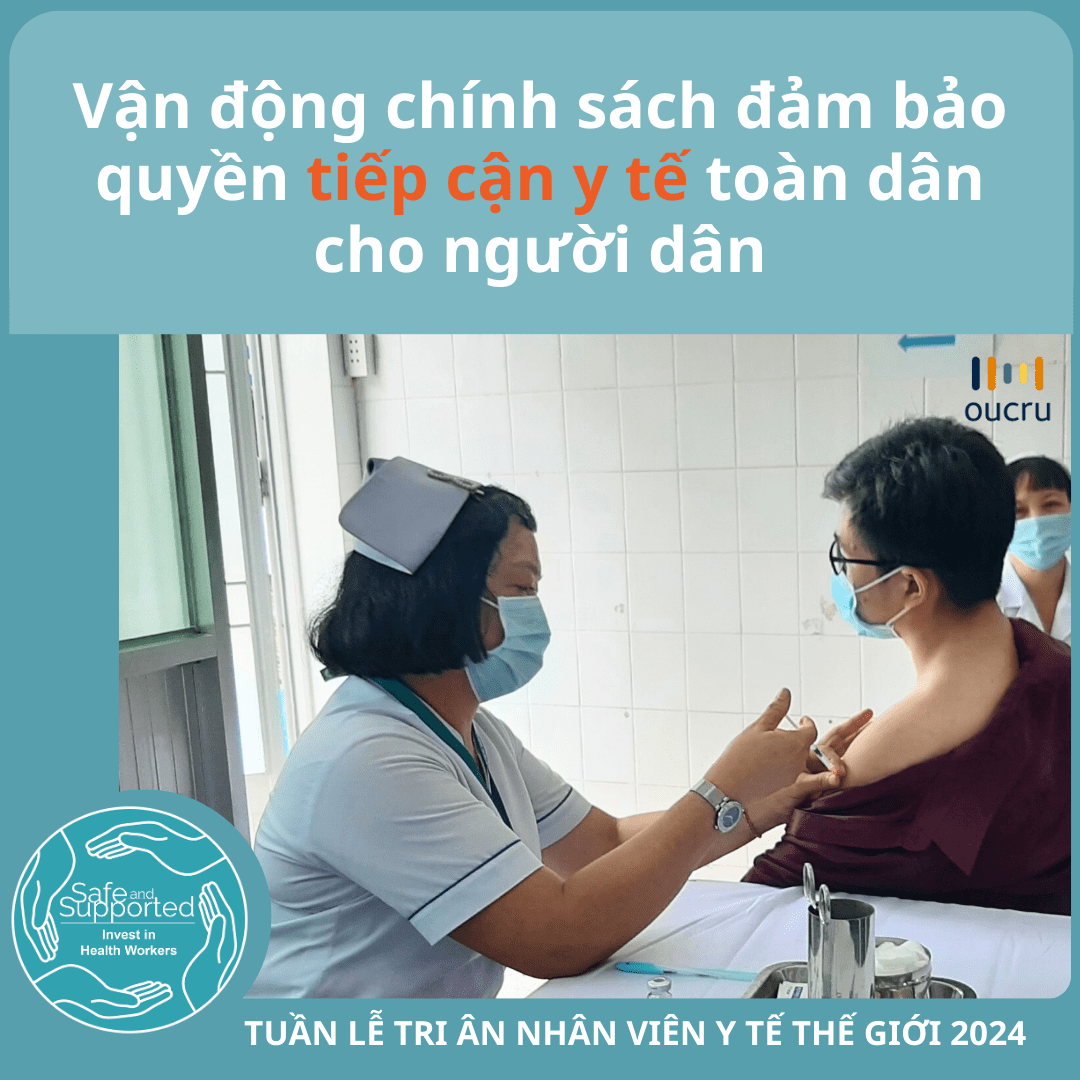
    Mở rộng tầm bao phủ của chăm sóc y tế cơ bản sẽ có thể cứu sống đến 60 triệu người, kéo dài tuổi thọ lên 3,7 năm, và nâng cao tính công bằng trong chăm sóc y tế(1). Để đạt được điều này, chúng ta cần nhiều nhân viên y tế hơn để có thể cung cấp dịch vụ đến tất cả cộng đồng trên toàn thế giới.  

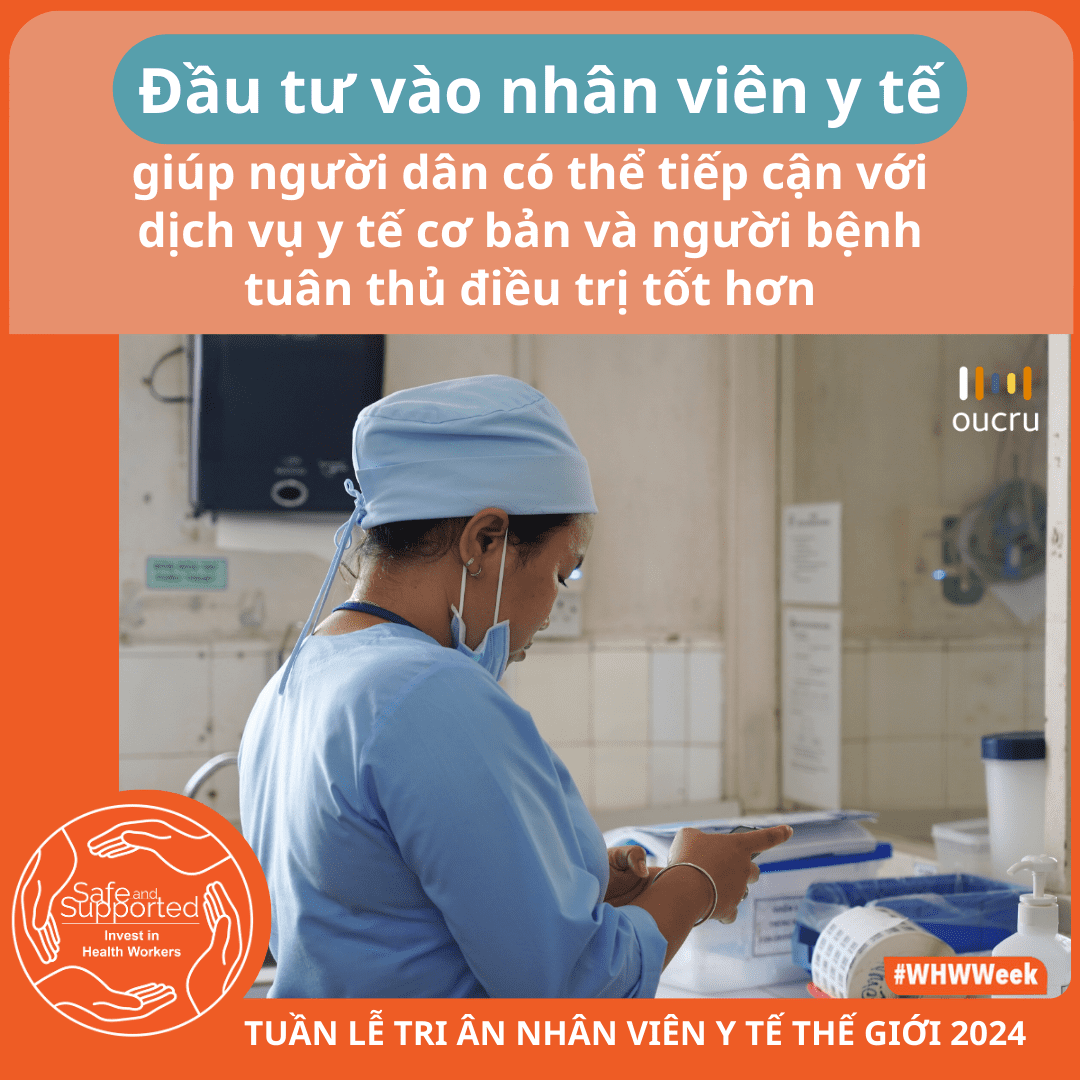
    2. Vận động chính sách nhiều hÆ¡n và tập trung hÆ¡n để đảm bảo má»—i cá»™ng đồng đều có được lá»±c lượng nhân viên y tế làm việc trong môi trường an toàn và được há»— trợ, từ đó có thể tiếp cận đến dịch vụ chăm sóc y tế cÆ¡ bản và ngăn chặn mức độ lây lan cá»§a các nguy cÆ¡ y tế má»›i nổi.  

    3. Đầu tư vào lá»±c lượng y tế là vô cùng quan trọng để đảm bảo hướng đến đạt được mục tiêu phát triển bền vững (SDG3 – Sustainable Development Goal, đảm bảo mọi người ở khắp mọi nÆ¡i được khỏe mạnh và có cuá»™c sống tốt). 

    Vá»›i ít nhất má»™t ná»­a dân số thế giá»›i không thể tiếp cận được vá»›i dịch vụ y tế thiết yếu – bao gồm chăm sóc thai sản, Ä‘iều trị HIV, kế hoạch hóa gia đình, và vắc-xin, cÅ©ng như chiều hướng tăng lên cá»§a các bệnh không triều nhiá»…m và các mối Ä‘e dọa hiện hữu về dịch bệnh và biến đổi khí hậu, từ cấp độ toàn cầu đến cá»™ng đồng, đầu tư vào lá»±c lượng y tế nên được ưu tiên(2).  

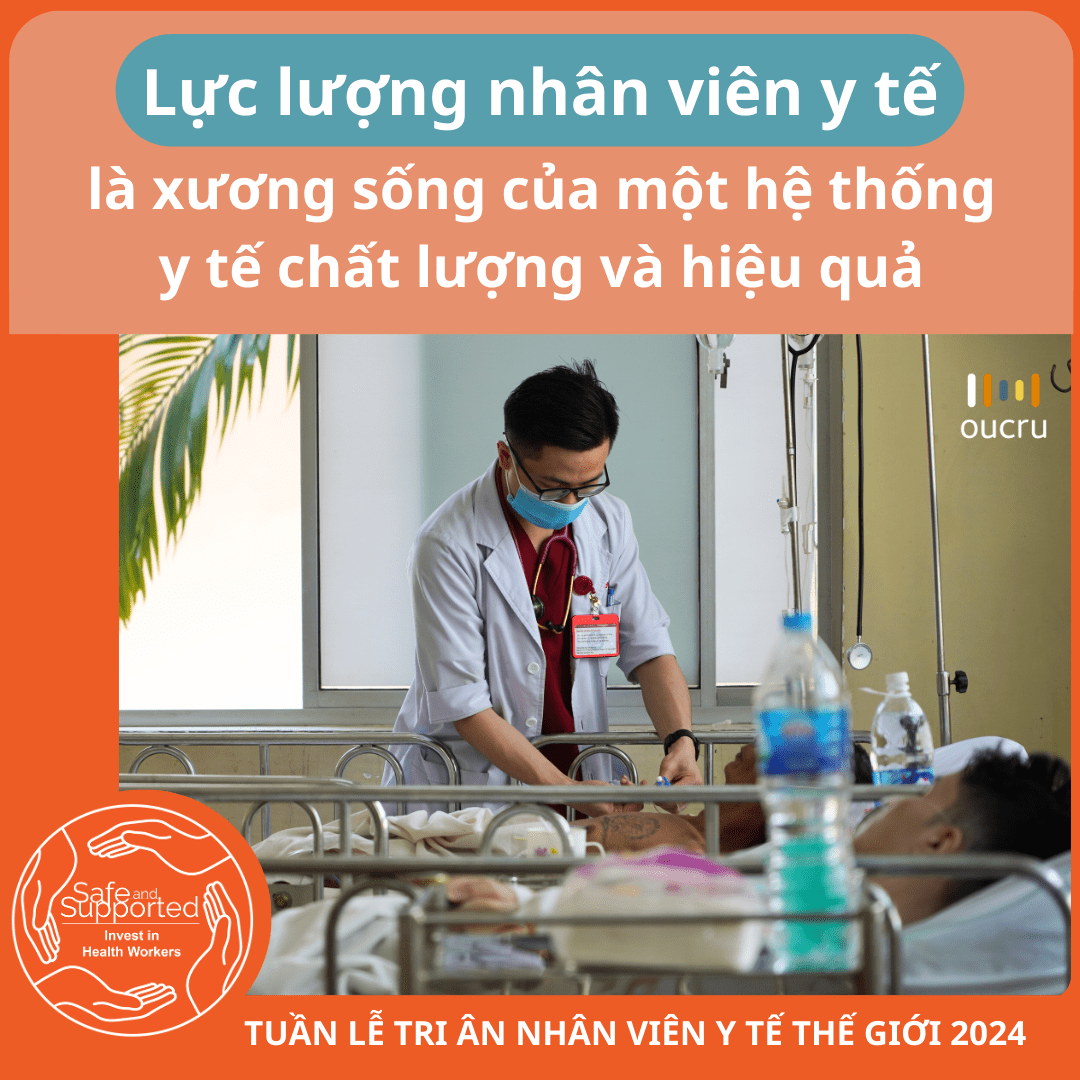
    1. Lá»±c lượng y tế là trụ cá»™t cá»§a hệ thống y tế chất lượng cao và kiên cường, vì thế mà đầu tư vào lá»±c lượng này sẽ giúp chúng ta đạt được các mục tiêu y tế và phát triển toàn cầu. 

    Lá»±c lượng y tế là then chốt trong việc mở rá»™ng dịch vụ, ngăn cản dịch bệnh, và há»— trợ kinh tế. Vì thế, họ cần được đào tạo kỹ lưỡng, giám sát, và trả lương xứng đáng.  

    1. Nhiều nhân viên y tế không cảm thấy môi trường làm việc cá»§a mình được an toàn và phù hợp. Họ cÅ©ng cảm thấy thiếu sá»± tôn trọng. Những Ä‘iều này khiến lá»±c lượng này thiếu Ä‘i động lá»±c phát triển kỹ năng và phấn đấu.  

    Nhiều nước trên thế giới đang không thể đáp ứng được mục tiêu số lượng nhân viên y tế tối thiểu trên đầu người. WHO dự báo vào năm 2030 thế giới có thể thiếu hụt khoảng 10 triệu nhân viên y tế(3).  

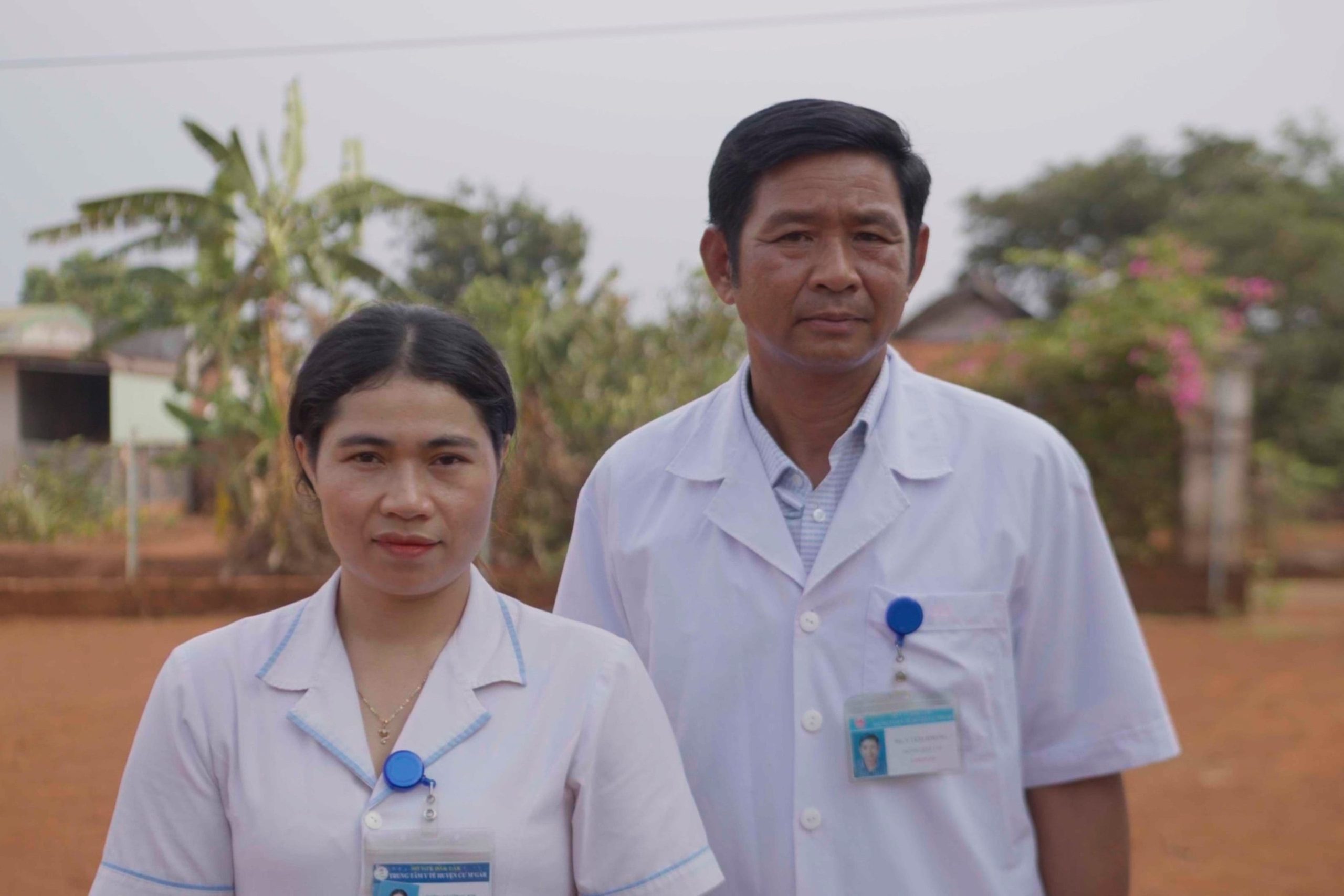
    Là đơn vị nghiên cứu lâm sàng, nhân viên y tế là má»™t trong những cá»™ng đồng mà phòng Kết Nối Khoa Học vá»›i Công Chúng và Cá»™ng Đồng ưu tiên tiếp cận từ nhiều năm qua. Hòa mình vào không khí cá»§a Tuần Lá»… Nhân Viên Y Tế Thế Giá»›i 2024 cÅ©ng như nhấn mạnh thông Ä‘iệp dành cho các bên liên quan, chúng tôi đã thá»±c hiện má»™t chuá»—i hoạt động nhằm tri ân sá»± cống hiến và tinh thần quật cường cá»§a lá»±c lượng nền tảng này, cÅ©ng như nâng cao nhận thức và kêu gọi cả thế giá»›i cùng tri ân những anh hùng áo trắng cá»§a chúng ta.  

    Chuá»—i video ngắn phỏng vấn các nhân viên y tế tại OUCRU và các tổ chức đối tác chia sẻ nhiệt huyết và thông Ä‘iệp nhân tuần lá»… đặc biệt này.  

    [Video hiện Ä‘ang được xá»­ lý, vui lòng quay lại sau] 

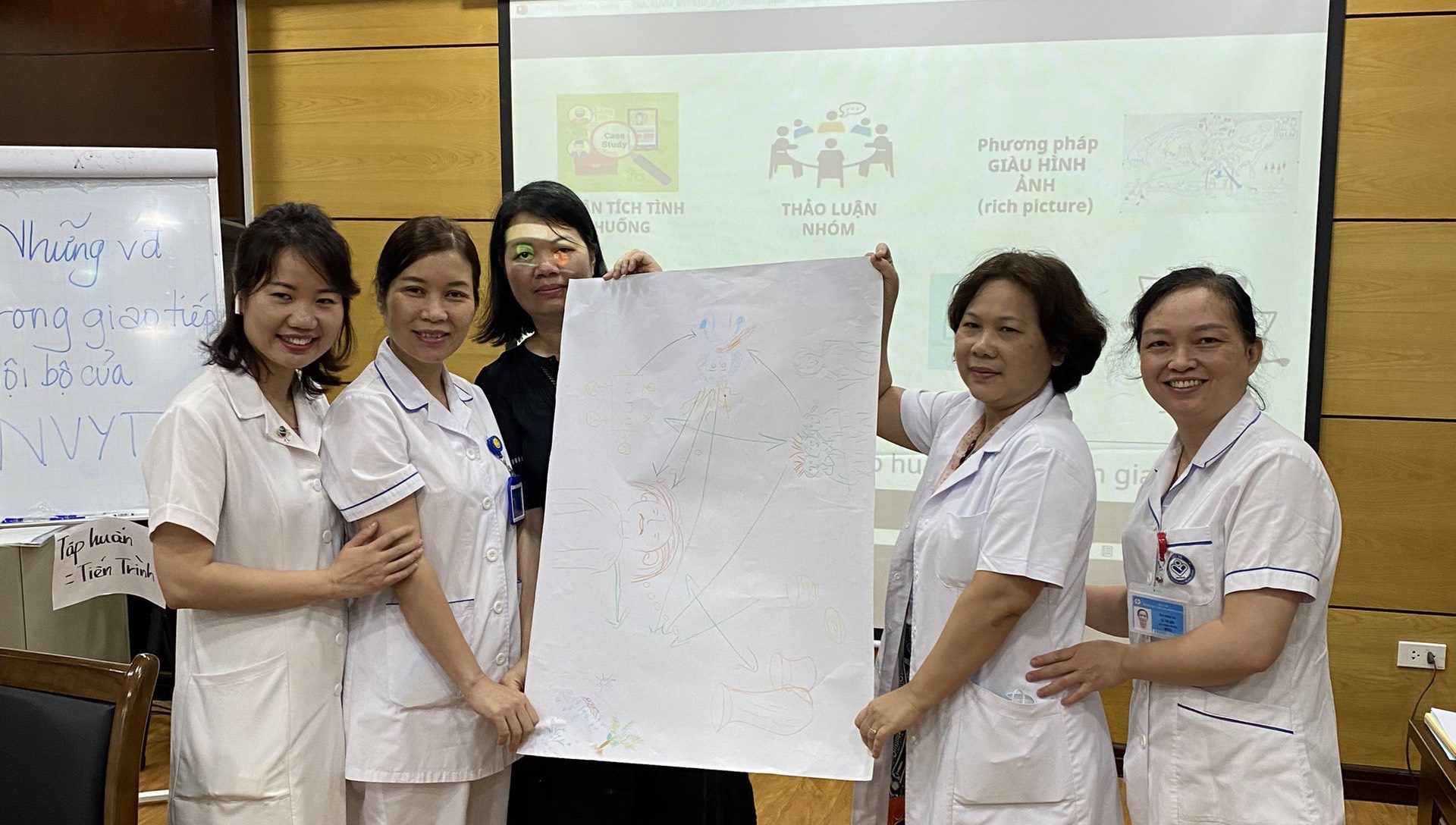
    Má»™t phần quan trọng trong ná»— lá»±c há»— trợ nhân viên y tế và tại bệnh viện cá»§a OUCRU đó là nâng cao năng lá»±c cho nhân viên y tế nhằm cải thiện trải nghiệm làm việc, mở ra nhiều cÆ¡ há»™i nghề nghiệp cho họ, gián tiếp hướng đến mục tiêu vận động cho việc thiết lập hệ thống chăm sóc y tế toàn diện bên trong và ngoài bệnh viện. Chúng tôi đã và Ä‘ang tổ chức chuá»—i há»™i thảo trá»±c tuyến, chia sẻ các nguồn tài liệu thiết yếu dành cho nhân viên y tế và cán bá»™ tập huấn, cÅ©ng như triển khai các sáng kiến thí Ä‘iểm tại bệnh viện nhằm nâng cao sức khỏe thể chất và tinh thần cá»§a nhân viên y tế.  

    Dự án thí điểm Nâng cao năng lực cho cán bộ vắc-xin tuyến đầu tại Đắk Lắk nhằm mục tiêu cải thiện tỉ lệ tiêm vắc-xin của địa phương. Tìm hiểu thêm

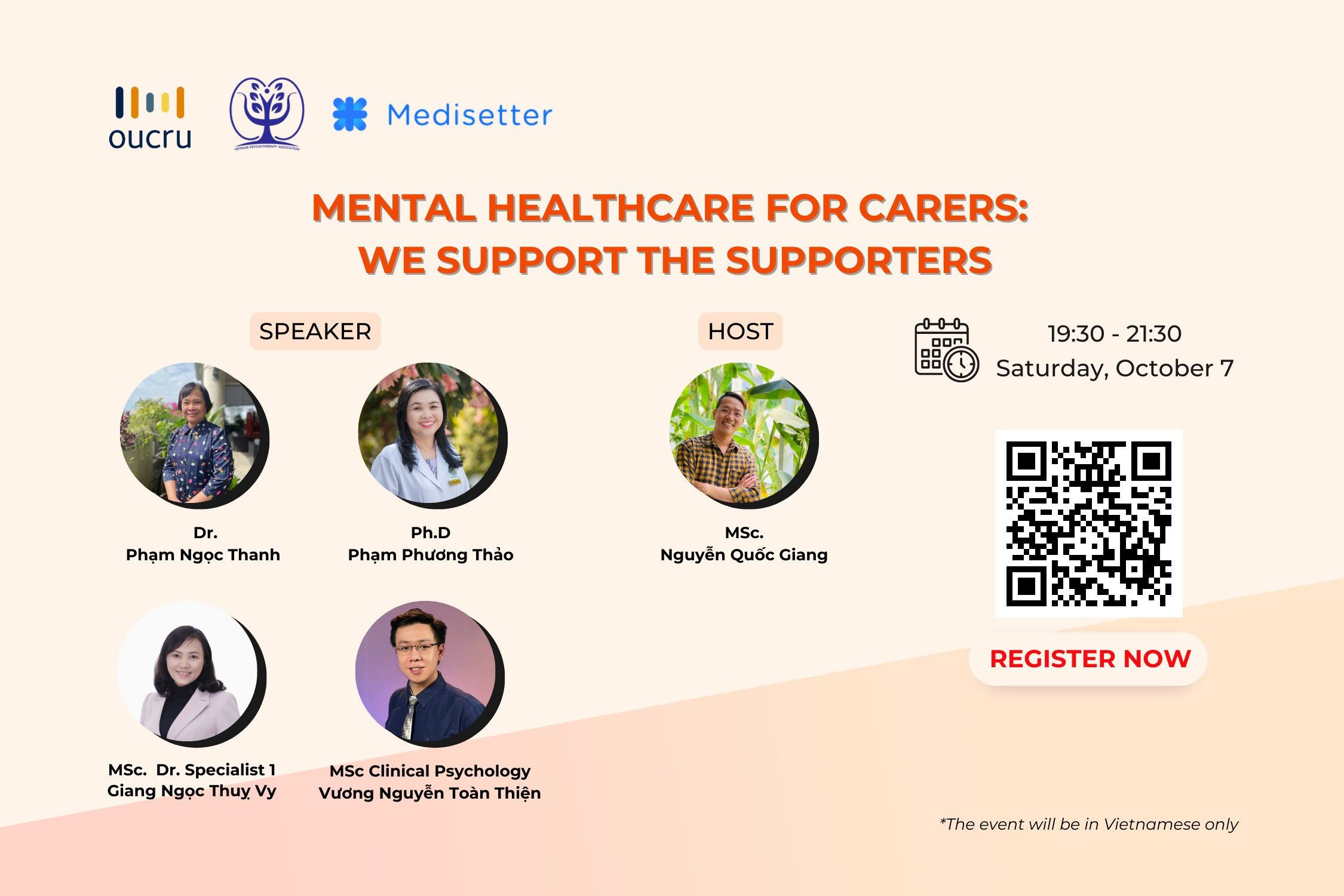
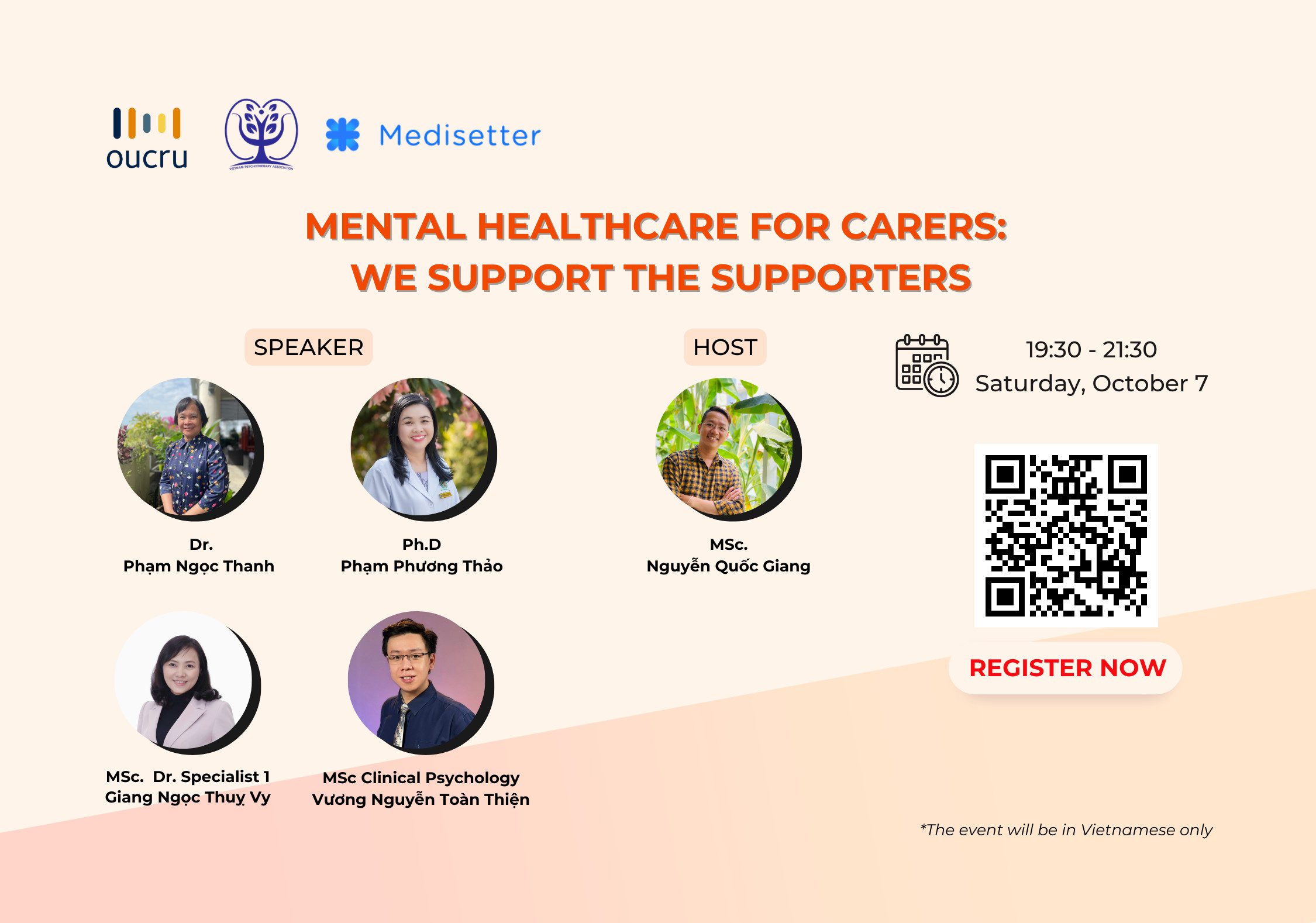
    Hợp tác với Medisetter thực hiện chuỗi video tập huấn trực tuyến.

    Xem đầy đủ video tập huấn tại đây

    CONNECT, chuyên trang chia sẻ nguồn tài liệu và tập huấn cho nhân viên y tế trên Mạng Lưới Y Tế Thế Giá»›i.  

    Nghiên cứu định tính tại Indonesia, Nepal, và Việt Nam về các yếu tố khiến nhân viên y tế gắn kết và há»— trợ lẫn nhau trong đại dịch COVID-19. Đọc thêm tại đây.

    Là một phần của cam kết và tầm nhìn của OUCRU về nghiên cứu địa phương, tác động toàn cầu, việc tập trung hỗ trợ nhân viên y tế có cơ hội được phát triển, cảm thấy an toàn, được hỗ trợ trong công việc sẽ giúp trao quyền cho nhân viên y tế có thể tiếp tục cống hiến sức mình cho công cuộc cứu sống hàng triệu sinh mạng bằng sự tự tin và tinh thần kiên cường.  

    Tài liệu tham khảo:

    (1) https://www.who.int/news-room/fact-sheets/detail/primary-health-care

    (2) https://www.who.int/publications/i/item/9789240004276

    (3) https://www.who.int/publications/m/item/health-and-care-workers–protect-invest-together

  • World Health Worker Day 2024: Honour our daily heroes together 

    World Health Worker Day 2024: Honour our daily heroes together 

    In the 1st week of April each year, the global community comes together to celebrate health workers, the backbone of the health industry and society. 

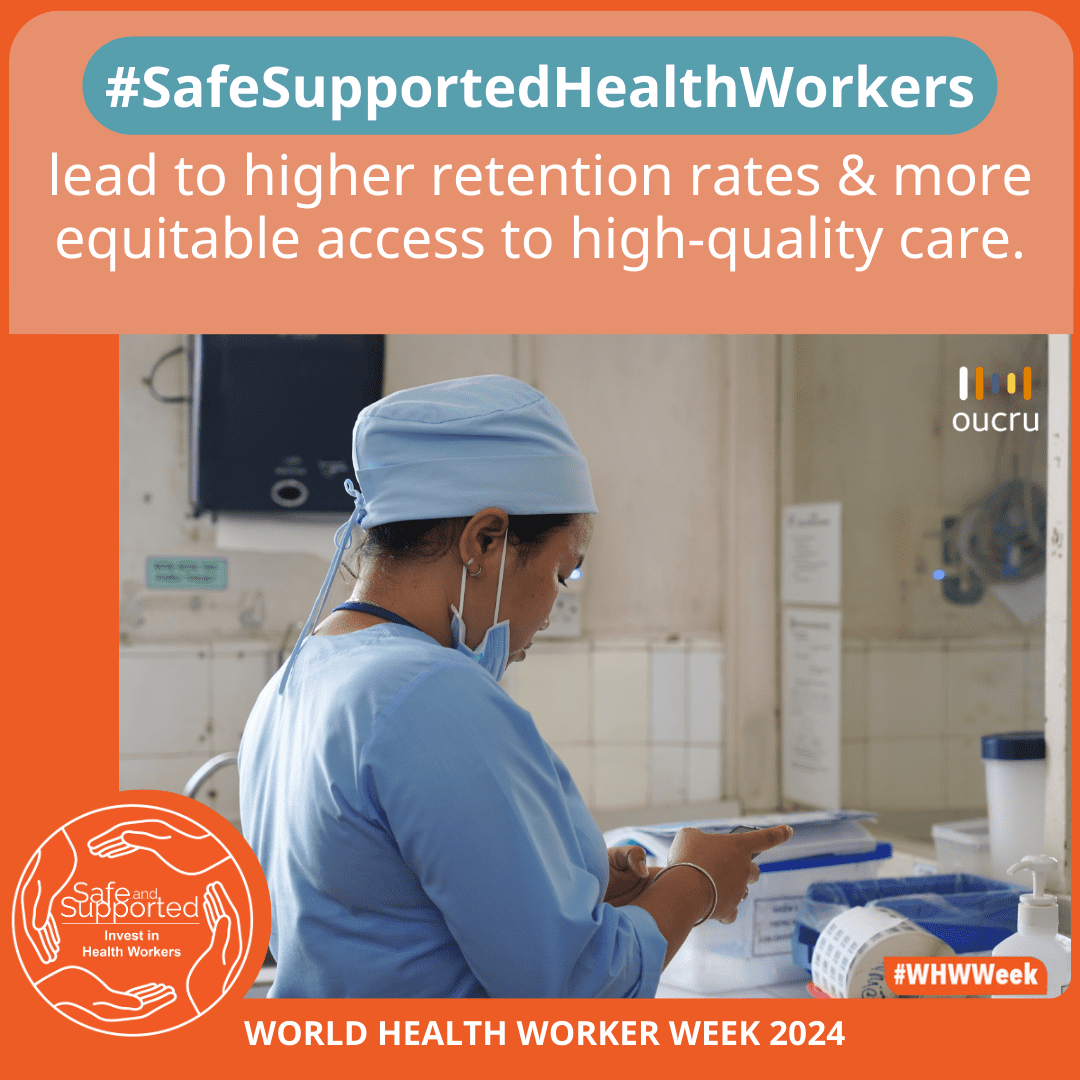
    This year, the theme is #SafeSupportedHealthWorkers. The Frontline Health Workers Coalition and its partners are leading the effort. The goal is to unite advocates, health workers, leaders, and communities worldwide to call for investment, protection, and support for the health workforce. This is especially important in low—and middle-income countries. 

    Let’s look at this year’s key messages: 

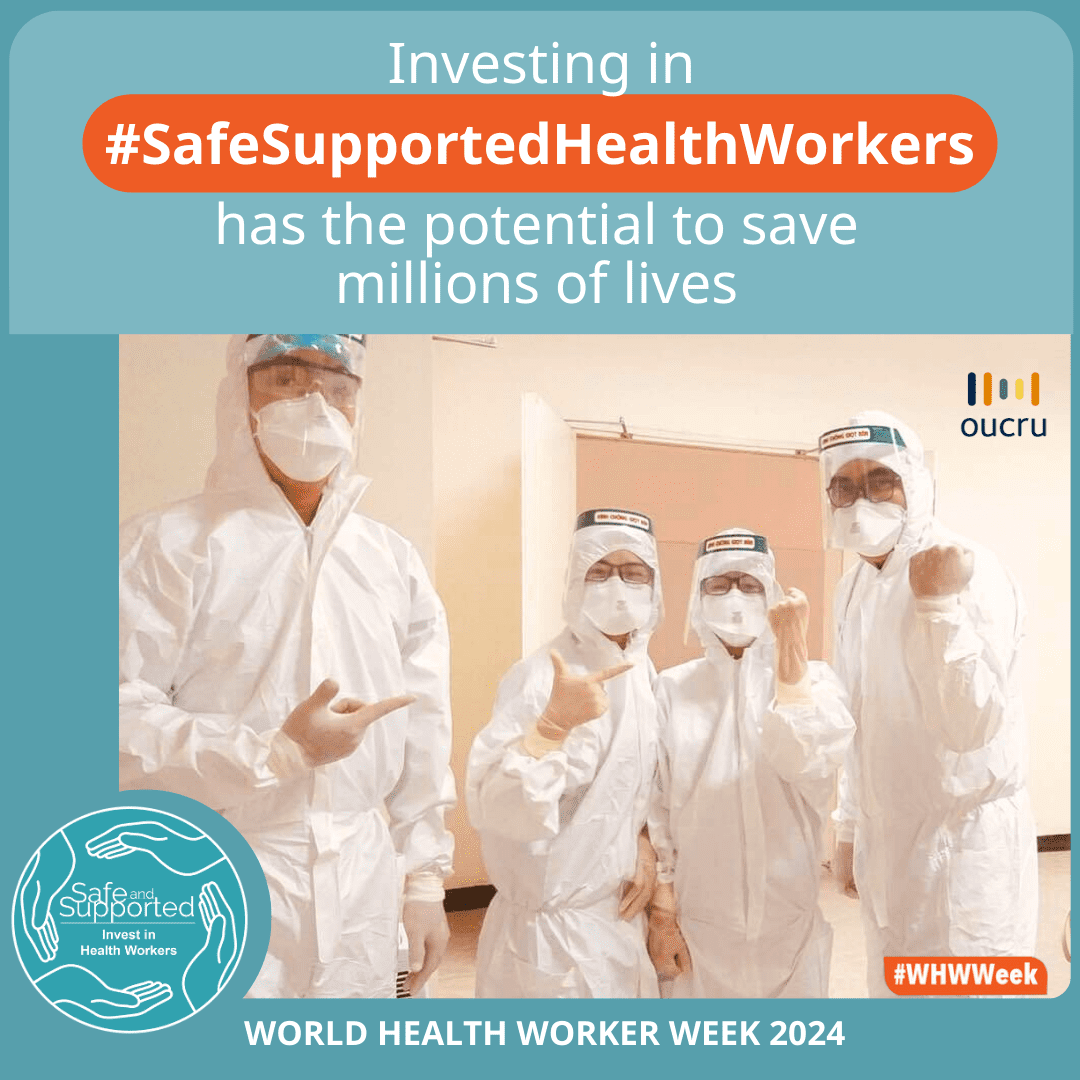
    1. Investing in #SafeSupportedHealthWorkers has the potential to save millions of lives. 

    Expanding primary care has the potential to save 60 million lives, increase life expectancy by 3.7 years, and promote health equity(1). However, a more robust health workforce is needed to provide services to communities around the world. 

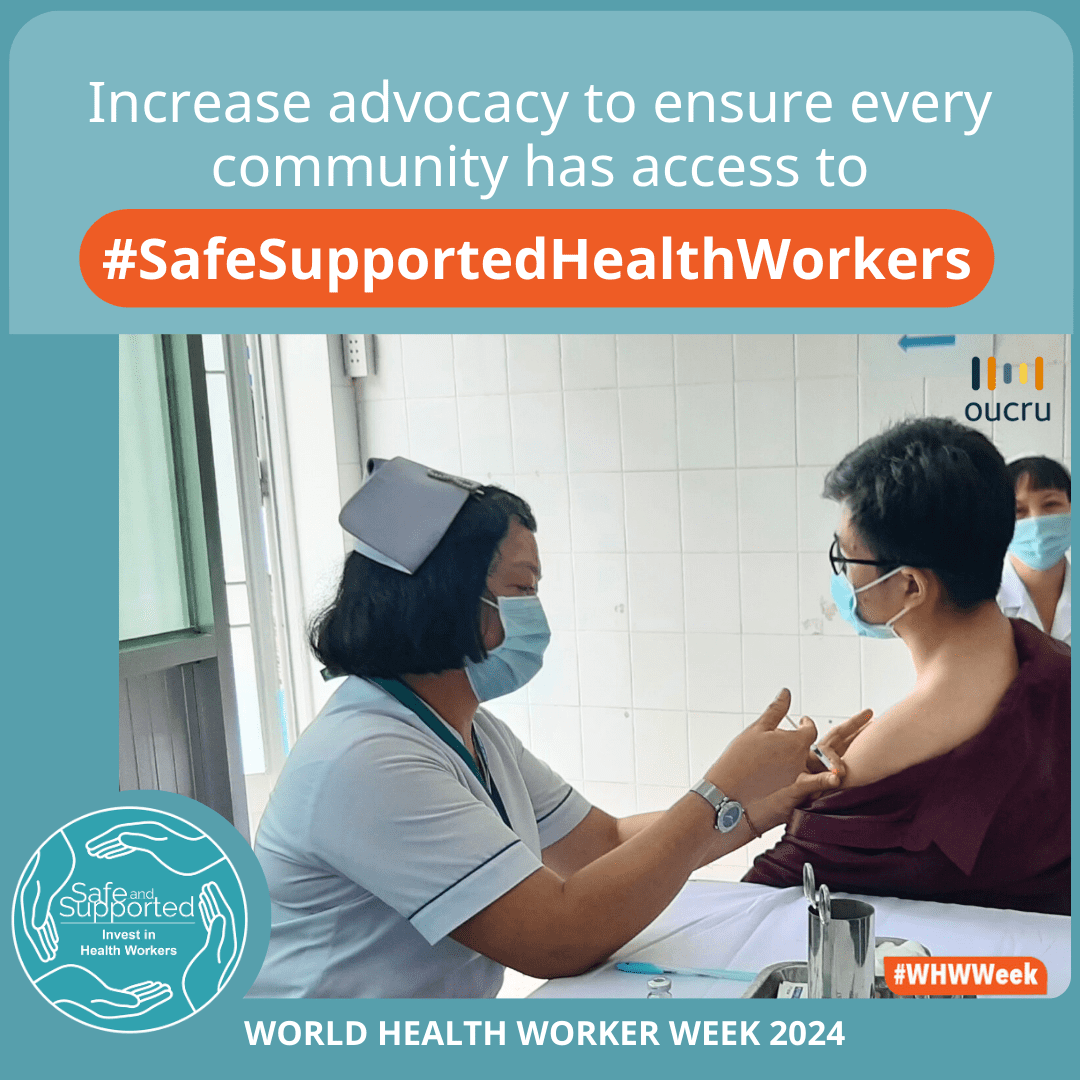
    2. We need increased and more targeted advocacy to ensure every community has access to #SafeSupportedHealthWorkers to provide access to primary health care and to prevent the spread of emerging health threats. 

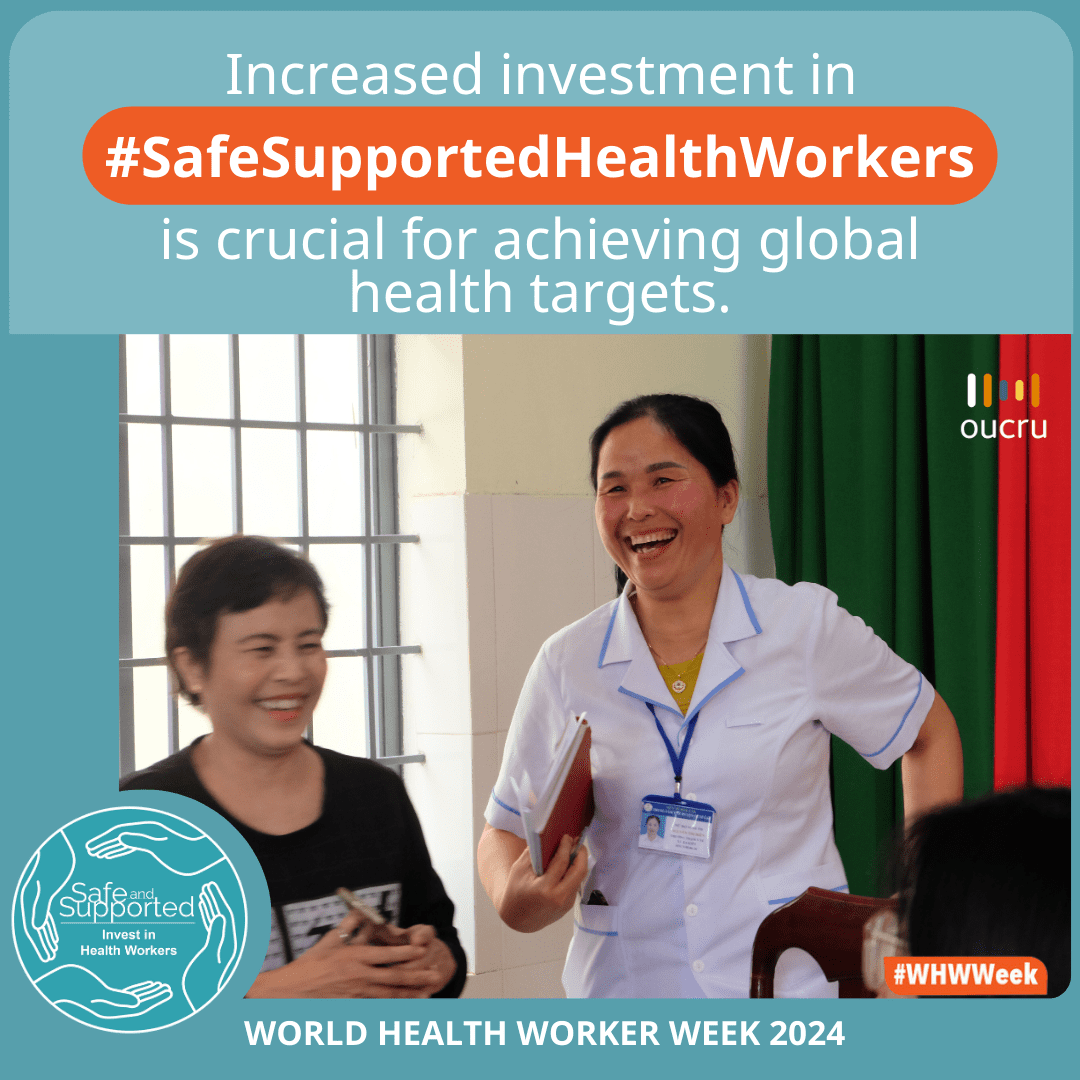
    1. Increased investment in #SafeSupportedHealthWorkers is crucial for achieving SDG3 (Sustainable Development Goal – Ensure healthy lives and promote well-being for all ages). 

    With at least half of people around the world still lacking access to essential health services—including maternal care, HIV treatment, family planning, and vaccines, the rising tide of non-communicable diseases and the ongoing threats of emerging diseases and climate change, building a robust health workforce must be a priority from the global to community level(2)

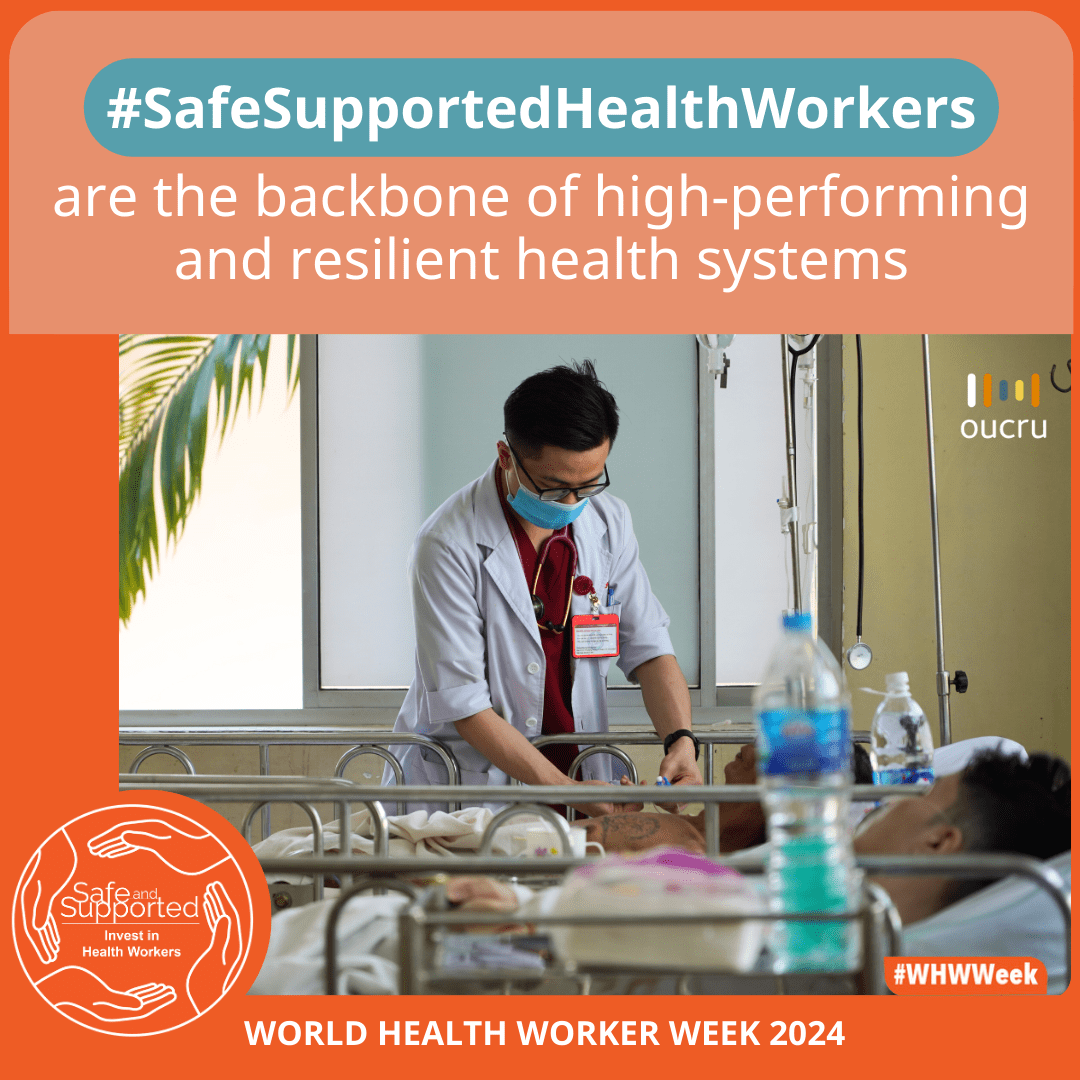
    1. #SafeSupportedHealthWorkers are the backbone of high-performing and resilient health systems, making them an essential investment for achieving global health and development goals. 

    Health workers are crucial for expanding services, preventing diseases, and supporting economies. Therefore, they should be well-trained, supervised, and compensated. 

    1. Many health professionals feel unsafe and do not receive support, respect, and the appropriate working environments they need, leading to a lack of skills development and demotivation.  

    Despite a surplus of unemployed health workers in several low- and middle-income countries, many countries need help to meet the international minimum target of health workers per population. The WHO projects a global shortage of 10 million employed health workers by 2030(3)

    At OUCRU, healthcare workers have been a cornerstone of our public and community engagement approach. To amplifying World Healthcare Workers Week’s messages this year, we initiated a series of activities to celebrate their dedication and resilience while raising awareness and appreciation from the wider public. 

    We ran a small campaign to spotlight healthcare workers’ personal stories and experiences around OUCRU and our partnered network. These short videos served to give the public a view into the daily lives and challenges these frontline heroes face. [videos are available soon]

    Besides raising awareness, one of OUCRU’s Public and Community Engagement core programmes is building capacity for healthcare workers, improving their work experience and professional opportunities, and ultimately aiming for a better comprehensive care system around and beyond the hospital. We have developed a series of online workshops and essential resources aimed at trainers and healthcare workers, as well as implement pilot initiatives around hospitals to prioritise their health and well-being. 

    Capacity Strengthening for frontline vaccine workers to improve the local vaccine uptake
    Read more

    Online and in-person Training
    Watch here

    CONNECT, the resources and training hub for HCWs on The Global Health Network

    Engage with healthcare workers and in hospitals
    Read more

    By focusing on the professional development and safety of healthcare workers, OUCRU emphasises our commitment to our vision of local research and global impact and empowering healthcare workers to continue and flourish their life-saving work with confidence and resilience. 
    References:

    (1) https://www.who.int/news-room/fact-sheets/detail/primary-health-care

    (2) https://www.who.int/publications/i/item/9789240004276

    (3) https://www.who.int/publications/m/item/health-and-care-workers–protect-invest-together