Author: Tuyet Anh Tran

  • Community Engagement, a bridge between research and public health: A case study from Dengue 

    With 75% of the disease burden concentrated in the Asia-Pacific region, ASEAN and the World Health Organization (WHO) choose June 15th as Dengue Day[1].

    According to WHO, dengue cases have reportedly increased from 505,430 cases in 2000 to 5.2 million in 2019. 

    2023 witnessed the highest number of dengue cases, with over 6.5 million cases and more than 7,300 dengue-related deaths, affecting over 80 countries in all WHO regions. The disease is now endemic in more than 100 countries in the WHO Regions of Africa, the Americas, the Eastern Mediterranean, Southeast Asia, and the Western Pacific. 

    In Vietnam, one of the largest dengue outbreaks happened in 2022 with over 367,000 dengue cases and 140 deaths reported (according to the General Department of Preventive Medicine, Vietnam Ministry of Health)[2]. 

    Several factors are associated with the increasing risk of spread of the dengue epidemic: the changing distribution of the vectors (chiefly Aedes aegypti and Aedes albopictus mosquitoes), especially in previously dengue native countries; the consequences of El Niño phenomena in 2023 and climate change leading to increasing temperatures and high rainfall and humidity; fragile health systems amid the COVID-19 pandemic; and political and financial instabilities in countries facing complex humanitarian crises and high population movements. 

    Community engagement matters in dengue control. 

    In the context of rising threats from dengue, involving and engaging the community becomes an urgent matter in global and national dengue control strategies. Research in 2015 found that household contacts who live in the same housing complex as confirmed patients are at increased risk of dengue, particularly in highly populated urban areas[3] while a study conducted in an urban area in Vietnam in 2019 revealed several community barriers that dengue programs have to face including a lack of communication skills from the health sector and low awareness and readiness from the community[4]. 

    To effectively engage with dengue patients and the high-risk dengue infection community, OUCRU’s Dengue group has cooperated with the Public and Community Engagement Group to organise a series of health talks at the Hospital for Tropical Diseases and OUCRU’s office. Other than providing trustworthy health science information about dengue to raise public awareness about dengue transmission, and prevention strategies for the community to implement at home, the project team also aimed to educate the local patient community about clinical trials knowledge, therefore enhancing the public’s understanding and acceptance, support the upcoming dengue antiviral prophylaxis trial, especially in recruitment. 

    Through this series of community engagement and involvement events, there were almost 400 participants from diverse backgrounds and educational and awareness levels actively engaged in the events. With more than 60 questions being asked, our dengue researchers and HTD doctors helped community members to answer the strongest concerns as well as build their trust, aiming for their support in further research in general, and dengue clinical research in particular. 

    This project serves as a valuable lesson on how to communicate effectively with participants from diverse backgrounds and explore several barriers while engaging with the community to improve in future projects such as how to compromise the project team’s goals and the community’s concerns, how to trigger their interest in complex ideas such as trials and research, and barriers on gathering their opinions and feedback including educational and other uncontrollable factors. 

    This dengue public engagement project is funded by Seed Awards, an initiative specified for researchers to implement their public and community engagement, aiming to raise awareness on the impact of such project on research agenda, build capacity to conduct public and community engagement projects and encourage researchers to integrate this component in their research process.  

    References:  

    1. HCDC. What is ASEAN Dengue Day?. Avaiable at https://hcdc.vn/hoidap/index/chitiet/Ccs74b#:~:text=Tr%C6%B0%E1%BB%9Bc%20nguy%20c%C6%A1%20lan%20r%E1%BB%99ng,ki%E1%BB%83m%20so%C3%A1t%20c%C4%83n%20b%E1%BB%87nh%20n%C3%A0y.
    2. World Health Organization. Dengue Situation Updates 2023. WHO Regional Office for the Western Pacific. 2023; https://apps.who.int/iris/handle/10665/365676. Accessed March 23, 2023. 
    3. Anders KL, Nga le H, Thuy NT, et al. Households as foci for dengue transmission in highly urban Vietnam. PLoS neglected tropical diseases. 2015;9(2):e0003528. 
    4. Nguyen-Tien T, Probandari A, Ahmad RA. Barriers to Engaging Communities in a Dengue Vector Control Program: An Implementation Research in an Urban Area in Hanoi City, Vietnam. The American journal of tropical medicine and hygiene. 2019;100(4):964-973. 
      1. Sức mạnh của cộng đồng: Kiến tạo và cải thiện sức khỏe tinh thần

        Gắn kết xã hội đóng vai trò quan trọng trong việc hỗ trợ con người trong việc giảm mức độ lo lắng và trầm cảm, giúp chúng ta nâng cao và củng cố tự trọng, đồng cảm, tin tưởng và hợp tác với những người xung quanh.

        Sự hỗ trợ và gắn kết xã hội đặc biệt quan trọng trong thời kỳ khủng hoảng và khi chúng ta phải đối mặt với thử thách trong cuộc sống. Một nghiên cứu trên 37.000 sinh viên tại Đại học Quốc gia Thành phố Hồ Chí Minh (VNU-HCMC) thực hiện cho thấy 84,5% sinh viên đại học chọn giữ liên lạc với gia đình và bạn bè để giúp họ vượt qua những thách thức do hạn chế xã hội của COVID-19. Một nghiên cứu tổng quan phạm vi cho thấy 83% các nghiên cứu chứng minh hỗ trợ xã hội có lợi cho các triệu chứng trầm cảm.

        Lợi ích nổi bật của cộng đồng là hỗ trợ.

        Cộng đồng, theo nghĩa rộng nhất, là nơi chúng ta cảm thấy thuộc về, mang lại cảm giác là một phần của một cái gì đó lớn hơn bản thân và cùng chia sẻ những kết nối tích cực. Cộng đồng không chỉ giới hạn trong gia đình và vòng tròn xã hội, mà có thể hình thành với những người xa lạ cùng chia sẻ một điểm chung.

        Khi các thành viên cộng đồng giúp đỡ lẫn nhau và củng cố sự gắn kết xã hội trong cộng đồng, đặc biệt trong những thời điểm thử thách của cuộc sống, điều này sẽ thúc đẩy lòng tự trọng và tạo ra những cảm xúc tích cực.

        Cô đơn có thể gây nguy hiểm cho sức khỏe tinh thần.

        Đôi khi cảm thấy cô đơn là điều bình thường, nhưng cảm giác cô đơn dai dẳng không giảm bớt, và ảnh hưởng đến cuộc sống hàng ngày có thể là dấu hiệu xấu cho sức khỏe tinh thần. Những người ít kết nối xã hội dễ bị lo lắng, trầm cảm, có biểu hiện và hành vi chống đối xã hội và thậm chí là xuất hiện suy nghĩ hay ý định tự tử. Một cuộc khảo sát cho thấy thiếu kết nối xã hội có thể dẫn đến nguy cơ mắc bệnh và tử vong cao hơn những yếu tố phổ biến như hút thuốc, huyết áp và thiếu vận động.

        Trong khi quan niệm truyền thống là người già hay cảm thấy cô đơn, một nghiên cứu cho thấy những người trẻ tuổi cũng có thể có những cảm xúc tiêu cực này. Điều này có thể chịu ảnh hưởng từ nhiều yếu tố, trong đó có việc mạng xã hội khơi dậy và khuếch tán cảm xúc tiêu cực cũng như xu hướng so sánh với cuộc sống của người khác. Đại dịch COVID-19 cũng đã để lại tác động sâu sắc không thể đảo ngược đến sức khỏe tâm thần của những người trẻ tuổi, đặc biệt là chứng lo âu xã hội.

        Cách tìm kiếm, xây dựng, và duy trì cộng đồng, kết nối xã hội

        Tìm được cộng đồng phù hợp với bản thân là một bước rất quan trọng để tận dụng sức mạnh của cộng đồng này trong việc chăm sóc sức khỏe tinh thần của bản thân. Bạn có thể áp dụng một số mẹo sau từ Quỹ Sức khỏe Tâm Thần:

        • Tìm kiếm và tham gia các nhóm phù hợp sở thích, tính cách, lối sống cá»§a bạn
        • Nếu cần được há»— trợ chuyên sâu hÆ¡n, hãy nghiên cứu các nhóm há»— trợ có sá»± tham gia cá»§a chuyên gia
        • Tham gia tình nguyện rất có lợi cho việc khuếch đại cảm giác thuá»™c về má»™t Ä‘iều/nhóm lá»›n lao hÆ¡n bản thân bạn.
        • Tận dụng các nhóm cá»™ng đồng địa phương.
        • Tham gia vào các cá»™ng đồng trá»±c tuyến.

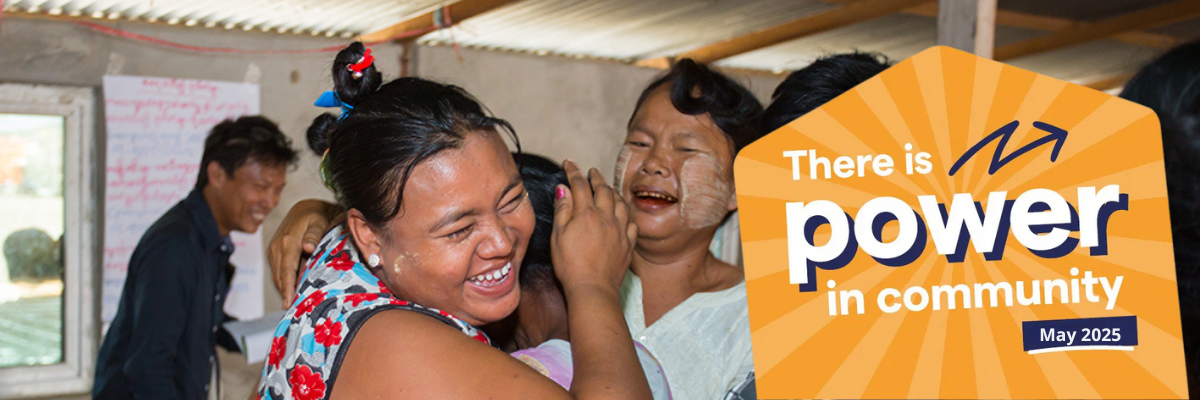
        * Tháng Năm được nhiều quốc gia chọn để tổ chức các hoạt động Nâng cao Nhận thức về Sức khỏe Tinh thần. Chủ đề năm 2025 là ‘Sức mạnh của cộng đồng’, nhấn mạnh vai trò của việc tham gia vào các nhóm cộng đồng cũng như duy trì tương tác xã hội đối với sức khỏe tinh thần. Xem thêm nhiều bài viết cùng chủ đề bên dưới.

      2. The power of community: Together for good mental health 

        People who feel more connected to others have lower levels of anxiety and depression. Some studies show they also have higher self-esteem, greater empathy for others, and are more trusting and cooperative.  

        Social support and connections are particularly important during crisis time. A research study of over 37,000 students at Vietnam National University of Ho Chi Minh City (VNU-HCMC) that was animated by Collab Lab, our youth-led initiative, showed that 84.5% of college students chose to stay connected with family and friends to help them overcome COVID-19’s social restrictions’ challenges. A scoping review shows that 83% of studies reported that social support benefited symptoms of depression.  

        Let’s delve deep into the essential role of community and the sense of connection as well as how you can find, build, and get help from the community.  

        Who is a community that we are talking about? 

        In the broadest sense, community is where we feel like we are a part of something bigger than ourselves and share positive connections. This can happen even with strangers who are not in your social and family circles but share the same beliefs with you.  

        What can a community offer? 

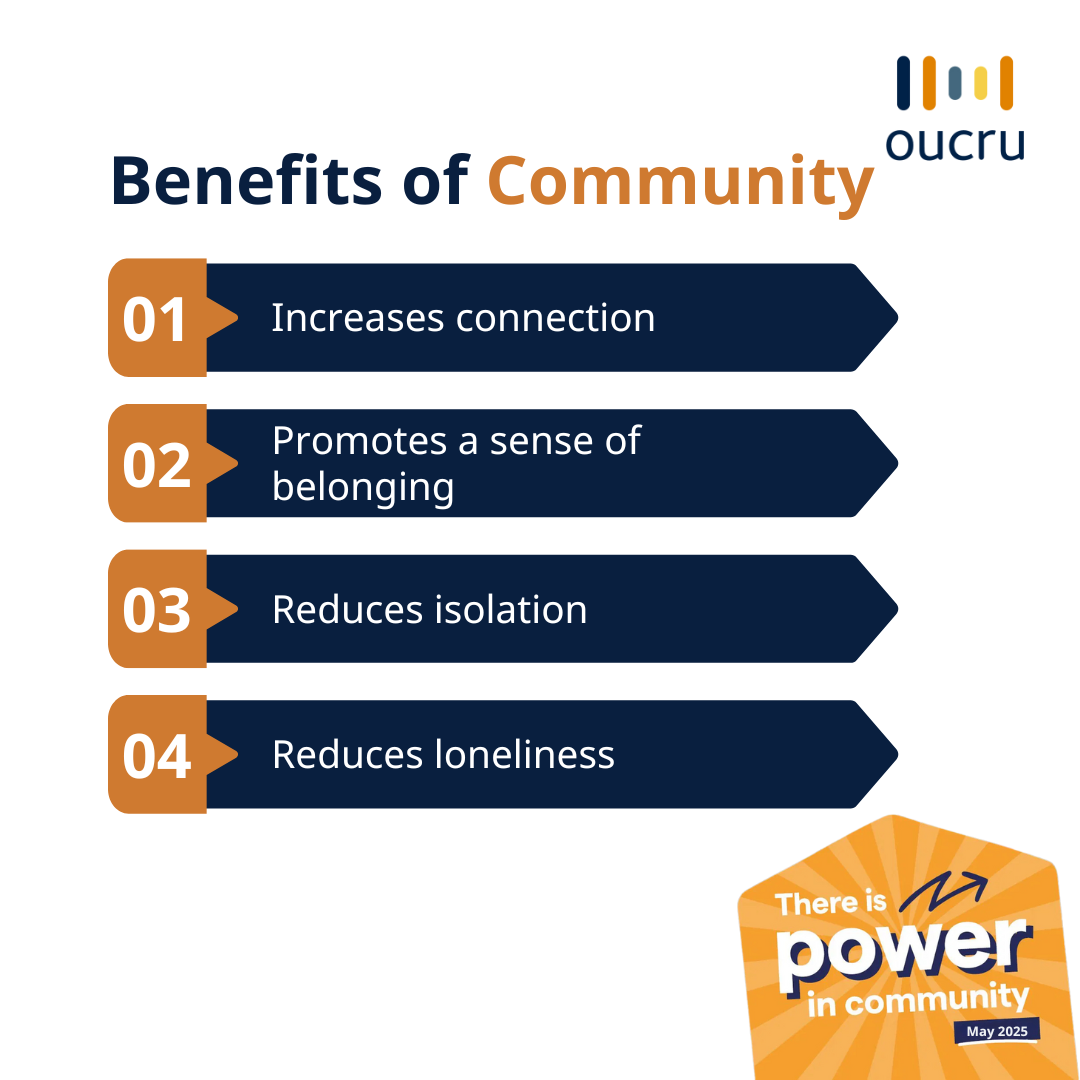
        The most powerful benefit of a community is offering support. Community members can help each other during life’s challenges, and reassure each other about our togetherness, therefore boosting self-esteem and creating positive social feedback.  

        Mental Health Month 2025 - Benefits of community in mental healthcare

        The Dangers of Loneliness 

        Though it’s common to feel lonely at times, persistent loneliness can adversely affect well-being. People low in social connection are more vulnerable to anxiety, depression, antisocial behavior, and even suicidal behaviors. A landmark survey showed that lack of social connectedness predicts vulnerability to disease and death beyond traditional risk factors such as smoking, blood pressure, and physical activity.  

        Research has found that, while loneliness is more likely a common social issue with elderly people, young people could suffer from it. This may be due to several factors, including heavy use of social media (and the tendency to compare with others’ lives) or the irreversible profound effect on young people’s mental health, particularly social anxiety during and after the COVID-19 pandemic.  

        Practical steps to find your community and maintain social connections 

        Mental Health Foundation suggests some tips on whether to form your community or find one suited to your needs. 

        • Join groups aligned with your identity or passions 
        • Support groups involving professional experts  
        • Volunteer at local animal shelters, environmental projects, or awareness campaigns. 
        • Connect with neighbors to strengthen your local bonds and build a sense of local support for each other. 
        • Engage in online communities. 
      3. Chăm sóc sức khỏe tinh thần: sức mạnh nằm ở cộng đồng.

        Chăm sóc sức khỏe tinh thần: sức mạnh nằm ở cộng đồng.

        Tháng Năm được nhiều quốc gia chọn để tổ chức các hoạt động Nâng cao Nhận thức về Sức khỏe Tinh thần thần.

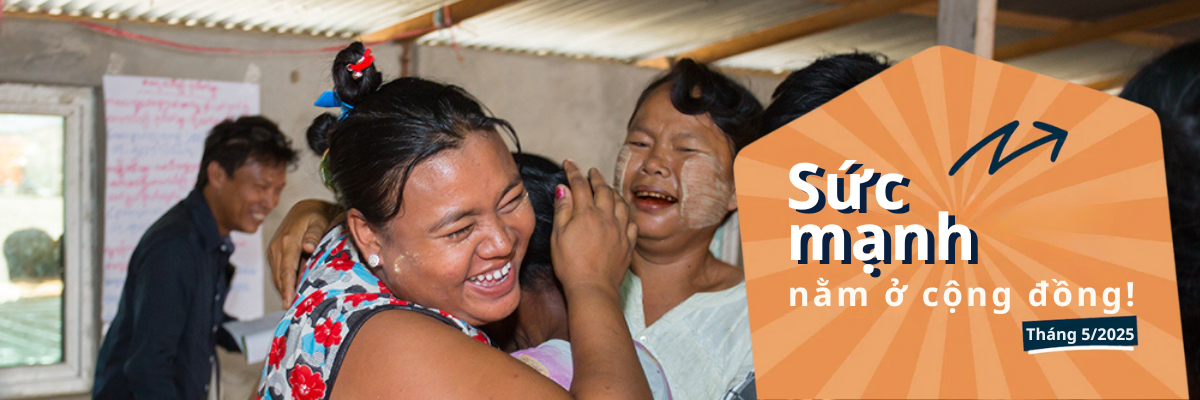
        Năm nay, Quỹ Sức khỏe Tâm thần, Anh, đã lựa chọn chủ đề ‘Sức mạnh của cộng đồng’, nhấn mạnh vai trò của việc tham gia vào các nhóm cộng đồng cũng như duy trì tương tác xã hội đối với sức khỏe tinh thần.

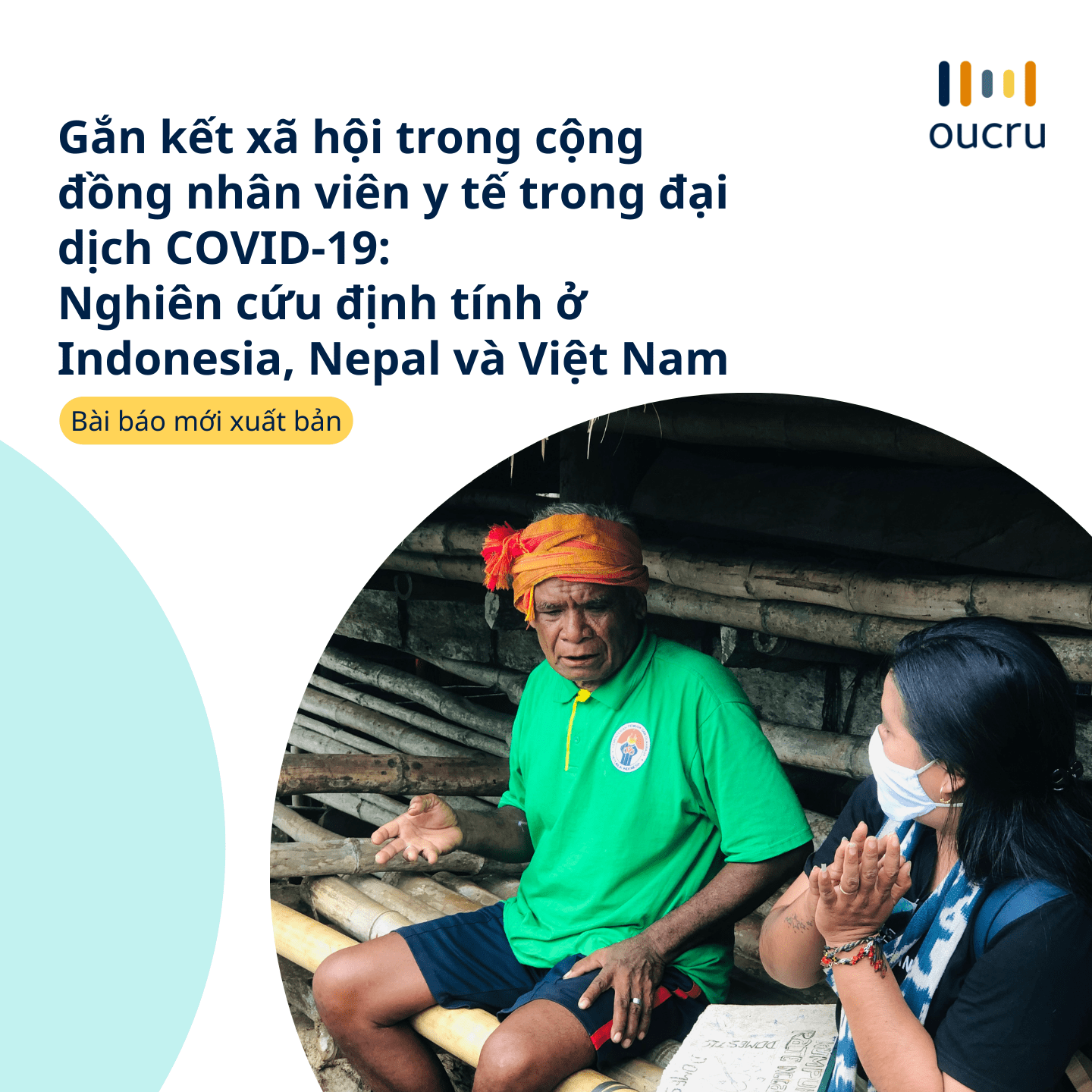
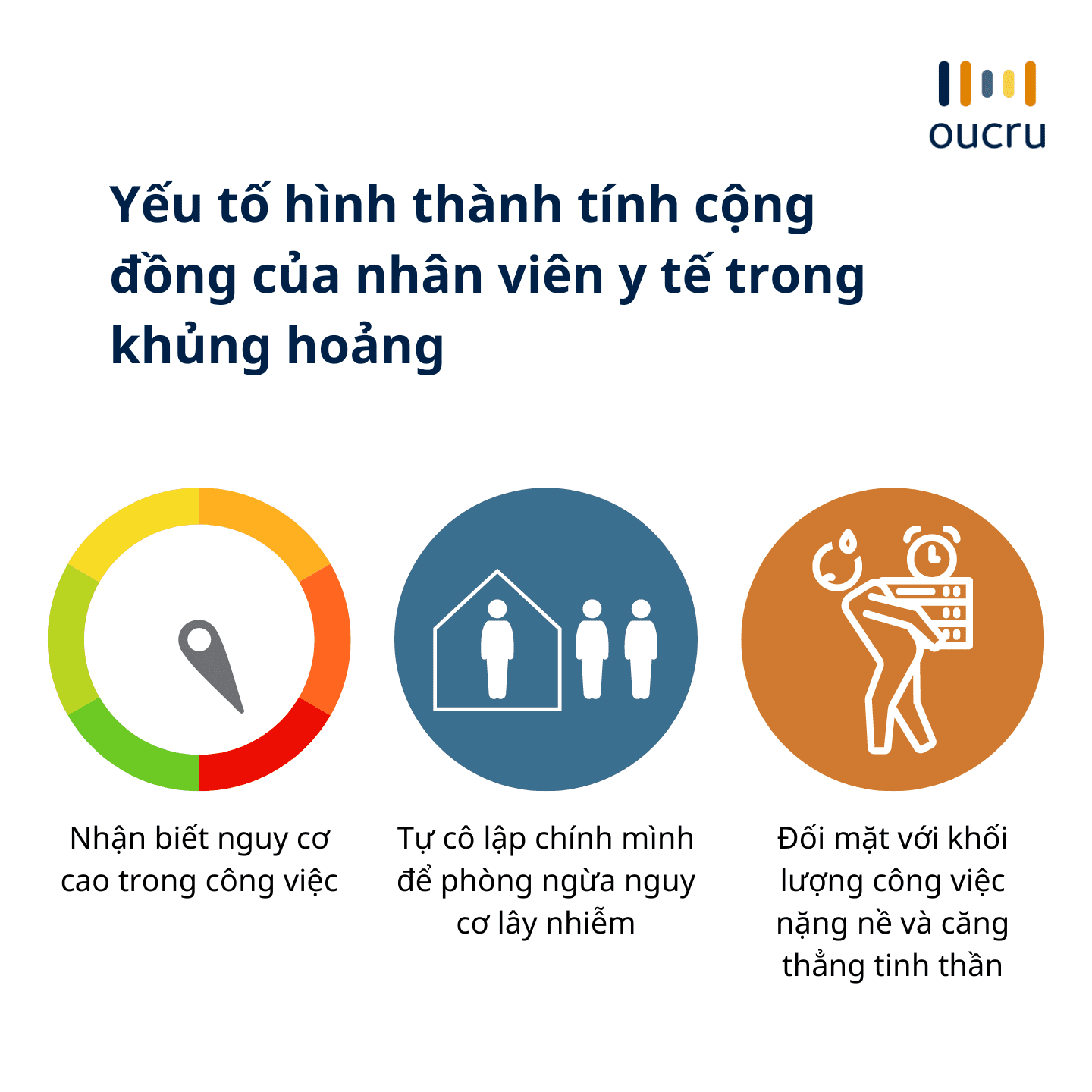
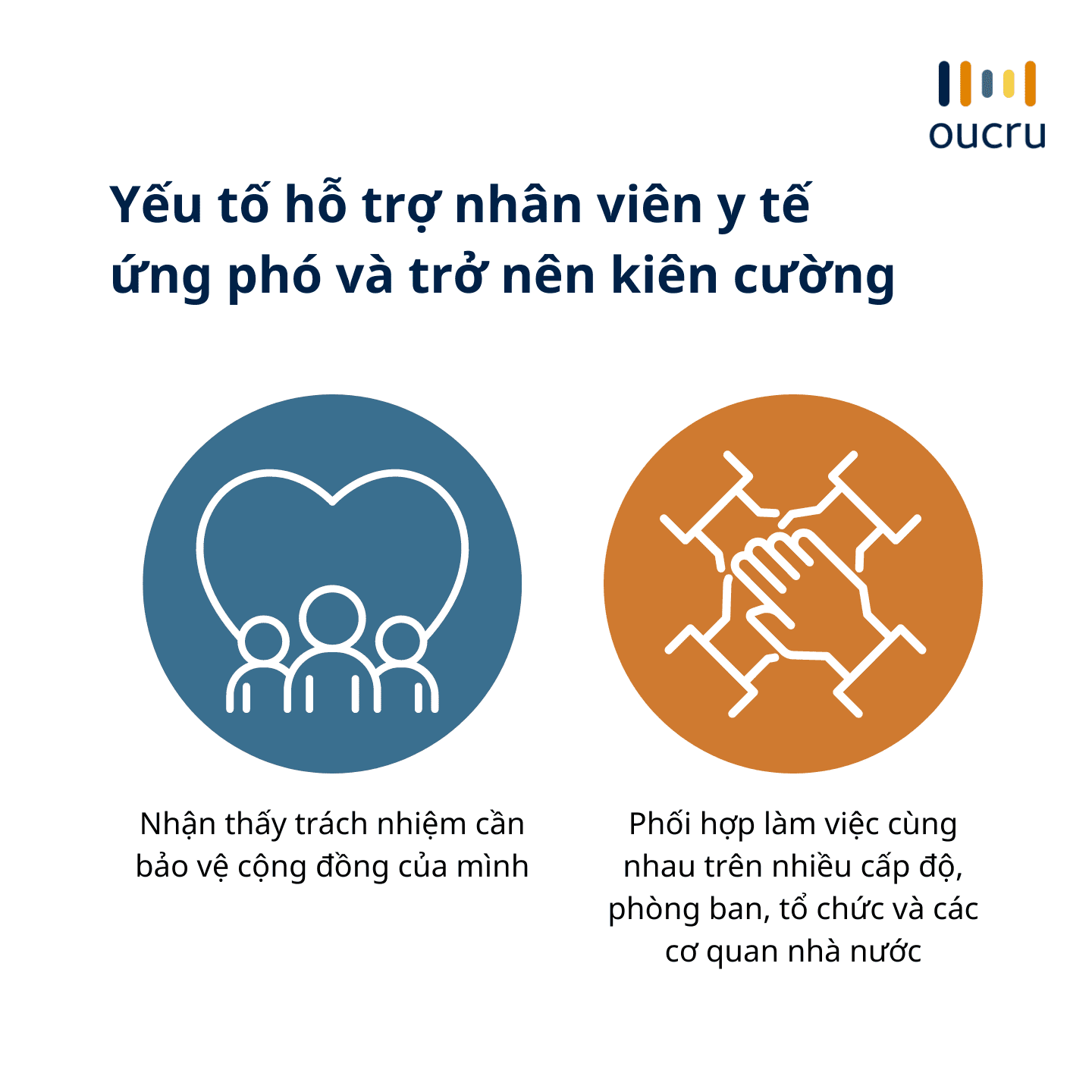
        Các mối quan hệ xã hội và cộng đồng đặc biệt quan trọng trong những khoảnh khắc khó khăn của cuộc sống, giúp chúng ta thêm động lực và niềm tin vượt qua thách thức và trở ngại. Một nghiên cứu của Tiến sĩ Nguyễn Thanh Hà, OUCRU Việt Nam, sử dụng khung lý thuyết xã hội học của Baehr về Cộng đồng Chung số phận, đã chứng minh sự hình thành mối liên kết xã hội này trong nhóm nhân viên y tế trong thời kỳ khó khăn của đại dịch COVID-19.

        Duy trì kết nối xã hội trong các mối quan hệ xã hội dẫn đến tình trạng sức khỏe tâm thần tích cực. Một nghiên cứu do Đại học Quốc gia Thành phố Hồ Chí Minh tiến hành cũng cho thấy duy trì kết nối xã hội mang lại những tác động tích cực đến sức khỏe tinh thần. Vào thời điểm đỉnh dịch COVID-19, 84,5% sinh viên đại học cho biết duy trì kết nối với gia đình và bạn bè đã giúp các bạn vượt qua những thách thức tâm lý trong thời gian giãn cách xã hội.

        Nghiên cứu này được dự án Collab Lab của phòng Kết nối Khoa học với Công chúng và Cộng đồng tóm tắt và dựng thành video vui nhộn và sáng tạo.

        Sức khỏe tinh thần trong lĩnh vực nghiên cứu, học thuật

        Sức khỏe tinh thần là nền tảng cho sự khỏe mạnh và hoạt động hiệu quả của các cá nhân.

        Theo WHO, hơn 100 triệu người bị rối loạn sức khỏe tâm thần ở khu vực Tây Thái Bình Dương. Tại Việt Nam, theo Bệnh viện Tâm thần Trung ương 1, 14,2% dân số mắc một trong mười rối loạn tâm thần phổ biến. Tỷ lệ tự tử năm 2015 là 5,87 trên 100.000 dân.

        Tuần lễ Nâng cao Nhận thức về Sức khỏe Tinh thần không chỉ nhấn mạnh tầm quan trọng của sức mạnh tập thể, mà còn khuyến khích các cộng đồng có thêm nhiều đối thoại cởi mở, tạo cơ hội cho các cá nhân, cộng đồng và tổ chức cùng nhau hướng đến giảm kỳ thị và thúc đẩy các hoạt động hỗ trợ sức khỏe tinh thần tốt hơn.

        Nhiều nghiên cứu đã chỉ ra những người làm công tác nghiên cứu trong các lĩnh vực học thuật thường gặp phải nhiều thách thức về sức khỏe tâm thần như căng thẳng, kiệt sức và trầm cảm. Một cuộc khảo sát trực tuyến toàn cầu cho thấy nhóm sau đại học có nguy cơ gặp phải lo âu hoặc trầm cảm ở mức độ trung bình đến nghiêm trọng cao gấp sáu lần so với dân số nói chung. Một phần ba nghiên cứu sinh có nguy cơ cao hoặc đã mắc một trong các rối loạn tâm thần phổ biến như trầm cảm. Một số yếu tố ảnh hưởng đến sức khỏe tinh thần của sinh viên đại học bao gồm trầm cảm, lo âu, căng thẳng, áp lực học tập, thiếu hỗ trợ xã hội, cô lập, chấn thương tâm lý, thiếu các biện pháp hòa nhập và các yếu tố căng thẳng liên quan đến đại dịch.

        Cùng nhau, chúng ta có thể gỡ bỏ rào cản và định kiến đối với sức khỏe tinh thần.

        Trong tháng Nâng cao Nhận thức về Sức khỏe Tinh thần này, OUCRU hợp tác với các chuyên viên tâm lý để tập hợp nguồn tài liệu hữu ích, phù hợp với người Việt Nam, đặc biệt các bạn trẻ làm việc trong lĩnh vực nghiên cứu, học thuật. Các tài liệu tập trung vào việc hỗ trợ các bạn chăm sóc sức khỏe tinh thần của mình thông qua việc giúp các bạn thiết lập, tham gia, và duy trì nhóm cộng đồng của mình cũng như cách giao tiếp hay tâm sự với bạn bè, đồng nghiệp, và gia đình về các vấn đề liên quan đến sức khỏe tinh thần của bạn. Những tài liệu này cũng phần nào giúp bạn hỗ trợ những người xung quanh.

        Hãy nhớ rằng: sức mạnh nằm trong cộng đồng của chúng ta, và trong đó có bạn.

      4. The power to take care of your mental health is within the community

        The power to take care of your mental health is within the community

        Several countries choose May as Mental Health Awareness Week. The theme of this year, chosen by the Mental Health Foundation, is community, highlighting the essential role of community and social connections in mental health and well-being. 

        Social connections and community play a central role in mental health, especially during times of crisis. Healthy relationships and helpful community will contribute to helping us navigate life’s challenges. Research done by Dr Nguyen Thanh Ha, OUCRU Vietnam, using Bahers’ sociological framework, Community of Fate, reflected the formation of a community of HCWs and the social cohesion underlying their efforts to survive hardship during the pandemic. 

        Social supports contributed to several findings that staying connected with social relationships has led to positive mental health status. A research study of over 37,000 students at Vietnam National University of Ho Chi Minh City (VNU-HCMC) that was animated by Collab Lab, our youth-led initiative, showed that 84.5% of college students chose to stay connected with family and friends to help them overcome COVID-19’s social restrictions’ challenges.  

        Mental health in the research context 

        Mental health is important to everyone. 

        According to WHO, more than 100 million people suffer from mental health disorders in the Western Pacific Region. In Vietnam, according to the National Mental Hospital, 14.2% of the population suffers from one of ten common mental disorders. The rate of suicide in 2015 was 5.87 per 100 000 population. 

        Mental Health Awareness Week is important not only to raise awareness and emphasise the importance of collective social efforts, but also to encourage open conversations, reduce stigma, and promote wellbeing. It creates an opportunity for individuals, communities, and organizations to come together, share stories, and advocate for better mental health support. 

        Mental health challenges like stress, burnout, and depression are pervasive in science, research, and academia. A global online survey revealed that graduate students were more than six times more likely to experience moderate to severe anxiety or depression compared to the general population. Other research indicates that one-third of Ph.D. students risk developing or already have a common psychiatric disorder such as depression. A narrative review has identified several factors affecting higher education students’ mental health, well-being, and academic performance—including depression, anxiety, stress, academic pressure, insufficient social support, isolation, trauma, lack of inclusive practices, and pandemic-related stressors. 

        We need to work together to dispel the taboo and stigma surrounding mental health challenges. 

        This May, during Mental Health Awareness Month, OUCRU is collaborating with psychological experts to provide useful, localised resources for young people in both public and professional settings. We will emphasise the community’s vital role in addressing mental health challenges and guide how to engage with various community members—from people outside of your social circle to friends, colleagues, supervisors, and family. 

        Stay tuned to learn how to care for your mental health and support those around you. Remember: the power lies within our community, and that includes you. 

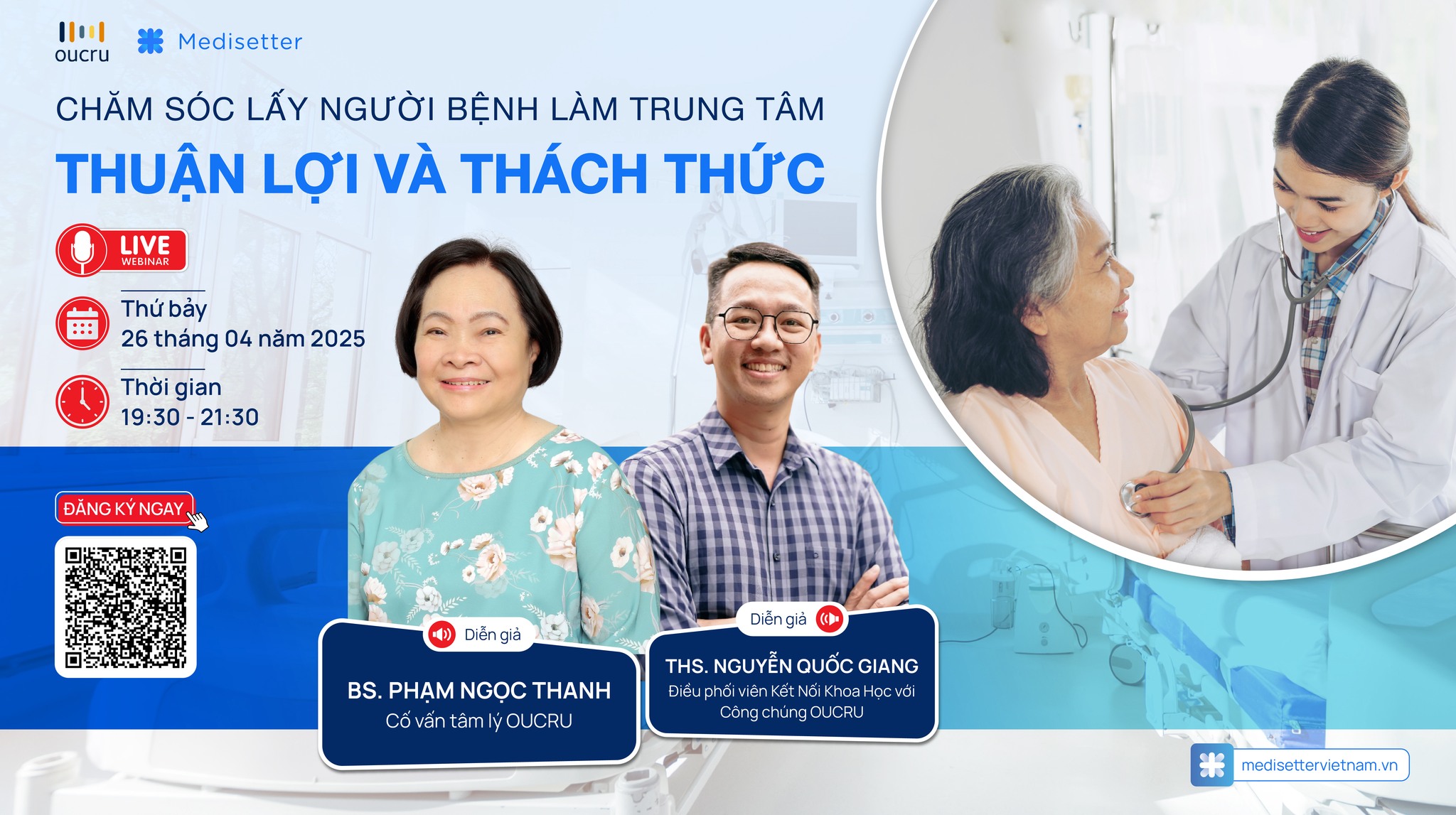
      5. Chăm sóc lấy người bệnh làm trung tâm: Nhân văn nhưng còn nhiều thử thách

        Chăm sóc lấy người bệnh làm trung tâm: Nhân văn nhưng còn nhiều thử thách

        Phương pháp chăm sóc lấy người bệnh làm trung tâm nêu bật tầm quan trọng của việc ưu tiên nhu cầu, mong muốn và giá trị của bệnh nhân cũng như trao quyền cho người bệnh tham gia tích cực vào quá trình điều trị, đặc biệt là vào những thời điểm cần đưa ra quyết định.

        Mô hình này đòi hỏi nhân viên y tế cần phát triển kỹ năng giao tiếp để đáp ứng nhu cầu bệnh nhân một cách hiệu quả, trở thành người bảo vệ quyền lợi của bệnh nhân .

        Những yếu tố quan trọng khác mà nhân viên y tế nên được trang bị bao gồm tôn trọng, giao tiếp rõ ràng để cung cấp đầy đủ thông tin cho bệnh nhân, tạo điều kiện và trao quyền ra quyết định cho bệnh nhân, hỗ trợ về mặt tâm lý cho bệnh nhân, từ đó cải thiện chất lượng của dịch vụ y tế một cách toàn diện bao gồm việc có sự tham gia của thân nhân người bệnh cũng như đảm bảo bệnh nhân có thể tiếp cận với các dịch vụ y tế cần thiết.

        Tại Việt Nam, mô hình này đã được Bộ Y tế đưa vào tiêu chí đánh giá bệnh viện từ năm 2016, và ngày càng chứng minh vai trò quan trọng trong xây dựng trải nghiệm y tế nhân văn, hiệu quả.

        Bên cạnh đó, khi đưa vào triển khai thực tế, nhiều cơ sở y tế đối mặt với nhiều thách thức như hạn chế về nguồn lực, đào tạo nhân viên và rào cản văn hóa.

        Trong khuôn khổ chương trình hợp tác giữa OUCRU và Medisetter Việt Nam, buổi đào tạo trực tuyến sắp tới sẽ tập trung vào:

        • Phân tích các thuận lợi và thách thức khi triển khai mô hình tại cÆ¡ sở.
        • Thảo luận các tình huống thá»±c tế từ kinh nghiệm lâm sàng.
        • Khuyến khích xây dá»±ng tư duy lấy người bệnh làm trung tâm trong mọi hoạt động chuyên môn.

        Sự kiện có sự tham gia của diễn giả

        • BS. Phạm Ngọc Thanh – Nguyên Trưởng khoa Tâm lý, Bệnh viện Nhi Đồng 1, Thành phố Hồ Chí Minh. Hiện là Cố vấn Tâm lý phòng Kết Nối Khoa Học vá»›i Công Chúng và Cá»™ng Đồng, OUCRU.
        • ThS. Nguyá»…n Quốc Giang – Thạc sÄ© Công tác Xã há»™i, Viện Nghiên cứu Xã há»™i Châu Á (Asian Social Institute), Philippines. Hiện là Điều phối viên phòng Kết Nối Khoa Học vá»›i Công Chúng và Cá»™ng Đồng, OUCRU.

        Tham gia cùng chúng tôi từ 19:30 – 21:30, Thứ Bảy, ngày 26.04.2025 qua Zoom.

        Đăng ký tại đây.

      6. Patient-centred care: The heart of modern healthcare approach to improve patient’s satisfactory

        Patient-centred care: The heart of modern healthcare approach to improve patient’s satisfactory

        Patient-centred care approach prioritises individual patients’ needs, preferences, and values throughout their care journey, empowers patients to become active participants in their care, particularly during the decision-making process.

        To adopt this approach, healthcare professionals must develop strong communication skills and serve as patient advocates to address patient needs effectively.

        Key requirements required from health professionals include respect, clear communication to enable and empower active informed decision-making, providing emotional support that may accompany health issues, and enhancing comprehensive care including involving family and friends as well as ensuring easy access to needed health care services.

        In Vietnam, this holistic approach has been part of hospital evaluation criteria since 2016 and has achieved significant success across healthcare institutions as well as nurturing more effective, compassionate, and more satisfying patient experiences.

        However, healthcare facilities also face several challenges in implementing this approach, including limits in resources, staff training, and culture obstacles.

        In the upcoming webinar, organised by OUCRU and Medisetter Vietnam, speakers MsC. Nguyen Quoc Giang and Dr. Pham Ngoc Thanh will host a special discussion about:

        • Advantages and challenges of adopting this approach in Vietnamese healthcare settings, with real examples.
        • Practical scenarios and lessions learned with speakers’ and partners’ clinical experience, emphasizing solutions to address challenges and improve patient satisfaction.
        • Strategies to encourage patient-centred adoptation across all aspects of professional medical fields.

        This webinar is a part of the long partnership between OUCRU’s Public and Community Engagement Group with Medisetter Vietnam, to improve communications skills for healthcare workers, thereby boost their confidence in communications with patients and enhance patient’s satisfactory in health settings in Vietnam. Watch other training recordings organised by us here.

        Join us at 19:30 – 21:30 on Saturday, 26.04.2025 via Zoom.

        Register here

      7. Collab Lab’s Meet the Scientists: Where science lovers connect

        Collab Lab’s Meet the Scientists: Where science lovers connect

        With the new concept ‘Through the Lenses of Science’, Collab Lab’s upcoming Meet the Scientists event is designed to bring meaningful interactions and engagement opportunities for young people to be able to dialogue and gain deep insight on scientific research as well as build the connection with scientists at OUCRU.

        • Explore and understand the comprehensive journey of scientific research while learning about different perspectives and approaches from stakeholders and communities, each of all should be respected and acknowledged.
        • Enable two-way feedback with meaningful discussions between scientists and young people. Young participants have opportunities to listen to researchers’ work, their achievements as well as challenges, and learning about their personal experiences that have shaped their scientific careers. Researchers can benefit from firsthand community feedback and questions, helping them refine their research ideas and agenda.
        • Young people can also contribute their opinions as a member of the community where research at OUCRU will take place at and affect to. This part is an important step of the process to help OUCRU research become more relevant, thereby create lasting impact in both the scientific community and society as a whole.

        Meet the Scientists is an annual event within the Collab Lab project, a youth-led initiative. A passionate team of university students and young professionals collaborate with scientists at OUCRU and partnered institutions to transform their scientific publications into engaging funny animated videos. The project aims to help research papers easier to understand and more accessible to all, especially young people.

        Watch Collab Lab’s videos in 2024 here.

        Explore more about Collab Lab process and how to get involved here.

      8. Moral distress of frontline workers in research settings is often overlooked

        Moral distress of frontline workers in research settings is often overlooked

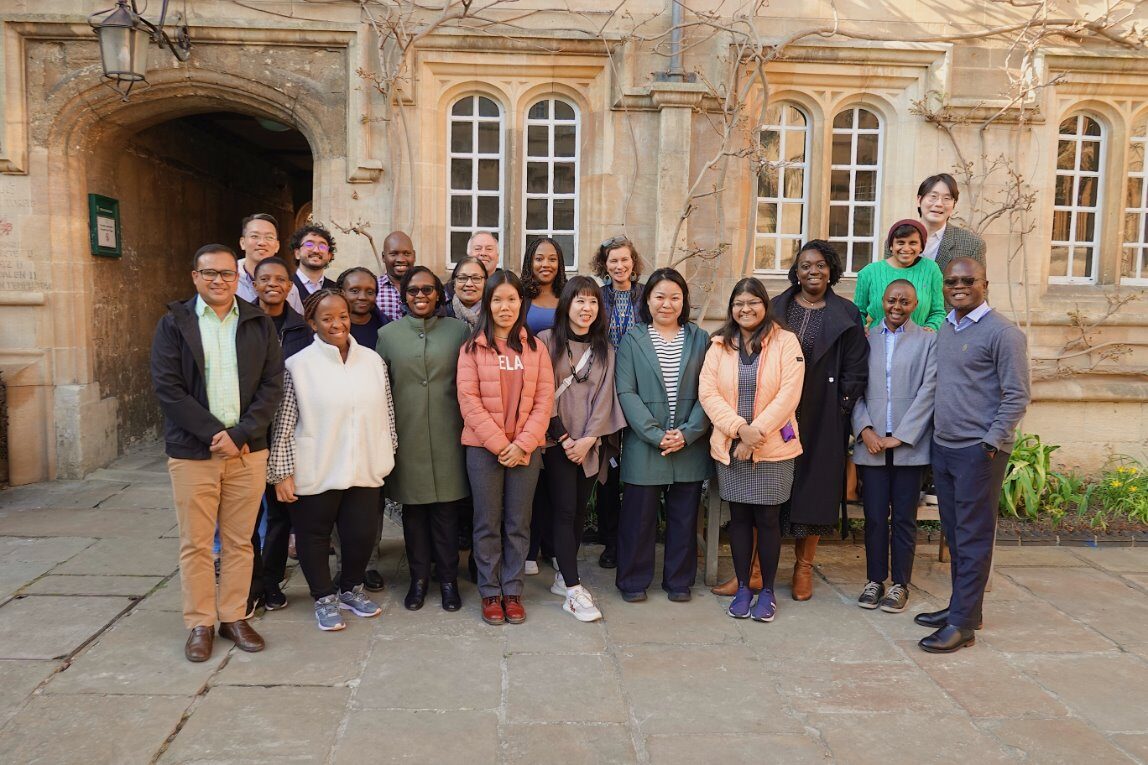
        The kick-off meeting for the Moral Distress Frontline Staff Network was organised over two and a half days, gathering professionals from the UK, Nepal, Bangladesh, India, Malawi, Kenya, Zimbabwe, Thailand, Sierra Leone, and Vietnam—each committed to improving the experience and well-being of frontline research staff working in resource-constrained settings.

        Complex emotions tied to frontline workers’ work were expressed visually through rich pictures and fishbowl activities, revealing striking commonalities despite the participants’ diverse backgrounds and geographies. Sessions such as “Caught in the Middle” were opportunities for participants to talk about their daily unique challenges that often to be unaddressed including institutional constraints and emotionally charged decision-making.

        Potential support interventions, such as peer-to-peer mentoring, safe spaces for reflection, and context-specific ethical guidance, were discussed, emphasising the importance of co-design and localised solutions.

        The meeting also launched a Participatory Action Network that would lay the foundation for an inclusive community of practice, focusing on moral distress, an aspect usually overlooked in global healthcare research. Participants agreed that moral distress intervention efforts must be both evidence-based and empathetic, sensitive to local realities.

        The network, ROOTs (Rethinking Organisational Opportunities to Tackle Moral Distress among Frontline Staff*), prioritises dignity, emotional resilience, and fairness for frontline staff, would include the organisation of webinars, development of guidelines and manuals, implementation of training programs, and initiation of collaborative research projects.

        This meeting is the shared commitment aiming for meaningful change in how research institutions support those at the frontline.

        The meeting and other activities to support healthcare and frontline workers are part of OUCRU’s Public and Community Engagement group’s visions. As a research unit, OUCRU works with health professionals across various settings, witnessing and understanding their challenges firsthand. Through our engagement programmes—including capacity building and networking—we aim to contribute to address their professional obstacles, enhance local healthcare performance, and improve the overall health experience for everyone.

        Read more about our Engagement to Support Healthcare Workers and in Hospitals programme here.

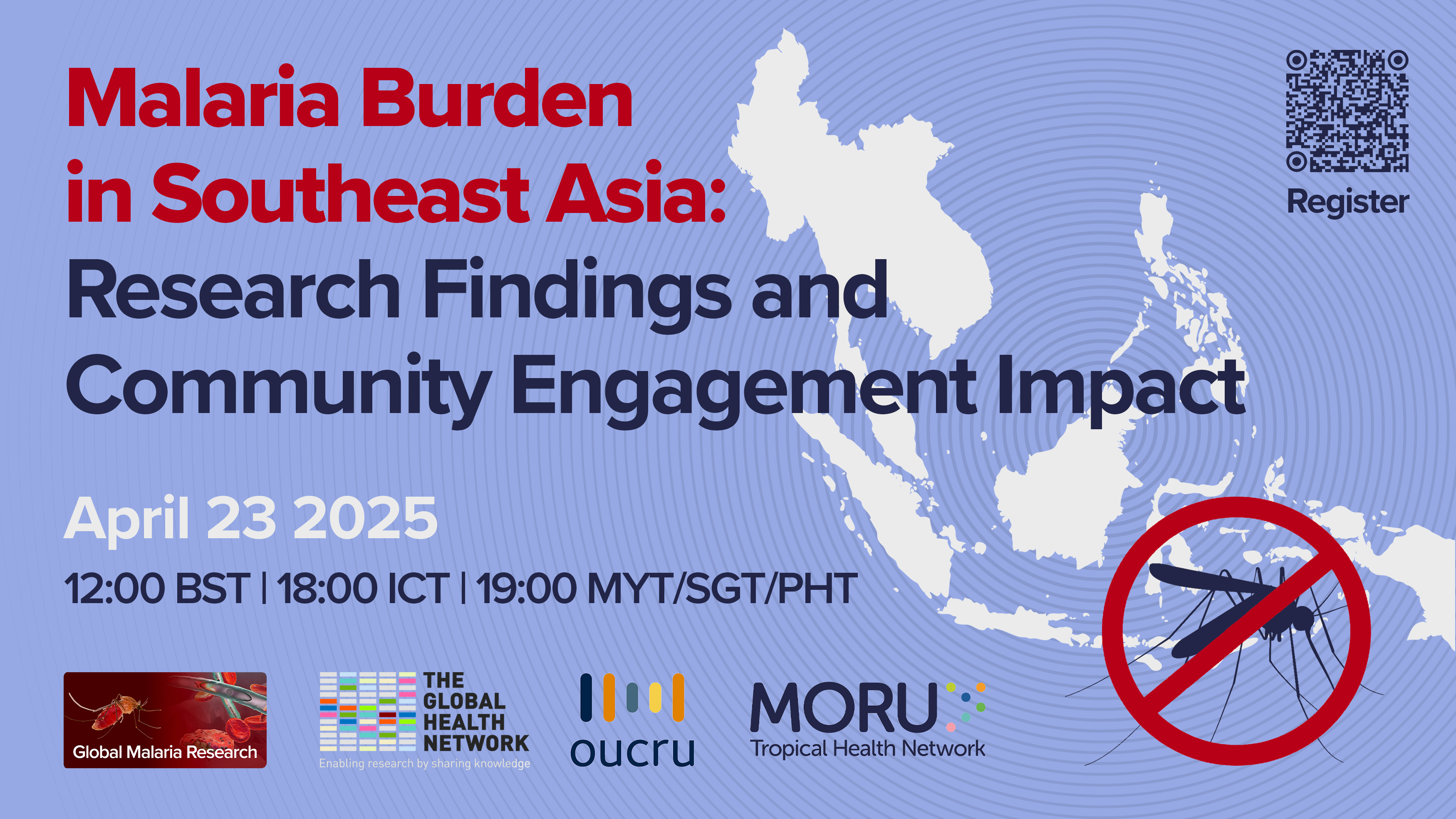
      9. Webinar: Malaria Burden in Southeast Asia: Research Findings and Community Engagement Impact

        Webinar: Malaria Burden in Southeast Asia: Research Findings and Community Engagement Impact

        Malaria remains a serious threat to public health across Asia. The South-East Asia Region has the second-highest malaria burden globally, with WHO estimating that 1.61 billion people remain at risk and the disease being endemic in nine countries.

        The Global Health Network, Oxford University Clinical Research Units (OUCRU) and Mahidol Oxford Tropical Medicine Research Unit (MORU) are organising a joint webinar to explore malaria’s often-overlooked impact in Southeast Asia. Researchers will present the region’s malaria research portfolio, highlighting historic MORU/OUCRU’s role in development of artemether-based drugs and OUCRU’s strategy to engage Indonesia’s war on malaria in Papua.

        Direct community involvement is essential for achieving “last mile” malaria elimination. Dr. Poonam Khetrapal Singh, WHO Regional Director for South-East Asia, has emphasised community engagement’s vital role in effective diagnosis and treatment, along with the importance of decentralising programmes from sub-national to district and village levels.

        To showcase successful community engagement initiatives, OUCRU and MORU researchers will present case studies demonstrating how they incorporate community voices, reach challenging populations, and use creative approaches to build awareness and understanding.

        Our speakers

        Dr Iqbal Elyazar 

        Epidemiology and Geospatial Programme Manager 

        Oxford University Clinical Research Unit Indonesia 

        Arjen M. Dondorp, FMedSci, MD, PhD 

        Deputy Director of the Mahidol Oxford Clinical Research Unit, Thailand 

        Professor J. Kevin Baird  

        Director of OUCRU Indonesia 

        Dr Mary Chambers

        Head of Public and Community Engagement Group

        Oxford University Clinical Research Unit 

        Register now

        Reference: https://www.who.int/southeastasia/health-topics/malaria