Blog

  • Tamoxifen repurposing study shows no benefit in treating deadly fungal meningitis

    Tamoxifen repurposing study shows no benefit in treating deadly fungal meningitis

    A drug repurposing study of tamoxifen for a deadly form of fungal meningitis suggests it has no benefits in clearing the infection more quickly.

    Hopes that tamoxifen could improve survival for a deadly form of fungal meningitis have been dashed by clinical trial results published in eLife.

    The study finds that adding tamoxifen to standard antifungal treatment was no better at speeding up the clearance of fungal infection from the spinal fluid of people with meningitis. More patients who received tamoxifen had evidence of conduction disturbances in their hearts, although there was no difference in the rates of severe side effects between study groups. 

    Cryptococcal meningitis is a leading cause of death in people with HIV, but also affects those without HIV, regardless of whether they are immunocompromised. Most infections are caused by a fungus called Cryptococcus neoformans (C. neoformans) and occur in low-income tropical settings. The gold-standard treatment is a combination of three drugs: flucytosine and amphotericin B initially, followed by fluconazole. Yet, even on this gold-standard therapy, a third of patients die within 10 weeks of being diagnosed. Moreover, the drug flucytosine is severely restricted by availability and cost, meaning it is rarely used where the disease burden is highest.

    “Tamoxifen has shown antifungal activity against various yeasts in the lab; we subsequently showed that it acts synergistically with amphotericin against two-thirds of clinical Cryptococcus isolates from our archive. As a well-understood, off-patent, cheap and widely available medicine, it was a promising candidate for treating cryptococcal meningitis,” explains co-first author Nguyen Thi Thuy Ngan, Clinician at the Department of Tropical Medicine, Cho Ray Hospital, and the Oxford University Clinical Research Unit (OUCRU), Ho Chi Minh City, Vietnam. 

    “We designed a randomised trial to determine whether using these drugs in combination could improve the speed of clearance of Cryptococcus from patients with meningitis with and without HIV,” adds co-first author Nhat Thanh Hoang Le, Biostatistician at OUCRU.

    The trial involved 50 patients – 40 had HIV and 10 did not. Of the patients, 24 were assigned to receive a standard anti-fungal treatment of amphotericin B and fluconazole plus tamoxifen, and 26 received the standard anti-fungal treatment only. The team measured the Early Fungicidal Activity (EFA) for both groups – that is, how quickly there was a decline in the amount of C. neoformans in a patient’s spinal fluid in the two weeks following treatment.

    Based on their prior experiments, the team had hoped to see better EFA for patients who had tamoxifen added to the antifungal treatment. However, there was no detectable difference in EFA.

    The only difference seen between the two treatment groups was the increased heart toxicity in the tamoxifen group. Studies in the lab had shown that a tamoxifen dose 5–10 times higher than that used routinely in breast cancer would be needed to have an antifungal effect. But a high dose of tamoxifen is known to cause an effect on the heart called QT prolongation – an  abnormality that can cause cardiac arrest. There was one sudden death in the tamoxifen group in this study, although this occurred after the period of tamoxifen administration and it was not associated with an abnormal heart rhythm.

    “Despite its apparent anti-cryptococcal effect and synergy with other drugs, tamoxifen does not increase the rate of clearance of yeast from spinal fluid in people with meningitis and is unlikely to result in clinical benefit,” concludes senior author Jeremy Day, Head of the CNS and HIV Infections Research Group at OUCRU, and Professor of Infectious Diseases at the Centre for Tropical Medicine and Global Health, Oxford University, UK. 

    “Our results show the importance of small-scale trials such as this for rapidly evaluating repurposable drugs and preventing the time and cost of a larger clinical study that is likely to fail. However, sadly this does mean that we urgently still need new, specific anti-cryptococcal drugs to be developed, and we also need to ensure that existing, available treatments are made accessible and affordable.”

    _________________________________

    For more information, contact: Communications@oucru.org

  • Nghiên cứu toàn cầu về lao lá»›n nhất từ trước đến nay xác định nguyên nhân di truyền cá»§a tính kháng thuốc

    Nghiên cứu toàn cầu về lao lớn nhất từ trước đến nay xác định nguyên nhân di truyền của tính kháng thuốc

    Các nhà nghiên cứu tại Đại học Oxford đã sử dụng các kỹ thuật giải trình tự gen tiên tiến để xác định hầu hết các biến thể gen gây ra tình trạng kháng lại 13 loại thuốc phổ biến nhất trong điều trị bệnh lao.

    Dự án  “Dự báo Tính kháng thuốc Toàn diện cho Hiệp hội Bệnh Lao Quốc tế (CRyPTIC)” đã thu thập bộ dữ liệu các mẫu vi khuẩn lao trong nghiên cứu lâm sàng lớn nhất từ trước đến nay từ khắp nơi trên thế giới, gồm 15.211 mẫu từ 27 quốc gia trên năm châu lục.

    Bằng cách sử dụng hai tiến bộ quan trọng là xét nghiệm định lượng mới về tính kháng thuốc và cách tiếp cận mới giúp xác định tất cả thay đổi về di truyền trong mẫu vi khuẩn lao kháng thuốc, các nhà nghiên cứu đã tạo ra bộ dữ liệu đặc biệt để định lượng cách những thay đổi trong mã gen của vi khuẩn lao làm giảm khả năng tiêu diệt các vi khuẩn gây bệnh lao của các loại thuốc khác nhau. Cùng với các công trình đang được hiện trong lĩnh vực, những đổi mới này hứa hẹn sẽ mang lại cải thiện cho cách điều trị bệnh lao trong tương lai.

    Bệnh lao gây tử vong ở người cao hơn bất kỳ loại vi khuẩn, vi-rút hoặc ký sinh trùng nào khác gây ra, ngoại trừ SARS-CoV-2. Mặc dù bệnh có thể điều trị được, tính kháng thuốc đã trở thành một vấn đề lớn trong suốt ba thập kỷ qua. Việc xác định các đột biến trong bộ gen của vi khuẩn lao để xác định loại thuốc nào sẽ mang lại cơ hội chữa khỏi tốt nhất cho bệnh nhân là cách thực tế nhất để kiểm tra tính kháng thuốc cho bệnh nhân.

    Tiến sĩ Timothy Walker, là Wellcome Fellow tại Đơn vị Nghiên cứu Lâm sàng Đại học Oxford (OUCRU) đồng thời cũng là  Phó Giáo sư tại Đại học Oxford, cho biết: “Dự án này là công trình quốc tế lớn được thực hiện trong hơn 5 năm qua và sẽ mang lại lợi ích cho bệnh nhân và cộng đồng khi dữ liệu được sử dụng để chẩn đoán và quản lý lao kháng thuốc một cách hiệu quả và làm giảm sự lây truyền”.

    Trong chín bản thảo mới chưa được bình duyệt, với mỗi bản ghi lại một khía cạnh tiến bộ khác nhau mà dự án CRyPTIC đã mang lại cho lĩnh vực, các nhà nghiên cứu trình bày về:

    • Cách diá»…n giải các xét nghiệm kháng thuốc má»›i [1] và cách má»™t dá»± án khoa học cá»™ng đồng vá»›i số mẫu lá»›n đã giúp giải quyết vấn đề này [2]
    • Cách tiếp cận má»›i về phát hiện và mô tả những thay đổi di truyền trong toàn bá»™ trình tá»± gen cá»§a lao đã cải thiện cách thức phát hiện những thay đổi di truyền dẫn đến tình trạng kháng thuốc như thế nào [3]
    • Cách sá»­ dụng những dữ liệu này để quét trình tá»± bá»™ gen lao để tìm những thay đổi là nguyên nhân gây ra kháng thuốc mà trước đây chưa được biết đến [4]
    • Cách các đột biến đơn và tổ hợp các đột biến có thể liên quan không chỉ đến việc xác định tính ‘kháng thuốc’ hoặc tính ‘nhạy thuốc’, mà còn đến những thay đổi nhỏ trong cách kháng sinh tiêu diệt vi khuẩn lao, từ đó làm giảm hiệu quả Ä‘iều trị [5], đặc biệt  là hai loại kháng sinh má»›i Ä‘ang được sá»­ dụng để Ä‘iều trị bệnh lao [6]
    • Cách các thuật toán trí tuệ nhân tạo có thể dá»± Ä‘oán tính kháng thuốc từ các dấu hiệu trong bá»™ gen vi khuẩn lao [7]
    • Cách những dữ liệu này [8] đã góp phần vào danh sách đột biến kháng thuốc trên bá»™ gen vi khuẩn lao đầu tiên được Tổ chức Y tế Thế giá»›i công nhận cho sá»­ dụng trên toàn cầu [9].

    Kết quả của nghiên cứu nhằm mục đích cải thiện việc kiểm soát bệnh lao và tạo điều kiện cho việc thực hiện chiến lược chấm dứt bệnh lao của Tổ chức Y tế Thế giới, thông qua điều trị lao kháng thuốc tốt hơn, nhanh hơn và có mục tiêu hơn bằng dự báo tính kháng thuốc bằng kiểu di truyền, mở đường cho việc xét nghiệm tính nhạy  thuốc trên toàn cầu.

    “Những công trình hợp tác quốc tế đang được thực hiện như nghiên cứu này là rất cần thiết trong việc thúc đẩy hiểu biết về các bệnh truyền nhiễm và cách điều trị chúng. Những tiến bộ này mang lại lợi ích cho tất cả mọi người, như chúng ta đã biết từ kinh nghiệm với COVID-19”, Tiến sĩ Walker nhấn mạnh.

    Dữ liệu hiện được cung cấp miễn phí, và cộng đồng khoa học có thể sử dụng dữ liệu để nâng cao hiểu biết về tình trạng kháng thuốc ở bệnh lao và cách điều trị tốt nhất cho căn bệnh này.

    Dự án được tài trợ bởi Quỹ MRC Newton, Wellcome, và Quỹ Bill & Melinda Gates. Đội ngũ các nhà khoa học dẫn dắt bởi Tiến sĩ Walker hiện đang làm việc tại Thành phố Hồ Chí Minh, Việt Nam tại Đơn vị Nghiên cứu Lâm sàng Đại học Oxford (OUCRU), một trong năm Chương trình Châu Á-Châu Phi của Quỹ Wellcome.

    Để biết thêm thông tin, vui lòng liên hệ với Nhóm Truyền thông của Đơn vị Nghiên cứu Lâm sàng Đại học Oxford (OUCRU) theo địa chỉ communications@oucru.org.

    Các bản thảo:

    1. Epidemiological cutoff values for a 96-well broth microdilution plate for high-throughput research antibiotic susceptibility testing of  tuberculosis. The CRyPTIC Consortium (2021) medRxiv preprint. https://doi.org/10.1101/2021.02.24.21252386
    2. BashTheBug: a crowd of volunteers reproducibly and accurately measure the minimum inhibitory concentrations of 13 antitubercular drugs from photographs of 96-well broth microdilution plates. Fowler PW et al. (2021) biorXiv preprint. https://doi.org/10.1101/2021.07.20.453060
    3. Minos: variant adjudication and joint genotyping of cohorts of bacterial genomes. Hunt M et al. (2021). bioRxiv preprint. https://doi.org/10.1101/2021.09.15.460475
    4. Genome-wide association studies of global Mycobacterium tuberculosis resistance to thirteen antimicrobials in 10,228 genomes. The CRyPTIC Consortium (2021). bioRxiv preprint. https://doi.org/10.1101/2021.09.14.460272
    5. Quantitative measurement of antibiotic resistance in tuberculosis reveals genetic determinants of resistance and susceptibility in a target gene approach. The CRyPTIC Consortium (2021). bioRxiv preprint. https://doi.org/10.1101/2021.09.14.460353
    6. Deciphering Bedaquiline and Clofazimine Resistance in Tuberculosis: An Evolutionary Medicine Approach. Sonnenkalb L et al. (2021) biorXiv preprint. https://doi.org/10.1101/2021.03.19.436148
    7. A generalisable approach to drug susceptibility prediction for tuberculosis using machine learning and whole-genome sequencing. The CRyPTIC Consortium (2021). bioRxiv preprint. https://doi.org/10.1101/2021.09.14.458035
    8. A data compendium of Mycobacterium tuberculosis antibiotic resistance. The CRyPTIC Consortium (2021) bioRxiv preprint. https://doi.org/10.1101/2021.09.14.460274
    9. The 2021 WHO catalogue of tuberculosis complex mutations associated with drug resistance: A new global standard for molecular diagnostics. Walker et al. (2021) Lancet preprint.https://papers.ssrn.com/sol3/papers.cfm?abstract_id=3923444 http://www.crypticproject.org/wp-content/uploads/2021/09/CRyPTIC9-WHO-preprint.pdf

    Vui lòng lưu ý rằng những bản thảo này là bản chưa được bình duyệt (preprint).

  • Largest ever global study of tuberculosis identifies genetic causes of drug resistance

    Largest ever global study of tuberculosis identifies genetic causes of drug resistance

    Using cutting-edge genomic sequencing techniques, researchers at the University of Oxford have identified almost all the genomic variation that gives people resistance to 13 of the most common tuberculosis (TB) drug treatments.

    The Comprehensive Resistance Prediction for Tuberculosis International Consortium (CRyPTIC) research project has collected the largest ever global dataset of clinical M. tuberculosis samples from across the world consisting of 15,211 samples from 27 countries on five continents.

    Using two key advances: a new quantitative test for drug resistance and a new approach which identifies all the genetic changes in a sample of drug-resistant TB bacteria the researchers have generated a unique dataset which the team has used to quantify how changes in the genetic code of M. tuberculosis reduce how well different drugs kill these bacteria that cause TB. These innovations, combined with ongoing work in the field, promise to profoundly improve how patients with TB are treated in the future.

    Tuberculosis kills more people each year than any other bacterium, virus, or parasite, except for SARS-CoV-2. Although it is treatable, drug resistance has emerged as a major problem over the past 3 decades. Testing for mutations in the M. tuberculosis genome to determine which drugs will give a patient the best chance of cure is the most realistic way of getting drug resistance testing to every patient who needs it.

    “This has been a massive international effort over five years, and will translate into benefits for patients and the wider community as these data are implemented to diagnose and manage drug-resistant TB effectively, and thereby reduce its onward transmission,” said Dr Timothy Walker, Wellcome Fellow at the Oxford University Clinical Research Unit (OUCRU) and Associate Professor at the University of Oxford.

    In a series of nine new preprint manuscripts, each documenting a different aspect of how the CRyPTIC project has advanced the field, the researchers reveal:

    • How the new drug resistance tests should be interpreted [1] and how a massive citizen science project helped solve this problem [2]
    • How a new approach to detecting and describing genetic changes in the whole TB genome sequence improved the way genetic changes driving drug resistance can be detected [3]
    • How these data were used to scan the TB genome sequence for changes not previously known to cause drug resistance [4]
    • How individual mutations, and combinations of mutations, can be related not just to blunt measures of ‘resistance’ or ‘susceptibility’, but also to even minor changes in the way a drug kills M. tuberculosis, thereby reducing the effectiveness of treatment [5] with special attention being paid to two novel compounds being used to treat tuberculosis [6].
    • How artificial intelligence can predict drug resistance from signatures in the DNA sequence [7]
    • How these data [8] contributed to the first list of drug resistance mutations in the TB genome to be endorsed for global use by the World Health Organization [9]

    These results aim to help improve control of tuberculosis and facilitate the World Health Organisation’s end TB strategy through better, faster and more targeted treatment of drug-resistant tuberculosis via genetic resistance prediction, paving the way towards universal drug susceptibility testing (DST).

    “Ongoing international collaborations like this are essential if we are to continue to drive forwards our understanding of infectious diseases and how to treat them. As we know from recent experience with COVID-19, such advances benefit everyone,” Dr Walker highlighted.

    The data, which are now freely available, can be used by the wider scientific community to improve our understanding of drug resistance in TB and how to best treat this important disease.

    This project is funded by MRC Newton Fund, Wellcome, and Bill & Melinda Gates Foundation. Dr Walker’s team is based in Ho Chi Minh City, Viet Nam, with the Oxford University Clinical Research Unit (OUCRU), one of five Wellcome’s Asia Africa Programmes.

    For further information, or to request an interview, please contact the Communications team at Oxford University Clinical Research Unit (OUCRU) at communications@oucru.org

    Manuscripts:

    1. Epidemiological cutoff values for a 96-well broth microdilution plate for high-throughput research antibiotic susceptibility testing of M. tuberculosis. The CRyPTIC Consortium (2021) medRxiv preprint. https://doi.org/10.1101/2021.02.24.21252386
    2. BashTheBug: a crowd of volunteers reproducibly and accurately measure the minimum inhibitory concentrations of 13 antitubercular drugs from photographs of 96-well broth microdilution plates. Fowler PW et al. (2021) biorXiv preprint. https://doi.org/10.1101/2021.07.20.453060
    3. Minos: variant adjudication and joint genotyping of cohorts of bacterial genomes. Hunt M et al. (2021). bioRxiv preprint. https://doi.org/10.1101/2021.09.15.460475
    4. Genome-wide association studies of global Mycobacterium tuberculosis resistance to thirteen antimicrobials in 10,228 genomes. The CRyPTIC Consortium (2021). bioRxiv preprint. https://doi.org/10.1101/2021.09.14.460272
    5. Quantitative measurement of antibiotic resistance in M. tuberculosis reveals genetic determinants of resistance and susceptibility in a target gene approach. The CRyPTIC Consortium (2021). bioRxiv preprint. https://doi.org/10.1101/2021.09.14.460353
    6. Deciphering Bedaquiline and Clofazimine Resistance in Tuberculosis: An Evolutionary Medicine Approach. Sonnenkalb L et al. (2021) biorXiv preprint. https://doi.org/10.1101/2021.03.19.436148
    7. A generalisable approach to drug susceptibility prediction for M. tuberculosis using machine learning and whole-genome sequencing.  The CRyPTIC Consortium (2021). bioRxiv preprint. https://doi.org/10.1101/2021.09.14.458035
    8. A data compendium of Mycobacterium tuberculosis antibiotic resistance. The CRyPTIC Consortium (2021) bioRxiv preprint. https://doi.org/10.1101/2021.09.14.460274
    9. The 2021 WHO catalogue of M. tuberculosis complex mutations associated with drug resistance: A new global standard for molecular diagnostics. Walker et al. (2021) Lancet preprint. https://papers.ssrn.com/sol3/papers.cfm?abstract_id=3923444 http://www.crypticproject.org/wp-content/uploads/2021/09/CRyPTIC9-WHO-preprint.pdf

    Note that since these manuscripts are preprints, they have not yet undergone academic peer-review.

  • Ký sinh trùng phổ biến thứ hai cá»§a bệnh sốt rét gây thiệt hại không nhỏ đến sức khỏe con người

    Ký sinh trùng phổ biến thứ hai của bệnh sốt rét gây thiệt hại không nhỏ đến sức khỏe con người

    Theo bài tổng quan của GS. Kevin Baird (Đơn vị Nghiên cứu Lâm sàng Eijkman-Oxford tại Indonesia) và Katherine Battle (Viện Mô hình Dịch bệnh tại Hoa Kỳ) công bố trên tạp chí truy cập mở PLOS Medicine ngày 7/10, ký sinh trùng sốt rét Plasmodium vivax (P. vivax) gây ra tình trạng nhiễm trùng mãn tính tái phát và tạo nên gánh nặng lớn cho sức khỏe toàn cầu, tuy nhiên gánh nặng này vẫn chưa được nhìn nhận đúng mức.

    Trong bài tổng quan, GS. Baird và Battle tóm tắt các bằng chứng cho thấy tình trạng nhiễm P. vivax mãn tính gây ra những tác hại lan rộng nhưng khó nhận biết, và những tác hại này thường bị bỏ qua trong các ước tính về gánh nặng toàn cầu của bệnh sốt rét dựa trên những ca bệnh cấp tính được báo cáo. Bên cạnh đó, P. vivax thường tác động đến các cộng đồng nghèo vốn phải đối mặt với nhiều thách thức về sức khỏe. Có năm loài Plasmodium gây bệnh sốt rét, nhưng phần lớn các ca bệnh được báo cáo (khoảng 193,5 triệu ca hàng năm) là do Plasmodium falciparum. P. vivax là nguyên nhân phổ biến thứ hai, với khoảng 14,3 triệu ca hàng năm. Một nghiên cứu gần đây cho thấy P. falciparum thường gây tử vong trong vòng hai tuần sau chẩn đoán, và những bệnh nhân nhiễm P. vivax có nguy cơ tử vong cao gấp đôi trong thời gian dài. Ở những người phơi nhiễm P. vivax lặp lại, tình trạng nhiễm trùng mãn tính gây tổn thương thận, não và hệ tuần hoàn.

    Những hiểu biết mới về đặc tính sinh học của P. vivax đã tiết lộ nhiều yếu tố góp phần tạo nên gánh nặng cho sức khỏe toàn cầu của ký sinh trùng này. Nó có thể tồn tại trong cơ thể ở mức độ thấp, không gây triệu chứng nên khó chẩn đoán nhưng vẫn có thể lây lan. Khu vực Châu Phi hạ Sahara từng được cho là miễn dịch với sự lây nhiễm của P. vivax, vì hầu hết dân số ở đây thiếu kháng nguyên Duffy, một phân tử trên bề mặt tế bào hồng cầu mà ký sinh trùng sử dụng để xâm nhập vào cơ thể. Tuy nhiên, một nghiên cứu gần đây cho thấy lây nhiễm P. vivax vẫn còn phổ biến ở khu vực này. Bên cạnh đó, một phần dân số ở đây mang hai biến thể di truyền phổ biến mà gây khó khăn cho việc điều trị bệnh sốt rét do P. vivax.

    Tất cả những yếu tố này làm cho việc đánh giá tình trạng nhiễm P. vivax một cách toàn diện và kiểm soát sự lây lan của nó trở nên phức tạp hơn. Baird và Battle kết luận rằng các phương pháp tiếp cận truyền thống được phát triển để ứng phó với P. falciparum ở Châu Phi là không phù hợp với P. vivax. Để loại trừ P. vivax, chúng ta cần các chẩn đoán, liệu pháp và chiến lược kiểm soát véc-tơ khác nhau, và cũng cần dữ liệu tốt hơn về phạm vi thực tế của gánh nặng do ký sinh trùng này gây ra.

    GS. Baird chia sẻ: “Việc xét nghiệm máu những bệnh nhân sốt rét cấp tính do P. vivax là không đủ để Ä‘o lường gánh nặng toàn cầu cá»§a tình trạng này. Ký sinh trùng này ẩn náu trong các cÆ¡ quan sâu bên trong cÆ¡ thể, và những tác hại chúng gây ra ở những cÆ¡ quan này tuy khó nhận biết nhưng vẫn rất đáng kể”.

    GS. Kevin Baird phỏng vấn với Outbreak News TV về Plasmodium vivax. 


    Bài báo này đã được đăng tải trên PLOS Medicine

    Thông tin Liên hệ: GS. Kevin Baird

    Trích dẫn: Battle KE, Baird JK (2021) The global burden of Plasmodium vivax malaria is obscure and insidious. PLoS Med 18(10): e1003799. https://doi.org/10.1371/journal.pmed.1003799 

  • Study: Second most common malaria parasite takes unrealized toll on human health

    Study: Second most common malaria parasite takes unrealized toll on human health

    The malaria parasite Plasmodium vivax (P. vivax) causes frequent, chronic infections that represent a major unrecognized burden on global health, according to a review by Kevin Baird of the Eijkman-Oxford Clinical Research Unit in Indonesia and Katherine Battle of the Institute for Disease Modeling in the United States publishing October 7th in the open access journal PLOS Medicine.

    In this review, Baird and Battle summarize evidence indicating that the global burden of malaria estimated from reported cases of acute attacks likely miss the widespread but more subtle harm done by chronic infection of P. vivax. Futhermore, P. vivax often affects impoverished communities where people face multiple health challenges. There are five Plasmodium species that cause malaria, but the vast majority of reported cases are due to Plasmodium falciparum, with about 193.5 million cases annually. P. vivax is the second most commonly reported cause, with about 14.3 million cases annually. A recent study found that while P. falciparum is more likely to cause death within two weeks of diagnosis, patients with P. vivax were more than twice as likely to die over the long term. Chronic infections in people who are repeatedly exposed to P. vivax cause damage to the kidneys, brain, and circulatory system.

    An improved understanding of the biology of P. vivax has recently revealed multiple factors that contribute to its toll on global health. The parasite can exist in the body at low levels that cause no symptoms, making it difficult to diagnose, but can still spread. Sub-Saharan Africa was once thought to be practically immune to P. vivax infection because most of the population lack the Duffy antigen, a molecule on the surface of red blood cells the parasite uses to invade. However, a recent study finds that P. vivax transmission is still widespread in this region. Additionally, there are two common genetic variations carried by part of the population that interfere with successful treatment of P. vivax malaria.

    All these factors complicate efforts to estimate the full extent of P. vivax infections and control its spread. Baird and Battle conclude that the traditional approaches developed to combat P. falciparum in Africa are inadequate for P. vivax. Eliminating P. vivax will require different diagnostics, therapies and vector control strategies, and better data that reveal the true scope of the burden.

    Baird adds, “Blood smears from patients suffering acute vivax malaria do not suffice to measure global burdens of this infection. The parasite finds refuge in deeper organs where the harm done is more subtle but nonetheless substantial.”

    Prof. Kevin Baird appeared on Outbreak News TV to discuss Plasmodium vivax. 


    This paper is freely available in PLOS Medicine


    Contact: Prof. Kevin Baird

    Citation: Battle KE, Baird JK (2021) The global burden of Plasmodium vivax malaria is obscure and insidious. PLoS Med 18(10): e1003799. https://doi.org/10.1371/journal.pmed.1003799 

  • Bài báo “Sá»± lây truyền cá»§a Biến thể Delta, virus SARS-CoV-2 trong bá»™ phận Nhân viên Y tế được Tiêm chá»§ng ở Việt Nam”

    Bài báo “Sự lây truyền của Biến thể Delta, virus SARS-CoV-2 trong bộ phận Nhân viên Y tế được Tiêm chủng ở Việt Nam”

    Theo chúng tôi được biết, má»™t bài viết gần đây từ Tổ chức Bảo vệ Sức khỏe Trẻ em (Children’s Health Defense) vào ngày 23 tháng 8 năm 2021 đã chia sẻ tuyên bố sai sá»± thật rằng bài báo cá»§a chúng tôi đã chứng minh “những người được tiêm chá»§ng mang lượng vi rút COVID-19 trong mÅ©i gấp 251 lần so vá»›i những người chưa được tiêm chá»§ng”.

    Biến thể Delta của vi-rút SARS-CoV-2 gây ra tải lượng vi rút cao, điều này đã được chứng minh trong các nghiên cứu gần đây từ các quốc gia khác nhau, bao gồm Trung Quốc (tham chiếu # 1), Singapore (tham chiếu # 2), Anh (tham chiếu # 3), và Hoa Kỳ (số 4 & 5). Nghiên cứu từ Trung Quốc cho thấy tải lượng vi rút ở những người bị nhiễm biến thể Delta cao hơn 1,000 lần so với những người bị nhiễm các chủng 19A / 19B được phát hiện ở Trung Quốc vào đầu năm 2020. Ngoài ra, các nghiên cứu từ Mỹ, Anh và Singapore đã chứng minh rằng những người đã tiêm chủng và những người chưa được tiêm chủng bị nhiễm biến thể Delta mang cùng một lượng vi rút như nhau trong đường hô hấp của họ, với tốc độ thanh thải vi rút nhanh hơn ở những người được tiêm (theo nghiên cứu từ Singapore).

    Trong nghiên cứu của mình (https://ssrn.com/abstract=3897733), chúng tôi so sánh tải lượng vi rút (suy ra từ giá trị PCR Ct) từ các trường hợp nhiễm chủng SARS-CoV-2 ban đầu được phát hiện ở Việt Nam trong khoảng thời gian từ tháng 3 đến tháng 4 năm 2020 (sau đây gọi là chủng gốc) với các trường hợp từ nhân viên y tế được tiêm chủng đầy đủ bị nhiễm biến thể Delta.

    Tương tự như dữ liệu từ các nghiên cứu đã đề cập ở trên, nghiên cứu của chúng tôi cho thấy rằng nhiễm trùng biến thể Delta ở nhân viên y tế được tiêm chủng đầy đủ có liên quan đến tải lượng vi-rút cao, hơn 250 lần so với những người bị nhiễm chủng gốc. Sự khác biệt về tải lượng vi rút là do biến thể Delta gây ra tải lượng vi rút cao hơn; điều này không liên quan đến tình trạng tiêm chủng của người bị nhiễm bệnh. Do đó, tuyên bố rằng những người được tiêm chủng mang theo gấp 251 lần lượng SARS-CoV-2 trong đường hô hấp của họ so với những người không được tiêm chủng là thông tin không đúng sự thật.

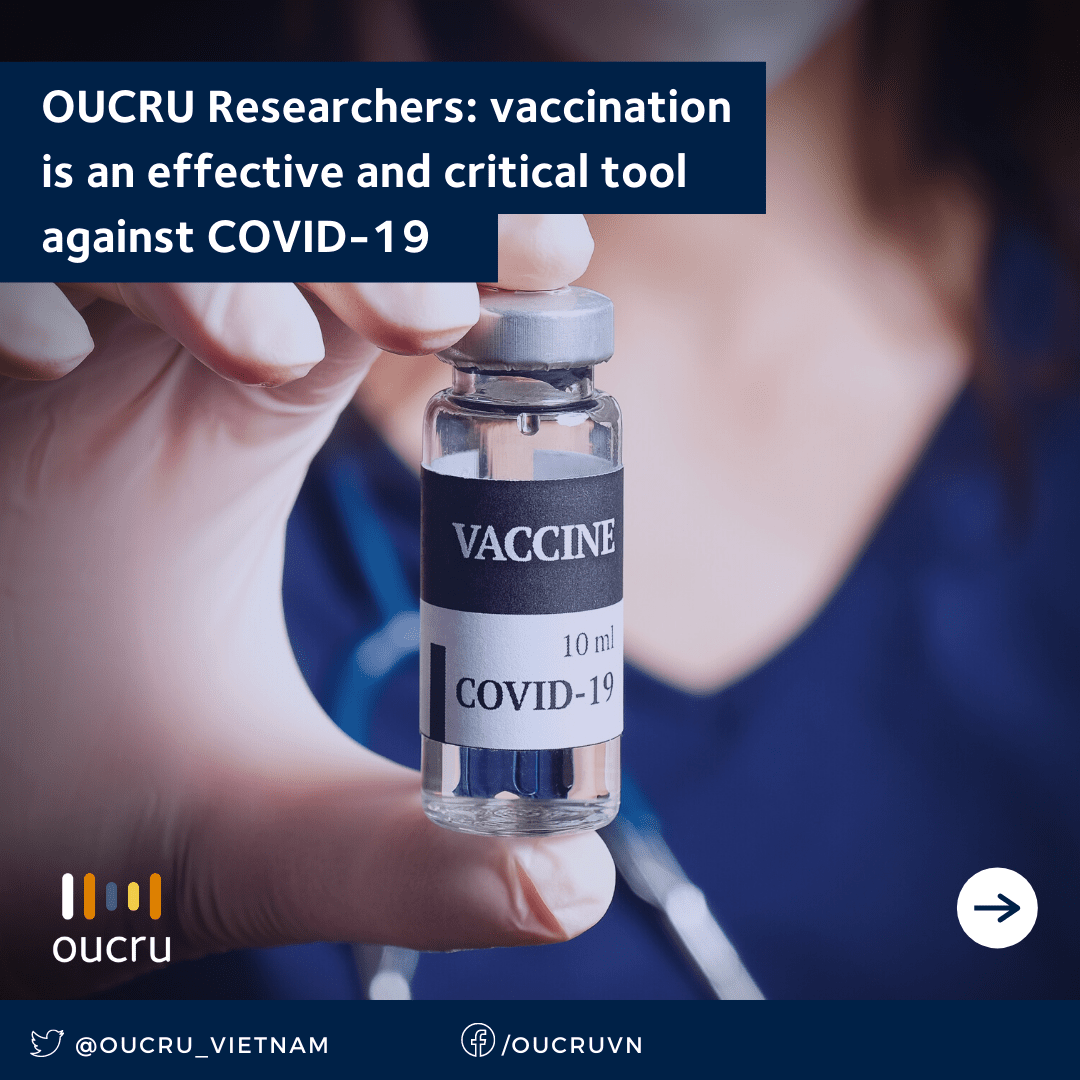
    Có rất nhiều bằng chứng về hiệu quả của vắc-xin trong việc ngăn ngừa bệnh nặng và tử vong do COVID-19. Nghiên cứu của chúng tôi không hề cung cấp bằng chứng ngược lại. Chúng tôi hết sức tán thành việc tiêm chủng và tin rằng đây là một công cụ quan trọng và hiệu quả chống lại COVID-19 và những hậu quả khủng khiếp của đại dịch.

    TS. BS. Nguyá»…n Văn VÄ©nh Châu – Giám đốc Bệnh viện Bệnh Nhiệt đới TP. Hồ Chí Minh

    GS. TS. Guy Thwaites – Giám đốc OUCRU

    TS. Lê Văn Tấn – Trưởng nhóm Các bệnh truyền nhiá»…m má»›i nổi, OUCRU

    Tài liệu tham khảo:

    1. Viral infection and transmission in a large, well-traced outbreak caused by the SARS-CoV-2 Delta variant, https://www.medrxiv.org/content/10.1101/2021.07.07.21260122v2.full.pdf+html

    2. Virological and serological kinetics of SARS-CoV-2 Delta variant vaccine-breakthrough infections: a multi-center cohort study, https://www.medrxiv.org/content/10.1101/2021.07.28.21261295v1

    3. Impact of Delta on viral burden and vaccine effectiveness against new SARS-CoV-2 infections in the UK, https://www.medrxiv.org/content/10.1101/2021.08.18.21262237v1

    4. Shedding of Infectious SARS-CoV-2 Despite Vaccination, https://www.medrxiv.org/content/10.1101/2021.07.31.21261387v4.full.pdf+html

    5. Outbreak of SARS-CoV-2 Infections, Including COVID-19 Vaccine Breakthrough Infections, Associated with Large Public Gatherings — Barnstable County, Massachusetts, July 202, https://www.cdc.gov/mmwr/volumes/70/wr/mm7031e2.htm

  • Our preprint article “Transmission of SARS-CoV-2 Delta Variant Among Vaccinated Healthcare Workers, Vietnam”

    Our preprint article “Transmission of SARS-CoV-2 Delta Variant Among Vaccinated Healthcare Workers, Vietnam”

    It has come to our attention that a recent post from the Children’s Health Defense on 23rd August 2021 shared the false claim that our paper demonstrated “vaccinated individuals carry 251 times the load of COVID-19 viruses in their nostrils compared to the unvaccinated”.

    SARS-CoV-2 Delta variant infection is associated with high viral loads, which has been demonstrated in recent studies from various countries (including China (ref#1), Singapore (ref#2), the UK (ref#3), and the US (ref#4&5)). The study from China showed that viral loads in people infected with the Delta variant were 1000 times higher than those infected with the 19A/19B strains detected in China in early 2020. Additionally, the studies from the US, the UK and Singapore demonstrated that vaccinated and unvaccinated individuals infected with SARS-CoV-2 Delta variant carried the same amounts of the virus in their respiratory tracts, with a faster viral clearance rate observed in vaccinated people (according to the study from Singapore).

    In our study (https://ssrn.com/abstract=3897733), we compared viral loads (inferred from PCR Ct values) from cases infected with the original SARS-CoV-2 strains detected in Vietnam between March and April 2020 (herein referred to original strains) with those from fully vaccinated healthcare workers infected with SARS-CoV-2 Delta variant.

    Similar to data from the aforementioned studies, we showed that Delta variant infections in fully vaccinated healthcare workers were associated with high viral loads, and indeed were 250 times higher than those in people infected with the original strains. The differences in viral load were driven by the ability of the Delta variant to cause higher viral loads; they had nothing to do with the vaccination status of the infected individual. Thus the claim that vaccinated individuals carry 251 times the loads of SARS-CoV-2 in their respiratory tract compared to the unvaccinated people is a misrepresentation of the data.

    There is overwhelming evidence for the effectiveness of vaccines in preventing severe disease and death from COVID-19. Our study provides no evidence to the contrary. We strongly endorse vaccination as a critical tool against COVID-19 and the terrible consequences of the pandemic.

    Nguyen Van Vinh Chau, MD, PhD – Director of Hospital for Tropical Diseases, Ho Chi Minh City

    Professor Guy Thwaites, MD, PhD  – Director of OUCRU

    Le Van Tan, PhD – Head of Emerging Infections Group, OUCRU

    References

    1. Viral infection and transmission in a large, well-traced outbreak caused by the SARS-CoV-2 Delta variant, https://www.medrxiv.org/content/10.1101/2021.07.07.21260122v2.full.pdf+html

    2. Virological and serological kinetics of SARS-CoV-2 Delta variant vaccine-breakthrough infections: a multi-center cohort study, https://www.medrxiv.org/content/10.1101/2021.07.28.21261295v1

    3. Impact of Delta on viral burden and vaccine effectiveness against new SARS-CoV-2 infections in the UK, https://www.medrxiv.org/content/10.1101/2021.08.18.21262237v1

    4. Shedding of Infectious SARS-CoV-2 Despite Vaccination, https://www.medrxiv.org/content/10.1101/2021.07.31.21261387v4.full.pdf+html

    5. Outbreak of SARS-CoV-2 Infections, Including COVID-19 Vaccine Breakthrough Infections, Associated with Large Public Gatherings — Barnstable County, Massachusetts, July 202, https://www.cdc.gov/mmwr/volumes/70/wr/mm7031e2.htm

  • Giám đốc OUCRU, GS. Guy Thwaites, được Nữ hoàng Anh vinh danh

    Giám đốc OUCRU, GS. Guy Thwaites, được Nữ hoàng Anh vinh danh

    Giám đốc của OUCRU, Giáo sư Guy Thwaites, vừa được vinh danh trong Danh sách vinh danh Sinh nhật năm 2021 của Nữ hoàng Anh, Elizabeth II.

    Ông được bổ nhiệm là Thành viên của Order of the British Empire (MBE) nhờ những cống hiến cho ngành Y tế cộng đồng và góp phần củng cố quan hệ giữa Vương quốc Anh và Việt Nam.

    Giáo sư Thwaites là Giám đốc của OUCRU từ năm 2013. Ông chịu trách nhiệm về chiến lược khoa học và lãnh đạo toàn bộ chương trình OUCRU, với chủ đề nghiên cứu chính về các bệnh truyền nhiễm mới nổi, sốt xuất huyết, nhiễm trùng não, lao, sốt rét, nhiễm trùng đường ruột, kháng thuốc kháng sinh và chăm sóc người bệnh hiểm nghèo. Nghiên cứu cá nhân của ông tập trung vào các bệnh nhiễm trùng nặng do vi khuẩn, đặc biệt là bệnh lao.

    Danh sách Vinh danh Sinh nhật Nữ hoàng năm 2021 cũng công nhận Giáo sư Peter Horby, trở thành Cử nhân Hiệp sĩ nhờ các cống hiến cho Nghiên cứu Y khoa, đặc biệt là trong đại dịch COVID-19.

    GS. Peter Horby nguyên là Giám đốc Đơn vị Nghiên cứu Lâm sàng Đại học Oxford tại Hà Nội. Hiện nay, ông là Giám đốc Trung tâm Khoa học Đại dịch (Pandemic Sciences Centre) và là Giáo sư về Các bệnh Truyền nhiễm mới nổi và Sức khỏe Toàn cầu. Ông là đồng chỉ đạo thử nghiệm Đánh giá ngẫu nhiên về liệu pháp điều trị COVID-19 (RECOVERY) của Vương quốc Anh. Đây là thử nghiệm kiểm soát ngẫu nhiên lớn nhất về phương pháp điều trị COVID-19 trên thế giới. OUCRU và các đối tác hiện cũng đang tham gia thử nghiệm RECOVERY.


  • OUCRU Director Guy Thwaites awarded MBE

    OUCRU Director Guy Thwaites awarded MBE

    OUCRU’s Director, Professor Guy Thwaites, was recently honoured in the 2021 Queen’s Birthday Honours List.

    He was appointed a Member of the Order of the British Empire (MBE) for services to public health and UK/Vietnam relations.

    Professor Thwaites has been the Director of OUCRU since 2013. He is responsible for the scientific strategy and leadership of the entire OUCRU programme, with its major research themes of emerging viral infections, dengue, brain infections, tuberculosis, malaria, enteric infections, antimicrobial drug resistance and care of the critically ill. His personal research focuses on severe bacterial infections, particularly tuberculosis.

    The 2021 Queen’s Birthday Honours List also recognised Professor Peter Horby, who became a Knight Bachelor for services to Medical Research, during the COVID-19 pandemic.

    Peter Horby is the former Director of the Oxford University Clinical Research Unit in Hanoi, Vietnam. He is currently the founding Director of the Pandemic Sciences Centre in Oxford and a Professor of Emerging and Infectious Diseases and Global Health. He co-leads the UK Randomised Evaluation of COVID-19 therapy (RECOVERY) trial, the largest randomised controlled trial of COVID-19 treatments in the world. OUCRU Units and partners participate in the RECOVERY trial.

  • Evaluation of New Diagnostics for Active and Incident TB (ENDxTB)

    Evaluation of New Diagnostics for Active and Incident TB (ENDxTB)

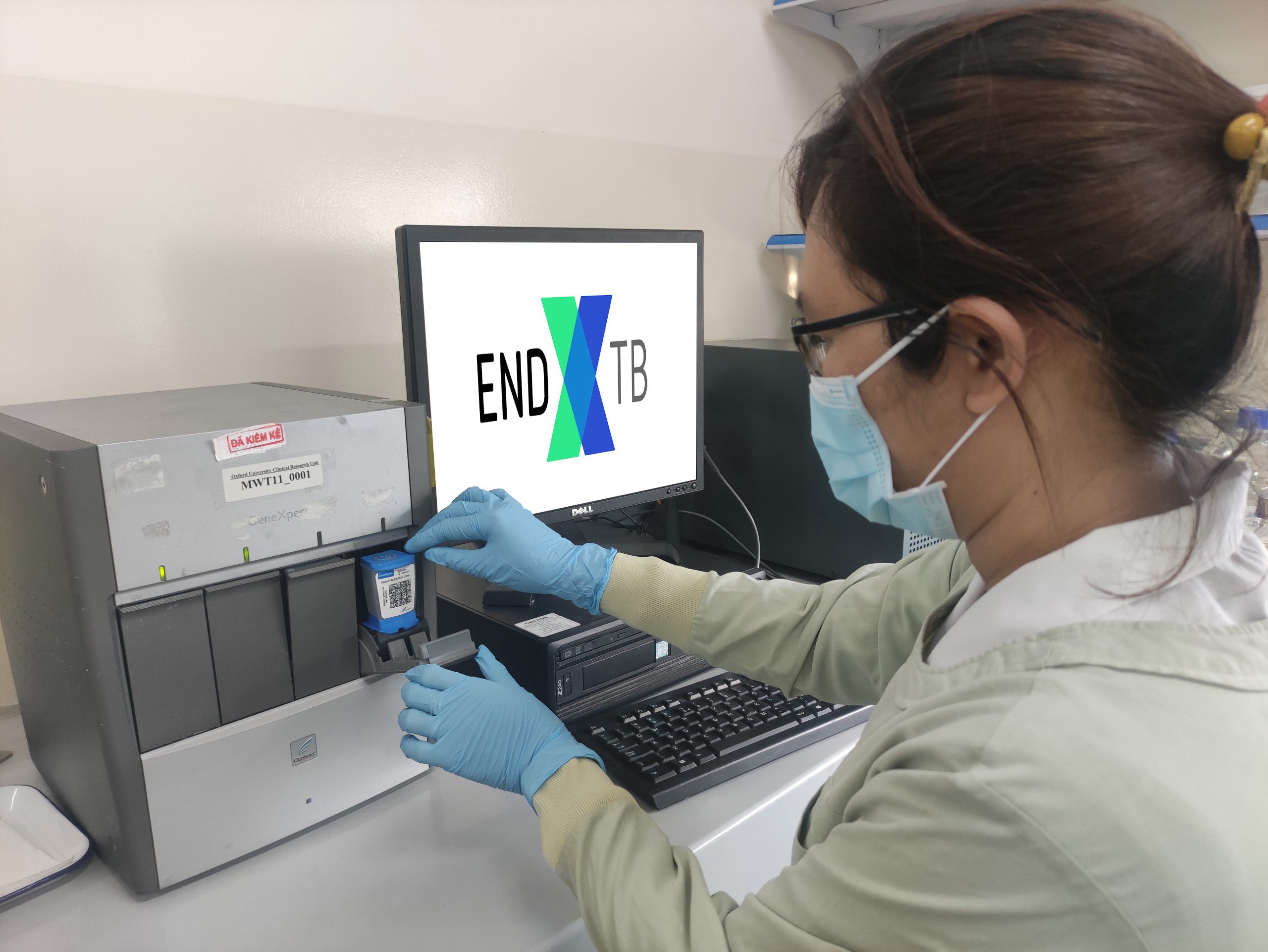
    To improve the diagnosis of all forms of TB at any age, the OUCRU TB team is participating in the international ENDxTB project, funded 2020 – 2025 by NIH. We provide clinical experience and laboratory skills to evaluate field-ready diagnostic tests and platforms for TB in Vietnam, in collaboration with Pham Ngoc Thach Hospital and District TB Units in Ho Chi Minh City.

    See more: https://www.endxtb.com/


    Â