Author: ipindra

  • Indonesia Hadapi Kesenjangan dalam Program Antibiotik RS, Temuan Studi Universitas Indonesia dan OUCRU Indonesia

    Indonesia Hadapi Kesenjangan dalam Program Antibiotik RS, Temuan Studi Universitas Indonesia dan OUCRU Indonesia

    19 November 2024 – Studi nasional yang dipimpin Fakultas Kedokteran Universitas Indonesia (FKUI) dan OUCRU Indonesia menemukan bahwa 9 dari 10 rumah sakit dari 575 sampel yang tersebar di 34 provinsi sudah memiliki Program Pengelolaan Antimikroba (ASP). Namun, hanya sekitar setengahnya yang memiliki program ASP yang kuat dan fungsional.

    Program Pengelolaan Antimikroba (Antimicrobial Stewardship Programme–ASP) adalah inisiatif rumah sakit yang berguna memastikan antibiotik dipakai secara tepat, saat benar-benar diperlukan, untuk mencegah infeksi yang resisten obat dan menjaga keefektifan antibiotik untuk pasien di masa mendatang.

    Studi ini menemukan berbagai hambatan signifikan dalam program ASP, termasuk keterbatasan akses ke layanan laboratorium mikrobiologi, keterbatasan anggaran serta staf untuk mengadakan kegiatan ASP, struktur rumah sakit yang hierarkis, dan kurangnya kolaborasi antardepartemen di rumah sakit. Studi ini menemukan bahwa hambatan-hambatan tersebut paling dirasakan oleh rumah sakit-rumah sakit di daerah dengan Indeks Pembangunan Kesehatan Masyarakat dan pengeluaran rumah tangga per kapita yang rendah.

    Studi yang disebut NASPA ini bertujuan untuk menilai bagaimana ASP dijalankan di Indonesia, mengidentifikasi tantangan yang dihadapi nakes, dan memberikan rekomendasi untuk memperkuat program-program ASP, baik di rumah sakit pemerintah maupun swasta. Studi ini mengadakan survei di 34 provinsi di Indonesia dan diskusi kelompok terarah dengan berbagai jenis RS, yaitu tipe pemerintah serta swasta, tingkat tinggi hingga rendah (A-D), dan RS di lokasi yang berbeda-beda.

    Foto kamar pasien di rumah sakit sebagai ilustrasi. Kredit: Pixabay dari Pexels.

    Kesenjangan dan Hambatan Teridentifikasi

    Robert Sinto, dr., peneliti pertama studi ini, menjelaskan, “Banyak rumah sakit kecil dan terpencil mengalami kekurangan sumber daya penting seperti anggaran, staf, laboratorium mikrobiologi, dan dukungan IT untuk mendukung pengumpulan data yang berkualitas tinggi.” Dia menambahkan bahwa beban kerja tinggi dan pergantian staf yang sering terjadi semakin membatasi waktu dan energi yang bisa dicurahkan nakes untuk kegiatan ASP sehingga programnya sulit dijalankan secara konsisten. Struktur yang hierarkis juga menghambat kolaborasi karena “staf junior mungkin ragu-ragu untuk mempertanyakan praktik peresepan obat dokter senior.” Dia juga mencatat, “Beberapa penyedia layanan kesehatan enggan untuk mengubah kebiasaan peresepan obat mereka. Banyak spesialis swasta sangat resisten terhadap pedoman ASP.”

    Riset ini juga mencatat bahwa pedoman ASP nasional sudah ada dan kemajuan sudah mulai tercapai, “tetapi peraturan yang lebih kuat masih diperlukan untuk menjadikan ASP sebagai prioritas, menetapkan standar minimum, dan memberikan metode evaluasi yang jelas,” tegas Assoc. Prof. Raph L. Hamers, peneliti senior dalam studi ini dan Kepala Program Riset Klinis Penyakit Menular OUCRU Indonesia.

    Jalan Menuju Program Antibiotik RS yang Lebih Kuat

    Meskipun dihadang banyak rintangan, penelitian ini juga mengidentifikasi berbagai faktor pendukung yang dapat membantu memperkuat program ASP di Indonesia. Salah satu faktor yang paling penting adalah dukungan kepemimpinan yang kuat. “Rumah sakit yang memiliki dukungan pendanaan dan manajemen yang memiliki dedikasi jauh lebih berhasil dalam mempertahankan ASP,” kata dr. Sinto.

    Faktor pendukung penting lainnya adalah kolaborasi antarnakes dan pelatihan ASP bagi mereka. “Kerja sama lintasdisiplin antara apoteker, dokter, dan staf pengendalian infeksi terbukti dapat meningkatkan kepatuhan terhadap protokol ASP dan penggunaan antibiotik,” jelas Prof. Anis Karuniawati, salah satu peneliti dalam studi ini dan ahli mikrobiologi klinis di FK UI.

    Riset ini juga memberikan panduan berharga bagi para pembuat kebijakan. Pelajaran yang ditemukan studi ini termasuk pentingnya standar nasional yang jelas, dukungan pendanaan yang lebih baik, dan pelatihan untuk membantu rumah sakit mengatasi hambatan yang ada.

    Studi NASPA merupakan kolaborasi antara Fakultas Kedokteran Universitas Indonesia, Rumah Sakit Cipto Mangunkusumo, Monash University Indonesia, Direktorat Bina Mutu Pelayanan Kesehatan Kementerian Kesehatan RI, Mahidol Oxford Tropical Medicine Research Unit, dan Mahidol University. Pendanaan disediakan oleh Wellcome [106680/Z/14/Z].
  • Nghiên cứu má»›i: Quản lý kháng sinh tại bệnh viện Indonesia còn nhiều hạn chế

    Nghiên cứu mới: Quản lý kháng sinh tại bệnh viện Indonesia còn nhiều hạn chế

    Ngày 19 tháng 11 năm 2024 – Một nghiên cứu quốc gia do Khoa Y, Đại học Indonesia (FMUI) và OUCRU Indonesia thực hiện đã phát hiện ra rằng, trong số 575 bệnh viện mẫu ở 34 tỉnh thành của Indonesia, có 9 trên 10 bệnh viện đã triển khai Chương Trình Quản Lý Kháng Sinh (Antimicrobial Stewardship Programme – ASP) chính thức. Tuy nhiên, chỉ một nửa trong số đó có khả năng triển khai chương trình quản lý kháng sinh toàn diện và hiệu quả.

    Chương trình Quản lý Kháng sinh (ASP) là sáng kiến của bệnh viện nhằm đảm bảo việc sử dụng kháng sinh đúng cách và chỉ khi cần thiết, giúp ngăn ngừa các nhiễm trùng kháng thuốc và bảo vệ hiệu quả của kháng sinh cho các bệnh nhân trong tương lai.

    Nghiên cứu chỉ ra rằng một số rào cản chính trong việc triển khai chương trình quản lý kháng sinh tại các bệnh viện bao gồm: hạn chế về khả năng tiếp cận dịch vụ vi sinh, thiếu nguồn lực và nhân lực để thực hiện các hoạt động quản lý kháng sinh, cơ cấu phân cấp trong bệnh viện, và thiếu sự hợp tác giữa các chuyên khoa. Những rào cản này rõ rệt hơn tại các bệnh viện nằm ở các quận có Chỉ số Phát triển Y tế Công cộng thấp và mức chi tiêu bình quân đầu người thấp.

    Nghiên cứu NASPA nhằm đánh giá tình trạng triển khai ASP trên toàn quốc, xác định những thách thức mà các nhân viên y tế gặp phải, và đưa ra các khuyến nghị để củng cố các chương trình này tại các bệnh viện công và tư nhân. Nghiên cứu đã khảo sát các bệnh viện ở 34 tỉnh và tiến hành các cuộc thảo luận nhóm với nhiều nhóm bệnh viện khác nhau, cả công và tư, các cấp độ bệnh viện từ cao đến thấp (A–D), và các khu vực địa lý khác nhau.

    Ảnh minh họa: Phòng bệnh trong bệnh viện. Nguồn: Pixabay, Pexels.

    Những Lỗ Hổng và Rào Cản Được Nhận Diện

    Tiến sĩ Robert Sinto,tác giả chính của nghiên cứu, cho biết: “Nhiều bệnh viện nhỏ và ở vùng sâu, vùng xa thiếu các nguồn lực thiết yếu như tài chính, nhân lực, phòng thí nghiệm vi sinh và hỗ trợ công nghệ thông tin để thu thập dữ liệu chất lượng cao.” Ông cũng cho rằng khối lượng công việc lớn và sự thay đổi nhân sự thường xuyên khiến nhân viên y tế không có đủ thời gian và năng lượng để tham gia vào các hoạt động của chương trình ASP, làm giảm khả năng duy trì chương trình một cách liên tục. Các cơ cấu phân cấp trong bệnh viện cũng là một rào cản lớn đối với sự hợp tác, vì nhân viên cấp dưới có thể ngần ngại đặt câu hỏi về phương pháp kê đơn của bác sĩ cấp cao”. Ông cũng lưu ý rằng, “Một số y bác sỹngần ngại thay đổi thói quen kê đơn, đặc biệt là nhiều bác sĩ tư nhân còn lưỡng lự trước các hướng dẫn của ASP.”

    Nghiên cứu cũng chỉ ra rằng mặc dù đã có các hướng dẫn quốc gia về ASP và một số tiến bộ đã đạt được, “tuy nhiên, cần có những quy định chặt chẽ hơn để ASP trở thành ưu tiên, thiết lập các tiêu chuẩn tối thiểu và cung cấp các phương pháp đánh giá rõ ràng,” Phó giáo sư Raph Hamers, tác giả chính và Trưởng chương trình nghiên cứu bệnh nhiễm trùng lâm sàng tại OUCRU Indonesia nhấn mạnh.

    Hướng Đi Để Tăng Cường Triển Khai ASP

    Dù gặp phải nhiều thách thức, nghiên cứu cũng đã chỉ ra các yếu tố quan trọng có thể giúp tăng cường triển khai ASP tại các bệnh viện trên toàn Indonesia. Một trong những yếu tố quan trọng nhất là sự hỗ trợ mạnh mẽ từ lãnh đạo bệnh viện. “Các bệnh viện có ngân sách và sự hỗ trợ từ ban quản lý thường thành công hơn trong việc duy trì các chương trình ASP”, Tiến sĩ Sinto cho biết.

    Một yếu tố quan trọng khác là sự hợp tác và đào tạo giữa các nhân viên y tế. “Sự hợp tác giữa các dược sĩ, bác sĩ lâm sàng và nhân viên kiểm soát nhiễm khuẩn đã chứng minh là có tác dụng cải thiện sự tuân thủ các quy trình của ASP và sử dụng kháng sinh,” Giáo sư Anis Karuniawati, đồng tác giả và chuyên gia về vi sinh lâm sàng tại FMUI giải thích.

    Những yếu tố này cung cấp các hướng dẫn quan trọng cho các nhà hoạch định chính sách, nhấn mạnh sự cần thiết phải có các tiêu chuẩn quốc gia rõ ràng, hỗ trợ tài chính tốt hơn và đào tạo để giúp các bệnh viện vượt qua những rào cản hiện tại.

    Nghiên cứu NASPA là sự hợp tác với Khoa Y Universitas Indonesia , Bệnh viện Cipto Mangunkusumo, Đại học Monash Indonesia, Cục Chất lượng Dịch vụ Y tế, Bộ Y tế Indonesia, Đơn vị Nghiên cứu Y học Nhiệt đới Mahidol Oxford và Đại học Mahidol. Nguồn tài trợ được cung cấp bởi Wellcome[106680/Z/14/Z] .

  • Gaps Identified in Indonesian Hospital Antibiotic Stewardship Programmes

    Gaps Identified in Indonesian Hospital Antibiotic Stewardship Programmes

    19 November 2024 – A nationwide study led by Faculty of Medicine Universitas Indonesia (FMUI) and OUCRU Indonesia found that 9 out of 10 hospitals in a sample of 575 across 34 provinces of Indonesia had a formal Antimicrobial Stewardship Programme. But only half of those had reached a development level where they could run a robust, functional stewardship programme.

    An Antimicrobial Stewardship Programme (ASP) is a hospital initiative to ensure antibiotics are used correctly and only when necessary, helping to prevent drug-resistant infections and keep antibiotics effective for future patients.

    Significant barriers to implementing the programmes that were identified included limited access to microbiology services, insufficient resources and staff to perform stewardship activities, hierarchical hospital structures, and lack of collaboration between the different disciplines working in the hospital. The study found that these barriers were most pronounced in hospitals located in districts with the lowest Public Health Development Index and per capita domestic expenditure.

    The NASPA Study aimed to assess the state of ASP implementation across Indonesia, identify the challenges healthcare providers face, and offer recommendations for strengthening these programmes in public and private hospitals. The study surveyed hospitals from across 34 provinces in Indonesia and conducted focus group discussions with a diverse subset of hospitals representing public and private hospitals, high to low tiered levels (A–D), and different geographic regions.

    Patient room in a hospital for illustrative purposes. Credit: Pixabay via Pexels.

    Gaps and Barries Identified 

    Robert Sinto, dr., the study’s first author, explained, “Many smaller and remote hospitals lack essential resources like funding, staff, microbiology labs, and IT support to support high-quality data collection.” He added that high workloads and frequent staff turnover further limited the time and energy healthcare workers can dedicate to ASP activities, making it difficult to maintain consistent programme efforts. Hierarchical structures further hinder collaboration, as “junior staff may hesitate to question senior doctors’ prescribing practices.” He also noted, “Some providers are reluctant to change prescribing habits, with many private specialists especially resistant to ASP guidelines.” 

    The study also highlighted that national ASP guidelines exist and progress has been made, “but stronger regulations are needed to make ASPs a priority, set minimum standards, and provide clear evaluation methods,” stressed Assoc. Prof. Raph Hamers, senior author of the paper and Head of Clinical Infectious Diseases Research Programme at OUCRU Indonesia.

    Path Forward for Stronger ASP Implementation 

    Despite many challenges, the study also identified key enablers that could help strengthen ASP implementation across Indonesia’s hospitals. One of the most important factors is strong leadership support. “Hospitals with dedicated funding and management backing are far more successful at sustaining ASPs,” said dr. Sinto.

    Another critical enabler is collaboration and training among healthcare workers. “Cross-disciplinary teamwork between pharmacists, clinicians, and infection control staff was shown to improve adherence to ASP protocols and antibiotic use,” explained Prof. Anis Karuniawati, a co-author of the paper and an expert in clinical microbiology at FMUI.

    These enablers offer valuable guidance for policymakers, highlighting the need for clear national standards, better funding support, and training to help hospitals overcome existing barriers.

    The NASPA study was a collaboration with Faculty of Medicine Universitas Indonesia, Cipto Mangunkusumo Hospital, Monash University Indonesia, Directorate of Health Services Quality of Indonesian MoH, Mahidol Oxford Tropical Medicine Research Unit, and Mahidol University. Funding was provided by Wellcome [106680/Z/14/Z].

  • Delegasi Wellcome Trust Berkunjung ke OUCRU Indonesia

    Delegasi Wellcome Trust Berkunjung ke OUCRU Indonesia

    Pada 14 Oktover 20245, delegasi Wellcome mengunjungi OUCRU Indonesia untuk memperdalam pemahaman tentang riset-riset OUCRU Indonesia, kerja samanya dengan berbagai mitra, dan inisiatif peningkatan kapasitasnya bagi ilmuwan lokal.

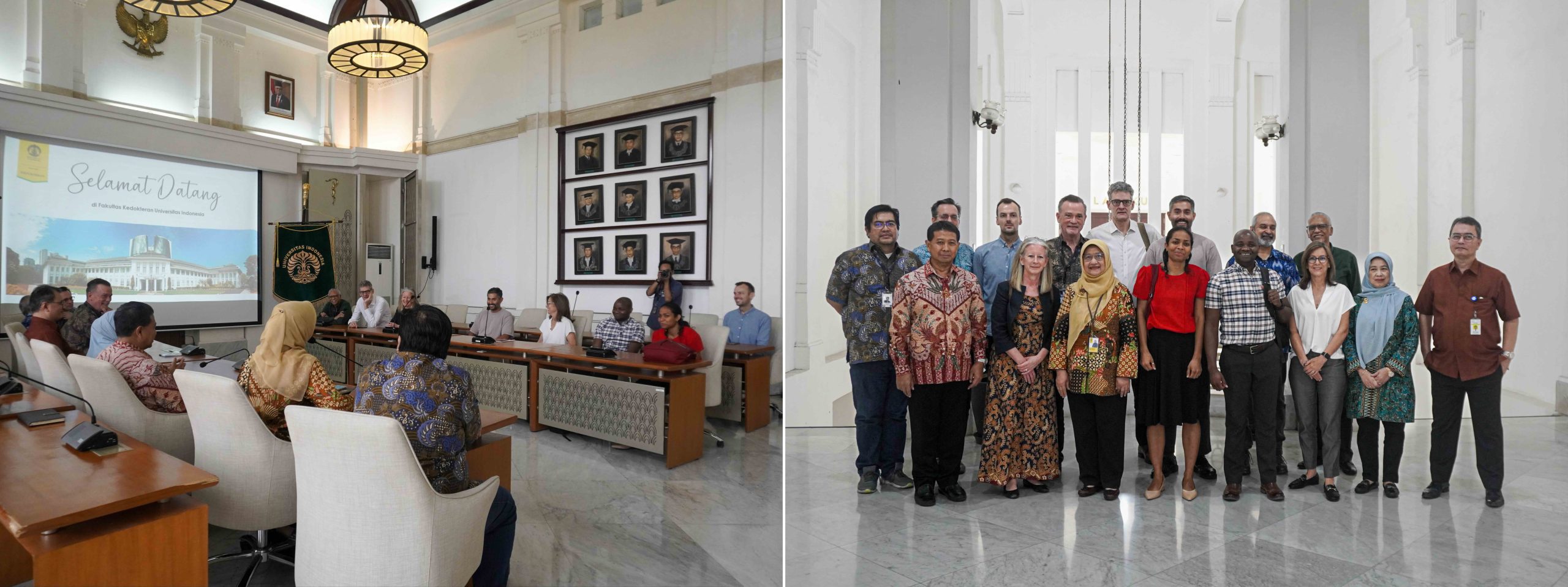
    Kunjungan dimulai dengan rapat dengan para pimpinan FK UI yang merupakan mitra utama OUCRU di Indonesia. Rapat tersebut utamanya membahas kolaborasi yang berlangsung antara OUCRU Indonesia dan FK UI dan cara-cara untuk memperkuatnya.

    Delegasi Wellcome bertemu dengan para pimpinan FK UI dan IMERI, yakni Wakil Dekan Bidang Sumber Daya, Ventura dan Administrasi Umum, Prof. Anis Karuniawati; Sekretaris Pimpinan Fakultas, Dr. Yuli Budiningsih; Manajer Kerja Sama, Ventura, dan Hubungan Alumni, Prof. Andon Hestiantoro; dan Direktur IMERI, Prof. Badriul Hegar Syarif.

    Setelahnya, delegasi Wellcome dibawa berkeliling kantor dan laboratorium OUCRU Indonesia untuk melihat langsung operasi unit riset ini. Tur ini kemudian diikuti dengan sesi presentasi untuk memberikan gambaran umum tentang empat program penelitian OUCRU Indonesia: Program Riset (1) Malaria, (2) Epidemiologi Geospasial, (3) Kesehatan Masyarakat & Genomik, dan (4) Penyakit Menular Klinis.

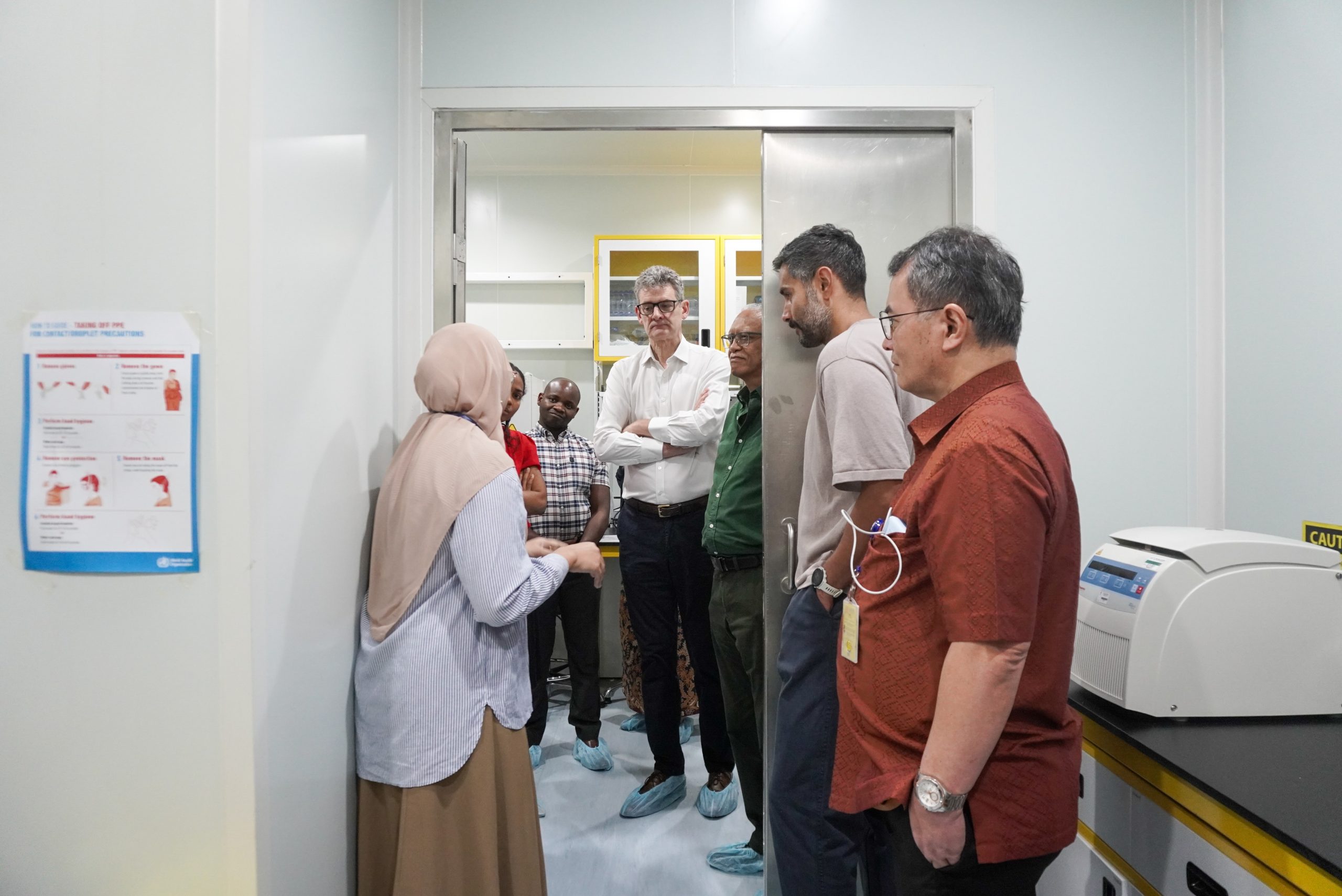
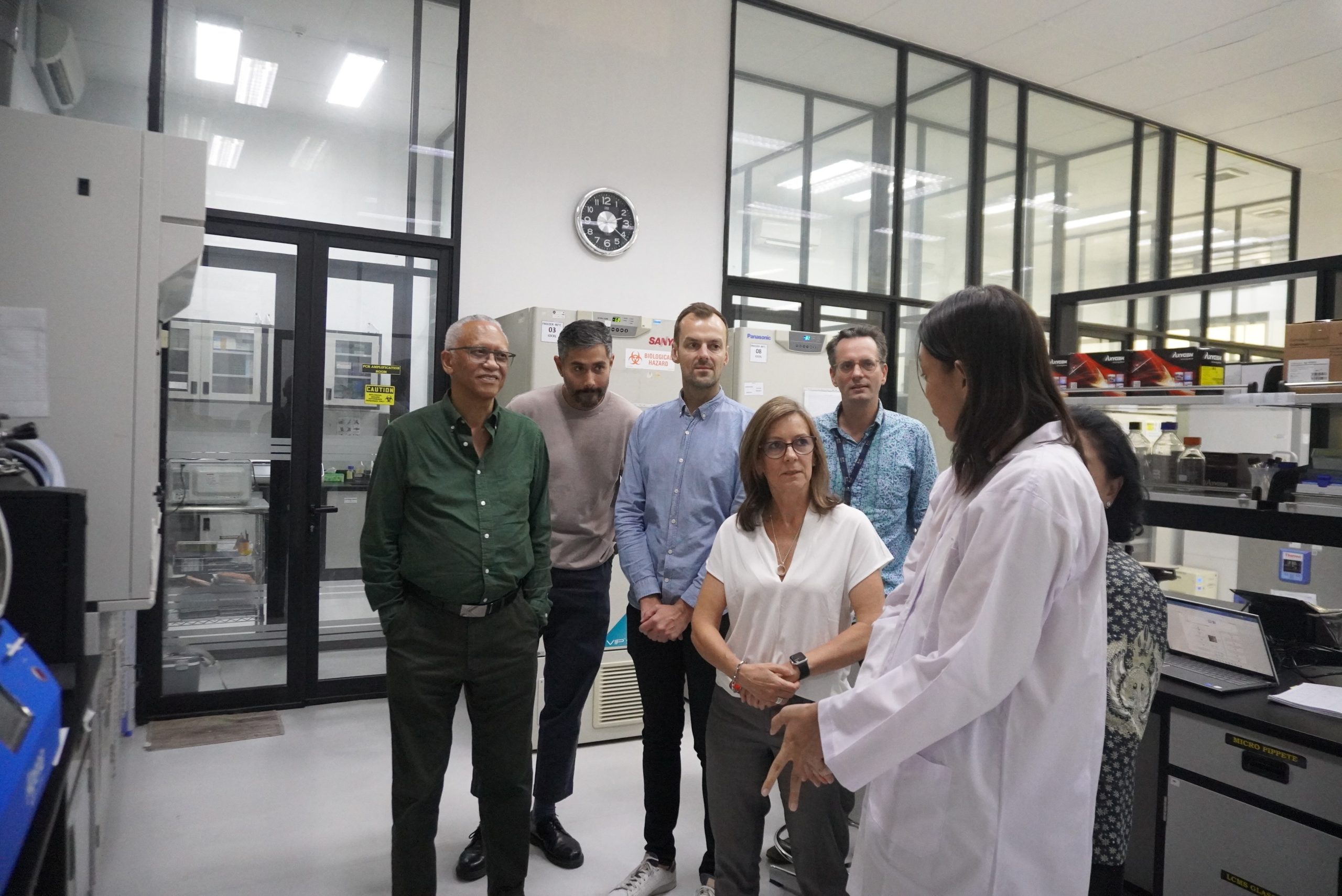
    Delegasi Wellcome mengelilingi laboratorium FK UI yang terletak di dalam gedung Indonesia Medical Education and Research Institute (IMERI).

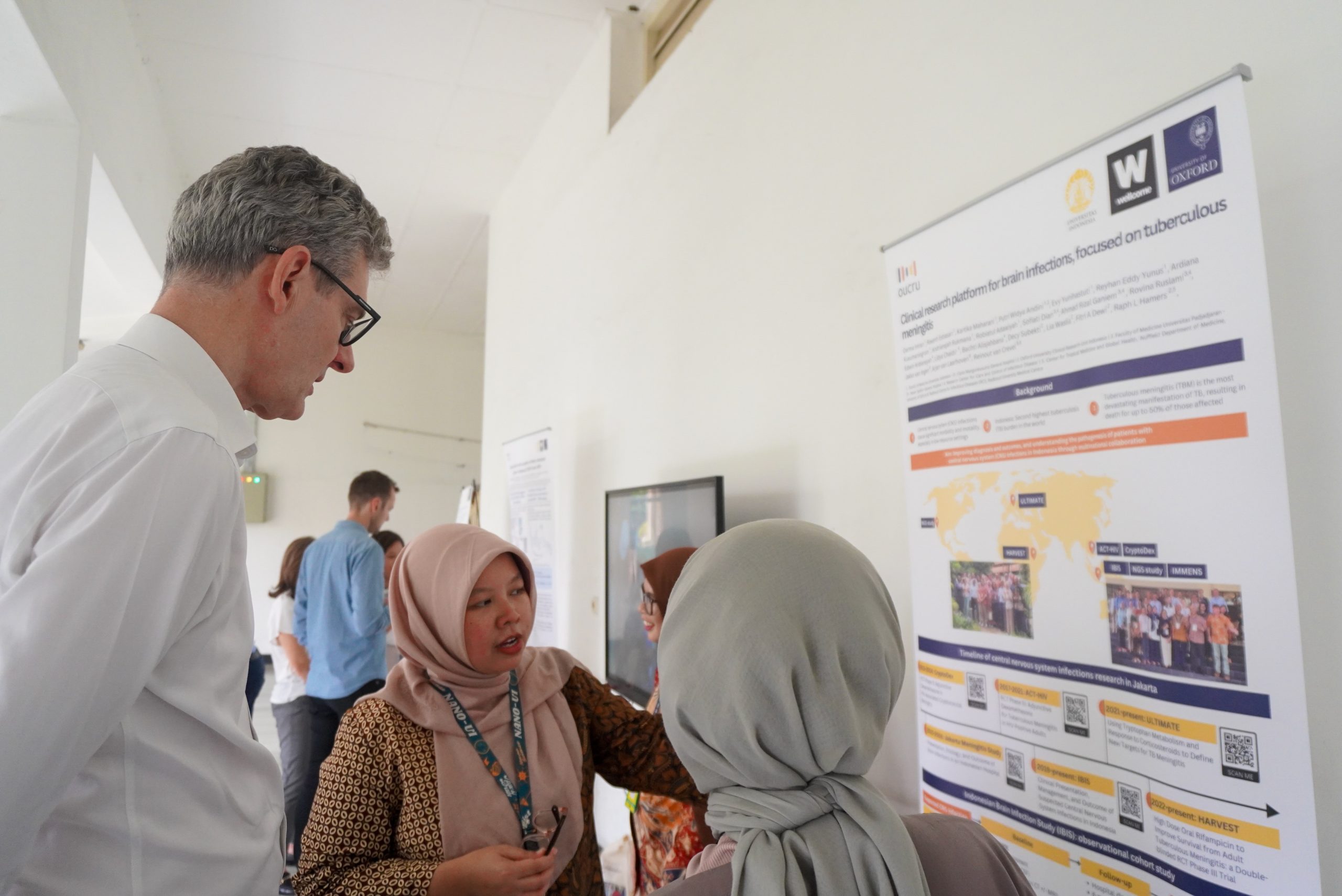
    Para tamu Wellcome juga disuguhkan dengan Bazar Sains yang memberikan mereka kesempatan untuk berinteraksi langsung dengan para ilmuwan dan kolaborator OUCRU Indonesia. Bazar ini menyajikan dua belas poster ilmiah tentang penelitian-penelitian OUCRU Indonesia dan inisiatif-inisiatif kami dalam melibatkan publik dan komunitas.

    Salah satu perwakilan Wellcome, Alex Pym, sedang mendiskusikan poster ilmiah tentang tuberkulosis meningitis dengan staf OUCRU Indonesia dan kolaborator saat Bazar Sains.

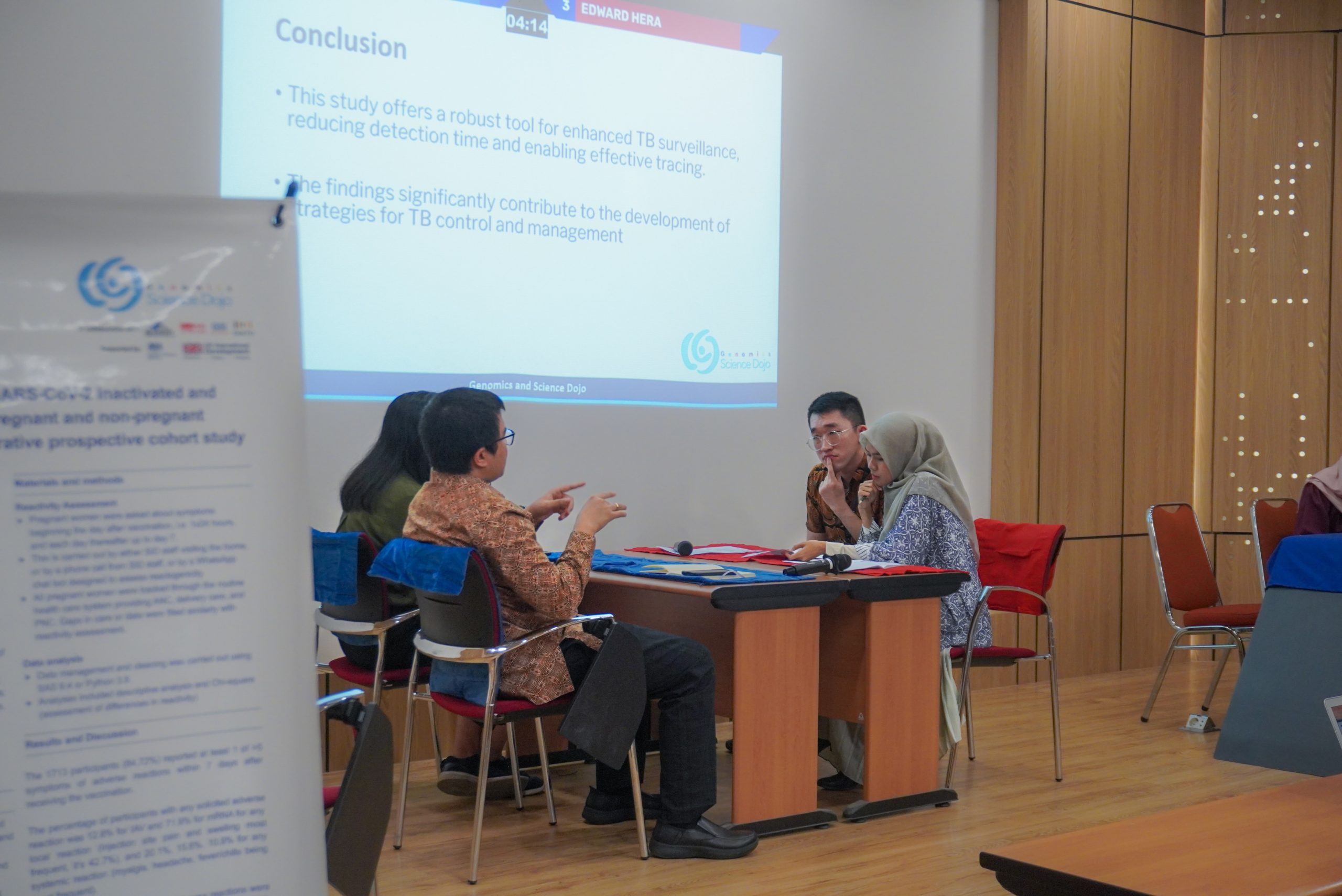
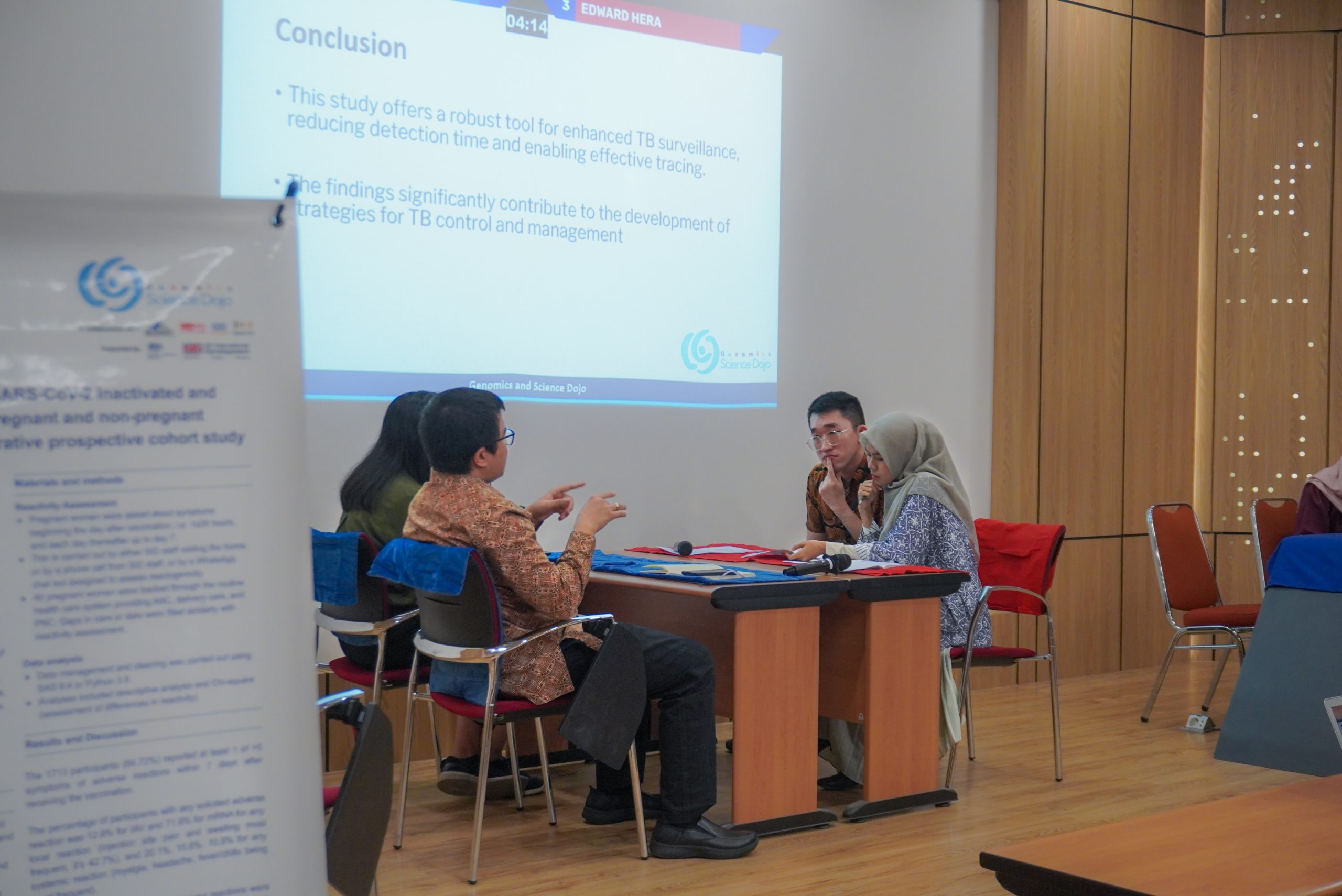
    Para tamu Wellcome juga sempat menyaksikan demonstrasi “Science Dojo” yakni debat ilmiah terstruktur yang dikembangkan bersama OUCRU Indonesia dengan dukungan dari British Council di Indonesia. Latihan debat dengan gaya ini didesain untuk mempertajam cara berpikir analitis serta kritis dan kemampuan komunikasi dengan tujuan membina generasi penerus peneliti Indonesia.

    Peragaan “Science Dojo” untuk Wellcome

    Para tamu Wellcome yang berkunjung adalah:

    • Julia Kemp, Head of Major International Programmes 
    • Stephen Gray, Senior Manager of Major International Programmes 
    • Alex Pym, Director of Infectious Diseases 
    • Sally Nicholas, Head of Health Systems and Environment 
    • Titus Divala, Research Lead Epidemics 
    • Jimmy Volmink, Chief Equity, Diversity, and Inclusion Officer 
    • Diego Baptista, Head of Research and Funding Equity 
    • Alethea Cope, Head of Translation 

    Kunjungan ini memberikan kesempatan OUCRU Indonesia untuk memperlihatkan kontribusinya terhadap penelitian kesehatan serta pengembangan kapasitas ilmuwan lokal dan memperkuat kolaborasi dengan Wellcome. Para delegasi Wellcome mengunjungi OUCRU Indonesia sebagai bagian dari partisipasi mereka dalam Major International Programmes Regional Annual Meeting 2024 yang diselenggarakan di Kota Ho Chi Minh, Vietnam, pada 16–18 Oktober.

  • Wellcome Trust Delegates Visit OUCRU Indonesia

    Wellcome Trust Delegates Visit OUCRU Indonesia

    On 14 October 2024, a delegation from Wellcome visited OUCRU Indonesia to deepen their understanding of the unit’s research, learn about its collaborations with various partners, and gain insights into its capacity-building initiatives for local researchers. 

    Wellcome delegates meet with FK UI faculty members: Vice Dean for Resources, Venture, and General Administration, Prof. Anis Karuniawati; Secretary to the Faculty, Dr. Yuli Budiningsih; Manager of Partnership, Venture, and Alumni Relations, Prof. Andon Hestiantoro; and Director of IMERI, Prof. Badriul Hegar Syarif. 

    The visit began with a meeting between the Wellcome delegates and key members of the Faculty of Medicine Universitas Indonesia (FMUI). The discussion centred around the ongoing collaboration between OUCRU and FMUI and ways to strengthen this partnership. 

    Following the meeting, the delegates were taken on a tour of OUCRU Indonesia’s workspaces and labs to give them a firsthand look at the unit’s operations. This was followed by a separate session offering an overview of OUCRU Indonesia’s four research programmes: Malaria, Geospatial Epidemiology, Community Health & Genomics, and Clinical Infectious Diseases Research Programmes. 

    Wellcome delegates tour FMUI’s laboratory inside the Indonesia Medical Education and Research Institute (IMERI) building.

    The visit also featured a Science Bazaar to provide Wellcome delegates the opportunity to interact directly with OUCRU Indonesia’s scientists and collaborators. The bazaar showcased 12 scientific posters highlighting research from OUCRU Indonesia’s four research programmes as well as our initiatives at public & community engagement. 

    Wellcome representative, Alex Pym, discussing one of the scientific posters presented in the Science Bazaar with OUCRU Indonesia’s staff and a collaborator.

    The Wellcome delegation also had the opportunity to observe a demonstration of “Science Dojo”—a structured debate-style exercise co-developed by OUCRU Indonesia with the support of the British Council in Indonesia. This exercise is designed to foster analytical and critical thinking and communications skills among scientists, with the goal of nurturing the next generation of Indonesian researchers. 

    A demonstration of Science Dojo held for Wellcome visitors.

    The visiting Wellcome delegates were: 

    • Julia Kemp, Head of Major International Programmes 
    • Stephen Gray, Senior Manager of Major International Programmes 
    • Alex Pym, Director of Infectious Diseases 
    • Sally Nicholas, Head of Health Systems and Environment 
    • Titus Divala, Research Lead Epidemics 
    • Jimmy Volmink, Chief Equity, Diversity, and Inclusion Officer 
    • Diego Baptista, Head of Research and Funding Equity 
    • Alethea Cope, Head of Translation 

    This visit was an opportunity to showcase OUCRU Indonesia’s contributions to health research and capacity building and strengthen collaboration with Wellcome. The delegates visited OUCRU Indonesia as part of their participation in the Major International Programmes Regional Annual Meeting 2024, hosted in Ho Chi Minh City, Vietnam, from October 16 to 18.

  • OUCRU Indonesia dan Universitas Indonesia Selesaikan Uji Vaksin Malaria Historis

    OUCRU Indonesia dan Universitas Indonesia Selesaikan Uji Vaksin Malaria Historis

    Sebagai suatu kesuksesan besar, Fakultas Kedokteran Universitas Indonesia (FK UI) dan OUCRU Indonesia telah menyelesaikan uji klinis fase 2 untuk dua vaksin malaria baru yang diproduksi Sanaria Inc. Riset ini merupakan uji coba vaksin malaria pertama yang pernah dilakukan di Indonesia dan yang pertama di kawasan Asia Pasifik dalam lebih dari 30 tahun.

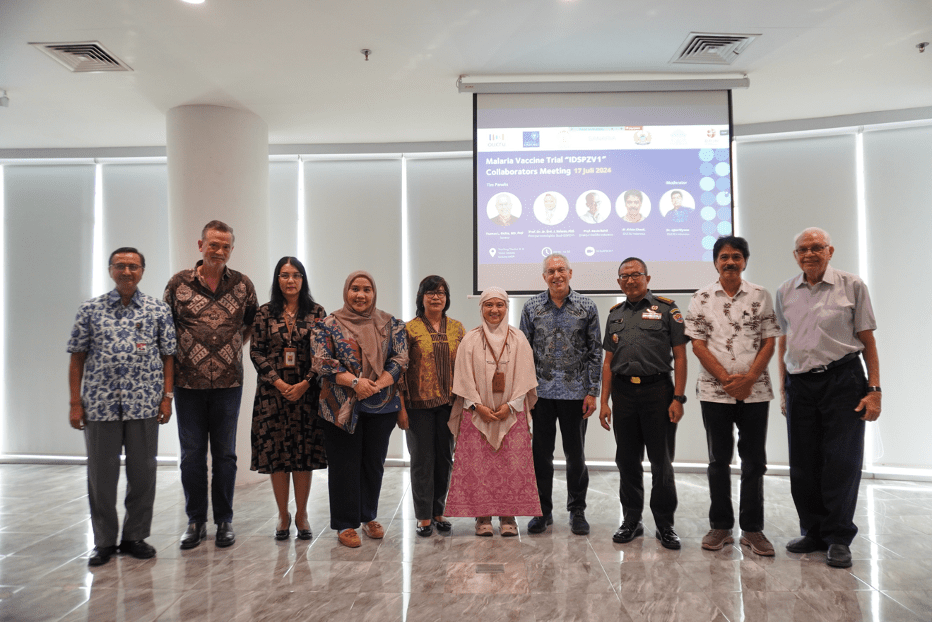
    Penyelesaian uji klinis ini diumumkan secara resmi saat ‘Scientific Collaborators Meeting’ yang diadakan pada 17 Juli 2024, terbuka untuk umum melalui Zoom. Dari kiri ke kanan: Direktur OUCRU Indonesia, Prof. J. Kevin Baird; Principal Investigator, Prof. Erni J. Nelwan; Site Medical Supervisor, Dr. Krisin Chand; dan Chief Medical Officer Sanaria, Dr. Thomas L. Richie.

    Terobosan dalam Riset Malaria

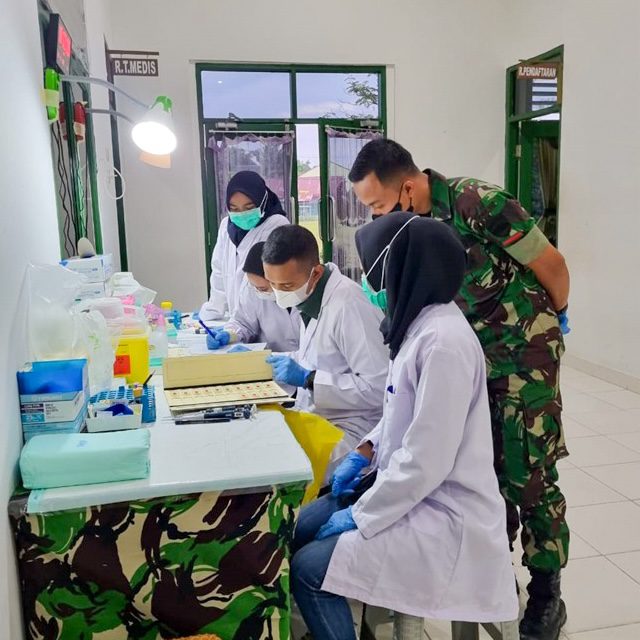
    Uji klinis ini melibatkan 345 sukarelawan TNI dari Batalyon 132 di Bangkinang, Riau, Indonesia. Mereka mendapatkan injeksi salah satu jenis vaksin atau suntikan plasebo sebelum berangkat tugas ke Kabupaten Keerom, Papua, daerah endemis malaria. Tujuannya adalah melihat seberapa baik vaksin bisa melindungi orang-orang yang belum pernah terkena malaria sebelumnya.

    Prof. Erni J. Nelwan dari FK UI, selaku Principal Investigator studi ini, mengatakan, “Penelitian ini unik karena melibatkan populasi yang belum pernah terkena malaria yang kemudian bepergian ke daerah endemik malaria. Dengan memvaksin para tentara yang belum pernah terinfeksi sebelum mereka bepergian ke daerah berisiko tinggi, kami bisa menguji efektivitas vaksin ini dalam kondisi nyata.”

    Letnan Dua Kennedi Siregar dari Peleton Kesehatan Batalion 132 Bangkinang turut menekankan pentingnya studi ini bagi masyarakat secara umum dan TNI secara khusus. “Tugas kami sering membawa kami ke daerah-daerah terpencil di seluruh Indonesia, terutama daerah yang rawan malaria. Malaria merupakan tantangan bagi kami. Keterlibatan dalam studi ini membuat kami lebih memahami penyakitnya. Sekarang, kami lebih memahami cara mendiagnosis dan mengobatinya dengan benar,” jelasnya.

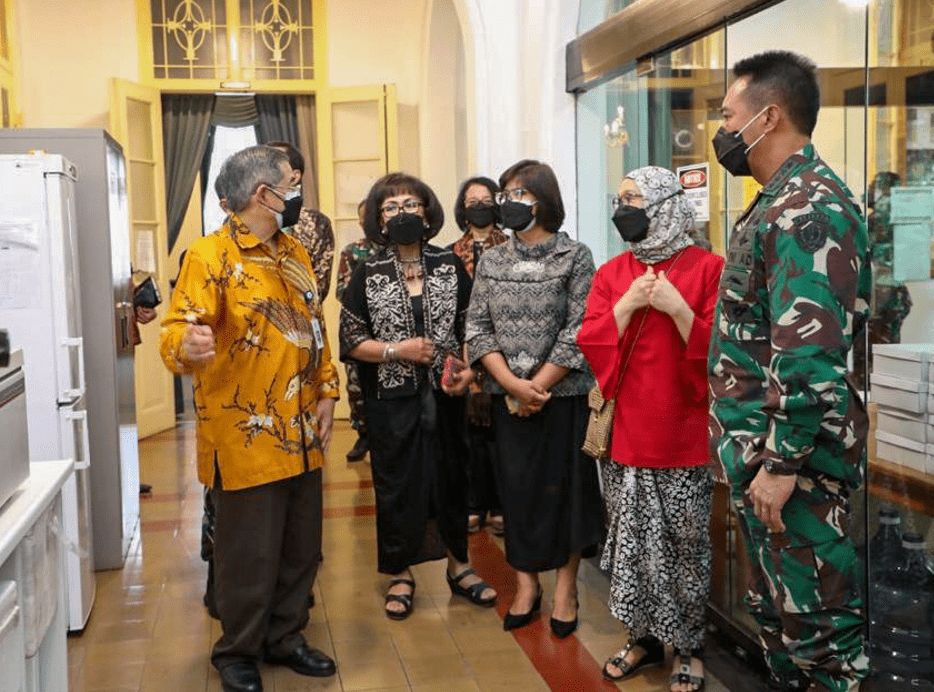
    Jenderal (Purn) Andika Perkasa, Kepala Staf TNI AD pada masanya (kanan), mengunjungi Lembaga Biologi Molekuler Eijkman (LMBE) pada 2021 untuk menandai awal kerja sama untuk uji klinis vaksin malaria. Dari kiri ke kanan: Prof. Amin Soebandrio, Direktur LBME; Prof. Herawati Sudoyo, Deputi Direktur LBME; Dr. Rintis Noviyanti, peneliti LBME; Dr. Safarina G. Malik, peneliti LBME; dan Jenderal Andika Perkasa.

    Para tentara divaksinasi dari Mei sampai September 2022 sebelum bertugas ke Kabupaten Keerom. Selama berada di sana, tim peneliti menangani lebih dari 700 kasus malaria. Mereka melanjutkan pemantauan selama enam bulan setelah para tentara kembali dan menangani 300 kasus tambahan.

    Dua Vaksin Malaria Baru yang Diuji Coba

    Kedua vaksin yang diuji coba adalah Sanaria® PfSPZ dan Sanaria® PfSPZ-CVac. Keduanya terbuat dari parasit malaria hidup, khususnya jenis Afrika Barat, yang dilemahkan dengan cara berbeda. Parasit di dalam Vaksin Sanaria® PfSPZ dilemahkan menggunakan radiasi, sedangkan parasit di dalam Vaksin Sanaria® PfSPZ-CVac dilemahkan dengan obat klorokuin yang diberikan secara oral kepada partisipan studi.

    Hasil uji cobanya menunjukkan bahwa vaksin Sanaria® PfSPZ aman dan dapat ditoleransi dengan baik, sama seperti plasebo. Vaksin Sanaria® PfSPZ-CVac juga terbukti aman dengan efek samping ringan. Kedua vaksin memberikan perlindungan terhadap malaria yang disebabkan parasit Plasmodium falciparum yang ditemukan di Papua, meskipun vaksinnya terbuat dari jenis malaria yang berbeda.

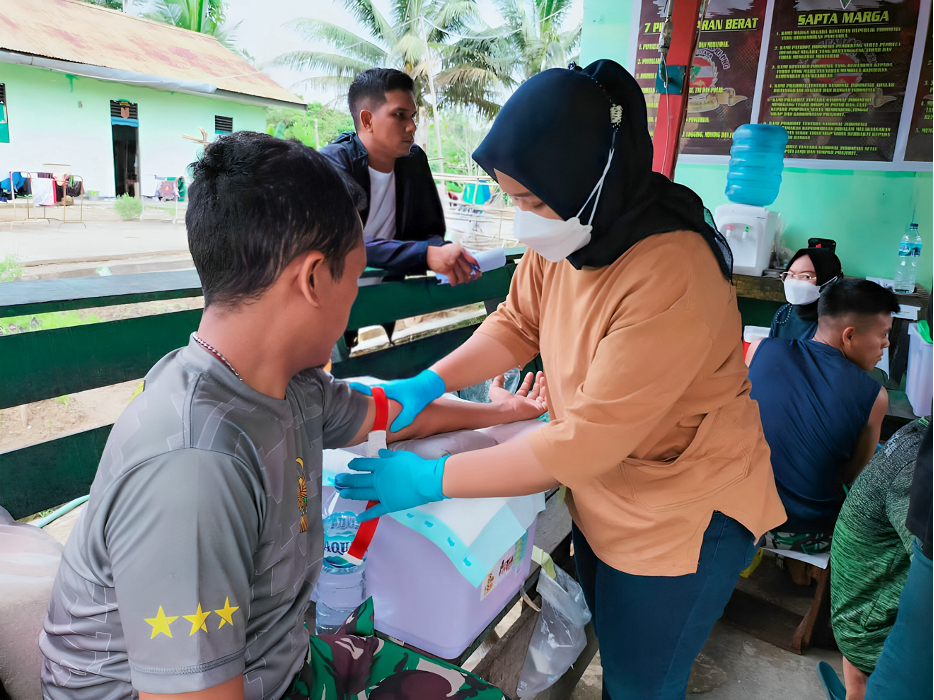
    Pengambilan sampel darah oleh Tim Studi sebagai bagian dari monitoring rutin partisan studi selama di Papua.

    Kerja Sama Merupakan Kunci Keberhasilan Uji Coba Ini

    Uji klinis ini merupakan buah kerja sama antara FK UI, OUCRU Indonesia, Pusat Kesehatan TNI AD (PUSKESAD), dan Pusat Riset Biologi Molekuler Eijkman dari Badan Riset dan Inovasi Nasional (PRBM BRIN).

    Tim studi uji coba vaksin malaria saat ‘Scientific Collaborators Meeting’ pada 17 Juli yang diwakili oleh (dari kiri ke kanan): Dr. dr. Soroy Lardo, Research Monitor; Prof. J. Kevin Baird, Direktur OUCRU Indonesia; dr. Minerva Theodora Simatupang dari Kelompok Kerja Malaria Kemenkes RI; dr. Helen Dewi Prameswari, Ketua Kelompok Kerja Malaria Kemenkes RI; Dr. Rintis Noviyanti, peneliti PRBM BRIN; Prof. Erni J. Nelwan, Principal Investigator; Dr. Thomas L. Richie, Chief Medical Officer Sanaria; dr. Sony Endro Cahyo, Dirbinlitbang PUSKESAD; dr. Krisin Chand, Site Medical Supervisor; dan Dr. Narain Punjabi, Research Monitor.

    Direktur OUCRU Indonesia, Prof. J. Kevin Baird, menekankan pentingnya kolaborasi dengan berbagai institusi lokal dalam mencari solusi global bagi penyakit menular, termasuk malaria. “Malaria adalah masalah besar di dunia dan Indonesia. Pekerjaan kami di OUCRU Indonesia mengutamakan penjalinan kerja sama dengan mitra lokal untuk menemukan solusi efektif bagi penyakit menular yang dapat diterapkan di seluruh dunia. Keberhasilan uji coba ini membuktikan kekuatan kemitraan tersebut dan merupakan langkah penting menuju eliminasi malaria,” terangnya.

    Dekan FK UI, Prof. Ari Fahrial Syam, turut menyoroti kerja sama yang memungkinkan terselesaikannya riset ini. Ia mengatakan, “Uji klinik fase 2 tentang vaksin malaria merupakan riset penting dalam pengembangan vaksin. Mudah-mudahan uji klinik bisa berlanjut sehingga keberadaan vaksin ini benar-benar bermanfaat dalam upaya memberantas malaria di Indonesia dan dunia. FK UI terus mendukung berbagai uji klinik the Oxford University Clinical Research Unit (OUCRU) melanjutkan kerja sama yang telah berlangsung sejak 13 tahun yang lalu.”

    Rencana ke Depan

    Chief Medical Officer Sanaria, Thomas L. Richie, mengungkapkan kegembiraannya atas hasil uji klinik ini dan menerangkan rencana Sanaria untuk menciptakan vaksin yang lebih baik lagi. “Kami sangat senang dengan hasil uji cobanya yang menjanjikan, terutama kemampuan vaksin untuk melindungi dari jenis malaria yang berbeda dari yang dipakai untuk membuatnya. Efikasi lintasjenis ini sangat penting untuk eliminasi malaria global karena ada banyak spesies malaria di seluruh dunia. Berdasarkan temuan ini, kami sedang mengembangkan vaksin generasi berikutnya bernama PfSPZ-LARC2 yang diharapkan menunjukkan hasil yang lebih baik lagi,” jelasnya.

    Hasil studi yang lebih rinci akan dipublikasikan pada akhir tahun setelah melalui peer-review. Penelitian yang didanai oleh Congressionally Directed Medical Research Program (AS) dan dipimpin oleh Prof. Erni J. Nelwan dari FK UI ini merupakan langkah penting dalam perjuangan melawan malaria.

  • OUCRU and Universitas Indonesia Complete Historic Malaria Vaccine Trial

    OUCRU and Universitas Indonesia Complete Historic Malaria Vaccine Trial

    In a major achievement, the Faculty of Medicine Universitas Indonesia (FMUI) and OUCRU Indonesia have completed a phase 2 clinical trial for two new malaria vaccines developed by Sanaria Inc. This is the first malaria vaccine trial ever conducted in Indonesia and the first in the Asia-Pacific region in over 30 years.

    This trial’s completion was officially announced during the Scientific Collaborators Meeting held on 17 July 2024, open to the public via Zoom. From left to right: Director of OUCRU Indonesia, Prof. J. Kevin Baird; Principal Investigator of the clinical trial, Prof. Erni J. Nelwan; Site Medical Supervisor, Dr. Krisin Chand; and Chief Medical Officer of Sanaria, Dr. Thomas L. Richie.

    Groundbreaking Research in Malaria

    The trial included 345 Indonesian soldier volunteers from Battalion 132 in Bangkinang, Riau Province, Indonesia. These soldiers received either one of the new malaria vaccines or a placebo before traveling to Keerom District in Papua Province, an area where malaria is endemic. The goal was to see how well the vaccines protected people who had never had malaria before.

    Prof. Erni J. Nelwan from FMUI, the Principal Investigator of this trial, said, “This study is groundbreaking because it involved a malaria-naive population traveling to an endemic region. By vaccinating soldiers who had never been exposed to malaria, we were able to truly test the effectiveness of these vaccines in a real-world setting.”

    Second Lieutenant Kennedi Siregar from Battalion 132 also noted the importance of this study, both for the public and, more specifically, the Indonesian Army. “Our soldiers are frequently deployed in remote areas across the country, especially in malaria-endemic areas. Malaria is a challenge for us. Being involved in this study has helped us understand this disease better; we now know better how to diagnose and treat it properly.”

    General Andika Perkasa, then Chief of Staff of the Indonesian Army (right), visited the Eijkman Institute for Molecular Biology in 2021 to mark the start of a partnership for Indonesia’s first malaria vaccine trial. From left to right: Prof. Amin Soebandrio, Director of Eijkman Institute for Molecular Biology (EIMB); Prof. Herawati Sudoyo, Deputy Director of EIMB; Dr. Rintis Noviyanti, EIMB scientist; Dr. Safarina G. Malik; EIMB scientist; and General Andika Perkasa.

    The soldiers were vaccinated between May and September 2022 and then deployed to Keerom District. During their time there, the research team treated over 700 malaria cases and continued to monitor the soldiers for six months after their return, treating another 300 cases.

    The New Malaria Vaccines Tested

    The two vaccines tested were Sanaria® PfSPZ and Sanaria® PfSPZ-CVac. Both used live malaria parasites from the West African strain that were weakened by different methods. The Sanaria® PfSPZ vaccine used parasites weakened by radiation, while the Sanaria® PfSPZ-CVac vaccine used parasites weakened by chloroquine that was given orally to study participants.

    The Sanaria® PfSPZ vaccine was found to be safe and well-tolerated, similar to a saline placebo. The Sanaria® PfSPZ-CVac vaccine also showed good safety and minor side effects. Both vaccines offered protection against malaria caused by the Plasmodium falciparum parasite found in Papua, which is different from the strain that made up the vaccine.

    A blood test done by the study team as part of routine monitoring of study participants in Papua, Indonesia.

    Partnerships are Key to the Trial’s Success

    The trial was made possible through a partnership between the Faculty of Medicine Universitas Indonesia, OUCRU Indonesia, the Indonesia Army Health Center, and the Eijkman Molecular Biology Research Center of the National Research and Innovation Agency.

    The malaria vaccine trial study team during the Scientific Collaborators Meeting on July 17, represented by (from left to right): Dr. dr. Soroy Lardo, Research Monitor; Prof. J. Kevin Baird, Director of OUCRU Indonesia; dr. Minerva Theodora Simatupang from the Malaria Working Group of the MoH; dr. Helen Dewi Prameswari, Head of the Malaria Working Group of the MoH; Dr. Rintis Noviyanti, scientist at the National Research and Innovation Agency; Prof. Erni J. Nelwan, Principal Investigator; Dr. Thomas L. Richie, Chief Medical Officer of Sanaria; Dr. dr. Sony Endro Cahyo from the Indonesia Army Health Center; dr. Krisin Chand, Site Medical Supervisor; and Dr. Narain Punjabi, Research Monitor.

    Director of OUCRU Indonesia, Prof. J. Kevin Baird, emphasized the importance of partnerships with local institutions in finding global solutions for infectious diseases, including malaria. “Malaria is a significant problem both globally and in Indonesia. Our work at OUCRU Indonesia focuses on collaborating with local partners to find effective solutions against infectious diseases that can be adopted around the world. The success of this trial is a testament to the power of these partnerships and a crucial step toward eliminating malaria,” he said.

    Dean of FMUI, Prof. Ari Fahrial Syam, also highlighted the collaborative effort behind the trial, saying “The phase 2 clinical trial of the malaria vaccine is crucial research in vaccine development. Hopefully, the clinical trial can continue so that the existence of this vaccine can truly benefit efforts to eradicate malaria in Indonesia and the world. FMUI continues to support various clinical trials of OUCRU Indonesia, continuing the cooperation that has been ongoing for the past 13 years.”

    The Next Steps

    The Chief Medical Officer of Sanaria, Thomas L. Richie, expressed his excitement about the results and shared Sanaria’s plan to create an improved vaccine. “We are thrilled with the trial’s promising results, especially the vaccines’ ability to protect against a different malaria strain than the one used to create them. This cross-strain efficacy is crucial for global malaria eradication, as there are many malaria species around the world. Building on these findings, we are developing a next-generation vaccine called PfSPZ-LARC2, hopefully showing even better results,” he explained.

    The detailed results of this study, funded by the Congressionally Directed Medical Research Program (USA) and led by Prof. Erni J. Nelwan from FMUI, will be published after peer review later this year. This trial marks a significant advancement in the fight against malaria, demonstrating the potential of innovative vaccines to combat this deadly disease on a global scale.

  • Peneliti OUCRU Indonesia Raih Presentasi Poster Terbaik di International Pandemic Sciences Conference 2024

    Peneliti OUCRU Indonesia Raih Presentasi Poster Terbaik di International Pandemic Sciences Conference 2024

    Salah satu ilmuwan OUCRU Indonesia, dr. Edward Sutanto MPH, memperoleh penghargaan ‘Presentasi Poster Terbaik’ dalam topik Vaksin dan Imunologi di International Pandemic Sciences Conference 2024. Poster Edward berkenaan dengan penelitian OUCRU Indonesia yang baru saja selesai tentang vaksin Covid-19 untuk ibu hamil di Indonesia.

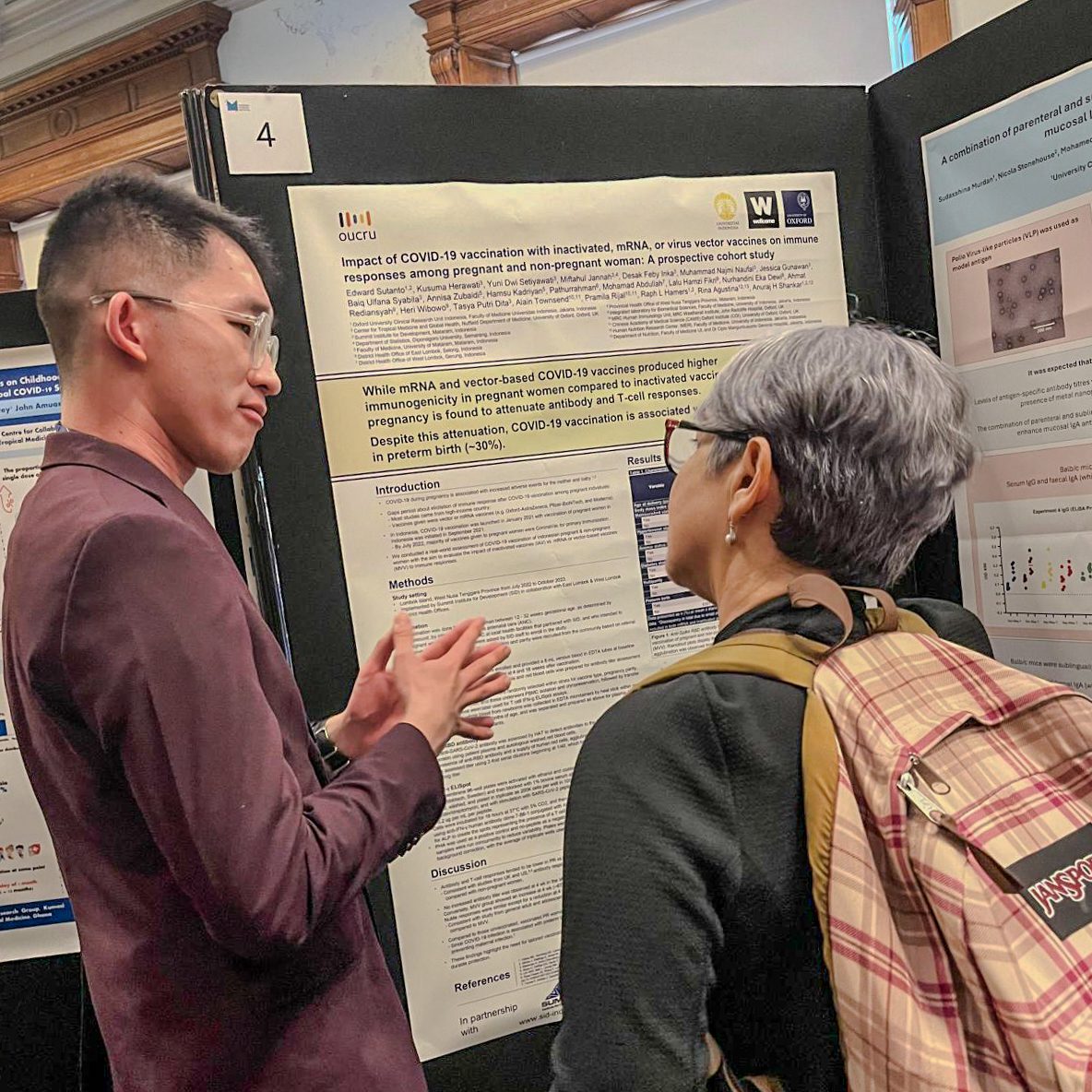
    Dokter Edward Sutanto menjelaskan posternya kepada salah satu peserta dari International Pandemic Sciences Conference 2024 di Oxford.

    Penelitian tersebut menunjukkan bahwa vaksinasi Covid-19 saat hamil dapat mengurangi risiko kelahiran prematur sekitar 30%. Vaksin mRNA (Pfizer serta Moderna) dan vaksin berbasis vektor (AstraZeneca) menghasilkan respons imun terhadap Covid-19 yang lebih kuat dibandingkan vaksin inaktif (Sinovac dan SinoPharm), meskipun kehamilan melemahkan respons imun ini.

    Studi yang dipresentasikan dr. Edward (dikenal sebagai studi “PregVax”) mempelajari bagaimana vaksin-vaksin Covid-19 memengaruhi ibu hamil dan bayinya. Penelitian ini secara khusus menyelidiki bagaimana vaksinasi, termasuk injeksi ‘booster’, memicu kekebalan terhadap Covid-19 pada ibu hamil dan bagaimana kekebalan ini ditransfer dari ibu hamil ke bayinya. Studi ini juga melihat dampk terhadap kondisi kehamilan dan keamanan dari vaksin-vaksin yang diteliti.

    PregVax melibatkan lebih dari 12.000 perempuan dan 6.000 bayi di Indonesia. Penelitian ini dilakukan bersama dengan para kolaborator dari Universitas Indonesia, Universitas Diponegoro, Universitas Mataram, Summit Institute for Development, beberapa dinas kesehatan, Chinese Academy of Medical Sciences Oxford Institute, dan MRC Weatherall Institute. Studi ini didanai oleh Chinese Center for Disease Control and Prevention.

    Edward bekerja di bawah Program Kesehatan Masyarakat di OUCRU Indonesia dan merupakan mahasiswa DPhil di University of Oxford.

    Edward berkomentar, “Saya senang kami menerima banyak pertanyaan dan ketertarikan terhadap PregVax selama konferensi berlangsung. Ini adalah penelitian yang penting untuk dilakukan di negara berpenghasilan rendah dan menengah, seperti Indonesia, karena sebagian besar penelitian vaksin COVID-19 cenderung berasal dari negara berpenghasilan tinggi. Penelitian kami mengungkapkan bahwa kehamilan melemahkan respons imun yang dihasilkan oleh vaksin COVID-19, menyoroti urgensi strategi vaksinasi khusus untuk kelompok berisiko tinggi ini.”

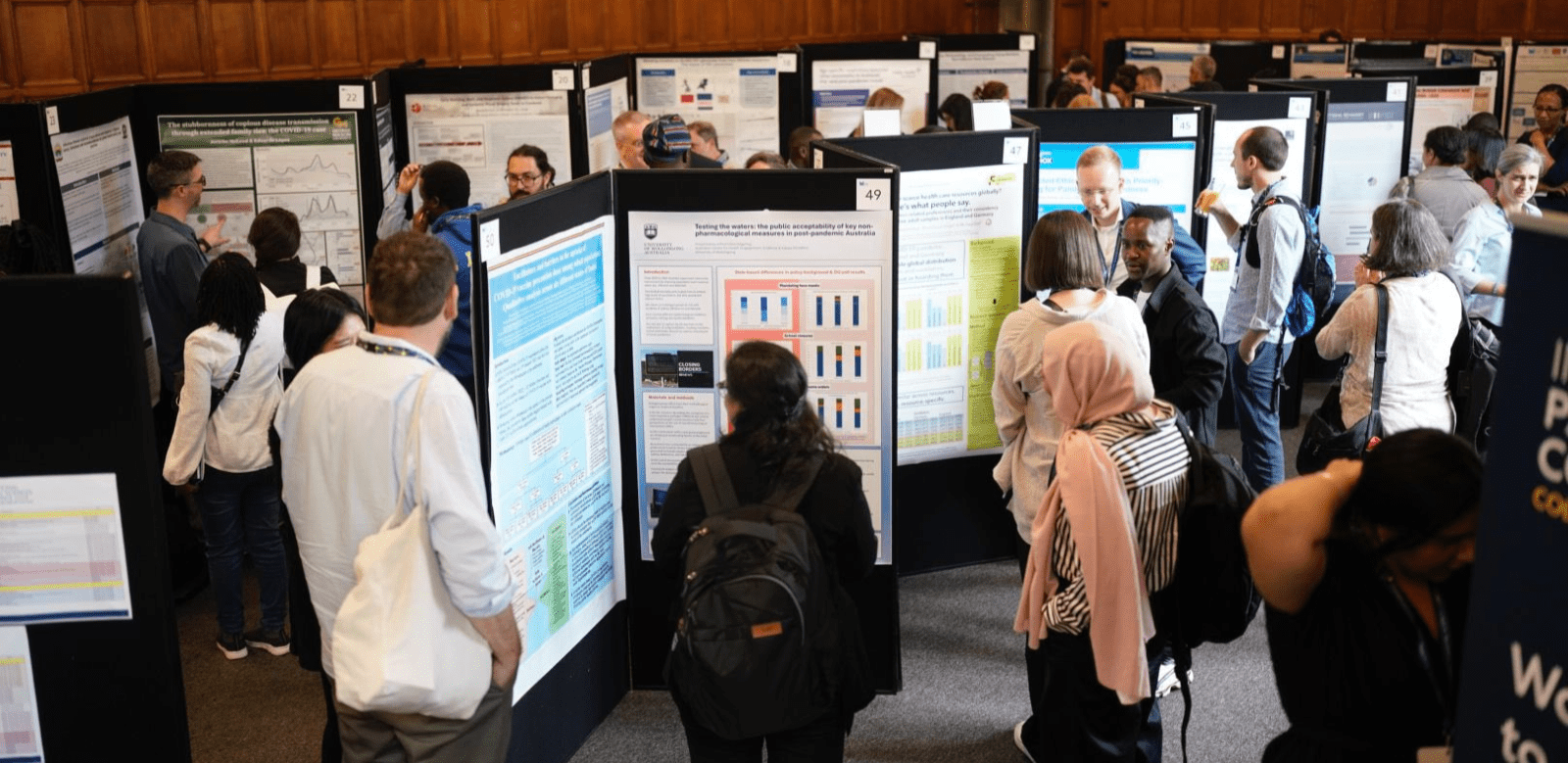
    Edward adalah salah satu dari sekian banyak peneliti OUCRU yang menghadiri International Pandemic Sciences Conference 2024. Delegasi kami yang terdiri dari berbagai program menampilkan poster-poster penelitian terbaru OUCRU tentang kesiapsiagaan dan respons terhadap pandemi.

    Dari kiri ke kanan: Ida Ayu Sutrisni (OUCRU Indonesia), Dr Nguyen Thanh Ha dan Assoc Prof Jennifer Van Nuil (OUCRU Vietnam) mempresentasikan studi COVID-19 mereka tentang Kohesi Sosial antara Tenaga Kesehatan dan Lapisan Kerentanan.
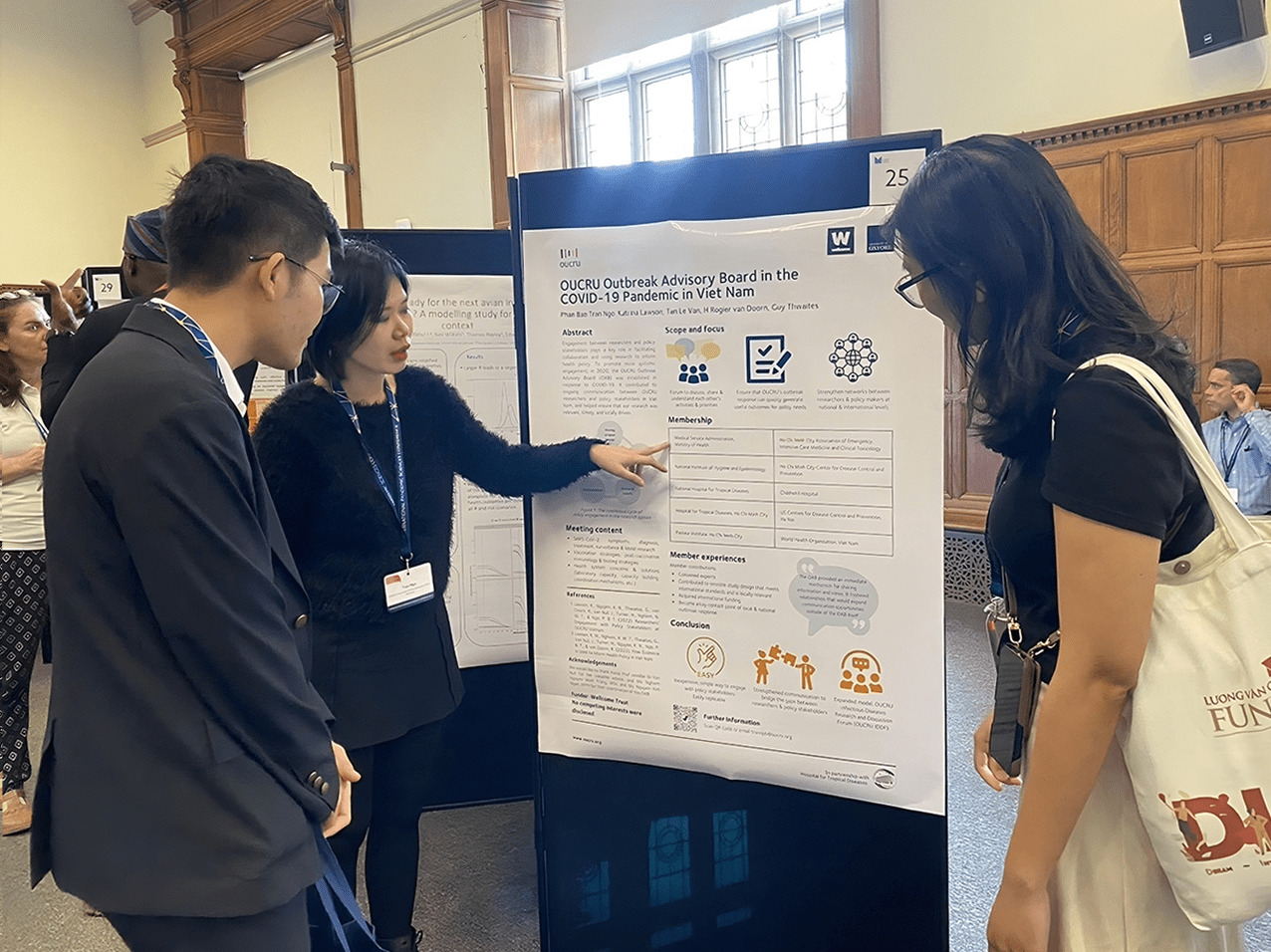
    Ngo Phan Bao Tran,Senior Policy Engagement Coordinator (OUCRU Vietnam), menjelaskan upaya para peneliti OUCRU dalam menggaet pemangku kepentingan di Vietnam.
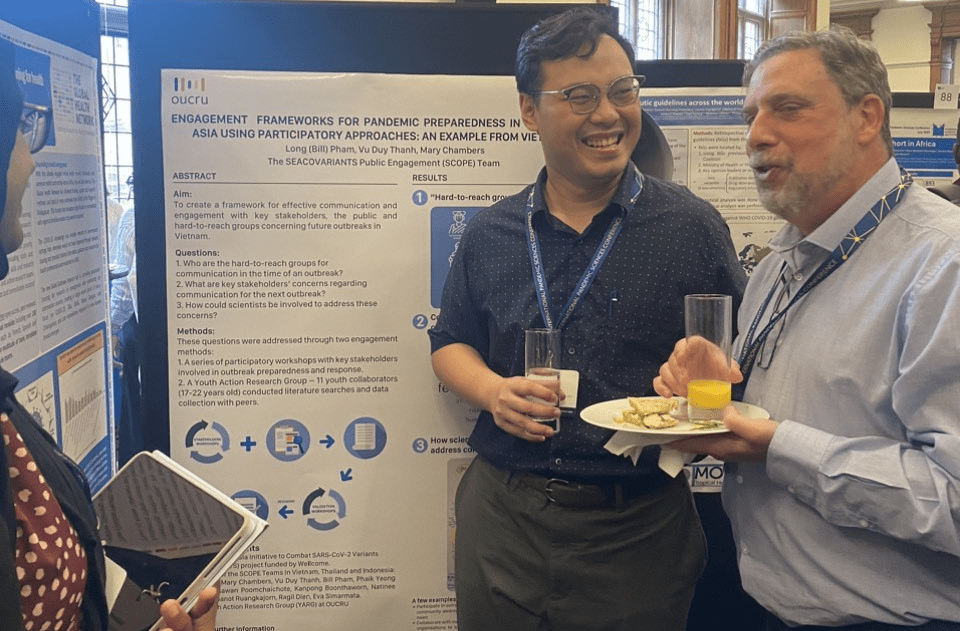
    Pham Ngoc Long (Bill) (OUCRU Vietnam), mempresentasikan kerangka kerja pelibatan masyarakat untuk kesiapsiagaan pandemi sebagai bagian proyek unggulan Southeast Asia Initiative to Combat SARS-CoV-2 Variants (SEACOVARIANTS)
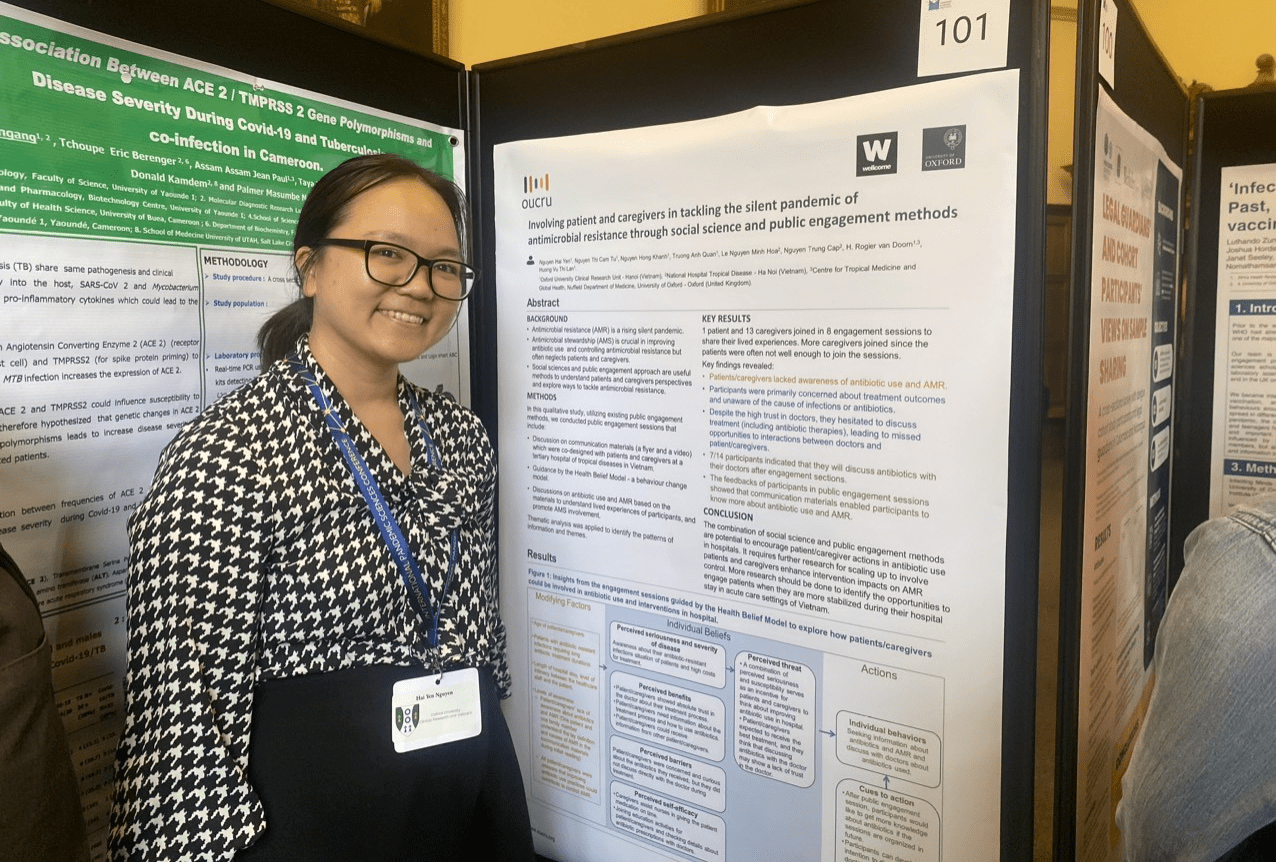
    Nguyen Hai Yen (OUCRU Vietnam) dengan penelitian terbarunya tentang resistensi antimikroba.

    Konferensi Ilmu Pandemi Internasional, yang diselenggarakan setiap tahun oleh Pandemic Sciences Institute, University of Oxford, bertujuan untuk memajukan penelitian dan kebijakan publik untuk mengatasi ancaman epidemi dan pandemi. Tahun ini, konferensinya dihadiri oleh lebih dari 750 delegasi, baik secara luring maupun daring, dari 63 negara berbeda.

  • Nghiên cứu cá»§a OUCRU Indonesia nhận giải thưởng tại Há»™i nghị Khoa học về Đại dịch Quốc tế 2024

    Nghiên cứu của OUCRU Indonesia nhận giải thưởng tại Hội nghị Khoa học về Đại dịch Quốc tế 2024

    Tiến sỹ Edward Sutanto MPH, OUCRU Indonesia, đã được trao giải “Trình bày Poster Khoa học Xuất Sắc Nhất” trong hạng mục Vắc xin và Miá»…n dịch học tại Há»™i nghị Khoa học về Đại dịch Quốc tế 2024. Poster cá»§a Tiến sÄ© Edward trình bày về PregVax má»™t nghiên cứu má»›i về vắc xin COVID-19 dành cho phụ nữ mang thai tại Indonesia.

    Bác sĩ Edward Sutanto trình bày poster tại Hội nghị Khoa học về Đại dịch Quốc tế 2024 tại Oxford.

    Nghiên cứu cho thấy Nghiên cứu cho thấy việc tiêm vắc xin COVID-19 khi mang thai giúp giảm khoảng 30% nguy cơ sinh non. Vắc xin sử dụng mRNA (Pfizer và Moderna) và vắc xin vector (AstraZeneca) tạo ra phản ứng miễn dịch chống lại COVID-19 ở phụ nữ mang thai tốt hơn so với vắc xin bất hoạt (SinoVac và SinoPharm), nhưng việc mang thai vẫn làm suy yếu phản ứng này.

    Nghiên cứu được trình bày (được gọi là nghiên cứu “PregVax”) tìm hiểu cách thức một số loại vắc xin COVID-19 ảnh hưởng đến phụ nữ mang thai và trẻ sơ sinh. Nghiên cứu cũng tìm hiểu việc tiêm chủng, bao gồm cả mũi nhắc lại, có tăng cường miễn dịch chống lại COVID-19 ở phụ nữ mang thai hay không và khả năng miễn dịch này được truyền từ mẹ sang con sơ sinh như thế nào. Ngoài ra, còn đánh giá các kết quả thai kỳ liên quan đến các loại vắc xin này, cũng như độ an toàn của chúng.

    PregVax được thực hiện trên 12.000 phụ nữ và 6.000 trẻ sơ sinh ở Indonesia. Nghiên cứu được thực hiện với sự hợp tác của Đại học Indonesia, Đại học Diponegoro, Đại học Mataram, Viện Phát triển Summit, một số sở y tế địa phương ở Indonesia, Viện Khoa học Y tế Trung Quốc Viện Oxford và Viện MRC Weatherall. Nghiên cứu được Trung tâm Kiểm soát và Phòng ngừa Dịch bệnh Trung Quốc tài trợ.

    Tiến sĩ Edward đang làm việc tại Chương trình Sức khỏe Cộng đồng thuộc OUCRU Indonesia và là sinh viên DPhil tại Đại học Oxford.

    Tiến sĩ Edward phát biểu, “Tôi rất vui vì PregVax nhận được nhiều câu hỏi và sự quan tâm trong hội nghị. Đây là một nghiên cứu quan trọng được thực hiện ở một quốc gia thu nhập thấp và trung bình như Indonesia, vì hầu hết các nghiên cứu về vắc xin COVID-19 đều đến từ các quốc gia thu nhập cao. Nghiên cứu của chúng tôi cho thấy thai kỳ làm giảm phản ứng miễn dịch do vắc xin COVID-19 tạo ra, do đó nhấn mạnh sự cấp thiết của một chiến lược tiêm chủng đặc biệt được thiết kế riêng cho nhóm nguy cơ cao này.”

    Tiến sĩ Edward là một trong số nhiều nhà nghiên cứu của OUCRU tham dự Hội nghị Khoa học về Đại dịch Quốc tế 2024. Các đại biểu đã trình bày một số poster, giới thiệu các nghiên cứu mới nhất của OUCRU về việc phòng, chống dịch bệnh.

    Từ trái sang: Ida Ayu Sutrisni (OUCRU Indonesia), BS Nguyễn Thanh Hà và PGS TS Jennifer Van Nuil (OUCRU Việt Nam) trình bày nghiên cứu COVID-19 vềSự gắn kết xã hội trong cộng đồng Nhân viên Y tế và Các tầng lớp tổn thương.
    Ngô Phan Bảo Trân, Điều phối viên Cấp cao Kết nối Chính sách (OUCRU Việt Nam), giới thiệu vềNỗ lực của OUCRU trong kết nối với các nhà hoạt định chính sách tại Việt Nam.
    Ths Phạm Ngọc Long (Bill) (OUCRU Việt Nam), trình bày khung tham vấn cộng đồng về việc sẵn sàng ứng phó đại dịch; trong khuôn khổ của dự án trọng điểm Sáng kiến Đông Nam Á Phòng chống Biến thể SARS-CoV-2 (SEACOVARIANTS)
    Ths Nguyễn Hải Yến (OUCRU Việt Nam) với nghiên cứu mới nhất về kháng thuốc kháng sinh.

    Hội nghị Khoa học về Đại dịch Quốc tế, được tổ chức hàng năm bởi Viện Khoa học về Đại dịch, Đại học Oxford, nhằm mục đích thúc đẩy nghiên cứu và chính sách công để giải quyết các mối đe dọa dịch bệnh và đại dịch. Năm nay, hội nghị chào đón hơn 750 đại biểu tham dự trực tiếp và trực tuyến tại Oxford, với sự tham gia của đại diện từ 63 quốc gia khác nhau.

  • OUCRU Indonesia Researcher Wins Best Poster Presentation at International Pandemic Sciences Conference 2024 

    OUCRU Indonesia Researcher Wins Best Poster Presentation at International Pandemic Sciences Conference 2024 

    OUCRU Indonesia scientist, Dr Edward Sutanto MPH, was awarded ‘Best Poster Presentation’ in the topic of Vaccine and Immunology at the International Pandemic Sciences Conference 2024. Edward’s poster showcased a recently completed study on Covid-19 vaccines for pregnant women in Indonesia. 

    Dr Edward Sutanto presents his poster to one of the participants at the International Pandemic Sciences Conference 2024 in Oxford. 

    The study showed that getting vaccinated against Covid-19 when pregnant reduces the chance of premature birth by about 30%. Vaccines that use mRNA (Pfizer and Moderna) and vector-based vaccines (AstraZeneca) produce better immune response against COVID-19 in pregnant women compared to inactivated vaccines (SinoVac and SinoPharm), but pregnancy still weakens this response.

    The study presented (called “the PregVax study”) investigated how several types of Covid-19 vaccines affected pregnant women and their newborns. The study specifically examined how vaccination, including booster shots, induced immunity against Covid-19 in pregnant women and how this immunity is transferred from pregnant women to newborns. Additionally, the study assessed pregnancy outcomes related to these vaccines as well as their safety.

    PregVax involved a cohort of more than 12,000 women and 6,000 newborns in Indonesia. It was conducted with collaborators from the University of Indonesia, University of Diponegoro, University of Mataram, Summit Institute for Development, several regional health offices in Indonesia, Chinese Academy of Medical Sciences Oxford Institute, and MRC Weatherall Institute. It received funding from the Chinese Center for Disease Control and Prevention.

    Edward works under the Community Health Programme at OUCRU Indonesia and is a DPhil student at the University of Oxford.

    Edward commented, “I am glad we received many questions and interest in PregVax during the conference. This is an important study to be conducted in a low- and middle-income country, like Indonesia, as most COVID-19 vaccine studies tend to come from high-income countries. Our study reveals that pregnancy weakens immune responses produced by COVID-19 vaccines, highlighting the urgency for a special vaccination strategy for this high-risk group.”

    Edward was one of many OUCRU researchers who attended the International Pandemic Sciences Conference 2024. Our delegates from across our programme presented several posters showcasing OUCRU’s latest research on pandemic preparedness and response.

    From left to right: Ida Ayu Sutrisni (OUCRU Indonesia), Dr Nguyen Thanh Ha and Assoc Prof Jennifer Van Nuil (OUCRU Vietnam) present their COVID-19 studies on Social Cohesion among Healthcare Workers and Vulnerability Layers.
    Ngo Phan Bao Tran, Senior Policy Engagement Coordinator (OUCRU Vietnam), highlights OUCRU Outbreak Advisory Board in the COVID-19 Pandemic in Viet Nam
    Pham Ngoc Long (Bill) (OUCRU Vietnam), presents the community engagement framework for pandemic preparedness under the flagship project Southeast Asia Initiative to Combat SARS-CoV-2 Variants (SEACOVARIANTS) 
    Nguyen Hai Yen (OUCRU Vietnam) with her latest research on antimicrobial resistance.

    The International Pandemic Sciences Conference, held annually by the Pandemic Sciences Institute, the University of Oxford, aims to advance research and public policies to address epidemic and pandemic threats. This year, the event welcomed over 750 delegates in Oxford and online, with participants from 63 different countries.