Blog

  • Science and stories

    Medical research relies on studies on large numbers of people in order to quantify the effects of diseases, and their treatments. However each patient is an individual. How can personal stories add to this ‘hard’ scientific approach?

    On Thursday 23rd November 2017, Dr Mary Chambers will deliver our 3rd Science in the Cafe talk, “Science and stories”. The series is in partnership with The Old Compass Cafe and Bar, in Ho Chi Minh City.

    In this talk Mary examines the role of digital storytelling in bringing individual insights to the biomedical research table, and how this can improve the relevance and quality of scientific endeavours.

    Mary will describe various methods, including film and Photovoice, which use media in a participatory way to collect people’s health stories. She will describe projects from Vietnam, Nepal and South Africa, and show examples of community-made films, their impact and some of the issues these methods have raised.

    Mary Chambers has a PhD in entomology from University of Cambridge UK. She came to Vietnam 17 years ago to study mosquitoes and malaria transmission in rural areas, but has since transitioned from doing the science to telling the public about it. Mary is now Head of Public Engagement at the OUCRU, working to integrate engagement into our clinical research studies. Her team aim to build links with the wider public by working with schools, universities and adults through public events such as The Old Compass ‘Science in the Café’ series. Her team uses a number of engagement methods including art, online platforms, science festivals, digital storytelling and theatre.

    This fascinating evening of science and medicine is now sold out! However, there are two more events in the series coming up: on Dec 7th (Prof Guy Thwaites)  and Jan 11th  (Prof Jeremy Day). Entrance tickets purchased in advance from the Old Compass Cafe: 100,000 VND. Tickets can only be purchased in cash at the cafe. (Please note that this is an intimate venue and most talks sell out).

    CHILDREN UNDER 12 YEARS OLD NOT PERMITTED

    TICKETS AVAILABLE AT THE OLD COMPASS CAFE – 3rd Floor, 63/11 Pasteur St., District 1, Ho Chi Minh City, Vietnam. (The alley right next to Liberty Citypoint Hotel)

  • Tuần Lá»… Truyền Thông Phòng Chống Kháng Thuốc – Cai Nhậu Kháng Sinh Cho Gia Cầm

    “Cai Nhậu Kháng Sinh Cho Gia Cầm”, một cuộc thi ảnh cho học sinh trung học phổ thông về lờn thuốc kháng sinh trong chăn nuôi, sẽ được phát động ở tỉnh Đồng Tháp vào ngày 13/11, nhằm hưởng ứng Tuần Lễ Truyền Thông Phòng Chống Kháng Thuốc.

    Tên cuộc thi xuất phát từ thực tế người chăn nuôi lạm dụng thuốc, khiến gia cầm như “nghiện” nhậu kháng sinh và vì vậy cần được “cai nhậu”. Nói cách khác, nông dân trong nước nên giảm thiểu sử dụng kháng sinh cho đàn gà, vịt, v.v. của mình.

    “Chúng tôi rất vui khi đồng tổ chức cuộc thi, góp phần hưởng ứng Tuần Lễ Truyền Thông Phòng Chống Kháng Thuốc”, tiến sỹ Juan Carrique-Mas thuộc Đơn Vị Nghiên Cứu Lâm Sàng Đại Học Oxford (OUCRU), TP. Hồ Chí Minh, nói. TS. Carrique-Mas hiện là chủ nhiệm dự án ViParc, một nghiên cứu ở tỉnh Đồng Tháp nhằm giúp nông dân nuôi gà khỏe mạnh nhưng sử dụng ít thuốc kháng sinh hơn.

    “Dự án ViParc rất chú trọng quan hệ cộng đồng, nên hoạt động với các bạn trẻ ở Đồng Bằng Sông Cửu Long là một bước tiến tích cực của chúng tôi, đặc biệt khi nhiều bạn nơi đây thường phụ giúp gia đình chăn nuôi”, TS. Carrique-Mas nói thêm.

    Cuộc thi ảnh sẽ kêu gọi các bạn học sinh vùng nông thôn, bao gồm THPT Châu Thành 1 và THPT Thanh Bình 1, gửi ảnh chụp, tranh vẽ và miêu tả ngắn về các thực hành chăn nuôi tốt để phòng tránh bệnh nhiễm khuẩn trên gia cầm, từ đó giảm thiểu nhu cầu phải dùng đến thuốc kháng sinh.

    “Cai Nhậu Kháng Sinh Cho Gia Cầm” được tổ chức bởi OUCRU, Trung Tâm Truyền Thông – Giáo Dục Sức Khỏe Đồng Tháp, và Sở Giáo Dục – Đào Tạo Tỉnh, thể hiện tinh thần hợp tác đa ngành trong việc phòng chống kháng thuốc trên cả động vật và người.

    Cuộc thi hướng đến giới trẻ vì đa phần người đứng đầu các trang trại hay hộ chăn nuôi là đàn ông lớn tuổi, trong khi đó, phụ nữ, trẻ em, thanh niên lại làm những công việc thực tế chăm sóc gia cầm thường xuyên, nhưng các chương trình truyền thông về kháng thuốc trong nông nghiệp chưa thật sự quan tâm vai trò của họ.

    Lờn thuốc kháng sinh (còn gọi “kháng kháng sinh”) là khả năng vi khuẩn chống lại được tác dụng của thuốc, khiến việc điều trị bệnh nhiễm khuẩn bị thất bại. Mặc dù đây là một vấn đề phức tạp với rất nhiều lý do, khoa học cho thấy nguyên nhân quan trọng nhất vẫn là tình trạng lạm dụng kháng sinh trong chăn nuôi. Một dự án OUCRU thực hiện năm 2015 phát hiện trung bình có đến 470 mg chất kháng sinh được sử dụng để nuôi một con gà thịt ở Đồng Bằng Sông Cửu Long, cao gấp 5-7 lần so với châu Âu.

    Vi khuẩn lờn thuốc kháng sinh, cũng như gen lờn thuốc, có thể truyền từ động vật sang người thông qua tiếp xúc trực tiếp, thức ăn và môi trường. Lờn thuốc kháng sinh đã trở thành một nguy cơ toàn cầu, hằng năm khiến 700.000 người chết. Nếu không có những hành động thiết thực thì từ năm 2050, thế giới sẽ có khoảng 10 triệu người chết mỗi năm (theo báo cáo năm 2016 từ chính phủ Anh Quốc).


  • Antibiotic Awareness Week visual story contest – Stop poultry from bingeing on antibiotics!

    “Cai Nhậu Kháng Sinh Cho Gia Cầm,” a visual story contest engaging high school students on antibiotic resistance in poultry farming, will be launched in the Mekong Delta province of Dong Thap on 13 November, in celebration of this year’s World Antibiotic Awareness Week (13-19 November, 2017).

    The contest name (literally “stop your poultry from binge-drinking antibiotics”) refers to Vietnam’s farming sector, where abuse of antibiotics in chicken and duck farming is widespread and there is an urgent need for farmers to reduce antibiotic usage.

    “We’re delighted to contribute to the Antibiotic Awareness Week through co-organizing the contest,” said OUCRU’s Juan Carrique-Mas. Dr. Carrique-Mas is the Principal Investigator of ViParc, a farm-based trial in Dong Thap province aiming to help farmers raise healthy chickens with lesser amounts of antibiotics.

    “ViParc is very much community focused, so engaging the youth in the Mekong Delta, who often help out their families with farming duties, including the raising of backyard and household poultry, is a positive development,” Dr. Carrique-Mas said.

    The visual story contest will invite students from two rural high schools to submit photos, drawings and short essays on good farming practices, which help prevent bacterial infections in poultry and reduce the need for antibiotics in the first place.

    “Cai Nhậu Kháng Sinh Cho Gia Cầm” is jointly organized by OUCRU, the Dong Thap Center for Health Information and Education, and the Provincial Department of Education and Training, showcasing multi-disciplinary collaboration to tackle antibiotic resistance in both animals and humans.

    The contest organizers chose to engage young people since most farm owners in Vietnam are older men, whereas women, children and teenagers are heavily involved in the day-to-day care of poultry but have been overlooked in major efforts to educate the public about antibiotic resistance in farming.

    Antibiotics are medicines used to prevent and treat bacterial infections. Antibiotic resistance occurs when bacteria change in response to the use of these medicines. Bacteria, not humans or animals, become antibiotic-resistant. These bacteria may infect humans and animals, and the infections they cause are harder to treat than those caused by non-resistant bacteria. While a complex issue with multiple causes, antibiotic resistance is fast promoted by the overuse and misuse of antibiotics in livestock production. An OUCRU project in 2015 found that about 470 mg of antibiotics was used to raise one meat chicken in the Mekong Delta of Vietnam, up to 5-7 times the average in Europe.

    Antibiotic resistance can spread from animals to humans through contact, food and environmental pathways. This problem is already a threat worldwide, causing about 700,000 human deaths a year. Without public action, by 2050, an estimated 10 million people might die annually because of antibiotic resistance, according to a 2016 report commissioned by the UK Government.


  • Science in the cafe

    We live in an era where the drugs we use to treat bacterial infections are no longer working effectively. This lack of treatment options for bacterial infections is a major risk for human and animal health. Bacteria have the ability to adapt to new pressures quickly and we as humans are ill-prepared to cope with the way they evolve and survive under harsh conditions.

    On Thursday 09th November 2017, Professor Stephen Baker will deliver a Science in the cafe talk, “How bad bugs become resistant to good drugs”. The series is in partnership with The Old Compass Cafe and Bar, in Ho Chi Minh City.

    Stephen will discuss how bacteria become resistant to antibiotics, why humans are performing the biggest microbiology experiment in history,  and what we can do as members of the public to slow down the spread and development of drug resistant bacteria.

    Stephen Baker obtained his PhD from Imperial College, London in 2005 studying the genomic diversity of the Salmonellae. He is currently a Professor of Molecular Microbiology at the University of Oxford in the Nuffield Department of Medicine and a Principal Research Fellow at the University of Cambridge. Stephen has been with OUCRU since 2007. His background is in molecular microbiology and was a postdoctoral training fellow at the Wellcome Trust Sanger Institute. He now leads a research group that has a multifaceted approach to studying and understanding the epidemiology, genomics, and diagnostics of enteric and zoonotic infections.

    Stephen is funded by a Wellcome Trust Sir Henry Dale Research Fellowship, and a Wellcome Trust strategic award. His current research is focused on understanding Shigella (a bacteria which caused severe and bloody diarrhoea in children) infections in children in Ho Chi Minh City and had additionally created an infrastructure across Vietnam to study the transfer of exotic viral pathogens from animals to humans. Additionally, Stephen is a globally recognised name in the field of typhoid fever research and contributes to work on drug resistance, genomics, molecular pathogenicity and novel diagnostic approaches to the disease.

    Join us for a fascinating evening of science and medicine. Entrance tickets purchased in advance at The Old Compass Cafe and Bar: 100,000 VND

    Entrance tickets at the door (if available) 150, 000VND. (Please note that this is an intimate venue and most talks sell out).

    CHILDREN UNDER 12 YEARS OLD NOT PERMITTED

    TICKETS AVAILABLE AT THE OLD COMPASS CAFE – 3rd Floor, 63/11 Pasteur St., District 1, Ho Chi Minh City, Vietnam. (The alley right next to Liberty Citypoint Hotel)
  • Understanding zoonotic antibiotic resistance in E. coli – a collaborative project

    OUCRU researchers are proud to be involved in HECTOR – an interdisciplinary, multi-national research consortium which is investigating the genetic factors that contribute to antibiotic resistance.

    Dr Ngo Thi Hoa, the leader of this collaboration in Vietnam and Oxford says: “The use of antibiotics in agriculture contributes substantially to the development of antibiotic resistant bacteria; particularly in E. coli ­- a type of bacteria that exists normally in humans and animals, but can sometimes cause opportunistic infections. However, we don’t fully understand how frequently bacteria and/or antibiotic resistance genes are transmitted between animals and humans. Results of this collaborative project will shed light on whether genetic factors of E. coli could be associated with their colonisation and spread between animals and humans. It will also tell us about how commonly the bacteria we study are carrying antibiotic resistance genes.”

    Antibiotics have revolutionized medicine and saved countless lives. Their discovery represented a quantum leap in the treatment of infectious diseases. Sadly, many bacteria are now resistant to multiple antibiotics, to the extent that resistant strains have become a major public health threat. There is a rising fear that bacterial infections might even become untreatable in the future. Many different factors have contributed to this situation including horizontal resistance gene transfer within and between bacteria species.

    An example of how antibiotic resistant bacteria can spread between animals and humans can be found in the case of the antibiotic drug colisitin. Discovered roughly 70 years ago, doctors stopped using colistin in human medicine because it can be highly toxic, but it is still used in veterinary medicine, mostly for treating intestinal infections. Nowadays, in the wake of increasing numbers of severe human infections caused by multidrug-resistant Gram-negative bacteria, colistin has become a key last resort drug. Recently, a plasmid-encoded colistin resistance gene was isolated from an animal-associated E. coli strain, and subsequently found worldwide on multi-resistance plasmids from bacteria isolated from humans, animals, retail meat and environmental samples. This indicated that even colistin, a last-resort antibiotic, is now under threat.

    The HECTOR consortium will be looking specifically at many E. coli isolates from human, animal and environmental sources in Europe and Vietnam. They will look at genetic factors in the isolates that might contribute to the ability of the E. coli to live in a specific host or environment. The consortium will also look at how antibiotic resistant genes are spread in E. coli. Then, they will use that data to set up a mathematical model that can predict the preferred host for the bacteria (e.g., pigs, chickens, humans etc.) and predict how these antibiotic resistance genes might be transmitted. This model will enable scientists to develop risk assessments on transmission of bacteria between animals and humans and to design and set up targeted interventions to prevent and reduce such transmission in the future.

    The HECTOR consortium brings together seven academic and public health research groups from Germany, The Netherlands, Spain, the United Kingdom and Vietnam from the fields of human and veterinary medicine, basic science and bioinformatics. HECTOR stands for Host restriction of Escherichia Coli on Transmission dynamics and spread Of antimicrobial Resistance. The HECTOR consortium has received funding for three years from the Joint Programming Initiative on Antimicrobial Resistance (JPIAMR)  to undertake this work.

  • Understanding zoonotic antibiotic resistance in E. coli – a collaborative project

    OUCRU researchers are proud to be involved in HECTOR – an interdisciplinary, multi-national research consortium which is investigating the genetic factors that contribute to antibiotic resistance.

    Dr Ngo Thi Hoa, the leader of this collaboration in Vietnam and Oxford says: “The use of antibiotics in agriculture contributes substantially to the development of antibiotic resistant bacteria; particularly in E. coli ­- a type of bacteria that exists normally in humans and animals, but can sometimes cause opportunistic infections. However, we don’t fully understand how frequently bacteria and/or antibiotic resistance genes are transmitted between animals and humans. Results of this collaborative project will shed light on whether genetic factors of E. coli could be associated with their colonisation and spread between animals and humans. It will also tell us about how commonly the bacteria we study are carrying antibiotic resistance genes.”

    Antibiotics have revolutionized medicine and saved countless lives. Their discovery represented a quantum leap in the treatment of infectious diseases. Sadly, many bacteria are now resistant to multiple antibiotics, to the extent that resistant strains have become a major public health threat. There is a rising fear that bacterial infections might even become untreatable in the future. Many different factors have contributed to this situation including horizontal resistance gene transfer within and between bacteria species.

    An example of how antibiotic resistant bacteria can spread between animals and humans can be found in the case of the antibiotic drug colisitin. Discovered roughly 70 years ago, doctors stopped using colistin in human medicine because it can be highly toxic, but it is still used in veterinary medicine, mostly for treating intestinal infections. Nowadays, in the wake of increasing numbers of severe human infections caused by multidrug-resistant Gram-negative bacteria, colistin has become a key last resort drug. Recently, a plasmid-encoded colistin resistance gene was isolated from an animal-associated E. coli strain, and subsequently found worldwide on multi-resistance plasmids from bacteria isolated from humans, animals, retail meat and environmental samples. This indicated that even colistin, a last-resort antibiotic, is now under threat.

    The HECTOR consortium will be looking specifically at many E. coli isolates from human, animal and environmental sources in Europe and Vietnam. They will look at genetic factors in the isolates that might contribute to the ability of the E. coli to live in a specific host or environment. The consortium will also look at how antibiotic resistant genes are spread in E. coli. Then, they will use that data to set up a mathematical model that can predict the preferred host for the bacteria (e.g., pigs, chickens, humans etc.) and predict how these antibiotic resistance genes might be transmitted. This model will enable scientists to develop risk assessments on transmission of bacteria between animals and humans and to design and set up targeted interventions to prevent and reduce such transmission in the future.

    The HECTOR consortium brings together seven academic and public health research groups from Germany, The Netherlands, Spain, the United Kingdom and Vietnam from the fields of human and veterinary medicine, basic science and bioinformatics. HECTOR stands for Host restriction of Escherichia Coli on Transmission dynamics and spread Of antimicrobial Resistance. The HECTOR consortium has received funding for three years from the Joint Programming Initiative on Antimicrobial Resistance (JPIAMR)  to undertake this work.

  • Pioneering Medicine Quality & Public Health Conference coming to Oxford

    Oxford University is hosting the first-ever dedicated academic conference on Medicine Quality & Public Health that will bring together people from a diversity of sectors working in this field.

    The MQPH 2018 Conference will take place in Oxford, United Kingdom, from 23 – 28 September 2018. This international event will bring together people from public health, national regulatory authorities, pharmacy, biomedical, chemistry, law, ethics, cultural and social sciences, pharmaceutical industry, international organisations and NGOs. It grants an opportunity to discuss the problem and outline the necessary steps to tackle the issue on a global scale.

    Pre-register your interest now!

  • Best drug for treating talaromycosis in HIV patients identified

    Researchers from Oxford University Clinical Research Unit in Vietnam have shown that amphotericin B is more effective than itraconazole for the initial treatment of talaromycosis in HIV patients. The principal investigator, Dr Thuy Le  stated: “These results offer strong support to the call for more health policy and advocacy to improve access to amphotericin B across Asia. Implementation of the research findings is now needed in the region.”

    The third most common infection that kills HIV patients in South and Southeast Asia is talaromycosis. This infection is caused by the fungus Talaromyces marneffei, (previously named Penicillium marneffei). The initial treatment with amphotericin B is effective; however this drug is not widely available and has many unacceptable side effects for which patients need to be closely monitored in the hospital. In South and Southeast Asia, itraconazole is commonly used as a substitute for amphotericin B, because it is widely available, cheap, well-tolerated, and can be given by mouth. However, until now the efficacy of these two drugs for treating patients with talaromycosis had not been tested.

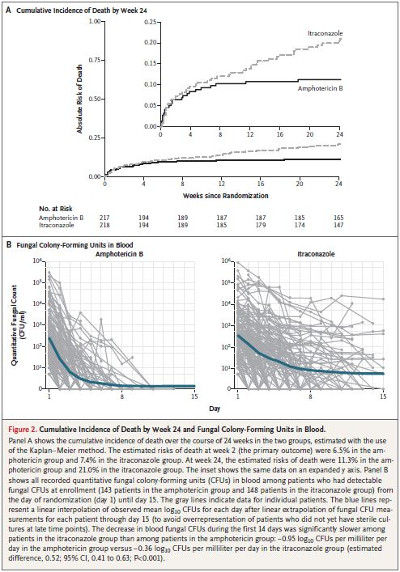
    In a clinical trial published last week in the New England Journal of Medicine, doctors in Vietnam in collaboration with researchers from the Oxford University Clinical Research Unit randomly assigned 440 HIV patients who were diagnosed with talaromycosis to either amphotericin B or itraconazole treatment in 5 hospitals across Vietnam. The study showed that despite more side effects, treatment with amphotericin B was associated with half the number of deaths compared to itraconazole, 11% versus 21% after 6 months. “In addition we found that amphotericin B killed the fungus in patient blood four times faster than itraconazole, and there were fewer disease relapse and complications in the amphotericin group”, commented Dr. Thuy Le. “Although amphotericin B has been included in the WHO essential medicines list since 2013, currently only 30-40% of patients with this infection in China and Vietnam are being treated with amphotericin B due to its high costs, poor supply chains, and concerns of toxicity.”

    kaplan-meier-curve

    The results also suggest that a shorter course of amphotericin B treatment should be evaluated. If effective it would make the treatment more acceptable by reducing the side effects, and the shorter treatment duration would be more affordable. In addition, the survival benefit of the initial treatment with amphotericin B only became apparent after two to six months on therapy. This trial therefore serves as a useful reminder to the clinical research community to consider longer follow-up time frames in the design of antifungal treatment trials.

  • Stephen Baker awarded Fleming Prize

    ***Update***  You can now view Stephen’s Fleming Prize Lecture on the Microbiology Society website:

    Microbiology Society Fleming Prize Lecture 2017: Professor Stephen Baker


    Professor Stephen Baker, head of OUCRU’s Enteric Infections group, has been awarded the prestigious 2017 Fleming Prize by the Microbiology Society.

    The Prize is named after Sir Alexander Fleming, founder and first President of the Society for General Microbiology (1945–1947), and is awarded to an early career researcher who has achieved an outstanding research record.

    Stephen has been recognized for his work on enteric diseases, such as norovirus, Shigella spp. and Salmonella typhi, which cause a significant disease burden in low- and middle-income countries. His recent work has looked at the evolution and spread of antibiotic resistance, and he combines genomics and epidemiology to provide a better understanding of disease outbreaks. Although working in Vietnam, Stephen also manages research programmes in Nepal and Indonesia, looking at the genetics, epidemiology and treatment of enteric infections.

    Steve said of his award: “Winning the Fleming Prize from the Microbiology Society is an unexpected but fantastic honour. Looking down the list at previous winners is pretty intimidating, and I hope I can continue in following a similar career path as some of them.”

    For more information about the Fleming Prize, see the Microbiology Society website

  • Pearl Gan honored in Swiss Malaria Photo contest.

    We are delighted to be able to share that photographer Pearl Gan was awarded the 3rd Prize yesterday in the Care Together category for the Swiss Malaria Group’s #EndMalaria Photo and Video Contest. The winning photograph is shown above.

    Pearl Gan has been working with the Eijkman-Oxford Clinical Research Unit in Jakarta, Indonesia on the See Malaria in Asia Project which aims to raise public awareness of malaria as a serious health problem for the region by telling the human story of Asia’s invisible malaria burden.

    Most malaria in Asia occurs among the rural poor, who do not yet live among the benefits of the profound economic progress that the region has seen. These populations are often “invisible”, not only in an epidemiological sense but also in social terms. And therefore communities who are engaged with the global malaria problem do not see all those affected by malaria in Asia.

    Funded by the Wellcome Trust, this photography project aims to engage the public with exhibitions across Asia. While working on the project, photographer Pearl Gan visited remote communities where endemic malaria causes illness and deaths.  EOCRU Director Prof Kevin Baird (Link to his profile)  says, “Pearl Gan captures much in her art – humanity, dignity, suffering. Her lens exposes the reality of the isolation and poverty that give malaria such freedom of harm and constraint of human development.”

    This photo is currently being exhibited together with the other winners in the Swiss Malaria Group’s photographic exhibition ‘Be the generation to end malaria’ on the lakeside of Geneva.