Blog

  • OUCRU collaborates with BBC World Service Evidence Series

    OUCRU researchers and Public Engagement department coordinated the BBC World Service radio recording of ‘Preventing Pandemics’ for The Evidence series on ‘Humans and Animals’. Recorded on location with farmers in the Mekong Delta and with an invited metropolitan audience at The Factory Contemporary Arts Centre in Ho Chi Minh City, presenters Claudia Hammond and Ha Mi discover the personal experiences of farmers on the front line looking out for new diseases, and hear from the scientists involved in zoonotic research.

    OUCRU speakers include:

    Ho Dang Trung Nghia

    Nguyen Van Cuong

    Stephen Baker

    Listen now on the BBC World Service website

    It will be on air at 00:06 Vietnam time on Tuesday 18 April, or available to download from 17-21 April.

    Produced in association with Wellcome Collection.

  • Monitoring the emergence of infectious diseases

    In the below article, Professor Stephen Baker explains the importance of monitoring the emergence of infectious diseases in Asia.

    Zoonotic diseases that pass from animal to human are an international public health problem regardless of location – being infected with Campylobacter from eating undercooked chicken in the UK is not uncommon, for example – but in lower-income countries the opportunities for such pathogens to enter the food chain are amplified.

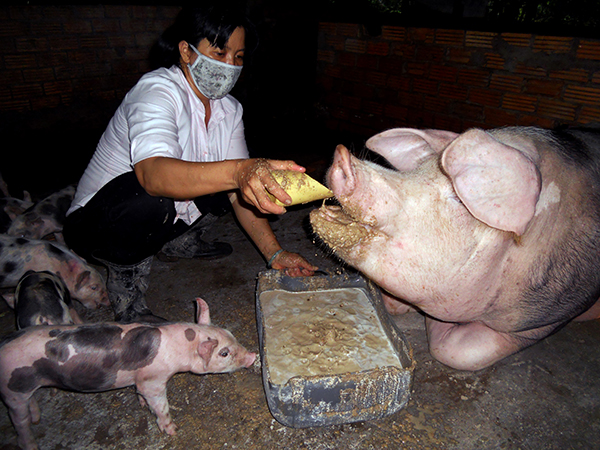
    Where I currently work in Vietnam, and across the region, humans have a very different way of interacting with animals being bred for food than would be familiar to those in the UK. If one were to travel to the Mekong Delta region (in the south of Vietnam) it would not be uncommon to see people who keep a large variety of farm animals in, or in close proximity to, their houses. It comes as little surprise that in a country where raw pig blood and pig uterus are commonly consumed, the number one cause of bacterial meningitis is Streptococcus suis, a colonising bacterium of pigs.

    pig

    The major problem of researching emerging infections is predicting how they arise and how we respond to them once they do.

    Given the complexity of zoonotic disease emergence and transmission, it is very rare that an outbreak can be traced back to the first identified human or animal case – known as the ‘index case’ and this remains a substantial challenge. A lack of effective health and surveillance infrastructures in many lower income countries compounds this issue, as we are wholly reliant on individuals entering the healthcare system and getting diagnosed, which seldom happens.

    The ideal scenario is that we can identify new pathogens with zoonotic potential in animals prior to them spilling over into humans. However, if we cannot achieve this we need to be aware of their existence and be able to respond by treating people effectively once they are infected. This means rapidly identifying patients with a particular infection, assessing the severity of their condition and diagnosing the agent. Therefore, having sentinel hospitals with well-trained clinical staff, good diagnostics and microbiology facilities is the best opportunity we are going to have to detect diseases.

    The most recent example of this is a case of Trypanosoma evansi infection – a protozoan disease of animals and, rarely, humans – that we identified in a woman attending our hospital with an atypical disease presentation. Ultimately, we were able to trace this infection back to her cutting herself when butchering a buffalo in her family house during New Year celebrations – this was the first reported human case of T. evansi in Southeast Asia. Our ability to interact with animal health authorities permitted access to sampling bovines in the proximity of the patient’s house. We found a very high prevalence of the parasite in the blood of cattle and buffalo close to where the woman lived, highlighting a new zoonotic infection in the region and likely a sustained risk.

    Diagnostic information has also been vital in data we published detailing an outbreak of fluoroquinolone-resistant Shigella sonnei. The reason we found this organism was that one of my clinical colleagues was culturing organisms from children with severe diarrhoeal disease, and realised that these samples had come from children who had been admitted to hospital with a more persistent form of the infection, and several appeared to relapse with the same syndrome. When we investigated the antimicrobial susceptibility profile of the isolated Shigella, we observed that the bacteria were highly resistant to fluoroquinolones – the antimicrobials that are used routinely to treat this infection in Vietnam (and indeed globally). We then conducted more clinical and laboratory investigations and found more cases in Vietnam and further afield. Through genome sequencing and a group of international collaborators, we could accurately piece together the emergence of this novel strain into Vietnam, other parts of Asia, Europe and Australia.

    These finding were largely serendipitous, but if you are not looking then you cannot find. Unfortunately, this approach is not a long-term strategy for monitoring and preventing the emergence of such pathogens. Sadly, the infrastructure improvements and long-term health studies that are needed to achieve a more sustainable model in lower income countries are an expensive undertaking, but without them healthcare improvements and changes to infectious disease policy will be difficult to achieve.

    Vietnam has changed beyond recognition since my arrival in 2007. Huge economic investment and political stability has had positive effects on healthcare in the country, and across the region. However, many challenges remain; a growing population, increasing demands for animal protein and the looming cloud of antimicrobial resistance in everyday pathogens suggest that Southeast Asia will continue to be a key region in driving global health security.

    The full article, ‘Emerging infectious diseases in Asia,’ appeared in the latest edition of the Microbiology Society’s quarterly magazine, Microbiology Today.

    This article also appears on the Oxford Science Blog

  • OUCRU leads first Science Café at Hue Medical University

    Oxford University Clinical Research Unit (OUCRU) at HCMC led the first ever Science Café at Hue Medical University on 29th October 2016. The speaker was Dr Pham Ngoc Thanh, and she presented the topic: Communication – Art or Skill ?

    Science Cafés are events which facilitate the public to engage in conversations about scientific topics outside of the usual academic settings. Science Cafés, also known as Café Scientifique, started in the UK in the 1990s and have now spread to over 30 countries around the world. Science Cafés offer a forum for debating issues of science and technology and aim to keep science accountable.

    The event in Hue aimed to:

    • Identify the importance of effective communication between doctor and patient.
    • Discuss patient demands or needs.
    • Discuss ways doctors can approach patients.
    • Discuss how to be effective communicators.
    • Identify the barriers to communication.

    There were 36 attendees. Most of them were newly graduated doctors from Hue Medical University who majored in Public Health. They enjoyed the talk and asked a lot of questions. The doctors who attended said they found this was very useful for them and they learned about how to  show patients they care about them. Dr Pham Ngoc Thanh said of the event: “Good communication between doctors and patients is key for effective treatment. Improving listening skills is a challenge but interesting to discuss.”

    – Nguyen Ngoc Bao Tran

  • OUCRU leads first Science Café at Hue Medical University

    Oxford University Clinical Research Unit (OUCRU) at HCMC led the first ever Science Café at Hue Medical University on 29th October 2016. The speaker was Dr Pham Ngoc Thanh, and she presented the topic: Communication – Art or Skill ?

    Science Cafés are events which facilitate the public to engage in conversations about scientific topics outside of the usual academic settings. Science Cafés, also known as Café Scientifique, started in the UK in the 1990s and have now spread to over 30 countries around the world. Science Cafés offer a forum for debating issues of science and technology and aim to keep science accountable.

    The event in Hue aimed to:

    • Identify the importance of effective communication between doctor and patient.
    • Discuss patient demands or needs.
    • Discuss ways doctors can approach patients.
    • Discuss how to be effective communicators.
    • Identify the barriers to communication.

    There were 36 attendees. Most of them were newly graduated doctors from Hue Medical University who majored in Public Health. They enjoyed the talk and asked a lot of questions. The doctors who attended said they found this was very useful for them and they learned about how to  show patients they care about them. Dr Pham Ngoc Thanh said of the event: “Good communication between doctors and patients is key for effective treatment. Improving listening skills is a challenge but interesting to discuss.”

    – Nguyen Ngoc Bao Tran

  • Podcast: Buddha Basnyat discusses high altitude illness

    Director of OUCRU-Nepal Buddha Basnyat recently recorded a podcast at the Centre for Tropical Medicine and Global Health in Oxford. Watch to hear Dr Basnyat discussing altitude illness, and why this area of medicine is a research focus for him.

    Buddha Basnyat: High altitude illness from NDM Oxford on Vimeo

    A transcript of the interview is available on the Centre for Tropical Medicine and Global Health website.

  • Stephen Baker awarded Fleming Prize

    ***Update***  You can now view Stephen’s Fleming Prize Lecture on the Microbiology Society website:

    Microbiology Society Fleming Prize Lecture 2017: Professor Stephen Baker


    Professor Stephen Baker, head of OUCRU’s Enteric Infections group, has been awarded the prestigious 2017 Fleming Prize by the Microbiology Society.

    The Prize is named after Sir Alexander Fleming, founder and first President of the Society for General Microbiology (1945–1947), and is awarded to an early career researcher who has achieved an outstanding research record.

    Stephen has been recognized for his work on enteric diseases, such as norovirus, Shigella spp. and Salmonella typhi, which cause a significant disease burden in low- and middle-income countries. His recent work has looked at the evolution and spread of antibiotic resistance, and he combines genomics and epidemiology to provide a better understanding of disease outbreaks. Although working in Vietnam, Stephen also manages research programmes in Nepal and Indonesia, looking at the genetics, epidemiology and treatment of enteric infections.

    Steve said of his award: “Winning the Fleming Prize from the Microbiology Society is an unexpected but fantastic honour. Looking down the list at previous winners is pretty intimidating, and I hope I can continue in following a similar career path as some of them.”

    For more information about the Fleming Prize, see the Microbiology Society website

  • ‘Flat Sunlight’ Exhibition 7 Oct – 24 November, 2016

    OUCRU has had a long partnership with artist Lena Bui, who will be launching her latest exhibition ‘Flat Sunlight’ this weekend at The Factory Contemporary Arts Centre in Ho Chi Minh City.

    Exhibition dates: 7 October – 24 November, 2016

    Location:

    The Factory Contemporary Arts Centre
    15 Nguyen U Di, Thao Dien, District 2, Ho Chi Minh City, Vietnam
    www.factoryartscentre.com

    ‘Flat Sunlight’ is an exhibition that attempts to change our perception and relationship to the natural world we intrinsically rely and belong. Lena Bui asks us to think deeper of our spiritual and physical understanding of what is good and bad, useful and useless, of what is assumed natural by marketable standards versus what is natural in nature, in order to reveal the social impact of such attitude on producers and consumers.

    After half a year undertaking field research (with thanks to the Zoonoses Group at OUCRU), living and observing traditional farming life in rural Vietnam, Bui is wary of Globalization and the effect this is having not only on the quality of the food we eat, but also its disruption of traditional farming communities where previously livestock were reared as important elements of an integrated family unit. In this exhibition she imaginatively alludes to sunlight, an energy all living things are fueled by, but here it is as if light is constant, without a night and day, and thus the realm of the fake may appear to reign supreme. Thus Bui moves methodically like an earnest botanist cum ethnographer, akin to generations of artists before her who refer to the techniques of science: such as Joseph Banks who accompanied Captain Cook in his journey in the 1700s, documenting flora and fauna, as they ‘discovered’ the land of Brazil, Tahiti, Australia and New Zealand; or the work of contemporary artists such as Amar Kanwar, Superflex or Kader Attia whose films and installations all employ the mechanisms of ethnography, studying cause and effect.

    In Bui’s ‘Vegetable Diary’, she documents various responses (via drawing and interview) to taste and shape dependent on the source of where these vegetables come from. In ‘Carefree Grasses’, a live collection of plants typically understood today as weeds are remembered as medicinal, ‘planted’ inside the exhibition space, replete with Vietnamese botanical texts. In ‘Mandala of Proliferation’ and ‘Sunsets and Spillages’, Bui provides a window onto the landscape of ‘flat sunlight’ where a plastic paradise floats in a layer of glitter and resin, multiplying and forming colonies, resembling bacteria on a petri dish, like artificial land strips on the sea or satellites floating into space. These artificial organisms proliferate and expand, bubbling like a rash or an ulcer, as if bursting the seam of the cyclic order that contains them.

    The final work in this exhibition gives us a filmic window onto the everyday life of a Vietnamese livestock farmer. From the eyes of a young girl, the niece, we catch a glimpse of the care and immense labor in rearing such animals as pigs and ducks (where antibiotic resistance is on the rise), but most significantly we witness the resilience of such farmers in catering for a commercial market that places value in the visual appeal of livestock, rather than their quality and health. Throughout this exhibition weaves a series of texts in response to the work on view, written by local Vietnamese scientists and an emerging playwright, as scientific record and artistic inflection.

    Bui states, ‘This exhibition examines the theme of food and our ready consumption of its diversity (both real and artificial), examining how human’s interconnected relationship with nature has, in the past, provided both spiritual and medical aid. Due to this unique opportunity to work with people from different disciplines I hope to bring a wide range of perspectives regarding our man-made and natural world into the show, to enable discussion surrounding tradition and development, consumption and the need for moderation, in order to build a healthier environment.’

    Showcasing film, installation and drawing, this exhibition will also possess an interactive science corner; a public lecture series for adults; and art/science workshops for children curated by Dr. Mary Chambers and the Public Engagement team at OUCRU.

    ‘Flat Sunlight’ is organized by OUCRU, Ho Chi Minh City with additional funding from the AXA Research Fund, and hosted by ‘The Factory Contemporary Arts Centre’.

    See here for more information on this exhibition and its public program: http://factoryartscentre.com/event/flat-sunlight/

    For enquiries, please contact: art@factoryartscentre.com
  • Dr Tan at TedX Hanoi – New diagnostics for brain infections

    In the highly globalized modern world, infectious diseases can emerge and spread much faster than ever before.
    Watch OUCRU’s Dr Le Van Tan talk at TedX Hanoi in May 2016 about how we can use DNA sequencing technologies to discover new causes of infectious diseases, and to develop new, better treatments.

  • Rapid test for bacterial infection reduces antibiotic use

    Researchers from the Oxford University Clinical Research Unit in Vietnam have shown that using a rapid (5-minute) test can reduce antibiotic misuse for respiratory infections. Cutting the number of unnecessary antibiotic prescriptions is a key way to prevent the spread of antibiotic-resistant infections.

    An article recently published in The Lancet Global Health is available here:
    http://www.thelancet.com/journals/langlo/article/PIIS2214-109X(16)30142-5/fulltext

    The rapid tests detect C-reactive protein (CRP), a marker of infections caused by bacteria, in patients’ blood. A low level of CRP is suggestive of viral infection and therefore antibiotic treatment is not required.

    The study team made the tests available at 10 primary healthcare centres in and around Hanoi, Vietnam, and recorded antibiotic use for 2000 patients who randomly were or were not tested for CRP. The results showed a significant reduction of antibiotic use in adults and children while clinical recovery was the same. This trial was the first to investigate this in a resource-constrained setting and showed similar results to trials in Europe. This was also the first trial to assess CRP tests for children.

    Vietnam is the world’s 14th most populous country with a rapidly developing economy. Unregulated access to antibiotics makes Vietnam vulnerable for drug resistance development. While infectious diseases are still one of the leading causes of death, resistance critically compromises treatment options. The WHO reported in 2014 that antibiotic resistance of common bacteria in community and hospitals had reached alarming levels world-wide. Promoting new, rapid diagnostics to cut unnecessary use of antibiotics was listed as one of the priority areas to fight antibiotic resistance.

    This intervention has the potential to be scaled up as several newer commercially affordable CRP tests have now been assessed and shown to be reliable. Prof. Heiman Wertheim, principal investigator, added: “There were large differences in the effect of the intervention between health centres; one centre saw no effect due to antibiotic stocks they wanted to get rid of. This nicely illustrates one of the practical obstacles that need to be overcome”.

    Prof Nguyen Van Kinh, investigator and director of the National Hospital for Tropical Diseases: “With this easy-to-use tool, primary healthcare providers can safely limit the unnecessary antibiotic use for viral respiratory infections. The study provides important evidence for simple solutions in antibiotic stewardship programmes. To enable a large scale implementation, further studies assessing cost-effectiveness of this intervention are needed”. This trial provides important data necessary for planning such studies.

    Dr Cao Hung Thai, vice head of the Medical Services Administration of the Ministry of Health, concluded: “This is important evidence that the Ministry of Health can use for primary health care regulations to improve rational antibiotic use”.

  • OUCRU researchers demonstrate Vietnam’s progress towards achieving SDGs

    A study by the international Global Burden of Disease Study (GBD) collaboration (which includes researchers from OUCRU), published in The Lancet, analyzed each country’s progress toward achieving the United Nation’s health-related Sustainable Development Goals (SDG) targets by creating an overall SDG Index score. Countries were then ranked by their scores to show which nations are closest to achieving the targets, and Vietnam stands out as having achieved significant progress.

    http://www.thelancet.com/journals/lancet/article/PIIS0140-6736(16)31467-2/abstract

    A nation’s SDG index score is based on a scale of zero to 100. Iceland tops the list with a score of 85. The lowest-scoring nation was the Central African Republic, at 20. The United States has a score of 75, just behind Slovenia, Greece, and Japan, all at 76. The study was funded by the Bill and Melinda Gates Foundation.

    South East Asia and Vietnam Summary

    Vietnam is ranked 94 of the 188 countries studied, when benchmarked by a battery of ‘indicators’ of achievement against SDGs. The SDG index scores for South East Asian countries are presented below, and show Vietnam has a score of 59 – the fifth highest in South East Asia – ahead of Thailand (56) and closely following Indonesia (60).

    SDG composite score for South East Asian and selected comparison countries

    Country SDG Index
    Singapore 85
    Brunei 78
    Malaysia 69
    Indonesia 60
    Vietnam 59
    Thailand 56
    East Timor 53
    Philippines 50
    Cambodia 47
    Myanmar (Burma) 46
    Laos 45
    – UK 82
    – USA 75
    – Japan 76
    – China 60         

    Vietnam has made significant advances in relation to the SDGs. In 1990 its SDG score was 34, in 2000 38 and in 2015 59. Furthermore, its SDG index is higher than would be predicted by socio-demographic factors alone. Dr Justin Beardsley from OUCRU HCMC says that this raw score only tells part of the story: “Vietnam has made significant progress. Behind these increasing numbers is an important human reality: higher scores mean healthier people.” This paper highlights some areas where Vietnam is performing well and others where further effort could improve the achievement of health-related development goals. The three best and worst indicators can be found below.

    The three best indicators

    SDG 2 End hunger, achieve food security and improved nutrition, and promote sustainable agriculture  Highest Indicator #1                Prevalence of ‘overweight’ in children aged 2 to 4

    SDG 3: Ensure healthy lives and promote well-being for all at all ages

    Highest Indicator #2        Proportion of births attended by skilled health personnel

    SDG 16: Promote peaceful and inclusive societies for sustainable development, provide access to justice for all and build effective, accountable, and inclusive institutions at all levels

    Highest Indicator #3        Incidence of deaths due to war

    The three worst indicators

    SDG 3: Ensure healthy lives and promote well-being for all at all ages

    Lowest Indicator #1        Incidence of malaria in areas where transmission is known to occur

    Lowest Indicator #2        Incidence of Hepatitis B

    Lowest Indicator #3        Incidence of new cases of HIV

    “We have concrete examples of countries making important progress on a range of health-related SDG indicators,” said Dr. Stephen S. Lim, Professor of Global Health at the Institute for Health Metrics and Evaluation (IHME) at the University of Washington, and lead author of study. “We now need to look to those countries that have seen strong progress to find out what they are doing right and how it can be applied more broadly.”

    The GBD is the largest and most comprehensive epidemiological effort to quantify health loss across places and over time. The GBD enterprise – now consisting of more than 1,800 researchers and policymakers in nearly 130 nations and territories – is coordinated by the Institute for Health Metrics and Evaluation (IHME) at the University of Washington.

    Nations with the top 10 and bottom 10 SDG Index scores:

    Top 10 Bottom 10
    1.     Iceland (85) 1.     Central African Republic (20)
    2.     Singapore (85) 2.     Somalia (22)
    3.     Sweden (85) 3.     South Sudan (22)
    4.     Andorra (83) 4.     Niger (23)
    5.     United Kingdom (82) 5.     Chad (24)
    6.     Finland (82) 6.     Democratic Republic of the Congo (24)
    7.     Spain (82) 7.     Burundi (26)
    8.     Netherlands (82) 8.     Mali (26)
    9.     Canada (81) 9.     Afghanistan (26)
    10. Australia (81) 10. Sierra Leone (27)