Blog

  • Giám sát – phản hồi: Hoạt động cốt lõi nâng cao chất lượng Ä‘iều trị và an toàn người bệnh

    Giám sát – phản hồi: Hoạt động cốt lõi nâng cao chất lượng điều trị và an toàn người bệnh

    Trong thực hành điều trị thường ngày, chỉ định kháng sinh là một hoạt động quen thuộc và thiết yếu. Tuy nhiên, do điều trị cho bệnh nhân cần cá thể hóa, việc chỉ định kháng sinh không phải lúc nào cũng thống nhất và tuân thủ đầy đủ các hướng dẫn điều trị chuẩn. Ở một số bệnh nhân, đặc biệt là những bệnh nhân có bệnh nền phức tạp, việc chọn thuốc chưa thật phù hợp theo chức năng gan thận, kháng sinh có thể được dùng kéo dài hơn cần thiết, hoặc chưa được điều chỉnh kịp thời theo diễn biến bệnh. Những hạn chế này nếu không được theo dõi sát sao có thể làm giảm hiệu quả điều trị và tăng nguy cơ kháng kháng sinh. Chính vì vậy, hoạt động giám sát – phản hồi đóng vai trò quan trọng trong việc hỗ trợ bác sĩ rà soát lại thực hành lâm sàng và đảm bảo việc sử dụng kháng sinh luôn hợp lý và an toàn cho người bệnh.

    Trong khuôn khổ nghiên cứu 60HN, giám sát – phản hồi được áp dụng như một cấu phần quan trọng nhằm hỗ trợ các bệnh viện sử dụng kháng sinh hợp lý hơn. Các hoạt động chính của quy trình giám sát – phản hồi bao gồm xây dựng kế hoạch rõ ràng, thành lập nhóm chuyên trách và triển khai kế hoạch giám sát – phản hồi một cách nhất quán để nâng cao chất lượng điều trị cho người bệnh. Các đơn vị được hỗ trợ kĩ thuật từ các chuyên gia đến từ trường Đại học Dược Hà Nội, Bệnh viện Bệnh nhiệt đới Trung ương, Bệnh viện Xanh-pôn và được cung cấp quy trình, hướng dẫn thực hiện cho các trường hợp dùng kháng sinh điều trị và dùng kháng sinh dự phòng phẫu thuật.

    Tại bệnh viện, nhóm chuyên trách giám sát – phản hồi được thành lập gồm 2 đến 3 thành viên có thể là bác sĩ lâm sàng hoặc dược sĩ lâm sàng đang làm công tác hỗ trợ điều trị, đặc biệt hiểu rõ về bệnh nhiễm khuẩn và sử dụng kháng sinh hợp lý. Ở các bệnh viện lớn, nhóm có thể bao gồm bác sĩ vi sinh để hỗ trợ xem xét chuyên sâu hơn.

    Nhóm chuyên trách sẽ trực tiếp triển khai hoạt động giám sát – phản hồi, tổng kết thông tin, báo cáo cho Ban Quản lý sử dụng kháng sinh (QLSDKS) của bệnh viện theo định kỳ hoặc theo các chuyên đề. Đây có thể xem là “đội kỹ thuật nòng cốt” – những người đóng vai trò trung tâm trong việc theo dõi, đánh giá để đưa ra thông tin giúp Ban QLSDSK đưa ra các chính sách cải thiện thực hành điều trị, đảm bảo các quy trình điều trị được áp dụng chính xác góp phần nâng cao chất lượng điều trị cho bệnh viện và tăng cường an toàn người bệnh.

    Để triển khai hoạt động giám sát – phản hồi, nhóm chuyên trách sẽ xây dựng kế hoạch chi tiết, bao gồm nội dung giám sát, cách thức thực hiện, quy mô, tần suất, nhân lực và thời gian, kèm theo nhiệm vụ của từng thành viên. Sau khi được phê duyệt, kế hoạch được gửi đến các khoa liên quan để phối hợp thực hiện.

    Khi tiến hành giám sát, nhóm chuyên trách xem xét phần kê đơn thuốc trong từng bệnh án và đối chiếu với hướng dẫn điều trị của bệnh viện cũng như các tài liệu chuẩn của Bộ Y tế. Nếu cần làm rõ thông tin, nhóm có thể trao đổi thêm với bác sĩ điều trị, điều dưỡng hoặc chính người bệnh. Tất cả thông tin thu thập được sẽ được ghi chép đầy đủ theo các biểu mẫu đánh giá tương ứng.

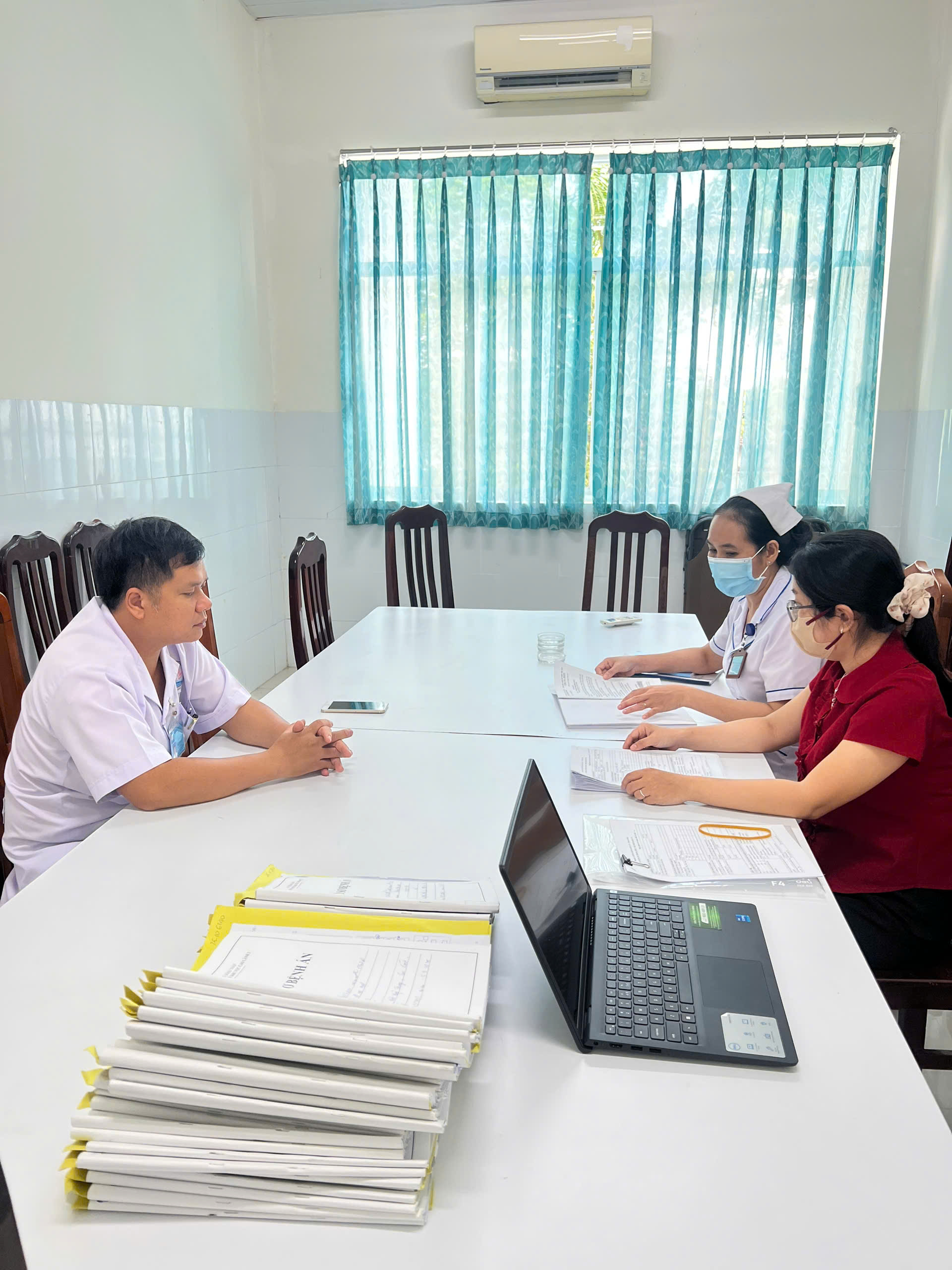
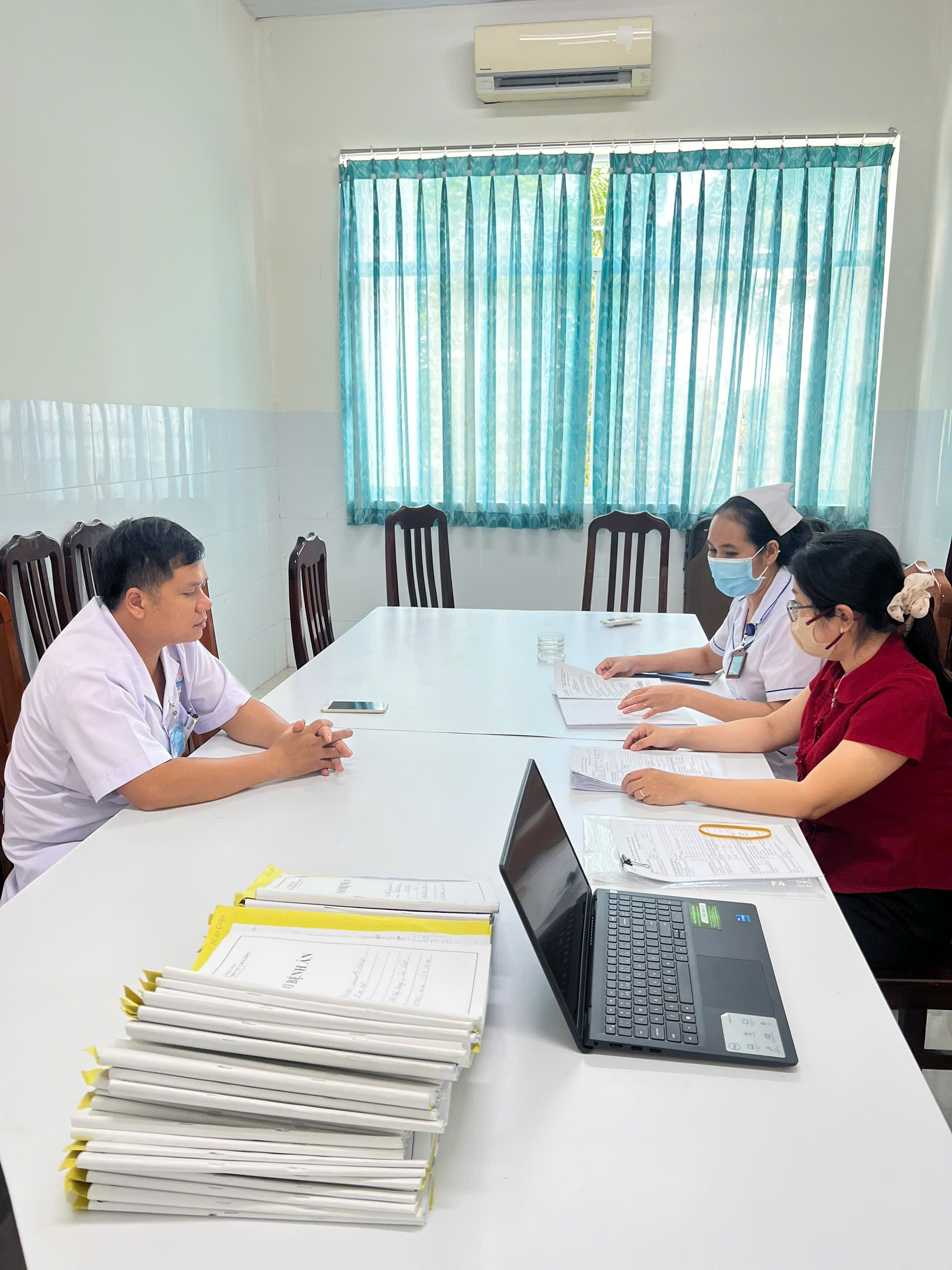
    Ảnh: nhóm chuyên trách thảo luận cùng bác sĩ kê đơn về các ca giám sát vừa thực hiện (Nguồn: đơn vị mạng lưới)

    Hoạt động giám sát có thể được thực hiện theo hai hình thức: tiến cứu (đánh giá trên bệnh nhân đang điều trị nội trú) và hồi cứu (đánh giá các bệnh án của bệnh nhân đã ra viện). Cả hai hình thức đều giúp Ban QLSDKS có cái nhìn toàn diện về thực hành kê đơn và kịp thời điều chỉnh khi cần thiết.

    Sau khi hoàn thành việc giám sát và tổng hợp thông tin, nhóm chuyên trách sẽ phản hồi trực tiếp đến bác sĩ kê đơn. Với giám sát tiến cứu, phản hồi được thực hiện ngay trong ngày nhằm giúp bác sĩ kịp thời điều chỉnh phác đồ để mang lại hiệu quả điều trị tốt hơn cho người bệnh. Hình thức phản hồi đa dạng như trao đổi trực tiếp, ghi chú vào bệnh án, gửi báo cáo cho khoa hoặc trình bày trong cuộc họp.

    Đối với giám sát hồi cứu, nhóm chuyên trách tổng hợp kết quả và chia sẻ lại với bác sĩ kê đơn hoặc khoa lâm sàng. Mặc dù được thực hiện sau khi bệnh nhân đã ra viện, phản hồi hồi cứu vẫn có giá trị quan trọng trong việc cải thiện thực hành kê đơn cho những trường hợp tương tự trong tương lai. Nhờ hoạt động giám sát – phản hồi, việc sử dụng kháng sinh tại bệnh viện trở nên hợp lý và nhất quán hơn. Người bệnh được điều trị đúng thuốc, đúng liều và đúng thời điểm, từ đó giảm nguy cơ dùng thuốc không cần thiết, hạn chế các biến cố bất lợi và cải thiện rõ rệt hiệu quả điều trị. Việc sử dụng kháng sinh hợp lý cũng góp phần quan trọng trong việc giảm nguy cơ kháng kháng sinh, một thách thức ngày càng tăng trong các cơ sở y tế hiện nay. Bên cạnh đó, các bác sĩ và dược sĩ có thêm cơ hội trao đổi chuyên môn, củng cố kiến thức và hoàn thiện thực hành kê đơn. Đối với bệnh viện, hoạt động này giúp nắm bắt rõ thực trạng sử dụng kháng sinh trong toàn hệ thống, từ đó nhận diện sớm các vấn đề phổ biến và xây dựng được những giải pháp phù hợp để nâng cao chất lượng điều trị lâu dài.

  • Audit & Feedback: A core AMS activity for bettercare and safer hospitals

    Audit & Feedback: A core AMS activity for bettercare and safer hospitals

    In daily clinical practice, prescribing antibiotics is a common and essential component of patient care. However, as treatment needs to be individualized, antibiotic prescribing is not always consistent or fully aligned with standard guidelines. For some patients, particularly those with complex comorbidities, antibiotic selection may not be fully appropriate based on organ function (e.g., renal or hepatic function), antibiotics may be used longer than necessary, or not adjusted in time according to changes in their condition. If not closely monitored, these limitations can reduce treatment effectiveness and increase the risk of antimicrobial resistance. This is why audit and feedback play an important role in helping clinicians review their prescribing practices and ensure that antibiotics are used appropriately and safely.

    Within the 60HN ASPARNet activities, audit and feedback are applied as a key component to support hospitals in improving antibiotic use. Its main activities include developing an action plan, establishing a dedicated audit and feedback team, and implementing audit and feedback in a consistent manner to enhance the quality of patient care. Network hospitals were provided with technical support from technical experts from Hanoi University of Pharmacy, National Hospital for Tropical Diseases, Saint Paul General Hospital, and standard operating procedures, guidance on implementation for both therapeutic antibiotic use and surgical antibiotic prophylaxis.

    At the hospital, an Antimicrobial Stewardship (AMS) team for audit and feedback is established, typically consisting of two to three members who may be clinical doctors or clinical pharmacists involved in treatment and patient support, particularly those experienced in infectious diseases and rational antibiotic use. In larger hospitals, a microbiologist may also be included to provide more in‑depth analysis.

    AMS team is responsible for carrying out audit and feedback activities, summarizing findings, and reporting regularly to the hospital’s AMS Committee on a regular basis or by specific topics. They are considered the “core team” who play a central role in monitoring and evaluation to generate evidence that informs the AMS committee’s policy decisions and supports improvements in clinical practice, ensuring that treatment protocols are appropriately implemented, thereby enhancing the quality of care and strengthening patient safety within the hospital.

    To implement audit and feedback, AMS team develops a detailed plan outlining the audit focus, methodology, scope, frequency, personnel, and timeline, along with the responsibilities of each member. Once approved, the plan is shared with relevant departments for coordination.

    During the audit, AMS team reviews the antibiotic prescriptions in each patient’s medical record and compares them with the hospital’s treatment guidelines and national standards issued by the Ministry of Health. When clarification is needed, they may discuss directly with the prescribing clinicians, nurses, or even the patients. All collected information is documented carefully using the corresponding audit forms.

    Photo: AMS team discussing recent audit cases with prescribing clinicians (Source: network hospital)

    Audit activities can be carried out in two forms: prospective audit (reviewing patients currently receiving inpatient treatment) and retrospective audit (reviewing records of patients who have been discharged). Both forms provide AMS committee with a comprehensive view of prescribing practices and help ensure timely adjustments when necessary.

    After completing the audit and compiling the findings, AMS team provides feedback directly to the prescribing clinicians. In prospective audits, feedback is delivered on the same day to help clinicians promptly adjust treatment and improve outcomes for current patients. Feedback may be given through direct discussion, notes in the medical record, reports to the department, or presentations in meetings.

    For retrospective audits, AMS team summarizes the results and shares them with prescribing clinicians or clinical departments. Although conducted after patient discharge, retrospective feedback remains valuable in improving prescribing practices for similar cases in the future.Thanks to audit and feedback, antibiotic use in hospitals becomes more appropriate and consistent. Patients receive the right drug, at the right dose, at the right time, reducing unnecessary antibiotic use, minimizing adverse events, and improving treatment outcomes. Rational antibiotic use also plays an important role in reducing antimicrobial resistance—an increasingly pressing challenge in healthcare settings today. At the same time, clinicians and pharmacists have more opportunities to exchange expertise, strengthen knowledge, and refine their prescribing practices. For hospitals, this activity helps them better understand antibiotic use across their system, identify common issues early, and develop targeted solutions to improve treatment quality in the long term.

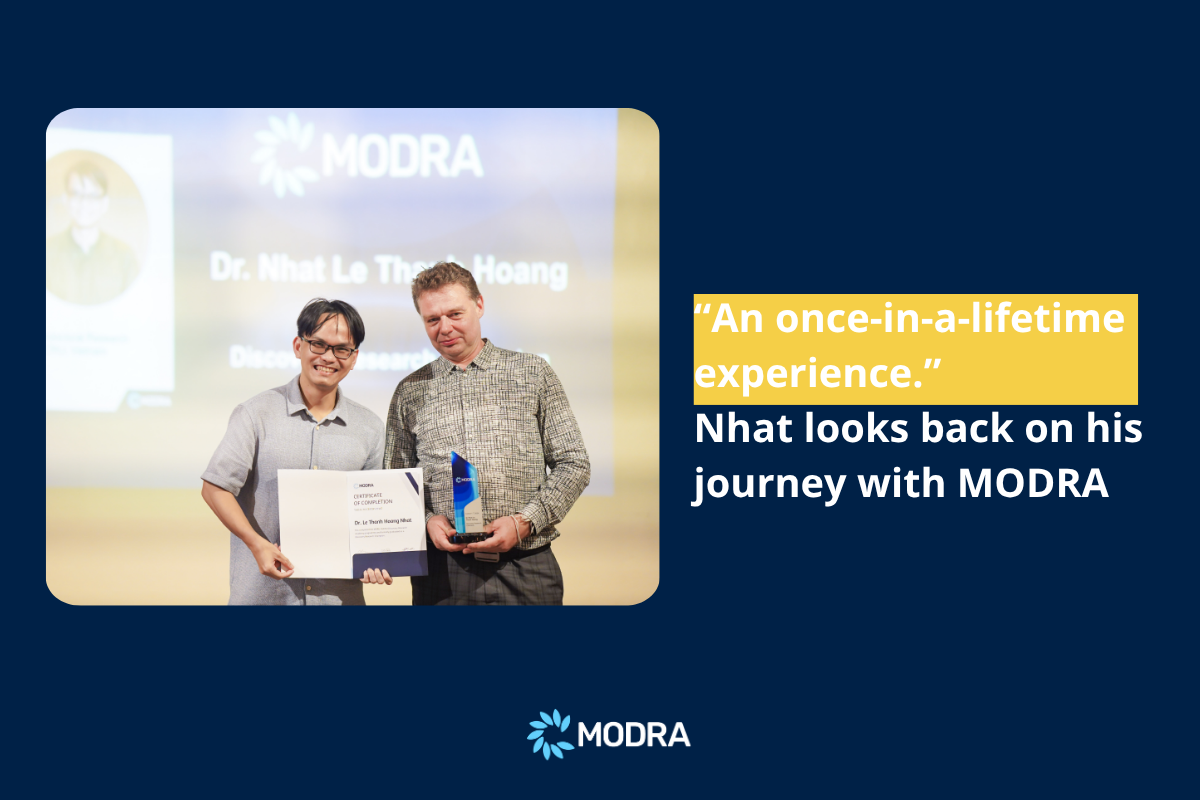
  • From MODRA to Wellcome Sanger Fellowship: Dr Le Thanh Hoang Nhat reflects on Growth and Connection 

    From MODRA to Wellcome Sanger Fellowship: Dr Le Thanh Hoang Nhat reflects on Growth and Connection 

    Dr Le Thanh Hoang Nhat, a member of the MODRA cohort 1, has been awarded the Wellcome Sanger Fellowship as an International Fellow in the Human Genetics programme, under the sponsorship of Dr. Emma Davenport. The three-year fellowship (£100,000) will support his research, developing a computational method to elucidate how human genetic variation shapes immune responses leading to severe pulmonary tuberculosis (PTB), with potential applications in improving treatment pathways for tuberculosis (TB) patients.  

    Reflecting on the application process, Nhat emphasized that success required not only technical strength but also clarity in demonstrating the relevance and potential impact of his work. Participation in MODRA played an important role in shaping this process. Through training, mentorship, and peer exchange, the programme helped him refine his research direction, strengthen his proposal narrative, and better position his work within a broader scientific landscape. 

    The role of MODRA: building confidence, perspective, and community 

    For Nhat, one of MODRA’s most valuable contributions was the opportunity to engage with a network of researchers from across Southeast Asia. Connecting with peers working in diverse areas of biomedical science broadened his perspective on the regional research landscape and highlighted shared challenges faced by researchers in low- and middle-income country contexts. Through these interactions, he developed a clearer understanding of how his work contributes to a wider body of research addressing regional and global health priorities. 

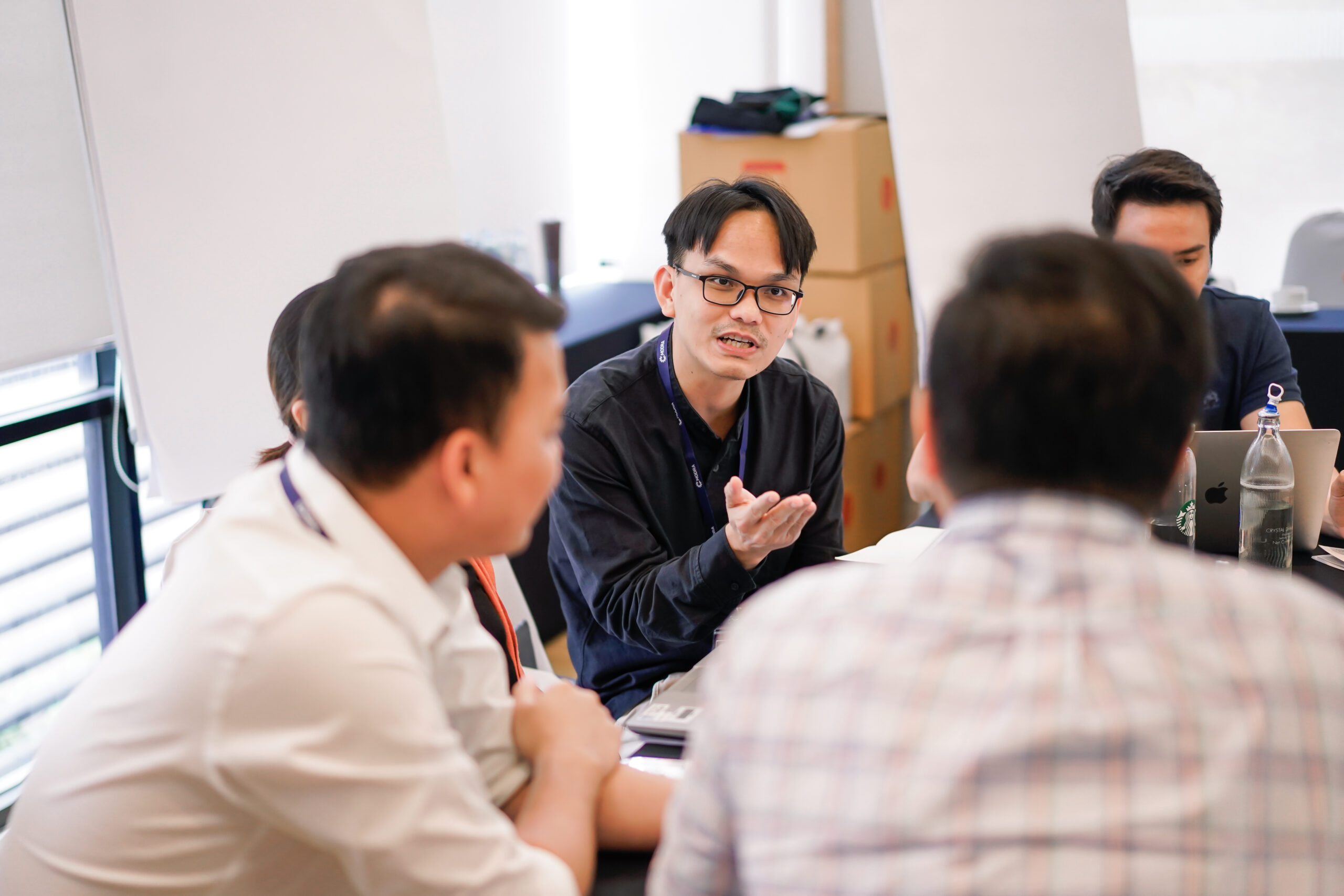
    Nhat discusses ideas with his MODRA “buddies” — his affectionate term for fellow MODRA members
    (Photo: OUCRU, 2024)

    MODRA’s Training component was particularly meaningful at this stage of his career. With more than ten years of research experience, he valued the opportunity to consolidate existing leadership styles and strengthen how these could be applied strategically in proposal development. Rather than introducing entirely new techniques, the training created space to refine research questions, clarify methodological approaches, and strengthen how ideas are communicated to a multidisciplinary audience. 

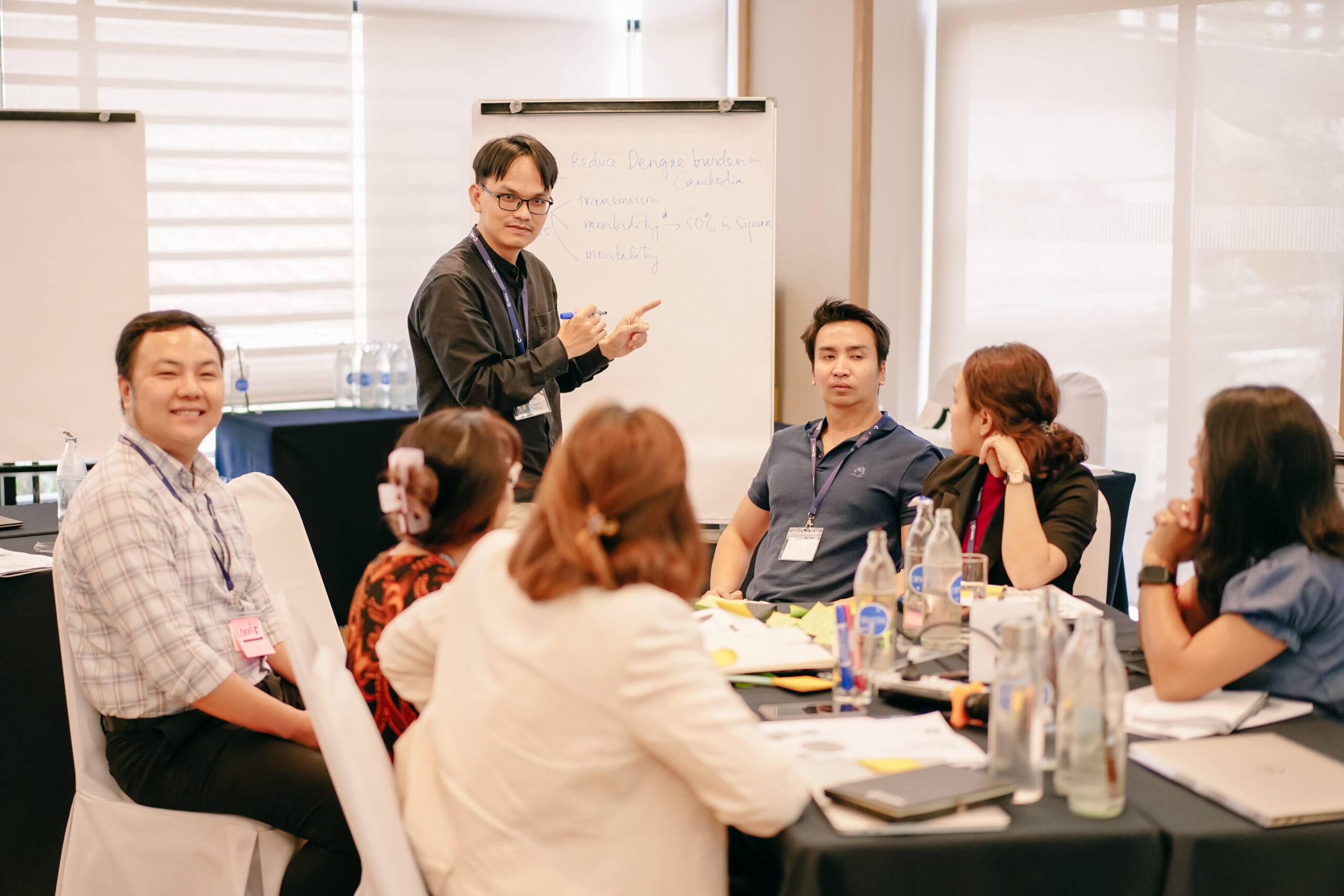
    He emphasises the importance of pitching, a skill he strengthened through the MODRA cohort. (Photo: OUCRU, 2024)

    Mentorship also played an important role. Nhat highlights the long-term guidance of Dr Thuong, Head of the TB research group and a member of MODRA’s Academic Advisory Committee. Her understanding of both the scientific field and local research realities helped him connect global research questions with context-specific insight. 

    He also acknowledged the encouragement and practical support provided by MODRA trainers and coordinators, whose contributions ensured participants could focus fully on their development. 

    A transformative experience 

    Looking back, Nhat describes MODRA as a “once-in-a-lifetime experience” that strengthened both his research direction and confidence as an independent researcher. The relationships built through the programme continue to provide a valuable source of support, helping him feel part of a wider scientific community working towards shared goals. 

    As he begins the Sanger International Fellowship, his experience highlights the importance of structured support mechanisms such as MODRA in enabling researchers to translate potential into opportunity and ideas into impact. 
     

    About MODRA 

    MODRA is an 18-month programme jointly delivered by OUCRU and MORU to support early-career postdoctoral researchers in Asia in becoming independent investigators. Through training, mentorship, and seed funding, the programme strengthens researchers’ ability to develop competitive, impactful research. 

  • OUCRU triển khai chương trình nghiên cứu quốc tế nhằm tìm kiếm chiến lược Ä‘iều trị má»›i cho lao màng não

    OUCRU triển khai chương trình nghiên cứu quốc tế nhằm tìm kiếm chiến lược điều trị mới cho lao màng não

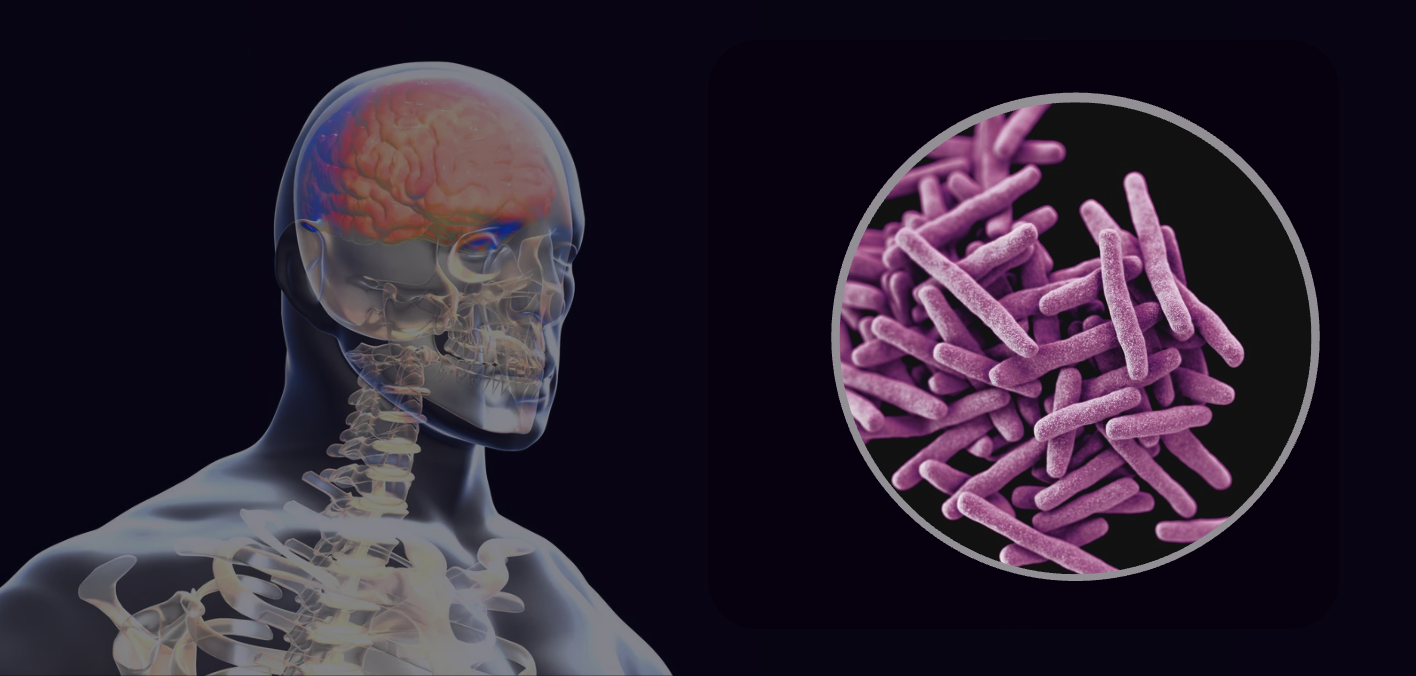
    Lao màng não là một trong những thể lao nghiêm trọng nhất. Dù được điều trị, căn bệnh này vẫn cướp đi sinh mạng của 30% đến 50% người mắc. Từ giữa thế kỷ 20, các bác sĩ vẫn phải dựa trên một phương pháp tiếp cận cơ bản: sử dụng kháng sinh để tiêu diệt vi khuẩn và corticosteroid để giảm tình trạng viêm não nguy hiểm do nhiễm trùng gây ra.

    Tuy nhiên, các thử nghiệm lâm sàng gần đây của OUCRU — bao gồm HARVEST (NEJM, tháng 12/2025); SURE (chưa công bố); ACT HIV (NEJM, tháng 10/2023); LAST ACT (Nat Med, tháng 1/2026) — đã chỉ ra rằng phương pháp này là chưa đủ. Việc tăng liều kháng sinh không cải thiện tiên lượng điều trị, trong khi hiệu quả của corticosteroid trong việc kiểm soát phản ứng viêm và mang lại lợi ích lâm sàng cho đa số bệnh nhân vẫn còn hạn chế. Thực tế này đặt ra yêu cầu cấp thiết về một hướng đi mới trong nghiên cứu và điều trị.

    Cơ hội đột phá

    Hiện nay, cơ hội để cải thiện việc điều trị lao màng não đang mở ra rõ rệt. Sự xuất hiện của hàng loạt thuốc chống lao mới có khả năng tiêu diệt vi khuẩn nhanh hơn các loại thuốc hiện tại. Đồng thời, các loại thuốc kháng viêm trúng đích cũng hứa hẹn kiểm soát tình trạng viêm não tốt hơn so với tiêu chuẩn điều trị bằng corticosteroid hiện nay.

    Dù vậy, những cơ hội này đang bị cản trở bởi ba lỗ hổng lớn: sự hiểu biết còn hạn chế về cơ chế bệnh sinh và dược lý; thiếu các mô hình động vật có khả năng dự báo chính xác hiệu quả của thuốc trên người; và sự vắng bóng của các dấu ấn sinh học (biomarkers) đáng tin cậy để đánh giá mức độ thành công của quá trình điều trị.

    Một chương trình nghiên cứu quy mô lớn, được hỗ trợ bởi Giải thưởng Khám phá (Discovery Award) trị giá 5 triệu Bảng từ quỹ Wellcome trong vòng 5 năm, sẽ tập trung lấp đầy những khoảng trống đó. Dự án do Giáo sư Guy Thwaites từ Đại học Oxford dẫn dắt, quy tụ đội ngũ chuyên gia quốc tế từ OUCRU Việt Nam, CIDRI-Africa (Nam Phi), Vương quốc Anh và Hoa Kỳ. Chương trình dự kiến khởi động vào tháng 10 năm 2026.

    “Đây là thời điểm cực kỳ triển vọng trong lĩnh vực nghiên cứu bệnh lao, với sự xuất hiện của các loại thuốc chống lao và kháng viêm mới,” Giáo sư Guy Thwaites chia sẻ. “Nhưng nếu không hiểu được mối quan hệ cốt lõi giữa khả năng diệt khuẩn, tình trạng viêm và kết cục lâm sàng, chúng ta có nguy cơ sử dụng thuốc thiếu tối ưu và bỏ lỡ cơ hội cứu sống bệnh nhân khỏi căn bệnh nguy hiểm này.”

    Nội dung nghiên cứu

    Đội ngũ nghiên cứu sẽ xây dựng một nền tảng khám phá và phát triển các chiến lược điều trị mới cho lao màng não, kết nối giữa y học thực nghiệm trên người tại Việt Nam và Nam Phi với các mô hình động vật tại Hoa Kỳ.

    Trong nghiên cứu trên người, nhóm sẽ thử nghiệm 4 phương pháp điều trị trên 160 người trưởng thành mắc lao màng não: bao gồm hai phác đồ kháng lao mạnh chứa bedaquiline và hai loại thuốc nhắm trực tiếp vào tình trạng viêm não thay vì vi khuẩn. Nghiên cứu nhằm định lượng mối liên hệ giữa nồng độ thuốc trong cơ thể, khả năng diệt khuẩn, mức độ viêm và kết quả lâm sàng; đồng thời tìm kiếm các dấu ấn sinh học mới về viêm và sinh lý để đo lường hiệu quả điều trị trong các thử nghiệm tương lai.

    Song song đó, nhóm nghiên cứu sẽ sử dụng mô hình thỏ và chuột mắc lao màng não để xác định mức độ dự báo của các nghiên cứu trên động vật đối với phản ứng điều trị ở người. Các mô hình này cũng được dùng để đánh giá tiềm năng của ba loại thuốc mới đang trong giai đoạn phát triển lâm sàng là ganfeborole (GSK), telacebec (TB Alliance) và TBAJ-876 (TB Alliance).

    Đội ngũ hợp tác quốc tế

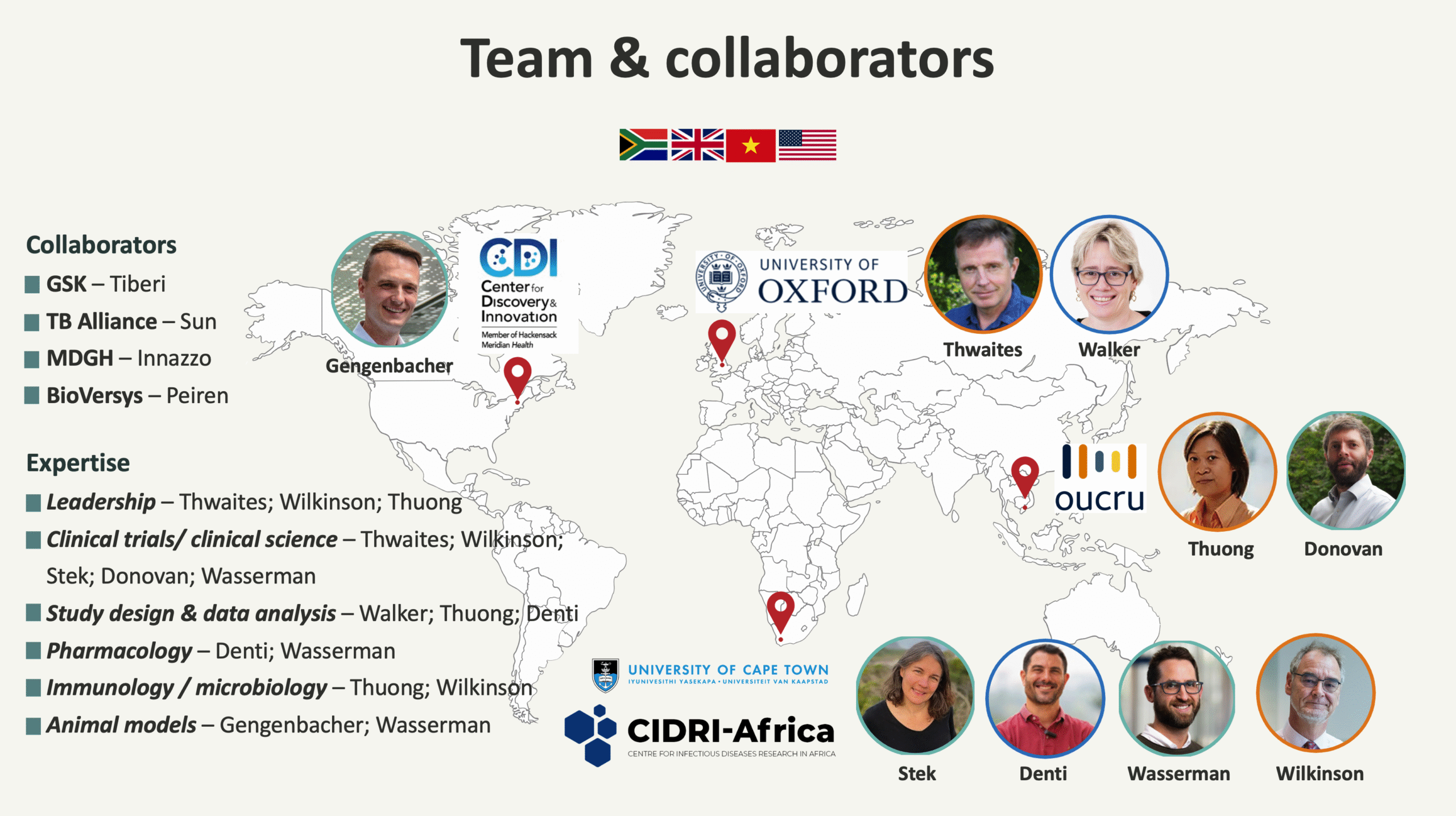
    Đội ngũ nghiên cứu đến từ Việt Nam, Nam Phi, Vương quôc Anh, Hoa Kỳ. Bản đồ: GS Guy Thwaites.

    Dự án được điều phối bởi Giáo sư Guy Thwaites, cùng các cộng sự: Sarah Walker (Đại học Oxford), Nguyễn Thụy Thương Thương và Joseph Donovan (OUCRU Việt Nam), Martin Gengenbacher (Trung tâm Khám phá và Đổi mới, Hoa Kỳ), cùng đội ngũ từ Đại học Cape Town và CIDRI-Africa (Nam Phi) gồm Robert Wilkinson, Cari Stek, Sean Wasserman và Paolo Denti.

    Các đối tác tham gia bao gồm GSK, TB Alliance, Medicines Development for Global Health, và BioVersys.

    Tầm nhìn dài hạn

    Lao màng não gây ảnh hưởng nặng nề nhất đến người dân tại các quốc gia có thu nhập thấp và trung bình. Dù các loại thuốc mới đang dần xuất hiện, nhưng nếu thiếu kiến thức để triển khai chúng một cách an toàn và hiệu quả, tiềm năng của chúng sẽ không thể được khai thác trọn vẹn.

    Nghiên cứu này đặt mục tiêu cung cấp nền tảng tri thức đó, từ đó tạo tiền đề cho một thế hệ thử nghiệm lâm sàng mới, giúp giảm thiểu đáng kể tỉ lệ tử vong do căn bệnh tàn khốc này gây ra.

  • New £5 million Wellcome Discovery Award to transform treatment for tuberculous meningitis

    New £5 million Wellcome Discovery Award to transform treatment for tuberculous meningitis

    Tuberculous meningitis (TBM) is one of the most severe forms of tuberculosis, killing between 30 and 50% of those who develop it despite treatment. Doctors have relied on the same basic approach since the 1950s: antibiotics to kill the bacteria, and corticosteroids to reduce the dangerous brain inflammation that the infection causes.  

    Recent OUCRU clinical trials, including HARVEST (NEJM Dec 2025); SURE (unpublished); ACT HIV (NEJM Oct 2023); LAST ACT (Nat Med Jan 2026), have shown that this approach is not good enough: higher-dose antibiotic regimens have worsened outcomes rather than improved them, and corticosteroids appear not to control inflammation or benefit most patients. The field needs a new direction. 

    The opportunity 

    There are real opportunities to improve TBM treatment. A resurgent pipeline of new anti-tuberculosis drugs may kill bacteria faster than current drugs, and targeted anti-inflammatory drugs may control life-threatening brain inflammation better than the corticosteroids used as standard of care today. 

    However, these opportunities are impaired by three critical gaps: a poor understanding of disease and therapeutic mechanisms; a lack of animal models that can predict whether new drugs and regimens will work in humans; and no reliable biomarkers to measure whether treatment is succeeding. 

    A major new research programme, funded by a £5 million Wellcome Discovery Award over five years, will seek to close those gaps. Led by Professor Guy Thwaites at the University of Oxford, the project brings together an international team from OUCRU Vietnam, CIDRI-Africa in Cape Town, South Africa, the UK, and the USA. The programme will start in October 2026. 

    ‘This is an incredibly exciting time in tuberculosis, with new anti-tuberculosis and anti-inflammatory drugs becoming available to improve treatment. But unless we understand the fundamental relationship between bacterial killing, inflammation, and outcome, we risk using the new drugs wrongly and missing the opportunity to increase survival from this lethal disease,’ said Professor Guy Thwaites.  

    What the research will do 

    The team will create a platform for the pre-clinical and clinical discovery and development of new therapeutic strategies for TBM, linking human experimental medicine in Vietnam and South Africa with animal models in the USA. 

    In the human study, the team will test four treatments in 160 adults with TBM: two potent bedaquiline-containing anti-tuberculosis regimens, and two drugs that target inflammation in the brain rather than the bacteria themselves. The study aims to quantify the relationship between drug concentrations in the body, bacterial killing, inflammation, and clinical outcome, and to discover novel inflammatory and physiological biomarkers that could be used to measure treatment success in future trials. 

    In parallel, the team will use rabbit and mouse models of TBM to define how well animal studies can predict human therapeutic responses. The models will also be used to evaluate the therapeutic potential of three new drugs in clinical development, ganfeborole (GSK), telacebec (TB Alliance), and TBAJ-876 (TB Alliance), establishing their role in the discovery and development of new treatment strategies for TBM. 

    An international team 

    The research team spans Vietnam, South Africa, the United Kingdom, and the United States. Map: Guy Thwaites.

    The research is led by Guy Thwaites, with Sarah Walker (University of Oxford), Nguyễn Thụy Thương Thương and Joseph Donovan (OUCRU Vietnam), and Martin Gengenbacher (Center for Discovery & Innovation, USA). The team also includes Robert Wilkinson, Cari Stek, Sean Wasserman and Paolo Denti at the University of Cape Town and CIDRI-Africa, South Africa.

    Industry collaborators include GSK, TB Alliance, Medicines Development for Global Health, and BioVersys. 

    Looking ahead 

    TBM disproportionately affects people in low- and middle-income countries. New drugs are beginning to emerge, but without the knowledge to deploy them safely and effectively, their potential may not be realised.  

    This research aims to provide that knowledge, and in doing so, lay the foundation for a new generation of clinical trials that could meaningfully reduce deaths from this devastating disease.

  • Tăng cường năng lá»±c hồi sức tích cá»±c tại Việt Nam thông qua đào tạo quốc tế

    Tăng cường năng lực hồi sức tích cực tại Việt Nam thông qua đào tạo quốc tế

    Việt Nam đang đối mặt với gánh nặng bệnh truyền nhiễm thuộc nhóm cao trong khu vực Đông Nam Á, đặt ra yêu cầu cấp thiết phải tăng cường năng lực Hồi sức tích cực trong hệ thống y tế. Năm nay, chương trình thu hút hơn 140 bác sĩ Hồi sức tích cực và dược sĩ lâm sàng đến từ 20 bệnh viện và trường đại học y khoa trên địa bàn TP. Hồ Chí Minh.

    Nội dung đào tạo bao quát các kiến thức trọng tâm của thực hành hồi sức hiện đại, bao gồm phòng ngừa viêm phổi liên quan thở máy, phân nhóm kiểu hình nhiễm trùng huyết, theo dõi huyết động, siêu âm tại giường (POCUS), an thần, rối loạn chức năng cơ quan, kháng kháng sinh, cũng như quản lý sảng và hội chứng cai. Chương trình cũng bao gồm các phiên thảo luận ca bệnh và tổng quan những nghiên cứu hồi sức nổi bật trong năm qua.

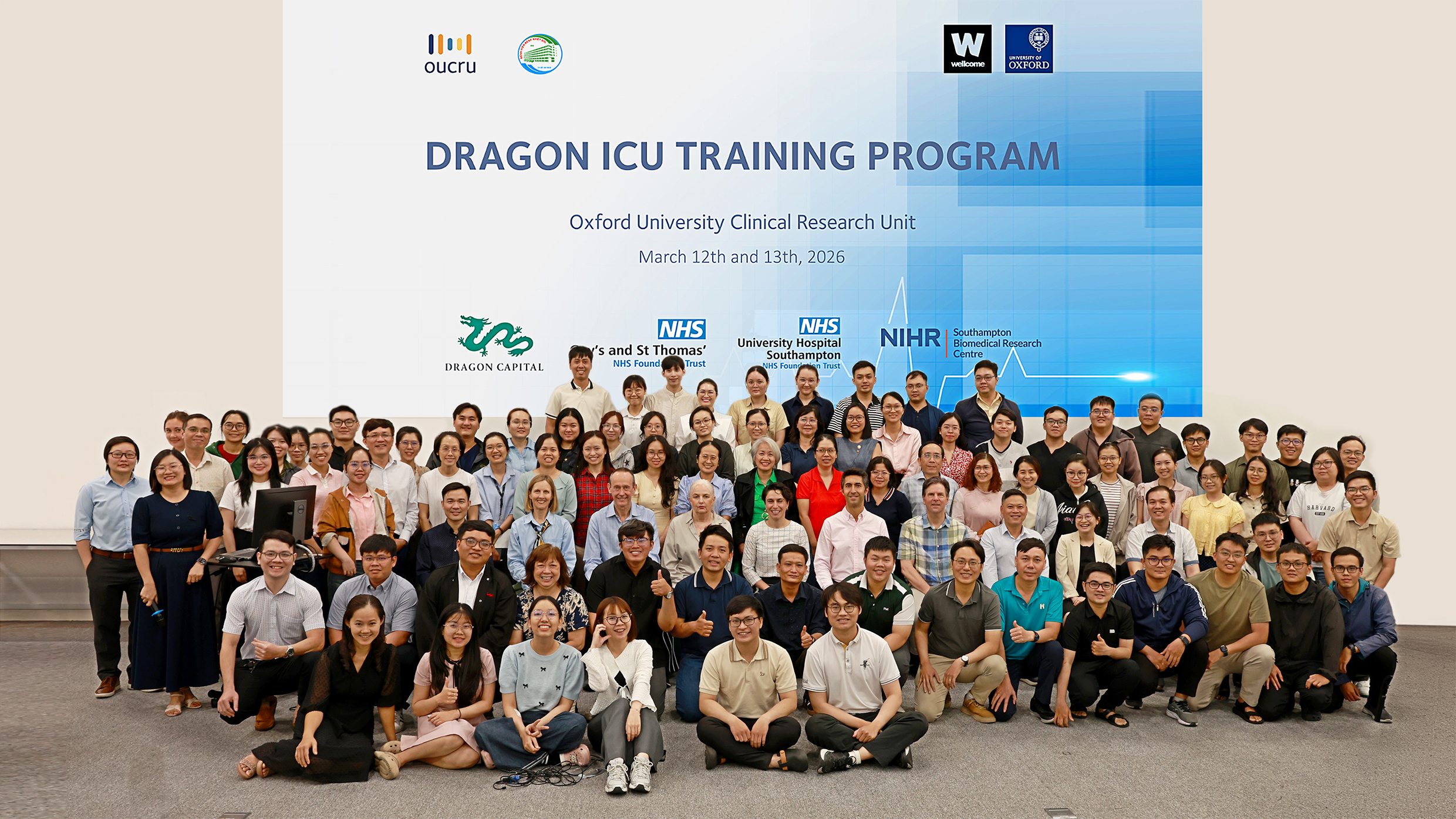
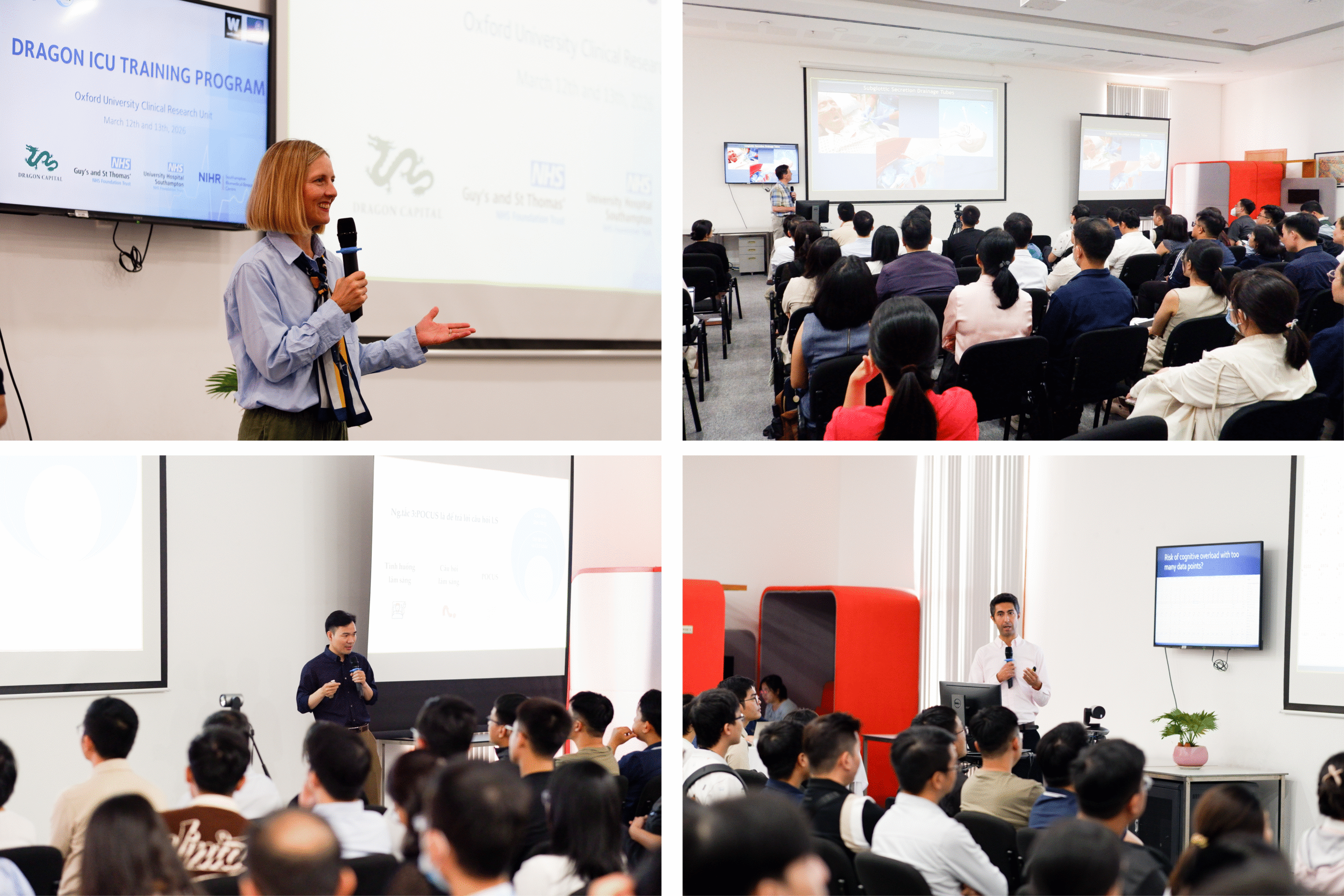
    Các chuyên gia Anh – Việt giảng dạy tại chương trình đào tạo Hồi sức tích cực 2026.
    Hình ảnh: Trang Nguyen/OUCRU

    Tham gia giảng dạy có các chuyên gia từ Bệnh viện Guy’s and St Thomas’ NHS Foundation Trust và Đại học Southampton, Vương Quốc Anh, cùng các bác sĩ lâm sàng đến từ Bệnh viện Bệnh Nhiệt đới và Bệnh viện Nhân dân 115.

    Đoàn chuyên gia cũng đã thăm Bệnh viện Nhân dân Gia Định (TP. Hồ Chí Minh) và Bệnh viện Đa khoa Đồng Tháp, đánh dấu lần đầu tiên hoạt động hợp tác được mở rộng ra ngoài địa bàn thành phố. Các chuyến thăm mang lại cái nhìn trực tiếp về thực hành hồi sức trong cả bối cảnh tuyến cuối đô thị và tuyến tỉnh, qua đó làm cơ sở xây dựng một buổi đào tạo ngắn tại Đồng Tháp, với nội dung điều chỉnh phù hợp với điều kiện thực tiễn địa phương.

    Những kinh nghiệm này sẽ góp phần định hướng các chương trình trong tương lai theo hướng thiết thực và phù hợp hơn với nhu cầu thực tế, đồng thời thúc đẩy hợp tác chuyên môn đến tuyến tỉnh.

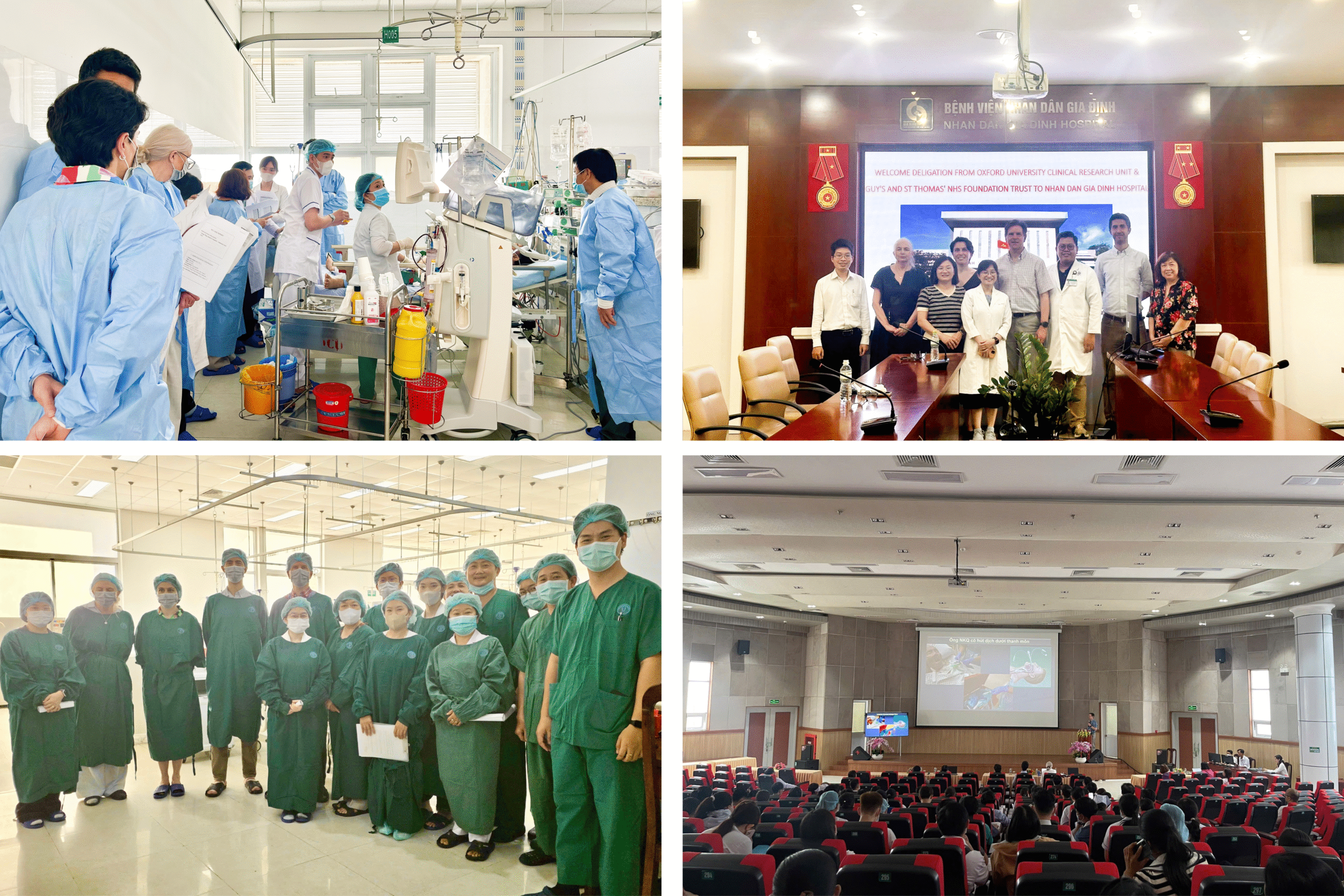
    Đoàn chuyên gia thăm Bệnh viện Nhân dân Gia Định và Bệnh viện Đa khoa Đồng Tháp.
    Hình ảnh: Trang Nguyen/OUCRU

    GS. TS. BS. Louise Thwaites, Nghiên cứu viên cấp cao tại OUCRU Việt Nam, nhận định: “Gánh nặng bệnh truyền nhiá»…m tại Việt Nam tạo áp lá»±c rất lá»›n lên các đơn vị Hồi sức tích cá»±c. Các bác sÄ© Ä‘ang phải xá»­ trí những ca bệnh phức tạp, thường trong Ä‘iều kiện nguồn lá»±c hạn chế. Chương trình đào tạo này nhằm đảm bảo họ có thể tiếp cận vá»›i trình độ chuyên môn tương đương các trung tâm hàng đầu thế giá»›i, đồng thời cá»§ng cố mạng lưới hợp tác trong nước.”

    Chương trình đào tạo thường niên này là một phần của hợp tác lâu dài giữa OUCRU và Bệnh viện Guy’s and St Thomas’, được triển khai từ năm 2014. Hoạt động được tài trợ bởi Dragon Capital Group, đối tác đã đồng hành lâu dài trong các nỗ lực nâng cao chất lượng chăm sóc y tế tại Việt Nam của OUCRU. Trong thời gian tới, các bên dự kiến tiếp tục mở rộng đào tạo, tăng cường hợp tác nghiên cứu, và thúc đẩy kết nối chính thức giữa các hội Hồi sức tích cực của Việt Nam và Vương quốc Anh.

  • Strengthening intensive care capacity in Vietnam through international training

    Strengthening intensive care capacity in Vietnam through international training

    Vietnam’s hospitals face some of the highest infectious disease caseloads in Southeast Asia, and strengthening intensive care unit (ICU) capacity is increasingly recognised as a national health priority. This year’s training drew over 140 intensive care doctors and clinical pharmacists from 20 hospitals and medical universities across Hồ Chí Minh City.

    The programme covered the breadth of modern ICU practice, from ventilator-associated pneumonia prevention, sepsis phenotypes, haemodynamic monitoring, point-of-care ultrasound, to sedation, organ dysfunction, antimicrobial resistance, and delirium and withdrawal management. Sessions also included interactive case presentations, and a review of key critical care research from past year.

    UK and Vietnamese experts lead sessions at the ICU Training 2026.
    Credit: Trang Nguyen/OUCRU

    Speakers included experts from Guy’s and St Thomas’ NHS Foundation Trust and the University of Southampton, alongside clinicians from the Hospital for Tropical Diseases and People’s 115 Hospital in Hồ Chí Minh City.  

    The visiting team also visited Gia Định People’s Hospital in Hồ Chí Minh City, and Đồng Tháp General Hospital, marking the first time the collaboration has extended beyond the city. These visits provided direct insight into intensive care practice across both urban and provincial settings, informing a short on-site training in Äá»“ng Tháp tailored to local needs.

    Going forward, these insights will help shape future programmes to be more targeted and locally relevant, with the broader aim of strengthening clinical exchange at provincial level.

    The visiting team at Gia Định People’s Hospital and Đồng Tháp General Hospital.
    Credit: Trang Nguyen/OUCRU

    “Vietnam’s infectious disease burden places enormous pressure on the ICUs. Clinicians here are managing some of the most complex cases in the region, often with limited resources.

    “This training is about ensuring they have access to the same expertise as specialists anywhere in the world, while strengthening local networks and partnerships,” said Professor Louise Thwaites, Senior Research Fellow at OUCRU Vietnam.

    The annual training is part of a long-standing collaboration between OUCRU and Guy’s and St Thomas’, which has been running since 2014. It is funded by Dragon Capital Group, a long-term supporter of OUCRU’s work to improve healthcare in Vietnam. 

    Future plans include additional training programs, research collaborations, and the establishment of formal links between Vietnamese and UK ICU societies. 

  • Menkes Targetkan Perluasan Inisiatif SPHERES Secara Nasional Setelah Kunjungan Kerja

    Menkes Targetkan Perluasan Inisiatif SPHERES Secara Nasional Setelah Kunjungan Kerja

    PURBALINGGA, 10 Maret, 2026 – Saat melakukan kunjungan kerja ke lokasi proyek SPHERES di Purbalingga, Jawa Tengah, Menteri Kesehatan Indonesia, Budi Gunadi Sadikin, memuji progres proyek tersebut dan menetapkan target ambisius untuk perluasannya ke tingkat nasional.

    “Saya melihat bagus sekali [progresnya]. Mudah-mudahan nanti bisa menjadi contoh untuk diimplementasikan di 514 kab/kota di seluruh Indonesia,” ujar Menkes Budi. Beliau juga menargetkan untuk memperluas inisiatif ini ke seluruh jaringan Puskesmas di tanah air dalam tiga tahun ke depan.

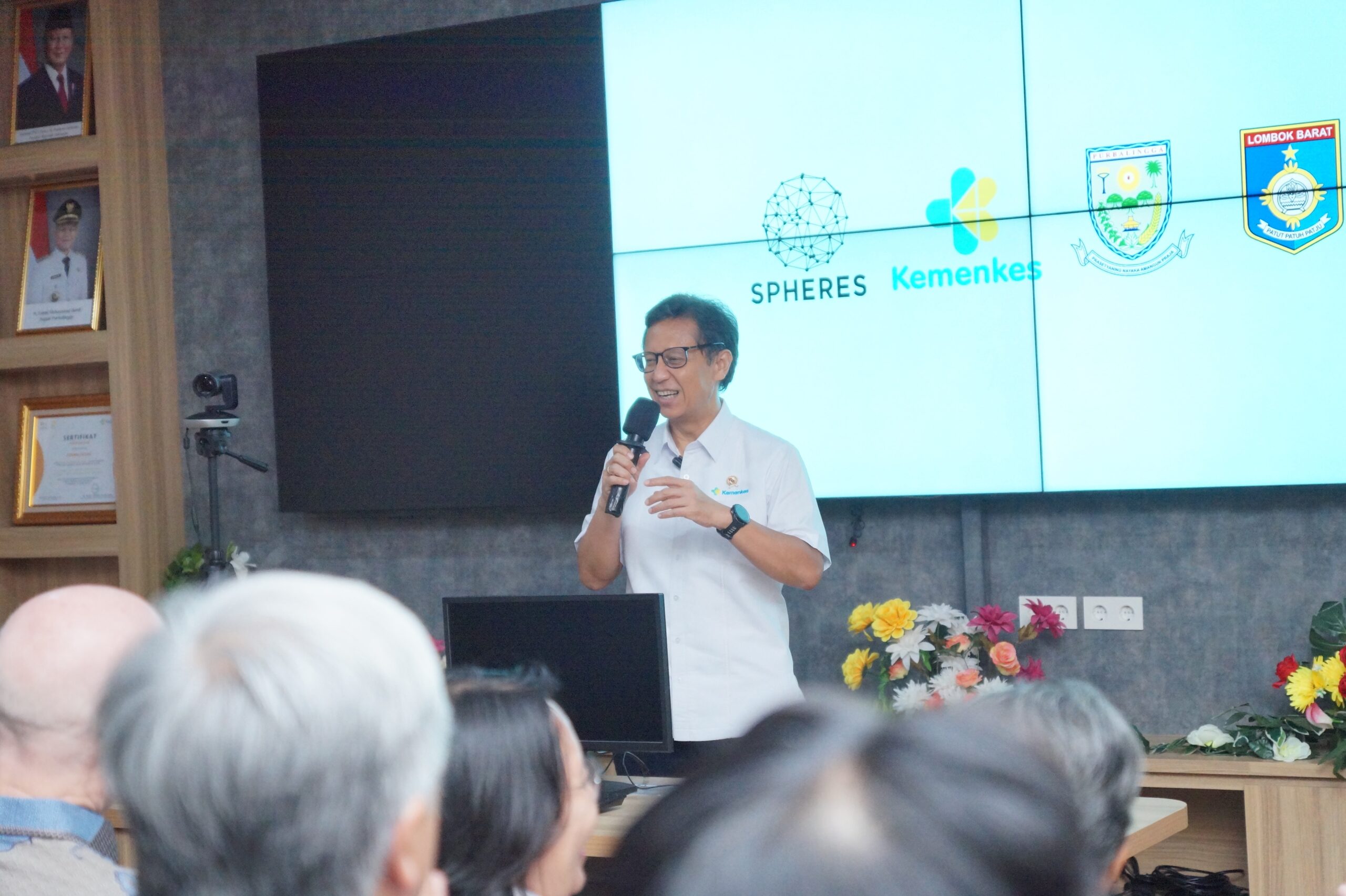
    Menteri Kesehatan Indonesia, Budi Gunadi Sadikin, di Kantor Dinkes Kab. Purbalingga untuk meninjau progres proyek SPHERES.

    Proyek Scalable Public Health Empowerment, Research, and Education Sites (SPHERES) dipimpin oleh Kementerian Kesehatan serta OUCRU Indonesia dan bekerja sama dengan pemerintah kabupaten Purbalingga serta Lombok Barat. Didanai oleh Gates Foundation, proyek ini bertujuan untuk memperkuat kesehatan masyarakat dengan memanfaatkan teknologi digital dalam pelayanan kesehatan primer.

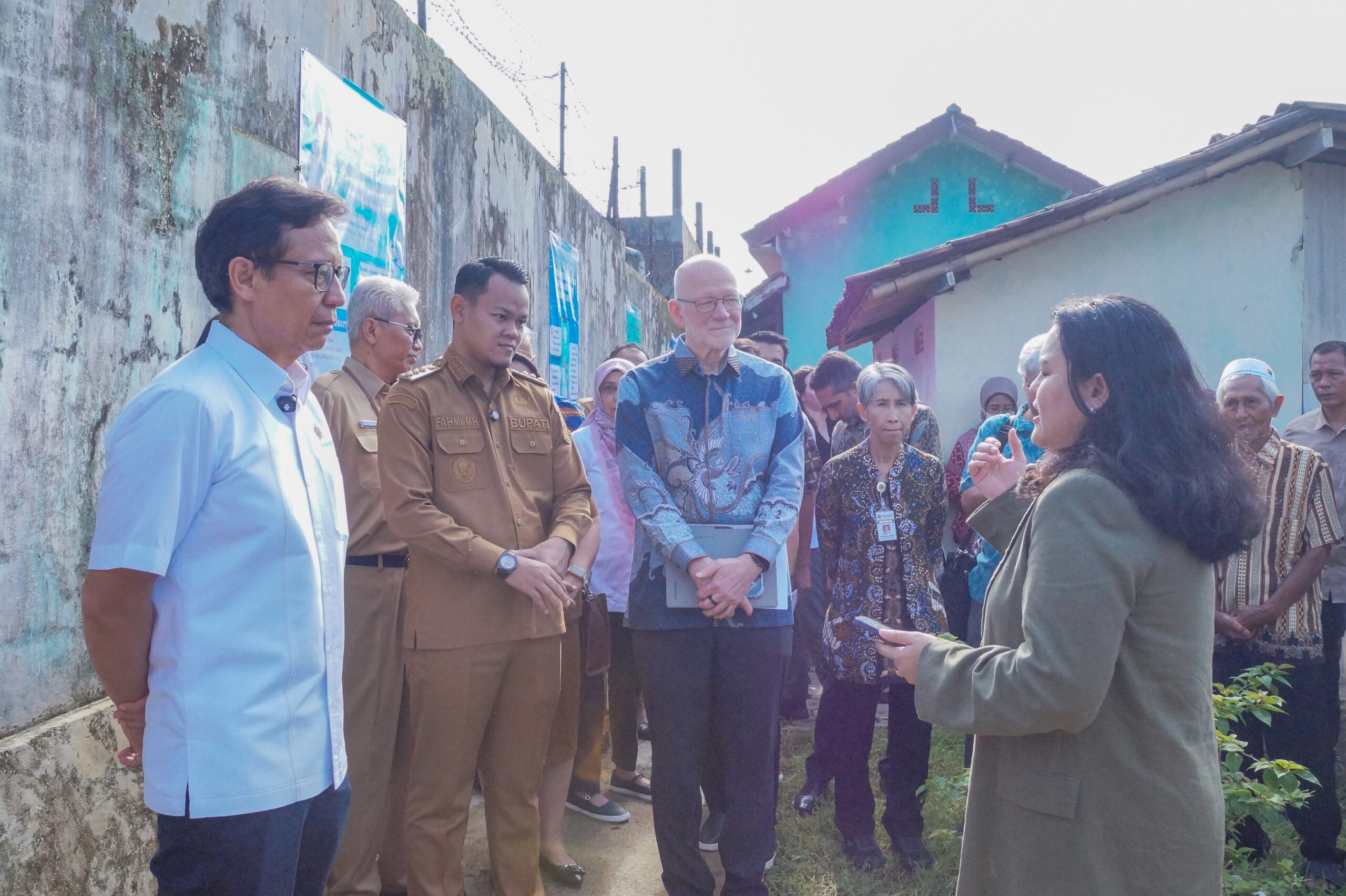
    Dr. Christopher Elias, Presiden Pembangunan Global dari Gates Foundation, juga turut hadir mendampingi Bapak Menteri saat kunjungan tersebut. Mereka mengunjungi Posyandu Lestari 5 Bancar, Puskesmas Purbalingga, dan Public Health Data Theatre (PHDT) yang berlokasi di Kantor Dinas Kesehatan Purbalingga.

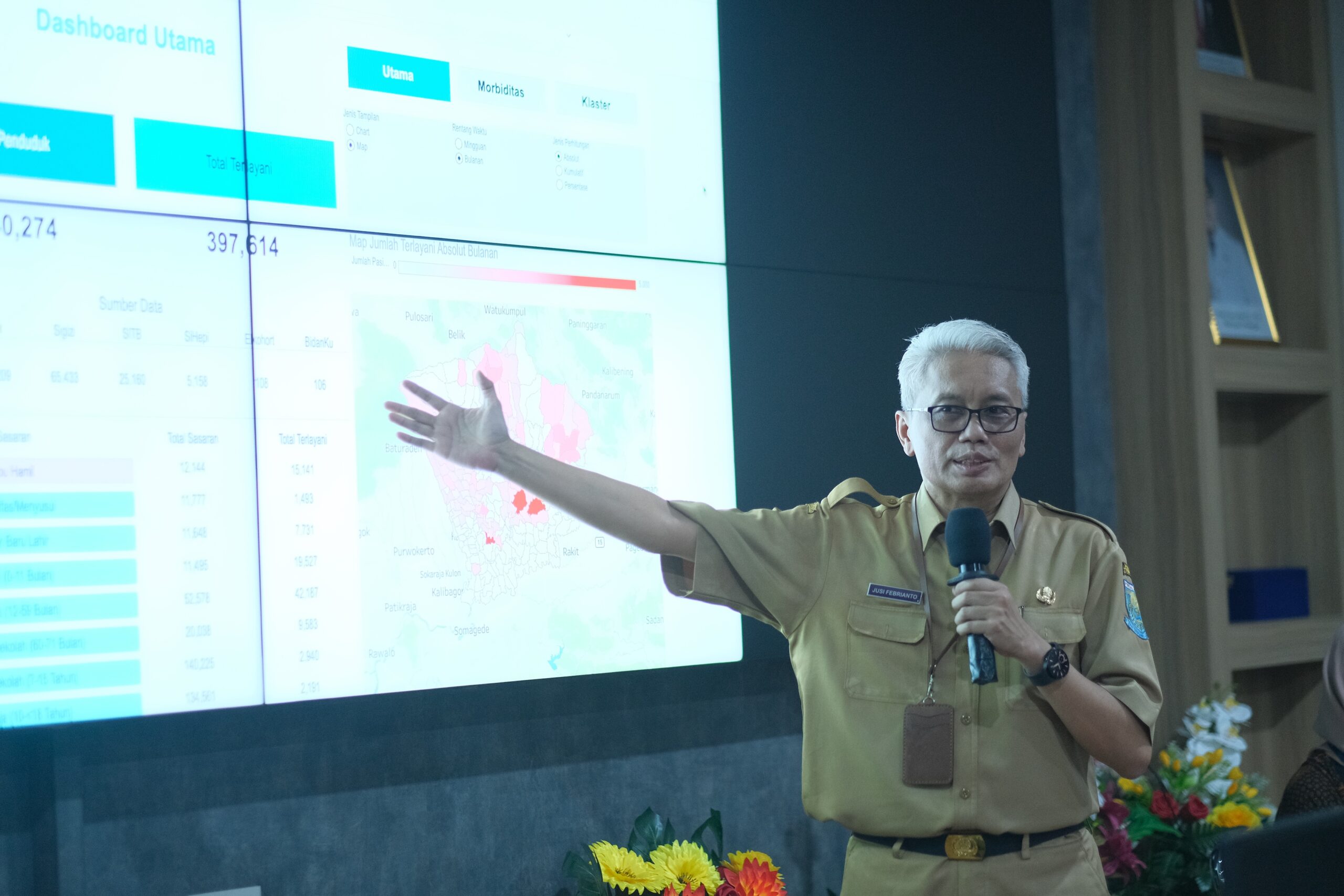
    Kepala Dinkes Kab. Purbalingga, Jusi Febrianto, memaparkan dasbor PHDT kepada para perwakilan Kemkes RI dan Gates Foundation.

    PHDT hadir sebagai terobosan baru dalam sistem kesehatan masyarakat di Indonesia. Berfungsi sebagai pusat kendali digital terpadu, fasilitas ini memungkinkan pejabat kesehatan memantau kondisi wilayah secara real-time melalui dasbor interaktif. Berbeda dengan sistem konvensional yang bergantung pada laporan bulanan statis, ‘Data Theatre’ memudahkan pemantauan tren secara instan. Jika terdeteksi lonjakan masalah kesehatan, mis. kenaikan tekanan darah di lokasi tertentu, petugas medis dapat segera diterjunkan ke lapangan.

    Dr. Elias menekankan pentingnya beralih ke aksi nyata berbasis data. Ia mengatakan, “Kuncinya adalah bagaimana data terkini bisa langsung diterjemahkan menjadi langkah konkret saat itu juga. Saya sangat bangga melihat progres ini. Program ini sangat layak untuk dilanjutkan dan direplikasi.”

    Tak hanya soal analisis data, terobosan lain dari SPHERES adalah kemampuannya dalam memangkas beban administrasi bagi nakes di garda terdepan. Lewat penggunaan standar pertukaran data FHIR (Fast Healthcare Interoperability Resources) dan teknologi pemindaian teks OCR (Optical Character Recognition), para petugas kini cukup memotret buku kesehatan fisik pasien agar datanya langsung tersinkronisasi secara otomatis dengan sistem nasional. Menteri Budi Sadikin menekankan bahwa inovasi ini sangat krusial bagi kesuksesan platform SatuSehat karena selama ini nakes sering kali merasa kewalahan akibat harus mengisi terlalu banyak aplikasi yang tidak saling terintegrasi.

    “Dengan ini diharapkan tenaga kesehatan bisa lebih banyak melayani masyarakat, bukan sibuk mengisi laporan atau aplikasi milik kementerian maupun pemerintah daerah,” kata Menkes.

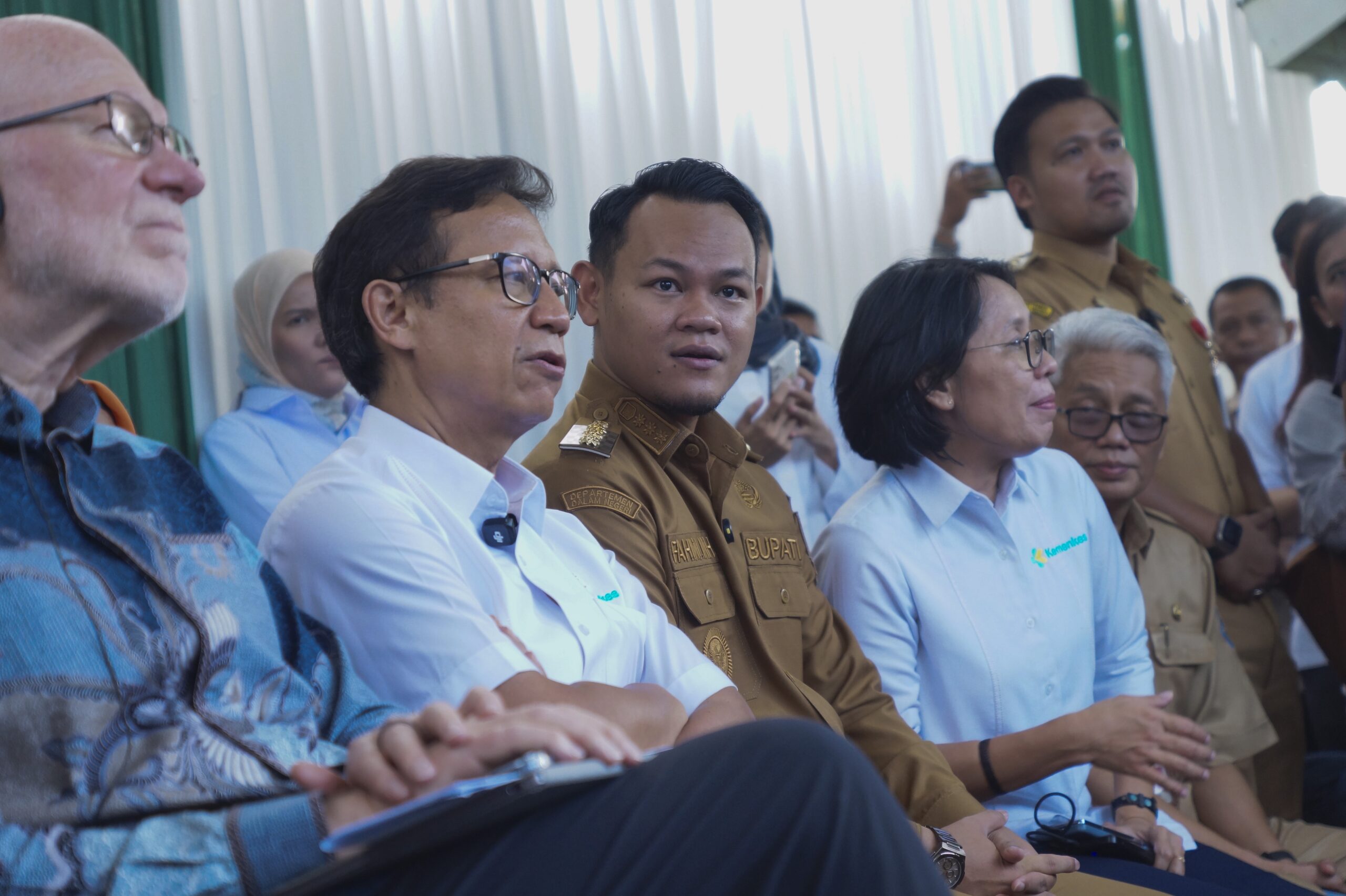
    Menkes Budi didampingi oleh Bupati Purbalingga dan Dr. Elias saat kunjungan ke salah satu faskes lokasi uji coba SPHERES di Kab. Purbalingga.

    Keberhasilan SPHERES di Purbalingga dan Lombok Barat tidak lepas dari komitmen kuat para pemimpin daerah. Bupati Purbalingga, Fahmi Muhammad Hanif, menyampaikan bahwa pemilihan lokasi proyek ini dilakukan melalui proses kompetitif guna menjaring daerah dengan komitmen transformasi digital terkuat. Senada dengan hal tersebut, Bupati Lombok Barat, Lalu Ahmad Zaini, menambahkan bahwa SPHERES sejalan dengan visinya untuk mewujudkan rekam medis digital yang terintegrasi bagi setiap warga, sejak lahir hingga lansia.

    Menanggapi capaian ini, Dr. Anuraj Shankar, Principal Investigator dari OUCRU Indonesia, menjelaskan: “Dengan menjalankan proyek ini sebagai studi acak terkontrol (randomised trial) berskala besar, kami berupaya memberikan bukti ilmiah yang kuat untuk mengevaluasi dampak dari intervensi ini. Data yang terkumpul akan menjadi landasan penting dalam melakukan penyesuaian serta mengukur kelayakan program ini untuk nantinya diimplementasikan di tingkat nasional.”

    Hingga saat ini, proyek SPHERES terus menunjukkan perkembangan positif di kedua kabupaten lokasi uji cobanya. Sebanyak 23 Puskesmas di kedua lokasi tersebut telah resmi terintegrasi dalam proyek ini. Tim proyek menargetkan perluasan intervensi hingga mencapai 42 Puskesmas dalam beberapa bulan ke depan untuk mematangkan cara kerja programnya sebelum diterapkan secara lebih luas di seluruh Indonesia.

  • Indonesia Minister of Health Aims to Scale SPHERES Initiative Nationwide Following High-Level Visit

    Indonesia Minister of Health Aims to Scale SPHERES Initiative Nationwide Following High-Level Visit

    PURBALINGGA, March 10, 2026 – During a high-profile visit to the SPHERES project site in Purbalingga, Central Java, Indonesia’s Minister of Health, Budi Gunadi Sadikin, lauded the project’s progress and set an ambitious target for its national expansion.

    “I see that the project is excellent. I hope it can serve as a model to be implemented in all 514 districts and cities across Indonesia,” the Minister stated. He further requested that the initiative be rolled out across the country’s network of community health centres (Puskesmas) over the next three years.“

    Indonesia Minister of Health, Budi Gunadi Sadikin, at Purbalingga Health Office to review the progress of the SPHERES project.

    The Scalable Public Health Empowerment, Research, and Education Sites (SPHERES) project is led by the Ministry of Health and OUCRU Indonesia, in partnership with the district governments of Purbalingga and West Lombok, and funded by the Gates Foundation. The project aims to revolutionise public health by bridging the gap between digital technology and frontline healthcare delivery.

    Accompanying the Minister was Dr Christopher Elias, President of Global Development at the Gates Foundation. The delegation toured Posyandu Lestari 5 Bancar (a neighbourhood-level health service post), Puskesmas Purbalingga, as well as the Public Health Data Theatre (PHDT) located in Purbalingga Health Office.

    Head of Purbalingga Health Office, Jusi Febrianto, presents the PHDT dashboard to representatives from the Ministry of Health and Gates Foundation. 

    The PHDT represents a novel concept in Indonesian public health, acting as a dedicated physical and digital command centre where health officials can view real-time maps and dashboards of their district’s health. Unlike traditional reporting, which relies on stagnant monthly paperwork, the Theatre allows officials to see immediate trends, such as a localised spike in blood pressure readings, and deploy health workers to those specific neighbourhoods instantly.

    Dr. Elias emphasized the significance of this shift toward data-driven action. “The big question is how we use real-time data to enable real-time action. It’s very encouraging to see what you’re doing; it’s worth continuing and worth replicating,” he said.

    Beyond data analysis, a core achievement of SPHERES is the reduction of administrative burdens for frontline staff. By utilizing FHIR (Fast Healthcare Interoperability Resources) standards and Optical Character Recognition (OCR) technology, the project allows health workers to simply photograph a patient’s physical health book to automatically sync data with national systems. Minister Sadikin noted that this is vital for the success of Indonesia’s SatuSehat platform, explaining that health workers are often overwhelmed by too many separate applications.

    “With this, it is expected that health workers can spend more time serving the community, rather than being busy filling out reports or applications belonging to the ministry or local government,” the Minister said.”

    Minister Budi is accompanied by Purbalingga Regent Head Fahmi Muhammad Hanif and Dr. Elias during the visit. 

    The success of SPHERES in Purbalingga and West Lombok is built on strong local leadership. Bupati Fahmi Muhammad Hanif of Purbalingga noted the project was awarded through a competitive process to identify the districts with the highest committment to digital change. His counterpart, Bupati Lalu Ahmad Zaini of West Lombok — who was also present during the visit — added that the project fulfills his vision of integrated cradle-to-grave digital health records for every citizen.

    Reflecting on the milestone, Dr Anuraj Shankar, the Principal Investigator of this project from OUCRU Indonesia, stated: “By implementing this project as a large-scale randomised trial, we are generating the robust scientific evidence needed to evaluate the impact of these interventions. This data will be essential for making the necessary adjustments and informing the feasibility of potential nationwide expansion in the future.”

    The SPHERES project continues to gain momentum across its pilot sites. To date, the initiative has successfully integrated 23 Puskesmas across the two districts. The project team aims to expand these interventions to a total of 42 Puskesmas in the coming months, further refining the model for nationwide implementation.

  • Pekerja Pabrik yang Menjadi Ilmuwan Penyakit Menular: Kisah Suwarti dari OUCRU Indonesia

    Pekerja Pabrik yang Menjadi Ilmuwan Penyakit Menular: Kisah Suwarti dari OUCRU Indonesia

    Suwarti adalah seorang ilmuwan laboratorium klinis di OUCRU Indonesia. Pekerjaanya meliputi mendeteksi keberadaan penyakit, melacak evolusi patogen, dan mempelajari reaksi tubuh terhadap infeksi.

    Selama tujuh tahun bekerja di OUCRU Indonesia, Suwarti telah memberikan banyak sumbangsih terhadap berbagai studi penting, termasuk studi-studi tentang Covid-19 dan kesiapsiagaan pandemi secara umum. Risetnya belakangan ini berfokus pada mempelajari reaksi tubuh terhadap vaksin Covid-19, Mpox, serta flu burung dan mengungkap pola wabah leptospirosis di Jakarta.

    Melihat gelar doktoral dan perannya sebagai peneliti, banyak orang tidak menyangka bahwa karier Suwarti bermula di pabrik bumbu masak, bukan laboratorium riset klinis.

    Awal yang Sederhana

    Salah satu pekerjaan pertama Suwarti adalah mengawasi pengendalian mutu (quality control) di suatu pabrik bumbu masak. Pekerjaan ini adalah pilihan yang masuk akal pada masanya. Berbekal gelar sarjana jurusan Teknologi Pangan, motivasi Suwarti sangat pragmatis, yakni mencari uang sebanyak-banyaknya.

    Sebagai anak terakhir dari sepuluh bersaudara, Mba Ati, nama panggilannya di kantor, datang dari keluarga yang sederhana. Ayahnya adalah buruh serabutan dan ibunya asisten rumah tangga.

    Sejak kecil, ia mengiginkan hidup yang lebih baik untuk dirinya dan keluarganya. “Aku gak ingin terus-menerus hidup miskin. Aku ingin hidup nyaman. Dan aku sadar akan hal ini sejak SMP setelah melihat anak-anak lain dari keluarga yang berkecukupan ,” kata Suwarti.

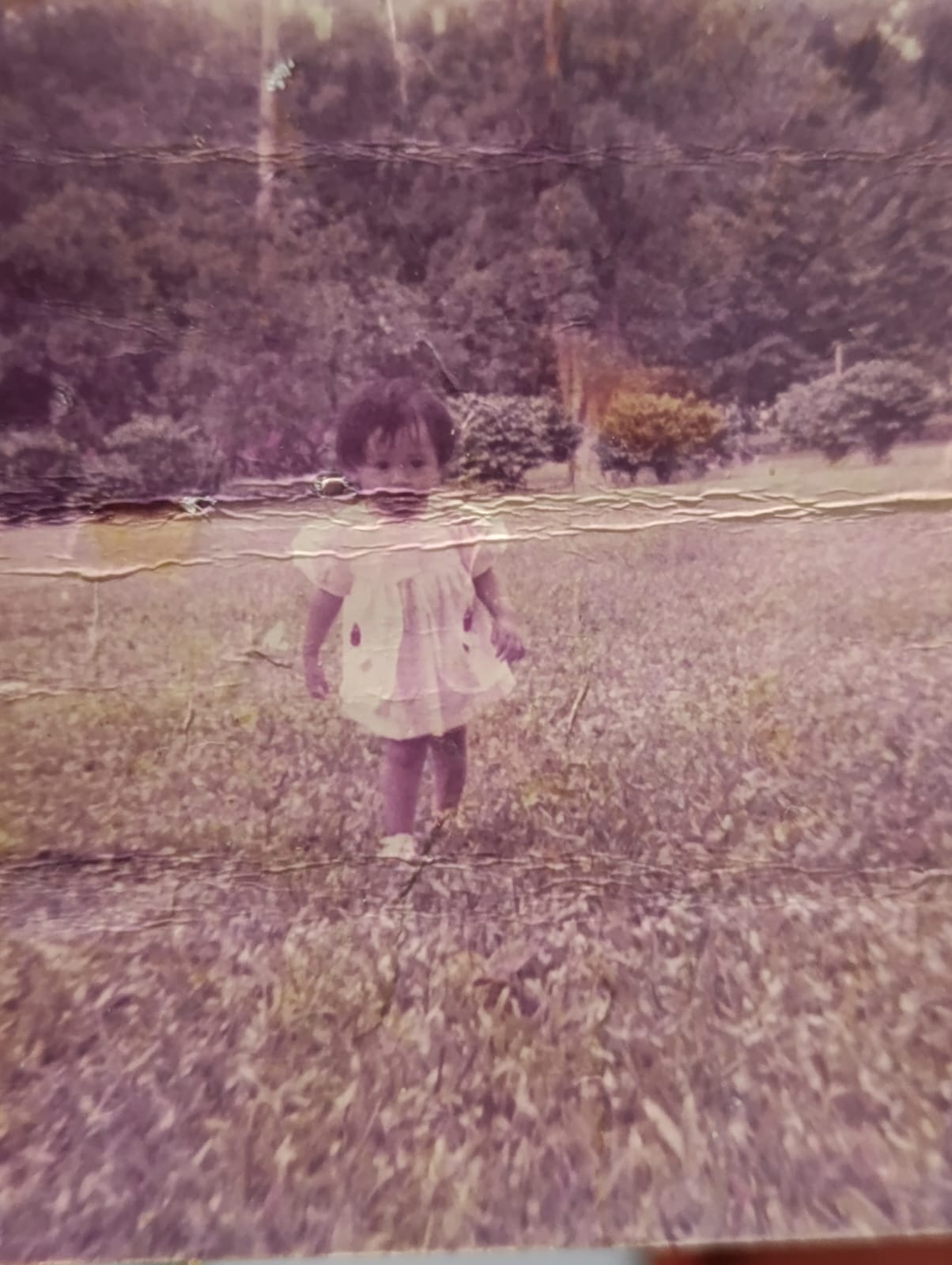
    Suwarti saat kecil pada tahun 1982.

    Beruntung, kedua orang tua Suwarti menyadari pentingnya pendidikan dan mendukungnya mengenyam pendidikan formal semampu mereka. Dukungan tersebut membawa Suwarti sampai memperoleh gelar sarjana dari IPB pada tahun 2004.

    Namun, setelah mulai bekerja dan berpenghasilan, satu pertanyaan terus mengusik benak Suwarti: Lalu, apa lagi? Apa lagi selanjutnya?

    Beralih ke Dunia Penelitian Akademik

    Saat berkuliah di IPB, Suwarti terkenal rajin dan berbakat di bidang biokimia. Reputasi inilah yang mendorong mantan dosen pembimbing skripsinya untuk menawari pekerjaan bagi Suwarti di laboratorium LIPI.

    Posisi yang ditawarkan adalah bagian dari proyek yang berupaya memodifikasi tumbuhan agar bisa memproduksi protein yang dibutuhkan tubuh manusia. Protein buatan dari tumbuhan ini bisa berguna bagi berbagai pengobatan kondisi medis tertentu.

    Proyek seperti ini terasa baru dan menarik bagi Suwarti, tetapi gajinya hanya setengah dari yang ia terima di pabrik bumbu saat itu. Meski demikian, LIPI juga menawarkan untuk membiayai pendidikan S2 Suwarti. Karena pekerjaannya di pabrik sudah terasa monoton, tawaran ini terasa masuk akal baginya.

    Suwarti akhirnya mengambil tawaran tersebut dan tak lama kemudian mulai bekerja dengan LIPI sambil menempuh pendidikan S2 di program Biologi UI.

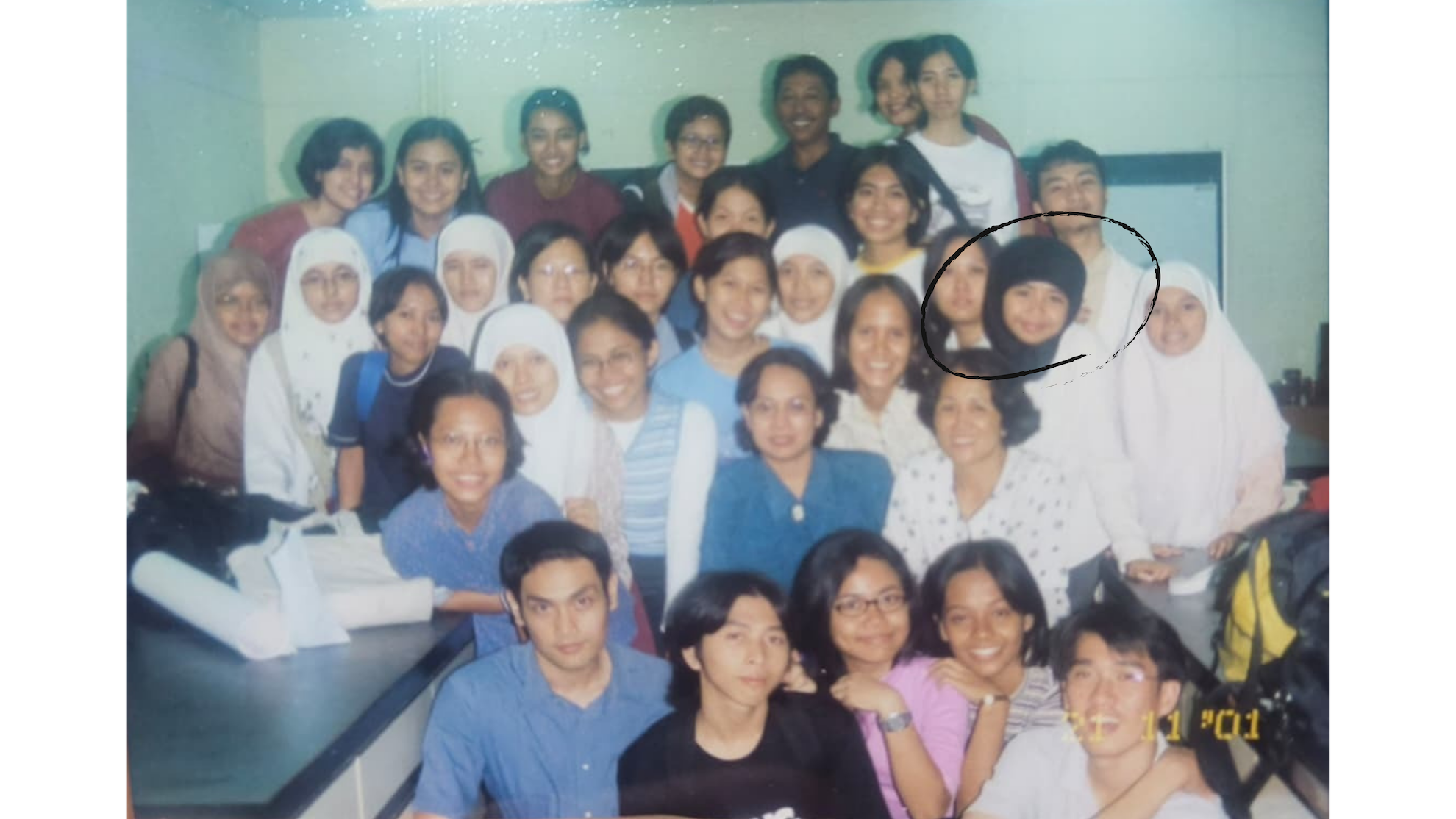
    Suwarti dengan teman-teman kuliahnya di IPB pada tahun 2001.

    Dari sana, satu peluang membuka jalan bagi peluang berikutnya. Pendidikan S2 tersebut membawa Suwarti ke beasiswa lain untuk menempuh gelar PhD di bidang Life Sciences di Hokkaido University, Jepang, sembari bekerja di National Institute for Materials Science di kota Tsukuba. Proyek doktoralnya meneliti bagaimana material berukuran sangat kecil, dikenal sebagai nanomaterial, bisa digunakan untuk membuat vaksin bekerja lebih efektif dalam memperkuat respons imun tubuh.

    Setelah lulus, ia terus bekerja di National Institute for Materials Science selama beberapa tahun untuk membantu mengembangkan vaksin TB jenis baru berdasarkan riset doktoralnya tentang nanomaterial.

    Suwarti merasa keputusannya untuk meninggalkan pekerjaan yang mapan demi pendidikan tinggi dan riset kesehatan tidak sepenuhnya didasari perhitungan rasional, tetapi lebih didasari pengaruh kuat tidak langsung dari ibunya.

    Ibu Iyah, ibunda Suwarti, hanya tamatan SD, tetapi ia memiliki rasa ingin tahu yang besar. Di salah satu rumah tempatnya bekerja sebagai ART, ada langganan majalah Kartini, majalah perempuan Indonesia legendaris yang membahas berbaga isu sosial, tokoh publik, serta gagasan tentang pendidikan dan kemajuan. Ibu Iyah membacanya setiap kali ada kesempatan, dan terkadang membacakan artikel-artikelnya kepada putrinya.

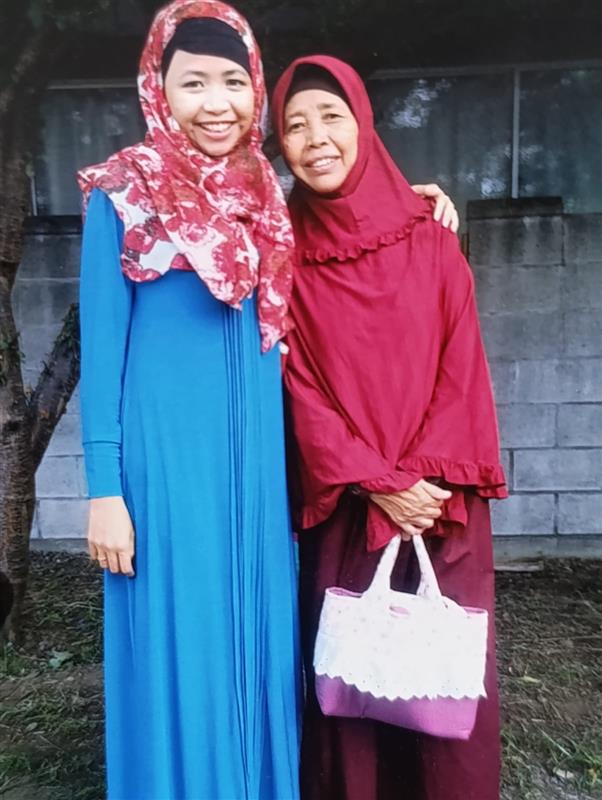
    Suwarti bersama ibunya.

    “Ibuku bisa dengan mudah mengenali tokoh-tokoh publik, seperti perdana menteri atau pebisnis, yang ia lihat di majalah dan menceritakan berita-berita yang ia baca,” kenang Suwarti. “Untuk seseorang dengan latar belakang pendidikannya, pengetahuan dan rasa ingin tahunya luar biasa. Kalau saja ia diberi kesempatan yang tepat, ia pasti punya karier yang sangat berbeda.”

    Rasa ingin tahu itu pun menurun kepada Suwarti. Sejak kecil, ia gemar membaca koran dan rajin belajar, paling rajin di antara saudara-saudaranya.

    “Aku gak pernah jadi yang paling top di SMA,” kata Suwarti. “Tapi aku selalu penasaran dan pede. Dan aku tahu bahwa pendidikan itu penting untuk mengubah status sosial seseorang.”

    Kepercayaan diri inilah yang akhirnya mendorong Suwarti untuk berani mengambil risiko, seperti saat menerima tawaran LIPI, dan menyetir kariernya ke dunia sains.

    Mendobrak Batasan Demi Sains

    Suwarti sadar dunia akademik tidaklah mudah.

    Bertepatan dengan bergabung bersama LIPI, Suwarti menikah dan mengandung tak lama kemudian. Ia didatangi banyak tanggung jawab baru secara bersamaan.

    “Aku bekerja full-time di laboratorium di Cibinong sambil kuliah di UI di Depok,” ujar Suwarti. “Saat itu aku sedang hamil, lalu kemudian harus mengurus bayi yang baru lahir. Bolak-balik antara rumah, tempat kerja, dan kampus di tiga kota berbeda adalah realitas harian. Kata ‘lelah’ pun gak bisa mengungkapkan yang aku rasakan waktu itu.”

    Suwarti lulus S2 bertepatan dengan berakhirnya proyek di LIPI. Ia sempat menganggur beberapa waktu sebelum akhirnya kesempatan lain datang, yakni menempuh S3 di Jepang. Suwarti bergegas mengambilnya.

    Meski demikian, periode ini tidaklah mudah. Selama 1,5 tahun pertama, ia harus meninggalkan suami dan putranya yang baru berusia empat tahun di Indonesia karena keterbatasan biaya. Satu-satunya cara yang ia bisa lakukan adalah mengunjungi keluarganya di Indonesia sebisa mungkin.

    Akhirnya, keadaan membaik. Suaminya juga menerima beasiswa untuk melanjutkan studi di Jepang. Sang suami membawa anak mereka, dan selama sekitar lima tahun, keluarga inti Suwarti hidup bersama di Jepang.

    Ketika ditanya bagaimana ia bisa bertahan melewati tahun-tahun berat tersebut, Suwarti menunjuk kemampuannya dalam multitasking. “Aku percaya perempuan hebat dalam melakukan banyak hal sekaligus karena keadaan yang menuntut kami,” katanya. “Kami harus menyeimbangkan banyak hal, tanggung jawab rumah tangga, mengasuh anak, bahkan menyusui, di samping pekerjaan.”

    Namun, multitasking saja tidak cukup, aku Suwarti. Ia juga ambisius.

    “Aku tipe orang yang punya target tinggi. Aku berani bermimpi besar,” ucapnya. “Aku percaya bahwa ketika kita bersungguh-sungguh menetapkan tujuan, alam semesta akan membukakan jalan.”

    Meski begitu, ia tak ingin perjalanannya dilihat sebagai usaha sendiri. Suwarti selalu mendapat dukungan dari orang-orang di sekitarnya. Suaminya berbagi tanggung jawab rumah tangga dan mendukung penuh kariernya. Ibunya juga membantu pekerjaan rumah harian dan pengasuhan anak, terutama di masa sebelum dan sesudah kepulangannya dari Jepang.

    “Dunia STEM tidak mudah bagi perempuan. Itu mengapa kita harus benar-benar merencanakan hidup yang kita inginkan dan memilih pasangan yang suportif. Suami dan ibu sangat mendukung cita-citaku secara konkret.”

    Hidup yang Berdampak di OUCRU Indonesia

    Setelah Suwarti dan suaminya menyelesaikan studi di Jepang, mereka sekeluarga kembali ke Indonesia. Tak lama kemudian, Suwarti menemukan peluang kerja di OUCRU Indonesia, tempat ia mendedikasikan karier riset pascadoktoralnya hingga saat ini.

    Di OUCRU Indonesia, Suwarti telah berkontribusi dalam berbagai riset besar seperti SEACOVARIANTS, DETECSI, INACO, INTERACT, dan IMOVA. Riset-riset ini mempelajari berbagai macam patogen, termasuk Covid-19, leptospirosis, HIV, dan Mpox.

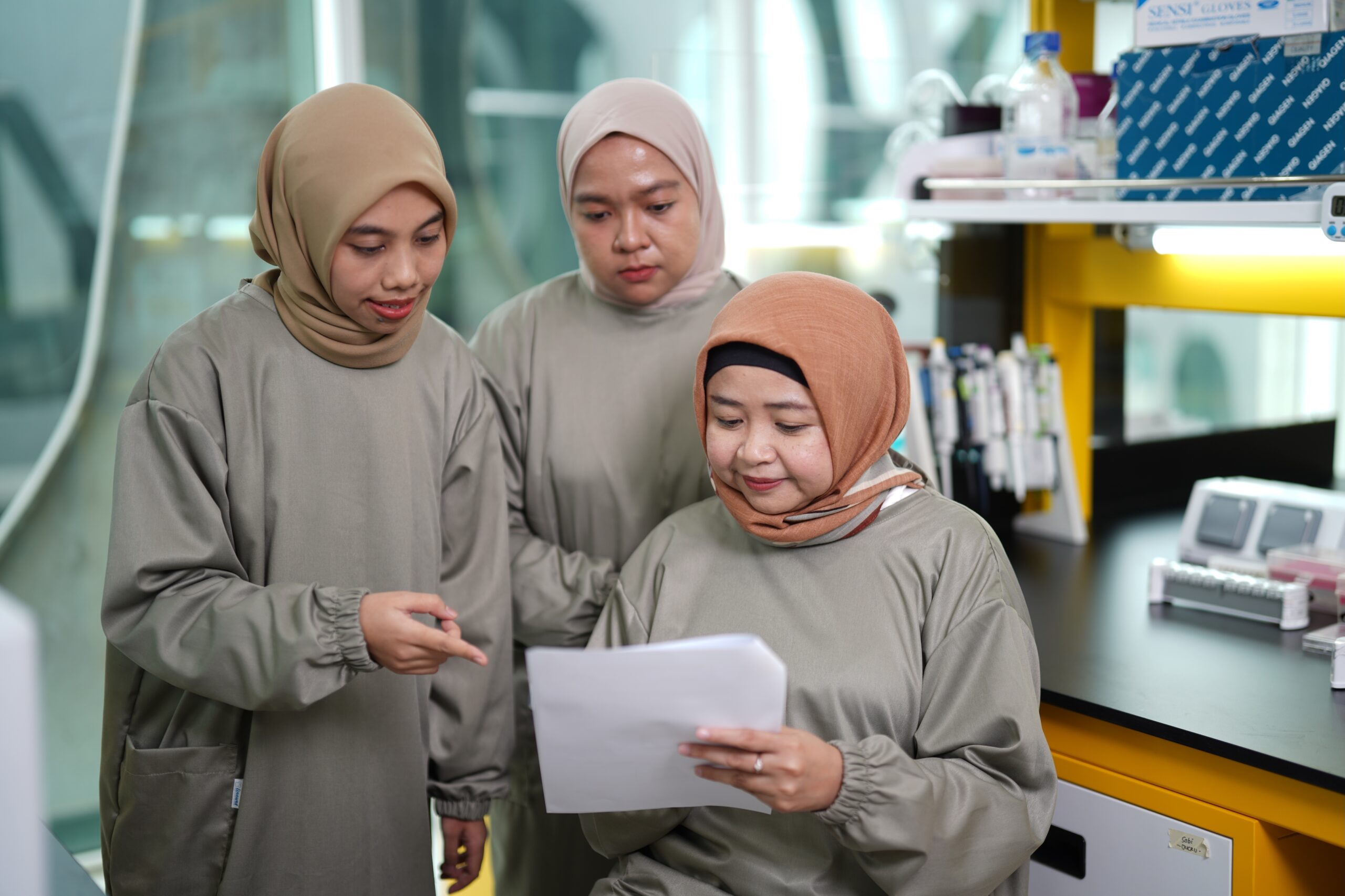
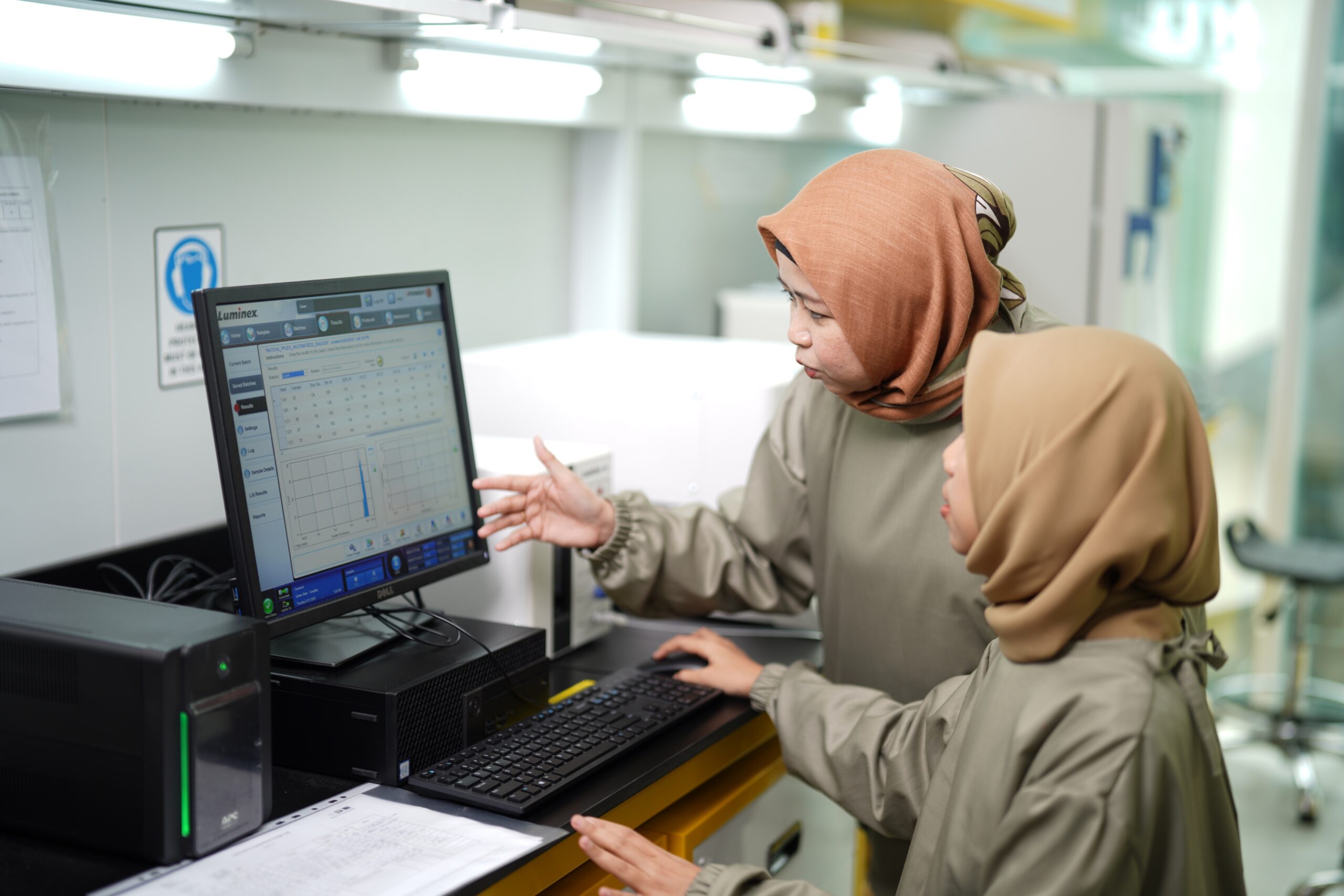
    Suwarti dan rekan kerjanya di laboratorium IMERI FK UI.

    “Mimpiku adalah melakukan penelitian yang memiliki dampak praktis dan nyata bagi masyarakat. Aku merasa banyak pekerjaanku di OUCRU Indonesia bersifat pragmatis,” kata Suwarti. “Studi seperti SEACOVARIANTS bertujuan memperkuat kesiapsiagaan pandemi, sementara INTERACT berfokus pada diagnosis cepat HIV untuk populasi rentan. Aku ingin pekerjaanku punya dampak nyata bagi orang lain.”

    Dalam pekerjaannya, Suwarti berkolaborasi erat dengan berbagai departemen di OUCRU Indonesia dan memimpin tim beranggotakan enam orang yang sebagian besar adalah perempuan. Namun, Suwarti tidak ingin mereka sekadar mengikuti jejaknya.

    “Saya ingin mereka belajar dari pengalaman saya, tetapi bukan menirunya. Saya ingin ilmuwan muda, terutama perempuan, menemukan kekuatan mereka sendiri dan membangun jalur mereka sendiri di dunia sains,” pesannya.

    Perkembangan Suwarti sebagai peneliti dan pemimpin juga dibentuk melalui pelatihan dan pendampingan yang didukung oleh OUCRU Indonesia dan para mitranya. Ia mengikuti program Make A Difference (MAD) yang mengasah kemampuannya dalam memimpin dan bekerja dengan orang lain. Ia juga terpilih untuk berpartisipasi dalam ISARIC Leadership Programme, sebuah inisiatif global yang memberdayakan peneliti perempuan dari negara-negara berpenghasilan rendah-menengah agar bisa menjadi peneliti mandiri.

    Suwarti bersama timnya.

    Selain itu, Suwarti juga merupakan bagian dari MORU–OUCRU Discovery Research Academy (MODRA), program pelatihan regional untuk ilmuwan pascdoktoral di Asia. MODRA akan memberikannya dana awal (seed funding) untuk mengeksplorasi metode baru tes leptospirosis yang lebih cepat dan praktis dibandingkan tes PCR standar. Tesnya akan berbasis LAMP dengan sistem lateral flow (serupa strip tes cepat) agar leptospirosis dapat dideteksi secara mudah tanpa laboratorium yang canggih. Tes seperti ini akan berguna bagi daerah-daerah dengan fasilitas terbatas.

    Tujuan jangka panjang Suwarti adalah memperbaiki cara penyebab demam didiagnosis di seluruh Indonesia, tidak hanya leptospirosis. Ia ingin membantu faskes mengidentifikasi penyebab demam menggunakan alat diagnosis yang akurat, praktis, dan terjangkau. “Gejala demam sangatlah umum, dan penyebabnya bisa bermacam-macam, mulai dari virus hingga bakteri yang berbeda-beda,” jelasnya. “Aku ingin menemukan cara yang mudah dan aksesibel untuk mendiagnosis penyakit-penyakit ini agar pengobatannya tepat dan pasien sehat. Itu visiku untuk negara ini.”

    Suwarti sudah banyak berubah sejak bekerja di pabrik hingga sekarang, tetapi ia masih termotivasi oleh satu hal yang sama: kepeduliannya terhadap orang-orang di sekitarnya. Dahulu, kepeduliannya bersifat personal, yakni membangun hidup yang lebih baik bagi keluarganya. Saat ini, di OUCRU Indonesia, ia bekerja untuk membangun hidup yang lebih baik bagi masyarakat luas, di Indonesia dan dunia.