
Blog

  • OUCRU Indonesia Welcome Students to Explore Biomedical Research and Science Careers    

    OUCRU Indonesia Welcome Students to Explore Biomedical Research and Science Careers    

    Ten junior and senior high school students in Jakarta explored careers in biomedical research.

    On 15 April 2026, OUCRU hosted its first student visit programme, welcoming groups of students from Australian Independent School (AIS) and Sinarmas World Academy (SWA) for a day of discovery, conversation, and hands-on learning.

    Designed as part of Public and Community Engagement efforts, the visit aims to open research environment for youth learners by offering a closer look at biomedical research practice in the laboratories, engaging with scientists, and exploring future opportunities in science.

    Experiencing Research First-Hand

    The visit began with an overview of OUCRU Indonesia by Prof. Kevin Baird, Interim Director of the OUCRU Programme. During the session, students were introduced to OUCRU’s journey as biomedical research unit in conducting clinical trials of diagnostics, drugs, and vaccines for infectious diseases. This session highlighted how OUCRU’s research contributes to improving public health and addressing infectious diseases through collaboration between laboratories, hospitals, and communities.

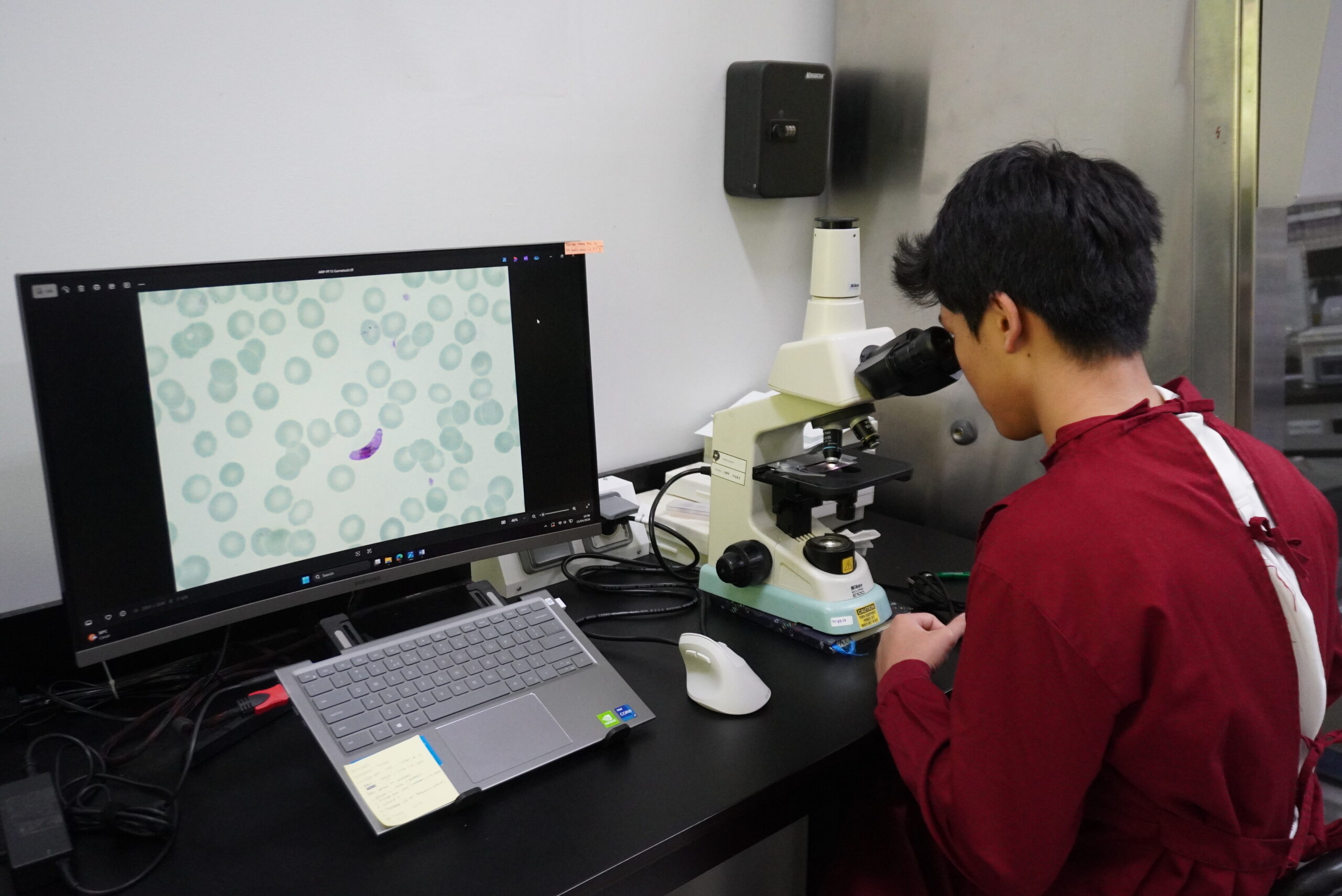
    Alongside the OUCRU introduction, students had the opportunity to explore the OUCRU office and laboratories at the Universities of Indonesia & Oxford Clinical Research Laboratory (IOCRL) and Cluster for Infectious Diseases Indonesian Medical Education and Research Institute (IMERI). Students learned hands-on practice of basic laboratory skills in diagnosing infectious diseases, as well as how samples are processed and studied through genomic analysis and sequencing. These experiences helped students see theories they learn in the classroom are applied directly in real-world scientific research.
    New Perspectives in Science

    As part of their experience, students also participate in a “Careers in Science” panel discussion featuring OUCRU Indonesia research professionals from diverse backgrounds. Covering the world of research, the panel session was moderated by Hanifah Nisrina, Communication and Digital Engagement Officer, and featured Prof. Kevin Baird (Malariologist), Dr Marlous Grijsen (Senior Scientist and Dermatologist), and Suwarti (Infectious Diseases Scientist). Speakers shared their professional journeys into biomedical research and highlighted that there is no single pathway into science. The session also emphasised the importance of youth involvement and the growing need for future talent in biomedical research.

    To further encourage interaction with researchers and research support at OUCRU, students participated in an exchange session, “Ask Me About My Job” to explore a wide range of roles behind health research and understand the collaborative nature of scientific work.

    Students reflected that experiencing this makes science feel more tangible and achievable. One student shared that the visit revealed “a lot more depth” to research than expected, while another noted that seeing the work firsthand made a career in science feel possible.
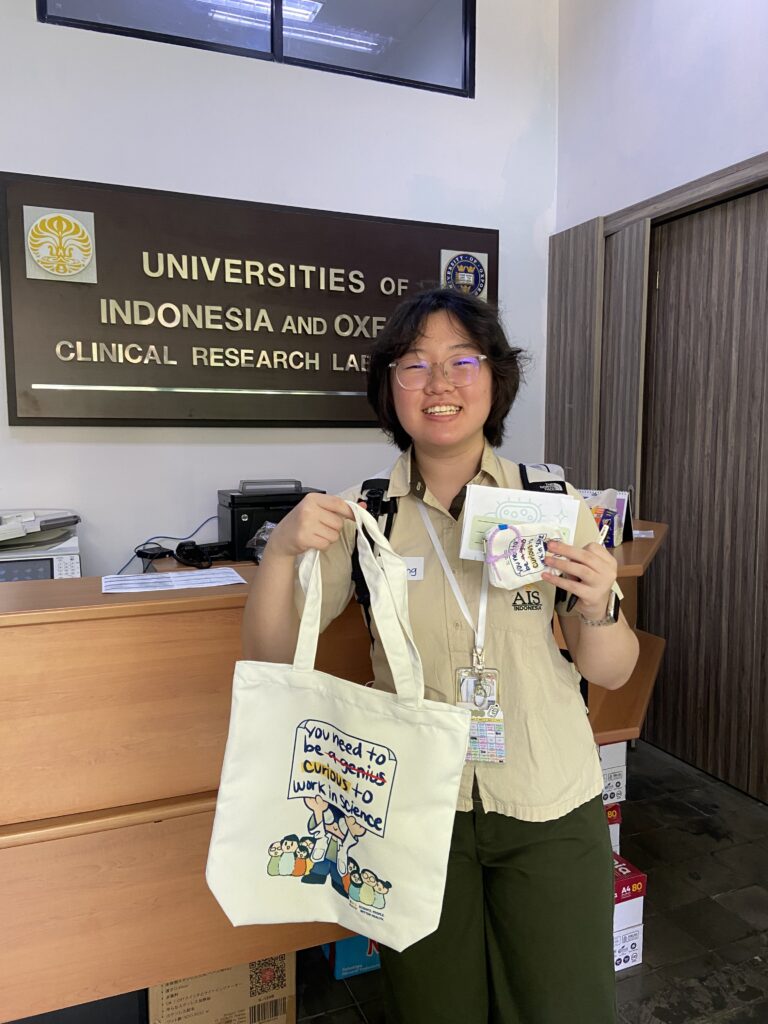
    “I loved this experience! This is my first visit to a lab and I’m excited to work in research. I think I would want to be like you (science communicator) one day”

    – Nayeong, 12th Grade student from AIS

    Supporting Future Scientific Talent

    As OUCRU’s first student visit programme, this event marked an important step in strengthening engagement between research institutions, educators, and young learners. By opening its laboratories to students, OUCRU aims to nurture curiosity, build scientific understanding, and inspire future careers in research.
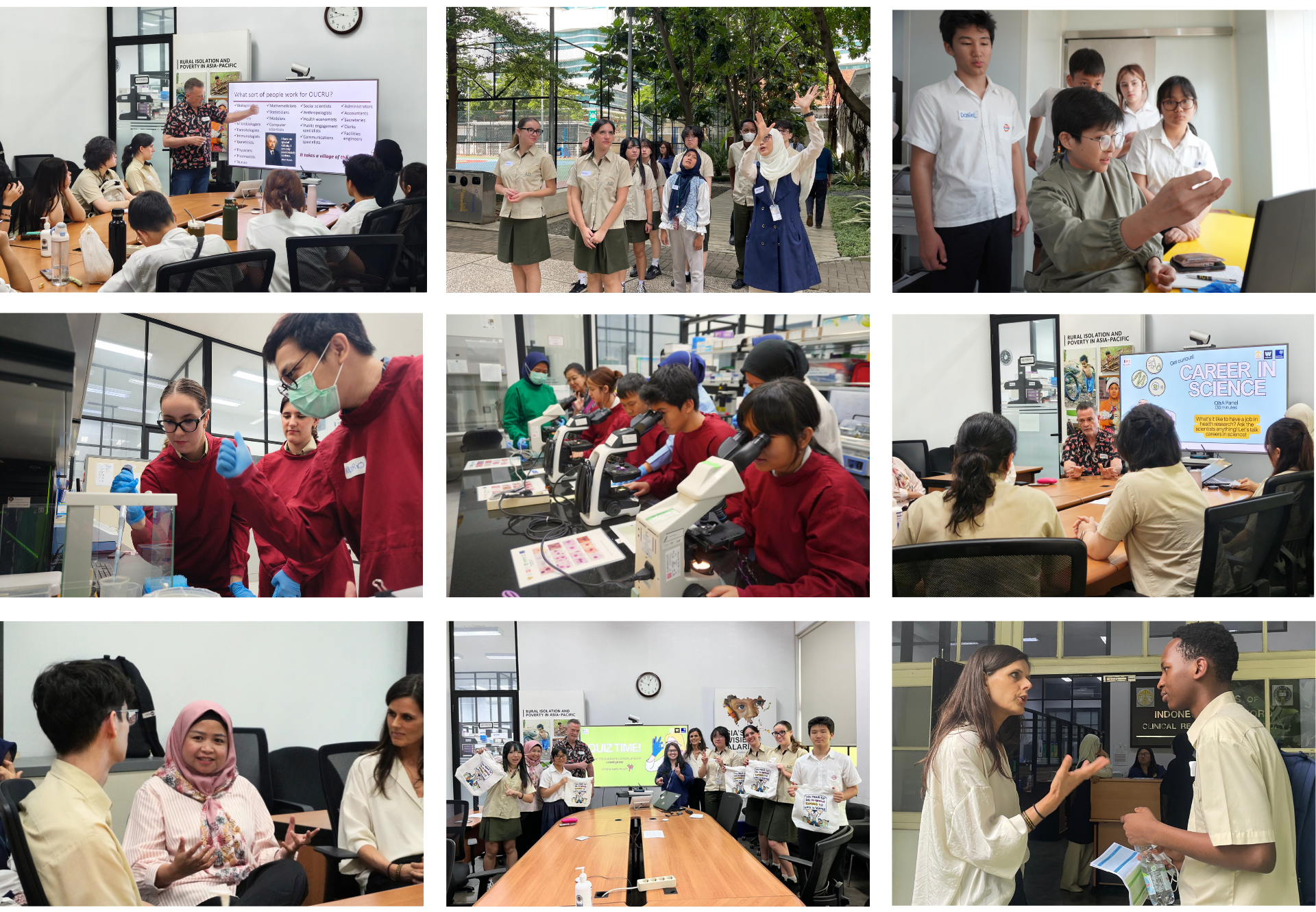
    OUCRU Indonesia’s first Student Visit illustrated student engagement with biomedical research environments. Students visited laboratories through guided demonstrations of infectious disease diagnostics and genomic workflows, as well as explored career pathways in health research.

    “We really appreciate this activity, and we hope to visit OUCRU again with more students.” — Mr. Wei, Teacher at SWA
  • Biaya Tersembunyi di Balik Malaria: Studi Baru Ungkap Besarnya Beban Ekonomi bagi Masyarakat Desa

    Biaya Tersembunyi di Balik Malaria: Studi Baru Ungkap Besarnya Beban Ekonomi bagi Masyarakat Desa

    Jatuh sakit dengan malaria menguras biaya yang jauh lebih besar dibandingkan penyakit demam lainnya karena hilangnya waktu untuk bekerja dan menjalani rutinitas. Studi yang terbit di BMJ Global Health ini merupakan penelitian pertama yang mengukur secara sistematis beban ekonomi dari malaria, termasuk kasus malaria zoonosis, di daerah pedesaan dan terpencil di Indonesia.

    Riset yang merupakan bagian dari proyek ZOOMAL dan melibatkan OUCRU Indonesia ini menyoroti kesenjangan kesehatan berdasarkan data dari sejumlah klinik di Sumatera Utara dan Kalimantan Utara. Data yang diperoleh mengungkapkan bahwa, sekalipun biaya kunjungan ke dokter tidak seberapa, biaya total akibat satu episode malaria rata-rata mencapai $33 atau Rp570.000. Bagi seorang buruh kasar yang tinggal di pedesaan, biaya ini adalah beban berat yang bisa menjerumuskannya langsung ke jurang kemiskinan.

    Untuk memperoleh gambaran kerugian yang utuh, para peneliti menyurvei 2.244 pasien antara tahun 2022 dan 2023 di delapan klinik kesehatan di kedua provinsi tersebut. Kelebihan utama dari studi ini adalah ketepatan diagnostiknya. Tim peneliti melakukan pengujian laboratorium polymerase chain reaction (PCR) yang telah divalidasi pada semua partisipan. Metode molekuler yang sangat sensitif ini memungkinkan para peneliti untuk mengidentifikasi parasit malaria secara pasti, termasuk varian khususnya, seperti Plasmodium vivax, Plasmodium falciparum, dan Plasmodium knowlesi yang bersifat zoonosis. Dengan memastikan jenis infeksi secara akurat, tim peneliti dapat mengetahui kerugian finansial dari berbagai jenis malaria dan membandingkannya dengan penyakit demam nonmalaria.

    Proyek riset ZOOMAL di Sumatera Utara dan Kalimantan Utara, Indonesia.

    Hasil analisisnya mengungkap bahwa malaria jauh lebih merugikan kondisi keuangan keluarga dibandingkan penyakit demam lainnya. Penyakit demam nonmalaria rata-rata menguras biaya sekitar $17 atau Rp300.000, sedangkan malaria menelan biaya hampir dua kali lipat. Perbedaan ini sebagian besar disebabkan oleh durasi sakit malaria yang cenderung lebih panjang sehingga lebih merugikan produktivitas.

    Data di lapangan memang menemukan bahwa beban terberat bukan berasal dari biaya perawatan, tetapi biaya tidak langsung berupa kehilangan produktivitas. Hilangnya penghasilan menyumbang sekitar 70% dari total kerugian akibat malaria. Di daerah pelosok di mana banyak orang menggantungkan hidupnya pada pekerjaan kasar harian, seperti bertani atau menebang kayu hutan, jatuh sakit selama seminggu berarti kehilangan pendapatan selama seminggu.

    Kerugian ini kerap diperparah dengan besarnya tantangan logistik untuk berobat. Pasien-pasien malaria yang tinggal di wilayah pelosok biasanya harus merogoh kocek cukup dalam untuk melalui medan sulit menggunakan moda transportasi pribadi. Jarak yang ditempuh juga cenderung lebih jauh dibandingkan saat sakit demam biasa karena pasien perlu mengunjungi faskes tertentu. Mereka juga perlu dirawat dan ditemani oleh anggota keluarga yang turut terpaksa mengorbankan waktu serta penghasilannya.

    Ancaman Plasmodium knowlesi, yakni parasit malaria yang menyebar dari kera ke manusia, memperumit kondisi kesenjangan yang ada. Varian zoonosis ini menyerang orang-orang yang bekerja di pedalaman hutan, seperti penebang kayu atau petani kecil, yang jarang memiliki jaring pengaman finansial (financial safety net). Dengan kata lain, kelompok termiskin berada di garis terdepan infeksi dan mengemban risiko tertinggi.

    “Untuk membayar ongkos perjalanan yang jauh ke klinik atau bertahan hidup selama masa tidak bekerja, banyak keluarga terpaksa menjual aset-aset penting atau mengambil pinjaman berbunga tinggi,” jelas Dr. Inke Nadia Diniyanti Lubis, Peneliti Utama studi sekaligus salah satu penulis artikel jurnal ini yang berasal dari Universitas Sumatera Utara. “Saat pasien pulih, mereka sudah menjadi lebih miskin dibandingkan sebelum mereka sakit, membuat mereka rentan terhadap krisis kesehatan berikutnya.”

    Di saat Indonesia semakin dekat dengan target eliminasi malaria, penyakit ini justru semakin terpusat pada kelompok-kelompok masyarakat yang terisolasi. Hal ini menandakan bahwa tindakan medis saja tidak lagi cukup untuk melindungi komunitas yang rentan.

    “Untuk benar-benar menuntaskan malaria, strategi kesehatan masyarakat harus melihat jauh dari sekadar membunuh parasitnya,” tegas Dr. Henry Surendra, pakar epidemiologi di OUCRU Indonesia dan salah satu penulis artikel jurnal ini. “Para pemangku kebijakan dapat mempertimbangkan subsidi pada tingkat rumah tangga atau strategi tes dan obati yang disubsidi dan berbasis outreach yang telah terbukti efektif di tempat lain.”

    Artikel ilmiah ini merupakan bagian dari penelitian ZOOMAL, proyek riset kolaboratif antara OUCRU Indonesia, Universitas Sumatera Utara, Lembaga Biologi Molekuler Eijkman (sekarang bagian dari BRIN), dan Menzies School of Health Research di Australia. Studi ini didanai oleh Australian Centre for International Agricultural Research dan Department of Foreign Affairs and Trade, Pemerintah Australia.

  • The Hidden Costs of Malaria: New Study Reveals Higher Economic Burden on Rural Families

    The Hidden Costs of Malaria: New Study Reveals Higher Economic Burden on Rural Families

    Being sick with malaria costs significantly more than other febrile illnesses, mostly due to time lost from work and daily routines. While health inequalities are a known reality, a recent paper published in BMJ Global Health marks the first time these hidden economic costs, particularly for zoonotic malaria, have been systematically measured across rural and remote areas in Indonesia.

    The study, part of the ZOOMAL project which involved OUCRU Indonesia, highlights a growing divide in health equity based on data from clinics in North Sumatra and North Kalimantan provinces. It found that while a patient might not pay much for a doctor’s visit, the total economic hit of a malaria episode averages around $33. For a rural labourer, this is a heavy burden that can act as a direct driver of poverty.

    To capture the full economic picture, researchers surveyed 2,244 patients between 2022 and 2023 across eight health clinics in the two provinces. A key strength of the study was its diagnostic precision. The research team conducted validated polymerase chain reaction (PCR) laboratory testing on all participants. This highly sensitive molecular method allowed researchers to definitively identify the exact parasite causing the illness, including specific species like Plasmodium vivax, Plasmodium falciparum, and the zoonotic Plasmodium knowlesi. By accurately confirming the infection type, the team could rigorously compare the financial toll of different forms of malaria against other non-malarial fevers.

    ZOOMAL research project in North Sumatra and North Kalimantan provinces, Indonesia.

    This direct comparison revealed that malaria is significantly more damaging to a family’s finances than a typical illness. While other common non-malarial fevers average an overall cost of $17, a malaria episode effectively doubles that financial hit. This stark difference is largely driven by the extended period of illness associated with the parasite. Because the physical recovery time for malaria is noticeably longer, the resulting loss of productivity is far more severe.

    The research shows that the most significant impact on households is rarely the direct medical bill. Instead, indirect costs make up the true price of the illness, with productivity losses accounting for roughly 70% of the financial drain. In remote regions where families rely heavily on daily manual labour in farming or forestry, a week of fever means a week without pay.

    This loss of income is frequently made worse by the logistical challenges of seeking treatment. Families living in hard-to-reach areas must often secure expensive private transport across difficult terrain, travelling significantly further to reach specialised clinics than they would for other common fevers. Moreover, in these rural settings, a healthy family member usually has to abandon their own work to act as a carer and escort, effectively doubling the household’s lost income overnight.

    The emergence of Plasmodium knowlesi, a type of malaria that spreads from macaques to humans, adds a complex layer to this economic burden. Because this zoonotic strain specifically targets individuals working deep in the forest, such as loggers or small-scale farmers, it disproportionately affects those with the least access to a financial safety net. Their daily work places them on the front lines of infection, putting the poorest of the populations at the highest risk.

    “To simply pay for the long journey to a clinic or to survive a period without wages, families are often forced to sell essential assets or take out high-interest loans, explains Dr. Inke Nadia Diniyanti Lubis, a Principal Investigator of the study and a coauthor of the paper. “By the time the patient has physically recovered, the family could be poorer than when they started, leaving them dangerously vulnerable to the next health crisis.”

    As Indonesia nears its goal of malaria elimination, the disease is increasingly concentrated in these isolated populations. This shift means that medical intervention alone is no longer enough to protect vulnerable communities.

    “To truly defeat malaria, public health strategies must look beyond simply curing the parasite,” concludes Dr Henry Surendra, an epidemiologist at OUCRU Indonesia and a coauthor of the paper. “Policymakers could consider household level subsidies, or subsidised, outreach-based test-and-treat strategies which have shown to be effective in other settings.”

    This paper is part of the ZOOMAL project, a collaborative research initiative between OUCRU Indonesia, Universitas Sumatera Utara, the Eijkman Institute of Molecular Biology (now part of Indonesia’s Research and Innovation Agency, BRIN), and the Menzies School of Health Research in Australia. The study is funded by the Australian Centre for International Agricultural Research and the Department of Foreign Affairs and Trade, Australian Government.

  • Dr Abhilasha Karkey Receives National Health Research Award from the Nepal Health Research Council  

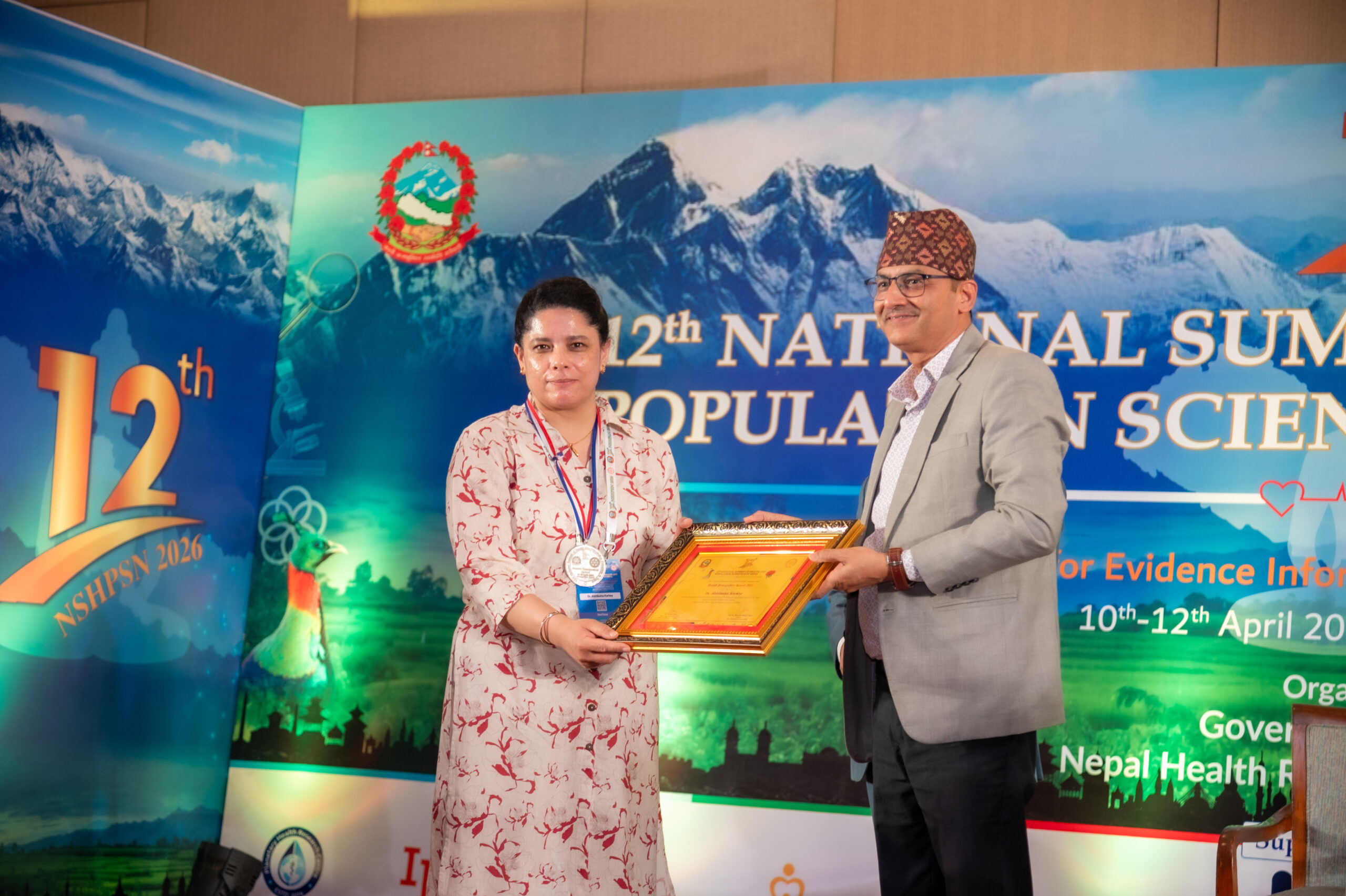
    Associate Professor Abhilasha Karkey, Director of the Oxford University Clinical Research Unit Nepal (OUCRU Nepal), has been honored with the Health Research Award at the 12th National Summit of Health and Population Scientists in Nepal, organized by the Nepal Health Research Council (https://nhrc.gov.np/). 

    The summit, held from 10–12 April 2026 at The Soaltee Kathmandu, brought together researchers, policymakers, academicians, health professionals, and development partners from across the country to share research findings and engage in dialogue on key health and population priorities. 

    The Health Research Award is a prestigious national recognition presented to an individual who has demonstrated sustained scientific excellence and made significant contributions to clinical care, public health, and strengthening of Nepal’s health system. This year’s selection process received 40 applications, reflecting strong national competition. Dr Karkey was selected for her outstanding research leadership, impactful publications, and long-term contributions to health research and practice in Nepal and the South Asian region.

    Dr Karkey’s work has been instrumental in advancing evidence-based public health and clinical practice. Her research in typhoid molecular epidemiology has helped identify transmission patterns and geographic hotspots, generating critical evidence that informed typhoid conjugate vaccine introduction and policy decisions. In parallel, her work on antimicrobial resistance (AMR), including contributions aligned with national efforts supported by the Fleming Fund, has focused on strengthening the quality and reliability of surveillance data, an essential foundation for effective public health action.

    Collectively, this body of work has provided, and continues to provide, a robust, locally generated evidence to inform health policy and decision making in Nepal.

    Under her leadership, OUCRU Nepal has made significant contributions to high-quality clinical research, interdisciplinary collaboration, and the generation of policy-relevant evidence. Her work continues to support national and regional efforts to improve infectious disease control, strengthen health systems, and build sustainable research capacity.

    The NHRC-hosted summit featured plenary sessions, parallel scientific presentations, panel discussions, and poster exhibitions, covering a wide range of topics including public health, digital health, epidemiology, and health systems strengthening. The event served as an important platform for knowledge exchange, collaboration, and the promotion of evidence-based policymaking in Nepal. 

    This recognition marks a proud moment for OUCRU Nepal, reaffirming the institution’s commitment to research excellence and its contribution to improving health outcomes. The award reflects not only Dr Karkey’s individual achievements but also the collaborative efforts of research teams and partners working across clinical and public health domains. 

    OUCRU Nepal warmly congratulates Dr Abhilasha Karkey on this well-deserved honor and remains committed to supporting impactful research that improves health outcomes in Nepal and beyond. 

  • OUCRU gia nhập Mạng lưới Giám sát Virus Corona toàn cầu cá»§a WHO

    OUCRU gia nhập Mạng lưới Giám sát Virus Corona toàn cầu của WHO

    Được thiết lập từ năm 2023, CoViNet quy tụ các chương trình giám sát và phòng thí nghiệm tham chiếu trên toàn thế giới nhằm hỗ trợ phát hiện sớm, theo dõi và đánh giá rủi ro đối với SARS-CoV-2, MERS-CoV cùng các chủng virus corona mới nổi có tiềm năng gây dịch và đại dịch.

    Mạng lưới này phát triển dá»±a trên hệ thống phòng thí nghiệm tham chiếu COVID-19 cá»§a WHO từ đầu đại dịch, nay được mở rá»™ng quy mô để bao quát nhiều chá»§ng virus corona hÆ¡n thông qua hướng tiếp cận “Má»™t sức khỏe” (One Health), tích hợp giữa sức khỏe con người, động vật và môi trường. CoViNet hiện bao gồm 58 phòng thí nghiệm tham chiếu tại 35 quốc gia.

    Các phòng thí nghiệm tham chiếu thuộc Mạng lưới Virus Corona của WHO (CoViNet). Ảnh: WHO (2026).

    Vào tháng 3/2026, phòng thí nghiệm nghiên cứu của OUCRU và BVBNĐ chính thức góp mặt vào hệ thống tham chiếu virus corona toàn cầu. Với tư cách thành viên, đội ngũ chuyên gia sẽ tiếp tục phối hợp chặt chẽ với WHO và các đối tác toàn cầu nhằm củng cố năng lực giám sát, xét nghiệm và ứng phó với các mối đe dọa từ virus corona. Sự kiện này là minh chứng cho bề dày kinh nghiệm và năng lực nghiên cứu của OUCRU và BVBNĐ trong lĩnh vực bệnh truyền nhiễm.

    BS.CKII Nguyá»…n Thành DÅ©ng, Giám đốc Bệnh viện Bệnh Nhiệt đới, chia sẻ: “Mối quan hệ hợp tác bền chặt giữa BVBNĐ và OUCRU, cùng kinh nghiệm dày dặn trong ứng phó dịch bệnh má»›i nổi tạo tiền đề vững chắc để chúng tôi đóng góp cho CoViNet. Thông qua mạng lưới này, chúng tôi sẽ nâng cao hÆ¡n nữa năng lá»±c xét nghiệm để phát hiện và phản ứng kịp thời vá»›i các mối nguy từ virus corona trong tương lai.”

    Giáo sư Kevin Baird, Quyền Giám đốc OUCRU, nhận định: “Chúng tôi đánh giá cao vai trò dẫn dắt cá»§a WHO trong các chiến dịch giám sát nhiá»…m trùng trọng Ä‘iểm, mà CoViNet là má»™t Ä‘iển hình. Cùng vá»›i các đồng nghiệp tại BVBNĐ, chúng tôi sẵn sàng đồng hành cùng WHO và các đối tác trong nhiệm vụ giám sát các chá»§ng virus corona ngoài tá»± nhiên. Sá»± hợp tác này không chỉ phục vụ sức khỏe cá»™ng đồng, mà còn duy trì các tiêu chuẩn chuyên môn nghiêm ngặt cho nghiên cứu khoa học thá»±c tiá»…n.”

    Giáo sư Lê Văn Tấn, Trưởng nhóm Nghiên cứu Bệnh truyền nhiá»…m má»›i nổi tại OUCRU, chá»§ nhiệm dá»± án SEACOVARIANTS, cho biết thêm: “Thông qua nền tảng SEACOVARIANTS do quỹ Wellcome tài trợ, chúng tôi đã xây dá»±ng hệ thống khu vá»±c về giám sát di truyền và đánh giá đáp ứng miá»…n dịch đối vá»›i nhiều tác nhân gây bệnh má»›i nổi như SARS-CoV-2, cúm gia cầm A, đậu mùa khỉ và Enterovirus A71. Gia nhập CoViNet giúp chúng tôi phát huy những thành quả này, đóng góp vào ná»— lá»±c chung trong việc sẵn sàng ứng phó dịch bệnh.”

    Phòng thí nghiệm của OUCRU và BVBNĐ tại Tp.HCM. Ảnh: Sang Nguyễn/OUCRU (2023).

    Tiến sÄ© Sangjun Moon, Điều phối viên nhóm An ninh Y tế và Khẩn cấp tại WHO Việt Nam, khẳng định: “Việc OUCRU và BVBNĐ trở thành phòng thí nghiệm tham chiếu CoViNet giúp nâng tầm đóng góp cá»§a Việt Nam vào mạng lưới giám sát virus corona toàn cầu. Cùng vá»›i Viện Vệ sinh Dịch tá»… Trung ương (NIHE) và Viện Pasteur TP.HCM, ba đơn vị này sẽ há»— trợ đắc lá»±c cho công tác chuẩn bị quốc gia và ứng phó khu vá»±c, dá»±a trên những đóng góp then chốt cá»§a OUCRU trong giám sát di truyền và xác định đặc tính biến thể thời gian qua. CoViNet sẽ giúp chia sẻ thông tin nhanh hÆ¡n và phối hợp hành động y tế hiệu quả hÆ¡n.”

    Việc gia nhập CoViNet sẽ thúc đẩy hợp tác sâu rộng tại Việt Nam và Đông Nam Á, đồng thời thắt chặt quan hệ đối tác với WHO và các mạng lưới nghiên cứu quốc tế. Điều này phản ánh cam kết chung trong việc phối hợp hành động y tế công cộng xuyên biên giới.

    OUCRU và BVBNĐ kỳ vọng sẽ đóng góp tích cực vào nỗ lực chung nhằm giám sát, thấu hiểu và ứng phó hiệu quả với các mối đe dọa sức khỏe cộng đồng trong tương lai.

  • OUCRU joins WHO Coronavirus Network 

    OUCRU joins WHO Coronavirus Network 

    Launched in 2023, CoViNet brings together surveillance programmes and reference laboratories from around the world to support the early detection, monitoring, and risk assessment of SARS-CoV-2, MERS-CoV, and emerging coronaviruses with epidemic and pandemic potential.

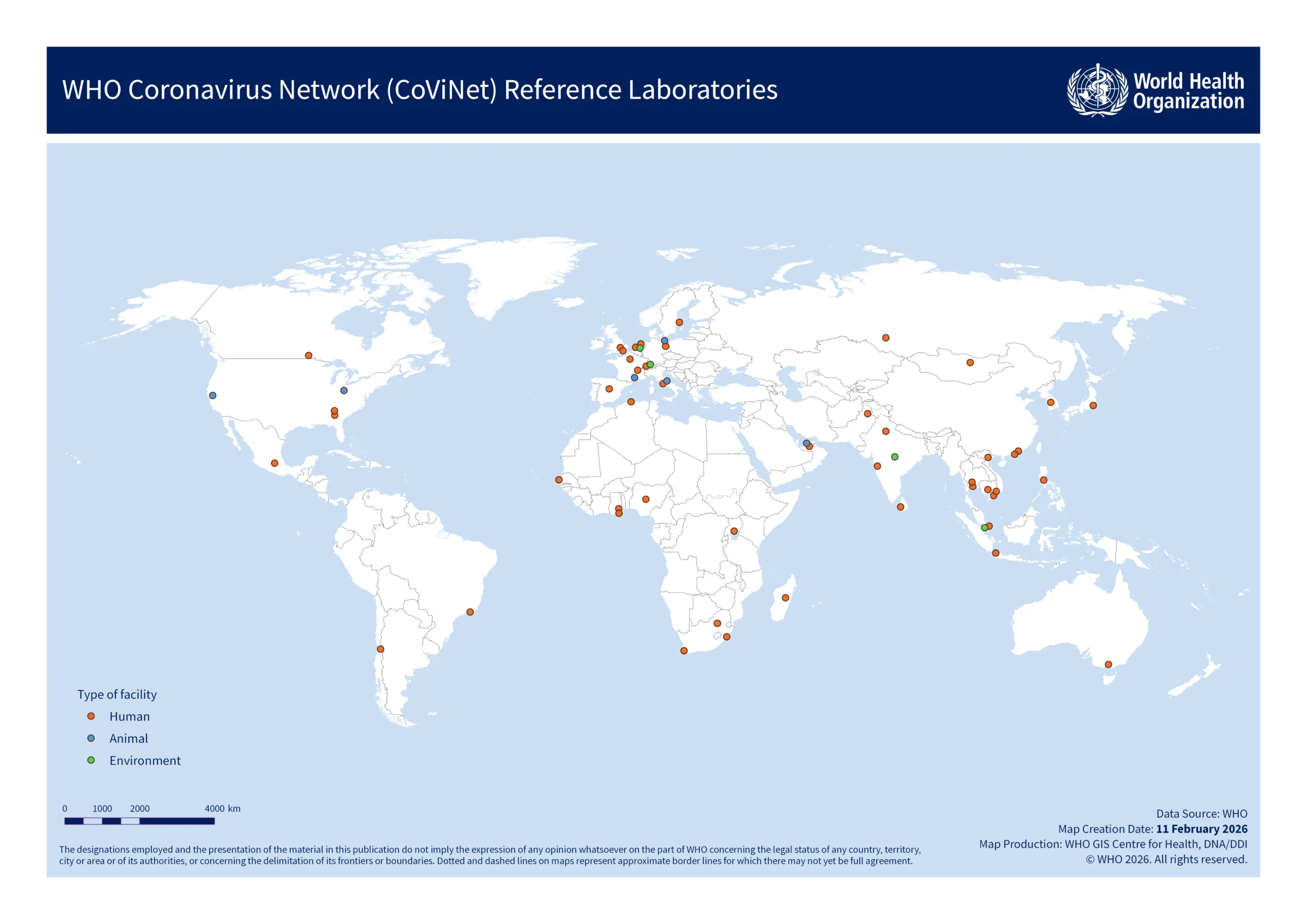
    The network builds on WHO COVID-19 reference laboratory network established at the start of the pandemic, expanding its scope to include a broader range of coronaviruses through a One Health approach that integrates human, animal and environmental health. It currently includes 58 reference laboratories across 35 countries.

    WHO Coronavirus Network (CoViNet) reference laboratories. Image: WHO (2026).

    In March 2026, the research laboratory of OUCRU and HTD was appointed by WHO as a reference laboratory for coronaviruses. As a member of the network, the team will continue to work closely with WHO and global partners to strengthen surveillance, laboratory capacity and coordinated responses to coronavirus threats. This appointment recognises OUCRU and HTD’s established expertise in infectious diseases and their strong research capacity.

    Dr Nguyá»…n Thành DÅ©ng, director of HTD, said: ‘The long-term partnership between HTD and OUCRU, together with our experience in responding to emerging infectious diseases, places us in a strong position to contribute to CoViNet. Through this network, we will further strengthen our laboratory capacity to detect and respond to future coronavirus threats.’

    Professor Kevin Baird, interim director of OUCRU, commented: ‘We appreciate and acknowledge the global leadership of the WHO in critical infections surveillance operations, of which CoViNet is a fine example. Together with our colleagues at HTD, we look forward to working with WHO and its many partners in the very important and global task of surveilling natural coronaviruses. The relationship not only serves human global health, it also serves to sustain the very high bar of technical excellence for the useful science emanating from it.’

    Professor Lê Văn Tấn, head of the Emerging Infections Research Group at OUCRU and principal investigator of SEACOVARIANTS, added: ‘Through the Wellcome-funded SEACOVARIANTS platform, we have established a regional platform for genomic surveillance and assessment of immune response to a wide range of emerging pathogens, including SARS-CoV-2, avian influenza A viruses, mpox and enterovirus A71. Joining CoViNet allows us to build on this work and contribute to strengthened epidemic preparedness and response.’

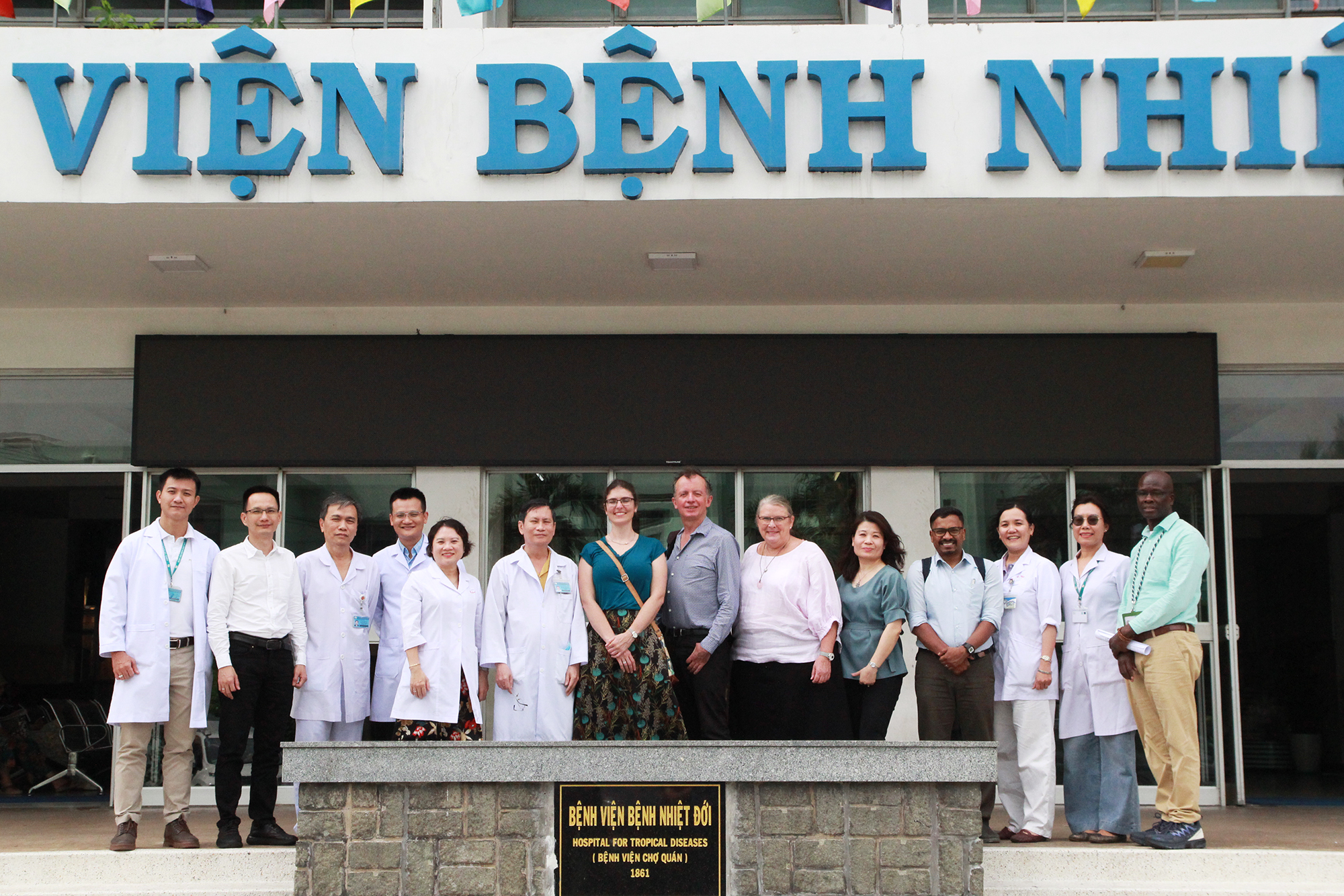
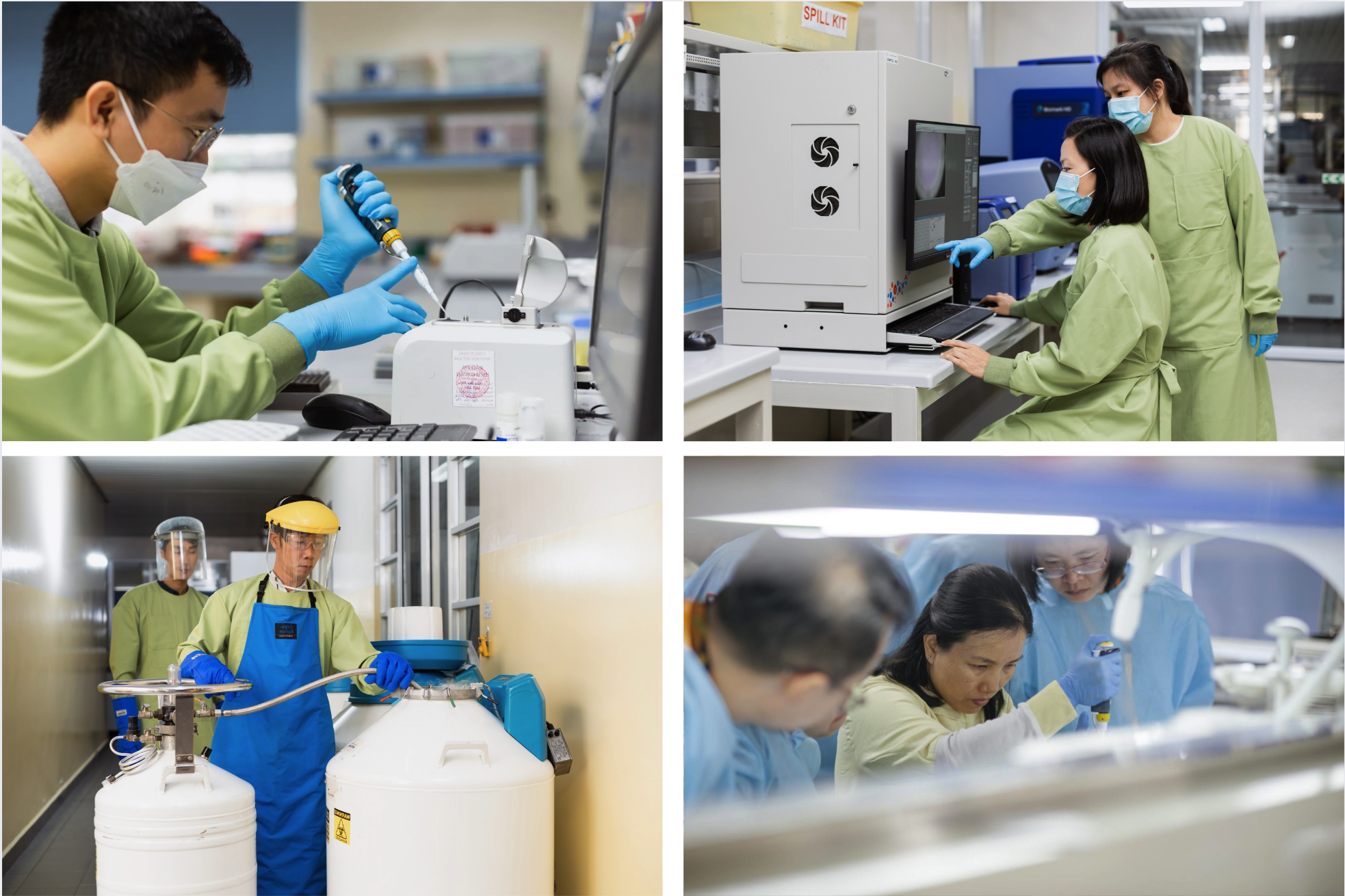
    The laboratory of OUCRU and HTD in Ho Chi Minh City, Vietnam. Photo: Sang Nguyen/OUCRU (2023).

    Dr Sangjun Moon, team coordinator, Health Security and Emergencies, WHO Vietnam asserted: ‘The appointment of OUCRU and HTD as a CoViNet reference laboratory enhances Vietnam’s contribution to global coronavirus surveillance.

    ‘Together with NIHE and PIHCMC, the three reference laboratories can support national preparedness and regional response, building on OUCRU’s recent contributions to genomic surveillance and variant characterisation. CoViNet enables faster information-sharing and more coordinated public health action.’

    Membership of CoViNet will strengthen collaboration across Vietnam and South-East Asia, as well as deepen partnerships with WHO and global research networks. It reflects a shared commitment to coordinated, cross-border public health action.

    OUCRU and HTD look forward to contributing to collective efforts to monitor, understand and respond to future public health threats.

  • Họp mạng lưới các bệnh viện triển khai chương trình Quản lý sá»­ dụng kháng sinh tại tỉnh Đồng Tháp tháng 03/2026

    Họp mạng lưới các bệnh viện triển khai chương trình Quản lý sử dụng kháng sinh tại tỉnh Đồng Tháp tháng 03/2026

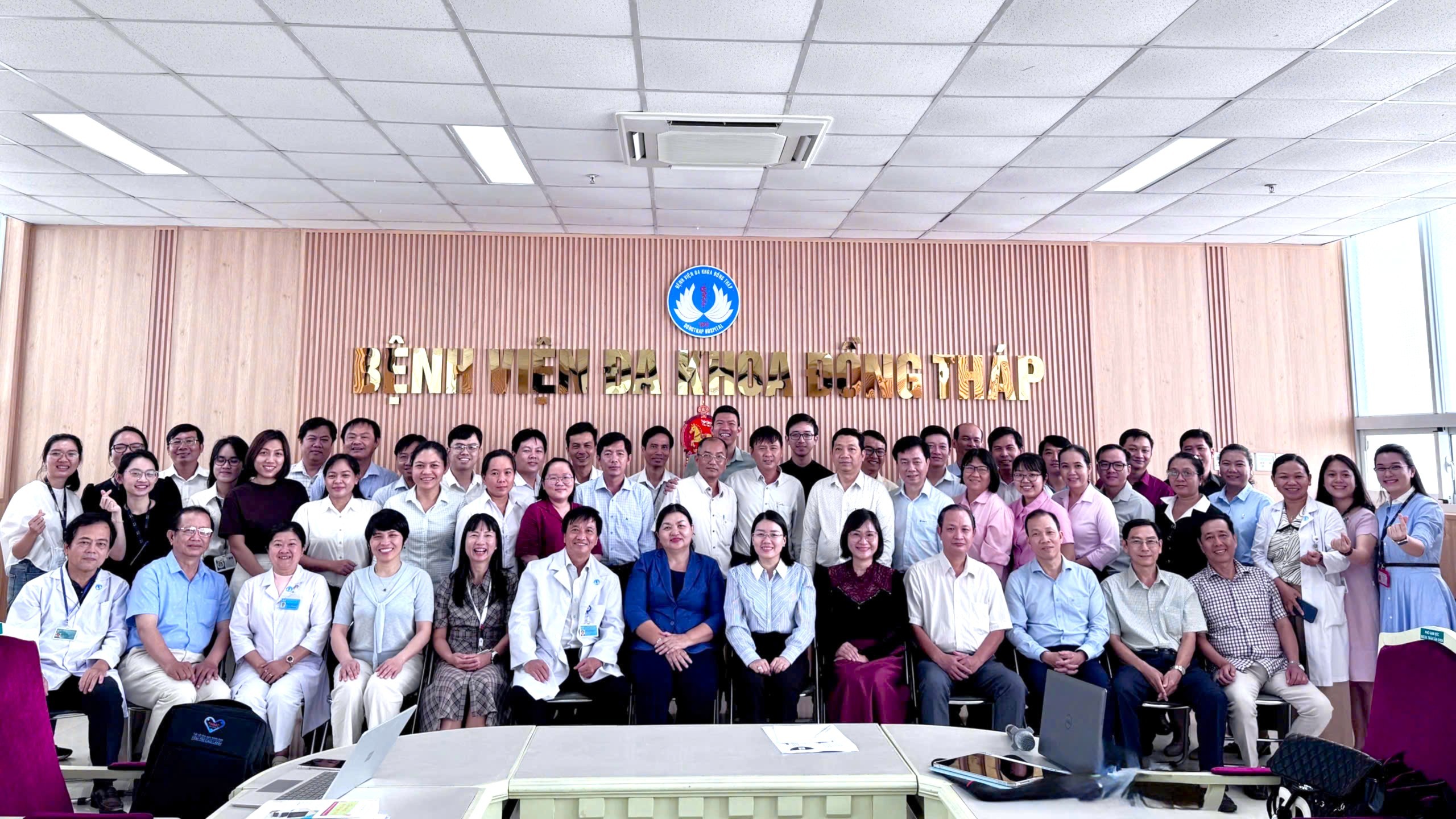
    Ngày 05/03/2026, dưới sự điều phối của Sở Y tế tỉnh Đồng Tháp, cuộc họp mạng lưới các bệnh viện đã được tổ chức tại hội trường Bệnh viện Đa khoa (BVĐK) Đồng Tháp với sự tham gia của sáu bệnh viện gồm BVĐK Đồng Tháp, BVĐK Sa Đéc, BVĐK khu vực Tháp Mười và Trung tâm y tế (TTYT) khu vực Cao Lãnh 2, TTYT khu vực Thanh Bình và TTYTkhu vực Lấp Vò. Cuộc họp được tổ chức với mục tiêu chia sẻ tiến độ hoạt động giữa các đơn vị, thảo luận những thách thức hiện gặp và đề xuất các giải pháp nâng cao hiệu quả thực hành sử dụng kháng sinh trong toàn tỉnh. Ngoài ra, đại diện VNPT Đồng Tháp cũng tham dự để cùng trao đổi về khả năng phối hợp trong công tác ứng dụng dữ liệu và công nghệ thông tin tại các cơ sở y tế. Cuộc họp đóng vai trò như một diễn đàn kết nối, giúp các bệnh viện trong mạng lưới nắm bắt tình hình chung về triển khai Quản lý sử dụng kháng sinh, học hỏi kinh nghiệm quản lý tổ chức và thống nhất những định hướng quan trọng về việc sử dụng các công cụ hỗ trợ hiển thị dữ liệu thường quy giúp định hướng quản trị dựa trên dữ liệu và nâng cấp củng cố các dữ liệu vi sinh cho giai đoạn tiếp theo.

    <a href="
    Ảnh 1: các bệnh viện tại Đồng Tháp tại cuộc họp mạng lưới tháng 03/2026 (Nguồn: OUCRU)

    Trong báo cáo mở đầu, đại diện Sở Y tế trình bày tổng quan hoạt động của mạng lưới các đơn vị triển khai chương trình quản lý sử dụng kháng sinh trong giai đoạn 03/2025 – 02/2026, bao gồm các hoạt động cốt lõi của chương trình như tập huấn nâng cao năng lực, thực hiện giám sát – phản hồi, tăng cường chương trình kiểm soát nhiễm khuẩn, xây dựng quy trình/hướng dẫn về sử dụng kháng sinh và hoàn thiện báo cáo tiêu thụ kháng sinh. Bài trình bày cũng điểm lại các cột mốc triển khai chính của nghiên cứu 60HN – ASPARNet từ năm 2024 đến 2026, cho thấy lộ trình triển khai rõ ràng và liên tục được đánh giá, điều chỉnh.

    Sở Y tế cũng nhấn mạnh nhu cầu tiếp tục hỗ trợ kỹ thuật, chuẩn hóa quy trình và hoàn thiện báo cáo tiêu thụ kháng sinh của mỗi đơn vị để nâng cao hiệu quả quản lý sử dụng kháng sinh trên toàn tỉnh.

    Trong phần chia sẻ của đơn vị, TTYT khu vực Cao Lãnh 2 – đơn vị đi đầu trong quý về các hoạt động quản lý sử dụng kháng sinh đã có các báo cáo tổng kết, chia sẻ kinh nghiệm và phân tích các điểm mạnh, yếu, thuận lợi, thách thức gặp phải trong quá trình triển khai. Đơn vị đã tiên phong tổ chức 03 lớp tập huấn kiểm soát nhiễm khuẩn vào cuối tháng 01/2026 cho nhân viên y tế và nhân viên vệ sinh, giúp củng cố kiến thức về phòng ngừa nhiễm khuẩn và sử dụng kháng sinh an toàn trong chăm sóc người bệnh. Bên cạnh đó, đơn vị cũng hoàn thiện báo cáo tiêu thụ kháng sinh cho giai đoạn 2023–2024. Những số liệu này đang được sử dụng để hỗ trợ lãnh đạo theo dõi và đưa ra chỉ đạo kịp thời. Việc xây dựng báo cáo tiêu thụ kháng sinh và triển khai tập huấn kiểm soát nhiễm khuẩn đã góp phần quan trọng trong việc nâng cao nhận thức, chuẩn hóa thực hành và cải thiện công tác quản lý sử dụng kháng sinh tại đơn vị.

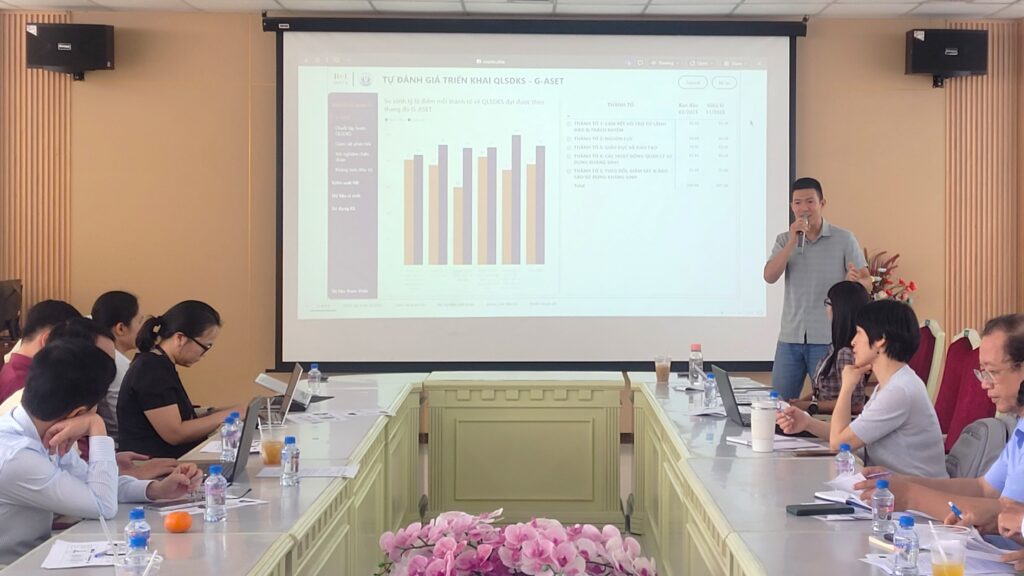
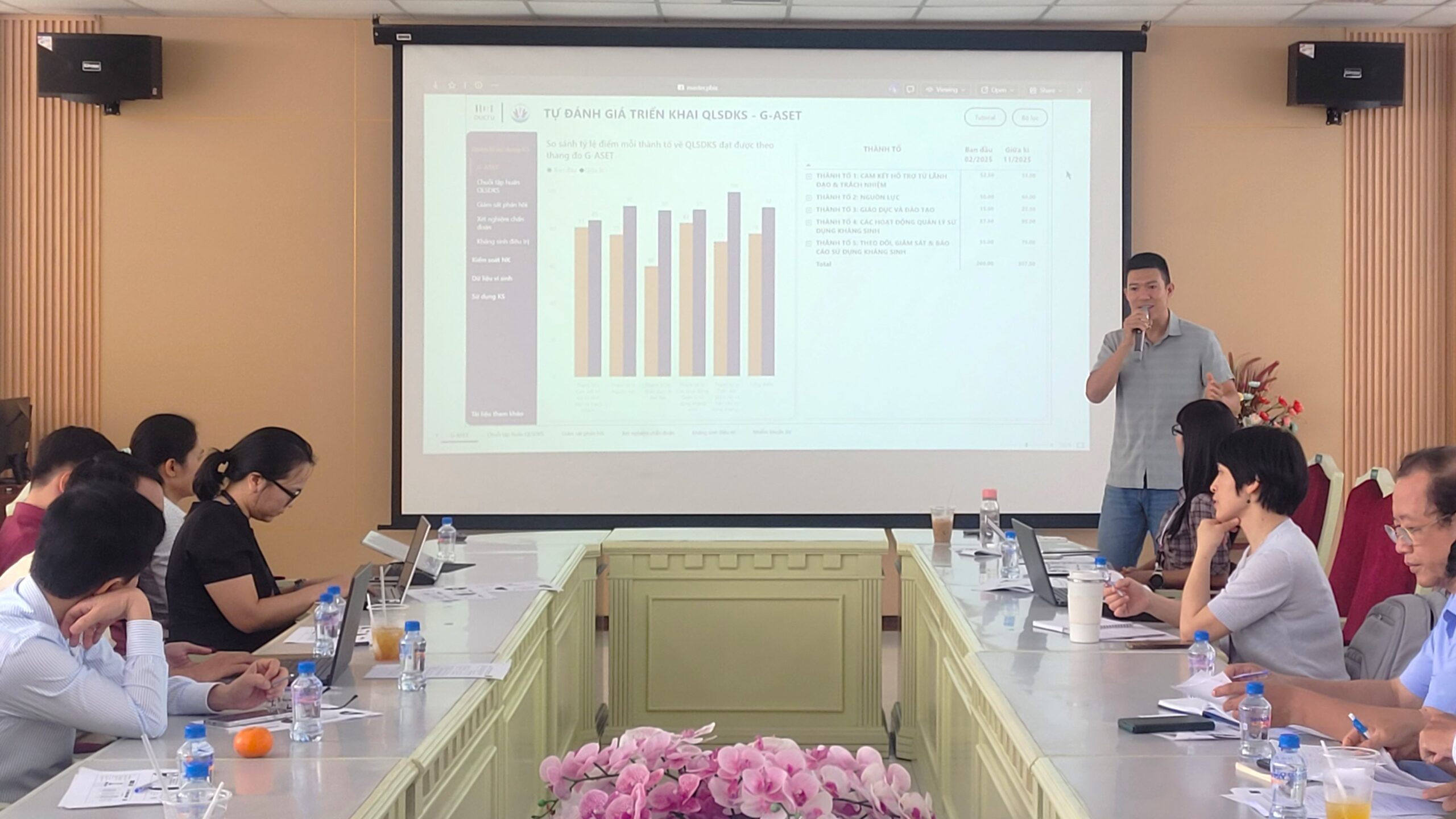
    Tiếp theo, OUCRU giới thiệu sơ bộ về nền tảng tích hợp dữ liệu hỗ trợ quản lý sử dụng kháng sinh (iSHARP), một mô hình kết nối các nguồn thông tin khác nhau (dữ liệu bệnh viện, các khảo sát,…) nhằm trực quan hóa các chỉ số, quy trình và hướng dẫn liên quan đến quản lý sử dụng kháng sinh và kiểm soát nhiễm khuẩn. Nền tảng hướng tới việc hỗ trợ các bệnh viện và Sở Y tế theo dõi dữ liệu một cách tập trung, thuận tiện và nhất quán hơn. Mô hình này được kỳ vọng sẽ trở thành công cụ hỗ trợ thiết thực cho công tác quản lý, giám sát và ra quyết định trong thời gian tới. Bài trình bày cũng nêu định hướng thí điểm cùng những gợi ý ban đầu về cơ chế phối hợp giữa các bộ phận kỹ thuật và đơn vị cung cấp hệ thống thông tin y tế. Đây được xem là bước khởi đầu quan trọng cho việc xem xét và phát triển một mô hình dữ liệu tích hợp trong tương lai.

    <a href="
    Ảnh 2: OUCRU giới thiệu nền tảng tích hợp, trực quan hoá dữ liệu bệnh viện (Nguồn: OUCRU)

    Sau phần giới thiệu của OUCRU, đại diện VNPT Đồng Tháp, đơn vị cung cấp hệ thống thông tin y tế tại địa phương, đã cùng các bệnh viện thảo luận về tính khả thi của việc tích hợp và khai thác hiệu quả các nguồn dữ liệu hiện có. Cuộc trao đổi tập trung vào khả năng kết nối giữa các nguồn dữ liệu, các yêu cầu kỹ thuật cần thiết và cách phối hợp giữa các bên để hướng tới một mô hình trực quan hóa chỉ số phù hợp với nhu cầu của toàn mạng lưới.

    Trong phiên làm việc buổi chiều, các đại biểu được chia nhóm để thảo luận về phương án triển khai chương trình QLSDKS trong thời gian tới, cũng như định hướng tích hợp các hoạt động này vào thực hành thường quy. Các nhóm làm việc theo các chủ đề gồm: (1) xây dựng công cụ hỗ trợ QLSDKS dựa trên bằng chứng và dữ liệu; (2) củng cố và duy trì hoạt động của Ban QLSDKS; (3) triển khai chương trình kiểm soát nhiễm khuẩn; và (4) nâng cao năng lực vi sinh nhằm góp phần kiểm soát kháng kháng sinh. Hoạt động được kì vọng sẽ giúp duy trì lâu dài các hoạt động QLSDKS kể cả sau khi kết thúc nghiên cứu.

    Kết thúc cuộc họp, Sở Y tế Đồng Tháp ghi nhận những nỗ lực và kết quả hoạt động của các đơn vị trong mạng lưới, đồng thời ban hành văn bản chỉ đạo nhằm thống nhất định hướng phối hợp trong giai đoạn tiếp theo. Sở nhấn mạnh tầm quan trọng của việc duy trì các hoạt động quản lý sử dụng kháng sinh một cách thường xuyên, đồng bộ và có hệ thống. Bên cạnh đó, các đơn vị được khuyến khích tăng cường chia sẻ kinh nghiệm, phối hợp chặt chẽ trong triển khai và chủ động đề xuất nhu cầu hỗ trợ để nâng cao chất lượng điều trị cho người bệnh trên toàn tỉnh.

    Tìm hiểu thêm về iSHARP tại bài viết này.

  • Network meeting of hospitals implementing the Antimicrobial Stewardship programme in Dong Thap in March 2026  

    Network meeting of hospitals implementing the Antimicrobial Stewardship programme in Dong Thap in March 2026  

    On March 05, 2026, under the coordination of the Dong Thap Department of Health (DoH), the network meeting was held with the participation of six network hospitals: Dong Thap General Hospital, Sa Dec General Hospital, Thap Muoi General Hospital, Cao Lanh 2 Health Center, Thanh Binh Health Center, and Lap Vo Health Center. The meeting provided an opportunity for participants to share progress, discuss current challenges, and propose solutions to enhance the effectiveness of antibiotic use practices across the province. Representatives from VNPT Dong Thap also attended to discuss opportunities for collaboration in applying data and information technology within healthcare facilities. The meeting served as a platform for connection, enabling hospitals in the network to gain an overview of the current antimicrobial stewardship (AMS) implementation situation, learn from one another in terms of organizational management practices, and align on key priorities for integrating routine data visualization tools to support data-driven decision-making and to strengthen and enhance microbiology data systems for the next phase.

    Photo 1: hospitals in the network meeting in Dong Thap in March 2026 (Source: OUCRU)

    In the opening report, the DoH presented an overview of network hospitals implementing the Antimicrobial Stewardship (AMS) programme activities from March 2025 to February 2026, including core AMS activities such as capacity‑building trainings, implementation of audit and feedback, strengthened infection prevention and control (IPC), development of antibiotic‑related guidelines and procedures, and completion of antibiotic consumption reports. The presentation also reviewed the major implementation milestones of the 60HN – ASPARNet project from 2024 to 2026, highlighting a clear and continuously evaluated implementation pathway.

    The DoH emphasized the need for ongoing technical support, process standardization, and completion of antibiotic consumption reports at each unit to improve antibiotic stewardship across the province.

    During the site sharing session, Cao Lanh 2 Health Center – one of the leading units in the quarter for implementing AMS activities – presented summary reports, shared experiences, and analyzed the strengths, weaknesses, facilitators, and challenges encountered during implementation. They reported organizing three IPC training sessions in late January 2026 for healthcare workers and cleaning staff, helping strengthen knowledge on infection prevention and safe antibiotic use. The hospital also completed its antibiotic consumption report for 2023–2024, which is now being used to support leadership decision‑making. These activities contributed meaningfully to raising awareness, standardizing practices, and improving antibiotic stewardship efforts at the facility.

    During the next session, OUCRU introduced the Integrated Stewardship in Hospitals for Antimicrobial Resistance Control Platform (iSHARP), a model designed to connect different information sources (hospital data, surveys, etc.) and visualize key indicators related to antibiotic stewardship and infection prevention and control. The model aims to help hospitals in the network and the DoH monitor data more conveniently, consistently, and in a centralized manner. This model is expected to become a practical tool supporting management, monitoring, and decision‑making in the coming period. The presentation also outlined initial directions for piloting the system and suggestions for coordination between technical teams and information system providers. This was regarded as an important first step toward exploring and developing an integrated data model in the future.

    Photo 2: OUCRU introduced iSHARP (Soucre: OUCRU)

    Following OUCRU’s introduction, representatives from VNPT Dong Thap, the local health information system provider, engaged in discussions with hospitals on the feasibility of integrating and effectively utilizing existing data sources. The discussion focused on system connectivity, technical requirements, and coordination mechanisms needed to develop a visualization model suitable for the entire network.

    During the afternoon session, participants were divided into groups to discuss strategies for the future implementation of antimicrobial stewardship (AMS) programmes, as well as approaches to integrating these activities into routine practice. The group discussions were organized around key themes: (1) developing evidence- and data-driven tools to support AMS; (2) strengthening and sustaining AMS committees; (3) implementing infection prevention and control (IPC) programmes; and (4) enhancing microbiology capacity to support antimicrobial resistance (AMR) control. These activities are expected to support the long-term sustainability of AMS implementation, including beyond the duration of the study.

    At the end of the meeting, the Dong Thap DoH acknowledged the efforts and achievements of the network units and issued a directive to ensure a unified approach for the next phase. The Department emphasized the importance of maintaining antibiotic stewardship activities regularly, systematically, and consistently. Units were also encouraged to continue sharing experiences, strengthening collaboration, and proactively identifying support needs to improve patient care quality across the province.

    Learn more about iSHARP here.

  • Lồng ghép các hoạt động Kiểm soát nhiá»…m khuẩn trong chương trình quản lý sá»­ dụng kháng sinh – nghiên cứu 60HN ASPARNet

    Lồng ghép các hoạt động Kiểm soát nhiá»…m khuẩn trong chương trình quản lý sá»­ dụng kháng sinh – nghiên cứu 60HN ASPARNet

    Bối cảnh
    Kiểm soát nhiễm khuẩn (KSNK) và Quản lý sử dụng kháng sinh (QLSDKS) là hai trụ cột quan trọng trong nỗ lực nâng cao an toàn người bệnh và kiểm soátkháng kháng sinh tại các cơ sở y tế. Các hoạt động KSNK đã từng bước được lồng ghép vào chương trình QLSDKS không chỉ giúp giảm nguy cơ nhiễm khuẩn bệnh viện mà còn góp phần thúc đẩy sử dụng kháng sinh hợp lý, từ đó hạn chế sự xuất hiện và lan truyền của vi khuẩn kháng thuốc tại các cơ sở y tế.


    Các hoạt động chính
    Với sự hỗ trợ của chuyên gia KSNK từ bệnh viện Bệnh Nhiệt đới Trung ương nhiều hoạt động đã được triển khai nhằm lồng ghép KSNK vào chương trình QLSDKS tại các bệnh viện tham gia nghiên cứu trong mạng lưới các đơn vị triển khai chương trình QLSDKS
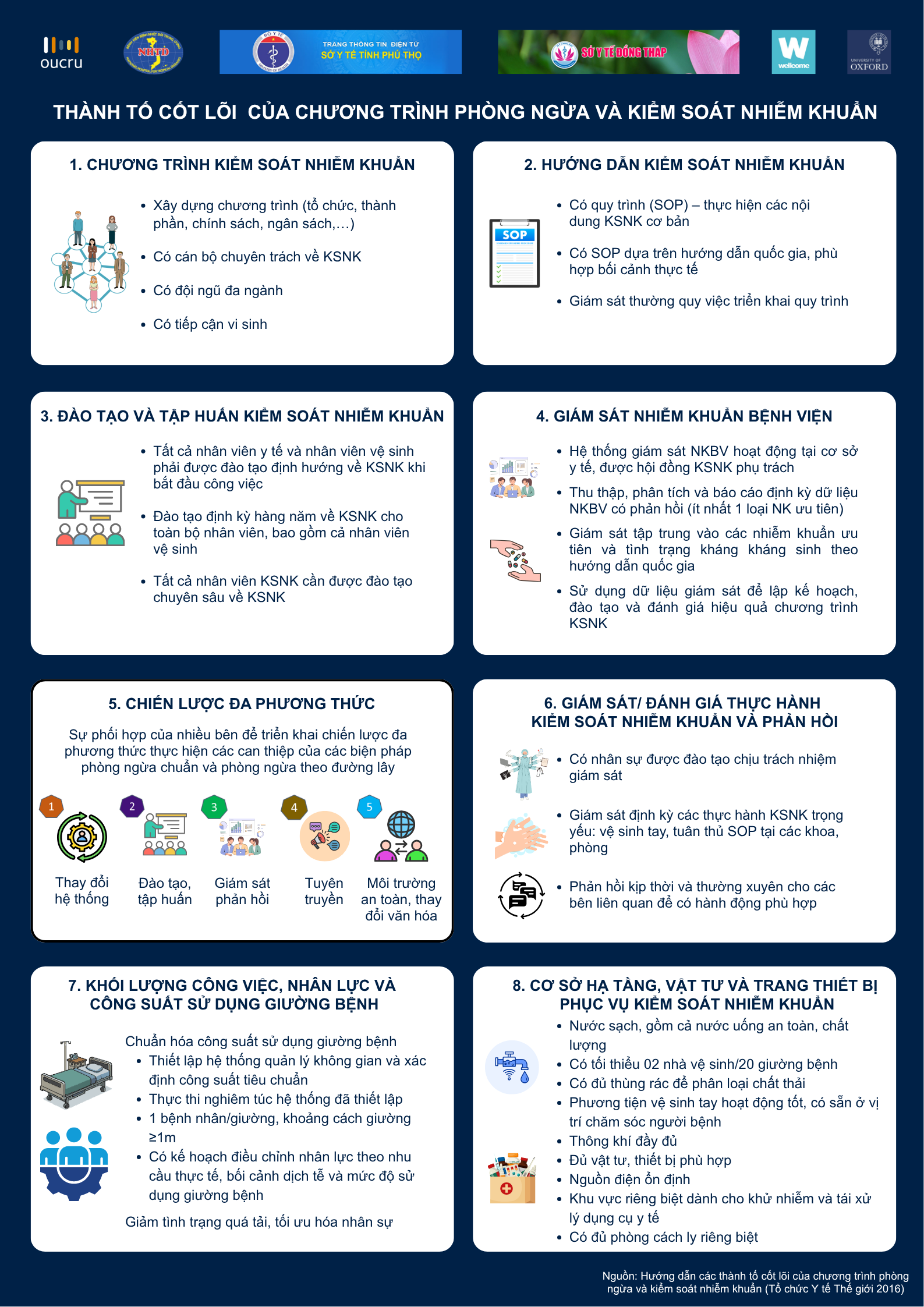
    Trước hết, chương trình KSNK tại mười hai cơ sở y tế đã được đánh giá bằng khung đánh giá chương trình kiểm soát nhiễm khuẩn của Tổ chức Y tế Thế giới (WHO) – Infection Prevention and Control Assessment Framework (IPCAF). Việc đánh giá này giúp các đơn vị xem xét các hoạt động của chương trình KSNK của đơn vị theo 8 thành tố cốt lõi, bao gồm chương trình KSNK, hướng dẫn KSNK, đào tạo và tập huấn, giám sát nhiễm khuẩn bệnh viện (NKBV), chiến lược đa phương thức, hệ thống giám sát phản hồi, nhân lực vật tư trang thiết bị và cơ sở vật chất.
    Dựa trên kết quả đánh giá, các buổi trao đổi chuyên môn đã được tổ chức với từng cơ sở y tế để rà soát chương trình KSNK của đơn vị theo khung IPCAF. Các buổi trao đổi này tạo cơ hội cho bệnh viện xác định những điểm mạnh, những khoảng trống cũng như các lĩnh vực ưu tiên cần cải thiện trong việc triển khai chương trình KSNK.
    Một nội dung được nhấn mạnh là giám sát NKBV và giám sát tuân thủ các thực hành KSNK, đây là những thành phần quan trọng của một chương trình KSNK hiệu quả. Các bệnh viện được khuyến khích tăng cường hệ thống giám sát và thường xuyên theo dõi việc tuân thủ các biện pháp phòng ngừa nhiễm khuẩn của nhân viên y tế.
    Để hỗ trợ việc giám sát một cách thống nhất giữa các cơ sở y tế, các quy trình chuẩn (SOPs) về giám sát tuân thủ thực hành KSNK đã được xây dựng với sự hỗ trợ từu các chuyên gia KSNK của bệnh viện Bệnh Nhiệt đới Trung ương. Các SOP này cung cấp hướng dẫn rõ ràng để các bệnh viện có thể thực hiện quan sát và đánh giá thực hành phòng ngừa nhiễm khuẩn một cách hệ thống

    Ảnh 1: Poster truyền thông về các thành tố cốt lõi cá»§a chương trình KSNK (Xây dá»±ng bởi OUCRU dá»±a trên Hướng dẫn các thành tố cốt lõi cá»§a chương trình KSNK – WHO)

    Bên cạnh đó, các poster truyền thông về NKBV cũng đã được xây dựng, nhấn mạnh các biện pháp phòng ngừa quan trọng trước và trong phẫu thuật. Các tài liệu này nhằm hỗ trợ nhân viên y tế áp dụng các thực hành dựa trên bằng chứng và nâng cao nhận thức về phòng ngừa nhiễm khuẩn vết mổ trong môi trường phẫu thuật.

    Kết quả và tác động

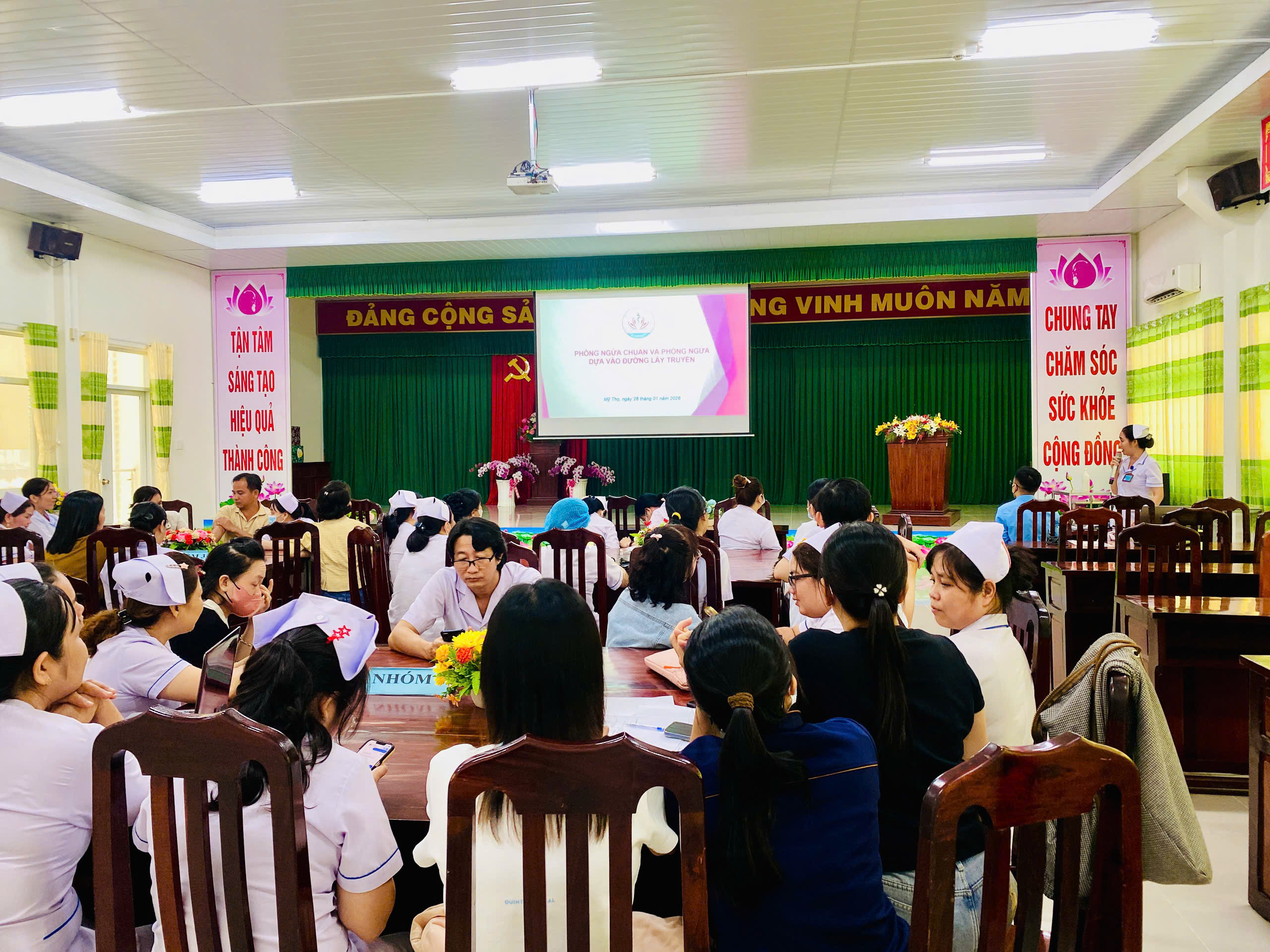
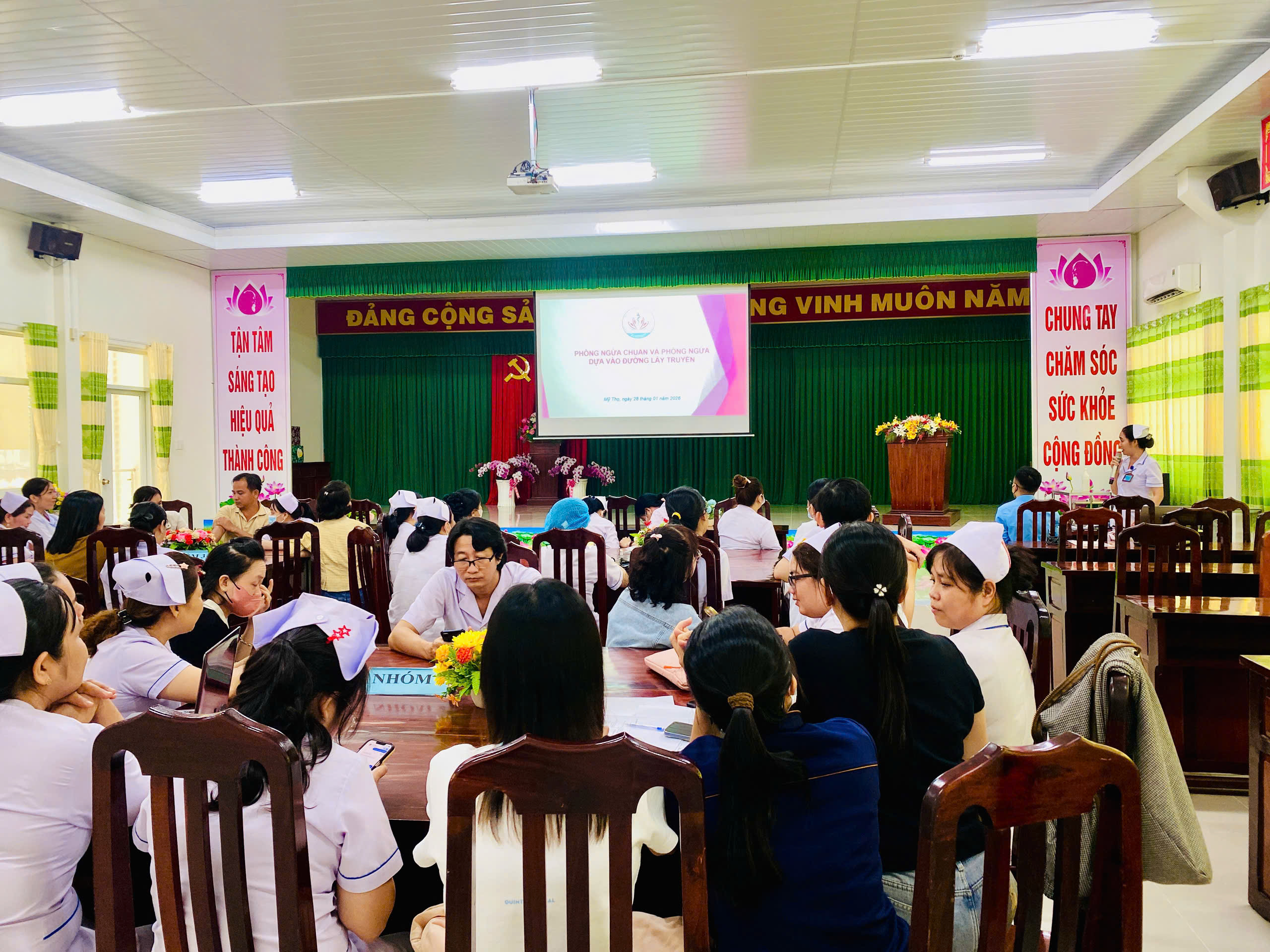
    Thông qua các hoạt động này, các đơn vịtham gia đã nâng cao hiểu biết về yêu cầu của chương trình KSNK theo khung IPCAF và xác định được những lĩnh vực cụ thể cần cải thiện. Đặc biệt, các đơn vị đã tích cực triển khai các hoạt động đào tạo và tập huấn liên tục về KSNK cho nhân viên y tế, bao gồm cả đào tạo cơ bản và cập nhật kiến thức chuyên sâu về các thực hành phòng ngừa nhiễm khuẩn, giám sát nhiễm khuẩn bệnh viện và sử dụng kháng sinh hợp lý. Các chương trình đào tạo này góp phần củng cố năng lực chuyên môn, nâng cao nhận thức và thay đổi hành vi tuân thủ thực hành KSNK trong toàn bệnh viện.

    Ảnh 2: Triển khai đào tạo và tập huấn KSNK tại đơn vị (Nguồn: Đơn vị cung cấp)

    Bên cạnh đó, việc xây dựng các quy trình giám sát chuẩn hóa, công cụ đánh giá và tài liệu truyền thông đã góp phần thúc đẩy việc triển khai các thực hành KSNK một cách thống nhất và có hệ thống hơn tại các cơ sở y tế trong Đồng Tháp. Các hoạt động này không chỉ hỗ trợ cải thiện chất lượng giám sát và phản hồi mà còn tạo nền tảng cho việc tích hợp hiệu quả giữa KSNK và quản lý sử dụng kháng sinh, hướng tới nâng cao chất lượng chăm sóc và an toàn người bệnh.

    Bước tiếp theo

    Trong thời gian tới, các bệnh viện sẽ tiếp tục tăng cường triển khai công tác KSNK bằng cách cải thiện hệ thống giám sát NKBV, tăng cường giám sát tuân thủ các thực hành phòng ngừa nhiễm khuẩn và thường xuyên rà soát hoạt động của chương trình KSNK dựa trên kết quả đánh giá IPCAF.

    Nhóm nghiên cứu 60HN sẽ tiếp tục hỗ trợ kỹ thuật trong việc phát triển và triển khai các công cụ giám sát điện tử, bao gồm các biểu mẫu báo cáo tự động cho giám sát NKBV và giám sát tuân thủ các quy trình KSBK và báo cáo đánh giá kết quả đánh giá các hoạt động KSNK của đơn vị theo IPCAF.
    Các công cụ này nhằm giúp các cơ sở y tế chuẩn hóa việc báo cáo, nâng cao chất lượng dữ liệu và cung cấp phản hồi kịp thời cho các hoạt động cải tiến chất lượng và phòng ngừa nhiễm khuẩn.

  • Integration of Infection Prevention and Control into the Antimicrobial Stewardship Programme – 60HN ASPARNet

    Integration of Infection Prevention and Control into the Antimicrobial Stewardship Programme – 60HN ASPARNet

    Background
    Infection Prevention and Control (IPC) and Antimicrobial Stewardship (AMS) are two key pillars in efforts to enhance patient safety and tackle antimicrobial resistance in healthcare facilities. IPC activities have been progressively integrated into the AMS programme, helping not only to reduce the risk of healthcare-associated infections but also to promote the rational use of antibiotics, thereby limiting the emergence and spread of antimicrobial-resistant organisms within healthcare setting.


    Key Activities
    With technical support from IPC experts from the National Hospital for Tropical Diseases, multiple activities were implemented to integrate IPC into the AMS programme across hospitals implementing the Antimicrobial Stewardship network.
    IPC programmes at twelve healthcare facilities were assessed using the WHO Infection Prevention and Control Assessment Framework (IPCAF). This assessment enables facility to review the implementation of their IPC programmes across the eight core components, including the IPC programme, IPC guidelines, education and training, healthcare-associated infection surveillance, multimodal strategies, monitoring and feedback systems, human resources and equipment, and the built environment and infrastructure. 
    Based on the assessment results, technical discussions were conducted with each facility to review their IPC programme according to the IPCAF framework. These discussions provided an opportunity for hospital’s IPC teams to identify strengths, gaps, and priority areas for improvement in their IPC implementation.
    A strong emphasis was placed on healthcare-associated infection (HAI) surveillance and monitoring compliance with IPC practices, which are critical components of an effective IPC programme. Hospitals were encouraged to strengthen their surveillance systems and regularly monitor adherence to key infection prevention measures among healthcare workers.
    To support standardized monitoring across facilities, standard operating procedures (SOPs) for monitoring compliance with IPC practices were developed with technical support from IPC experts from National Hospital for Tropical Diseases. These SOPs provide clear guidance on how hospitals can systematically conduct observation and assessment of infection prevention practices.

    Photo 1: Poster on the core components of the IPC programme (Developed by OUCRU based on WHO Guidelines on the Core Components of IPC Programmes)

    In addition, educational posters on IPC were developed, highlighting key preventive measures before and during surgical procedures. These materials are intended to support healthcare workers in implementing evidence-based practices and raising awareness about SSI prevention in surgical settings.

    Results and Impact

    Through these activities, participating facilities enhanced their understanding of the requirements of IPC programmes based on the IPCAF framework and were able to identify specific areas requiring improvement. Notably, healthcare facilities actively implemented training and capacity-building activities on IPC for healthcare workers, including both foundational training and advanced updates on infection prevention practices, healthcare-associated infection surveillance, and rational antimicrobial use. These training initiatives contributed to strengthening professional competencies, improving awareness, and promoting behavioral change in adherence to IPC practices across hospitals.

    Photo 2: Implementation of IPC training and capacity-building activities at the facility (Source: Provided by the facility)

    In addition, the development of standardized surveillance procedures, assessment tools, and communication materials facilitated more consistent and systematic implementation of IPC practices across healthcare facilities in Dong Thap. These efforts not only improved the quality of monitoring and feedback mechanisms but also established a foundation for more effective integration between IPC and antimicrobial stewardship programmes, ultimately contributing to improved quality of care and patient safety.

    Next steps

    In the coming period, hospitals will continue to strengthen IPC implementation by improving HAI surveillance systems, enhancing monitoring of compliance with infection prevention practices, and regularly reviewing IPC programme activities based on IPCAF assessment results.

    The 60HN research team will continue to provide technical support for the development and implementation of electronic surveillance tools, including automated reporting forms for HAI surveillance, monitoring compliance with IPC practices, and generating reports to assess facility IPC activities based on IPCAF.These tools aim to support healthcare facilities in standardizing reporting processes, improving data quality, and providing timely feedback to inform quality improvement and infection prevention efforts.