Author: Hưng Vũ

  • Strengthening Vaccine Communication Capacity: OUCRU and NIHE Deliver Training of Trainers Programme for National Vaccine Trainers 

    The course brought together 10 participants from NIHE’s Northern Expanded Programme on Immunization (EPI) Office and the Health Information & Communication Unit, many of whom currently serve as trainers for provincial vaccination staff. Participants represented a highly experienced group, with extensive backgrounds in public health and immunisationprogrammes.

    The training was facilitated by Nguyen Hong Nga (Senior Public and Community Engagement Coordinator, OUCRU Hanoi) and Nguyen Quoc Giang (Senior Public and Community Engagement Coordinator, OUCRU Ho Chi Minh City).

    Building practical skills for vaccine communication

    The original vaccine communication package was designed as a five-day programme. To accommodate participants’ schedules while maintaining core learning outcomes, the agenda was adapted into an intensive two-day format covering all five modules. The training team also reorganised the learning flow by introducing Local Context Analysis at the beginning of the course, helping participants better connect communication strategies with real-world vaccine challenges in communities.

    The training covered topics including:

    • Building trust with caregivers and communities
    • Persuasive communication techniques
    • Verbal and non-verbal communication skills
    • Understanding local contexts and vaccine hesitancy drivers
    • Vaccine knowledge and addressing misinformation
    • Adult learning principles and facilitation skills for trainers
    • Micro-teaching practice to prepare participants for delivering future courses

    Interactive methods such as role-play, reflection exercises, group discussions, debates, and micro-teaching sessions were integrated throughout the programme to encourage active learning and peer exchange.
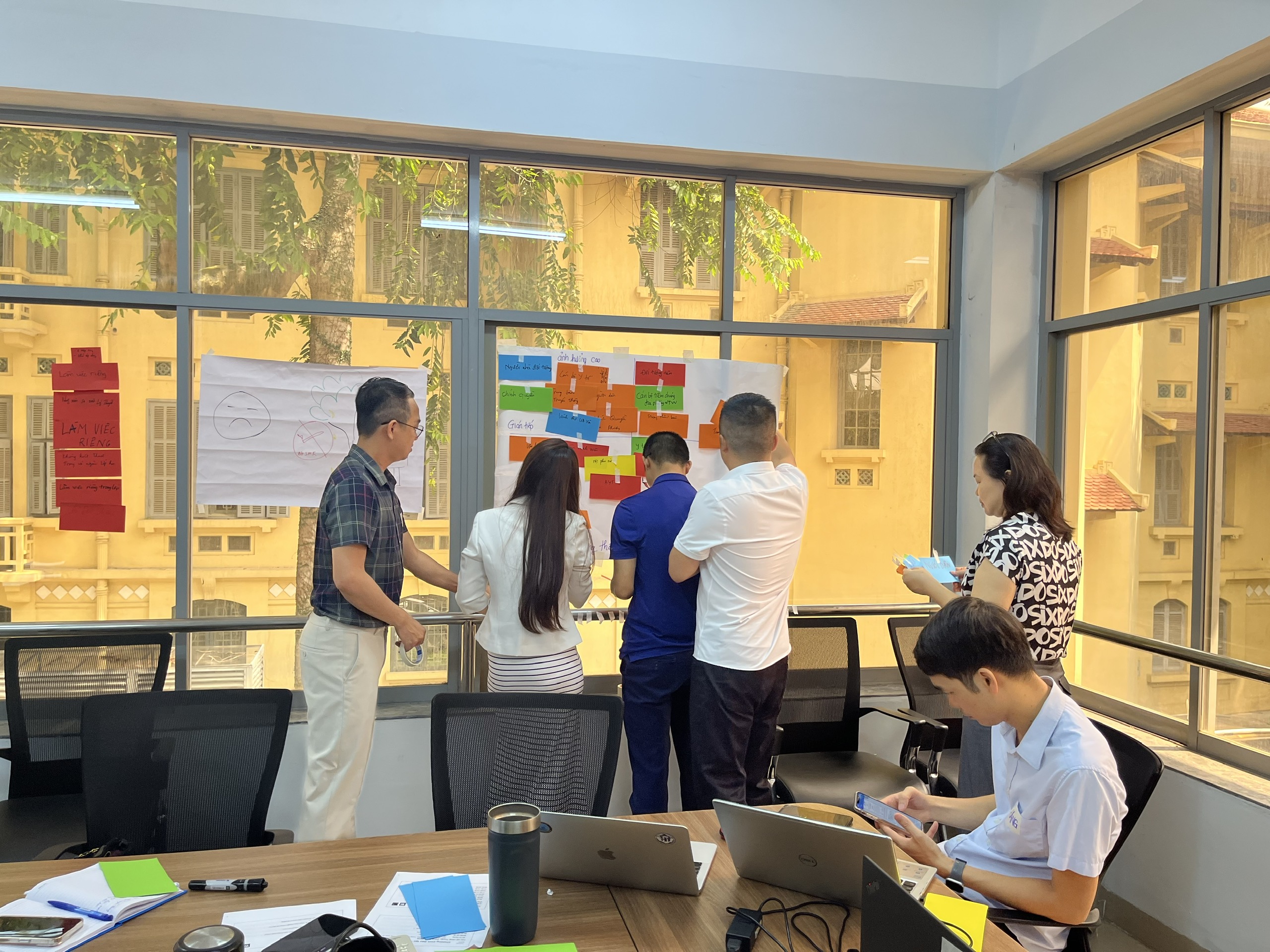
    Participants joining Group Discussion. Image: OUCRU

    Strong engagement and positive participant feedback

    Participants showed high levels of enthusiasm and engagement during discussions and practical exercises. Many highlighted the usefulness of interactive methods and communication techniques that could be immediately applied to their work.

    Post-training feedback was positive. Participants particularly appreciated Practical communication and persuasion skills; Techniques for building trust and active listening; Opportunities for role-play and reflection and Interactive facilitation approaches suitable for adult learners. Evaluation results indicated consistently high satisfaction across training content, facilitation methods, and trainer performance. Participants praised facilitators for “being approachable, energetic, and creating an inclusive learning environment”

    One recurring recommendation was the need for annual refresher or update sessions to maintain and strengthen communication skills among trainers.
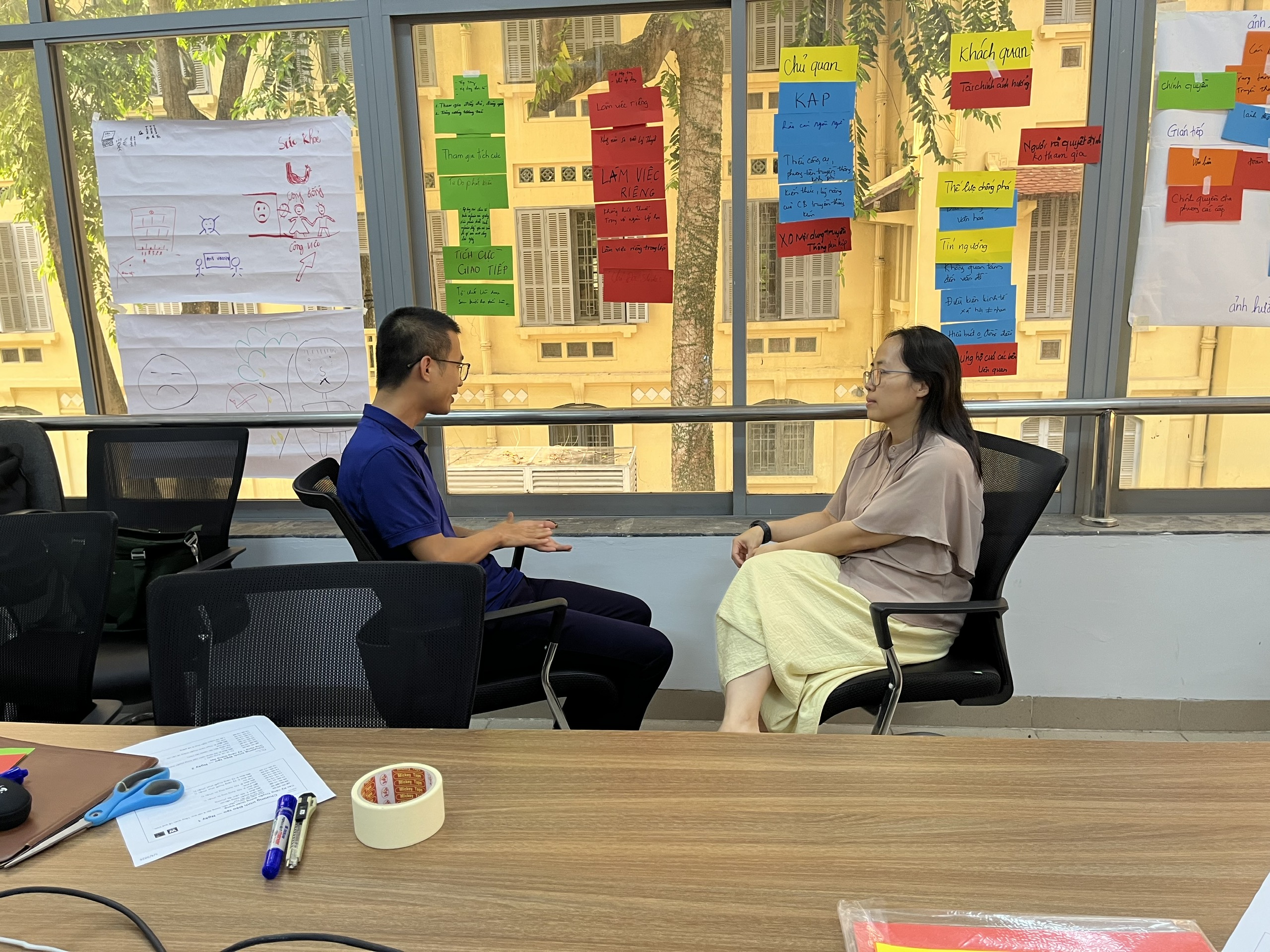
    Participants joining Role Play on Vaccine Communications Scenario. Image: OUCRU

    Early signs of sustainability and scale-up

    Encouragingly, the training materials and approaches are already being applied beyond the workshop itself.

    Even before officially attending the ToT course, M.D, Msc Tran thi Lan Anh, Expert at Communicable Diseases Control and Prevention Department, NIHE used the OUCRU vaccine communication manual in December 2025 to deliver communication training for new vaccine staff in Thai Nguyen province, demonstrating early adoption of the materials. Several participants are also scheduled to deliver three vaccine consultation training courses in May 2026 for commune health staff in Hung Yen, provincial CDC staff in Phu Tho and Lao Caiprovinces. Looking ahead, NIHE plans to organise two additional ToT courses in July and September 2026 targeting commune health workers and village health collaborators. OUCRU may be invited to co-facilitate these future trainings, further supporting national capacity strengthening efforts.

    These developments suggest that the programme is moving beyond a one-off training activity towards a sustainable cascade model, where trained national facilitators can continue building communication capacity at provincial and community levels.

    Improving training materials for future implementation

    Participant feedback also highlighted opportunities to refine the training package. Materials including the ToT manual, flipbooks, communication cards, and reflective journals may be adapted further to improve flow, wording, and usability for different learner groups.

    Continuous refinement of the package will help ensure that vaccine communication training remains practical, context-specific, and responsive to the evolving needs of healthcare workers.
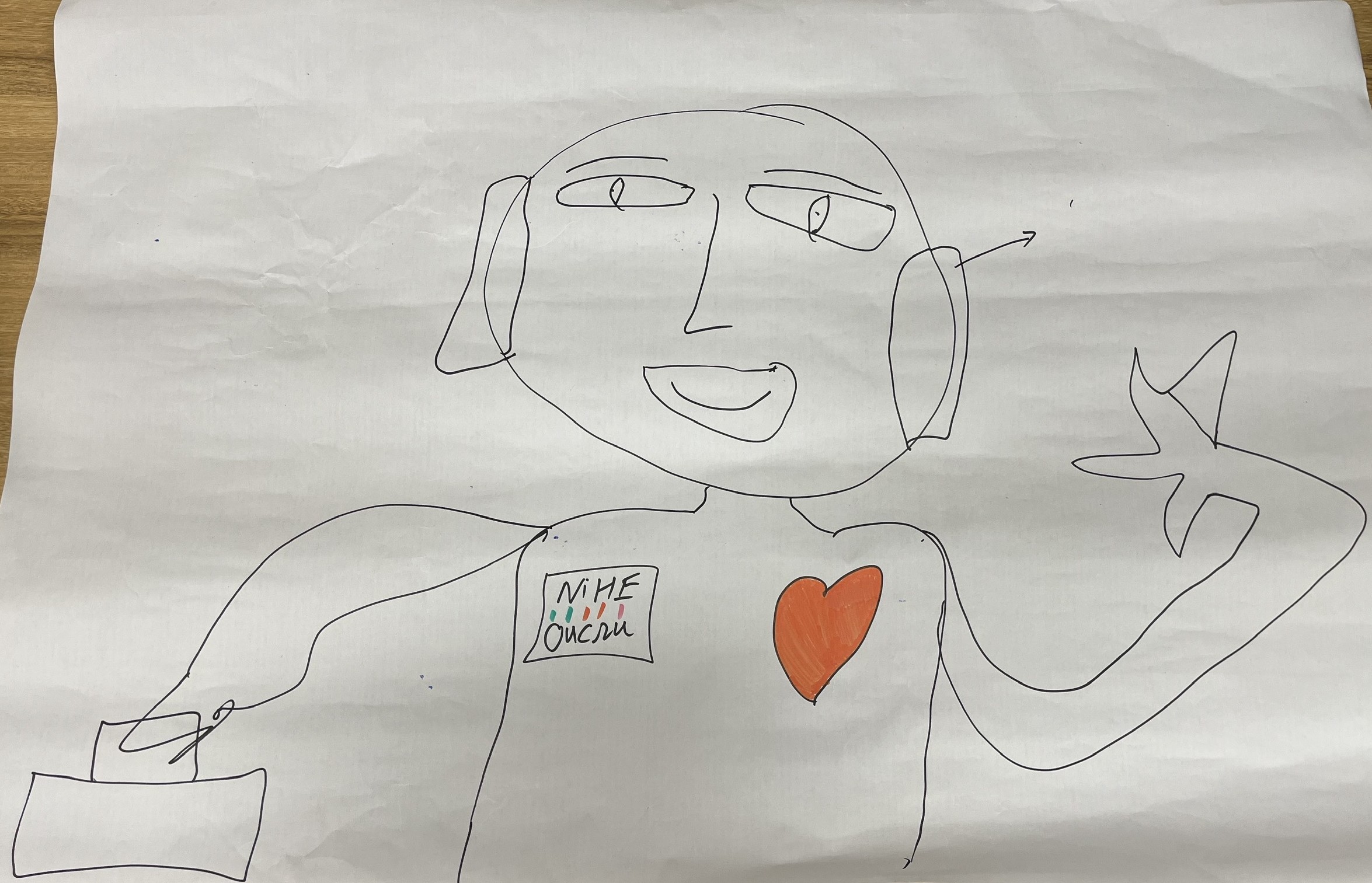
    Participant’s drawing of Vaccine Frontline Worker. Image: OUCRU

    Looking ahead

    Effective vaccine communication remains essential for addressing misinformation, building trust, and supporting informed vaccination decisions within communities. Strengthening the capacity of trainers at national and provincial levels is a critical step towards improving communication between healthcare workers and caregivers across Vietnam.

    This Training of Trainers programme represents an important milestone in the ongoing collaboration between OUCRU and NIHE to strengthen vaccine communication systems and support frontline health workers through sustainable learning approaches.

    OUCRU extends sincere thanks to NIHE participants, facilitators, and partners for their active engagement and continued collaboration in advancing vaccine communication capacity in Vietnam.
  • Building Genomics Capacity for Vietnam’s Public Health and Research Community

    Building Genomics Capacity for Vietnam’s Public Health and Research Community

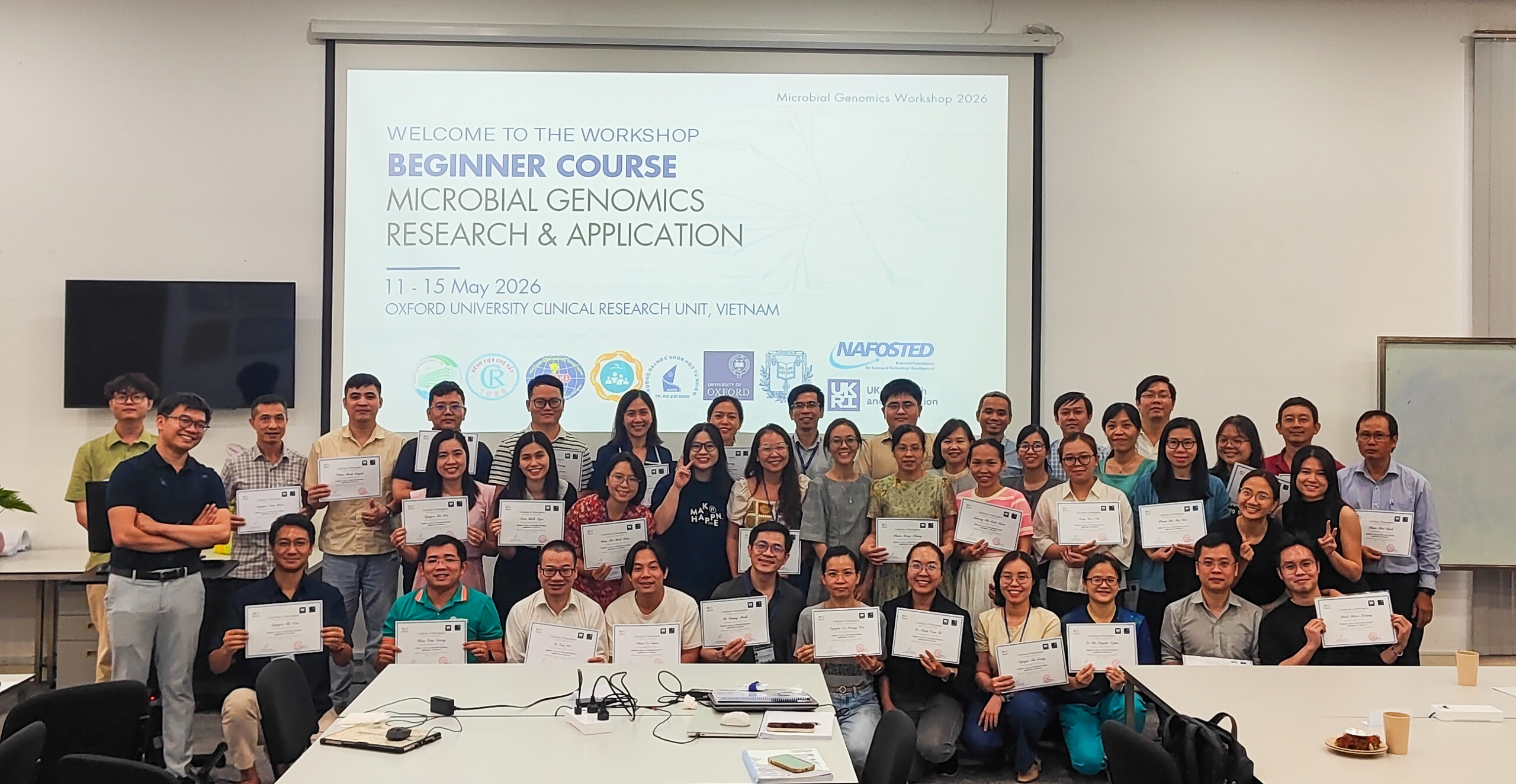
    The five-day workshop was designed to strengthen practical skills in microbial genomics and bioinformatics, with a focus on applications in clinical microbiology, infectious disease research, and public health surveillance. Delivered in Vietnamese by researchers from OUCRU’s Molecular Epidemiology Group, the course combined lectures, hands-on computational exercises, and real-world case studies to support participants with diverse levels of prior experience.

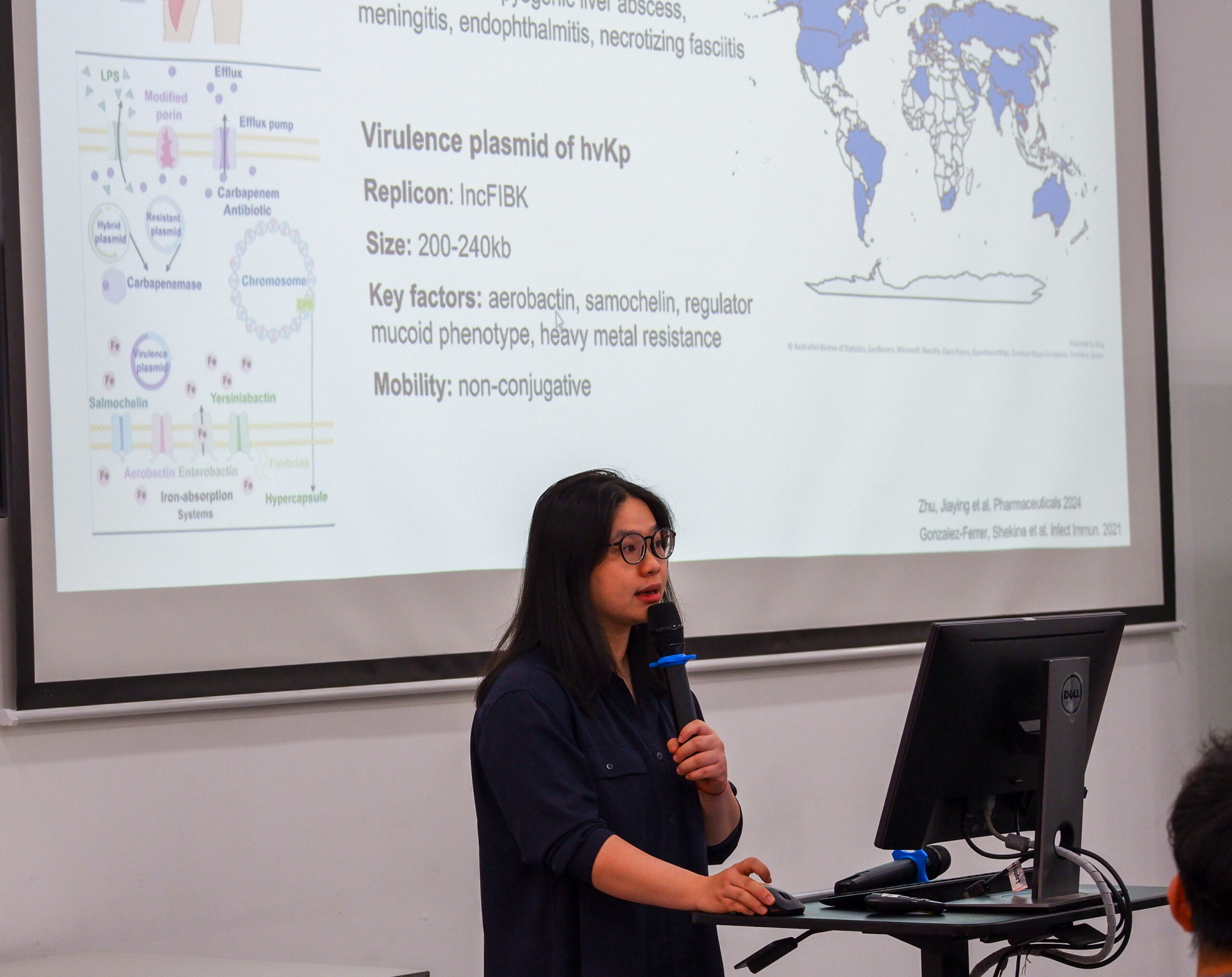
    Participants explored the foundations of whole-genome sequencing (WGS), genome assembly, phylogenetic analysis, and metagenomic sequencing, while gaining experience using widely adopted bioinformatics tools and workflows. Sessions covered topics ranging from bacterial genome analysis and antimicrobial resistance gene identification to outbreak investigation and pathogen detection using metagenomic next-generation sequencing (mNGS).

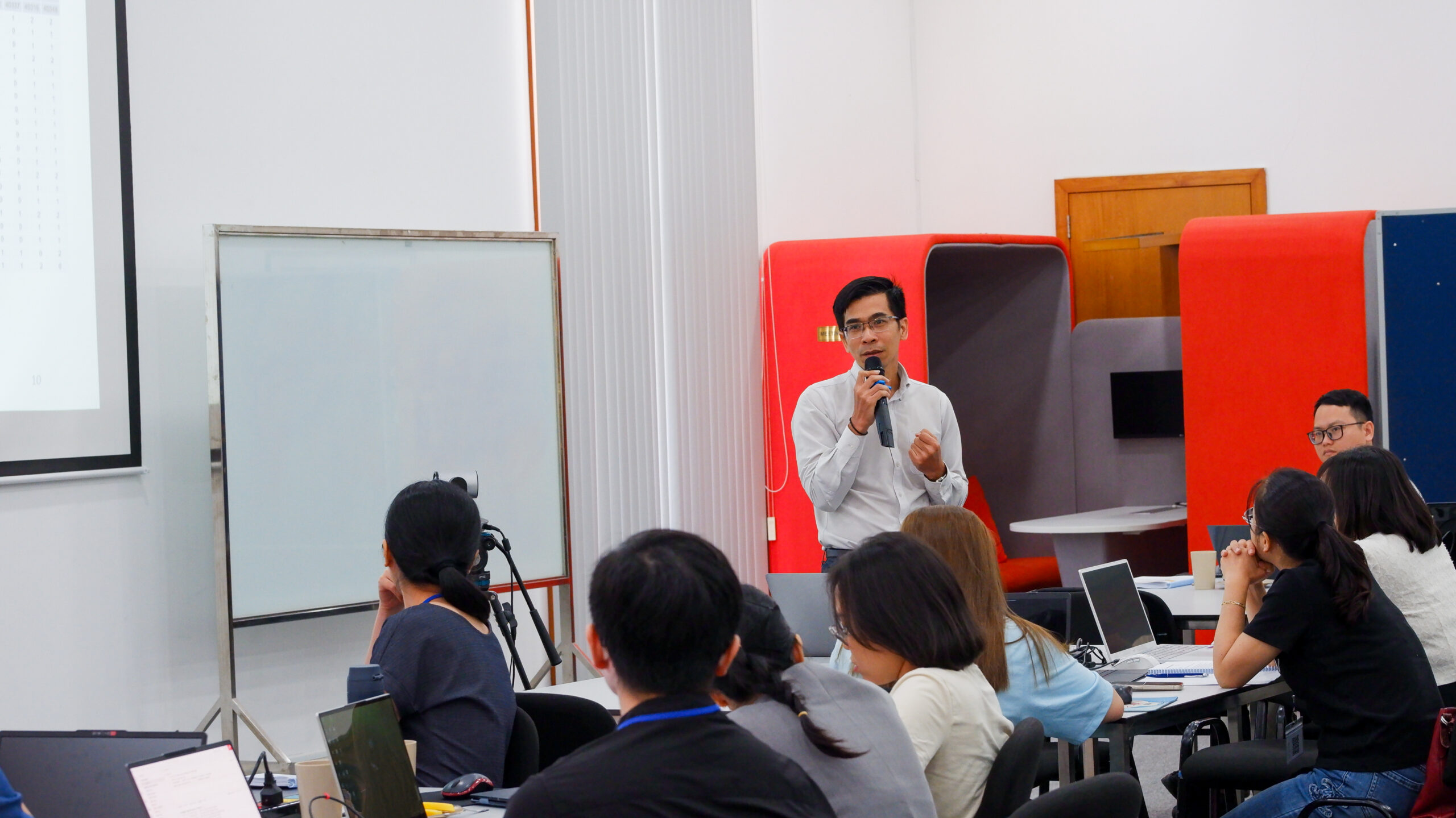
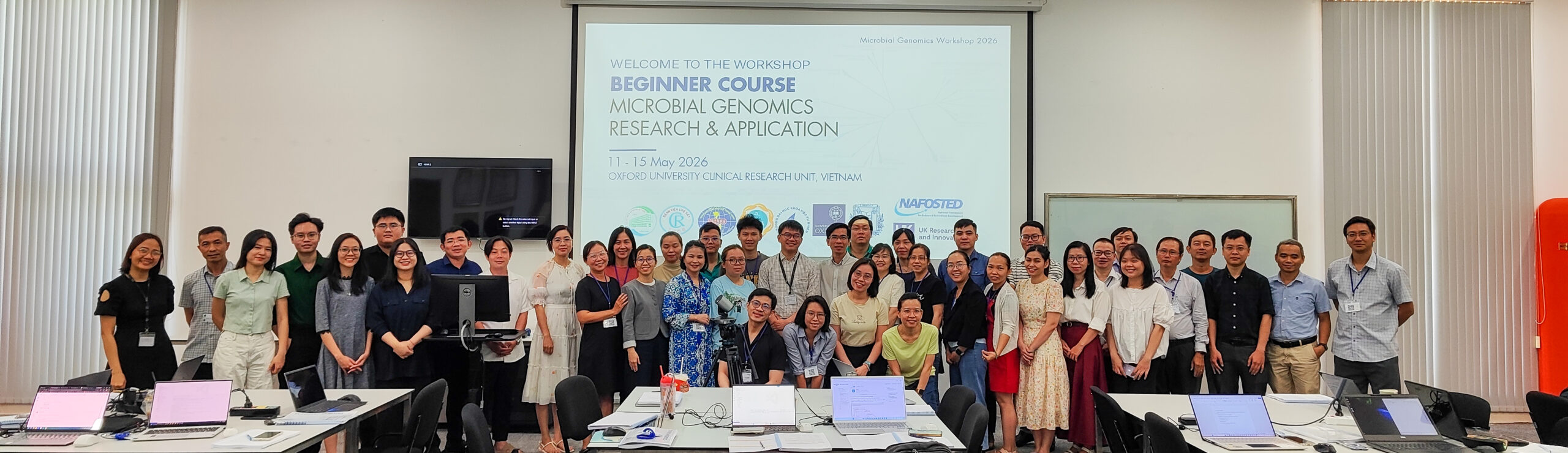
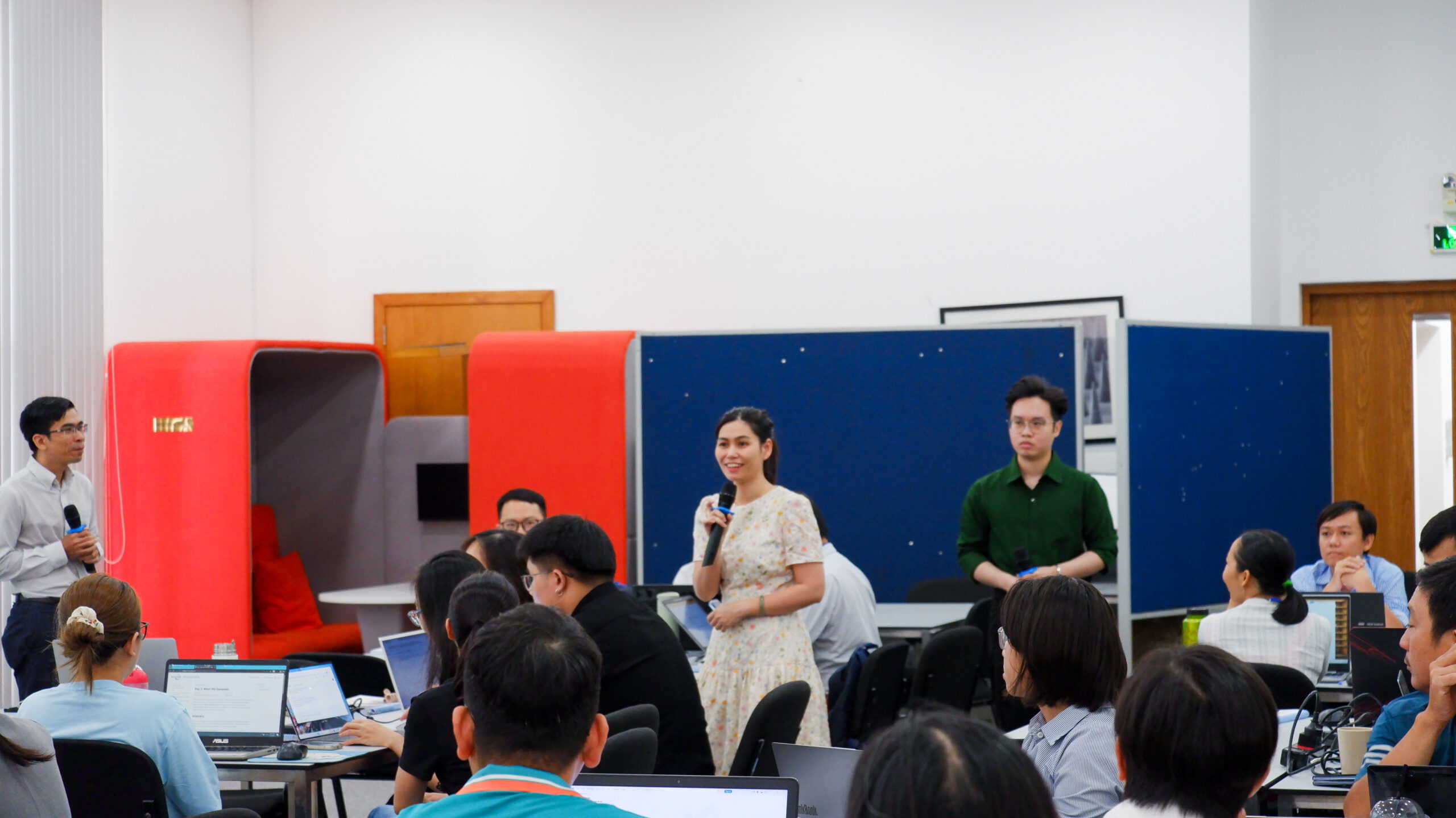
    Around 40 participants from local hospitals, public health institutions and hospitals joined the workshop. Images: OUCRU

    The workshop also introduced participants to practical data analysis environments and cloud-based computational tools, enabling attendees to build confidence in handling sequencing datasets independently. By working through real genomic datasets and simulated clinical scenarios, participants gained insight into how genomic technologies can support infectious disease diagnostics, surveillance, and research in Vietnam and beyond.

    The training reflects OUCRU’s ongoing commitment to strengthening scientific and public health capacity in the region through accessible, locally delivered training initiatives. By bringing together researchers, clinicians, laboratory scientists, and public health professionals from multiple institutions, the workshop also created opportunities for collaboration and knowledge exchange across Vietnam’s infectious disease research community.

    I was fortunate to be trained in bioinformatics and microbial genomics by world-leading experts, and I now have the opportunity to share these knowledge and skills with local researchers across Vietnam. Knowledge gains its greatest value when it is shared and passed on.” – Dr. Pham Thanh Duy – Head of MolEpi Group

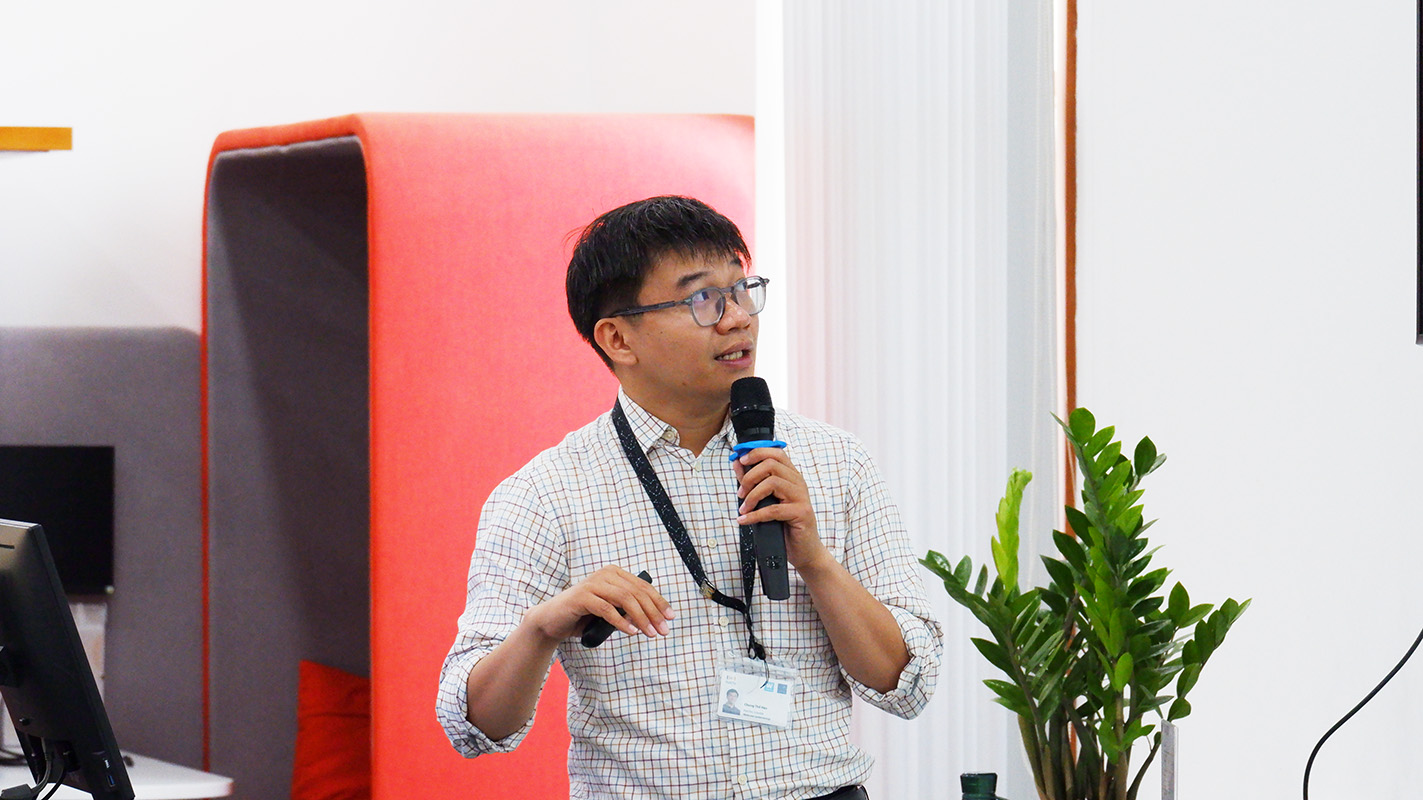
    The course was led by Dr. Pham Thanh Duy, Head of the Molecular Epidemiology Group at OUCRU, together with lecturers and teaching assistants from the group, including Dr. Chung The Hao, Nguyen Pham Nhu Quynh, Ton Ngoc Minh Quan, and Mai Thu Si Nguyen.

    The course was coordinated and led by members of the Molecular Epidemiology Group at OUCRU. Image: OUCRU

    As genomic technologies continue to play an increasingly important role in infectious disease research and outbreak response, initiatives such as this workshop contribute to building the local expertise needed to support future research, diagnostics, and public health preparedness in Vietnam.
  • MODRA Cohort 1: Where they are now and what comes next? 

    MODRA Cohort 1: Where they are now and what comes next? 

    Upon completion of the MODRA programme and moving move into the next stage of their careers, here’s a look at how our fellows are turning learning into lasting impact.

    Dr Pham Tran Vinh Phu’s current research focuses on discovering new antibacterial compounds to fight Methicillin-resistant Staphylococcus aureus (MRSA), a dangerous “superbug” that causes hospital infections. With his MODRA seed award, has combined computational analysis and laboratory experiments to identify new molecules that can stop MRSA from growing, helping to address the growing challenge of antimicrobial resistance.

    Through MODRA, Phu learned how to translate research ideas into fundable projects. “Most big grants require preliminary data, but getting that data without funding is impossible,” he explains. “MODRA gave me the structure and confidence to design a strong proposal, manage my project effectively, and communicate my research impact to funders.”

    As a lecturer and researcher at the University of Danang, Phu is using the MODRA experience to launch his own laboratory and create a baseline for future research. In his lab, he is also nurturing the next generation of scientists through hands-on mentorship and training

    Originally from Myanmar, Dr Pyae Linn Aung relocated to Thailand to continue his research career amid the current political situation in his home country. His work focuses on public health, epidemiology, and the socio-behavioral aspects of malaria control among migrants and hard-to-reach populations. With his MODRA seed award, he led a study on hidden malaria transmission among Myanmar migrants in Thailand, documenting infection prevalence and care-seeking behaviors to inform more inclusive malaria elimination strategies.

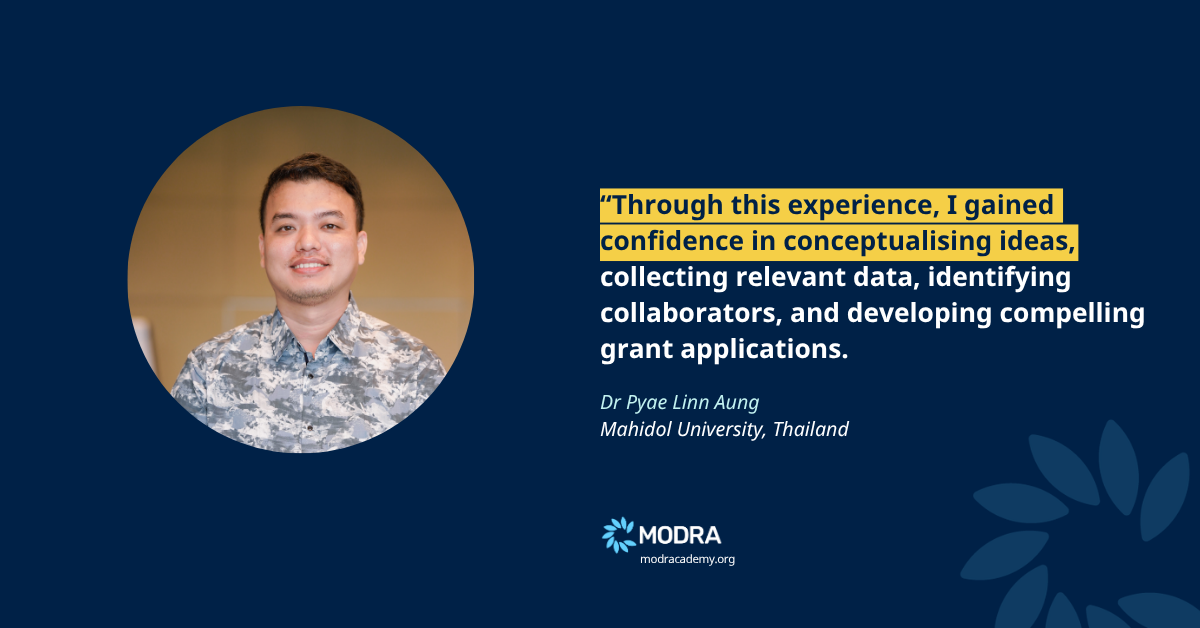
    “The MODRA seed grant was my first international research funding,” he reflects. “It allowed me to conduct a small but meaningful study and adapt to the research environment in Thailand. Through this experience, I gained confidence in conceptualizing ideas, collecting relevant data, identifying collaborators, and developing compelling grant applications. I now feel more prepared to apply for larger, competitive grants.”

    Having completed his MODRA project, Pyae has published two papers from his seed grant work and established new collaborations with researchers in Australia and elsewhere to extend his study on malaria transmission dynamics. He hopes to expand this network further and contribute evidence that supports regional malaria elimination efforts across Southeast Asia.

    Dr Sabina Dongol is the Head of Laboratory at OUCRU Nepal, where she has long been behind the lab work supporting all major research projects. With her MODRA seed award, she led her first independent research study evaluating rapid diagnostic tests for typhoid. The project has helped to fill a critical evidence gap and improve the accuracy of typhoid diagnosis in low-resource settings.

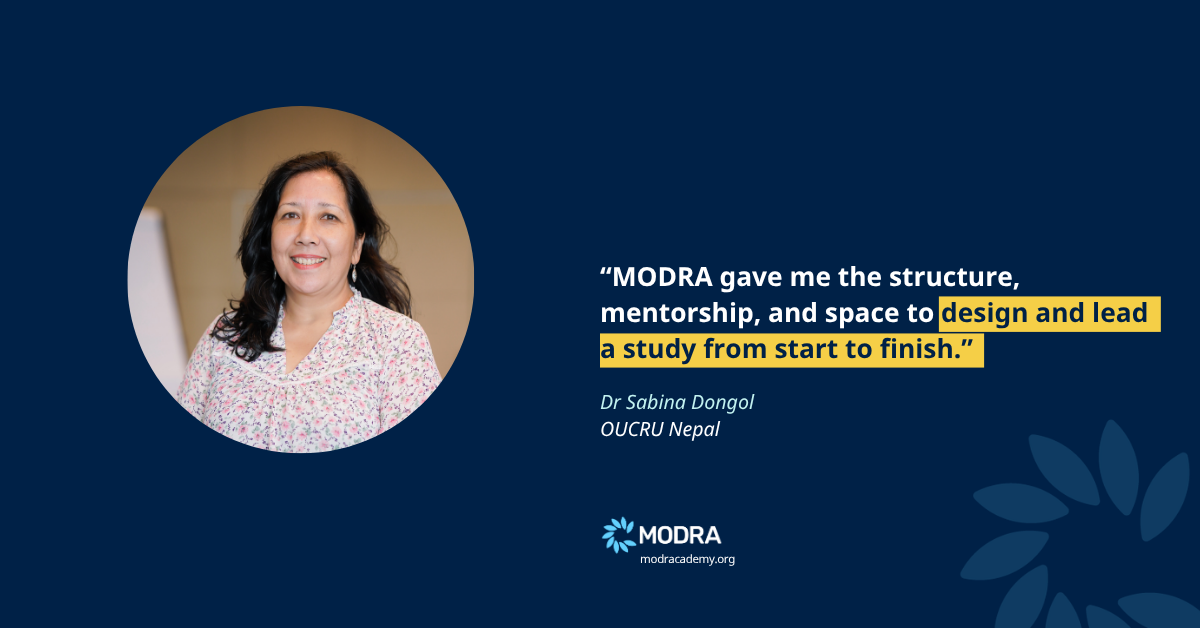
    MODRA provided Sabina with the backbone to transition from a laboratory technician to an independent researcher capable of leading her own studies. “For many years, my work focused on generating data for other projects,” she explains. “MODRA gave me the structure, mentorship, and space to design and lead a study from start to finish.”

    Beyond strengthening her technical expertise, MODRA helped Sabina build new collaborations with hospitals and laboratories across Kathmandu and expand her professional network. She recently won a place in the ISARIC Leadership Programme for Scientists, further recognizing her potential as a future leader in infectious-disease diagnostics and health research in Nepal.

  • iSHARP – Nền tảng tích hợp dữ liệu há»— trợ quản lý sá»­ dụng kháng sinh trong bệnh viện

    Chính sự phân tán này khiến việc trích xuất, tổng hợp và xử lý dữ liệu vẫn phải thực hiện theo cách thủ công, đòi hỏi nhiều thời gian và nhân lực. Trong bối cảnh ngành y tế đang thúc đẩy chuyển đổi số, việc xây dựng một mô hình tích hợp dữ liệu có khả năng kết nối thông tin giữa các hệ thống thông tin của bệnh viện trở nên ngày càng cần thiết, nhằm tận dụng tốt hơn các hệ thống hiện có và hỗ trợ quản lý dựa trên dữ liệu một cách kịp thời hơn.

    Xuất phát từ những nhu cầu thực tế đó, trong khuôn khổ nghiên cứu 60HN – ASPARNet, OUCRU đã xây dựng và phát triển nền tảng tích hợp dữ liệu hỗ trợ QLSDKS – iSHARP nhằm hỗ trợ các bệnh viện và cơ quan quản lý triển khai hoạt động QLSDKS và KSNK dựa trên dữ liệu. iSHARP được thiết kế như một giải pháp giúp các bệnh viện tập trung các dữ liệu thành một báo cáo đồng bộ thống nhất, giúp các lãnh đạo bệnh viện đưa ra quyết định cụ thể kịp thời dựa trên bằng chứng dữ liệu khoa học. iSHARP không thay thế các hệ thống đang được bệnh viện sử dụng, nó đóng vai trò liên kết và tập hợp dữ liệu từ các hệ thống hiện có, đồng thời giữ nguyên các quy trình nhập liệu hàng ngày của nhân viên y tế. Nền tảng có thể kết nối dữ liệu kê đơn từ hệ thống bệnh án điện tử, kết nối kết quả xét nghiệm từ hệ thống xét nghiệm, và tiếp nhận dữ liệu KSNK thông qua các biểu mẫu điện tử khi cần. Nhờ cách tiếp cận này, iSHARP có thể được triển khai linh hoạt, hạn chế tối đa việc thay đổi thói quen làm việc và tránh gây gián đoạn hoạt động chuyên môn của bệnh viện.

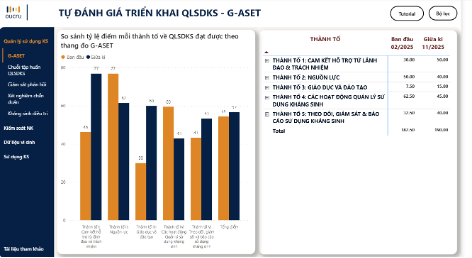
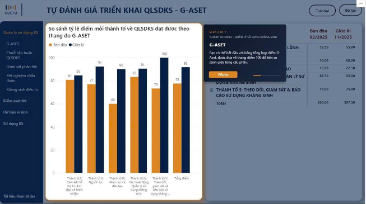
    Ảnh 1: Giao diện cấu phần Quản lý sử dụng kháng sinh – thang đo G-ASET (Nguồn: OUCRU)

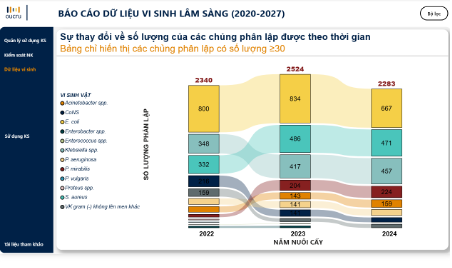
    Trên nền tảng tích hợp dữ liệu này, iSHARP được xây dựng với nhiều cấu phần chức năng nhằm hỗ trợ toàn diện cho các hoạt động kiểm soát kháng kháng sinh và đảm bảo an toàn người bệnh. Trước hết, nền tảng hỗ trợ bệnh viện rà soát và đánh giá các hoạt động QLSDKS đang được triển khai như công tác tập huấn, giám sát và phản hồi, giúp nhìn nhận rõ những nội dung đã thực hiện cũng như các lĩnh vực cần tiếp tục cải thiện. Song song với đó, iSHARP hỗ trợ quản lý và theo dõi các hoạt động kiểm soát nhiễm khuẩn, góp phần tổng hợp thông tin và giám sát các chỉ số liên quan một cách hệ thống. Nền tảng cũng tích hợp quản lý dữ liệu vi sinh, cho phép xây dựng và theo dõi báo cáo kháng sinh đồ tích lũy thông qua các bảng và biểu đồ trực quan, phản ánh xu hướng kháng thuốc theo thời gian. Đồng thời, iSHARP hỗ trợ chương trình QLSDKS dựa trên dữ liệu kê đơn từ hệ thống bệnh án điện tử, giúp theo dõi các chỉ số sử dụng kháng sinh theo khoa phòng và từng giai đoạn, tạo nền tảng dữ liệu thống nhất phục vụ cả hoạt động chuyên môn và quản lý.

    Ảnh 2: Tính năng “Tutorial” hỗ trợ người dùng sử dụng nền tảng 1 cách hiệu quả (Nguồn: OUCRU)

    Ở cấp độ bệnh viện, iSHARP giúp giảm đáng kể khối lượng công việc liên quan đến tổng hợp và báo cáo dữ liệu. Thay vì phải trích xuất dữ liệu từ nhiều hệ thống khác nhau và xử lý riêng lẻ một cách thủ công, nền tảng hỗ trợ tự động tổng hợp các thông tin và trực quan hoá dữ liệu thông qua bảng và biểu đồ.

    iSHARP cung cấp Ban lãnh đạo bệnh viện một bức tranh tổng quan, rõ ràng và kịp thời về công tác QLSDKS và KSNK, hỗ trợ công tác chỉ đạo, theo dõi và ra quyết định dựa trên dữ liệu. Với Ban QLSDKS, nền tảng giúp theo dõi xu hướng sử dụng kháng sinh theo khoa phòng, đánh giá việc tuân thủ các khuyến cáo điều trị và phát hiện sớm các vấn đề cần can thiệp. Trong khi đó, Hội đồng KSNK có thể sử dụng dữ liệu được tổng hợp và trình bày một cách hệ thống để giám sát diễn biến nhiễm khuẩn bệnh viện, hỗ trợ triển khai và điều chỉnh các biện pháp kiểm soát phù hợp.

    Quan trọng hơn, iSHARP cung cấp cơ sở dữ liệu thống nhất hỗ trợ ra quyết định lâm sàng, cho phép bác sĩ tham khảo xu hướng sử dụng kháng sinh và tình hình kháng thuốc theo từng khoa phòng trong quá trình điều trị. Những thông tin này góp phần nâng cao tính hợp lý trong sử dụng kháng sinh, giảm nguy cơ nhiễm khuẩn bệnh viện và cải thiện an toàn cho người bệnh.

    Ảnh 3: Giao diện cấu phần Quản lý dữ liệu vi sinh (Nguồn: OUCRU)

    Ở cấp độ quản lý, iSHARP mang lại cho Sở Y tế khả năng từng bước tăng cường giám sát và điều hành chủ động hơn, thay vì phụ thuộc hoàn toàn vào các báo cáo định kỳ từ các bệnh viện. Nền tảng được kỳ vọng có thể hỗ trợ theo dõi tình hình sử dụng kháng sinh, xu hướng kháng thuốc và chất lượng KSNK tại nhiều cơ sở y tế theo thời gian, từ đó giúp cơ quan quản lý sớm nhận diện những đơn vị cần ưu tiên hỗ trợ hoặc can thiệp. Dựa trên dữ liệu được tổng hợp và trình bày một cách hệ thống, iSHARP có tiềm năng hỗ trợ Sở Y tế trong việc xây dựng kế hoạch đào tạo, đầu tư nguồn lực và tổ chức giám sát phù hợp với nhu cầu thực tế. Đồng thời, nền tảng góp phần hướng tới việc chuẩn hóa hệ thống chỉ số về QLSDKS và KSNKở cấp tỉnh, tạo nền tảng dữ liệu phục vụ công tác báo cáo, hỗ trợ quản lý và triển khai các hoạt động phòng, chống kháng thuốc.

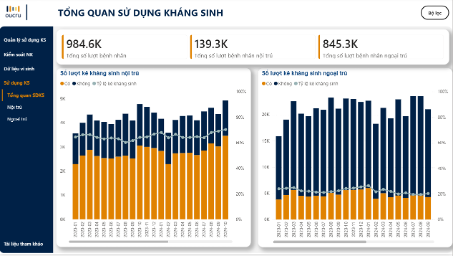
    Ảnh 4: Giao diện cấu phần Quản lý dữ liệu sử dụng kháng sinh (Nguồn: OUCRU)

    Không chỉ mang lại giá trị cho bệnh viện và cơ quan quản lý, iSHARP còn mở ra khả năng hợp tác với các đơn vị cung cấp hệ thống thông tin y tế. Với vai trò bổ sung lớp phân tích dữ liệu và các báo cáo trực quan chuyên sâu, iSHARP giúp nâng cao giá trị sử dụng của các hệ thống hiện hành, đồng thời mở rộng khả năng phát triển các giải pháp chuyên biệt phục vụ QLSDKS và kiểm soát nhiễm khuẩn. Hiện tại, iSHARP đang được triển khai thí điểm tại một vài bệnh viện và có kế hoạch nhân rộng ra các đơn vị y tế khác trong khu vực. Cách tiếp cận này phù hợp với định hướng phát triển các giải pháp y tế số có tính bền vững, cho phép thử nghiệm, hoàn thiện và từng bước nhân rộng trong thực tế. Với tư duy thiết kế không làm gián đoạn hệ thống, tận dụng tối đa dữ liệu sẵn có và trực quan hóa các chỉ số theo các khuyến cáo quốc tế, iSHARP là một bước tiến quan trọng trong việc hỗ trợ bệnh viện và Sở Y tế tiếp cận mô hình quản lý dựa trên dữ liệu. Được phát triển trong khuôn khổ nghiên cứu 60HN – ASPARNet bởi OUCRU, iSHARP không chỉ là một công cụ kỹ thuật, mà còn là nền tảng hỗ trợ chuyển đổi số có chiều sâu, góp phần nâng cao chất lượng chăm sóc người bệnh, tăng cường KSNK và hướng tới sử dụng kháng sinh hợp lý hơn tại Việt Nam.

  • iSHARP – Integrated Stewardship in Hospitals for Antimicrobial Resistance Control Platform

    This fragmentation means that data extraction, aggregation, and analysis still rely heavily on manual processes, requiring substantial time and human resources. As the health sector is increasingly pursuing digital transformation, the development of an integrated data model capable of connecting information across hospital information systems (HIS) has become increasingly necessary. Such an approach would allow better use of existing systems while supporting more timely, data-driven management.

    Building on these practical needs, within the framework of the 60HN–ASPARNet study, OUCRU developed iSHARP (Integrated Stewardship in Hospitals for Antimicrobial Resistance Control Programme), an integrated data platform designed to support data-driven AMS and IPC in hospitals. iSHARP is designed as a solution that helps hospitals consolidate data into a unified reporting system, providing hospital leadership with timely access to data‑driven insights to support informed decision‑making. iSHARP does not replace existing HIS. Instead, it serves as a layer that links and brings together data from current systems while preserving routine data entry workflows for healthcare staff. The platform can connect prescribing data from electronic medical record systems, connect laboratory results from laboratory information systems, and incorporate IPC data through electronic forms where available. With this approach, iSHARP can be implemented flexibly, minimizing changes to established work practices and avoiding disruption to routine hospital operations.

    Photo 1: Interface of the Antimicrobial Management component – G-ASET tool (Source: OUCRU)

    On this integrated data platform, iSHARP is built around multiple functional components that together provide comprehensive support for AMR control and patient safety initiatives. First, the platform helps hospitals review and assess ongoing AMS activities, such as training, audit and feedback, allowing them to identify what has been implemented and where further improvement is needed. At the same time, iSHARP supports the management and monitoring of IPC activities by systematically compiling relevant information and indicators. The platform also integrates microbiology data management, enabling the development and monitoring of cumulative antibiogram reports through tables and visual displays that reflect trends in AMR over time. In addition, iSHARP supports AMS based on prescribing data from electronic medical record systems, allowing hospitals to track antimicrobial use indicators by department and over different periods, and to establish a unified data foundation for both clinical practice and management purposes.

    Photo 2: “Tutorial” feature supporting users in effectively using the platform (Source: OUCRU)

    At the hospital level, iSHARP helps significantly reduce the workload associated with data aggregation and reporting. Instead of extracting data from multiple systems and processing them separately through manual means, the platform supports the automated consolidation and visualization of information through tables and charts.

    iSHARP provides hospital leadership with a clear, comprehensive, and timely overview of AMS and IPC activities, supporting data‑informed leadership, monitoring, and decision‑making. For AMS teams, the platform enables monitoring of antimicrobial use trends by department, assessment of adherence to treatment recommendations, and early identification of issues requiring intervention. Meanwhile, IPC teams can use systematically aggregated and clearly presented data to monitor trends in hospital‑acquired infections and to support the implementation and adjustment of appropriate control measures.

    More importantly, iSHARP provides a unified data foundation to support clinical decision-making, allowing clinicians to refer to antimicrobial use patterns and resistance trends by department during the treatment process. This information contributes to improving the appropriateness of antimicrobial use, reducing the risk of hospital-acquired infections, and enhancing patient safety.

    Photo 3: Interface of the Microbiology Data Management component (Source: OUCRU)

    At the management level, iSHARP offers Departments of Health (DoH) the opportunities to gradually strengthen more proactive oversight and coordination, rather than relying solely on periodic reports submitted by hospitals. The platform allows real-time monitoring of antimicrobial use, resistance trends, and IPC activities across multiple healthcare facilities. This supports early identification of facilities that may require prioritized support or intervention. Based on systematically aggregated and clearly presented data, iSHARP has the potential to support DoH in developing training plans, allocating resource, and organizing supervisory activities aligned with actual needs. At the same time, the platform contributes to standardizing indicators related to AMS and IPC at the provincial level, creating a data foundation for reporting, supporting management functions, and facilitating the implementation of AMR prevention and control activities.

    Photo 4: Interface of the Antimicrobial Use Management component (Source: OUCRU)

    Beyond its value for hospitals and health authorities, iSHARP also opens up opportunities for collaboration with HIS providers. By adding an advanced data analysis layer and in-depth visual reporting, iSHARP enhances the usability and added value of existing systems, while also expanding the potential to develop specialized solutions for AMS and IPC. Currently, a comprehensive iSHARP prototype is being piloted at two hospitals and with the plan for gradual expansion to other healthcare facilities in the region under the direction of DoH. This approach aligns with the development of sustainable digital health solutions, allowing for testing, refinement, and step-by-step scale-up in real-world settings.With a design philosophy focused on avoiding system disruption, maximizing the use of existing data, and visualizing key indicators in line with international recommendations, iSHARP represents an important step toward data-driven management for hospitals and Departments of Health. Developed by OUCRU within the framework of the 60HN–ASPARNet study, iSHARP is not merely a technical tool but a platform that supports meaningful digital transformation. It contributes to improving the quality of patient care, strengthening infection control, and promoting more rational use of antimicrobials in Viet Nam.

  • Họp mạng lưới các bệnh viện triển khai chương trình Quản lý sá»­ dụng kháng sinh tại tỉnh Đồng Tháp tháng 03/2026

    Họp mạng lưới các bệnh viện triển khai chương trình Quản lý sử dụng kháng sinh tại tỉnh Đồng Tháp tháng 03/2026

    Ngày 05/03/2026, dưới sự điều phối của Sở Y tế tỉnh Đồng Tháp, cuộc họp mạng lưới các bệnh viện đã được tổ chức tại hội trường Bệnh viện Đa khoa (BVĐK) Đồng Tháp với sự tham gia của sáu bệnh viện gồm BVĐK Đồng Tháp, BVĐK Sa Đéc, BVĐK khu vực Tháp Mười và Trung tâm y tế (TTYT) khu vực Cao Lãnh 2, TTYT khu vực Thanh Bình và TTYTkhu vực Lấp Vò. Cuộc họp được tổ chức với mục tiêu chia sẻ tiến độ hoạt động giữa các đơn vị, thảo luận những thách thức hiện gặp và đề xuất các giải pháp nâng cao hiệu quả thực hành sử dụng kháng sinh trong toàn tỉnh. Ngoài ra, đại diện VNPT Đồng Tháp cũng tham dự để cùng trao đổi về khả năng phối hợp trong công tác ứng dụng dữ liệu và công nghệ thông tin tại các cơ sở y tế. Cuộc họp đóng vai trò như một diễn đàn kết nối, giúp các bệnh viện trong mạng lưới nắm bắt tình hình chung về triển khai Quản lý sử dụng kháng sinh, học hỏi kinh nghiệm quản lý tổ chức và thống nhất những định hướng quan trọng về việc sử dụng các công cụ hỗ trợ hiển thị dữ liệu thường quy giúp định hướng quản trị dựa trên dữ liệu và nâng cấp củng cố các dữ liệu vi sinh cho giai đoạn tiếp theo.

    <a href="
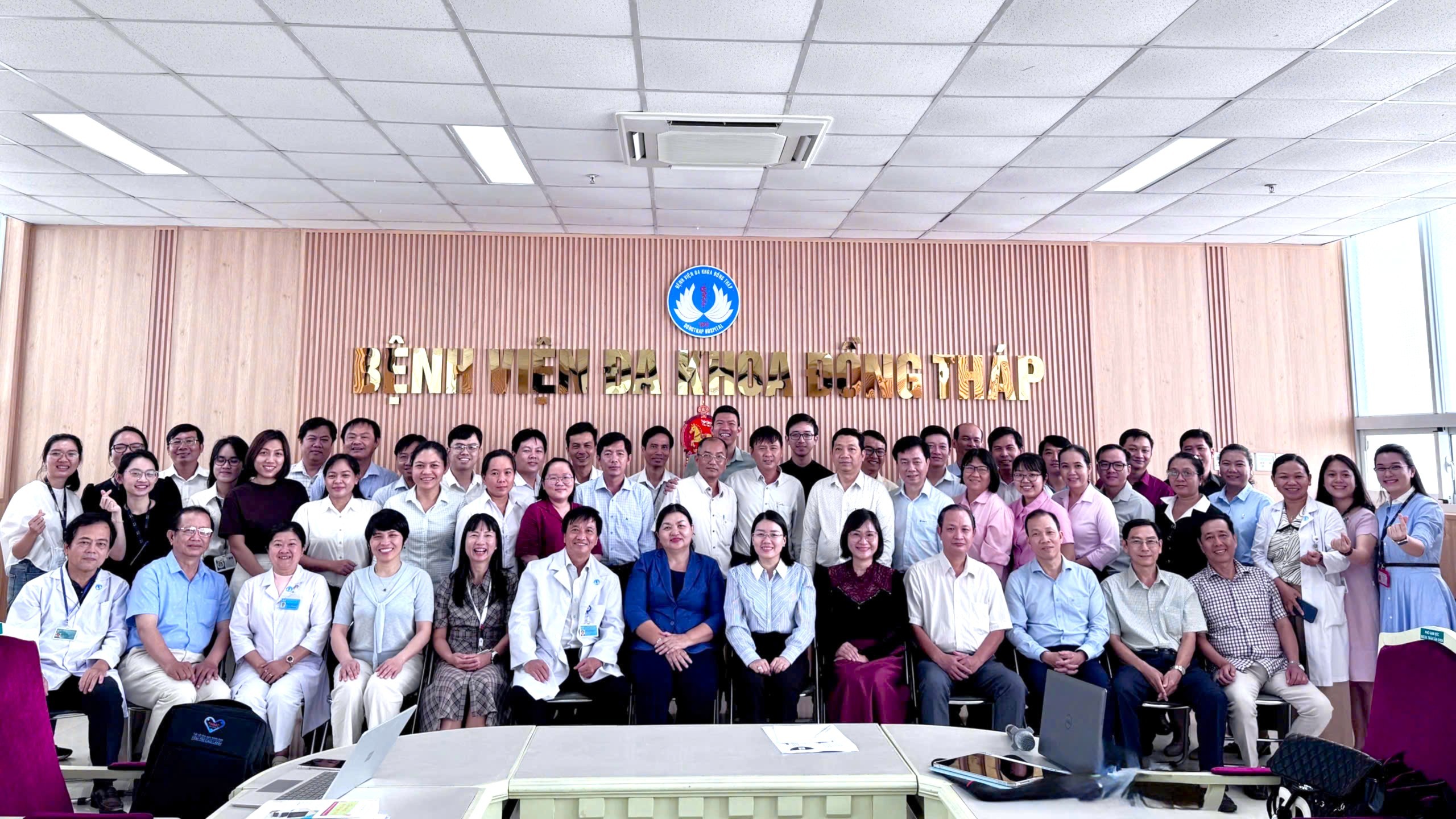
    Ảnh 1: các bệnh viện tại Đồng Tháp tại cuộc họp mạng lưới tháng 03/2026 (Nguồn: OUCRU)

    Trong báo cáo mở đầu, đại diện Sở Y tế trình bày tổng quan hoạt động của mạng lưới các đơn vị triển khai chương trình quản lý sử dụng kháng sinh trong giai đoạn 03/2025 – 02/2026, bao gồm các hoạt động cốt lõi của chương trình như tập huấn nâng cao năng lực, thực hiện giám sát – phản hồi, tăng cường chương trình kiểm soát nhiễm khuẩn, xây dựng quy trình/hướng dẫn về sử dụng kháng sinh và hoàn thiện báo cáo tiêu thụ kháng sinh. Bài trình bày cũng điểm lại các cột mốc triển khai chính của nghiên cứu 60HN – ASPARNet từ năm 2024 đến 2026, cho thấy lộ trình triển khai rõ ràng và liên tục được đánh giá, điều chỉnh.

    Sở Y tế cũng nhấn mạnh nhu cầu tiếp tục hỗ trợ kỹ thuật, chuẩn hóa quy trình và hoàn thiện báo cáo tiêu thụ kháng sinh của mỗi đơn vị để nâng cao hiệu quả quản lý sử dụng kháng sinh trên toàn tỉnh.

    Trong phần chia sẻ của đơn vị, TTYT khu vực Cao Lãnh 2 – đơn vị đi đầu trong quý về các hoạt động quản lý sử dụng kháng sinh đã có các báo cáo tổng kết, chia sẻ kinh nghiệm và phân tích các điểm mạnh, yếu, thuận lợi, thách thức gặp phải trong quá trình triển khai. Đơn vị đã tiên phong tổ chức 03 lớp tập huấn kiểm soát nhiễm khuẩn vào cuối tháng 01/2026 cho nhân viên y tế và nhân viên vệ sinh, giúp củng cố kiến thức về phòng ngừa nhiễm khuẩn và sử dụng kháng sinh an toàn trong chăm sóc người bệnh. Bên cạnh đó, đơn vị cũng hoàn thiện báo cáo tiêu thụ kháng sinh cho giai đoạn 2023–2024. Những số liệu này đang được sử dụng để hỗ trợ lãnh đạo theo dõi và đưa ra chỉ đạo kịp thời. Việc xây dựng báo cáo tiêu thụ kháng sinh và triển khai tập huấn kiểm soát nhiễm khuẩn đã góp phần quan trọng trong việc nâng cao nhận thức, chuẩn hóa thực hành và cải thiện công tác quản lý sử dụng kháng sinh tại đơn vị.

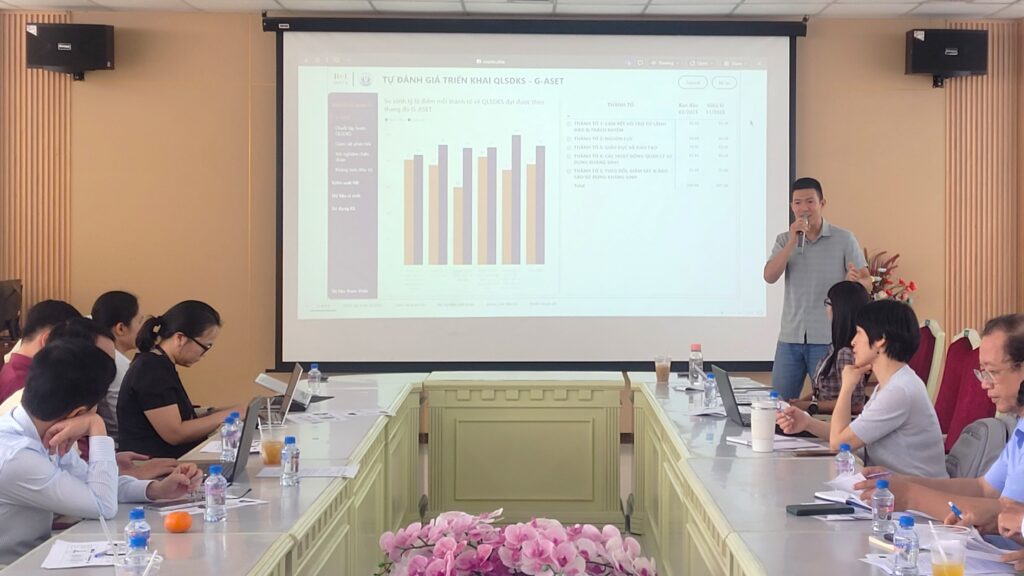
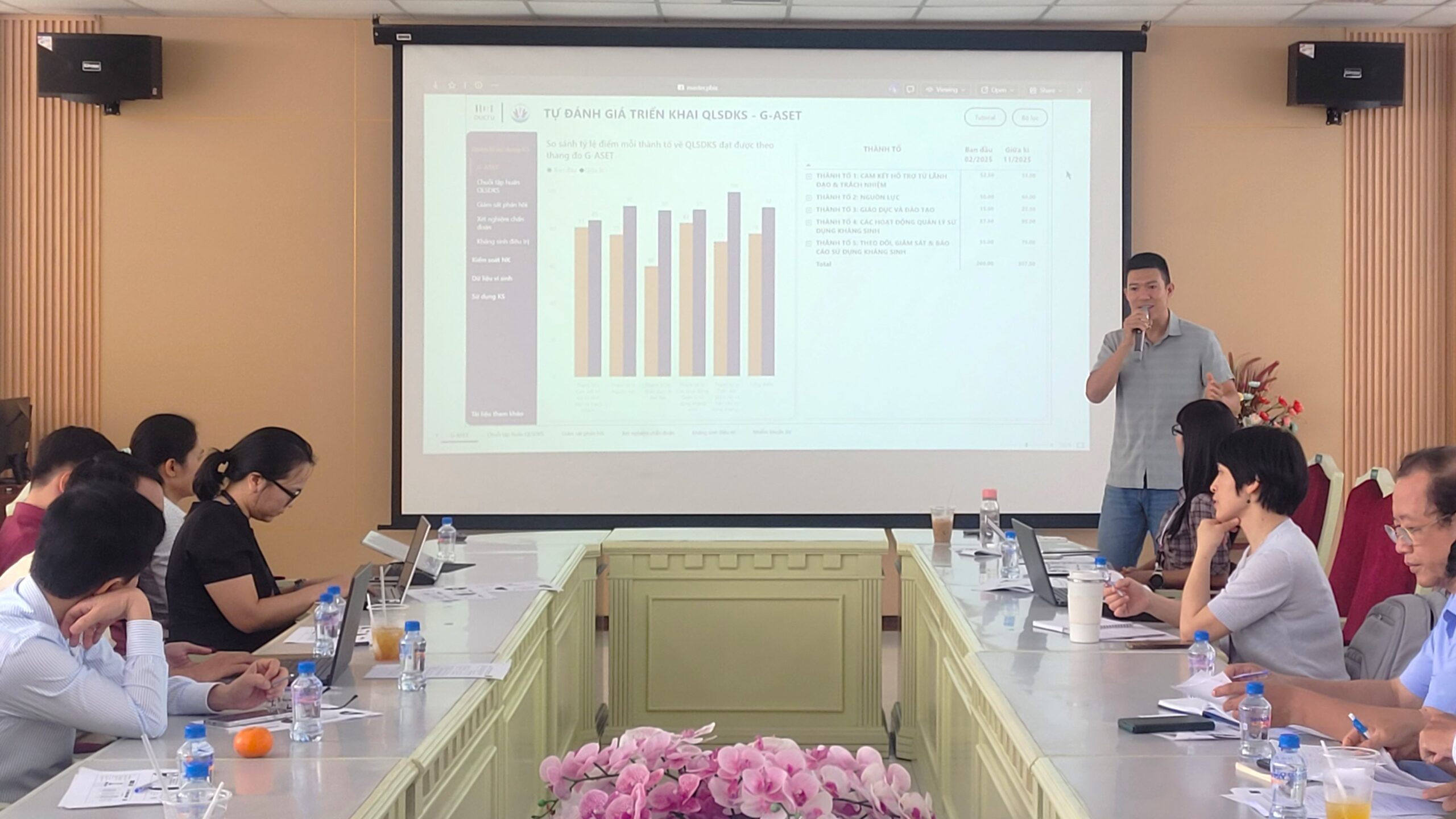
    Tiếp theo, OUCRU giới thiệu sơ bộ về nền tảng tích hợp dữ liệu hỗ trợ quản lý sử dụng kháng sinh (iSHARP), một mô hình kết nối các nguồn thông tin khác nhau (dữ liệu bệnh viện, các khảo sát,…) nhằm trực quan hóa các chỉ số, quy trình và hướng dẫn liên quan đến quản lý sử dụng kháng sinh và kiểm soát nhiễm khuẩn. Nền tảng hướng tới việc hỗ trợ các bệnh viện và Sở Y tế theo dõi dữ liệu một cách tập trung, thuận tiện và nhất quán hơn. Mô hình này được kỳ vọng sẽ trở thành công cụ hỗ trợ thiết thực cho công tác quản lý, giám sát và ra quyết định trong thời gian tới. Bài trình bày cũng nêu định hướng thí điểm cùng những gợi ý ban đầu về cơ chế phối hợp giữa các bộ phận kỹ thuật và đơn vị cung cấp hệ thống thông tin y tế. Đây được xem là bước khởi đầu quan trọng cho việc xem xét và phát triển một mô hình dữ liệu tích hợp trong tương lai.

    <a href="
    Ảnh 2: OUCRU giới thiệu nền tảng tích hợp, trực quan hoá dữ liệu bệnh viện (Nguồn: OUCRU)

    Sau phần giới thiệu của OUCRU, đại diện VNPT Đồng Tháp, đơn vị cung cấp hệ thống thông tin y tế tại địa phương, đã cùng các bệnh viện thảo luận về tính khả thi của việc tích hợp và khai thác hiệu quả các nguồn dữ liệu hiện có. Cuộc trao đổi tập trung vào khả năng kết nối giữa các nguồn dữ liệu, các yêu cầu kỹ thuật cần thiết và cách phối hợp giữa các bên để hướng tới một mô hình trực quan hóa chỉ số phù hợp với nhu cầu của toàn mạng lưới.

    Trong phiên làm việc buổi chiều, các đại biểu được chia nhóm để thảo luận về phương án triển khai chương trình QLSDKS trong thời gian tới, cũng như định hướng tích hợp các hoạt động này vào thực hành thường quy. Các nhóm làm việc theo các chủ đề gồm: (1) xây dựng công cụ hỗ trợ QLSDKS dựa trên bằng chứng và dữ liệu; (2) củng cố và duy trì hoạt động của Ban QLSDKS; (3) triển khai chương trình kiểm soát nhiễm khuẩn; và (4) nâng cao năng lực vi sinh nhằm góp phần kiểm soát kháng kháng sinh. Hoạt động được kì vọng sẽ giúp duy trì lâu dài các hoạt động QLSDKS kể cả sau khi kết thúc nghiên cứu.

    Kết thúc cuộc họp, Sở Y tế Đồng Tháp ghi nhận những nỗ lực và kết quả hoạt động của các đơn vị trong mạng lưới, đồng thời ban hành văn bản chỉ đạo nhằm thống nhất định hướng phối hợp trong giai đoạn tiếp theo. Sở nhấn mạnh tầm quan trọng của việc duy trì các hoạt động quản lý sử dụng kháng sinh một cách thường xuyên, đồng bộ và có hệ thống. Bên cạnh đó, các đơn vị được khuyến khích tăng cường chia sẻ kinh nghiệm, phối hợp chặt chẽ trong triển khai và chủ động đề xuất nhu cầu hỗ trợ để nâng cao chất lượng điều trị cho người bệnh trên toàn tỉnh.

    Tìm hiểu thêm về iSHARP tại bài viết này.

  • Network meeting of hospitals implementing the Antimicrobial Stewardship programme in Dong Thap in March 2026  

    Network meeting of hospitals implementing the Antimicrobial Stewardship programme in Dong Thap in March 2026  

    On March 05, 2026, under the coordination of the Dong Thap Department of Health (DoH), the network meeting was held with the participation of six network hospitals: Dong Thap General Hospital, Sa Dec General Hospital, Thap Muoi General Hospital, Cao Lanh 2 Health Center, Thanh Binh Health Center, and Lap Vo Health Center. The meeting provided an opportunity for participants to share progress, discuss current challenges, and propose solutions to enhance the effectiveness of antibiotic use practices across the province. Representatives from VNPT Dong Thap also attended to discuss opportunities for collaboration in applying data and information technology within healthcare facilities. The meeting served as a platform for connection, enabling hospitals in the network to gain an overview of the current antimicrobial stewardship (AMS) implementation situation, learn from one another in terms of organizational management practices, and align on key priorities for integrating routine data visualization tools to support data-driven decision-making and to strengthen and enhance microbiology data systems for the next phase.

    Photo 1: hospitals in the network meeting in Dong Thap in March 2026 (Source: OUCRU)

    In the opening report, the DoH presented an overview of network hospitals implementing the Antimicrobial Stewardship (AMS) programme activities from March 2025 to February 2026, including core AMS activities such as capacity‑building trainings, implementation of audit and feedback, strengthened infection prevention and control (IPC), development of antibiotic‑related guidelines and procedures, and completion of antibiotic consumption reports. The presentation also reviewed the major implementation milestones of the 60HN – ASPARNet project from 2024 to 2026, highlighting a clear and continuously evaluated implementation pathway.

    The DoH emphasized the need for ongoing technical support, process standardization, and completion of antibiotic consumption reports at each unit to improve antibiotic stewardship across the province.

    During the site sharing session, Cao Lanh 2 Health Center – one of the leading units in the quarter for implementing AMS activities – presented summary reports, shared experiences, and analyzed the strengths, weaknesses, facilitators, and challenges encountered during implementation. They reported organizing three IPC training sessions in late January 2026 for healthcare workers and cleaning staff, helping strengthen knowledge on infection prevention and safe antibiotic use. The hospital also completed its antibiotic consumption report for 2023–2024, which is now being used to support leadership decision‑making. These activities contributed meaningfully to raising awareness, standardizing practices, and improving antibiotic stewardship efforts at the facility.

    During the next session, OUCRU introduced the Integrated Stewardship in Hospitals for Antimicrobial Resistance Control Platform (iSHARP), a model designed to connect different information sources (hospital data, surveys, etc.) and visualize key indicators related to antibiotic stewardship and infection prevention and control. The model aims to help hospitals in the network and the DoH monitor data more conveniently, consistently, and in a centralized manner. This model is expected to become a practical tool supporting management, monitoring, and decision‑making in the coming period. The presentation also outlined initial directions for piloting the system and suggestions for coordination between technical teams and information system providers. This was regarded as an important first step toward exploring and developing an integrated data model in the future.

    Photo 2: OUCRU introduced iSHARP (Soucre: OUCRU)

    Following OUCRU’s introduction, representatives from VNPT Dong Thap, the local health information system provider, engaged in discussions with hospitals on the feasibility of integrating and effectively utilizing existing data sources. The discussion focused on system connectivity, technical requirements, and coordination mechanisms needed to develop a visualization model suitable for the entire network.

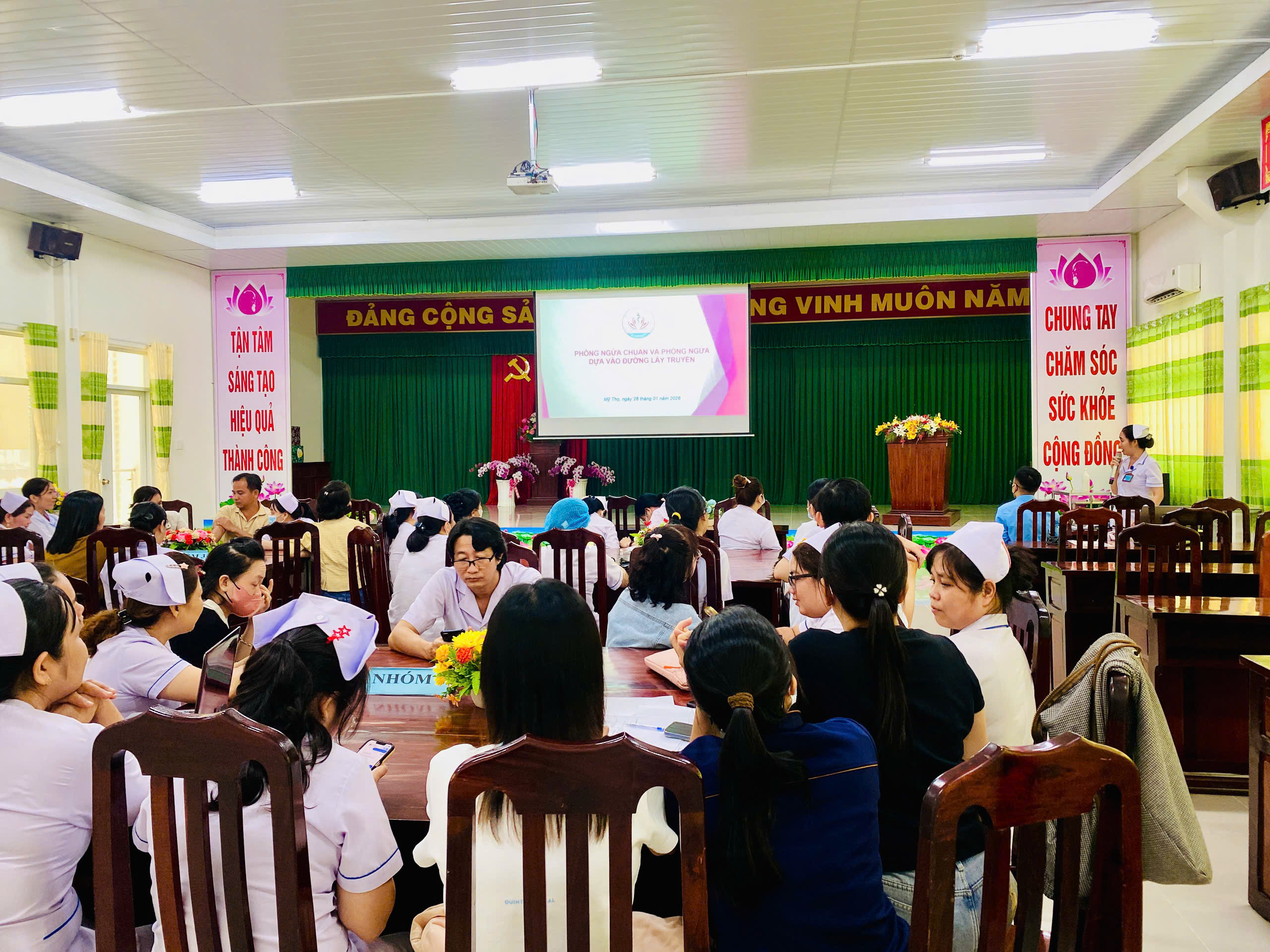
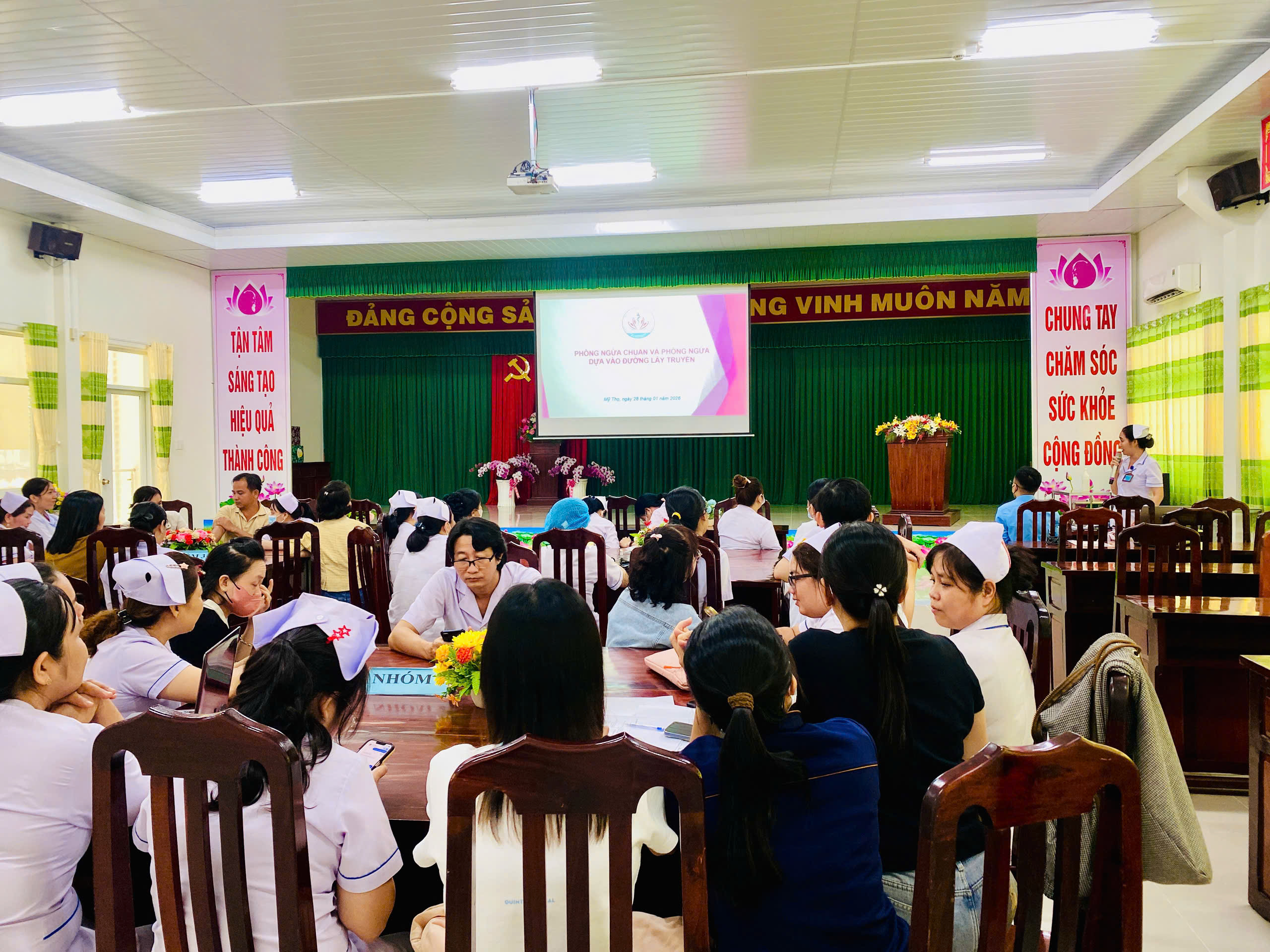
    During the afternoon session, participants were divided into groups to discuss strategies for the future implementation of antimicrobial stewardship (AMS) programmes, as well as approaches to integrating these activities into routine practice. The group discussions were organized around key themes: (1) developing evidence- and data-driven tools to support AMS; (2) strengthening and sustaining AMS committees; (3) implementing infection prevention and control (IPC) programmes; and (4) enhancing microbiology capacity to support antimicrobial resistance (AMR) control. These activities are expected to support the long-term sustainability of AMS implementation, including beyond the duration of the study.

    At the end of the meeting, the Dong Thap DoH acknowledged the efforts and achievements of the network units and issued a directive to ensure a unified approach for the next phase. The Department emphasized the importance of maintaining antibiotic stewardship activities regularly, systematically, and consistently. Units were also encouraged to continue sharing experiences, strengthening collaboration, and proactively identifying support needs to improve patient care quality across the province.

    Learn more about iSHARP here.

  • Lồng ghép các hoạt động Kiểm soát nhiá»…m khuẩn trong chương trình quản lý sá»­ dụng kháng sinh – nghiên cứu 60HN ASPARNet

    Lồng ghép các hoạt động Kiểm soát nhiá»…m khuẩn trong chương trình quản lý sá»­ dụng kháng sinh – nghiên cứu 60HN ASPARNet

    Bối cảnh
    Kiểm soát nhiễm khuẩn (KSNK) và Quản lý sử dụng kháng sinh (QLSDKS) là hai trụ cột quan trọng trong nỗ lực nâng cao an toàn người bệnh và kiểm soátkháng kháng sinh tại các cơ sở y tế. Các hoạt động KSNK đã từng bước được lồng ghép vào chương trình QLSDKS không chỉ giúp giảm nguy cơ nhiễm khuẩn bệnh viện mà còn góp phần thúc đẩy sử dụng kháng sinh hợp lý, từ đó hạn chế sự xuất hiện và lan truyền của vi khuẩn kháng thuốc tại các cơ sở y tế.


    Các hoạt động chính
    Với sự hỗ trợ của chuyên gia KSNK từ bệnh viện Bệnh Nhiệt đới Trung ương nhiều hoạt động đã được triển khai nhằm lồng ghép KSNK vào chương trình QLSDKS tại các bệnh viện tham gia nghiên cứu trong mạng lưới các đơn vị triển khai chương trình QLSDKS
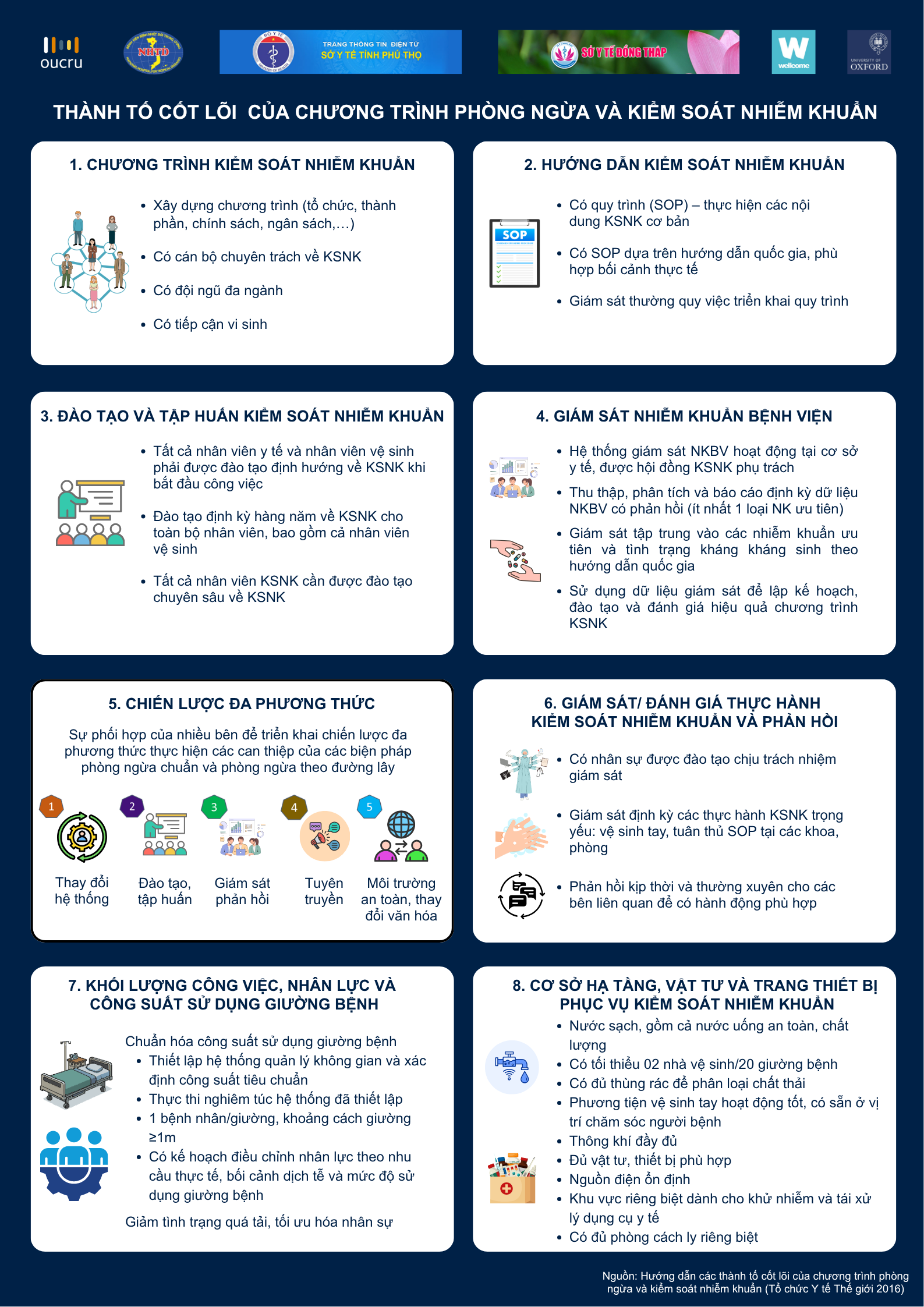
    Trước hết, chương trình KSNK tại mười hai cơ sở y tế đã được đánh giá bằng khung đánh giá chương trình kiểm soát nhiễm khuẩn của Tổ chức Y tế Thế giới (WHO) – Infection Prevention and Control Assessment Framework (IPCAF). Việc đánh giá này giúp các đơn vị xem xét các hoạt động của chương trình KSNK của đơn vị theo 8 thành tố cốt lõi, bao gồm chương trình KSNK, hướng dẫn KSNK, đào tạo và tập huấn, giám sát nhiễm khuẩn bệnh viện (NKBV), chiến lược đa phương thức, hệ thống giám sát phản hồi, nhân lực vật tư trang thiết bị và cơ sở vật chất.
    Dựa trên kết quả đánh giá, các buổi trao đổi chuyên môn đã được tổ chức với từng cơ sở y tế để rà soát chương trình KSNK của đơn vị theo khung IPCAF. Các buổi trao đổi này tạo cơ hội cho bệnh viện xác định những điểm mạnh, những khoảng trống cũng như các lĩnh vực ưu tiên cần cải thiện trong việc triển khai chương trình KSNK.
    Một nội dung được nhấn mạnh là giám sát NKBV và giám sát tuân thủ các thực hành KSNK, đây là những thành phần quan trọng của một chương trình KSNK hiệu quả. Các bệnh viện được khuyến khích tăng cường hệ thống giám sát và thường xuyên theo dõi việc tuân thủ các biện pháp phòng ngừa nhiễm khuẩn của nhân viên y tế.
    Để hỗ trợ việc giám sát một cách thống nhất giữa các cơ sở y tế, các quy trình chuẩn (SOPs) về giám sát tuân thủ thực hành KSNK đã được xây dựng với sự hỗ trợ từu các chuyên gia KSNK của bệnh viện Bệnh Nhiệt đới Trung ương. Các SOP này cung cấp hướng dẫn rõ ràng để các bệnh viện có thể thực hiện quan sát và đánh giá thực hành phòng ngừa nhiễm khuẩn một cách hệ thống

    Ảnh 1: Poster truyền thông về các thành tố cốt lõi cá»§a chương trình KSNK (Xây dá»±ng bởi OUCRU dá»±a trên Hướng dẫn các thành tố cốt lõi cá»§a chương trình KSNK – WHO)

    Bên cạnh đó, các poster truyền thông về NKBV cũng đã được xây dựng, nhấn mạnh các biện pháp phòng ngừa quan trọng trước và trong phẫu thuật. Các tài liệu này nhằm hỗ trợ nhân viên y tế áp dụng các thực hành dựa trên bằng chứng và nâng cao nhận thức về phòng ngừa nhiễm khuẩn vết mổ trong môi trường phẫu thuật.

    Kết quả và tác động

    Thông qua các hoạt động này, các đơn vịtham gia đã nâng cao hiểu biết về yêu cầu của chương trình KSNK theo khung IPCAF và xác định được những lĩnh vực cụ thể cần cải thiện. Đặc biệt, các đơn vị đã tích cực triển khai các hoạt động đào tạo và tập huấn liên tục về KSNK cho nhân viên y tế, bao gồm cả đào tạo cơ bản và cập nhật kiến thức chuyên sâu về các thực hành phòng ngừa nhiễm khuẩn, giám sát nhiễm khuẩn bệnh viện và sử dụng kháng sinh hợp lý. Các chương trình đào tạo này góp phần củng cố năng lực chuyên môn, nâng cao nhận thức và thay đổi hành vi tuân thủ thực hành KSNK trong toàn bệnh viện.

    Ảnh 2: Triển khai đào tạo và tập huấn KSNK tại đơn vị (Nguồn: Đơn vị cung cấp)

    Bên cạnh đó, việc xây dựng các quy trình giám sát chuẩn hóa, công cụ đánh giá và tài liệu truyền thông đã góp phần thúc đẩy việc triển khai các thực hành KSNK một cách thống nhất và có hệ thống hơn tại các cơ sở y tế trong Đồng Tháp. Các hoạt động này không chỉ hỗ trợ cải thiện chất lượng giám sát và phản hồi mà còn tạo nền tảng cho việc tích hợp hiệu quả giữa KSNK và quản lý sử dụng kháng sinh, hướng tới nâng cao chất lượng chăm sóc và an toàn người bệnh.

    Bước tiếp theo

    Trong thời gian tới, các bệnh viện sẽ tiếp tục tăng cường triển khai công tác KSNK bằng cách cải thiện hệ thống giám sát NKBV, tăng cường giám sát tuân thủ các thực hành phòng ngừa nhiễm khuẩn và thường xuyên rà soát hoạt động của chương trình KSNK dựa trên kết quả đánh giá IPCAF.

    Nhóm nghiên cứu 60HN sẽ tiếp tục hỗ trợ kỹ thuật trong việc phát triển và triển khai các công cụ giám sát điện tử, bao gồm các biểu mẫu báo cáo tự động cho giám sát NKBV và giám sát tuân thủ các quy trình KSBK và báo cáo đánh giá kết quả đánh giá các hoạt động KSNK của đơn vị theo IPCAF.
    Các công cụ này nhằm giúp các cơ sở y tế chuẩn hóa việc báo cáo, nâng cao chất lượng dữ liệu và cung cấp phản hồi kịp thời cho các hoạt động cải tiến chất lượng và phòng ngừa nhiễm khuẩn.

  • Integration of Infection Prevention and Control into the Antimicrobial Stewardship Programme – 60HN ASPARNet

    Integration of Infection Prevention and Control into the Antimicrobial Stewardship Programme – 60HN ASPARNet

    Background
    Infection Prevention and Control (IPC) and Antimicrobial Stewardship (AMS) are two key pillars in efforts to enhance patient safety and tackle antimicrobial resistance in healthcare facilities. IPC activities have been progressively integrated into the AMS programme, helping not only to reduce the risk of healthcare-associated infections but also to promote the rational use of antibiotics, thereby limiting the emergence and spread of antimicrobial-resistant organisms within healthcare setting.


    Key Activities
    With technical support from IPC experts from the National Hospital for Tropical Diseases, multiple activities were implemented to integrate IPC into the AMS programme across hospitals implementing the Antimicrobial Stewardship network.
    IPC programmes at twelve healthcare facilities were assessed using the WHO Infection Prevention and Control Assessment Framework (IPCAF). This assessment enables facility to review the implementation of their IPC programmes across the eight core components, including the IPC programme, IPC guidelines, education and training, healthcare-associated infection surveillance, multimodal strategies, monitoring and feedback systems, human resources and equipment, and the built environment and infrastructure. 
    Based on the assessment results, technical discussions were conducted with each facility to review their IPC programme according to the IPCAF framework. These discussions provided an opportunity for hospital’s IPC teams to identify strengths, gaps, and priority areas for improvement in their IPC implementation.
    A strong emphasis was placed on healthcare-associated infection (HAI) surveillance and monitoring compliance with IPC practices, which are critical components of an effective IPC programme. Hospitals were encouraged to strengthen their surveillance systems and regularly monitor adherence to key infection prevention measures among healthcare workers.
    To support standardized monitoring across facilities, standard operating procedures (SOPs) for monitoring compliance with IPC practices were developed with technical support from IPC experts from National Hospital for Tropical Diseases. These SOPs provide clear guidance on how hospitals can systematically conduct observation and assessment of infection prevention practices.

    Photo 1: Poster on the core components of the IPC programme (Developed by OUCRU based on WHO Guidelines on the Core Components of IPC Programmes)

    In addition, educational posters on IPC were developed, highlighting key preventive measures before and during surgical procedures. These materials are intended to support healthcare workers in implementing evidence-based practices and raising awareness about SSI prevention in surgical settings.

    Results and Impact

    Through these activities, participating facilities enhanced their understanding of the requirements of IPC programmes based on the IPCAF framework and were able to identify specific areas requiring improvement. Notably, healthcare facilities actively implemented training and capacity-building activities on IPC for healthcare workers, including both foundational training and advanced updates on infection prevention practices, healthcare-associated infection surveillance, and rational antimicrobial use. These training initiatives contributed to strengthening professional competencies, improving awareness, and promoting behavioral change in adherence to IPC practices across hospitals.

    Photo 2: Implementation of IPC training and capacity-building activities at the facility (Source: Provided by the facility)

    In addition, the development of standardized surveillance procedures, assessment tools, and communication materials facilitated more consistent and systematic implementation of IPC practices across healthcare facilities in Dong Thap. These efforts not only improved the quality of monitoring and feedback mechanisms but also established a foundation for more effective integration between IPC and antimicrobial stewardship programmes, ultimately contributing to improved quality of care and patient safety.

    Next steps

    In the coming period, hospitals will continue to strengthen IPC implementation by improving HAI surveillance systems, enhancing monitoring of compliance with infection prevention practices, and regularly reviewing IPC programme activities based on IPCAF assessment results.

    The 60HN research team will continue to provide technical support for the development and implementation of electronic surveillance tools, including automated reporting forms for HAI surveillance, monitoring compliance with IPC practices, and generating reports to assess facility IPC activities based on IPCAF.These tools aim to support healthcare facilities in standardizing reporting processes, improving data quality, and providing timely feedback to inform quality improvement and infection prevention efforts.

  • Giám sát – phản hồi: Hoạt động cốt lõi nâng cao chất lượng Ä‘iều trị và an toàn người bệnh

    Giám sát – phản hồi: Hoạt động cốt lõi nâng cao chất lượng điều trị và an toàn người bệnh

    Trong thực hành điều trị thường ngày, chỉ định kháng sinh là một hoạt động quen thuộc và thiết yếu. Tuy nhiên, do điều trị cho bệnh nhân cần cá thể hóa, việc chỉ định kháng sinh không phải lúc nào cũng thống nhất và tuân thủ đầy đủ các hướng dẫn điều trị chuẩn. Ở một số bệnh nhân, đặc biệt là những bệnh nhân có bệnh nền phức tạp, việc chọn thuốc chưa thật phù hợp theo chức năng gan thận, kháng sinh có thể được dùng kéo dài hơn cần thiết, hoặc chưa được điều chỉnh kịp thời theo diễn biến bệnh. Những hạn chế này nếu không được theo dõi sát sao có thể làm giảm hiệu quả điều trị và tăng nguy cơ kháng kháng sinh. Chính vì vậy, hoạt động giám sát – phản hồi đóng vai trò quan trọng trong việc hỗ trợ bác sĩ rà soát lại thực hành lâm sàng và đảm bảo việc sử dụng kháng sinh luôn hợp lý và an toàn cho người bệnh.

    Trong khuôn khổ nghiên cứu 60HN, giám sát – phản hồi được áp dụng như một cấu phần quan trọng nhằm hỗ trợ các bệnh viện sử dụng kháng sinh hợp lý hơn. Các hoạt động chính của quy trình giám sát – phản hồi bao gồm xây dựng kế hoạch rõ ràng, thành lập nhóm chuyên trách và triển khai kế hoạch giám sát – phản hồi một cách nhất quán để nâng cao chất lượng điều trị cho người bệnh. Các đơn vị được hỗ trợ kĩ thuật từ các chuyên gia đến từ trường Đại học Dược Hà Nội, Bệnh viện Bệnh nhiệt đới Trung ương, Bệnh viện Xanh-pôn và được cung cấp quy trình, hướng dẫn thực hiện cho các trường hợp dùng kháng sinh điều trị và dùng kháng sinh dự phòng phẫu thuật.

    Tại bệnh viện, nhóm chuyên trách giám sát – phản hồi được thành lập gồm 2 đến 3 thành viên có thể là bác sĩ lâm sàng hoặc dược sĩ lâm sàng đang làm công tác hỗ trợ điều trị, đặc biệt hiểu rõ về bệnh nhiễm khuẩn và sử dụng kháng sinh hợp lý. Ở các bệnh viện lớn, nhóm có thể bao gồm bác sĩ vi sinh để hỗ trợ xem xét chuyên sâu hơn.

    Nhóm chuyên trách sẽ trực tiếp triển khai hoạt động giám sát – phản hồi, tổng kết thông tin, báo cáo cho Ban Quản lý sử dụng kháng sinh (QLSDKS) của bệnh viện theo định kỳ hoặc theo các chuyên đề. Đây có thể xem là “đội kỹ thuật nòng cốt” – những người đóng vai trò trung tâm trong việc theo dõi, đánh giá để đưa ra thông tin giúp Ban QLSDSK đưa ra các chính sách cải thiện thực hành điều trị, đảm bảo các quy trình điều trị được áp dụng chính xác góp phần nâng cao chất lượng điều trị cho bệnh viện và tăng cường an toàn người bệnh.

    Để triển khai hoạt động giám sát – phản hồi, nhóm chuyên trách sẽ xây dựng kế hoạch chi tiết, bao gồm nội dung giám sát, cách thức thực hiện, quy mô, tần suất, nhân lực và thời gian, kèm theo nhiệm vụ của từng thành viên. Sau khi được phê duyệt, kế hoạch được gửi đến các khoa liên quan để phối hợp thực hiện.

    Khi tiến hành giám sát, nhóm chuyên trách xem xét phần kê đơn thuốc trong từng bệnh án và đối chiếu với hướng dẫn điều trị của bệnh viện cũng như các tài liệu chuẩn của Bộ Y tế. Nếu cần làm rõ thông tin, nhóm có thể trao đổi thêm với bác sĩ điều trị, điều dưỡng hoặc chính người bệnh. Tất cả thông tin thu thập được sẽ được ghi chép đầy đủ theo các biểu mẫu đánh giá tương ứng.

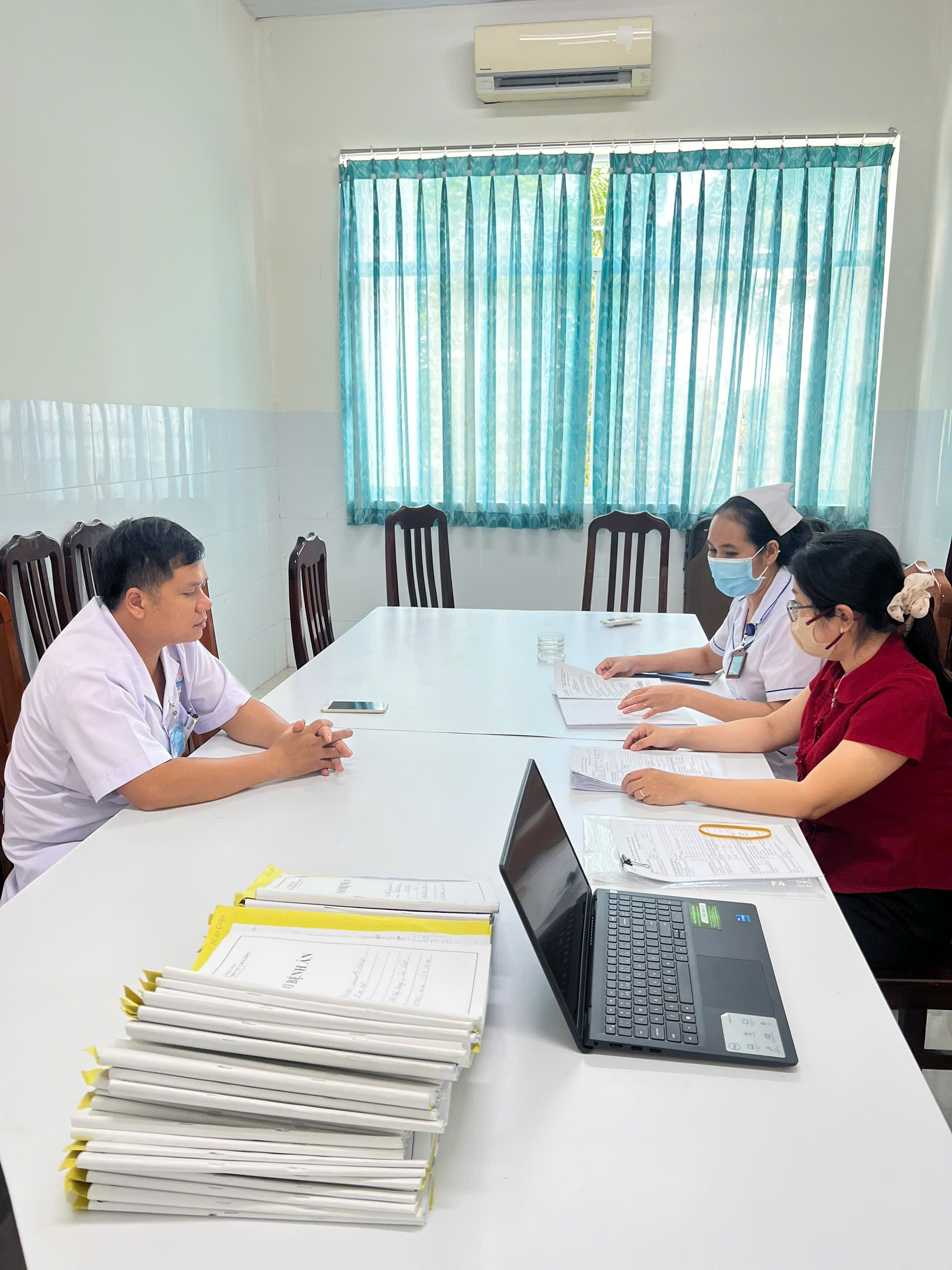
    Ảnh: nhóm chuyên trách thảo luận cùng bác sĩ kê đơn về các ca giám sát vừa thực hiện (Nguồn: đơn vị mạng lưới)

    Hoạt động giám sát có thể được thực hiện theo hai hình thức: tiến cứu (đánh giá trên bệnh nhân đang điều trị nội trú) và hồi cứu (đánh giá các bệnh án của bệnh nhân đã ra viện). Cả hai hình thức đều giúp Ban QLSDKS có cái nhìn toàn diện về thực hành kê đơn và kịp thời điều chỉnh khi cần thiết.

    Sau khi hoàn thành việc giám sát và tổng hợp thông tin, nhóm chuyên trách sẽ phản hồi trực tiếp đến bác sĩ kê đơn. Với giám sát tiến cứu, phản hồi được thực hiện ngay trong ngày nhằm giúp bác sĩ kịp thời điều chỉnh phác đồ để mang lại hiệu quả điều trị tốt hơn cho người bệnh. Hình thức phản hồi đa dạng như trao đổi trực tiếp, ghi chú vào bệnh án, gửi báo cáo cho khoa hoặc trình bày trong cuộc họp.

    Đối với giám sát hồi cứu, nhóm chuyên trách tổng hợp kết quả và chia sẻ lại với bác sĩ kê đơn hoặc khoa lâm sàng. Mặc dù được thực hiện sau khi bệnh nhân đã ra viện, phản hồi hồi cứu vẫn có giá trị quan trọng trong việc cải thiện thực hành kê đơn cho những trường hợp tương tự trong tương lai. Nhờ hoạt động giám sát – phản hồi, việc sử dụng kháng sinh tại bệnh viện trở nên hợp lý và nhất quán hơn. Người bệnh được điều trị đúng thuốc, đúng liều và đúng thời điểm, từ đó giảm nguy cơ dùng thuốc không cần thiết, hạn chế các biến cố bất lợi và cải thiện rõ rệt hiệu quả điều trị. Việc sử dụng kháng sinh hợp lý cũng góp phần quan trọng trong việc giảm nguy cơ kháng kháng sinh, một thách thức ngày càng tăng trong các cơ sở y tế hiện nay. Bên cạnh đó, các bác sĩ và dược sĩ có thêm cơ hội trao đổi chuyên môn, củng cố kiến thức và hoàn thiện thực hành kê đơn. Đối với bệnh viện, hoạt động này giúp nắm bắt rõ thực trạng sử dụng kháng sinh trong toàn hệ thống, từ đó nhận diện sớm các vấn đề phổ biến và xây dựng được những giải pháp phù hợp để nâng cao chất lượng điều trị lâu dài.